Enterprise Sales: Pitch, Negotiate & Close
Learning Goal: Mastering the enterprise sales cycle to pitch, negotiate, and close multi-year contracts with Fortune 500 procurement departments.
- Prerequisites: Basic understanding of sales concepts (SDR/AE roles) and general B2B dynamics.
- Estimated Total Study Time: 18 Hours (includes video instruction, recommended reflection, and mapping exercises).
Module 1: Foundations of B2B & Enterprise Sales
This module deconstructs the fundamental differences between transactional sales and high-stakes enterprise sales. You will learn to map out multi-month sales cycles, comprehend the realities of selling to companies with billions in revenue, and align your mindset with the consultative approach required to handle large-scale, high-margin transactions.
Recommended Videos

- Why this video: This video acts as the perfect strategic introduction to enterprise software sales. It provides a robust structural overview using the "segmentation pyramid" model. It teaches you how to align your product, marketing, and sales operations dynamically as you scale your deals upmarket from mid-market to massive enterprise accounts.
- Knowledge Checkpoint:
- Understand the segmentation pyramid model and how target markets are structurally divided.
- Identify key differences in sales execution when moving upmarket to enterprise tiers.
- Explain how a company must adapt its product-market fit strategies for larger deal sizes.

- Why this video: Alex Hormozi breaks down the foundational differences in top-of-funnel customer acquisition between B2C and B2B systems. While B2C utilizes broad, emotional storytelling, B2B requires hyper-rational, trust-based relationships and value-oriented logic. This is essential for understanding why enterprise sales requires longer touchpoints and highly targeted outreach.
- Knowledge Checkpoint:
- Differentiate between emotional B2C brand plays and rational B2B pipeline development.
- Identify the top-of-funnel strategies unique to scaling B2B enterprise operations.
- Explain how transaction value alters the level of personalization required in your outreach.

- Why this video: Written from the perspective of a seasoned sales professional, this video provides deep context on the scope, responsibilities, and earning potential of an Enterprise Account Executive (ENT AE). It details what it means to sell specifically to companies with over $5B in revenue, illustrating the scale of operations you will be navigating.
- Knowledge Checkpoint:
- Explain the scope of responsibility of an Enterprise Account Executive (ENT AE).
- Describe the profile and characteristics of target enterprise clients (minimum $5B+ revenue threshold).
- Define the career expectations and primary drivers of high-commission enterprise contracts.
Module 2: Navigating the Fortune 500 Buying Committee
Selling to a major corporation is never a one-to-one interaction; it is a one-to-many strategic campaign. On average, an enterprise buying group involves 6 to 11 stakeholders across multiple divisions. This module teaches you how to map these complex organizational structures, visually trace decision-makers using power-mapping methodologies, run meticulous discovery calls, and establish credibility with C-suite executives.
Recommended Videos
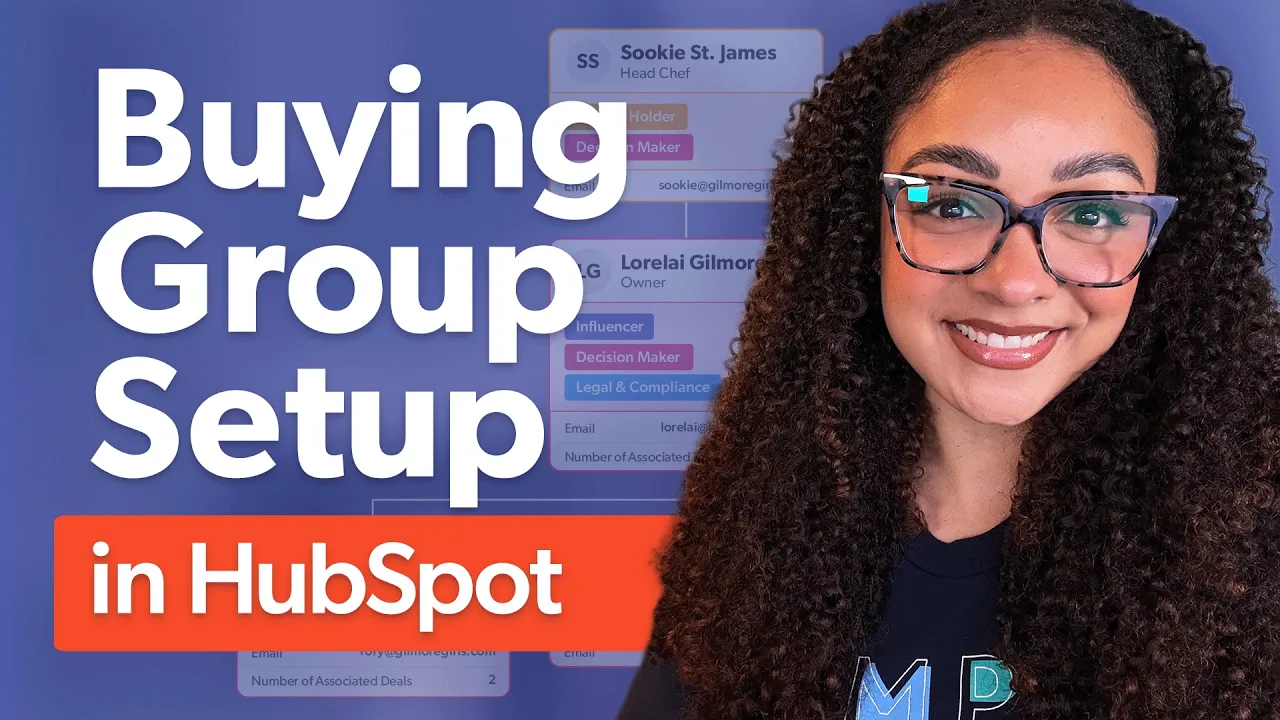
- Why this video: To successfully navigate an account, you must visually and systematically organize the buying committee. This video provides a practical walkthrough of setting up and utilizing automated and manual "buying groups" within a modern CRM (HubSpot). This allows you to visually track and organize the economic buyers, technical champions, and legal influencers on a deal.
- Knowledge Checkpoint:
- Define what a "buying group" is and how it is structured inside a CRM environment.
- Map out specific roles within a typical corporate purchasing committee (Champion, Economic Buyer, Blocker).
- Apply templates to maintain a visual layout of organizational power dynamics for active deals.

- Why this video: This video introduces the core conceptual framework of "power mapping." While originating in political organizing, power mapping is a critical B2B tool. It visualizes hidden networks of influence, node connections, and unusual alliances within a system, allowing you to identify who holds actual authority behind official titles.
- Knowledge Checkpoint:
- Explain the foundational theory of power mapping and how it exposes hidden nodes of authority.
- Construct a network diagram identifying decision-makers, champions, and potential internal blockers.
- Leverage peer networks to find "unusual alliances" that can push a stalled deal forward.

- Why this video: An enterprise deal is won or lost during the discovery phase. This masterclass by 30 Minutes to President's Club breaks down eight devastating discovery mistakes. It details how to handle pricing transparently, when and how to demo your product, and how to unearth the hard, underlying operational pain that drives budget approval.
- Knowledge Checkpoint:
- Structure an enterprise-grade discovery call using a diagnostic approach.
- Address pricing questions early in the conversation without losing leverage or positioning.
- Diagnose the deep operational costs of the "status quo" to build urgency.

- Why this video: This demo showcases "Relationship Mapping" tools. It illustrates how software solutions integrate Salesforce CRM and LinkedIn Sales Navigator to build centralized relationship maps. This ensures the entire sales team can collaborate and view key buyer committee changes in real time.
- Knowledge Checkpoint:
- Utilize integrated CRM tools to map relationship pathways across a target account.
- Maintain real-time updates on executive movements and stakeholder changes within the account.
- Collaborate with cross-functional sales teams on key target-account relationship structures.
Module 3: Crafting & Pitching the Enterprise Business Case
To close multi-million dollar contracts, you must shift from feature-selling to value-selling. Enterprise buyers require concrete, mathematical proof of business impact. This module covers how to model quantitative ROI, build business cases that withstand scrutiny from internal finance committees, and present persuasively to busy executive stakeholders.
Recommended Videos

- Why this video: Victor Antonio details exactly how to present numbers to enterprise buyers. He outlines a rigorous framework for demonstrating quantitative ROI. This involves calculating the complete scope of investment (including time, capital, and emotional output) and balancing it against concrete, monthly operational savings and revenue growth.
- Knowledge Checkpoint:
- Calculate the true total cost of investment (encompassing money, time, implementation effort, and operational friction).
- Build a quantitative value model showing projected monthly savings or revenue increases.
- Translate technical capabilities into explicit financial metrics (ROI, payback period, and total cost of ownership).
- Why this video: Serial entrepreneur Jyoti Bansal explains that in enterprise sales, purely technical product evaluations are insufficient. To win major budgets, you must build a durable business case. You must show how your software translates to high-level strategic priorities, enabling your champions to defend the purchase internally to corporate budget committees.
- Knowledge Checkpoint:
- Distinguish between the technical evaluation phase and the formal business justification phase.
- Create a business case that aligns directly with C-level strategic initiatives (cost reduction, risk mitigation, or revenue enablement).
- Equit your champion with the presentation materials needed to navigate internal capital allocation reviews.

- Why this video: Presenting to senior executives requires a completely different approach than a standard sales deck pitch. Rick Gilbert lays out the rules of "executive survival." He explains why you must ditch long build-ups and state your core recommendation within the first 30 seconds of walking in, using data-driven insights to navigate executive-level conversations.
- Knowledge Checkpoint:
- Structure an executive presentation using an inverted pyramid format (leading with key recommendations and outcomes).
- Pivot dynamically when executives interrupt, change the agenda, or skip to the final pages of your presentation.
- Deliver a powerful, concise value proposition within the critical first 30 seconds of an executive meeting.
Module 4: Overcoming Legal, Security, and Procurement Hurdles
Curriculum Correction: This module has been renamed to place stronger practical focus on navigating corporate IT security assessments, SOC 2 compliance, and InfoSec reviews, which are the most common bottlenecks in modern enterprise cycles.
Enterprise procurement departments use highly systematic processes to minimize risk, manage vendors, and drive down prices. Furthermore, modern SaaS contracts cannot close without passing intense IT security reviews. This module covers how to build technical trust during InfoSec evaluations, strategically navigate RFPs/RFIs, and understand the role of procurement departments.
Recommended Videos
- Why this video: Passing InfoSec is often the largest bottleneck in enterprise sales. This video provides a comprehensive blueprint for transforming the IT security evaluation from an obstacle into a competitive advantage. It teaches you how to establish technical trust, prepare security documentation proactively, and satisfy the rigorous standards of corporate security teams.
- Knowledge Checkpoint:
- Describe the standard IT security review process and how enterprise buyers evaluate technical risk.
- Identify key security standards (SOC 2 Type II, ISO 27001, GDPR) required to establish technical trust.
- Coordinate with internal security and engineering teams to proactively address InfoSec questionnaires.
- Why this video: This segment offers high-level context on how enterprise security infrastructure operates. It highlights the importance of thorough security evaluations (including encryption, identity access management, and data-storage models) that software must pass before deployment in Fortune 500 environments.
- Knowledge Checkpoint:
- Identify core components of enterprise security architecture (identity/access controls, data storage, encryption).
- Understand why security teams audit external vendors' data handling and authentication mechanisms.
- Position your platform's security compliance metrics to mitigate risk for the client's CISO.
- Why this video: This video introduces a vital tactic: the "RFP Decline Strategy." RFPs (Requests for Proposals) are often pre-wired for a competitor. This segment outlines how to politely decline RFPs where you lack direct stakeholder access. This allows you to protect your team's time and avoid commodity pricing traps.
- Knowledge Checkpoint:
- Evaluate RFPs to determine if the deal is pre-wired for a competitor or worth pursuing.
- Implement the "decline strategy" politely to regain stakeholder access and discovery rights.
- Identify common negotiation patterns and behavioral profiles used by professional procurement offices.

- Why this video: If you choose to respond to an RFP, execution must be flawless. This guide covers how to strategically structure RFP responses. It details how to organize information according to evaluation criteria, format your response to align with client expectations, and use clear response frameworks.
- Knowledge Checkpoint:
- Organize RFP responses systematically to match specified corporate evaluation criteria.
- Formulate template standards for recurring architectural, legal, and operational responses.
- Write responses that highlight your unique value proposition within standard RFP constraints.
Module 5: Negotiating and Closing Multi-Year Contracts
The final stage of the enterprise sales cycle is contract execution. This requires highly sophisticated negotiation and deep familiarity with contract law. This module covers how to negotiate multi-million dollar contracts, understand Master Services Agreements (MSAs) and Statements of Work (SOWs), and apply elite negotiation frameworks (such as the Harvard Project and Chris Voss methodologies).
Recommended Videos
- Why this video: This video details the foundational framework of principled negotiation established by the Harvard Negotiation Project. By learning to focus on interests rather than rigid positions, separate people from the problem, and invent options for mutual gain, you can secure favorable, collaborative, multi-year contracts.
- Knowledge Checkpoint:
- Apply the four core principles of the Harvard Negotiation Method in high-stakes sales conversations.
- Distinguish between a party's stated "positions" and their underlying strategic "interests."
- Formulate objective criteria to evaluate terms and arrive at mutually beneficial contract structures.
![Stan Christensen-The Art of Negotiation [Entire Talk]](https://i.ytimg.com/vi/eKFElV8tS48/hqdefault.jpg?sqp=-oaymwEmCOADEOgC8quKqQMa8AEB-AHyA4ACmgKKAgwIABABGFYgVihlMA8=&rs=AOn4CLAV5LDP9lp9aeeNzlgNxI3QH_3DBQ)
- Why this video: This presentation expands on the practical implementation of negotiation frameworks. It introduces BATNA (Best Alternative to a Negotiated Agreement). This teaches you how to accurately calculate your leverage and determine your walk-away point before sitting down at the negotiation table with corporate procurement.
- Knowledge Checkpoint:
- Identify and continuously strengthen your BATNA (Best Alternative to a Negotiated Agreement) before negotiating.
- Determine your counterpart's BATNA to accurately evaluate negotiation leverage.
- Formulate a walk-away threshold to protect profit margins and prevent contract over-commitment.
- Why this video: Former FBI lead hostage negotiator Chris Voss provides an invaluable perspective on negotiating with professional procurement officers. He demystifies corporate buyers, explaining why you should leverage the clinical/technical buy-in you already secured from the actual end-users to resist procurement's aggressive downward price demands.
- Knowledge Checkpoint:
- Identify common pricing tactics and cost-down games played by procurement departments.
- Leverage the pre-existing technical/clinical champion buy-in to protect pricing integrity.
- Utilize Voss's empathy-driven negotiation tactics to handle aggressive commercial demands.
- Why this video: This short, high-impact video defines the core legal documents required to close enterprise deals. It provides clean, distinct definitions of Master Services Agreements (MSAs) versus Statements of Work (SOWs), ensuring you understand how legal terms govern ongoing, multi-year vendor engagements.
- Knowledge Checkpoint:
- Define a Master Services Agreement (MSA) and identify the overarching corporate legal terms it governs.
- Explain how a Statement of Work (SOW) operates beneath an active MSA.
- Distinguish between long-term legal agreements and dynamic project-level delivery documents.
- Why this video: To ensure painless implementation and clear contract boundaries, you must master the Statement of Work (SOW). This video details how to outline exact project scopes, establish clear deliverables, set timelines, and construct payment milestones within legal documents.
- Knowledge Checkpoint:
- Draft a Statement of Work (SOW) with defined, unambiguous business deliverables.
- Identify and outline out-of-scope tasks to prevent project creep.
- Align contract milestones and payment schedules with phase completions.
Course Map
This map outlines the recommended progression through the enterprise sales curriculum. Ensure you complete each module sequentially, as the strategic and technical frameworks build upon one another to mirror a real-world enterprise sales cycle.
Key People Index
The following notable experts, researchers, and sales leaders are referenced throughout this curriculum:
- Roger Fisher (Harvard Negotiation Project): Legendary author and researcher who pioneered principled negotiation, focusing on interests instead of rigid positional bargaining.
- Chris Voss (Former FBI Hostage Negotiator): Founder of The Black Swan Group and developer of empathy-driven negotiation frameworks. He offers a master-class perspective on navigating aggressive corporate procurement agents.
- Jyoti Bansal (Founder of AppDynamics & Harness): Highly successful enterprise tech entrepreneur. He provides critical frameworks on separating technical features from the actual business case needed to secure enterprise budgets.
- Rick Gilbert (Executive Communication Expert): Author of Speaking Up. He specializes in training leaders and sales professionals how to communicate with fast-paced C-suite executives.
- Alex Hormozi (Acquisition.com): Entrepreneur and author who breaks down the structural, top-of-funnel operational differences between B2C consumer loops and rational B2B sales cycles.
Final Self-Assessment
Complete this comprehensive self-assessment after finishing all five modules to verify your readiness to execute multi-year, Fortune 500 enterprise transactions.
- Enterprise Dynamics: Can you explain the core differences between a transactional, single-decision-maker sales loop (B2C/SMB) and a multi-month, multi-stakeholder enterprise cycle?
- Power Mapping: Are you able to construct a visual map of a target organization, highlighting connections, visual alliances, champions, and hidden blockers?
- Discovery Protocol: Can you conduct a diagnostic, consultative discovery call that unearths deep operational pain without resorting to early, product-feature pitch patterns?
- Quantitative ROI Modeling: Can you calculate and present a mathematical business case that balances total cost of ownership against projected monthly savings or revenue increases?
- C-Suite Communication: Are you prepared to pitch to an executive, state your main recommendation within the first 30 seconds, and pivot gracefully under pressure?
- InfoSec Strategy: Do you understand the criteria required to pass corporate IT security evaluations, including SOC 2 standards, identity access controls, and data residency audits?
- RFP Evaluation: Can you apply the RFP decline strategy to protect resources and regain direct stakeholder access on pre-wired bids?
- Harvard Principles: Are you able to navigate a complex negotiation by focusing on mutual interests, establishing objective criteria, and separating the personal from the problem?
- BATNA Calculation: Have you mapped out your team's walk-away parameters and identified alternatives before entering commercial negotiations?
- Contract Law Foundations: Do you understand the difference between the legal terms governed by a Master Services Agreement (MSA) and the project deliverables outlined in a Statement of Work (SOW)?