Inventory Optimization: E-com SCM & Logistics
Learning Goal: Mastering inventory optimization and supply chain management for rapidly growing e-commerce brands.
- Prerequisites: Basic business math and familiarity with spreadsheet environments (like Microsoft Excel or Google Sheets).
- Estimated Total Study Time: 14 hours
Module 1: Introduction to E-commerce SCM & Logistics
This module establishes the core framework of supply chain management (SCM) and logistics within the digital retail ecosystem. You will examine the transition from traditional linear distribution networks to highly agile, consumer-centric e-commerce setups, tracking how information and physical goods move from manufacturers to final customer doorsteps.
Recommended Videos

- Why this video: This academic lecture lays down a structured foundation of logistics and supply chain theory. It defines key terminologies (inbound/outbound logistics, information flow) necessary to build professional competency before diving into e-commerce-specific scenarios.
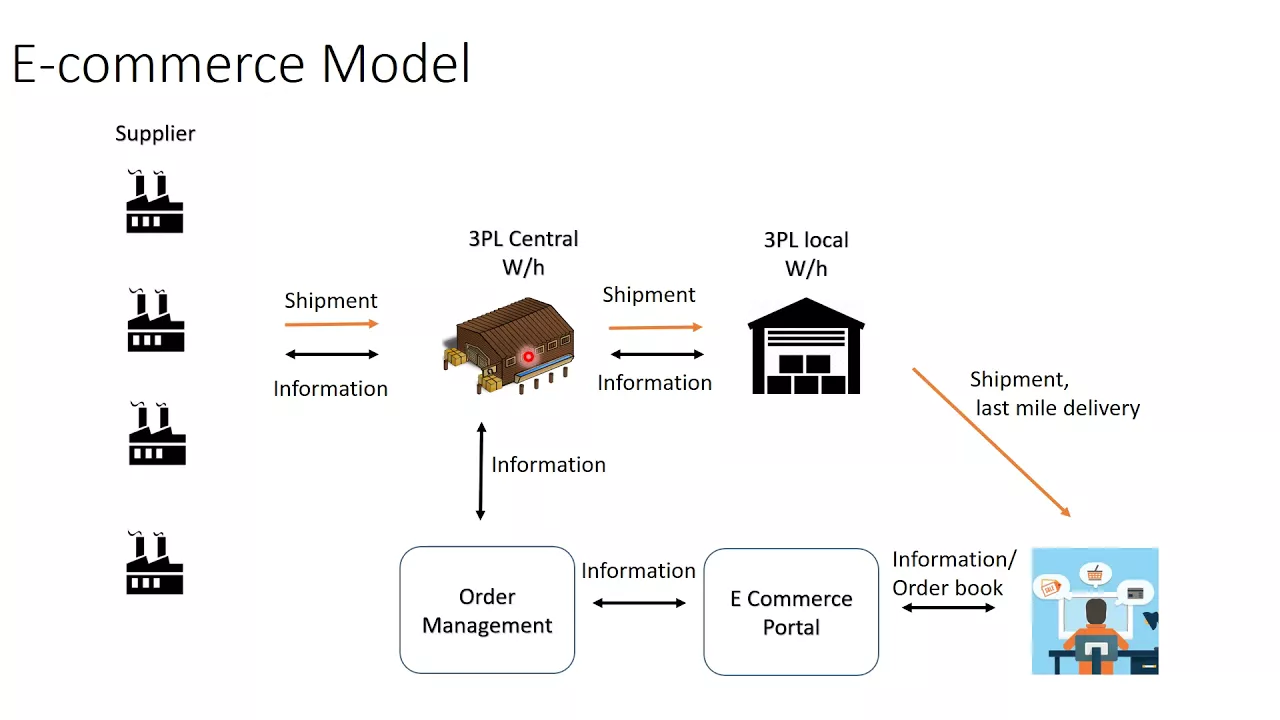
- Why this video: This concise, visual explainer shows the practical architecture of online shopping networks. It traces order placement, central warehousing systems, order management routing, and last-mile operations, making abstract logistics concepts tangible.

- Why this video: This deep dive inside Amazon's fulfillment centers reveals the high-tech reality of modern e-commerce operations. Seeing how inventory is barcoded, dynamically stored, retrieved, and shipped illustrates the standard of speed and efficiency that modern brands are up against.
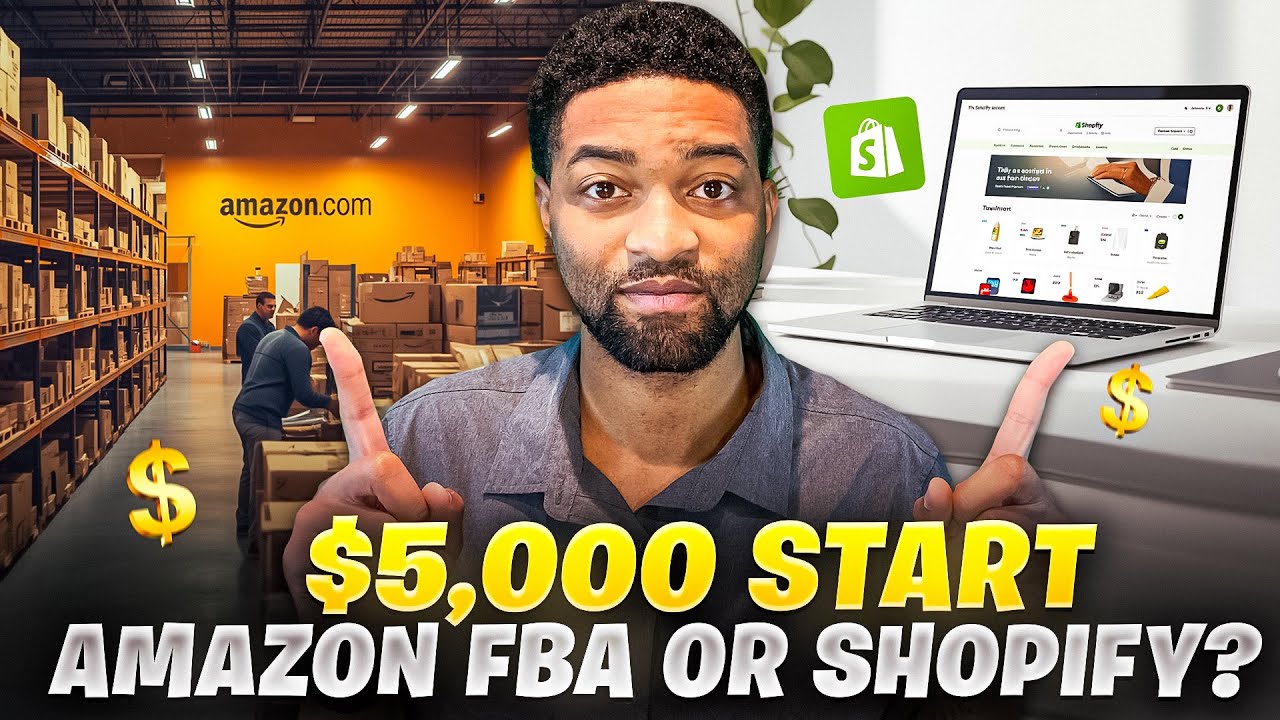
- Why this video: For an e-commerce strategist, picking a sales and fulfillment platform dictates margin structure and supply chain control. This video provides a direct, financial contrast between Amazon FBA's automatic but costly fulfillment and Shopify's higher-margin, merchant-managed approach.
Knowledge Checkpoint
- Contrast inbound and outbound logistics and explain how they interact within a digital retail platform.
- Trace the path of an e-commerce order from the click of the "buy button" to dispatch from a central fulfillment hub.
- Define the core trade-offs between third-party automated distribution networks (like Amazon FBA) and independent store control (like Shopify).
Module 2: Inventory Fundamentals & Key Metrics
This module transitions from high-level supply flows to the mathematical principles governing inventory holding. You will learn how to calculate variables designed to buffer against supplier delays and market volatility, balance warehousing costs against the risk of stockouts, and monitor overall inventory health.
Recommended Videos
- Why this video: Calculating safety stock protects growing brands from unexpected disruptions. This tutorial explains the variables required—including maximum daily usage, average daily usage, and lead times—to compute defensible safety stock levels and reorder points (ROP).

- Why this video: This video introduces the statistical precision of the Q-R (Min-Max) inventory model. It demonstrates how to integrate a specific service level Z-score (such as 1.64 for a 95% service level) and demand standard deviations to establish robust safety stock.

- Why this video: Effective inventory optimization requires tracking health metrics beyond basic stock levels. This guide breaks down fundamental, advanced KPIs like Stock Turn (revenue divided by inventory cost value) and GMROI (Gross Margin Return on Investment), which assess how efficiently working capital converts to cash.
Acknowledging Coverage Gaps
- SKU Rationalization: The video pool has limited dedicated coverage of SKU rationalization (auditing and weeding out underperforming variants). To master this, we recommend searching YouTube independently for "SKU rationalization matrix e-commerce tutorial" to learn how to categorise your catalog into A, B, and C performers.
Knowledge Checkpoint
- Calculate the Reorder Point (ROP) using the standard formula: .
- Calculate Safety Stock mathematically, accounting for demand variations (standard deviation) and targeted customer service levels (Z-score).
- Explain how GMROI bridges the gap between marketing margins and inventory efficiency.
Module 3: Demand Forecasting & Replenishment Planning
Overstocking drains cash reserves, while understocking limits revenue. This module covers predictive analytics and algebraic optimizations. You will learn to build data-driven sales forecasts and calculate the Economic Order Quantity (EOQ) to minimize combined holding and ordering costs.
Recommended Videos

- Why this video: This video provides a clear, foundational explanation of the Economic Order Quantity (EOQ) formula: It explains the relationship between annual demand (), ordering costs (), and unit carrying costs (), laying a solid foundation for your replenishment decisions.

- Why this video: This video offers a practical step-by-step tutorial on using Microsoft Excel's built-in "Forecast Sheet" feature. You'll learn to process historical e-commerce transactional data, automatically account for seasonal cycles, and establish high and low confidence boundaries.

- Why this video: This e-commerce-specific forecasting walkthrough illustrates how to build dynamic spreadsheets using operational inputs, active marketing assumptions, and historical customer cohorts to project demand.
Knowledge Checkpoint
- Calculate the Economic Order Quantity (EOQ) when given annual item demand, fixed order fees, and inventory storage cost percentages.
- Create an automated monthly demand projection chart in Excel using historical, multi-year sales data.
- Differentiate qualitative forecasting methods (e.g., Delphi Technique) from quantitative methods (e.g., historical time-series regression).
Module 4: Warehouse Management & Order Fulfillment
Even the best inventory plan will fail if warehouse operations are inefficient. This module covers physical facility layouts, picking and packing strategies, and logistics partnerships. You will analyze in-house warehouse configurations and learn how to manage outsourced third-party logistics (3PL) models.
Recommended Videos

- Why this video: Designed to address a critical gap in warehouse layouts, this deep dive outlines various picking systems. It covers everything from basic paper-guided collections to advanced wave, batch, and automated goods-to-person workflows.

- Why this video: This software demonstration shows how warehouse management systems (WMS) optimize floor operations. It clearly contrasts batch picking (gathering inventory for multiple orders at once) with wave picking (staging orders by zone/shipping carrier), showing how they improve warehouse throughput.

- Why this video: An essential, fast introduction to the concept of third-party logistics. It highlights how businesses delegate their warehousing, raw stock management, and customer packaging to external specialists.

- Why this video: This step-by-step tutorial bridges software integration and physical logistics. It shows how to connect a Shopify store with Amazon Multi-Channel Fulfillment (MCF) to automate order fulfillment.
Knowledge Checkpoint
- Differentiate between discrete, batch, and wave warehouse picking processes, and identify when to use each.
- List the operational trade-offs of using an outsourced 3PL warehouse versus managing an in-house facility.
- Configure the settings required to connect a Shopify storefront to an external fulfillment network like Amazon FBA.
Module 5: Multi-Channel Logistics & Supply Chain Scaling
Scaling an e-commerce brand requires managing multiple sales channels (Shopify, Amazon, wholesale) without siloing your inventory. This module covers advanced scaling strategies. You will learn to manage multichannel supply networks, mitigate the costly "Bullwhip Effect" across your supply chain, and use modern software to sync your stock in real-time.
Recommended Videos
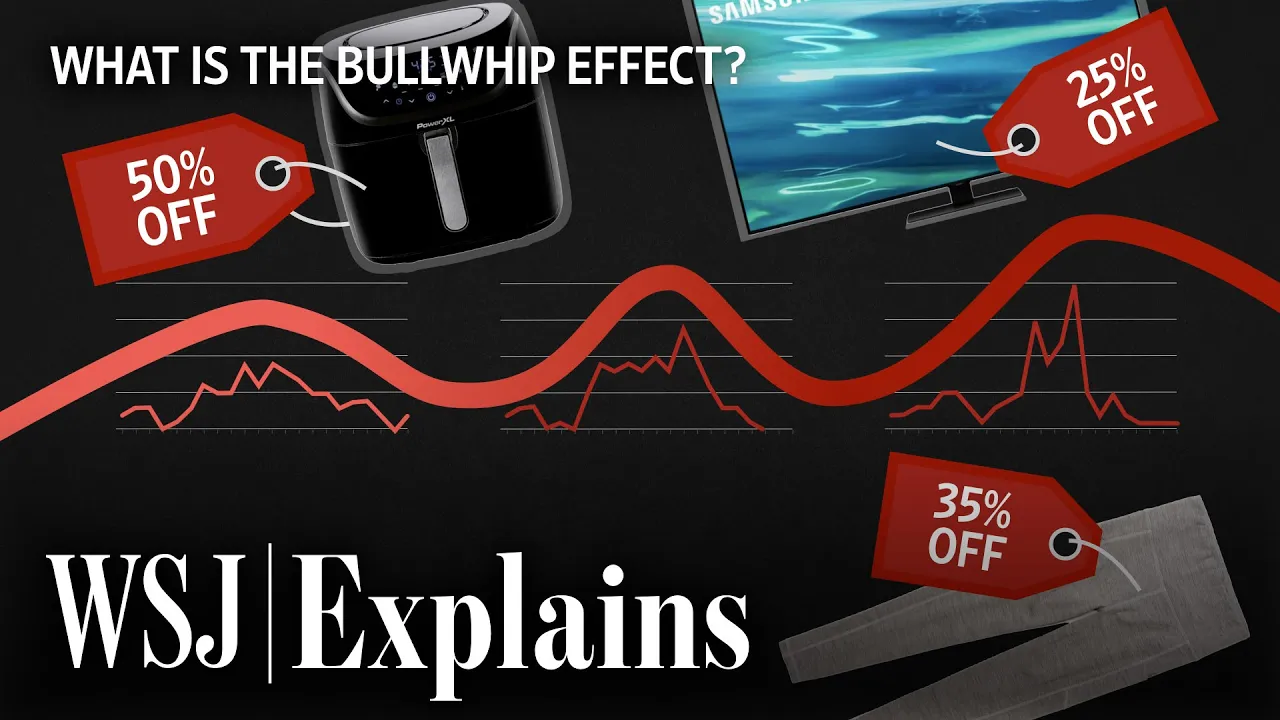
- Why this video: This Wall Street Journal production illustrates the Bullwhip Effect. It shows how minor changes in consumer purchases can turn into massive oversupply or shortages as orders travel up the supply chain.

- Why this video: This deeper academic analysis breaks down the root causes of the Bullwhip Effect, such as order batching, price variations, and rationing. It also provides actionable strategies to stabilize your supply chain.

- Why this video: Managing multiple storefronts without dedicated inventory software often leads to stockouts or double-selling. This walkthrough demonstrates how systems like Veeqo sync stock levels across Amazon, Shopify, and eBay in real-time.

- Why this video: This high-level summary outlines the three main supply chain levers needed to scale from 7 to 8 figures: reducing cost of goods sold (COGS), speeding up delivery times, and optimizing working capital.
Knowledge Checkpoint
- Define the Bullwhip Effect and explain how over-ordering at the retail level creates severe factory-level disruptions.
- List three ways to minimize the Bullwhip Effect in an e-commerce supply chain.
- Explain how a multi-channel inventory management system prevents double-selling on different platforms during sales spikes.
Course Map
This map outlines the recommended learning path and shows how the modules build on one another.
Key People Index
- Professor Hau Lee (Stanford Graduate School of Business): One of the world's leading authorities on supply chain management. He is widely recognized for his pioneering research on the "Bullwhip Effect" (often called the Lee-Forrester effect), which explains how demand variability amplifies as it moves upstream.
- Michael Burry (Founder of Scion Asset Management): Well-known macro investor who frequently highlights how post-pandemic inventory cycles and the "Bullwhip Effect" influence consumer inflation, supply chain overcorrections, and wholesale liquidation trends.
Final Self-Assessment
Complete this comprehensive self-assessment to verify your mastery of e-commerce inventory optimization.
- I can clearly explain the differences between inbound logistics, outbound logistics, and last-mile operations.
- I can calculate safety stock using the standard deviation of lead time and demand, along with a specified service level Z-score.
- I can calculate a brand's Reorder Point (ROP) for any product based on average daily sales, supplier lead times, and safety stock.
- I can calculate the Economic Order Quantity (EOQ) to find the ideal balance between ordering and carrying costs.
- I can run a sales and revenue forecast in Microsoft Excel using historical data and its built-in Forecast Sheet tools.
- I can calculate Stock Turn and GMROI to evaluate how efficiently a business is using its working capital.
- I can differentiate between discrete, batch, and wave picking, and identify which strategy fits a given warehouse layout.
- I can outline the steps needed to integrate a Shopify storefront with Amazon Multi-Channel Fulfillment (MCF) for automated shipping.
- I can define the "Bullwhip Effect," identify its main causes, and implement three strategies to minimize its impact.
- I can explain how real-time inventory management software syncs stock levels across multiple sales channels to prevent overselling.