Bioorthogonal Chemistry: Probes & Conjugation
Learning Goal:
Students will master the foundational chemical principles, bioconjugation strategies, bioorthogonal reaction mechanisms, and chemoproteomic workflows required to design and apply molecular probes for biological visualization, target identification, and translational drug discovery.
Prerequisites
- Organic Chemistry: Familiarity with nucleophilic substitution, addition-elimination mechanisms, pericyclic reactions, and basic nomenclature of oxygen/nitrogen heteroatoms.
- Biochemistry: Basic understanding of protein structure (amino acids, residues), nucleic acids, and carbohydrate/glycan composition.
Course Parameters
- Estimated Study Time: 24 Hours
- Pedagogical Pathway: Foundations (M1) Classical Bioconjugation (M2) In Vivo Chemistry (M3) Probe Design & Chemoproteomics (M4) Translational Therapeutics (M5).
Module 1: Organic Chemistry & Biochemistry Foundations
This module establishes the chemical baseline required for chemical biology. You will review organic functional groups, basic reactivity profiles (electrophiles vs. nucleophiles), and the molecular structures of the primary biological macromolecules (proteins, nucleic acids, lipids) that serve as targets for conjugation.
Recommended Videos

Why this video: This video introduces organic nomenclature and chemical properties of heteroatom-containing functional groups (ethers, alcohols, aldehydes, ketones, amines). Understanding these groups is essential for identifying reactive nucleophiles on natural biomolecules and planning synthetic alterations.

Why this video: A clear, concise bridge connecting pure organic chemistry to biological macromolecules. It primes you on the four structural pillars of biochemistry (carbohydrates, lipids, proteins, and nucleic acids) and their role as biological machinery.

Why this video: An in-depth, academic-grade lecture exploring amino acid properties, zwitterion behavior, peptide bond synthesis, and nucleic acid structures. This provides the thorough molecular detail required to understand why certain protein residues are selected as conjugation handles.
Knowledge Checkpoint
- Identify the nucleophilic atoms in standard amino acid side chains (e.g., Lysine, Cysteine, Tyrosine).
- Explain how a peptide bond is formed via nucleophilic acyl substitution.
- Predict the ionization state of carboxyl and amine groups at physiological pH (7.4).
- Distinguish between the structural backbones of DNA/RNA versus proteins under physiological conditions.
Module 2: Bioconjugation Fundamentals & Click Chemistry
This module covers covalent coupling strategies used to link molecules to biological targets. You will learn the classic chemical reactions targeting native protein residues (such as amine-directed NHS-esters and thiol-directed maleimides) and trace the historical development of K. Barry Sharpless's click chemistry paradigm.
Recommended Videos

Why this video: An introductory webinar defining fundamental terminology, reactive functional groups (amines, sulfhydryls, aldehydes), and structural considerations for designing robust covalent linkages.
Why this video: This lecture covers homobifunctional and heterobifunctional cross-linkers (such as DSS). It provides chemical context on how NHS esters target amines and outlines photo-reactive cross-linking methods.

Why this video: An engaging overview of the Click Chemistry concept that earned the 2022 Nobel Prize. It introduces the thermodynamic and kinetic requirements of click reactions, explaining how simple building blocks link together cleanly in water.
Minor Coverage Gap: Step-by-Step Mechanisms
Pedagogical Note: To supplement the physical organic mechanisms of classic bioconjugations:
- NHS-Ester Reaction: Research the step-by-step nucleophilic acyl substitution mechanism. Note how the primary amine on a lysine attacks the carbonyl carbon of the NHS ester, resulting in an amide bond and the release of -hydroxysuccinimide as a leaving group.
- Maleimide Reaction: Research the Michael addition (conjugate addition) mechanism where a thiol nucleophile (from a cysteine residue) attacks the -carbon of the maleimide's -unsaturated carbonyl system under neutral pH conditions.
Knowledge Checkpoint
- Draw the general chemical structures of an NHS-ester and a maleimide, identifying their electrophilic centers.
- Explain why maleimide reactions are highly selective for sulfhydryls over primary amines at pH 6.5–7.5.
- List the structural and thermodynamic rules that define a "Click" reaction according to Sharpless.
- Contrast homobifunctional and heterobifunctional cross-linking agents and outline their distinct uses.
Module 3: Bioorthogonal Reactions in Living Systems
This module covers reactions that can occur selectively within living systems without interfering with native biochemical processes. You will study Carolyn Bertozzi's development of copper-free click chemistry (SPAAC) and the kinetics of the tetrazine-trans-cyclooctene (TCO) ligation.
Recommended Videos

Why this video: The definitive, primary academic lecture on bioorthogonal chemistry. Dr. Bertozzi walks through the transition from copper-catalyzed reactions to copper-free SPAAC, demonstrating how these chemical tools map complex glycans in vivo.

Why this video: Focuses on the development of Strain-Promoted Azide-Alkyne Cycloaddition (SPAAC). This video explains how bending the alkyne bond angle inside a cyclooctyne ring lowers the activation energy, enabling rapid reactions with azides without toxic copper catalysts.

Why this video: A focused, clinical-biotech lecture showing how the exceptionally fast tetrazine-TCO ligation is used for pre-targeted in vivo imaging, reducing radiation exposure to healthy tissues.
Minor Coverage Gap: Advanced Reaction Mechanisms
Pedagogical Note: For deep-dive chemical mechanics:
- SPAAC Mechanism: Research the orbital interactions of the dipolar cycloaddition. Understand how the bond angle strain in cyclooctynes drives the reaction forward without catalytic assistance.
- Tetrazine Ligation: Research the Inverse-Electron Demand Diels-Alder (IEDDA) reaction mechanism. Note how the electron-deficient tetrazine diene reacts with the strained trans-cyclooctene (TCO) dienophile, followed by a retro-Diels-Alder reaction that expels nitrogen gas ().
Knowledge Checkpoint
- Explain why the classic copper-catalyzed azide-alkyne cycloaddition (CuAAC) cannot be used in living cells.
- Describe how metabolic glycan labeling incorporates azide-bearing sugars into cellular glycoproteins.
- Compare the reaction kinetics (second-order rate constants, ) of SPAAC versus Tetrazine-TCO ligate reactions.
- Sketch the reaction components and final pyridazine product of an Inverse-Electron Demand Diels-Alder (IEDDA) reaction between tetrazine and TCO.
Module 4: Design of Molecular Probes & Chemoproteomics
This module explores the design and synthesis of functional molecular probes. You will study the physics of fluorophore design (HOMO-LUMO gaps) and master Activity-Based Protein Profiling (ABPP)—a chemoproteomic technique used to map active enzymes across the proteome.
Recommended Videos

Why this video: Dr. Mitchison explains the physical organic chemistry of fluorophores, discussing conjugate systems, HOMO-LUMO transitions, photo-stability, and synthetic strategies for targeting probes to cellular structures.
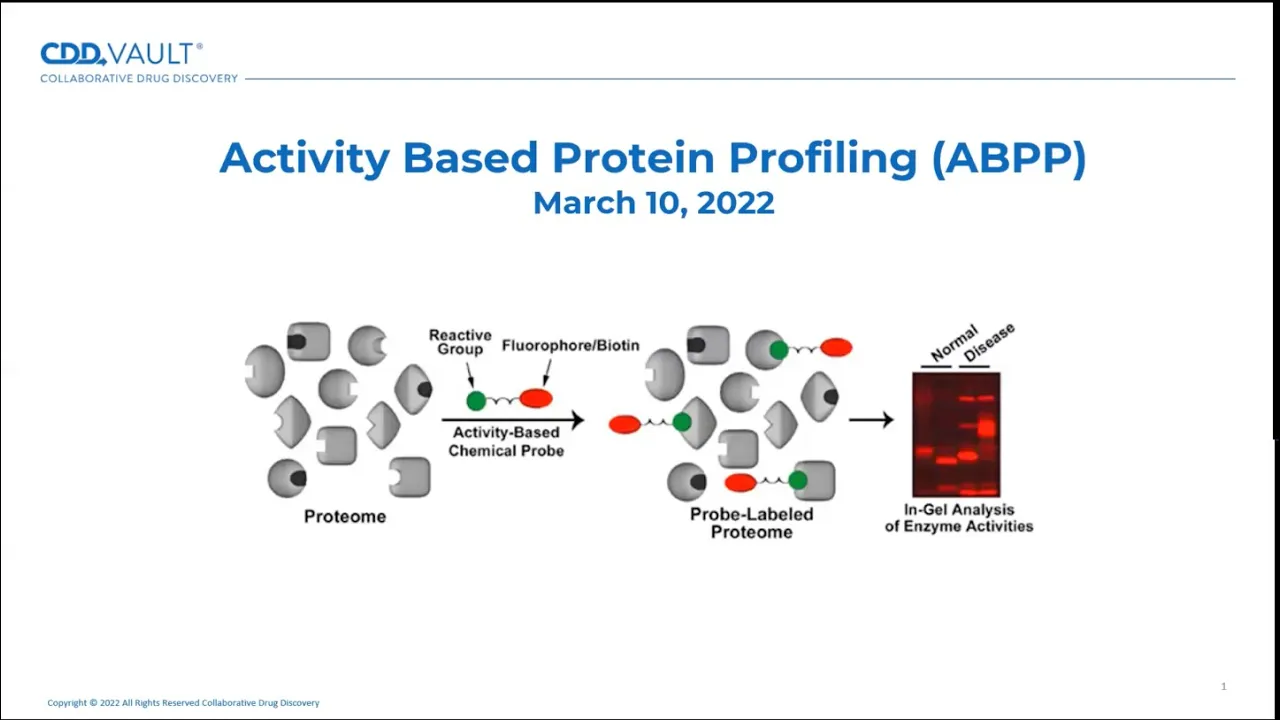
Why this video: An in-depth, academic lecture on Activity-Based Protein Profiling (ABPP). It outlines how to design reactive, activity-directed chemical probes, optimize linkers, and use quantitative mass spectrometry to discover novel drug targets.
Minor Coverage Gap: Synthesizing Electrophilic Warheads
Pedagogical Note: ABPP probes depend on specific electrophilic "warheads" that react with active-site residues.
- Research chemical biology reviews on electrophile design, such as fluorophosphonates (targeting serine hydrolases) or -unsaturated amides/acrylamides (targeting active-site cysteines).
- Analyze how varying linker lengths affects probe-to-target selectivity in complex proteomic mixtures.
Knowledge Checkpoint
- Explain how expanding the conjugation of an organic dye molecule affects its HOMO-LUMO gap and shifts its emission wavelength.
- Draw the three key components of an activity-based probe: (1) reactive warhead, (2) spacer/linker, and (3) analytical tag.
- Explain why activity-based probes label only the active forms of enzymes, whereas standard antibody-based assays label both active and inactive forms.
- Describe the complete analytical workflow of a competitive ABPP experiment designed to determine target engagement of a small-molecule inhibitor.
Module 5: Translational Applications in Medicine & Diagnostics
This final module examines how bioorthogonal chemistry, chemoproteomics, and molecular probe design translate into clinical applications. You will study in vivo drug delivery, bioorthogonal diagnostic imaging, and the design of Proteolysis-Targeting Chimeras (PROTACs).
Recommended Videos

Why this video: A comprehensive academic lecture on translating bioorthogonal chemistry from the lab to human therapeutics, highlighting clinical trials for targeted antibody-enzyme conjugates.

Why this video: A detailed, chemistry-focused exploration of targeted protein degradation. This lecture explains how to design bifunctional PROTAC molecules, optimize their linker lengths, and select appropriate E3 ubiquitin ligase ligands.
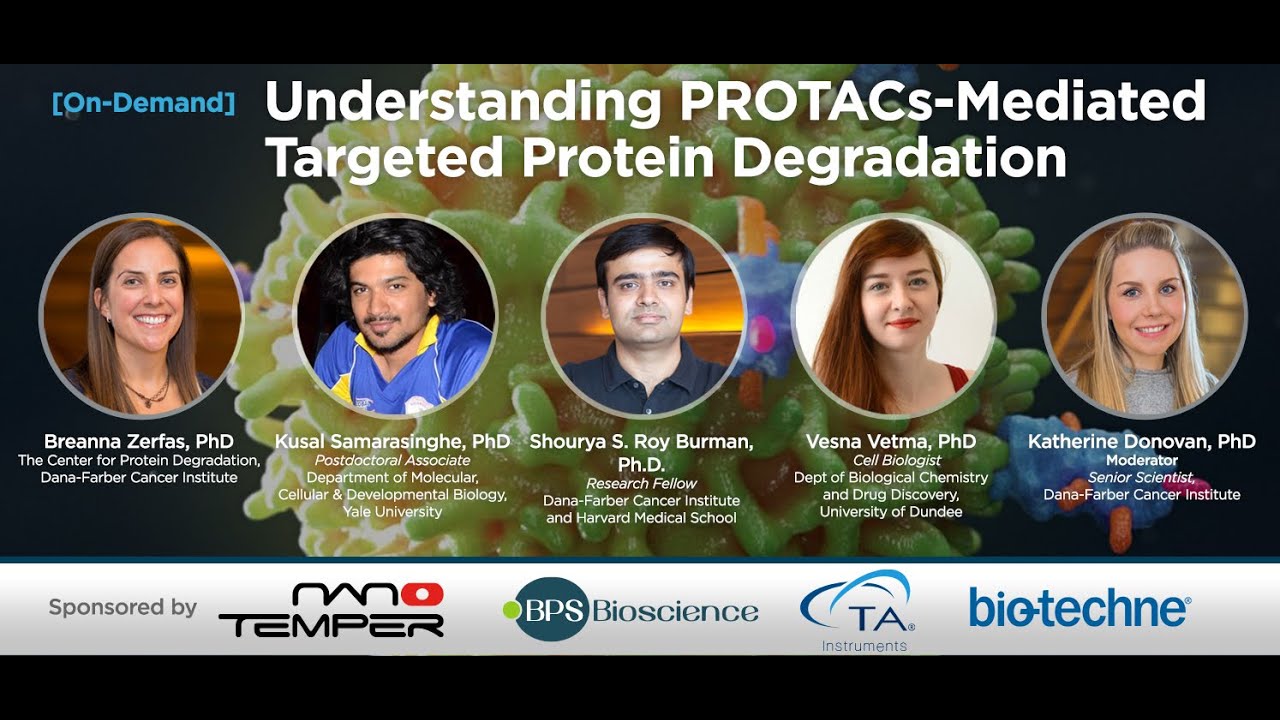
Why this video: An advanced, technical webinar exploring the biochemical and biophysical mechanisms of targeted protein degradation, focusing on the ternary complex formed between the target protein, the PROTAC, and the E3 ligase.
Knowledge Checkpoint
- Explain how a bioorthogonal reaction can be used to release an active drug selectively at a tumor site (often referred to as a "click-to-release" strategy).
- Describe the complete mechanism of action of a PROTAC, tracing the pathway from E3 ligase recruitment to proteasomal degradation.
- Define the "Hook Effect" (autoinhibitory hook) in PROTAC pharmacology and explain why high concentrations of a bifunctional degrader can reduce target degradation.
- List the physical-chemical properties (such as molecular weight and polar surface area) that make optimizing PROTACs for cellular uptake challenging.
Course Map
Key People Index
- Dr. Carolyn Bertozzi (Stanford/UC Berkeley): Pioneer of "bioorthogonal chemistry." Developed the Strain-Promoted Azide-Alkyne Cycloaddition (SPAAC) and metabolic glycan labeling. Awarded the 2022 Nobel Prize in Chemistry.
- Dr. K. Barry Sharpless (Scripps Research): Conceptualized "Click Chemistry." Discovered the copper-catalyzed azide-alkyne cycloaddition (CuAAC). Awarded the 2001 and 2022 Nobel Prizes in Chemistry.
- Dr. Morten Meldal (University of Copenhagen): Independently and concurrently co-discovered the classic copper-catalyzed azide-alkyne cycloaddition (CuAAC) reaction. Awarded the 2022 Nobel Prize in Chemistry.
- Dr. Ben Cravatt (Scripps Research): Co-inventor and pioneer of Activity-Based Protein Profiling (ABPP) and chemoproteomics, establishing methods to study functional enzyme states directly in complex proteomes.
- Dr. Dan Nomura (UC Berkeley): Chemoproteomics researcher specializing in using covalent, activity-based probes to identify and target undruggable proteins for degradation.
Final Self-Assessment
Complete this comprehensive self-assessment to verify your mastery of Chemical Biology:
- Functional Reactivity: Can you write out the organic mechanism of a primary amine reacting with an NHS ester, including the structure of the intermediate and final amide product?
- Selectivity Profiles: Can you explain how reaction conditions (specifically pH) must be adjusted to ensure selective maleimide conjugation to thiols rather than amines?
- Click Thermodynamics: Can you explain how the ring strain of cyclooctyne (SPAAC) bypasses the activation energy barrier normally overcome by a copper catalyst in CuAAC?
- In Vivo Kinetics: Can you explain why the Tetrazine-TCO ligation is preferred for fast in vivo pre-targeted PET imaging over slower click reactions?
- Metabolic Glycan Labeling: Can you outline the step-by-step pathway from feeding cells synthetic azido-sugars to selectively imaging glycoconjugates with a fluorescent probe?
- Probe Design: Can you dissect any activity-based probe and identify which elements control active-site binding, target selectivity, and analytical detection?
- Quantitative Proteomics: Can you describe the difference between a direct ABPP assay and a competitive ABPP assay used to evaluate drug candidates?
- Targeted Protein Degradation: Can you explain the structural and kinetic conditions required for a PROTAC to form a stable ternary complex with its target protein and E3 ligase?
- The Hook Effect: Can you graph and chemically explain why PROTAC efficacy decreases at extremely high concentrations?
- Clinical Translation: Can you name and detail at least one real-world, clinical-stage therapeutic application of bioorthogonal chemistry?