Cryptography: History, Ciphers & Public Key
Learning Goal: Examine the historical evolution of cryptography and secret communication—from substitution ciphers and the Enigma machine to public-key cryptography—and its influence on military intelligence, individual privacy, and digital trust.
- Prerequisites: Basic knowledge of modular arithmetic and elementary algebra. No prior computer science or cybersecurity experience is required.
- Estimated Total Study Time: 12 Hours
Module 1: Classical Cryptography: From Caesar to Vigenère
This module covers the origins of secret writing. You will explore how ancient civilizations sought to secure messages using shift-based substitutions and how polyalphabetic methods later attempted to defeat frequency-based decryption strategies.
Recommended Videos

Why this video: This concise visual introduction introduces the core mechanics of the Caesar Shift Cipher. Crucially, it highlights Al-Kindi's historic discovery of frequency analysis—the statistical method of leveraging natural language patterns to break monoalphabetic substitution ciphers.
Knowledge Checkpoint:
- Understand how a shift cipher moves plaintext characters down the alphabet using a fixed offset key.
- Explain how letter frequency tables (identifying common letters like 'E', 'T', and 'A') allow cryptanalysts to break simple monoalphabetic substitution ciphers without knowing the key.
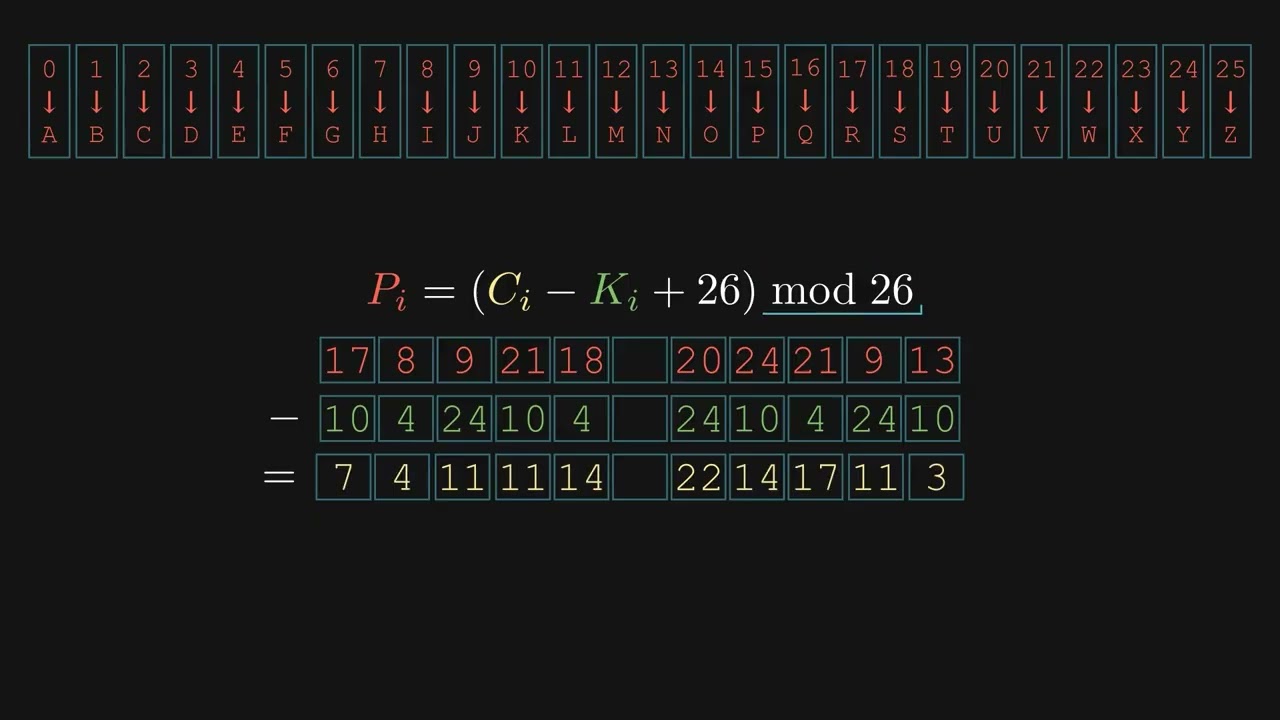
Why this video: This guide breaks down the multi-layered mechanics of the Vigenère cipher. By walking through step-by-step keyword repeating and the use of the Vigenère table (tabula recta), it illustrates how polyalphabetic encryption masks natural language frequency distributions.
Knowledge Checkpoint:
- Define how a keyword is repeated and mapped over a plaintext message to construct a polyalphabetic key.
- Contrast monoalphabetic substitution ciphers with polyalphabetic substitution ciphers.

Why this video: This detailed tutorial demonstrates how to cryptanalyze a Vigenère cipher when the key is unknown. It visually maps out how to find the key length by checking index coincidence and how to crack individual Caesar sub-ciphers using frequency analysis.
Knowledge Checkpoint:
- Explain how repeating sequences in ciphertext reveal the key length of a Vigenère cipher (Kasiski examination theory).
- Detail the exact steps required to isolate and break individual polyalphabetic segments using standard single-alphabet frequency techniques.
Gap Note on Classical Cryptanalysis: While these videos offer clear structural examples, the best way to master this is hands-on practice. We highly recommend using online interactive substitution cipher solvers to crack historical texts using frequency histograms.
Module 2: Mechanical Warfare: The Enigma Machine and Bletchley Park
In this module, you will step into the electro-mechanical era of cryptography. You will study the inner workings of the German military's Enigma machine and investigate the logical methods Alan Turing and his Bletchley Park colleagues used to crack it during World War II.
Recommended Videos
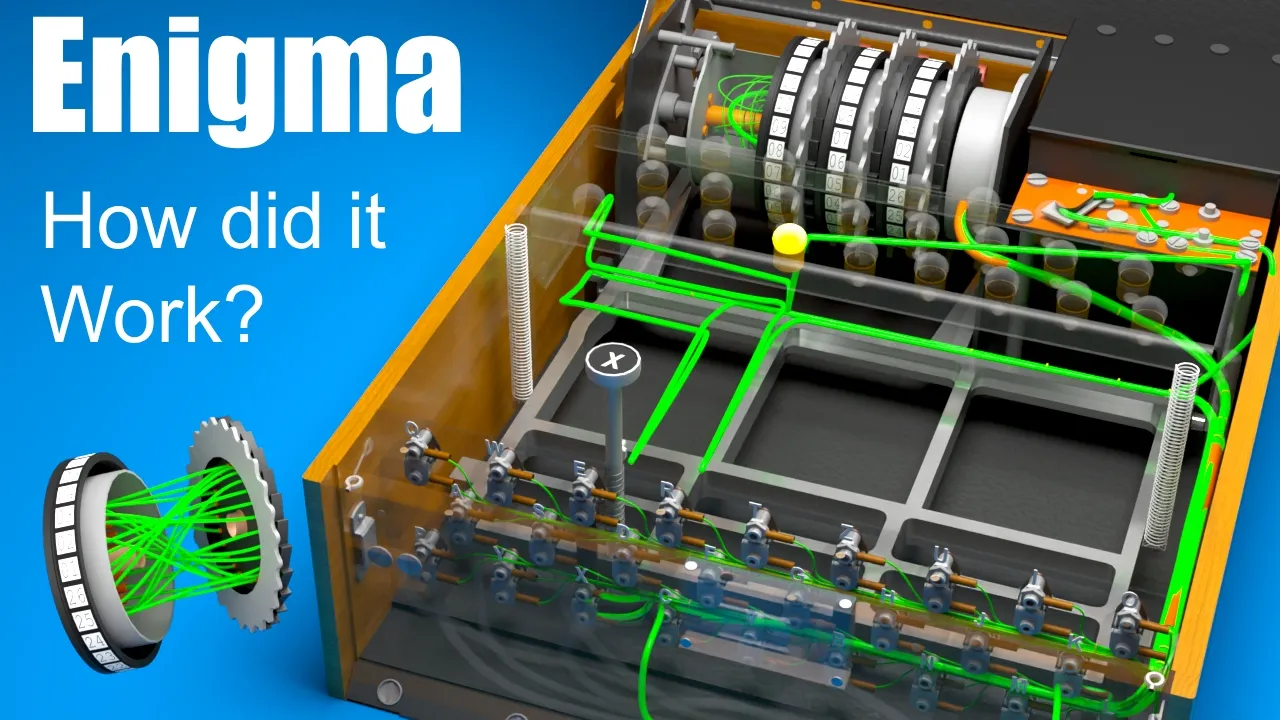
Why this video: This highly polished 3D animation reveals the physical, mechanical, and electrical subsystems inside the Enigma machine. It details the exact electrical path from keypress, through the plugboard (Steckerbrett), through the rotating rotors, to the reflector (Umkehrwalze), and back to the lampboard.
Knowledge Checkpoint:
- Trace the path of an electrical signal through the keyboard, plugboard, rotors, reflector, and lightboard.
- Explain why the reflector mechanism made decryption identical to encryption, and understand the core physical flaw it introduced: a letter could never encrypt to itself.
Why this video: This video calculates the mathematical space of Enigma configurations, totaling over 158 quintillion possibilities. It explains how rotor selection, rotor starting positions, ring settings, and plugboard connections combined to create a key space that WWII military intelligence considered unbreakable.
Knowledge Checkpoint:
- Calculate the permutations generated by selecting 3 rotors out of a pool of 5.
- Describe how the plugboard (Steckerbrett) dramatically expanded the size of Enigma's mathematical key space compared to commercial versions.
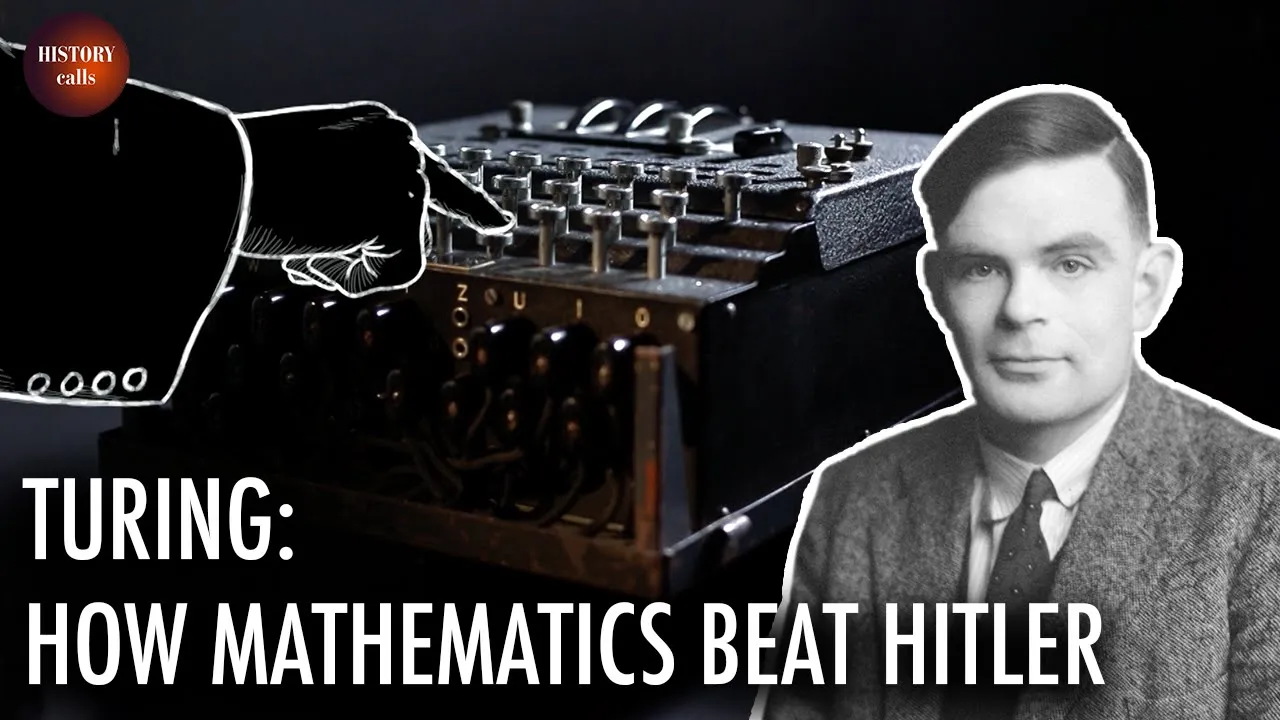
Why this video: This historical documentary places mechanical cryptography in context. It traces Alan Turing's mathematical achievements at Bletchley Park, the design of the electro-mechanical Bombe machines, and how intelligence derived from decrypted messages (Ultra) influenced the Battle of the Atlantic.
Knowledge Checkpoint:
- Identify what a "crib" is and how predictable language in German military broadcasts (such as weather reports) gave Allied codebreakers a foothold.
- Explain the mechanical logic of Turing’s Bombe machine in filtering out millions of incorrect rotor configurations based on electrical contradictions.
Module 3: Symmetric Encryption and the Key Exchange Problem
This module covers the modern era of symmetric cryptography. You will study the evolution from the Data Encryption Standard (DES) to the Advanced Encryption Standard (AES) and analyze the fundamental security vulnerability of symmetric cryptography: the Key Distribution Problem.
Recommended Videos

Why this video: This video introduces the Key Distribution Problem. It shows why secure communication fails if parties have no secure way to share their identical symmetric keys without an eavesdropper intercepting them.
Knowledge Checkpoint:
- Define symmetric cryptography and explain why sharing a single key becomes a security vulnerability at scale.
- Explain why symmetric systems scale poorly ( keys needed for users) when every pair of communicators requires a unique private key.
Why this video: This video compares the structure of DES with the design of AES, explaining why DES had to be phased out due to its insecure key size.
Knowledge Checkpoint:
- State the key size difference between standard DES (56-bit key) and AES (128, 192, or 256-bit keys).
- Explain why a 56-bit key size became vulnerable to modern brute-force computing power.

Why this video: Delivered by academic cryptographer Christof Paar, this lecture segment details the transition from DES to the Rijndael cipher (AES). It describes the public, multi-year competitive evaluation process hosted by NIST that established AES as the global standard.
Knowledge Checkpoint:
- Describe the history of the NIST AES competition launched in 1997.
- Identify the main design requirements for the winning Rijndael algorithm (efficiency, security, and hardware compatibility).
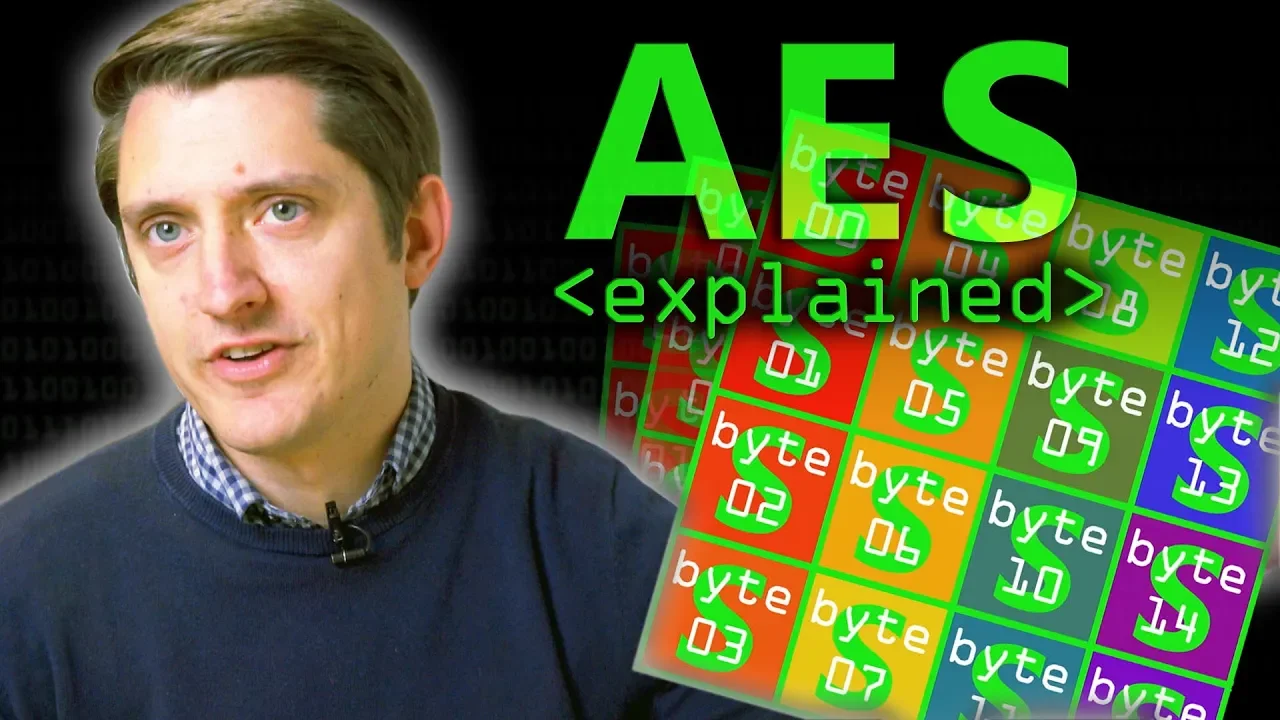
Why this video: This computer science classic demystifies the inner mathematical rounds of AES. It breaks down the matrix operations, showing how bytes are shifted, mixed, substituted, and combined with round keys to achieve secure confusion and diffusion.
Knowledge Checkpoint:
- Detail the four mathematical transformations performed in each round of AES: SubBytes, ShiftRows, MixColumns, and AddRoundKey.
- Explain the difference between AES symmetric block encryptions and classical stream/substitution methods.
Module 4: The Public-Key Revolution: RSA and Diffie-Hellman
This module explores the shift to asymmetric cryptography. You will study how mathematical one-way functions allowed untrusted parties to establish secure communications without sharing private keys in advance.
Recommended Videos

Why this video: Using an intuitive paint-mixing metaphor, this video explains how asymmetric protocols work. It shows how public values and private components can combine to produce an identical, secure shared key over public channels.
Knowledge Checkpoint:
- Explain the paint-mixing analogy of the Diffie-Hellman key exchange.
- Identify which elements must remain private and which elements are shared publicly.
Why this video: This video transitions from the paint analogy to the actual modular arithmetic powering Diffie-Hellman. It demonstrates how prime numbers (), generators (), and the mathematical difficulty of discrete logarithms keep shared keys secure.
Knowledge Checkpoint:
- State the formula used by both parties to compute their public keys: .
- Explain why the "Discrete Logarithm Problem" makes it computationally impossible for an attacker to deduce the private exponent from the public parameters.
Why this video: This video introduces asymmetric key pairs. It shows how public keys function as open locks that anyone can use to encrypt a message, while only the recipient's private key can decrypt it.
Knowledge Checkpoint:
- Distinguish between a public key (used for encryption) and a private key (used for decryption).
- Explain why knowing a public key does not allow an eavesdropper to derive the corresponding private key.

Why this video: This video covers the mathematical engine behind RSA encryption. It explains prime factorization, modular inverses, and how Euler’s Totient function () acts as the mathematical trapdoor that makes RSA secure.
Knowledge Checkpoint:
- Explain why multiplying two massive prime numbers () is computationally easy, while factoring back into and is extremely difficult.
- Define the role of Euler’s Totient function in calculating the private exponent .
Module 5: Digital Trust: HTTPS, End-to-End Encryption, and Privacy
This module covers how cryptography secures the modern internet. You will analyze how web browsers secure connections, how end-to-end encryption protocols protect personal messaging, and the ongoing socio-political battles over privacy and government surveillance.
Recommended Videos

Why this video: This video breaks down the steps of a TLS handshake. It details how asymmetric cryptography, symmetric cryptography, and digital certificates work together to establish secure, encrypted HTTPS web connections.
Knowledge Checkpoint:
- Outline the core stages of the TLS handshake (ClientHello, ServerHello, Certificate Verification, Key Exchange, Finished).
- Explain how asymmetric keys are used to agree upon a temporary symmetric session key for the rest of the connection.

Why this video: This video explains the mechanics of End-to-End Encryption (E2EE). It shows how E2EE ensures that only the sender and recipient can read messages, keeping them secure from transit routers, ISPs, and the messaging platforms themselves.
Knowledge Checkpoint:
- Define the fundamental rule of E2EE: data must be encrypted on the sender's device and decrypted only on the recipient's device.
- Identify what metadata is exposed during E2EE transit (e.g., timestamps, sender/receiver identity) even when message contents remain encrypted.

Why this video: Featuring Moxie Marlinspike (creator of the Signal Protocol), this talk explores the history of cryptography and the "Crypto Wars" of the 1990s. It traces how encryption evolved from military use to consumer applications, and details early battles over export restrictions and the Clipper Chip.
Knowledge Checkpoint:
- Understand why the U.S. government initially classified high-grade cryptography software as "munitions" subject to strict export controls.
- Explain the design of the "Clipper Chip" proposal and how its escrowed backdoor design threatened individual privacy.
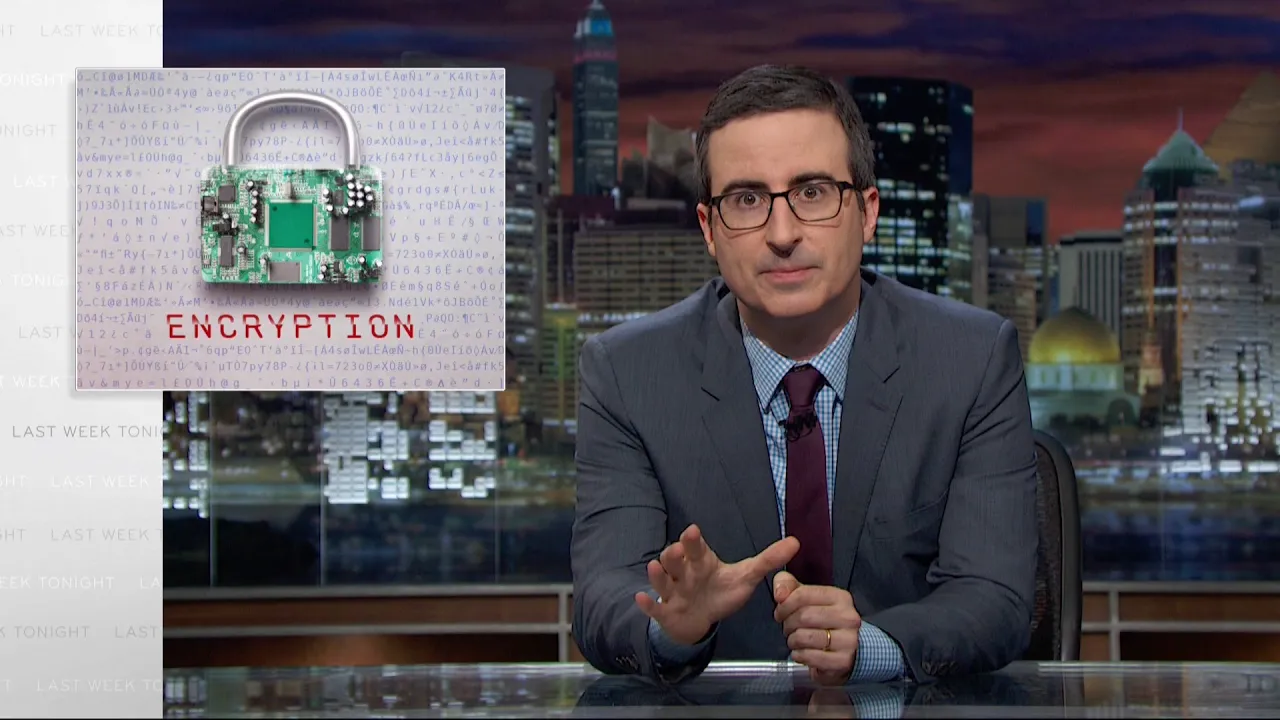
Why this video: This segment explores the modern debate between individual privacy and national security. It covers the friction between technology companies implementing end-to-end encryption and law enforcement agencies demanding "exceptional access" backdoors.
Knowledge Checkpoint:
- Articulate the trade-offs of the "encryption debate" (individual privacy and secure commerce vs. national security and law enforcement access).
- Explain why cryptographers agree that creating a "law-enforcement-only" backdoor makes a system vulnerable to hackers and foreign adversaries.
Gap Note on Modern E2EE Implementations: While these videos cover the conceptual foundations of E2EE and the history of privacy debates, they do not details the math behind advanced messaging protocols. For a deeper understanding, search for "The Double Ratchet Algorithm" to learn how modern messaging apps generate fresh keys for every single message.
Course Map
Key People Index
- Al-Kindi (801–873 AD): Arab mathematician who discovered frequency analysis, breaking monoalphabetic substitution ciphers and establishing the foundation of scientific cryptanalysis.
- Arthur Scherbius (1878–1929): The German electrical engineer who patented and designed the electro-mechanical Enigma cipher machine.
- Alan Turing (1912–1954): British mathematician and computer pioneer who cracked the naval Enigma machine at Bletchley Park and formulated the concept of universal computing.
- Whitfield Diffie & Martin Hellman: Inventors of the Diffie-Hellman key exchange in 1976, which solved the key distribution problem and launched the asymmetric cryptography revolution.
- Ron Rivest, Adi Shamir, & Leonard Adleman: Computer scientists who created the RSA cryptosystem in 1977, implementing prime factorization as a practical public-key encryption mechanism.
- Moxie Marlinspike: Software developer and founder of Signal, who co-developed the modern Signal Protocol to provide automatic end-to-end encryption for global communications.
Final Self-Assessment
Complete this comprehensive self-assessment to verify your understanding of classical, mechanical, and modern digital cryptography.
- Classical Substitution: Can you explain how a polyalphabetic Vigenère cipher flattens natural letter frequency distributions compared to a simple Caesar cipher?
- Frequency Analysis: Can you trace the mathematical steps required to determine the key length of an encrypted Vigenère ciphertext using index coincidence?
- Enigma Mechanics: Can you describe the electrical path of a keypress through the Enigma machine and explain why its reflector prevented a letter from encrypting to itself?
- Turing's Codebreaking: Do you understand how Alan Turing used linguistic patterns (cribs) and electrical contradictions to eliminate billions of rotor combinations?
- Symmetric Scalability: Can you explain the Key Distribution Problem and calculate why symmetric encryption is difficult to scale for millions of internet users?
- DES vs. AES: Do you understand the physical and mathematical reasons why the 56-bit DES standard was replaced by the Rijndael algorithm (AES)?
- AES Internals: Can you list and define the four matrix-shuffling rounds used by AES to secure data blocks?
- Diffie-Hellman Mechanics: Can you write the modular arithmetic formula that allows two untrusted parties to establish a shared secret key over an insecure connection?
- RSA Trapdoors: Can you explain why prime factorization acts as a mathematical one-way function that powers RSA asymmetric key pairs?
- TLS Handshake: Can you outline how asymmetric encryption, symmetric encryption, and digital certificates work together to secure HTTPS web connections?
- End-to-End Encryption: Can you explain the security difference between transport-layer encryption (HTTPS) and device-to-device end-to-end encryption (E2EE)?
- Socio-Political History: Can you summarize the core arguments of the 1990s "Crypto Wars" and explain why technical experts oppose backdoor access for law enforcement?