Female Bildungsroman: Gender, Genre & Evolution
Learning Goal: Examine the evolution of the female Bildungsroman from the 19th century to contemporary literature, analyzing how female authors adapt the traditional coming-of-age narrative to critique gender roles and societal constraints.
- Prerequisites: None (A basic background in literary analysis or feminist theory is helpful but not required).
- Estimated Total Study Time: 15 hours
Module 1: Introduction to the Classic Bildungsroman
This module establishes the foundational definitions, German historical roots, and structural expectations of the classic, male-centric Bildungsroman (the novel of formation or education). By investigating its origins in Goethe's era, we will identify how traditional models assumed a path of social integration and civic development that was systematically unavailable to historical women. This sets up the critical lens needed to understand why female authors had to subvert the genre.
Recommended Videos

This video traces the origins of the Bildungsroman back to its conceptualization by German philologist Carl Morgan Stern in 1819, utilizing Johann Wolfgang von Goethe's Wilhelm Meister's Apprenticeship as the genre's foundational text. It outlines the four core pillars of the traditional coming-of-age framework, providing a clear checklist against which we can evaluate gender-based modifications.
Knowledge Checkpoint:
- Understand the definition and etymology of the German term Bildungsroman (combining Bildung and Roman).
- Identify the foundational role of Goethe's Wilhelm Meister's Apprenticeship in defining the classic genre.
- List the traditional phases of development a protagonist undergoes in the classic European model.

This segment explores how the centuries-old, European-born Bildungsroman structure is adapted to marginalized contexts. It focuses on the crucial transition from profound emotional loss and the search for identity to eventual self-realization, highlighting how non-traditional protagonists must fight for the agency that classic male protagonists took for granted.
Knowledge Checkpoint:
- Explain how "profound emotional loss" acts as the catalyst for the journey of self-discovery.
- Contrast the traditional social integration of the male protagonist with the social estrangement experienced by marginalized characters.
Gap Note on Literary Theory: While these videos establish the basic definition and pillars of the traditional Bildungsroman, they do not provide a detailed, side-by-side critical analysis comparing the male model to the female model. To supplement this, students are strongly encouraged to independently search for:
- "Male vs female Bildungsroman literary theory coming of age" Notice how the male trajectory focuses on social expansion (going out into the world, career, public life), whereas the female trajectory historically depicts social contraction (confinement to the home, domestic service, marriage, and psychological internalization).
Module 2: The 19th-Century Female Struggle
This module explores how 19th-century female novelists, particularly Charlotte Brontë, adopted and radically modified the Bildungsroman to critique Victorian gender expectations, domestic servitude, and the institution of marriage. Rather than integrating peacefully into their societies, these female protagonists find that their self-preservation and moral integrity require active rebellion against social confinement.
Recommended Videos
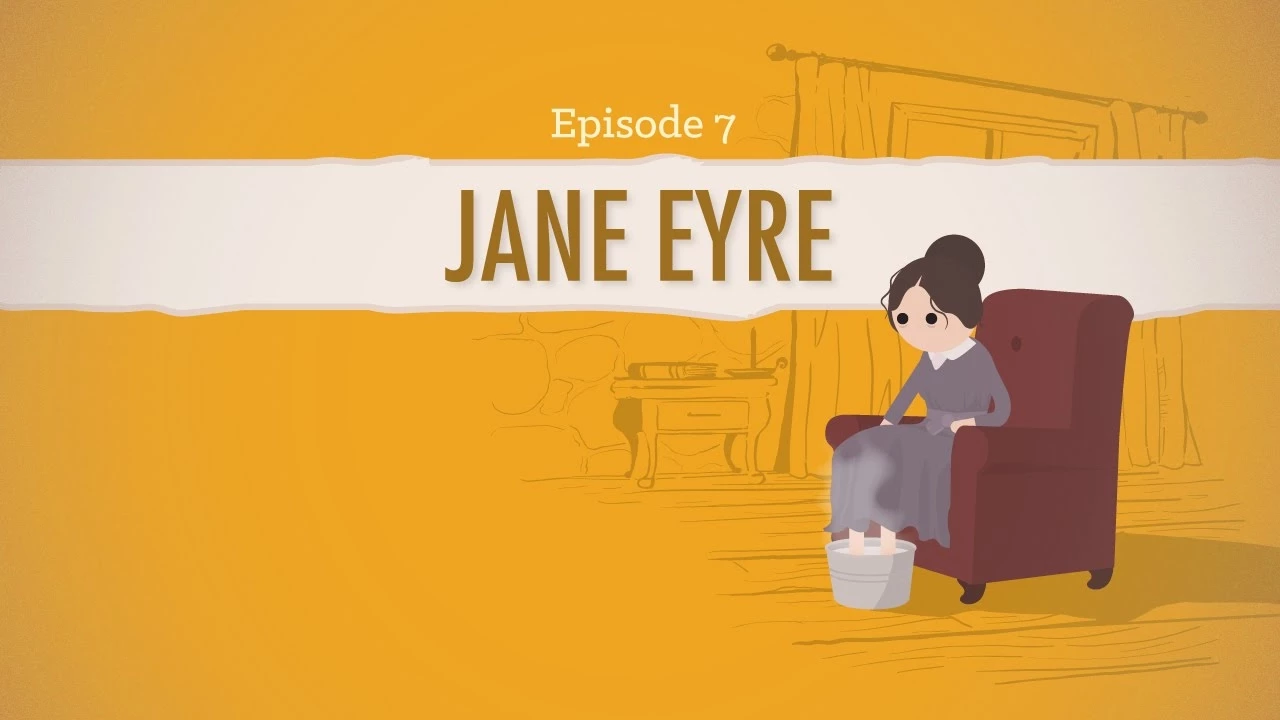
This comprehensive lecture analyzes Charlotte Brontë's Jane Eyre (1847) as a groundbreaking female Bildungsroman. The video details Jane's trajectory from an abused, dependent orphan to an economically and emotionally independent woman, demonstrating how Brontë blends the gothic tradition with a fierce critique of Victorian class and gender structures.
Knowledge Checkpoint:
- Trace Jane Eyre's growth across her major geographic locations (Gateshead, Lowood, Thornfield, Moor House, Ferndean).
- Explain how Jane achieves financial autonomy and why this is a revolutionary element in a Victorian coming-of-age novel.
- Analyze the balance between Jane's passion and moral reason throughout her developmental arc.

This academic lecture provides a deep dive into the feminist contradictions within Jane Eyre, focusing on Jane's role as a governess to Adèle Varens. Dr. Octavia Cox analyzes the tension between Jane's passionate demand for female intellectual freedom and her enforcement of conservative Victorian behavioral expectations on her young pupil, showing the complex reality of negotiating independence within systemic oppression.
Knowledge Checkpoint:
- Define the social and economic position of the "governess" in 19th-century England.
- Identify the narrative contradictions between Jane’s private rebellion and her public role as a socializing agent of Victorian norms.
- Discuss how Jane critiques the "Angel in the House" archetype while navigating her relationship with Rochester.

This video offers an essential analytical look at Jane Eyre, focusing heavily on the double/mirror motif. It explores how Bertha Mason—the "madwoman in the attic"—serves as a psychological mirror of Jane's repressed rage, passions, and fears of marital confinement, offering a key feminist reading of the novel's gothic elements.
Knowledge Checkpoint:
- Explain the "double" or mirror theory connecting Jane Eyre and Bertha Mason.
- Analyze how Bertha's confinement reflects the literal and figurative threats facing Victorian women who refuse to conform.
Module 3: Modernism and the Interior Awakening
As we move into the 20th century, the battleground of the female Bildungsroman shifts from external societal structures to the interior mind. This module examines how modernist and mid-century female writers utilized stream-of-consciousness, feminist aesthetics, and semi-autobiographical fiction to map the internal psychological awakenings and mental health crises of young women navigating suffocating social expectations.
Recommended Videos
This university lecture focuses on Virginia Woolf's seminal 1929 extended essay A Room of One's Own. It explores how Woolf establishes the material, financial, and psychological prerequisites for female artistic development, arguing that a woman's creative "coming of age" is impossible without systemic economic liberation.
Knowledge Checkpoint:
- Understand why Woolf argues that a woman needs "five hundred pounds a year and a room of her own" to write fiction.
- Discuss the historical and systematic barriers that historically prevented women from producing classic literature.
- Explain the concept of "Judith Shakespeare" as a hypothetical narrative of female genius denied.

Professor Nick Mount presents an extensive, brilliant reading of Woolf's To the Lighthouse (1927). He analyzes how Woolf subverts the traditional epic and Bildungsroman forms, shifting focus from external heroic actions to a domestic sphere. Lily Briscoe's struggle to complete her painting serves as a modernist, non-traditional coming-of-age story of a female artist finding her vision independent of patriarchal approval.
Knowledge Checkpoint:
- Describe how Woolf adapts the stream-of-consciousness narrative technique to represent internal psychological growth.
- Trace Lily Briscoe's developmental journey and how her artistic breakthrough represents a successful, non-marital female maturation.
- Contrast the gendered worldviews of Mr. and Mrs. Ramsay as presented in the novel.

This video analyzes Sylvia Plath’s The Bell Jar (1963) as a psychological, mid-20th-century female Bildungsroman. It traces Esther Greenwood's descent into clinical depression while facing the polarizing expectations of 1950s womanhood (careers versus domestic marriage and motherhood), illustrating how the "coming of age" process under patriarchy can lead to an internal psychological breakdown.
Knowledge Checkpoint:
- Explain the central metaphor of "the bell jar" and how it represents Esther's psychological confinement.
- Analyze the famous "fig tree" passage as a representation of Esther's paralyzing anxiety over choosing a socially acceptable female identity.
- Discuss how Plath critiques 1950s medicalization and treatment of female mental illness.

This reader's analysis examines the deeply personal and semi-autobiographical elements of The Bell Jar. The discussion focuses on Esther's intellectual alienation during her summer internship in New York City, shedding light on the psychological cost of trying to conform to a society that treats young women as decorative objects.
Knowledge Checkpoint:
- Describe the disillusionment Esther experiences with the corporate/publishing world in New York City.
- Connect Esther’s feelings of alienation to the historical limits of mid-century "white feminism."
Gap Note on Mid-Century Psychology: The video pool has great coverage of Plath's plot, but is light on advanced structural critiques of her work. To deepen your analysis of how mid-century isolation alters the Bildungsroman, search independently for:
- "The Bell Jar Sylvia Plath feminist literary analysis" Pay attention to how critics argue that Esther’s madness is not just a personal pathology, but a rational response to a pathologically restrictive society.
Module 4: Intersectionality and Postcolonial Perspectives
This module transitions from Western, white-centric frameworks to examine how women of color and postcolonial writers adapted the Bildungsroman. By analyzing how gender intersects with race, economic class, and the legacy of imperialism, this module unpacks how the "coming of age" process is complicated by systemic displacement and double consciousness.
Recommended Videos
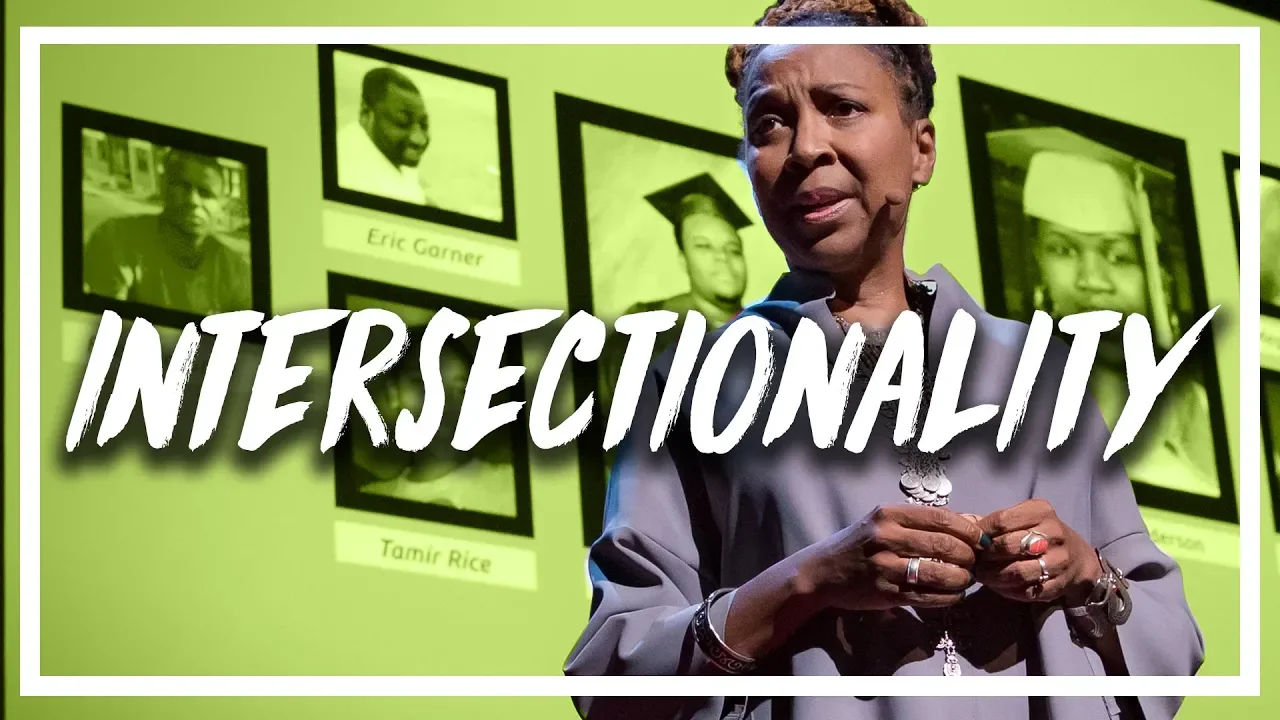
This video provides an excellent introduction to "intersectionality"—a term coined by legal scholar Kimberlé Crenshaw in 1989. It explains how different forms of systemic oppression (sexism, racism, classism, ableism) overlap and compound, laying the theoretical groundwork for analyzing postcolonial and Chicana coming-of-age novels.
Knowledge Checkpoint:
- Define intersectionality and explain how it differs from a single-axis analysis of gender.
- Describe how historical feminist movements sometimes excluded the lived realities of women of color.
An academic lecture analyzing Maria Lugones' seminal theory of "the coloniality of gender." The lecture argues that European colonialism did not merely impose Western gender roles onto colonized nations, but active introduced completely new, highly destructive gender arrangements that dehumanized indigenous and colonized women, setting up the exact double-binds explored in postcolonial literature.
Knowledge Checkpoint:
- Explain Maria Lugones' theory of the "coloniality of gender."
- Understand how Western colonial structures imposed a hierarchical gender system that placed colonized women at the bottom.
- Apply this framework to understand the psychological dislocation of colonized female protagonists.

This video provides a deep summary and analysis of Sandra Cisneros's The House on Mango Street (1984). It traces Esperanza Cordero’s journey growing up in an urban Latino neighborhood in Chicago. It details how Cisneros uses a vignette structure to showcase Esperanza's development as an artist who seeks to escape her male-dominated environment without abandoning her community.
Knowledge Checkpoint:
- Analyze the significance of "houses" and domestic spaces as symbols of both confinement and self-determination in the novel.
- Explain how Esperanza uses writing as a medium to construct an identity that defies traditional gender expectations in her community.
- Describe the meaning of the quote: "a home in the heart."
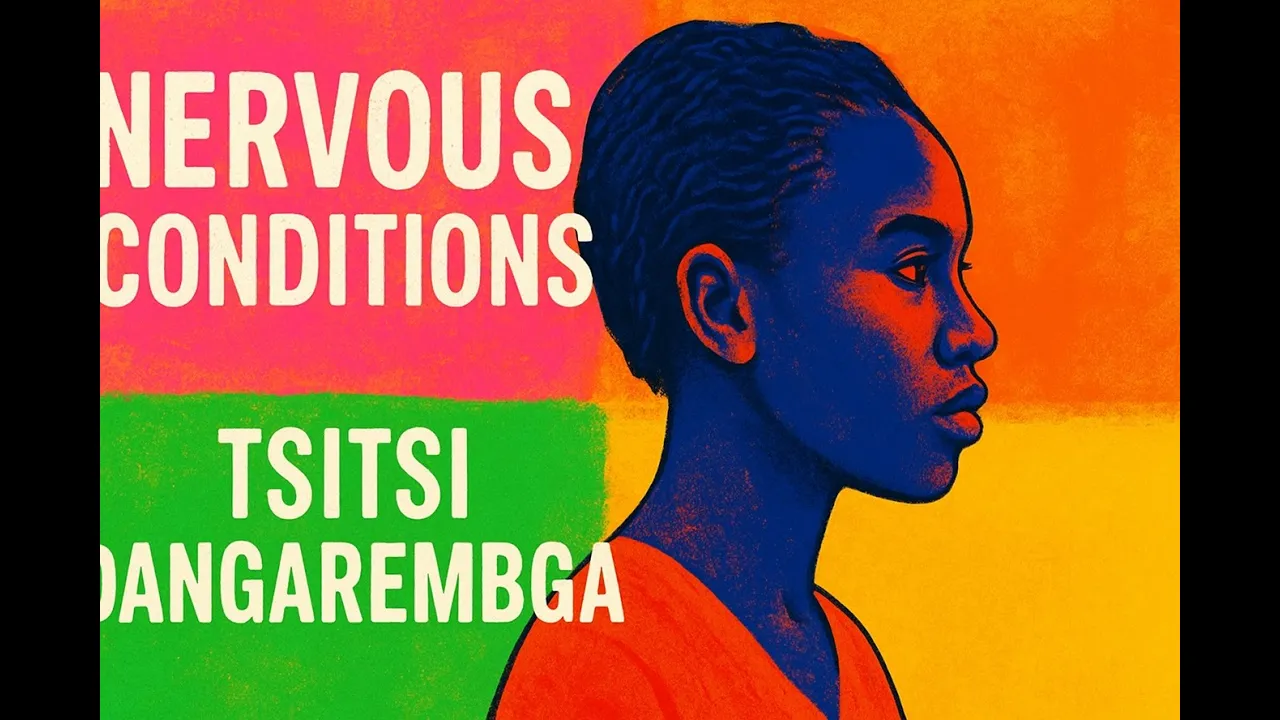
An analytical review of Tsitsi Dangarembga’s landmark postcolonial novel Nervous Conditions (1988). Set in 1960s Rhodesia (now Zimbabwe), this video explores how British colonialism and traditional Shona patriarchy intersect to create psychological dislocation for the female characters, following the young protagonist Tambudzai (Tambu) as she pursues western education at a mission school.
Knowledge Checkpoint:
- Explain how the opening line ("I was not sorry when my brother died") establishes the subversion of patriarchal inheritance and expectations.
- Analyze the contrast between Tambu's determination to achieve social mobility through education and her cousin Nyasha's acute eating disorder and psychological breakdown.
- Define the "nervous condition" (drawing from Frantz Fanon's theory of colonial neurosis) as it relates specifically to colonized women.
Module 5: Contemporary Transformations and Queer Narratives
This module examines how late 20th and 21st-century authors have deconstructed traditional coming-of-age milestones. By centering queer identities, lifelong female friendships, and modern existential alienation, these contemporary writers discard the classic teleological "resolution" (marriage or stable integration) in favor of fluid, ongoing self-reinvention.
Recommended Videos

This video offers an in-depth review and critical analysis of Elena Ferrante’s Neapolitan Novels (a four-volume masterwork following Elena and Lila from childhood in post-war Naples through old age). The review explains how Ferrante constructs a "dual Bildungsroman" that moves away from individualistic growth to explore how two women's minds and identities are inextricably linked, dynamic, and shaped by systemic violence and socio-political shifts.
Knowledge Checkpoint:
- Discuss how Ferrante subverts the single-protagonist Bildungsroman by using a dual-growth structure (Elena and Lila).
- Explain how the post-war, working-class Naples setting limits, shapes, and violently polices the girls' physical and intellectual development.
- Define the concept of smarginatura ("dissolving boundaries") as a key metaphor for female existential instability in Ferrante's work.
![Jeanette Winterson - Oranges Are Not the Only Fruit [REVIEW/DISCUSSION]](https://i.ytimg.com/vi/gt6ePWQc5hg/maxresdefault.jpg)
An analysis of Jeanette Winterson’s semi-autobiographical modern classic Oranges Are Not the Only Fruit (1985). This video examines how the novel operates as a foundational queer female Bildungsroman, following a young girl adopted into an evangelical Pentecostal household who must navigate her developing lesbian identity, religious expectations, and eventual exile from her church and family.
Knowledge Checkpoint:
- Analyze the novel's creative structure, which uses Biblical book names (Genesis, Exodus, etc.) to frame a queer coming-of-age story.
- Discuss the subversion of "oranges" as the only fruit—evaluating how this serves as a metaphor for binary, dogmatic worldviews that refuse to accept complexity.
Author Jeanette Winterson reflects on her debut novel, detailing how her own life experiences as an adopted child in an evangelical home shaped the narrative. She shares insights on how literature and storytelling became her tools of survival and self-creation when her biological and social realities tried to suppress her identity.
Knowledge Checkpoint:
- Understand the autobiographical elements that informed Winterson's depiction of evangelical religious isolation.
- Explain why the author views storytelling and mythology as crucial resources for a queer person constructing an identity outside of heteronormative systems.
Gap Note on Queer Theory: While Winterson's Oranges is a masterpiece, the video pool contains limited systematic overviews of 21st-century queer female coming-of-age literature. To enrich your study of contemporary queer transformations, search independently for:
- "Queer female Bildungsroman literature analysis" Think about how contemporary queer narratives often reject traditional milestones (such as marriage, steady employment, domestic stability) in favor of what theorists call "queer time"—the idea of navigating adulthood through alternative timelines of discovery, chosen family, and continuous evolution.
Course Map
This flowchart outlines the recommended chronological progression through the curriculum. Each module serves as a critical conceptual foundation for the next.
Key People Index
| Person | Context & Contributions | Associated Works / Concepts |
|---|---|---|
| Johann Wolfgang von Goethe | German writer who popularized the classic Bildungsroman form in the late 18th century. | Wilhelm Meister's Apprenticeship |
| Charlotte Brontë | Victorian novelist who adapted the gothic genre and the Bildungsroman to center on female autonomy, labor, and desire. | Jane Eyre |
| Virginia Woolf | Groundbreaking modernist novelist and essayist who pioneered stream-of-consciousness and feminist literary aesthetics. | A Room of One's Own, To the Lighthouse |
| Sylvia Plath | Mid-century poet and novelist whose semi-autobiographical work laid bare the psychological toll of gender expectations. | The Bell Jar |
| Kimberlé Crenshaw | Legal scholar and critical race theorist who introduced the structural framework of intersectionality. | Intersectionality Theory (1989) |
| Maria Lugones | Feminist philosopher and postcolonial theorist who examined how colonialism and gender hierarchies interact. | The Coloniality of Gender |
| Sandra Cisneros | Chicana poet and novelist known for redefining the coming-of-age story through fragmented vignettes. | The House on Mango Street |
| Tsitsi Dangarembga | Zimbabwean author and filmmaker who critiques the overlapping systems of British colonialism and native Shona patriarchy. | Nervous Conditions |
| Elena Ferrante | Contemporary Italian novelist whose work centers on long-term female friendships and developmental instability. | The Neapolitan Novels |
| Jeanette Winterson | English novelist who pioneered modern queer British literature by subverting biblical structures to chart lesbian self-discovery. | Oranges Are Not the Only Fruit |
Final Self-Assessment
Use this comprehensive checklist to measure your mastery of the curriculum's core concepts.
- Can you define the traditional Bildungsroman genre and explain its four major conceptual pillars?
- How does Jane Eyre's position as a working governess subvert the idealized Victorian Victorian "Angel in the House" archetype?
- In what ways does Bertha Mason serve as a psychological mirror or "double" for Jane Eyre?
- What material and economic resources does Virginia Woolf argue are essential for a woman to realize her creative and personal potential?
- How does Lily Briscoe's completed painting in To the Lighthouse serve as a non-traditional modernist coming-of-age resolution?
- Can you analyze Sylvia Plath's "fig tree" metaphor as an expression of existential dread under 1950s gender expectations?
- Explain how Kimberlé Crenshaw's "intersectionality" changes our reading of working-class women and women of color in literature.
- How does Maria Lugones' "coloniality of gender" help explain the specific psychological challenges faced by Tambu and Nyasha in Nervous Conditions?
- In what ways does Sandra Cisneros's choice of a fragmented, poetic vignette structure in The House on Mango Street challenge the traditional linear timeline of the classic Bildungsroman?
- How do Elena Ferrante's Neapolitan Novels subvert the traditional focus on a single, isolated protagonist's development?
- Explain how Jeanette Winterson uses Biblical structures in Oranges Are Not the Only Fruit to construct a queer female coming-of-age narrative.