Framing Films: Aspect Ratios & Psychology
Learning Goal: Evaluate the dramatic use of shifting aspect ratios and variable screen framing in modern independent films to analyze how changing physical boundaries represent psychological confinement or liberation.
- Prerequisites: Basic familiarity with film vocabulary (shot types, cinematography basics). No prior technical knowledge of aspect ratios is required.
- Estimated Total Study Time: 12 hours (incorporating video viewing, active analysis, and suggested readings).
Module 1: Foundations of Aspect Ratios and Screen Framing
In this foundational module, you will dive into the technical evolution and standard definitions of cinematic aspect ratios. You will learn to recognize the visual and narrative differences between historical standards like 4:3 (1.33:1), standard modern formats like 16:9 (1.78:1), and widescreen theatrical formats like 2.35:1. This technical baseline is crucial before analyzing how filmmakers subvert these frames for psychological storytelling.
Recommended Videos
1. Choosing The Right Aspect Ratio For Your Film
Why this video: This video provides an elegant, concise primer on how aspect ratios evolved through technological innovations and commercial changes—from early 35mm silent film standards (4:3) to the introduction of sound and widescreen spectacles. It serves as an perfect entry point to ground your understanding of why specific frame sizes exist in the first place.
Knowledge Checkpoint:
- Detail how the introduction of sound strips onto 35mm film strips physically modified the earliest standard aspect ratios.
- Distinguish the visual properties and historic purposes of 4:3 (1.33:1) vs. modern widescreen standards.
- Identify how aspect ratio decisions serve as one of the first and most critical staging decisions a director or cinematographer must make.
2. ASPECT RATIO - A Guide for Editors & Filmmakers
Why this video: This detailed deep-dive explains how aspect ratios fundamentally shape composition, staging, and audience engagement from a technical post-production perspective. It details how the physical shape of your canvas changes the grammar of a scene, dictating where characters are placed and how much environmental information is displayed.
Knowledge Checkpoint:
- Define the term "aspect ratio" mathematically and explain how it relates to visual frame proportions.
- Explain how a wider aspect ratio (such as 2.39:1) changes the blocking of characters in a scene compared to a narrower ratio.
- Understand the editing and framing choices that must occur when translating or cropping footage between different aspect ratio standards.
3. Composition and framing for film. RULE OF THIRDS vs THE GOLDEN RATIO. Cinematic aspect ratios.
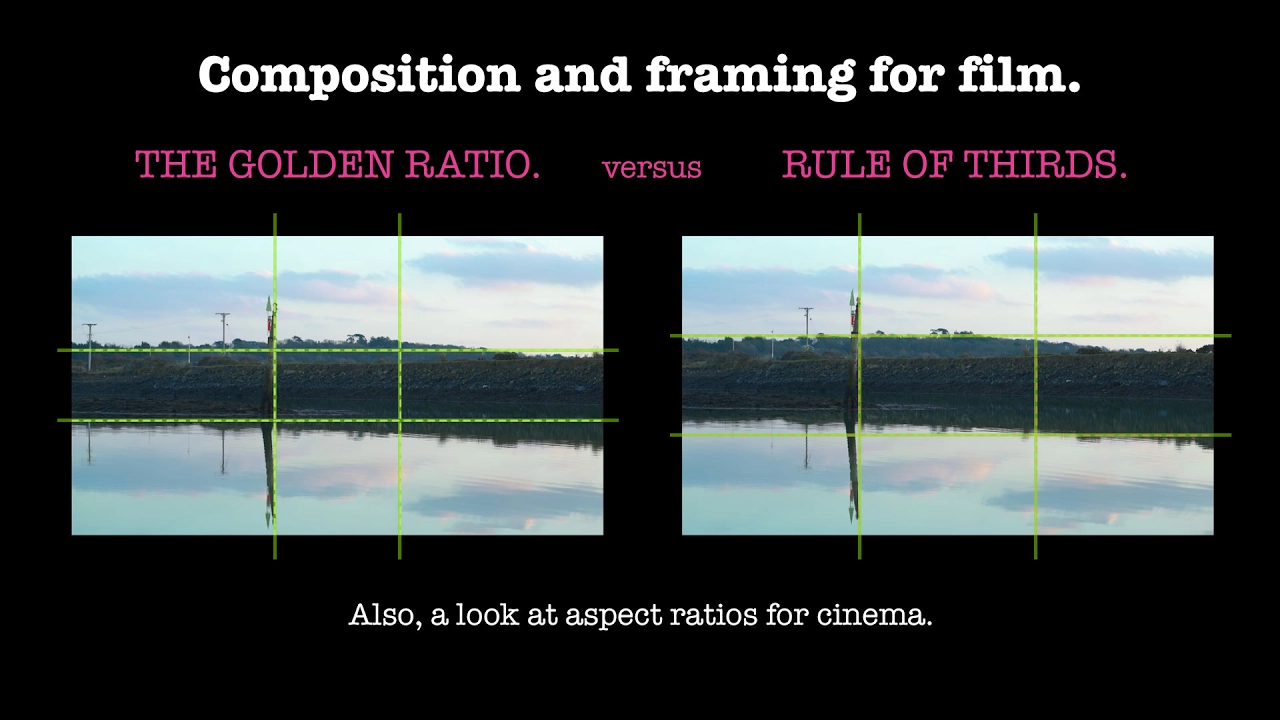
Why this video: This video bridges technical ratio dimensions with the artistic rules of frame composition. By analyzing the Rule of Thirds and the Golden Ratio specifically within the context of different aspect ratios (such as 16:9 and 2.35:1), you will understand how the physical borders of a frame alter the geometric balance of an image.
Knowledge Checkpoint:
- Contrast how the Rule of Thirds and the Golden Ratio are applied across a standard 16:9 frame versus a wide 2.35:1 frame.
- Describe how the edges of different aspect ratios create different degrees of horizontal or vertical scanning for the viewer's eye.
- Explain how grid systems help a cinematographer maintain balance when framing moving subjects.
Module 2: The Psychology of Cinematic Space
With the technical foundations established, we now explore how filmmakers utilize composition, negative space, and screen boundaries to manipulate viewer emotion. This module introduces the "psychology of the frame," demonstrating how simple changes in spatial design can conjure deep feelings of isolation, vulnerability, tension, or claustrophobia.
Curriculum Advisory Note: While general cinematic composition is widely documented, deep-dives specifically connecting spatial layout to targeted psychological emotions like acute claustrophobia, intimacy, or tension are moderately covered in standard video essays. To supplement this module, you are strongly encouraged to independently search for written academic articles on "Spatial Despair in Cinematic Framing" and observe films like Shame (2011) or Safe (1995) to see negative space used to convey alienation.
Recommended Videos
1. Composition & Framing in Cinematography: Visual Storytelling Techniques
Why this video: This video demonstrates how shot types, depth, balance, camera height, and character positioning serve as powerful tools of psychological manipulation. It explains how compositions guide audience empathy and emotional attachment to characters.
Knowledge Checkpoint:
- Define how "negative space" in a frame can be used to make a character feel emotionally empty or isolated.
- Explain how camera height and balance within the frame boundaries alter the power dynamics between characters.
- Describe how physical depth (foreground vs. background staging) alters the psychological urgency of a shot.
2. Cinematography Analysis — Zodiac
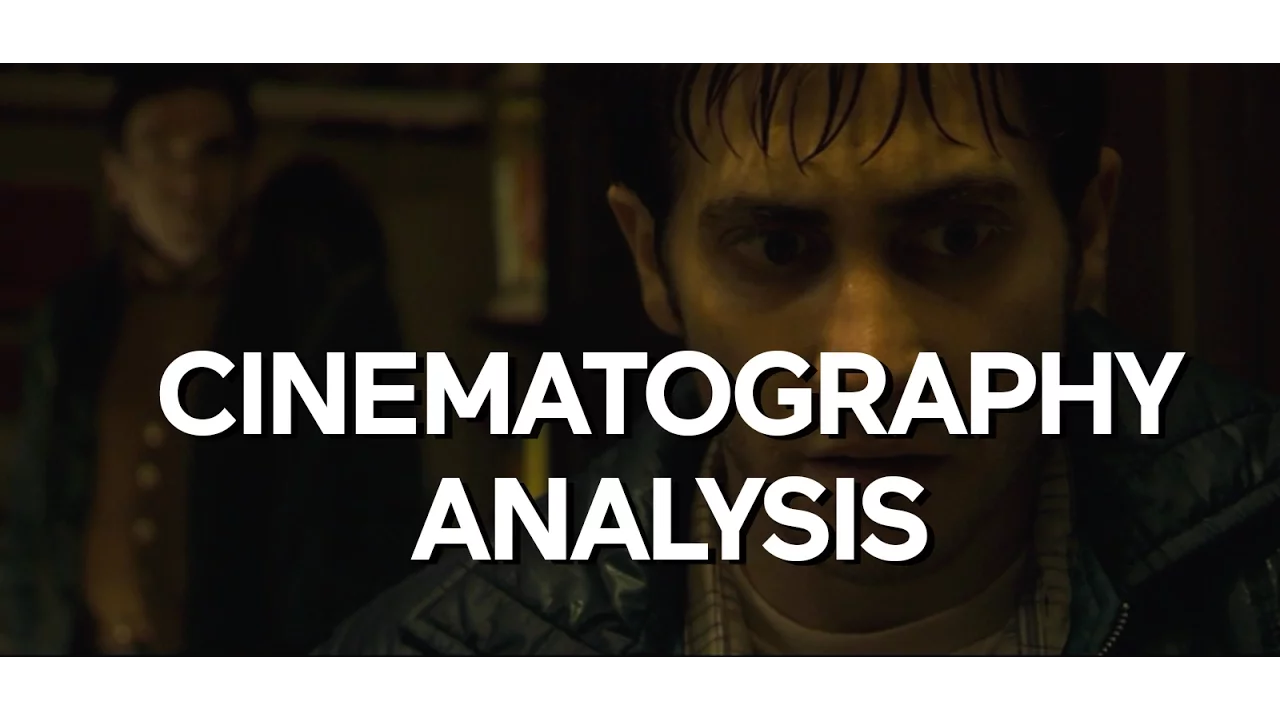
Why this video: David Fincher is a master of clinical, tense, and psychologically uncomfortable composition. This detailed analysis of Zodiac demonstrates how meticulous framing, precise camera angles, blocking, and deliberate negative space can make a viewer feel intensely unsettled and claustrophobic even in relatively open spaces.
Knowledge Checkpoint:
- Analyze how character blocking and camera angles in Zodiac are calculated to create tension and dread.
- Explain how framing a character off-center with wide negative space behind them can induce paranoia.
- Describe how "clean shots" versus "dirty shots" (having objects/people in the foreground) manipulate the audience's sense of spatial safety.
3. Film Blocking Techniques for Directors: Space, Shapes, Lines

Why this video: Although brief, this video delivers a vital look at cinematic blocking—the physical arrangement of actors and objects in a space. It illustrates how the geometry of shapes and lines within a physical frame visually portrays power, vulnerability, and underlying emotional subtexts.
Knowledge Checkpoint:
- Identify how horizontal, vertical, and diagonal lines within a frame affect a shot's underlying emotional energy.
- Explain how the spatial distance between two characters in a frame symbolizes their psychological relationship.
- Describe how framing a character inside "shapes within shapes" (such as doorways or windows) constructs a thematic feeling of entrapment.
Module 3: Shifting Aspect Ratios as a Narrative Tool
This module analyzes how and why modern filmmakers dynamically change aspect ratios during a film. Rather than sticking to a single frame size, visionary directors use shifting boundaries as an active narrative element to signal jumps in time, changes in perspective, or sudden alterations in a character's emotional reality.
Curriculum Advisory Note: Comprehensive, deep-dive video essays analyzing the exact "how-to" and chronological narrative shifts of aspect ratios are rare in public video pools. To gain a complete mastery of this tool, we recommend searching independently for scholarly articles such as "The Changing Canvas of Wes Anderson" and "Dynamic Aspect Ratio Design in Modern A24 Films".
Recommended Videos
1. Waves - Unique Cinematography

Why this video: Trey Edward Shults’ film Waves is one of the most prominent modern examples of dynamic aspect ratio shifting. This brief breakdown demonstrates how the film shifts through multiple aspect ratios to mimic the characters' psychological states, serving as chronological markers and emotional gauges throughout the narrative.
Knowledge Checkpoint:
- Explain how the changing screen boundaries in Waves track with the mental health and emotional pressure of the protagonist, Tyler.
- Detail how a transition from widescreen (2.35:1) down to a narrow ratio visually communicates a panic attack or emotional constriction.
- Analyze why a filmmaker would choose to alter the frame dynamically during a scene rather than using cutaways.
2. Half in the Bag Episode 68: Cheap Thrills and The Grand Budapest Hotel

Why this video: This classic review clip highlights Wes Anderson's highly deliberate, systematic use of three distinct aspect ratios in The Grand Budapest Hotel. You will observe how Anderson uses ratios as chronological markers to guide the viewer across different historical eras of the hotel's existence.
Knowledge Checkpoint:
- List the three primary timelines in The Grand Budapest Hotel and identify which specific aspect ratio corresponds to each era (1.37:1, 2.35:1, and 1.85:1).
- Discuss how Anderson's meticulous symmetry adapts to narrow Academy formats compared to wide anamorphic formats.
- Explain how aspect ratios act as a subconscious "framing device" that tells the audience how far removed they are from the core story.
3. Everything GREAT About Everything Everywhere All at Once!

Why this video: Daniels' Oscar-winning Everything Everywhere All at Once utilizes rapid-fire aspect ratio shifting to navigate its vast multiverse. This segment highlights how these visual shifts are used not just for aesthetic play, but to immediately cue the audience to changes in universe rules, characters' emotional states, and existential perspectives.
Knowledge Checkpoint:
- Describe how shifting aspect ratios can be used to signal transitions between different levels of reality or states of consciousness.
- Contrast how wide, anamorphic ratios in the film contrast with taller, domestic 16:9 formats to express a character's sense of scale.
- Analyze how dynamic framing transitions can bypass the need for explanatory text or dialogue when establishing a change in narrative setting.
Module 4: Decoding Confinement and Liberation through Frame Boundaries
In this final, advanced module, we synthesize technical knowledge and psychological concepts to evaluate how modern independent films manipulate physical frame boundaries to express the ultimate thematic dichotomy: psychological confinement (entrapment) versus emotional liberation (freedom). We will examine how a changing frame acts as an active narrative agent, constricting or expanding based on the interior state of the characters.
Curriculum Advisory Note: There is very poor coverage in public video databases analyzing the specific psychological dichotomy of "confinement vs. liberation" through dynamic frame boundaries in indie masterpieces like Xavier Dolan's Mommy or Trey Edward Shults' Waves. To supplement this gap, we recommend seeking out and reading academic papers such as "The Expanding Frame: Xavier Dolan's Mommy and the Poetics of the 1:1 Aspect Ratio" and watching these films in their entirety to experience these profound aspect ratio shifts firsthand.
Recommended Videos
1. The Cinema Condition #47: MOMMY (2014)

Why this video: Xavier Dolan's Mommy (2014) is famous for its bold use of a vertical 1:1 (square) aspect ratio. This deep, analytical conversation details how this narrow format forces the viewer to focus intensely on the characters' faces, creating a claustrophobic, suffocating environment that represents their financial and mental entrapment—until a legendary scene where the protagonist literally pushes the boundaries of the screen wide open.
Knowledge Checkpoint:
- Explain how a 1:1 aspect ratio mimics portraiture and restricts peripheral vision to induce a feeling of psychological entrapment.
- Analyze the dramatic and psychological effect of the moment when the frame physically expands in Mommy. What does this represent for the characters?
- Discuss how the verticality of a 1:1 frame changes how a filmmaker stages interactions between three characters in a room.
2. Xavier Dolan Video Essay | TIFF 2015

Why this video: This video essay highlights Xavier Dolan's formal cinematic choices, particularly comparing his use of the square 1:1 frame to contemporary portraiture, smartphone culture, and selfies. It helps contextualize how modern directors bridge historic cinematic forms with contemporary visual language to evoke feelings of personal intimacy and isolation.
Knowledge Checkpoint:
- Connect the 1:1 aspect ratio of Mommy to modern social media culture (Instagram, selfies) and explain how this connection alters audience empathy.
- Explain how Dolan uses narrow frames to isolate characters from their environment, ensuring they cannot "escape" the camera's gaze.
- Contrast the intimate, portrait-like focus of a square ratio with the observational nature of a traditional widescreen frame.
3. The Lighthouse reviewed by Mark Kermode

Why this video: Robert Eggers’ The Lighthouse (2019) utilized a vintage, vertical 1.19:1 aspect ratio (mimicking early sound films) to tell a harrowing tale of madness and isolation. This review highlights how this restrictive frame physically cuts off the environment, boxing the two leads into an unavoidable, claustrophobic psychological downward spiral.
Knowledge Checkpoint:
- Explain how a 1.19:1 aspect ratio enhances the vertical architecture of a lighthouse while compressing horizontal escape options.
- Analyze how the restrictive boundaries of The Lighthouse serve as a visual metaphor for the characters' deteriorating sanity and physical entrapment.
- Discuss how black-and-white cinematography combined with a near-square aspect ratio heights the psychological dread of a film.
Course Map
This flowchart maps out the optimal path of study. Complete the foundational modules before advancing to the complex thematic and analytical modules.
Key People Index
The following directors, cinematographers, and theorists are highlighted throughout this curriculum for their groundbreaking contributions to framing and aspect ratio design:
- Xavier Dolan: Canadian auteur who revolutionized modern independent cinema’s visual language in Mommy (2014) by utilizing a 1:1 square aspect ratio that dynamically shifts to widescreen during moments of emotional liberation.
- Wes Anderson: Renowned director known for his meticulous production design and composition. In The Grand Budapest Hotel (2014), he mapped three distinct timelines to their corresponding historical aspect ratios (1.37:1, 1.85:1, and 2.35:1).
- Trey Edward Shults: Writer/director of Waves (2019), who used a shrinking and expanding aspect ratio to track the mounting pressure and ultimate release of his main characters.
- Robert Eggers: Director of The Lighthouse (2019), who revived the historic 1.19:1 aspect ratio to craft an unforgettable atmosphere of historical realism and claustrophobic madness.
- David Fincher: A director praised for his clinical use of negative space, camera movement, and blocking to manipulate tension and human psychology (e.g., Zodiac, Se7en).
Final Self-Assessment
Complete this comprehensive self-assessment to verify your mastery of aspect ratios, framing, and psychological cinematic design.
- I can define the mathematical proportions of standard ratios: 4:3 (1.33:1), 16:9 (1.78:1), 2.35:1, 1.19:1, and 1:1.
- I can trace the historical transition of movie screens from early silent frames to the introduction of sound and 1950s widescreen spectacles.
- I can analyze how "negative space" is used within a widescreen composition to symbolize emotional isolation or psychological vulnerability.
- I can identify how filmmakers use "shapes within shapes" (such as window panes or doors) to create a visual cage around a character.
- I can articulate the precise storytelling rationale for changing aspect ratios mid-film.
- I can detail how The Grand Budapest Hotel utilizes three different aspect ratios to orient the audience across three historic timelines.
- I can explain the emotional arc represented by the shifting aspect ratios in Trey Edward Shults' Waves.
- I can explain the unique psychological effect of Xavier Dolan's 1:1 aspect ratio in Mommy and analyze the impact of the screen's expansion.
- I can analyze how Robert Eggers uses the vertical 1.19:1 frame in The Lighthouse to mirror the verticality of the tower and construct a visual trap.
- I can write a short, critical essay evaluating how physical frame boundaries in independent cinema can represent the abstract psychological concepts of confinement and liberation.