Gutenberg's Press: Reformation & Literacy
Learning Goal: Analyze the revolutionary impact of Gutenberg's printing press on 16th-century Europe, focusing on how the democratization of information fueled the Protestant Reformation and transformed literacy.
- Prerequisites: None. A basic understanding of medieval European history is helpful but not required.
- Estimated Total Study Time: 6 Hours
Module 1: The Scribal Culture and Gutenberg's Invention
This module explores the starting point of the information age. You will examine the labor-intensive scribal culture of medieval Europe, where books were rare, luxury items produced by hand. You will then study the mechanical and materials innovations of Johannes Gutenberg’s movable-type printing press, which completely disrupted this older system.
Recommended Videos

- Why this video: This video provides a detailed visual breakdown of how medieval manuscripts were produced before the printing press. It highlights the raw labor, specialized tools, and animal skins (parchment) required to write a single text, illustrating why books were strictly reserved for the wealthy elite.
- Knowledge Checkpoint:
- Understand the process of turning animal hides into parchment.
- Explain how scribes laid out pages, applied ink, and decorated manuscripts with gold leaf.
- Describe why the collaborative nature of manuscript production made books scarce and expensive.
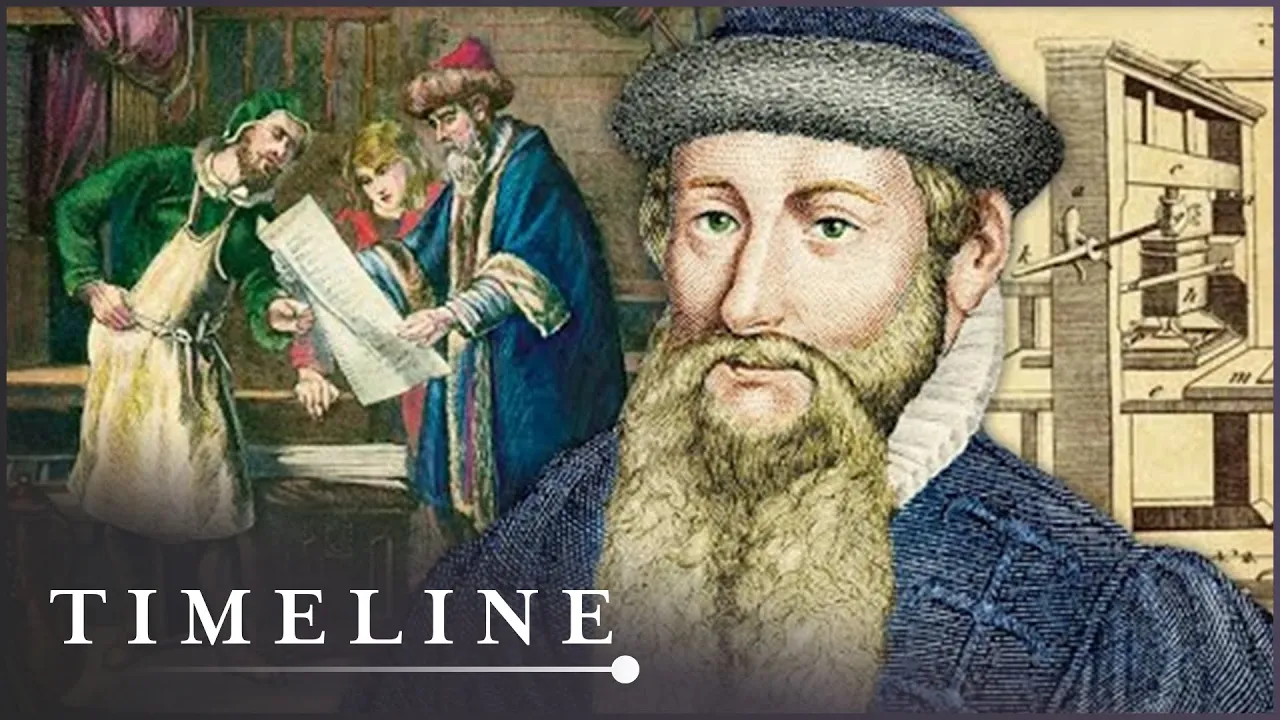
- Why this video: This comprehensive documentary, hosted by Stephen Fry, details the mechanical and engineering challenges Gutenberg had to solve. It provides an in-depth, hands-on look at the exact metal alloy, oil-based ink, and adapted wine press screw mechanics that made the press a historical reality.
- Knowledge Checkpoint:
- Detail the physical materials Gutenberg used to create long-lasting, uniform metal alloy type.
- Explain why the transition from water-based inks to oil-based inks was necessary for printing on metal.
- Describe the pressure-multiplying screw design adapted from agricultural tools (like grape/olive presses).

- Why this video: This video features a practical, step-by-step physical demonstration of a replica Gutenberg press. It clearly visualizes the speed and mechanics of setting, inking, pressing, and drying sheets of printed text.
- Knowledge Checkpoint:
- Identify the role of the ink balls (beaters) in applying oil-based ink uniformly to the type.
- Contrast "movable type" layout processes with solid-plate woodblock printing methods.
- Identify how many steps were required to load, press, and release a single page of text.
Module 2: The Print Revolution and Rising Literacy
This module analyzes the macro-economic and cultural effects of mass book production. By slashing the cost of books and scaling up output, the printing press incentivized vernacular translation (printing in regional spoken languages like German, English, and French rather than academic Latin). This linguistic standardization laid the groundwork for modern nation-states and transformed literacy rates across Europe.
Recommended Videos

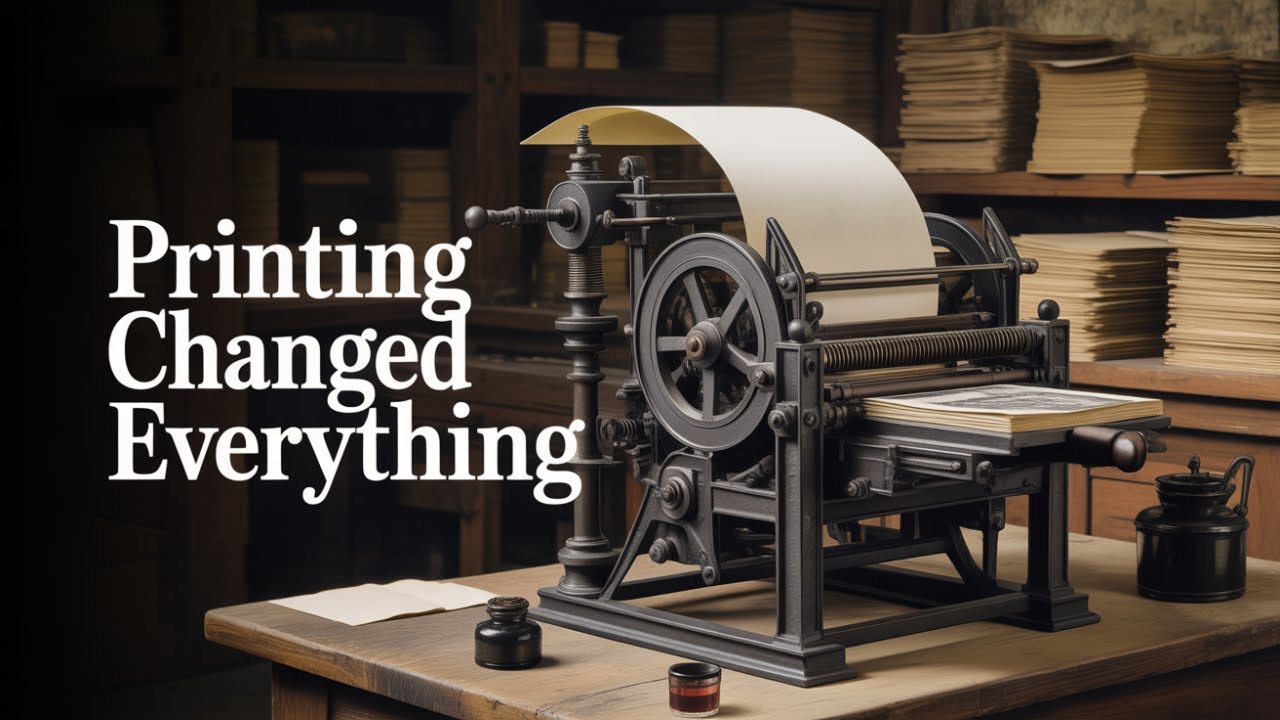
- Why this video: Although brief, this historical address provides critical comparative data on pre-Gutenberg vs. post-Gutenberg economics. It highlights that before the press, a single book cost equivalent to an average family farm, restricting European literacy to under 1%.
- Knowledge Checkpoint:
- Understand the dramatic drop in book valuation relative to typical medieval wages.
- Describe how the explosion of book volume in the first 50 years of printing outpaced centuries of handwritten output.
- Why this video: This video addresses a major historical shift: the standardization of vernacular languages. Since printing books in dozens of hyper-regional dialects was economically unviable, printers prioritized standardized versions of local tongues, which unified diverse regions under singular national languages.
- Knowledge Checkpoint:
- Explain how economic decisions by early printers led to the decline of regional dialects (e.g., standardizing French or German).
- Articulate the relationship between standardized language printing and the development of national identities.

- Why this video: This short explainer focuses on the stabilization of the English language. It highlights how printing standardized spelling, grammar, and punctuation, transforming a highly fragmented language into a globally recognizable standard.
- Knowledge Checkpoint:
- Identify the role of early print shops in standardizing spelling and grammar conventions.
- Contrast the fluid, chaotic spelling of pre-print English with the standardized spelling introduced by mechanical duplication.

- Why this video: This focused review clip highlights the direct social feedback loop of printing: vernacular books fueled the public's desire to read, which in turn accelerated literacy and created local communities of shared knowledge.
- Knowledge Checkpoint:
- Explain the link between printing in native/vernacular languages and the rise in local community reading circles.
- Describe how the accessibility of local-language texts eroded the academic monopoly of the Latin-educated elite.
Curriculum Note on Gaps: While the available video pool features excellent overviews of vernacular standardization, the physical logistics of the actual book distribution trade (e.g., how books traveled along trade routes from print hubs like Frankfurt, Venice, and Paris) is lighter. To supplement your learning, research how "book fairs" and merchant networks physically distributed printed paper sheets across Europe.
Module 3: Fueling the Protestant Reformation
This module examines the direct intersection of technology and theology. You will analyze how Martin Luther leveraged the decentralized nature of print media to launch what historians call the world’s first "viral" media campaign, bypassing the centralized authority of the Catholic Church and forever fracturing Western Christianity.
Recommended Videos

- Why this video: This high-production documentary travelogue guides you through the physical locations of the Reformation. It connects Martin Luther’s theological rebellion in Wittenberg directly to the mass-printing of his German Bible translation, illustrating how technology made his survival and influence possible.
- Knowledge Checkpoint:
- Recall the event of October 31, 1517, and explain Luther's criticism of Catholic indulgences.
- Describe how translating the Latin Bible into German shifted spiritual authority from priests to individual readers.

- Why this video: Author Tom Standage draws an analytical parallel between the Protestant Reformation and modern social media. He explains how Luther's 95 Theses went "viral" through a decentralized, peer-to-peer printing network, demonstrating that the printing press functioned as an early system of distributed information.
- Knowledge Checkpoint:
- Explain how a text written in Latin for academics was translated, printed, and distributed to the public without central oversight.
- Define "decentralized distribution" in the context of 16th-century print networks.

- Why this video: This video analyzes the societal disruption caused by rapid media shifts. It explores how Martin Luther used inflammatory, accessible, illustrated pamphlets to connect with the public, drawing parallels between the print revolution and the rise of the internet.
- Knowledge Checkpoint:
- Explain how the rapid drop in printing costs allowed for shorter, highly partisan pamphlets.
- Analyze how mass communication can lead to both intellectual liberation and deep social polarization.
Module 4: Censorship, Science, and Modern Legacy
This module explores how institutions reacted to the loss of information control. You will analyze the rise of institutional censorship, represented by the Catholic Church's Index Librorum Prohibitorum. Additionally, you will examine how the printing press paved the way for the Scientific Revolution by standardizing technical data and enabling scientists across Europe to collaborate accurately.
Recommended Videos

- Why this video: This lecture references the work of pioneering media historian Elizabeth Eisenstein. It explains how the printing press acted as a double-edged sword: while it enabled the Scientific Revolution, the Reformation, and the Enlightenment, it also accelerated less rational movements, like regional witch hunts, by spreading sensational texts.
- Knowledge Checkpoint:
- Define Elizabeth Eisenstein’s concept of the printing press as an "agent of change."
- Discuss how print technology democratized both scientific inquiry and widespread superstitions.

- Why this video: This video examines the Catholic Church's formal response to the print revolution: the Index Librorum Prohibitorum (Index of Prohibited Books). It explores how the Church tried to regain control over public discourse by banning heretical and philosophical works.
- Knowledge Checkpoint:
- Describe the purpose and historical timeline of the Index Librorum Prohibitorum.
- Identify how the criteria for banning a book shifted as philosophical and scientific texts grew more popular.

- Why this video: This scholarly dialogue outlines how the printing press laid the groundwork for the Scientific Revolution. By standardizing diagrams, mathematical tables, and observations, print allowed researchers across Europe to build on each other's work without the risk of copyist errors.
- Knowledge Checkpoint:
- Explain how copyist errors in hand-written manuscripts distorted scientific and mathematical data over time.
- Describe how exact replication of texts allowed scientists to critique and verify experimental results across different regions.

- Why this video: This segment explores the theological justification behind the Council of Trent's book ban. It illustrates how the Catholic Church viewed the printing press as a tool of spiritual danger that required active institutional regulation.
- Knowledge Checkpoint:
- Identify the historical connection between the Council of Trent and the enforcement of book censorship.
- Explain the Church's argument that unguided reading could lead to spiritual error and social instability.
Course Map
This flowchart maps the logical progression of the curriculum, tracing the journey from the physical invention of the press to its broad cultural, religious, and scientific consequences.
Key People Index
- Johannes Gutenberg (c. 1400–1468): A German goldsmith and inventor from Mainz who adapted agricultural press mechanics and developed a durable, cast-metal movable type system. His work launched the Western printing revolution.
- Martin Luther (1483–1546): A German monk and theologian whose critique of Catholic indulgences sparked the Protestant Reformation. He utilized the printing press to distribute his translated vernacular Bible and polemical pamphlets widely.
- William Caxton (c. 1422–c. 1491): The merchant and translator who brought the printing press to England in 1476. By choosing the Chancery Standard dialect for his publications, he helped standardize modern English.
- Elizabeth Eisenstein (1923–2016): A prominent American historian of the French Revolution and early modern Europe. She wrote The Printing Press as an Agent of Change, a foundational text on the print revolution's role in shaping Western science and culture.
Final Self-Assessment
Review this checklist after completing all modules to assess your understanding of how the printing press shaped early modern Europe:
- Explain why handwritten manuscript production made books a rare luxury item reserved for the wealthy elite.
- Detail the three key innovations Gutenberg combined to create his printing press: movable metal type, oil-based ink, and the screw press.
- Understand why early modern printers prioritized standardizing regional languages (vernaculars) over printing in local dialects.
- Explain how the printing press contributed to rising literacy rates throughout 16th-century Europe.
- Describe the media strategy Martin Luther used to circulate his 95 Theses and vernacular Bible across Europe.
- Define the term "decentralized distribution" and explain why it made it difficult for the Catholic Church to control Protestant ideas.
- Identify the purpose of the Index Librorum Prohibitorum and how the Catholic Church sought to regulate print shops.
- Explain why the exact replication of scientific data and mathematical tables was critical to the development of the Scientific Revolution.
- Discuss Elizabeth Eisenstein's concept of the printing press as a dual "agent of change" that spread both rational science and popular superstitions.