Product Liability: Strict Liability & Defects
Learning Goal: Deconstructing the legal standards of strict product liability to evaluate manufacturer and distributor liability for design, manufacturing, and warning defects.
- Estimated Study Time: 8 Hours
- Prerequisites: None (This curriculum functions as a self-contained introduction to tort law and product liability).
Module 1: Foundations of Tort Law & The Three Pillars of Product Defects
This module introduces the basic structure of civil law, focusing on the law of torts. You will explore how civil wrongs differ from criminal acts, analyze the paradigm shift from negligence-based liability to strict liability in product-related injuries, and construct a high-level conceptual framework of the three primary types of product defects: design, manufacturing, and warning defects.
Recommended Videos
Video 1: An Overview of Tort Law – Intentional Torts, Negligence, and Strict Liability

- Why this video: This video sets the foundational baseline for the entire curriculum by classifying the broad spectrum of tort law into its three classic categories: intentional torts, negligence, and strict liability. It details how liability varies depending on the actor's level of intent or carelessness, providing the necessary contrast to understand why strict product liability bypasses traditional elements of fault.
- Knowledge Checkpoint:
- Define the difference between intentional torts, negligence, and strict liability.
- Explain how the focus of strict liability shifts from the behavior of the actor to the condition of the product.
Video 2: Difference Between Negligence and Strict Liability in Lawsuits

- Why this video: This video dives deeper into the practical legal differences between negligence and strict liability. You will learn how proving a negligence claim requires establishing a standard of care and demonstrating a breach of that standard, whereas strict liability claims do not require proof of direct negligence or "fault" to impose liability on manufacturers.
- Knowledge Checkpoint:
- Why is a plaintiff's burden of proof significantly lighter regarding fault under a strict liability theory compared to a negligence theory?
- Identify the policy rationales behind holding manufacturers strictly liable for defective products.
Video 3: Introduction to Product Liability: Module 1 of 5
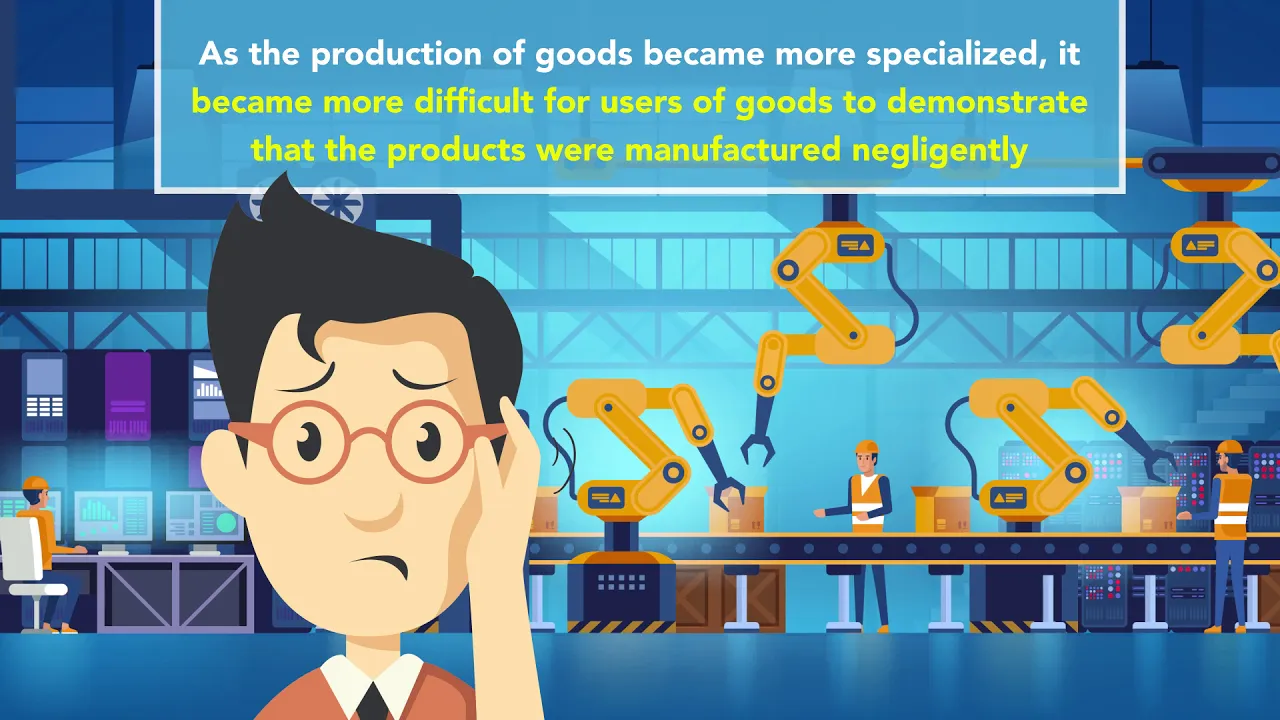
- Why this video: A comprehensive, systematic presentation on product liability foundations. This lesson lays out the essential components of product liability under tort law, detailing the evolution of strict liability frameworks (such as the Restatement of Torts Section 402A) and introducing the basic taxonomy of manufacturing deviations, design defects, and warning/marketing defects.
- Knowledge Checkpoint:
- Name the primary legal theories under which a product liability lawsuit can be brought (e.g., strict liability, negligence, breach of warranty).
- Detail the historical shift away from the doctrine of privity of contract, which historically prevented consumers from suing remote manufacturers directly.
Video 4: What are the Three Types of Product Liability Claims?

- Why this video: Per the feedback review, this video serves as the ideal conceptual bridge to consolidate the "Three Pillars of Product Defects" into Module 1. It provides a side-by-side taxonomy of manufacturing defects, design defects, and warning/marketing defects, allowing you to clearly distinguish how each type of defect occurs and is evaluated.
- Knowledge Checkpoint:
- Distinguish between a manufacturing defect (a deviation in a single unit) and a design defect (an inherent flaw across all units).
- Define a marketing/warning defect and explain why even an impeccably designed and manufactured product can still be legally "defective."
Module 2: Evaluating Design Defects & Legal Tests
Design defects exist when a product is manufactured exactly as intended according to its plans, yet the underlying blueprint or engineering renders the entire product line inherently unsafe. This module teaches you how courts evaluate design defects, focusing heavily on two competing legal standards: the Consumer Expectations Test and the Risk-Utility Test (often involving the requirement of a Reasonable Alternative Design).
Recommended Videos
Video 1: Design Defects: Module 2 of 5
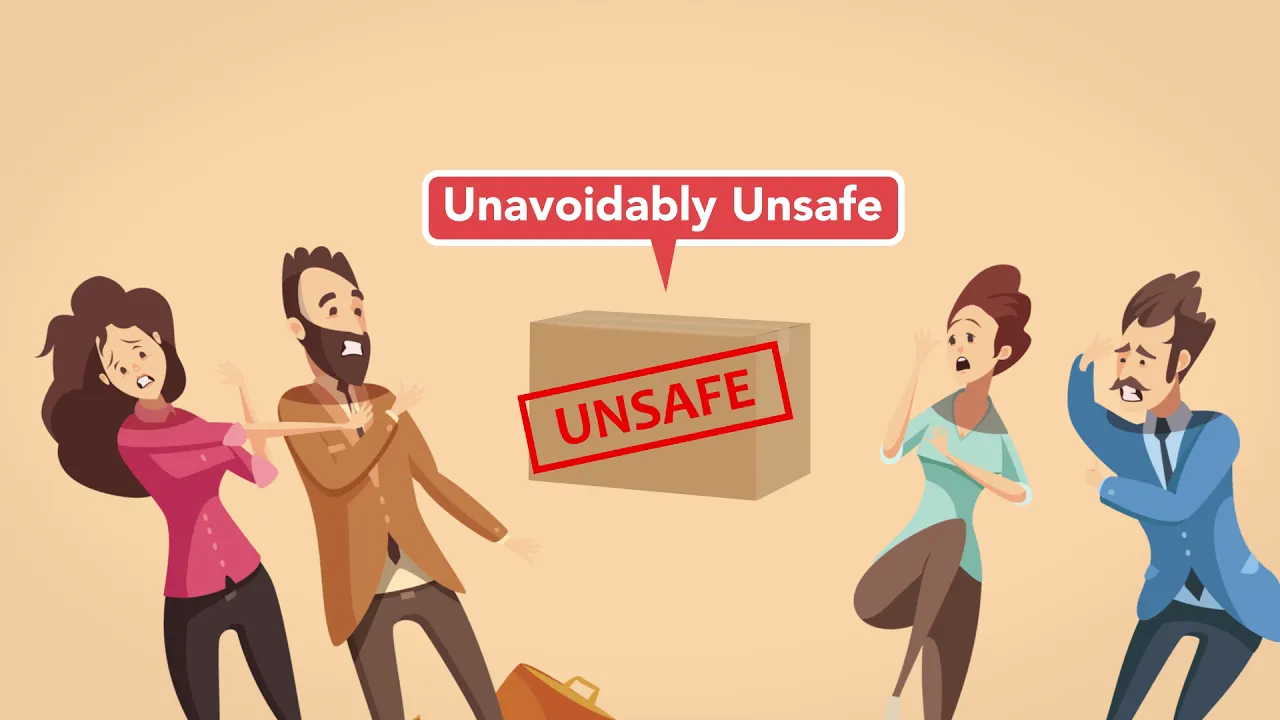
- Why this video: This video focuses entirely on the mechanics of design defects, introducing the critical economic and engineering balancing tests utilized by modern judiciaries. It discusses how courts assess whether a design is "unreasonably dangerous" and explores the role of industry standards and state-of-the-art defenses.
- Knowledge Checkpoint:
- Define what makes a product's design "unreasonably dangerous."
- Explain the core balance of the risk-utility evaluation: what factors are weighed on the risk side versus the utility side?
Video 2: 69th Annual National Moot Court Competition Final 2019
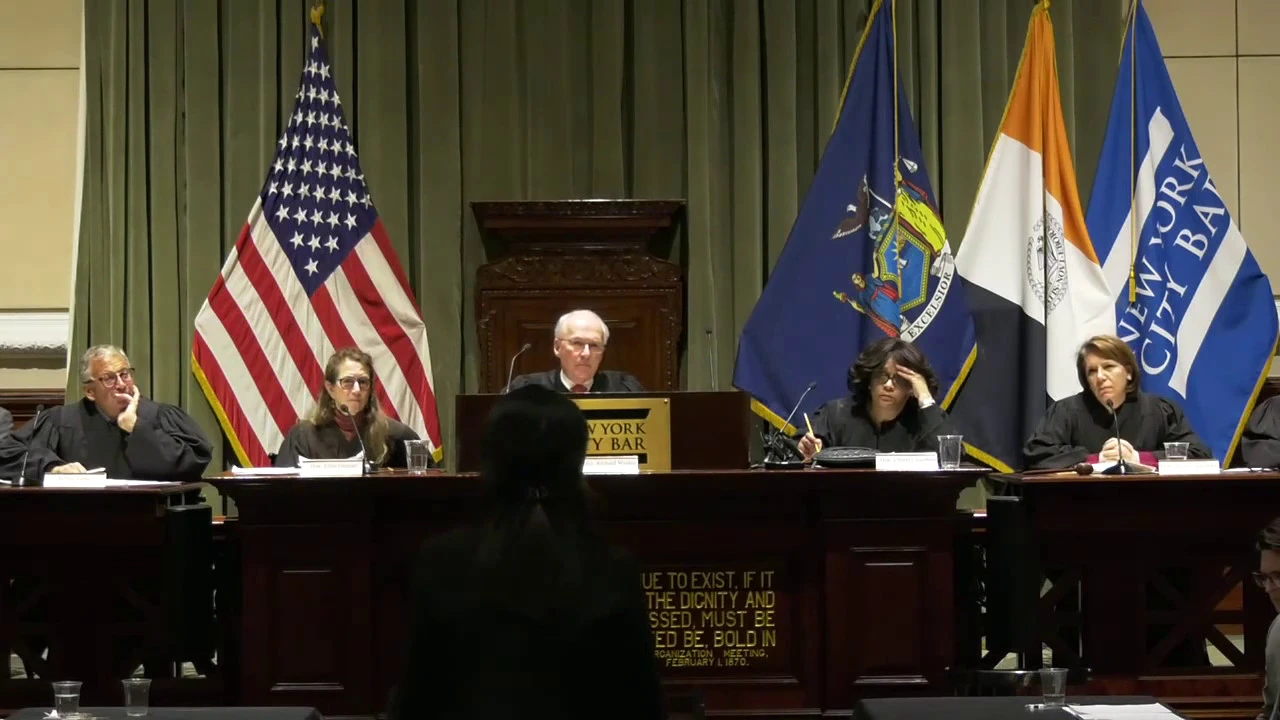
- Why this video: This footage of elite legal advocacy provides a real-world look at how the Consumer Expectations Test is analyzed in complex, modern contexts (such as autonomous vehicles and emerging tech). Listening to the arguments helps you understand how courts grapple with whether a consumer's expectations are reasonable when dealing with highly automated, complex software-driven hardware.
- Knowledge Checkpoint:
- Explain how the Consumer Expectations Test applies to complex products where an ordinary consumer might not understand the product's internal mechanics.
- Understand how advocacy changes depending on whether the jurisdiction favors the Consumer Expectations Test or the Risk-Utility Test.
Video 3: Product Liability From A Litigating Engineer’s Perspective
- Why this video: Although brief, this clip highlights the foundational importance of Section 402A of the Restatement (Second) of Torts. It explicitly frames how the Consumer Expectations Test evaluates whether a product is "in a condition unreasonably dangerous" beyond that which would be contemplated by the ordinary consumer.
- Knowledge Checkpoint:
- Trace the origin of the Consumer Expectations Test back to Section 402A of the Restatement (Second) of Torts.
- State the primary criteria of Section 402A regarding user expectations.
Video 4: Smith & Wesson Wins Lawsuit Over "Smart Gun" Push

- Why this video: This clip walks through a high-profile, real-world case study where a plaintiff asserted that a firearm was defectively designed because it lacked "smart gun" safety technology. It illustrates how courts apply risk-utility analysis to determine whether the absence of a safety feature constitutes a design flaw, or if the proposed alternative design is commercially and technologically unfeasible.
- Knowledge Checkpoint:
- What are the practical requirements for establishing a "Reasonable Alternative Design" (RAD) in a risk-utility jurisdiction?
- How do feasibility, cost, and utility changes affect the viability of a plaintiff's proposed alternative design?
Gap Acknowledgment & Guided Self-Study
While the recommended videos illustrate these concepts, they do not provide a detailed, side-by-side academic breakdown of the transition from the Restatement (Second) to the Restatement (Third) of Torts.
To bridge this gap, conduct independent research to answer the following questions:
- How does the Restatement (Second) of Torts § 402A (which favors the Consumer Expectations Test) differ from the Restatement (Third) of Torts: Products Liability § 2 (which heavily relies on the Risk-Utility Test and requires proof of a Reasonable Alternative Design)?
- In what types of cases does the Consumer Expectations Test fail, prompting courts to adopt the Risk-Utility Test instead? (Hint: Consider complex medical devices or industrial machinery).
Module 3: Manufacturing and Warning Defects in Practice
Manufacturing defects occur when a single product unit departs from its intended design due to an error in the assembly or production phase. Warning defects (or "failure to warn") occur when a product is manufactured and designed perfectly, but lacks warnings about non-obvious, foreseeable risks, or lacks instructions for safe use. This module covers the strict liability standard for manufacturing deviations and the legal criteria for warning labels.
Recommended Videos
Video 1: Duty to Warn: Module 3 of 5

- Why this video: This video establishes the clear, three-part legal framework required to make a warning "adequate." It serves as a checklist for assessing whether a manufacturer has fulfilled its duty to warn of hidden dangers associated with product use.
- Knowledge Checkpoint:
- Identify the three criteria of an adequate warning:
- Describe the exact nature of the hazard.
- Provide clear instructions on how to avoid the hazard.
- Explain the potential consequences of failing to follow instructions.
- Identify the three criteria of an adequate warning:
Video 2: Litigating a Failure to Warn Claim in Product Liability Cases
- Why this video: This in-depth litigation lecture explores how failure to warn claims are argued in front of juries. It goes beyond simple label design to cover the "learned intermediary" doctrine, the duty to warn of foreseeable misuses, and how human factors engineering shapes legal standards of warning visibility and comprehension.
- Knowledge Checkpoint:
- Explain the "Heeding Presumption" in warning defect cases.
- What is the "Learned Intermediary Doctrine," and how does it shield prescription drug manufacturers if adequate warnings are given to prescribing physicians?
Video 3: Product Liability Lawsuits - A Battleground with Warning Labels

- Why this video: This video focuses on how warnings must be structured according to safety standards (such as ANSI Z535) to survive legal scrutiny. It explores how failure to warn is often the easiest defect for plaintiffs to argue because it does not require redesigning an entire physical product line—only altering a piece of paper or a sticker.
- Knowledge Checkpoint:
- Why do plaintiffs' attorneys often prefer warning defect claims over design defect claims?
- How does the physical placement, color, and icon design of a safety label affect its legal "adequacy"?
Video 4: Joy-Con Drift Lawsuit: Manufacturing vs. Design Defects
- Why this video: This concise legal analysis uses the famous Nintendo Switch "Joy-Con Drift" litigation to clarify the difference between manufacturing and design defects. The video explains that if a product is designed to work one way, but error-prone components are assembled in a manner that causes widespread failure, plaintiffs must choose their legal theories carefully.
- Knowledge Checkpoint:
- Explain why a defect that affects every single unit shipped is classified as a design defect, whereas a defect that affects only 1% of units due to factory machine calibration errors is a manufacturing defect.
Gap Acknowledgment & Guided Self-Study
The video pool features limited coverage of strict liability for manufacturing defects (deviations from blueprints). Under strict liability, a manufacturer is responsible for a manufacturing defect even if they exercised all possible care in preparing and marketing the product.
To bridge this gap, conduct independent research on the following:
- Explain the strict liability standard for manufacturing deviations. Why is the manufacturer's level of quality control irrelevant if a defective unit slips through and causes injury?
- Locate and study a seminal manufacturing defect case (such as Escola v. Coca-Cola Bottling Co., 1944). How did the concept of Res Ipsa Loquitur transition into strict liability for manufacturing defects?
Module 4: Identifying Liable Parties & Defenses in Strict Liability
Strict product liability holds not only the manufacturer accountable, but also potentially any commercial entity in the chain of distribution. This module covers who can be sued (the "vertical chain" of distribution), the critical legal distinction between commercial and casual sellers, and the primary affirmative defenses available to defendants, including product misuse, assumption of risk, and material alteration.
Recommended Videos
Video 1: Torts: Strict Liability & Restatement 402A

- Why this video: This video focuses on bar-exam-level black letter law regarding strict product liability. It establishes the foundational elements of a strict liability claim, emphasizing that the seller must be a "commercial seller" engaged in the business of selling such products.
- Knowledge Checkpoint:
- What are the elements required to state a prima facie case for strict products liability?
- Distinguish between a "commercial seller" (e.g., a retail store, wholesaler, or manufacturer) and a "casual seller" (e.g., an individual selling a used lawnmower on online classifieds).
Video 2: MEE Black Letter Law Review: Product Liability Chain of Distribution

- Why this video: This video addresses the rules governing the chain of distribution. It explains that a plaintiff can sue any commercial entity in the direct distribution chain—from the manufacturer to the wholesaler, distributor, and final retailer—provided the defect existed when the product left that particular defendant's control.
- Knowledge Checkpoint:
- Draw a diagram of a typical vertical distribution chain (Manufacturer Distributor Wholesaler Retailer) and identify which parties can be held strictly liable.
- How does a retailer protect themselves financially when sued for a defect created solely by the manufacturer? (Hint: Consider indemnity).
Video 3: Exceptions and Defenses to the Rule of Strict Liability

- Why this video: This video details the major affirmative defenses available to defendants in strict liability claims. It explores how a plaintiff's own conduct (such as misuse, negligence, or voluntary assumption of risk) can reduce or completely bar recovery depending on the jurisdiction.
- Knowledge Checkpoint:
- Define the defense of "Assumption of Risk" in a product liability context. What must a defendant prove regarding the plaintiff's subjective knowledge?
- Explain how "Product Misuse" operates as a defense. Does the misuse have to be unforeseeable to shield the manufacturer from liability?
Gap Acknowledgment & Guided Self-Study
The video pool does not deeply explore how different states handle comparative fault versus contributory negligence in strict liability cases, nor does it address "material product alteration" by a third party.
To bridge this gap, conduct independent research on the following:
- If a consumer modifies a product (e.g., bypassing a safety switch on a table saw), how does this "material alteration" defense impact the manufacturer's strict liability if an injury later occurs?
- What is the difference between comparative fault jurisdictions and pure contributory negligence jurisdictions when a plaintiff uses a product in a negligent manner?
Course Map
Key People Index
- Justice Roger Traynor (Associate Justice, later Chief Justice, of the Supreme Court of California): The jurist behind the landmark concurring opinion in Escola v. Coca-Cola Bottling Co. (1944) and the majority opinion in Greenman v. Yuba Power Products, Inc. (1963). He formulated the modern doctrine of strict products liability in tort, arguing that public policy demands that the risk of injury from defective products be placed on the manufacturers who can control the danger and spread the cost, rather than on defenseless injured consumers.
- William Prosser: A legal scholar and reporter for the Restatement (Second) of Torts, whose work on Section 402A helped standardize the strict products liability framework across the United States.
Final Self-Assessment
Complete this comprehensive self-assessment to verify your mastery of the legal standards of strict product liability.
- Distinguish Tort Categories: Can you explain how strict liability differs conceptually and practically from both negligence and intentional torts?
- Apply the Three Pillars: Given a factual scenario, can you correctly classify an injury-causing product flaw as either a manufacturing defect, a design defect, or a warning defect?
- State 402A Elements: Can you write down the prime elements of a strict products liability claim under the Restatement (Second) of Torts § 402A?
- Contrast Legal Tests: Can you explain the difference in evidence required to win a case under the Consumer Expectations Test versus the Risk-Utility Test?
- Formulate a RAD: Do you know what factors a plaintiff must prove to demonstrate that a "Reasonable Alternative Design" was commercially and technologically feasible?
- Assess Warning Adequacy: Can you evaluate a physical warning label to determine if it meets the three legal criteria of adequacy (nature of hazard, method of avoidance, and consequences)?
- Trace Chain of Distribution: Can you identify which commercial parties can be sued in a standard product distribution chain, and explain why casual/non-merchant sellers are excluded?
- Apply Affirmative Defenses: Can you distinguish between "Assumption of Risk," "Unforeseeable Product Misuse," and "Material Product Alteration" as defenses to a strict liability lawsuit?
- Analyze the Learned Intermediary Doctrine: Do you understand how and when a manufacturer is shielded from direct duty to warn consumer warnings in pharmaceutical contexts?