Dystopian Fiction: History, Tropes & Evolution
Learning Goal: Trace the evolution of the Dystopian novel across the 20th and 21st centuries, examining how authors adapt speculative fiction tropes to mirror contemporary anxieties regarding technology, totalitarianism, and ecological collapse.
- Prerequisites: None (A basic familiarity with 20th-century history is highly recommended).
- Estimated Total Study Time: 12 Hours
Module 1: Foundations of Dystopian Literature
This module establishes the literary origins of the dystopian genre. You will explore how the genre evolved as a cautionary counter-narrative to Sir Thomas More's Utopia (1516), examining the psychological reasons humans construct dark futures and analyzing the foundational text that built the modern dystopian template.

- Why this video: This essential introductory lesson outlines the structural differences between ideal societies (utopias) and their unintended destructive outcomes (dystopias). It traces this balance back to Plato's philosopher kings, providing the macro-level conceptual vocabulary required for literary analysis.
- Knowledge Checkpoint:
- Explain the linguistic origin of "Utopia" and how its dual translation ("good place" / "no place") sets the stage for dystopian subversion.
- Identify three common societal mechanisms (e.g., restricted information, state intervention) used by fictional regimes to enforce a false utopia.

- Why this video: To master dystopian literature, one must study Yevgeny Zamyatin's seminal 1924 work, We. Written in the early days of the Soviet Union and subsequently suppressed, this book directly inspired Orwell and Huxley. This video details how Zamyatin established the central tropes of the mechanical state, mathematical collectivism, and the erasure of the individual.
- Knowledge Checkpoint:
- Describe the "One State" in We and how it uses literal glass architecture to eliminate private life.
- Analyze how Zamyatin’s protagonist, D-503, reflects the psychological battle between human irrationality (imagination) and state-mandated reason.

- Why this video: A deeper exploration of the cultural transition from 19th-century technological optimism to 20th-century dread. This video looks at how geopolitical shifts, late capitalism, and the "End of History" thesis forced literary imagination away from positive world-building and toward defensive, speculative warnings.
- Knowledge Checkpoint:
- Define the "End of History" concept and explain why it made imagining alternatives to modern economic systems difficult, leading to a rise in dystopian popularity.
- Explain the psychological preference for pessimistic speculative fiction as a defensive cognitive mechanism.
Module 2: Mid-20th Century: Totalitarianism, Surveillance & State Control
The trauma of World War II, the rise of Nazi Germany and Stalinist Russia, and the ideological divide of the Cold War fundamentally changed speculative fiction. This module examines how mid-century writers adapted these historical horrors to conceptualize absolute state authority, industrial surveillance, and psychological control.
- Why this video: John Green's literary analysis of George Orwell's 1984 provides a detailed breakdown of how the state of Oceania controls reality itself. The video focuses heavily on the mechanics of Newspeak—the state's engineered language—and how modifying vocabulary can systematically restrict critical thought.
- Knowledge Checkpoint:
- Detail how "Newspeak" aims to eliminate the possibility of subversive thought by reducing the range of human vocabulary.
- Explain the concept of "Doublethink" and how citizens of Oceania are forced to accept contradictory statements as absolute truths.
- Why this video: A high-level intellectual debate comparing the two defining, yet highly contrasting, mid-century dystopian warnings: George Orwell's model of surveillance, pain, and state violence vs. Aldous Huxley's model of consumerism, genetic conditioning, and engineered pleasure.
- Knowledge Checkpoint:
- Contrast Orwell’s view of state suppression through pain with Huxley’s vision of societal pacification through pleasure, leisure, and consumer goods.
- Discuss how Huxley’s background in biology and observation of American consumerism in the 1930s shaped the genetic stratification (Alphas, Betas, Epsilons) of Brave New World.
![How Manufactured Pleasure Is Costing Our Freedom [4K]](https://i.ytimg.com/vi/POIk593CRV4/maxresdefault.jpg)
- Why this video: This video essay focuses on Neil Postman's thesis from Amusing Ourselves to Death, analyzing how modern, hyper-connected, and media-saturated societies are increasingly susceptible to Huxley's pleasure-based dystopia rather than Orwell's boot-on-the-face authoritarianism.
- Knowledge Checkpoint:
- Define the metaphor of Huxley's "Soma" in the context of modern social media and consumer distractions.
- Explain why soft power and voluntary submission to sensory pleasure can be a more durable form of social control than physical threat.
Module 3: Late 20th Century: Corporate Hegemony, Cyberpunk & Gender
As globalization expanded, digital computing evolved, and feminist movements challenged traditional hierarchies, dystopian literature shifted. The central threat of the genre migrated from the centralized political state toward unchecked corporate sovereignty, digital networks, and reproductive subjection.

- Why this video: This highly visual analysis looks at William Gibson's 1984 novel Neuromancer, which established the foundational themes of the cyberpunk subgenre. It outlines how Gibson shifted the threat of dystopia from governments to multinational conglomerates (zaibatsus) that treat human beings as raw data and meat-based commodities.
- Knowledge Checkpoint:
- Explain how Gibson's cyberpunk world represents the ultimate evolution of corporate hegemony over state governments.
- Define the literary and social relationship between "high tech" and "low life" that is fundamental to cyberpunk.
- Why this video: A comprehensive literary lecture on Margaret Atwood’s The Handmaid’s Tale (1985). This video explores feminist dystopian themes, showing how Atwood constructed the fundamentalist state of Gilead by combining historical atrocities with real-world religious and patriarchal structures, creating a chilling speculative vision of gender-based control.
- Knowledge Checkpoint:
- Contrast Margaret Atwood’s definition of "speculative fiction" with traditional "science fiction."
- Explain how the state of Gilead strips women of their identity by systematically revoking their financial independence and linguistic agency.
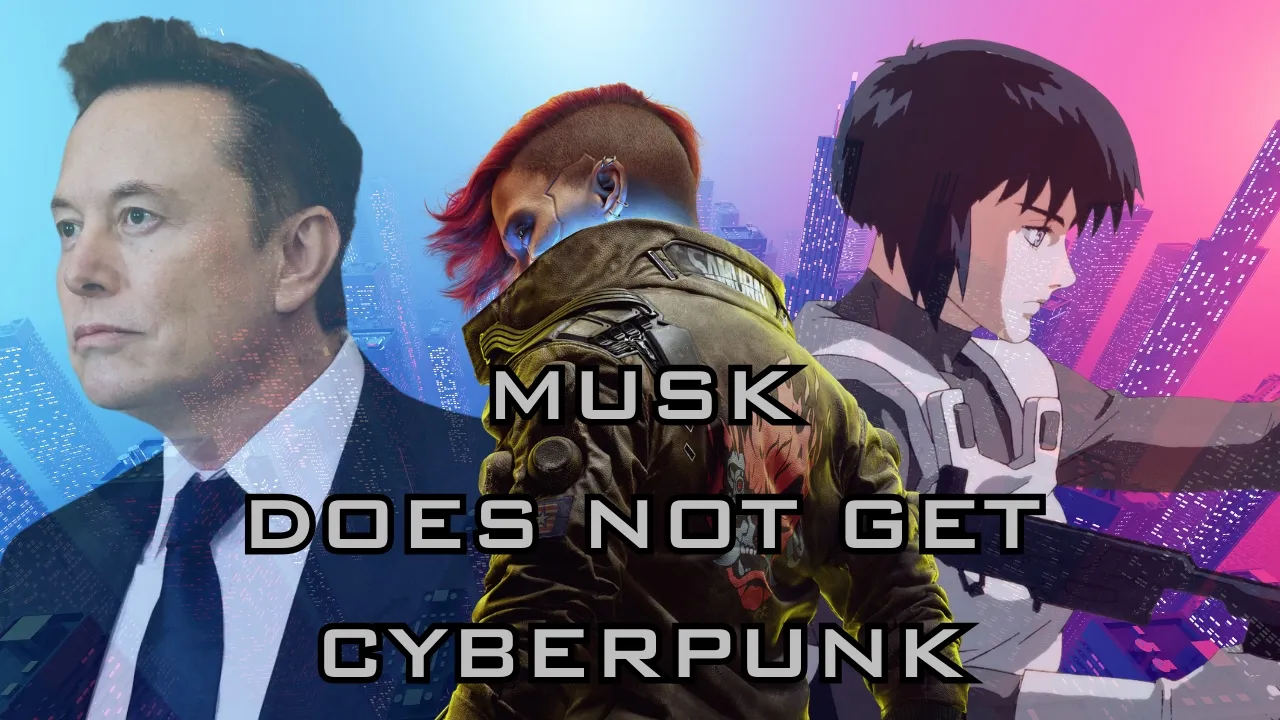
- Why this video: This critical video essay highlights a key irony in modern culture: how corporate tech-oligarchs often aestheticize and champion the technology of cyberpunk while remaining blind to the genre's underlying, deeply anti-corporate, and anti-capitalist warning messages.
- Knowledge Checkpoint:
- Explain why early cyberpunk writers like William Gibson viewed corporate-led technological advancements as a threat to human autonomy rather than a utopian achievement.
- Analyze the concept of corporate privatization as a primary driver of the cyberpunk dystopia.
Module 4: The Anthropocene: Ecological Collapse & Climate Fiction (Cli-Fi)
In the late 20th and early 21st centuries, humanity's destabilization of the Earth's ecosystems introduced a new source of dread: ecological collapse. Authors began translating global warming, resource depletion, and corporate genetic engineering into dystopian warnings, creating a subgenre known as "Climate Fiction" or "Cli-Fi."

- Why this video: (Note: This is a low-view, academic introductory video, reflecting a general gap in high-performing literature-focused Cli-Fi videos in the pool). It serves as a concise, theoretical introduction to "Cli-Fi" as a distinct 21st-century literary genre, outlining how it maps environmental change onto human societies.
- Knowledge Checkpoint:
- Define "Cli-Fi" and explain how its roots in actual environmental science differentiate it from traditional post-apocalyptic science fiction.
- Describe how Cli-Fi authors use local geographic disruption to illustrate global climate crises.
- Why this video: (Long-form lecture). In this deeply academic address, Margaret Atwood revisits her eco-dystopian masterpiece, Oryx and Crake. She explores how unchecked consumer capitalism, corporate-owned science, and genetic modifications intersect to bring about the destruction of the natural world and the human species.
- Knowledge Checkpoint:
- Analyze the division in Oryx and Crake between the hyper-rich corporate "compounds" and the impoverished, polluted "pleeblands."
- Detail Atwood's perspective on the ethical responsibilities of scientific experimentation when driven entirely by corporate profit motives.

- Why this video: This book review introduces Yoko Tawada’s highly-regarded contemporary novel, Scattered All Over The Earth. The book serves as a perfect example of modern eco-dystopian literature, imagining a world where the nation of Japan has completely dissolved into the sea due to ecological collapse, forcing its citizens to navigate a post-national world.
- Knowledge Checkpoint:
- Identify how contemporary eco-dystopias represent the loss of ancestral homelands and the creation of "climate refugees."
- Discuss how Yoko Tawada uses language and memory to reconstruct a vanished homeland.
📚 Curriculum Note on Cli-Fi: Due to limitations in high-view video coverage for Cli-Fi, students are strongly encouraged to independently read and study key texts in this genre to supplement their learning, specifically Octavia Butler's Parable of the Sower (ecological breakdown and social decay) and Kim Stanley Robinson's The Ministry for the Future (institutional responses to global warming).
Module 5: 21st Century: Digital Panopticons & YA Dystopian Booms
At the turn of the millennium, dystopian fiction branched into two cultural phenomena: a massive commercial boom in Young Adult (YA) survival narratives reflecting class disparities, and adult speculative fiction addressing the invisible, voluntary surveillance systems of big tech and modern predictive algorithms.

- Why this video: This video essay traces the massive literary boom in teen dystopian fiction following the 2008 release of The Hunger Games. It explains how these books modified traditional totalitarian tropes to address young adult anxieties regarding systemic exploitation, performance culture, and economic inequality, while also showing why the subgenre eventually oversaturated and collapsed.
- Knowledge Checkpoint:
- Explain how The Hunger Games uses the "forced performance" of the arena as a metaphor for modern media consumption and corporate exploitation.
- Analyze why YA dystopian novels experienced a rapid decline in quality and market viability around 2015.
- Why this video: Dave Eggers' The Circle represents a major shift in contemporary adult dystopian literature. This review explains how the novel addresses "algorithmic anxiety." Instead of a brutal dictator forcing surveillance onto the populace, a friendly, Google-like monopoly coaxes users into voluntarily surrendering their absolute privacy in exchange for convenience and social validation.
- Knowledge Checkpoint:
- Contrast the "forced transparency" of Orwell’s Telescreen with the "voluntary transparency" of Eggers' The Circle.
- Explain how social metrics, public rankings, and online validation function as modern disciplinary tools in 21st-century speculative fiction.
- Why this video: In this conversation, historian Yuval Noah Harari maps the real-world trajectory of algorithmic technology onto dystopian templates. He warns that when algorithms start making life-altering decisions (credit, employment, romance) without human accountability, society enters a "digital panopticon" that operates beyond the scope of traditional democratic check-and-balance systems.
- Knowledge Checkpoint:
- Explain how algorithmic feedback loops can exploit human evolutionary biases (like negativity bias) to engineer public opinion.
- Define the "algorithmic panopticon" and explain why it presents a unique threat to individual free will.
Course Map
This flowchart maps your intellectual progression through the modules, tracing the chronological and thematic shifts of the dystopian genre over the past century.
Key People Index
As you proceed through this curriculum, pay close attention to the contributions of these key thinkers and authors:
- Yevgeny Zamyatin (1884–1937): Soviet writer who pioneered modern dystopian literature with We (1924), introducing the concept of the mathematical, glass-walled, completely public state.
- Aldous Huxley (1894–1963): Author of Brave New World (1932); warned that authoritarian control could be achieved through genetic engineering, state-sanctioned distraction, and manufactured pleasure.
- George Orwell (1903–1950): Author of 1984 (1949); exposed the threats of state surveillance, historical revisionism, and the destruction of language (Newspeak).
- William Gibson (1948–Present): Author of Neuromancer (1984); father of the cyberpunk genre, who predicted virtual reality and corporate feudalism over state-based politics.
- Margaret Atwood (1939–Present): Pioneer of speculative fiction; author of The Handmaid's Tale (reproductive and gendered control) and Oryx and Crake (environmental degradation and bio-corporate experimentation).
- Dave Eggers (1970–Present): Author of The Circle (2013); pioneered the analysis of voluntary surveillance and Big Tech monopolies in 21st-century literature.
Final Self-Assessment
To verify your mastery of this curriculum, ensure you can confidently check off each of the following 10 objectives:
- Trace the historical evolution of the dystopian genre, beginning with Thomas More's Utopia through to modern Climate Fiction (Cli-Fi).
- Detail the foundational role Yevgeny Zamyatin's We played in shaping the themes of 1984 and Brave New World.
- Contrast the Orwellian surveillance state model (fear/pain/deprivation) with the Huxleyan consumer control model (distraction/pleasure/consumption).
- Analyze how George Orwell’s Newspeak concept functions as a method of psychological constraint.
- Define the literary subgenre of Cyberpunk, citing how it shifts the primary antagonist from a political state to multinational corporations.
- Distinguish between pure "science fiction" and Margaret Atwood’s definition of "speculative fiction," providing examples from The Handmaid's Tale.
- Explain how environmental degradation and genetic engineering became the dominant speculative anxieties of the late 20th and early 21st centuries.
- Identify how the YA dystopian boom (e.g., The Hunger Games) adapted classical totalitarian motifs to comment on modern class inequality and media culture.
- Contrast 20th-century state-enforced surveillance (the Telescreen) with 21st-century voluntary, corporate surveillance (such as in The Circle).
- Explain the dystopian threat of algorithmic decision-making as outlined by contemporary thinkers like Yuval Noah Harari.