Civil Resistance: Tactics & Regime Transition
Learning Goal: Analyze the strategic mechanics of nonviolent civil resistance, evaluating how tactics like mass mobilization, economic boycotts, and security force defection drive regime transition.
- Prerequisites: None (Introduction to political science or social movements is helpful but not required).
- Estimated Total Study Time: 15 Hours
Module 1: Foundations of Nonviolent Power
Module Overview
This module introduces the foundational theories of nonviolent civil resistance. It contrasts the structural dynamics of violent vs. nonviolent campaigns and breaks down the core academic concepts that explain how unarmed civilians can challenge deeply entrenched, autocratic regimes. You will study Gene Sharp's "Consent Theory of Power"—which posits that political power is not monolithic but relies entirely on the cooperation and obedience of the populace—and evaluate Dr. Erica Chenoweth's landmark empirical research on the "3.5% rule."
Core Video Resources

- Why this video: This academic lecture by Dr. Erica Chenoweth provides an exhaustive, data-driven look at how ordinary citizens coordinate nonviolent actions to defend, expand, and improve democracy. It forms the empirical backbone of this module, explaining why civil resistance remains the most strategically viable alternative to violent rebellion.

- Why this video: This video offers a concise, structured breakdown of the core arguments in Chenoweth and Stephan's seminal text. It explains the structural advantages of nonviolence, focusing on how lower barriers to entry drive mass participation, promote tactical innovation, and heighten resilience under state repression.

- Why this video: Delivered by a leading strategist, this lecture breaks down the operational dynamics of civil resistance. It details the strategic shift from spontaneous, emotional protests to highly organized campaigns that rely on withdrawing consent from oppressive structures using systematic methods of non-cooperation.
Knowledge Checkpoint
- Explain the core premise of Gene Sharp's "Consent Theory of Power" and identify how it challenges the traditional view of monolithic state power.
- Define the "3.5% rule" as developed by Dr. Erica Chenoweth, detailing how she arrived at this metric and what it reveals about mass mobilization.
- List three distinct structural advantages that nonviolent campaigns possess over violent insurgencies when attempting to attract diverse social participation.
- Describe the difference between a spontaneous riot and a disciplined, strategic civil resistance campaign.
Module 2: Tactics of Mass Mobilization
Module Overview
Successful civil resistance requires more than just high numbers; it demands rigorous tactical planning, the preservation of nonviolent discipline, and structured resource management. This module details how social movements scale participation and sustain momentum under active state repression.
Curriculum Note on Gaps: While the provided video pool features excellent overviews on managing repression and resource mobilization, it lacks highly granular tactical manuals on how underground committees plan daily logistics. Learners looking to supplement this area are highly encouraged to search independent libraries for the manual “How Nonviolent Struggle Works” by Gene Sharp.
Core Video Resources

- Why this video: This panel discussion from the United States Institute of Peace provides crucial strategic insights into how movements maintain tactical discipline under severe government crackdowns. It addresses the central paradox of repression: how violent state overreactions can backfire and inadvertently expand a disciplined, nonviolent movement.

- Why this video: Featuring co-author Maria J. Stephan, this short clip illustrates how civil resistance campaigns utilize low-risk, highly disruptive everyday acts (such as coordinated whistle-blowing) to maintain psychological and tactical pressure on regimes while minimizing the physical risk to participants.

- Why this video: This lecture introduces Resource Mobilization Theory, explaining that a movement's success depends on structural factors: financial assets, media access, political influence, and organizational networks, rather than just raw societal discontent.
Knowledge Checkpoint
- Define "tactical backfire" and explain how a state's violent repression can inadvertently accelerate a nonviolent movement's growth.
- What is "nonviolent discipline," and why does empirical research show that even minor outbreaks of protester violence drastically reduce a movement's chance of success?
- Contrast "high-risk" mobilization tactics (like street occupations) with "low-risk" tactics (like coordinated noise-making or boycotts), detailing when each should be deployed.
- Explain how Resource Mobilization Theory reframes social movements, shifting focus from "societal anger" to "organizational capacity."
Module 3: Economic Boycotts and Disruption
Module Overview
To collapse an autocracy, a movement must raise the financial cost of maintaining the status quo until the ruling elites find it unsustainable. This module analyzes the economic levers of civil resistance, evaluating consumer boycotts, divestment, and strikes.
Curriculum Note on Gaps: The historical video pool focuses heavily on case studies like the Montgomery Bus Boycott but lacks advanced macro-economic models detailing how general strikes disrupt state-level supply chains or currency valuations. To fill this gap, research academic papers on “The Economic Backbreaker: Strikes and Capital Flight in Regime Change” using Google Scholar.
Core Video Resources

- Why this video: This video explores the historic Montgomery Bus Boycott as a prime case study of structured economic non-cooperation. It demonstrates how organizing parallel transit systems and sustaining long-term commercial boycotts can cripple municipal budgets and force institutional compliance.

- Why this video: Economist Richard Wolff details the mechanics of the general strike. He explains how coordinated, systemic labor stoppages differ from localized workplace disputes by stopping the production of wealth across multiple industries, directly threatening the regime's core financial survival.

- Why this video: This deep dive analyzes the strategic viability of boycotts as political weapons. It evaluates how contemporary movements leverage consumer power to pressure corporations, state suppliers, and financial institutions to withdraw their support from oppressive regimes.
Knowledge Checkpoint
- Detail the difference between a standard labor strike and a political "general strike," focusing on their ultimate objectives.
- Explain how the organizers of the Montgomery Bus Boycott sustained their campaign economically for over a year, specifically detailing parallel transport networks.
- Analyze the concept of "economic leverage." Why must a regime-challenging movement target the financial interests of the dictator's ruling coalition rather than just the state treasury?
- Under what conditions do international divestment campaigns succeed, and how do they interact with domestic non-cooperation tactics?
Module 4: Security Force Defection & Regime Pillars
Module Overview
No authoritarian regime can survive once its primary pillars of support—specifically the military, police, and civil service—refuse to carry out orders. This module analyzes the psychological, social, and political variables that drive security forces to defect from a regime and join or accommodate a nonviolent uprising.
Curriculum Note on Gaps: While our video pool provides rich historical cases (like Otpor in Yugoslavia or the 2024 Bangladesh uprising), it lacks detailed academic lectures outlining the precise strategic steps movements must take to safely communicate with officers prior to defection. Supplement this by reading “Fostering Military Defection” by the International Center on Nonviolent Conflict (ICNC).
Core Video Resources
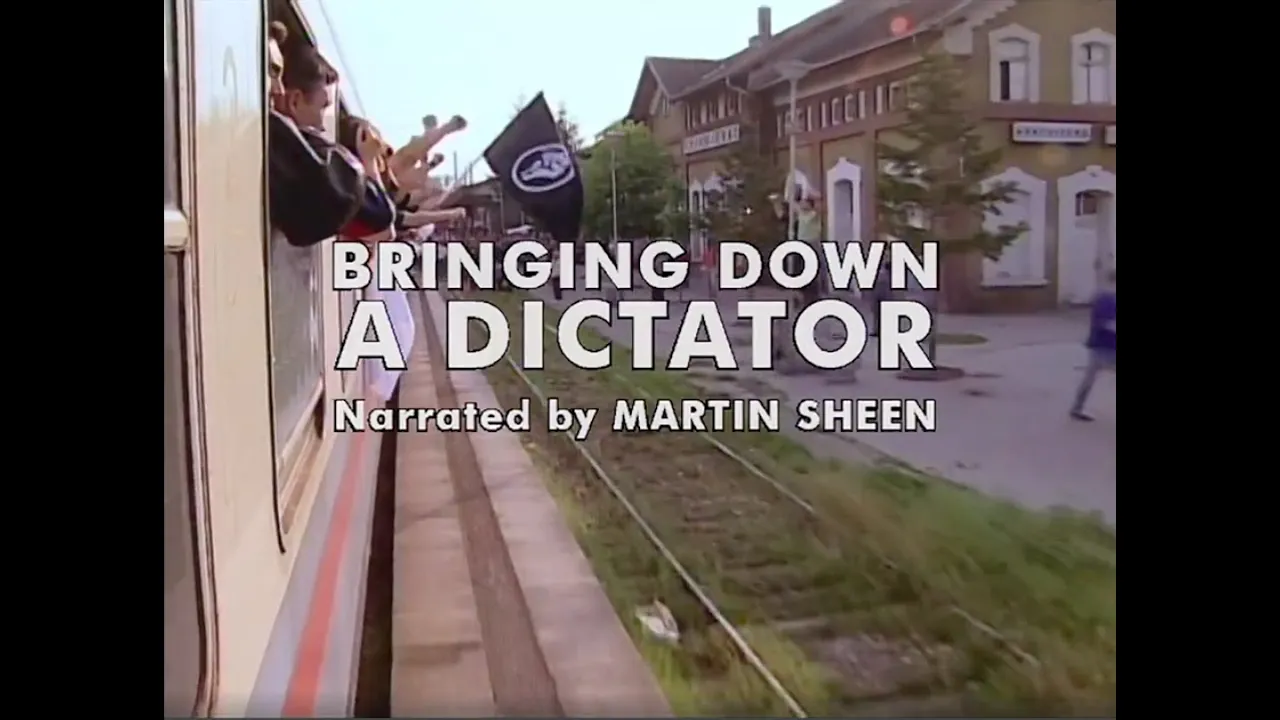
- Why this video: This documentary offers an inside look at how the Serbian student movement Otpor (DOS) brought down Slobodan Milošević. It illustrates the strategic discipline required to win over police forces by deliberately refusing to treat ordinary officers as enemies, directly inducing security defections during the final mass mobilization.

- Why this video: This investigation analyzes the chain of command during the 2024 uprising in Bangladesh. It shows how excessive political violence and state repression alienated high-ranking officers, culminating in the military withdrawing its support from the prime minister and accelerating regime collapse.

- Why this video: Journalist Chris Hedges delivers a lecture on the structural mechanics of successful revolutions, arguing that a regime is never truly overthrown until its internal security forces defect or flatly refuse to fire upon bread riots and peaceful demonstrators.
Knowledge Checkpoint
- Describe the strategic shift in Otpor's messaging toward the police, explaining how they humanized the police to encourage defection.
- What is the "tipping point of obedience" within a military hierarchy, and how does extreme state violence accelerate this internal crisis?
- Identify three distinct pillars of support (beyond security forces) that a regime relies on, and detail how non-cooperation weakens each.
- Analyze the difference between "passive defection" (refusing to shoot or enforce curfews) and "active defection" (joining the protesters).
Module 5: Regime Transition and Democratic Consolidation
Module Overview
The overthrow of a dictator represents only the halfway point of a democratic revolution. The resulting power vacuum can lead to chaos, civil war, or a new dictatorship unless a transition is managed and democratic institutions are built. This module focuses on the structural hurdles of post-nonviolent transitions, power-sharing agreements, and institutional reform.
Curriculum Note on Gaps: Video archives often prioritize the dramatic, violent overthrow of regimes (e.g., Syria) over the slow, technical processes of democratic consolidation. To supplement the resources below, search independent databases for academic papers on “Institutional Design and Democratic Survival after Civil Resistance” by Maria J. Stephan.
Core Video Resources

- Why this video: This interview outlines the practical mechanics of democratic consolidation in a post-conflict/post-authoritarian landscape. It details structural actions, including removing repressive laws, establishing journalistic independence, and broadening political freedoms beyond elections.
- Why this video: This address highlights the post-dictatorship challenge where coalition partners begin fighting among themselves over governance. It provides a real-world perspective on maintaining stable coalition governance after the common autocratic enemy has been removed.

- Why this video: This short clip introduces the "paradox of authoritarian regimes": the empirical reality that collapsed autocracies are frequently replaced by new autocracies built from the remnants of the old regime, illustrating the difficulty of democratic consolidation.
Knowledge Checkpoint
- Define "power vacuum" in the context of regime transition, and identify the risks it poses to newly formed, fragile democratic coalitions.
- Explain why historical data shows that transitions driven by nonviolent civil resistance are significantly more likely to yield lasting democracies than transitions driven by armed insurgencies.
- Detail three institutional reforms required to turn a post-authoritarian state into a consolidated democracy.
- What is the "coalition fracture risk" after a dictator's fall, and how can transition leaders mitigate it?
Course Map
Key People Index
-
Dr. Erica Chenoweth
Context: Professor of Public Policy at Harvard Kennedy School. Famous for conducting the first comprehensive quantitative study comparing the success rates of violent and nonviolent campaigns (Why Civil Resistance Works), which established the "3.5% rule." -
Dr. Gene Sharp (1928–2018)
Context: Often called the "Machiavelli of Nonviolence." Founded the Albert Einstein Institution and wrote The Politics of Nonviolent Action, creating the modern strategic framework for civil resistance, including his categorizations of 198 nonviolent weapons. -
Dr. Maria J. Stephan
Context: Co-author of Why Civil Resistance Works and former Director of the Program on Nonviolent Action at the United States Institute of Peace. Expert on international support for democratic transitions and civil resistance movements. -
Chris Hedges
Context: Pulitzer Prize-winning journalist, activist, and author. His writing and lectures analyze the decline of empires and emphasize the role of security force defections as the decisive factor in revolutions.
Final Self-Assessment
Complete this comprehensive self-assessment to verify your mastery of the strategic mechanics of nonviolent civil resistance:
- Explain how Gene Sharp's "Consent Theory of Power" shifts the strategic focus of a revolution from targeting the dictator to targeting their underlying pillars of support.
- State the "3.5% rule" and analyze the empirical relationship between a campaign's total level of active, sustained mass participation and its probability of success.
- Describe how to manage the tactical backfire effect when a nonviolent movement is subjected to extreme state-sponsored physical repression.
- Contrast resource mobilization theory with relative deprivation theory, explaining why funding, logistics, and organizational networks are more critical to success than political outrage.
- Design a strategic framework for a general strike, listing the economic sectors that must be halted and those that should be exempted to preserve public safety.
- Evaluate the strategic differences between a local consumer boycott and a coordinated international divestment campaign.
- Detail the tactical steps a nonviolent movement should take to humanize police forces and lower the psychological barriers to military defection.
- Explain how to maintain "nonviolent discipline" within a mass mobilization under active agent provocateur and counter-intelligence pressure.
- Map out the potential institutional pitfalls of a power vacuum directly following a dictator's resignation.
- Analyze the concrete steps required to reform the judicial, security, and media systems in a post-conflict country to prevent the emergence of a new autocracy.