Game Psychology: Operant Conditioning & CBT
Learning Goal: Analyze how operant conditioning, variable ratio schedules of reinforcement, and persuasive design are utilized in digital gaming to drive engagement, and evaluate behavioral strategies to treat internet gaming disorder.
- Prerequisites: None (Introductory psychology concepts are helpful but fully explained)
- Estimated Study Time: 12 Hours
Module 1: Foundations of Behaviorism and Operant Conditioning
This module introduces behavioral psychology, exploring how early psychologists shifted focus from unobservable mental states to measurable external behaviors. You will explore the foundational split between classical conditioning (passive associative learning) and operant conditioning (active learning governed by consequences), culminating in B.F. Skinner's Skinner box paradigm.
Recommended Videos

-
Why this video: This classic TED-Ed animation provides a clear distinction between Pavlovian (classical) conditioning and Skinnerian (operant) conditioning. It defines the core mechanics of how stimuli are linked to automatic biological responses versus how actions are linked to voluntary consequences.
-
Knowledge Checkpoint:
- Understand the mechanism of classical conditioning (associating two stimuli to elicit an involuntary response).
- Understand the mechanism of operant conditioning (modifying voluntary behaviors based on environmental consequences).
- Identify real-world examples of both conditioning types.

-
Why this video: Crash Course provides a thorough historical and conceptual dive into Thorndike’s Law of Effect and Skinner's radical behaviorism. It details the mechanical differences between reinforcement (increasing behavior) and punishment (decreasing behavior), distinguishing between positive (adding a stimulus) and negative (removing a stimulus) variants.
-
Knowledge Checkpoint:
- Differentiate between Positive Reinforcement, Negative Reinforcement, Positive Punishment, and Negative Punishment.
- Define Thorndike's "Law of Effect" and explain how it laid the groundwork for Skinner's research.
- Explain how shaping is used to build complex behaviors through successive approximations.

-
Why this video: This video focuses on the hardware and experimental design of the Skinner Box (operant conditioning chamber). It shows how B.F. Skinner controlled variables to measure behavioral adaptation in rats and pigeons, illustrating how response rates are recorded when subjects act on levers to receive rewards or escape shocks.
-
Knowledge Checkpoint:
- Describe the physical components and purpose of a Skinner Box.
- Explain how Skinner isolated behavioral variables to establish measurable learning curves.
- Define what a "discriminive stimulus" is in the context of the box (e.g., a light signaling that food is available).
Module 2: Schedules of Reinforcement and the Variable Ratio Hook
This module transitions from basic conditioning to reinforcement schedules. You will study the four primary schedules of reinforcement: Fixed Ratio (FR), Variable Ratio (VR), Fixed Interval (FI), and Variable Interval (VI). This section highlights why variable ratio schedules yield the highest rates of response and make behaviors highly resistant to extinction.
Recommended Videos

-
Why this video: Khan Academy offers a clear introduction to continuous versus partial reinforcement. It highlights the psychological distinction between ratio (number of responses) and interval (time elapsed) variables, paving the way for advanced behavioral modeling.
-
Knowledge Checkpoint:
- Distinguish between continuous reinforcement and partial (intermittent) reinforcement.
- Explain why partial reinforcement schedules make behaviors much more resistant to extinction than continuous reinforcement.
- Identify the core parameters of ratio versus interval-based delivery.

-
Why this video: This video breaks down the four distinct partial reinforcement schedules (Fixed Ratio, Variable Ratio, Fixed Interval, Variable Interval). It illustrates the characteristic behavioral response curves for each schedule, such as the post-reinforcement pause in fixed schedules versus the steady, high-rate response of variable schedules.
-
Knowledge Checkpoint:
- Define the characteristics of a Fixed Interval (FI) schedule (and explain its characteristic "scalloped" response pattern).
- Describe how a Variable Ratio (VR) schedule operates and why it produces steady, rapid response rates.
- Compare Fixed Ratio (FR) and Variable Interval (VI) schedules in terms of response rate and pattern.

-
Why this video: This short video addresses the psychological impact of variable ratio reinforcement on human attachment and obsessive behaviors. It explains how uncertainty and unpredictable rewards keep individuals highly engaged and prone to compulsive loops.
-
Knowledge Checkpoint:
- Explain the psychological connection between reward unpredictability and emotional attachment.
- Describe how the human brain responds to uncertain outcomes versus guaranteed rewards.
Module 3: Persuasive Design and Gamification Mechanics
Here, you will analyze how modern game designers apply behavioral psychology to keep players engaged. We examine the transition of the Skinner Box into game loops, loot boxes, and dark patterns. This module also features the Fogg Behavior Model (), explaining how design prompts align motivation and ability to drive user action.
Recommended Videos

-
Why this video: This deep dive connects Skinnerian principles directly to game mechanics. It outlines seven psychological tricks used by publishers—ranging from variable ratio reward loops to artificial scarcity and loss aversion—to shape player habits and support live-service models.
-
Knowledge Checkpoint:
- Define how a video game loop functions as a virtual Skinner box.
- Explain the concept of loss aversion and how daily login streaks exploit it.
- Describe how artificial scarcity is used to drive engagement and monetization.
-
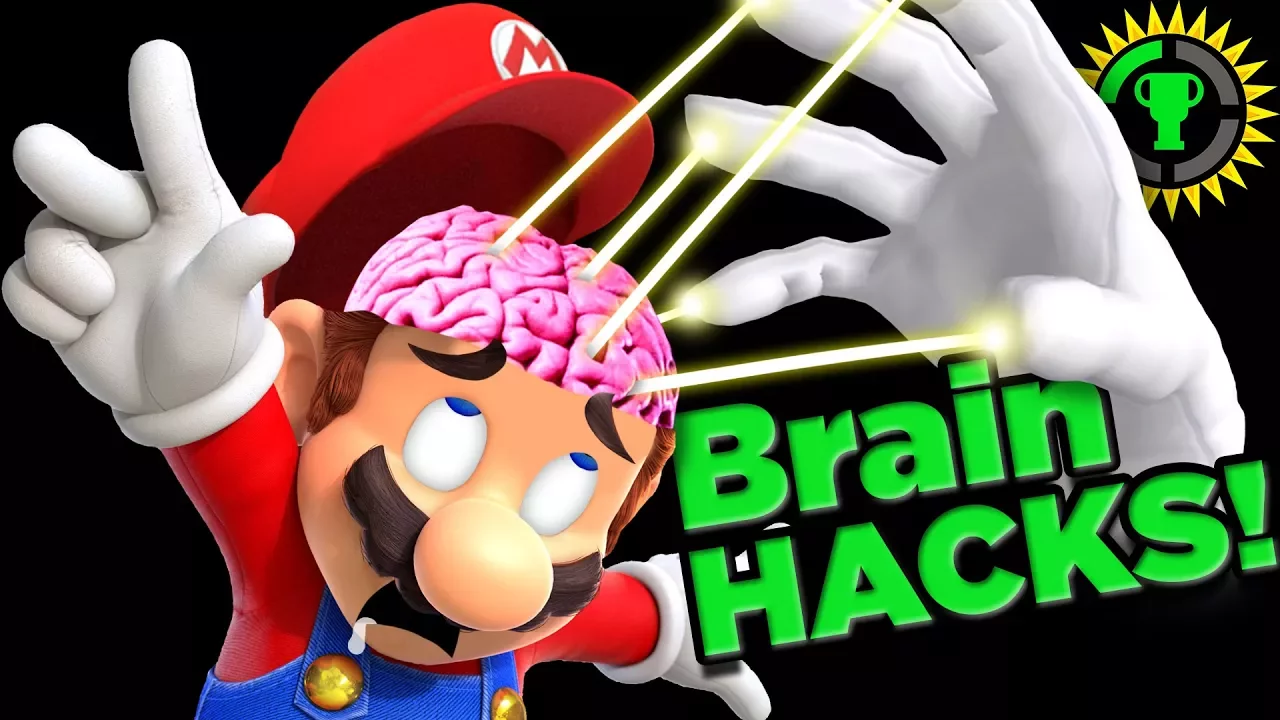
Why this video: Game Theory investigates loot boxes and random-number-generator (RNG) drop systems. It shows how variable-ratio schedules are paired with sensory cues (such as lights, animations, and celebratory sounds) to trigger dopamine and simulate the psychological high of traditional slot machines.
-
Knowledge Checkpoint:
- Explain how loot boxes utilize variable ratio reinforcement to encourage continued play.
- Describe how visual and auditory feedback in reward openings enhances the psychological impact of a win.
- Discuss the ethical concerns regarding loot boxes as a form of unregulated, gamified gambling.

-
Why this video: This video introduces the Fogg Behavior Model (). It explains how human behavior is driven by the interaction of Motivation, Ability, and Prompts (Triggers). It shows how gamification systems design behaviors to be as easy as possible (maximizing Ability) and use timely notifications (Prompts) to establish habits.
-
Knowledge Checkpoint:
- Explain the equation and define its three core elements.
- Describe how game designers reduce cognitive load to maximize a player's Ability to act.
- Identify how game alerts and push notifications serve as Prompts at the intersection of motivation and ability.
Module 4: Neuroscience and Diagnosis of Internet Gaming Disorder
This module explores the neurobiology of behavioral addiction and the clinical guidelines for diagnosis. You will study how compulsive gaming impacts the brain's mesolimbic dopamine pathway—focusing on anticipation and motivation rather than pure pleasure. Additionally, we cover the 9 diagnostic criteria for Internet Gaming Disorder (IGD) as outlined in Section III of the DSM-5.
Recommended Videos

-
Why this video: This video examines the neurobiology of extreme gaming behaviors. It details how games are designed to stimulate constant dopamine release, shifting dopamine's role from a simple "pleasure molecule" to a powerful driver of motivation and anticipation that can hijack survival pathways.
-
Knowledge Checkpoint:
- Describe the role of the mesolimbic dopamine pathway in anticipation and goal-directed behavior.
- Explain how continuous video game stimulation can lead to dopamine receptor down-regulation and tolerance.
- Contrast dopamine's role as a molecule of "wanting" (motivation) versus "liking" (pleasure).

-
Why this video: This segment details the clinical diagnostics of gaming addiction, presenting the DSM-5 criteria for Internet Gaming Disorder. It explains the requirements for clinical diagnosis, showing how clinicians differentiate heavy recreational play from pathological gaming.
-
Knowledge Checkpoint:
- Identify the threshold for a DSM-5 diagnosis of IGD (meeting 5 or more of the 9 criteria within a 12-month period).
- List key criteria of IGD, including preoccupation, withdrawal, tolerance, loss of control, and functional impairment.
- Discuss how functional impairment in daily life separates a passionate hobby from a behavioral disorder.

-
Why this video: This presentation provides a clinical look at IGD’s classification in the DSM-5, where it is noted as a condition needing further study in Section III. It walks through the behavioral signs of the disorder, helping clinicians and educators identify early warning signs.
-
Knowledge Checkpoint:
- Explain why the DSM-5 placed Internet Gaming Disorder in Section III (Conditions for Further Study).
- Recognize behavioral signs of IGD, such as using games to escape negative moods or lying to family members about gaming time.
- Identify the physiological and psychological symptoms associated with IGD withdrawal.
Module 5: Behavioral Treatment Strategies for Compulsive Gaming
This module covers clinical interventions for Internet Gaming Disorder. You will explore evidence-based therapies, including Cognitive Behavioral Therapy (CBT) and Motivational Interviewing (MI). The curriculum highlights how to identify "change talk," restructure negative beliefs, and address the unmet psychological needs that often drive players toward virtual achievements.
Recommended Videos

-
Why this video: Led by clinical experts, this video outlines treatment strategies for digital and gaming addictions. It emphasizes using Motivational Interviewing as an initial step to build trust and resolve ambivalence, placing behavioral therapy above pharmacology as a primary treatment.
-
Knowledge Checkpoint:
- Explain why motivational interviewing is utilized as a first-line clinical strategy before structured behavioral changes.
- Compare the effectiveness of psychological therapies (like CBT) against pharmacological options for behavioral addictions.
- Describe how clinicians handle resistance during initial treatment phases.

-
Why this video: This training video breaks down the OARS framework (Open questions, Affirmations, Reflections, Summaries), which is central to Motivational Interviewing. It demonstrates how to shift from directive advising to collaborative dialogue, helping clients identify their own reasons to change.
-
Knowledge Checkpoint:
- Define the acronym OARS and explain how each part helps build a therapeutic relationship.
- Explain the concept of "change talk" and how a clinician can encourage it using reflective listening.
- Demonstrate how to structure a summary statement to resolve ambivalence in a patient struggling with addiction.

-
Why this video: This archival clip from the Beck Institute shows Dr. Aaron Beck using cognitive restructuring. It illustrates how to challenge negative, all-or-nothing core beliefs (e.g., "I'm a failure in the real world, so I only matter in games") and break them down into realistic, manageable parts.
-
Knowledge Checkpoint:
- Define cognitive restructuring and explain how it helps address behavioral addictions.
- Explain how a therapist identifies and challenges "cognitive distortions" or all-or-nothing thinking.
- Describe the process of reframing a global negative belief into distinct, workable areas.

-
Why this video: Dr. Alok Kanojia (Dr. K) analyzes gaming addiction through Self-Determination Theory. He explains how games satisfy fundamental psychological needs (Autonomy, Competence, and Relatedness) far more easily than real life, and provides practical strategies to rebuild motivation in the real world.
-
Knowledge Checkpoint:
- Identify the three core needs of Self-Determination Theory (Autonomy, Competence, and Relatedness) and explain how games fulfill them.
- Explain the difference between detoxing (temporary abstinence) and addressing the underlying reasons why someone plays compulsively.
- Discuss practical behavioral modifications to rebuild real-world self-efficacy and reduce dependence on digital achievements.
Course Map
Key People Index
- B.F. Skinner (1904–1990): Father of radical behaviorism. Developed the operant conditioning chamber (Skinner Box) and discovered reinforcement schedules, demonstrating how voluntary actions are shaped by consequences.
- Edward Thorndike (1874–1949): Educational psychologist who formulated the "Law of Effect," which states that behaviors followed by pleasant outcomes are more likely to be repeated, laying the foundation for operant conditioning.
- B.J. Fogg: Founder of the Behavior Design Lab at Stanford University. Developed the Fogg Behavior Model (), which is widely used in tech design to analyze and build user habits.
- Dr. Aaron Beck (1921–2021): Pioneer of Cognitive Therapy. Developed cognitive restructuring techniques to help patients identify and challenge cognitive distortions.
- Dr. Alok Kanojia (Dr. K): Harvard-trained psychiatrist and co-founder of HealthyGamerGG. He is a prominent figure in adapting clinical principles to help gamers manage internet and video game addictions.
Final Self-Assessment
Complete this comprehensive self-assessment to verify your mastery of game psychology, operant conditioning, and behavioral treatment:
- Distinguish Conditioning Models: Can you explain the difference between classical conditioning (associating passive stimuli) and operant conditioning (modifying active behaviors based on rewards/punishments)?
- Categorize Reinforcement Types: Can you identify and provide an example for positive reinforcement, negative reinforcement, positive punishment, and negative punishment?
- Analyze Reinforcement Schedules: Can you explain why variable ratio schedules produce high, steady rates of response and make behaviors highly resistant to extinction?
- Describe the Skinner Box Model: Can you outline how Skinner controlled stimuli, behavior, and consequences within his experimental chamber to track learning patterns?
- Deconstruct Persuasive Loops: Can you explain how game designers translate operant principles into digital features like loot boxes, daily reward systems, and push notifications?
- Apply the Fogg Model (): Can you explain how Motivation, Ability, and Prompts must align to trigger a behavior, and how design choices can simplify actions to build habits?
- Identify the Neuroscience of Game Loop Anticipation: Can you describe the role of the mesolimbic dopamine pathway and explain how dopamine drives motivation and anticipation rather than just pure pleasure?
- Outline the 9 DSM-5 IGD Criteria: Can you list at least 5 of the 9 diagnostic criteria for Internet Gaming Disorder and explain how to differentiate recreational play from clinical impairment?
- Utilize the OARS Framework: Can you define each element of OARS (Open questions, Affirmations, Reflections, Summaries) and demonstrate how to use them to encourage "change talk" during Motivational Interviewing?
- Apply Cognitive Restructuring: Can you explain how to help a patient identify a cognitive distortion, challenge an all-or-nothing belief, and reframe it into concrete, realistic goals?
- Apply Self-Determination Theory to Gaming: Can you explain how games fulfill the needs for Autonomy, Competence, and Relatedness, and how clinicians can help patients build healthy, real-world alternatives to meet these needs?