Pitching Pre-Seed Decks: Design & VC Delivery
Learning Goal: Constructing and delivering a high-converting pre-seed pitch deck to secure initial venture capital funding for early-stage startups.
- Prerequisites: Basic knowledge of business concepts; a validated early-stage startup idea (no revenue or product is required).
- Estimated Total Study Time: 15 hours (includes video lectures, analysis, deck construction, and pitch practice).
Module 1: Venture Capital & Pre-Seed Funding Foundations
Module Overview
Before drafting your pitch deck, you must understand the financial mechanics of venture capital and where the "pre-seed" stage fits in the startup lifecycle. This module covers the difference between pre-seed, seed, and Series A funding, how venture capital funds operate, and how to assess early institutional investor expectations.
Recommended Videos
Video 1: Venture Capital Basics: Seed, Series A, B, C & IPO Explained

-
Why this video: This ultra-concise overview from Forbes provides a quick, visual layout of the sequential lifecycle of venture capital. It helps founders grasp where their pre-seed/seed stage sits relative to later-stage Series A, B, and C rounds, contextualizing the long-term journey of venture-backed companies.
-
Knowledge Checkpoint:
- Understand the core transition from seed-stage funding (ideation/initial operations) to Series A (market fit and scaling).
- Explain why pre-seed sits at the entry point of institutional venture capital.
Video 2: What is Pre-Seed Funding? (Finance Explained)

-
Why this video: This video explains how pre-seed funding acts as the initial capital needed to get an idea off the ground. Haroun frames pre-seed through modern dynamics—where low startup costs due to free software and cloud infrastructure change how much capital you actually need to raise initially.
-
Knowledge Checkpoint:
- Define what "pre-seed" funding means in terms of startup development and capital requirements.
- Identify the key cost factors of launching modern software startups compared to traditional brick-and-mortar storefronts.
Video 3: Seed, Pre-seed, (Pre-Pre-Seed?): What the Earliest Stages of Funding Mean for Entrepreneurs Today

-
Why this video: This deeply comprehensive panel session outlines how seed and pre-seed rounds have evolved over the last 15 years. You will learn how what used to be a standard seed round has now split into institutional pre-seed stages, and what this shifting timeline means for expectations of early traction.
-
Knowledge Checkpoint:
- Trace the evolutionary shift from historical seed rounds to the modern pre-seed tier.
- Understand why investors have pushed back milestones, making modern pre-seed look like yesterday's seed round.
- Formulate a capital-raising schedule that aligns with current institutional definitions.
Module 2: Anatomy of a Winning Pre-Seed Pitch Deck
Module Overview
A pre-seed pitch deck requires a highly optimized structure. Because you have minimal financial metrics, your deck must prioritize founder credibility, problem validation, and initial market assumptions. This module breaks down the standard core slides every early-stage venture capital investor expects to see.
Recommended Videos
Video 1: Aribnb’s First Pitch Deck: Startup Pitch Review

-
Why this video: Analyzing Airbnb's iconic original pitch deck teaches founders how to present a clean, clear problem-solution fit. This breakdown highlights how to frame massive industry disruption using extremely simple language, addressing hotel disconnects and customer convenience when you don't have millions in traction.
-
Knowledge Checkpoint:
- Deconstruct Airbnb’s original slides to locate the core elements of problem-solution framing.
- Identify how a pre-seed startup can argue its value proposition clearly without having complex historical financials.
Video 2: Ask Jack: What Are The Core Slides That All VCs & Angels Expect To See In Your Pitch Deck

-
Why this video: This video reviews the precise 13-slide layout expected by professional angel networks and pre-seed VCs. From the team biography slide to your product architecture, this guide serves as a practical blueprint for structuring your first presentation deck.
-
Knowledge Checkpoint:
- List the 13 essential slides required to meet standard VC criteria.
- Outline the exact purpose and goal of the Introduction, Problem, Solution, and Team slides.
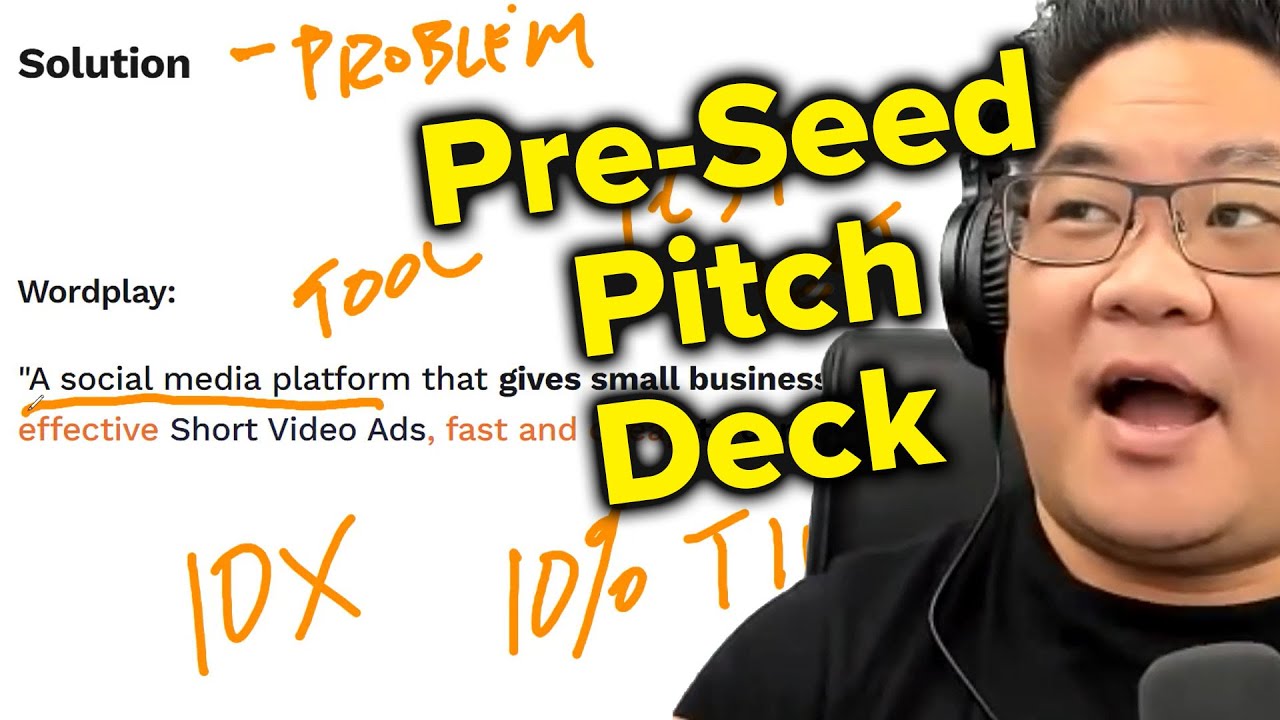
Video 3: Pitch Deck Critique 10 - PRE-SEED Startup Marketing Tech - WordPlay
-
Why this video: Pre-seed decks must focus on different components than late-stage pitches. This live critique illustrates how pre-seed decks fail when they try to mimic Series A financial projection metrics, showing instead how to win on founder credibility, fundamental problem validation, and initial market discovery.
-
Knowledge Checkpoint:
- Distinguish between the metrics-focused design of late-stage decks and the validation-focused design of pre-seed decks.
- Reframe your own deck to prioritize "founder-market fit" and validated customer pain over speculative five-year revenue projections.
Module 3: Storytelling, Problem Framing, and Market Size
Module Overview
To capture a pre-seed VC's attention, you must build a compelling narrative around your startup. This module explores how to frame the problem using structural narrative arcs, how to craft a convincing problem slide, and how to calculate a realistic market size using the TAM, SAM, and SOM framework.
Recommended Videos
Video 1: Pitching & Storytelling | Crafting Your Startup’s Narrative Part 1
-
Why this video: This video teaches you how to map the classic Hero’s Journey framework to your pitch. Instead of viewing your startup as the hero, you will learn to position the customer as the protagonist, the market challenge as the enemy, and your startup as the magical guide or tool that enables their success.
-
Knowledge Checkpoint:
- Map your startup's core pitch to the Hero's Journey framework.
- Clearly identify the customer as the protagonist and frame their primary pain point as the central conflict.
Video 2: Flow of a Pitch Deck | Start-up Business | Sarthak Ahuja

-
Why this video: Sarthak Ahuja details how to weave an uninterrupted flow through your deck. He explains how to introduce the "enemy" (the customer's burning problem), justify "why now" is the perfect market timing to attack it, and assert "why you" possess the unfair advantage to solve it.
-
Knowledge Checkpoint:
- Construct a logical narrative transition between the Problem, Market Timing, and Team slides.
- Articulate a clear answer to the "Why Now?" question for your specific industry sector.
Video 3: 19. Pitch Deck Problem Slide Summary & Tips

-
Why this video: The problem slide is often where founders lose investor interest. This video outlines how to build an undeniable problem statement by answering five critical questions: What is the issue, who is struggling, why does it matter, why is it urgent, and why are you the ideal team to fix it?
-
Knowledge Checkpoint:
- Draft a problem slide that answers the five core questions of target audience, severity, urgency, and founder capability.
- Strip your problem slide of generic descriptions and replace them with specific, evidence-backed pain points.
Video 4: How to Calculate Your TAM SAM SOM for Startups (Taylor Swift Method)

-
Why this video: Using an entertaining, relatable Taylor Swift concert analogy, this video deconstructs the essential market sizing frameworks. Learn how to accurately define and present your Total Addressable Market (TAM), Serviceable Available Market (SAM), and Serviceable Obtainable Market (SOM) to show VCs you understand your realistic launchpad.
-
Knowledge Checkpoint:
- Define the operational boundaries of TAM, SAM, and SOM.
- Apply the bottom-up or top-down calculation methodology to estimate your startup’s initial target demographic (SOM).
Module 4: Business Models, Pre-Seed Traction, & SAFE Notes
Module Overview
Note: In accordance with our syllabus review feedback, this module focuses specifically on how to establish early traction with zero revenue, and how to structure "The Ask" using modern pre-seed vehicles like SAFE (Simple Agreement for Future Equity) notes.
Recommended Videos
Video 1: 3 Ways to Show Traction Without a Product while Fundraising

-
Why this video: This video addresses one of the biggest challenges for early-stage founders: proving traction before building a product. Learn how to rank and pitch three alternative validation markers: (1) customer pre-sales, (2) formal letters of intent (LOIs) or waitlist signups, and (3) qualitative feedback from systematic customer interviews.
-
Knowledge Checkpoint:
- Identify the three primary forms of non-revenue traction.
- Select the validation method most appropriate for your current startup stage and execute a plan to collect those metrics.
Video 2: Want VC Investment? Here’s How to Nail Your Pitch.
-
Why this video: This video warns founders about a critical mistake: failing to highlight early-stage milestones. Even with no revenue, you must highlight qualitative traction—such as user interviews, system designs, or prototype tests—to show momentum.
-
Knowledge Checkpoint:
- Design a dedicated "Traction Slide" showcasing non-revenue milestones.
- Ensure your pitch explicitly addresses validation achievements to avoid the assumption that no work has been done.
Video 3: How to Pitch and Raise Funds

-
Why this video: This short video outlines the three mandatory requirements of a standard "Ask" slide: exactly how much capital you are raising, what security structure you are using (such as a SAFE note or convertible note), and how you plan to allocate those funds.
-
Knowledge Checkpoint:
- State the precise dollar value of your pre-seed funding target.
- Determine the appropriate vehicle (e.g., SAFE note with valuation cap) for your funding round.
- Create a simple allocation breakdown detailing exactly how the capital will be used.
Video 4: [Live] How to Budget a Startup Funding Round
![[Live] How to Budget a Startup Funding Round](https://i.ytimg.com/vi/_PQJtC_Fj74/maxresdefault.jpg)
-
Why this video: This video shows you how to design a pre-seed budget tied directly to developmental milestones (e.g., MVP launch or initial customer acquisition) rather than arbitrary calendar months. This approach ensures you raise enough capital to actually reach your next fundable milestone.
-
Knowledge Checkpoint:
- Build a milestone-driven budget plan for your pre-seed raise.
- Map key hiring and development costs directly to your product launch timeline.
Module 5: Visual Design and Pitch Deck Optimization
Module Overview
A great story can be undermined by poor visual execution. In this module, you will learn practical slide design using tools like Canva, and analyze data-driven research on how investors actually read pitch decks—using analytics insights on investor attention spans and behavior.
Recommended Videos
Video 1: How to create and design a startup pitch deck in Canva | Step by step tutorial

-
Why this video: This step-by-step Canva tutorial demonstrates how to build clean, professional slides. It focuses on using consistent design systems, visual hierarchy, and clean data visualizations to make complex information easy for busy investors to digest.
-
Knowledge Checkpoint:
- Select a clean, high-contrast, professional template in Canva.
- Structure your traction slide using clear charts, growth indicators, or timeline maps instead of text blocks.
Video 2: Inside Howie: The AI Secretary | Austin Petersmith, Co-founder and CEO

-
Why this video: This case study highlights a critical data point: according to DocSend platform metrics, the average investor spends only about 3 seconds per slide. This reality check underscores why you must design your deck for quick scanning rather than dense reading.
-
Knowledge Checkpoint:
- Apply the "3-second rule" to test your slides: can a viewer grasp the core message of each slide in 3 seconds?
- Replace paragraph text blocks with concise, single-sentence headlines and bold metrics.
Video 3: DocSend CEO Russ Heddleston on pitch deck insights, leaning into criticism & more | E1161

-
Why this video: In this detailed interview, the CEO of DocSend explains how pitch deck tracking platforms monitor investor behavior. Learn which slides receive the most viewing time (such as Team and Financials/Ask) and how to use these analytics insights to optimize your deck's structure.
-
Knowledge Checkpoint:
- Understand how investors navigate pitch decks in real-world scenarios.
- Structure your most scrutinized slides (Team, Problem, and the Ask) to stand out and hold up under close reading.
Video 4: What is DocSend? (with cc) | Secure document sharing, document analytics, and document control

-
Why this video: This video introduces the secure document sharing tools used by professional fundraising teams. Learn how to control access to your deck, monitor which slides individual investors spend the most time on, and use those insights to prepare for your follow-up meetings.
-
Knowledge Checkpoint:
- Set up a tracking link for your pitch deck.
- Use viewer engagement data to refine and improve underperforming slides before sending the deck to more investors.
Module 6: Delivering the Pitch and Managing Investor Q&A
Module Overview
A great deck is only as effective as its delivery. This final module covers how to transition from a rigid presentation to an engaging, conversational pitch. It also addresses how to handle difficult questions from investors, and how to manage the high-stakes Q&A session.
Recommended Videos
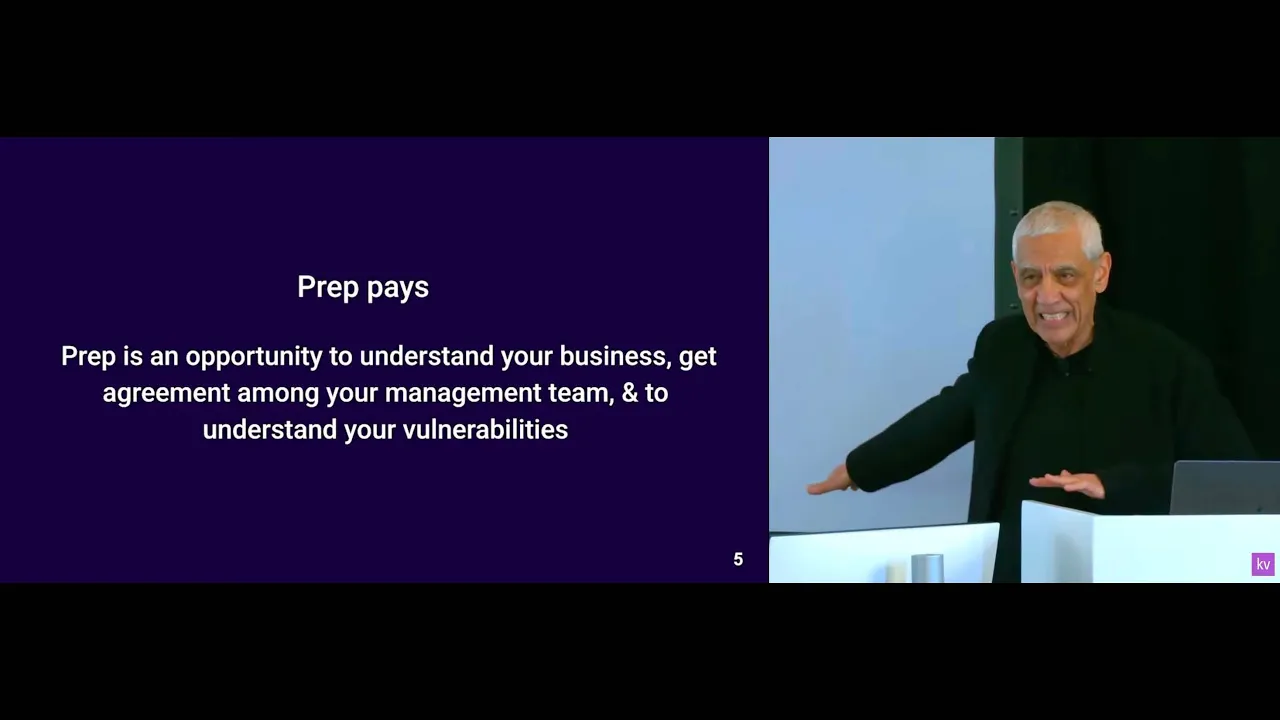
Video 1: Nail Your Raise: Luring VCs | Vinod Khosla
-
Why this video: Veteran venture capitalist Vinod Khosla explains how to shift your focus from dry, analytical facts to a compelling, emotional narrative. This masterclass illustrates how to present a vision that captures an investor's interest, helping you cut through skepticism by showing a clear, high-conviction path forward.
-
Knowledge Checkpoint:
- Focus your presentation on a clear, compelling story rather than a dry list of facts.
- Identify potential sources of investor skepticism and address them proactively in your narrative.
Video 2: How To Perfectly Pitch Your Seed Stage Startup With Y Combinator's Michael Seibel

-
Why this video: Y Combinator’s Michael Seibel shares a key pitching strategy: treat the pitch as an interactive conversation rather than a rigid monologue. Learn how to read investor interest, skip directly to the slides they care about most, and build a collaborative, two-way dialogue.
-
Knowledge Checkpoint:
- Reframe your presentation style to welcome active questions during the pitch.
- Practice jumping directly to specific slides to address investor interest without breaking your overall narrative flow.
Video 3: Sara Choi: Wing VC Partner - Healthcare Tech & Early-Stage Innovation

-
Why this video: Sara Choi reframes how to view difficult questions during a pitch. Instead of seeing tough investor questions as a sign of skepticism, you will learn to view them as an indicator of real engagement and curiosity—and how to handle this friction to build trust.
-
Knowledge Checkpoint:
- Learn to recognize tough questions as a sign of investor interest rather than criticism.
- Practice handling difficult questions calmly and constructively to build confidence and rapport.
Video 4: I said the wrong thing and suddenly our Series A pitch meeting was over

-
Why this video: Y Combinator President Garry Tan shares a critical lesson: trying to bluff your way through a question you don't understand can instantly derail a meeting. Learn why admitting what you don't know and offering a clear, professional follow-up is the best way to maintain credibility.
-
Knowledge Checkpoint:
- Avoid bluffing when asked a question you don't know how to answer.
- Use a reliable framing phrase (e.g., "We don't have that exact metric on hand, but let me verify that data and follow up with you today.") to handle gaps gracefully.
Course Map
Key People Index
- Vinod Khosla (Co-Founder, Sun Microsystems & Khosla Ventures): A legendary venture capitalist known for backing early-stage tech and clean energy companies. He emphasizes narrative depth and emotional connection over dry financial models.
- Michael Seibel (Managing Director & Group Partner, Y Combinator): Former CEO of Justin.tv and Socialcam. He is a leading startup advisor who coaches founders on clean communication and interactive, conversational pitching styles.
- Russ Heddleston (CEO & Co-Founder, DocSend): A pioneer in fundraising analytics. His research analyzes thousands of pitch decks to track exactly how modern venture capitalists review presentations.
- Garry Tan (President & CEO, Y Combinator): A prominent early-stage investor and co-founder of Initialized Capital. He advocates for absolute transparency and advises founders against bluffing during investor Q&A.
Final Self-Assessment
Before scheduling your first investor pitch, complete this final checklist to ensure your deck and delivery are ready:
- Structural Alignment: Does your pitch deck follow the standard 13-slide layout expected by early-stage venture capitalists?
- Modern Funding Focus: Is your "Ask" structured around a modern pre-seed funding vehicle (such as a SAFE note with a clear valuation cap) rather than a complex equity structure?
- Clear Problem Statement: Does your problem slide answer the five key questions (what, who, why, urgency, and why you) within 15 seconds?
- Bottom-Up Market Sizing: Is your TAM, SAM, and SOM calculated using a realistic, data-backed bottom-up method rather than arbitrary global figures?
- Non-Revenue Traction: If you have zero revenue, does your traction slide showcase alternative proof of progress (like pre-sales, customer interviews, or waitlist growth)?
- The "3-Second Rule" Test: Have you simplified your slides so that a viewer can understand the key takeaway of each slide in just 3 seconds?
- DocSend Analytics Ready: Have you set up your deck tracking links to monitor where investors spend the most time viewing your presentation?
- Conversational Delivery: Have you practiced your pitch as a two-way conversation, allowing you to skip to specific slides based on investor interest without losing your narrative flow?
- Honest Q&A Strategy: Do you have a plan to handle tough or unknown questions with honesty and professional follow-ups instead of bluffing?