Economic Growth: Institutions, Rights & Aid
Learning Goal: Analyze how institutional frameworks, property rights, and foreign aid models influence long-term economic growth and poverty reduction in developing nations.
- Prerequisites: None. A basic understanding of introductory macroeconomics is helpful but not required.
- Estimated Total Study Time: 15 Hours
Module 1: Foundations of Economic Growth and Development
This module establishes the foundational distinctions between quantitative economic growth and qualitative economic development. You will explore how nations measure prosperity, analyze historical wealth divergence, and understand why small growth rate differences yield massive disparities in living standards over time.
Recommended Videos

-
Why this video: This formal MIT OpenCourseWare lecture is the ultimate academic introduction to development economics. It defines the discipline, outlines global patterns of inequality, and explains why studying cross-country standard-of-living differences is critical for human welfare.
-
Knowledge Checkpoint:
- Understand how development economics differs from standard neoclassical macroeconomics.
- Identify key historical factors that have led to massive income divergence between nations.
- Explain how standard of living measurements encompass more than simple per-capita GDP.

-
Why this video: A clear, concise conceptual breakdown that unpacks the core distinction between quantitative growth (vertical output increase) and qualitative development (structural improvement of human capabilities).
-
Knowledge Checkpoint:
- Define "economic growth" in terms of national output and Real GDP.
- Define "economic development" and list at least three of its multidimensional metrics (e.g., healthcare, education, literacy).
- Contrast how a country can experience growth without experiencing true development.
-
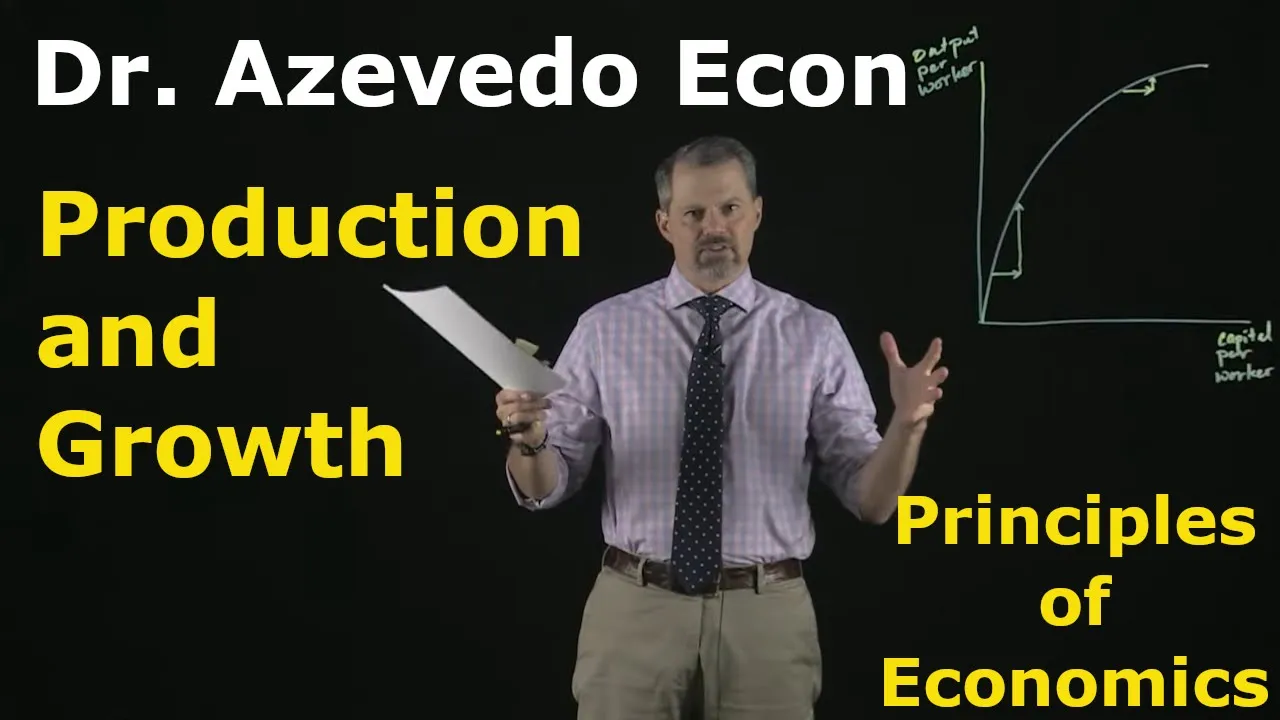
Why this video: This video introduces Real GDP per capita as a proxy for the standard of living, illustrating the compounding power of long-term economic growth rates over generations.
-
Knowledge Checkpoint:
- Explain why Real GDP per capita is used to measure national average income.
- Describe how a small annual growth rate difference (e.g., 2% vs. 4%) compounds significantly over a 50-year period.
- Explain how productivity acts as the fundamental driver of long-term economic growth.
Module 2: Institutional Frameworks: The Rules of the Game
This module introduces institutional economics, exploring how formal laws and informal social norms shape human interaction and investment incentives. You will analyze the groundbreaking "Why Nations Fail" thesis by Daron Acemoglu and James A. Robinson, focusing on the systemic differences between inclusive and extractive institutions.
Recommended Videos

-
Why this video: Nobel Laureate Daron Acemoglu delivers a concise, powerful introduction to his framework, explaining how political and economic institutions serve as the primary determinants of a nation's prosperity or poverty.
-
Knowledge Checkpoint:
- Define "inclusive political and economic institutions" and describe how they foster investment and innovation.
- Define "extractive institutions" and explain how they centralize power to benefit a narrow ruling elite.
- Explain how secure property rights and level playing fields under inclusive institutions drive long-term development.

-
Why this video: This comprehensive academic lecture walks through the core arguments of "Why Nations Fail" using historical examples. It demonstrates why alternative explanations for global inequality—such as geography, climate, and culture—fail to explain historical patterns of wealth divergence.
-
Knowledge Checkpoint:
- Critically evaluate the limitations of geography and culture as explanations for economic development.
- Describe the historical concept of a "critical juncture" and how it can alter a nation's institutional trajectory.
- Analyze why ruling elites under extractive regimes actively block technological innovation (creative destruction).

-
Why this video: This video breaks down the conceptual economics definition of institutions as "the rules of the game," illustrating how they structure human incentives, reduce economic uncertainty, and lower transaction costs.
-
Knowledge Checkpoint:
- Differentiate between formal institutions (written laws, constitutions, courts) and informal institutions (customs, traditions, social norms).
- Explain how secure institutional frameworks reduce transaction costs and encourage long-term capital investments.
- Describe the feedback loop between political institutions and economic outcomes.
Module 3: Property Rights and Rule of Law
This module explores how property rights and predictable legal systems unlock economic opportunity. It focuses on the theories of Peruvian economist Hernando de Soto Polar regarding "dead capital" and the informal economy. Additionally, you will examine how contract enforcement and the rule of law lower transaction costs, enabling complex global value chains.
Curriculum Note on Keyword Clarification: To prevent historical search confusion with the 16th-century Spanish explorer Hernando de Soto, the resources selected for this module refer strictly to Hernando de Soto Polar (born 1941), the contemporary Peruvian developmental economist and author of The Mystery of Capital.
Recommended Videos
-
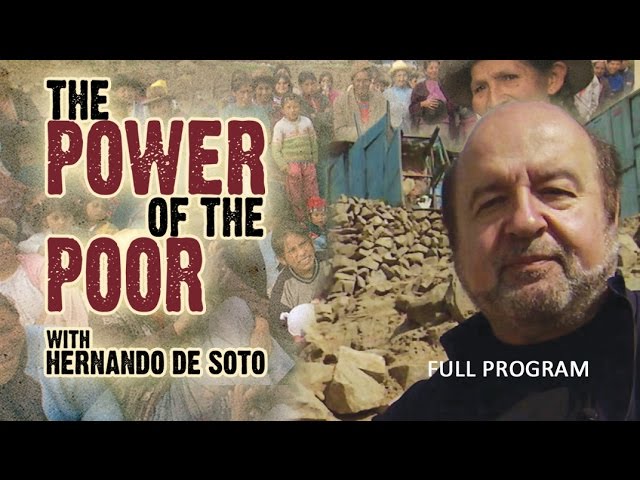
Why this video: This feature-length documentary presents Hernando de Soto Polar’s empirical field research. It reveals that the global poor possess trillions of dollars in real assets (homes, businesses, land) but are locked out of the formal economy due to a lack of legal property titles.
-
Knowledge Checkpoint:
- Define de Soto’s concept of "dead capital" and explain why an asset cannot generate investment equity without formal legal titles.
- Identify the primary bureaucratic barriers that prevent informal entrepreneurs from legalizing their businesses.
- Describe how formalizing property rights enables individuals to use their assets as collateral to secure bank credit.
-
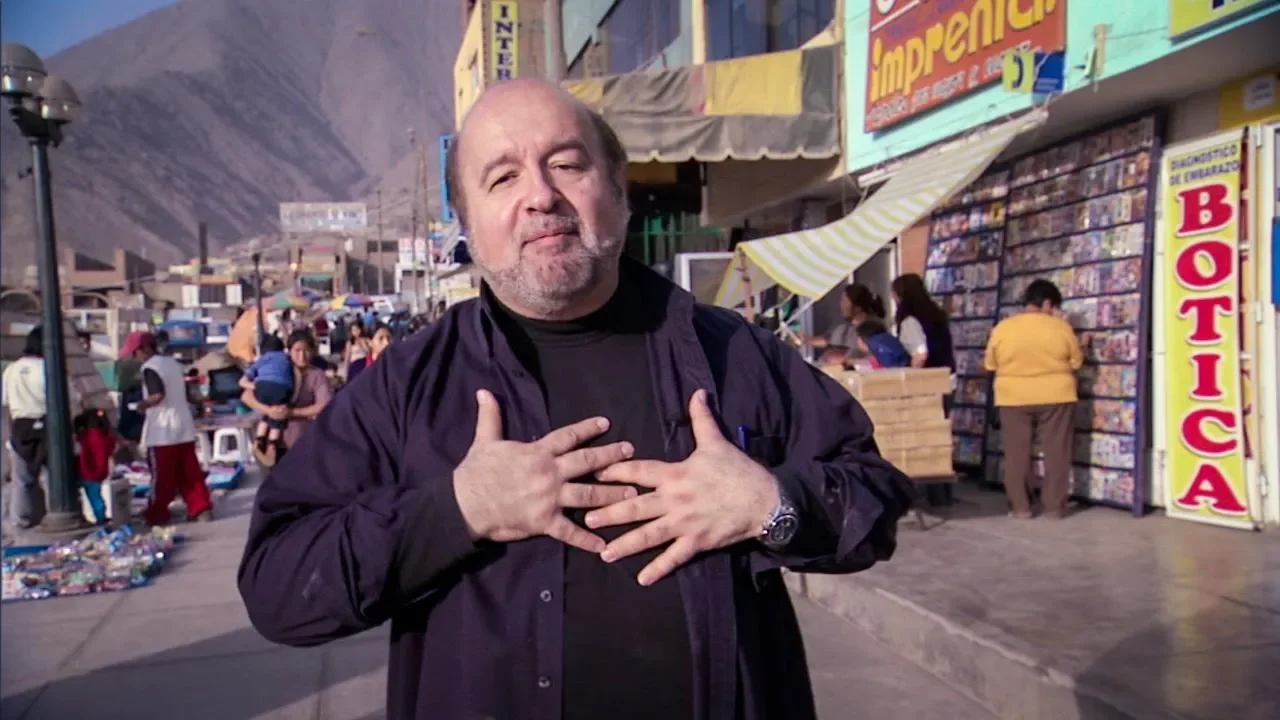
Why this video: This video focuses on de Soto’s policy recommendations, demonstrating how introducing secure, transferable property rights is a crucial prerequisite for moving from poverty to a free, property-owning middle class.
-
Knowledge Checkpoint:
- Explain how formal property rights transform physical assets into liquid, transferable representations of value.
- Describe the link between legal registry systems and the creation of national trust and investment markets.
- Evaluate how formal property titles reduce local corruption and protect individuals from arbitrary state seizure.

-
Why this video: An in-depth academic lecture that connects the rule of law directly to the mitigation of business risk, explaining how predictable legal enforcement enables domestic and foreign long-term investment.
-
Knowledge Checkpoint:
- Define the economic characteristics of the "rule of law" (e.g., clear, publicized, stable, and equally applied laws).
- Explain why an independent, non-corrupt judiciary is essential for lowering investor risk premium.
- Analyze how a weak rule of law leads to capital flight and underinvestment.
-
Why this video: This analysis focuses on the mechanics of contract enforcement. It explains why economic specialization is impossible without a legal framework that guarantees reliable contract resolution.
-
Knowledge Checkpoint:
- Explain how weak contract enforcement limits economic actors to simple, localized transactions.
- Describe how legal guarantees of contract enforcement allow businesses to build complex global supply chains.
- Define how transaction costs are lowered when economic actors have a reliable, non-violent venue for resolving business disputes.
Module 4: Foreign Aid Models and the Development Debate
This module addresses the debate over foreign aid effectiveness. You will explore the divide between "top-down" aid models (Jeffrey Sachs) and decentralized, market-driven development critiques (William Easterly, Dambisa Moyo).
Recommended Videos

-
Why this video: This classic interview features William Easterly laying out his core critique of top-down development planners. He explains why massive financial aid packages often fail to stimulate economic growth when they lack market accountability.
-
Knowledge Checkpoint:
- Differentiate between Easterly's concept of top-down "Planners" and bottom-up, feedback-driven "Searchers."
- Explain how direct government-to-government aid can inadvertently prop up corrupt political regimes.
- Discuss why aid accountability should be directed toward domestic citizens rather than foreign donor agencies.

-
Why this video: Jeffrey Sachs defends targeted, evidence-based public investments. He argues that aid works when it is structured as a professional, measurable technical contract (e.g., disease control, agricultural inputs) rather than open-ended political support.
-
Knowledge Checkpoint:
- Describe Sachs’ argument for targeted clinical interventions (such as anti-malaria bed nets and water infrastructure).
- Explain how a country can fall into a "poverty trap" where low savings prevent capital investment, necessitating external aid.
- Outline the difference between political conditionality and technical, outcome-based project funding.

-
Why this video: Economist Dambisa Moyo presents her "Dead Aid" thesis. She outlines how systemic, open-ended budgetary aid to governments creates economic distortions, fuels dependency, and crowds out private enterprise across Africa.
-
Knowledge Checkpoint:
- Explain why Moyo argues that large aid flows weaken local capital markets and local manufacturing incentives.
- Describe how aid inflows can artificially strengthen local currency, harming a nation's export competitiveness.
- Contrast systemic budgetary aid with direct foreign direct investment (FDI) and capital market access.
-
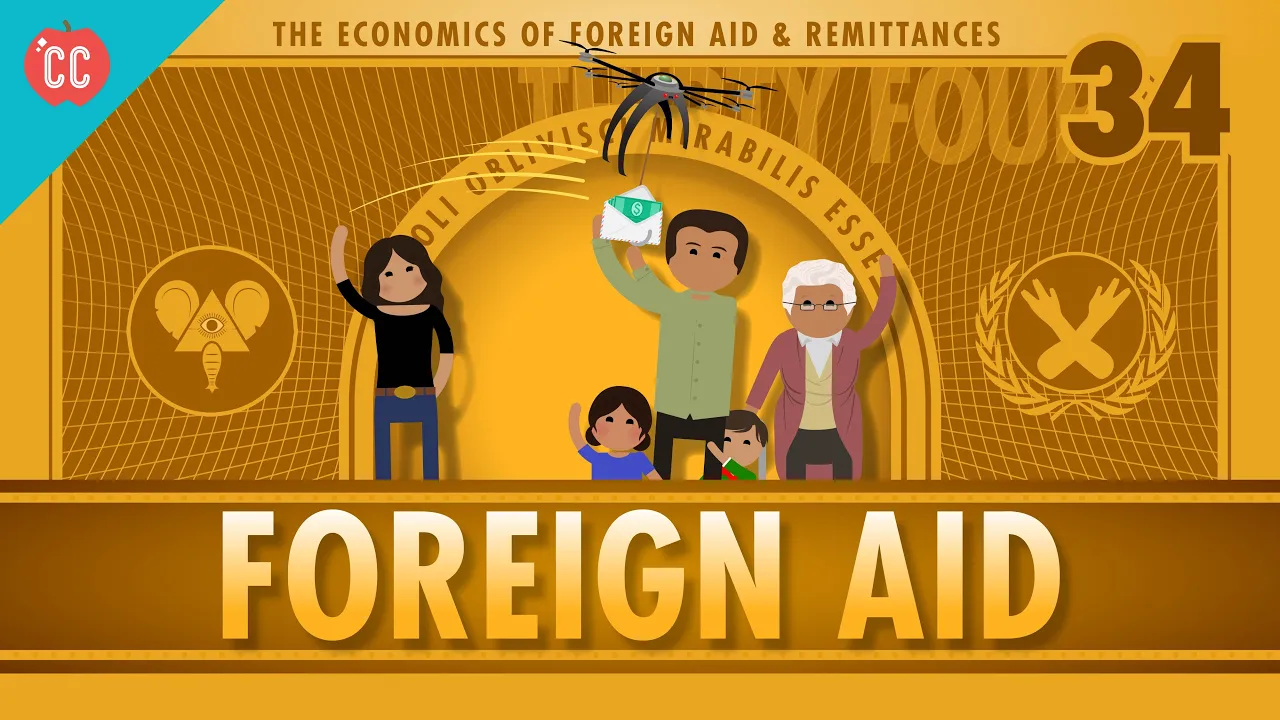
Why this video: This video provides a structured macro overview of foreign aid channels, private philanthropy, and the under-discussed impact of migrant remittances on development.
-
Knowledge Checkpoint:
- Define and distinguish between bilateral aid, multilateral aid, and humanitarian assistance.
- Define "remittances" and explain why they are often more direct and efficient than official developmental aid.
- State what percentage of the national budget is actually spent on foreign aid by developed nations like the United States.
Module 5: Modern Poverty Reduction and Policy Design
This module shifts the focus from macro-debates to evidence-based micro-interventions. You will examine the use of Randomized Controlled Trials (RCTs)—pioneered by Nobel Laureates Esther Duflo and Abhijit Banerjee—to test specific social policies, isolate causal effects, and design targeted programs to break poverty traps.
Recommended Videos

-
Why this video: In this TED Talk, Esther Duflo introduces randomized controlled trials in development economics. She argues that instead of debating aid ideologically, economists should act as "plumbers"—testing and refining specific interventions to see what works.
-
Knowledge Checkpoint:
- Explain how a Randomized Controlled Trial (RCT) isolates a causal link between an intervention and its outcome.
- Describe how Duflo’s research on immunizations and bed nets reveals that small incentives can yield large changes in behavioral compliance.
- Contrast the "plumber" approach to policy design with grand, top-down development schemes.
-
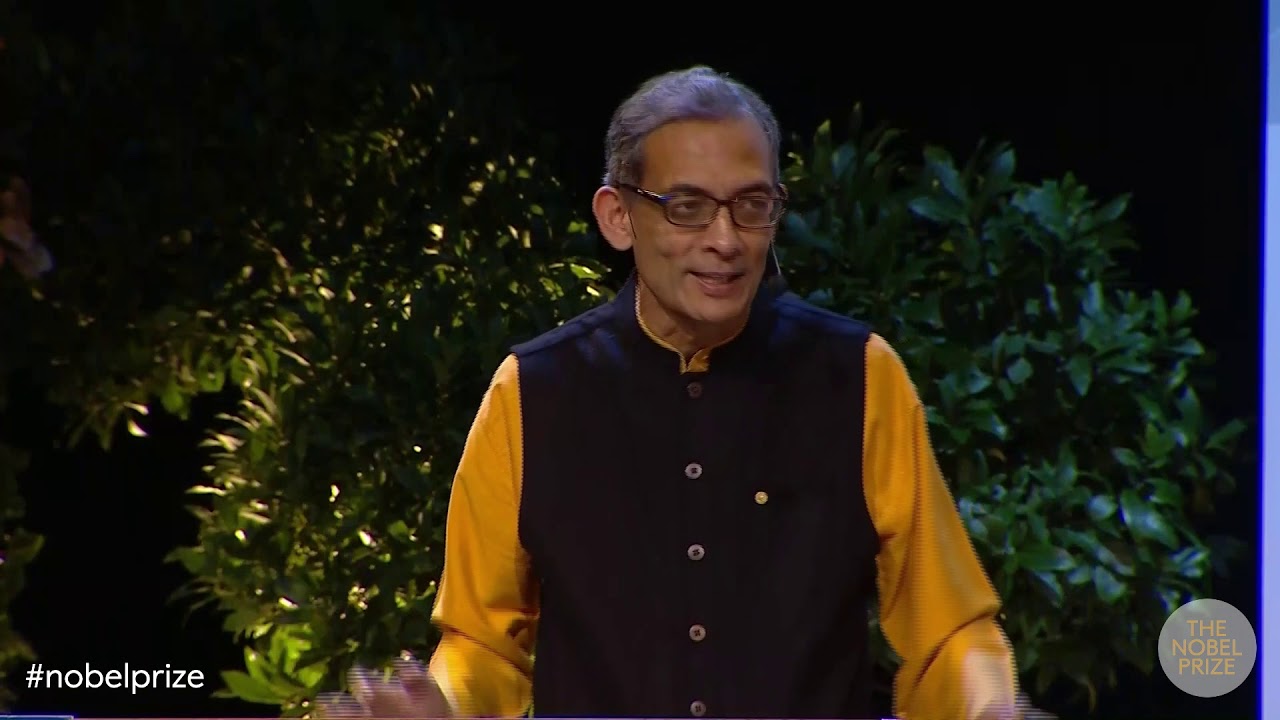
Why this video: Nobel Laureate Abhijit Banerjee explains how RCTs help economists understand the microeconomic choices of the poor, showing how empirical evidence can correct mistaken assumptions about credit, health, and education behaviors.
-
Knowledge Checkpoint:
- Explain how random assignment solves the problem of selection bias in social experiments.
- Describe how microeconomic behavior among the poor is influenced by risk, liquidity constraints, and information gaps.
- Discuss the ethical considerations of conducting randomized evaluations in developing regions.

-
Why this video: This academic lecture analyzes "Graduation Programs"—a highly evaluated, multi-faceted intervention designed to help ultra-poor households build sustainable livelihoods and escape systemic poverty traps.
-
Knowledge Checkpoint:
- Explain the theoretical mechanics of a poverty trap using economic models.
- Detail the components of a Graduation Program (asset transfer, training, consumption support, savings access).
- Analyze the RCT evidence showing that graduation programs can yield long-term, self-sustaining welfare gains.
Course Map
Below is the recommended sequence of modules. Note how the conceptual frameworks established in Modules 1 and 2 serve as foundational prerequisites for understanding legal structures, foreign aid, and modern policy design.
Key People Index
- Daron Acemoglu (MIT): Nobel Laureate economist. Developed the "Why Nations Fail" framework, showing that inclusive institutions drive long-term prosperity, while extractive ones lead to poverty and stagnation.
- Hernando de Soto Polar (Institute for Liberty and Democracy, Peru): Pioneer in institutional development. Formulated the theory of "dead capital," showing that formal property registration is essential to help the global poor access formal credit and capital markets.
- Jeffrey Sachs (Columbia University): Champion of the Millennium Villages Project. Argues that targeted, public investments in healthcare, infrastructure, and agriculture are needed to help countries escape poverty traps.
- William Easterly (NYU): Broad critic of top-down developmental planning. Advocates for market-driven solutions led by local, feedback-driven "Searchers" rather than external "Planners."
- Dambisa Moyo: International economist and author of Dead Aid. Argues that systemic development aid corrupts institutions and crowds out private investment, advocating instead for trade and capital market access.
- Esther Duflo & Abhijit Banerjee (MIT / J-PAL): 2019 Nobel Laureates. Pioneered the use of Randomized Controlled Trials (RCTs) to test specific microeconomic interventions and design evidence-based anti-poverty policies.
Final Self-Assessment
Complete this comprehensive self-assessment checklist after reviewing all modules:
- Explain the difference between economic growth (quantitative increase in GDP) and economic development (improvement in quality of life and human capabilities).
- Define inclusive and extractive institutions and describe their respective impacts on innovation and economic performance.
- Differentiate between formal institutions (laws, regulations) and informal institutions (cultural norms, customs).
- Explain Hernando de Soto Polar’s concept of "dead capital" and identify how formal property titles help resolve it.
- Describe how predictable contract enforcement and the rule of law lower transaction costs and facilitate complex economic specialization.
- Contrast William Easterly's developmental "Searchers" with top-down "Planners."
- Summarize Jeffrey Sachs' argument for targeted, technical public interventions to break poverty traps.
- Outline Dambisa Moyo’s critique of systemic government-to-government budgetary aid.
- Describe the mechanics of a Randomized Controlled Trial (RCT) and how it establishes causal impact.
- Explain how a multi-faceted "Graduation Program" works to help ultra-poor households escape poverty.