Fiscal Policy: Stimulus, Austerity & Debt
Learning Goal: Evaluate the effectiveness of fiscal policy during recessions, comparing the economic multipliers and long-term debt sustainability of government spending stimulus versus austerity measures.
- Prerequisites: None (Designed to take you from foundational concepts to advanced empirical research).
- Estimated Total Study Time: 12 Hours
Module 1: Foundations of Macroeconomics & Fiscal Policy
This module introduces the foundational dynamics of the aggregate economy. You will learn what a recession is, how shocks perturb economic equilibrium, and how the state uses its primary fiscal levers—taxation and public spending—to stabilize business cycles using the Aggregate Demand-Aggregate Supply (AD-AS) framework.
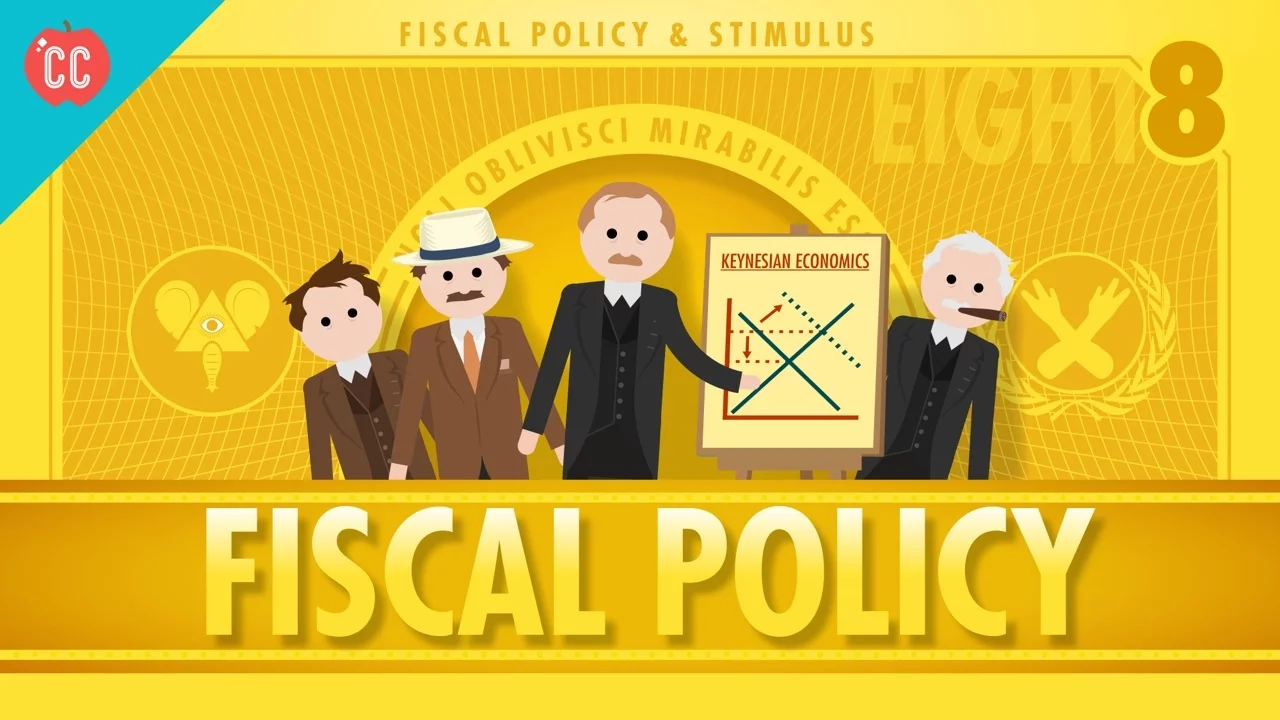
Why this video: This video provides a foundational overview of fiscal policy. It introduces expansionary and contractionary policies, illustrating how governments manipulate spending and taxation to shift Aggregate Demand and counteract recessions.

Why this video: To understand fiscal interventions, you must master the AD-AS model. This lecture walks you through the mechanics of economic fluctuations, demonstrating how shifts in the aggregate demand and supply curves create output gaps and recessions.
Module 1 Knowledge Checkpoint
- Define a recession using standard macroeconomic metrics.
- Explain how a negative demand shock shifts the Aggregate Demand (AD) curve and impacts real GDP and price levels.
- Contrast expansionary fiscal policy with contractionary fiscal policy, highlighting the tools associated with each.
Module 2: The Multiplier Effect & Economic Stimulus
This module explores the mechanics of the Keynesian multiplier. You will calculate how an initial injection of public spending creates a chain reaction of consumption through the economy, and you will learn why economists distinguish between the government spending multiplier and the tax cut multiplier.

Why this video: This video introduces the mathematical foundations of the Keynesian Cross and explains how a change in autonomous planned expenditures leads to a proportionally larger shift in equilibrium GDP.

Why this video: This video walks through the step-by-step math of the Marginal Propensity to Consume (MPC) and Marginal Propensity to Save (MPS). It explains the formula for the government spending multiplier and demonstrates how cash injections ripple through the private sector.

Why this video: This video addresses a critical comparative gap: why the tax multiplier is smaller than the government spending multiplier. It explains that when citizens receive tax cuts, they save a portion (MPS) of that income, reducing the initial economic impact compared to direct government spending.
Module 2 Knowledge Checkpoint
- Calculate the government spending multiplier using the formula or .
- Explain why the tax multiplier () is always smaller in absolute magnitude than the spending multiplier.
- Map the path of a $100 million infrastructure investment through the economy when the MPC is 0.75.
Module 3: Stimulus vs. Austerity in Times of Crisis
This module analyzes the central macroeconomic debate of the past century: when hit with a recession, should governments spend to stimulate demand (Keynesian school) or cut spending to balance budgets and prevent debt accumulation (Austrian/Classical school)?

Why this video: This video brings the core philosophical and economic clash between John Maynard Keynes and Friedrich Hayek to life. It highlights the arguments for demand-side intervention versus the defense of market-clearing pricing and structural savings.

Why this video: Political economist Mark Blyth presents a critique of austerity. He explains the "fallacy of composition"—the mistake of assuming that because an individual household must cut back during hard times, a sovereign government should do the same.

Why this video: Professor Steve Keen critiques the mathematical underpinnings of austerity, explaining how public sector deficits write private sector surpluses and demonstrating why cutting government expenditures during downturns can inadvertently reduce total national income.
Module 3 Knowledge Checkpoint
- Contrast the Keynesian perspective on aggregate demand failures with the Austrian perspective on market adjustments.
- Explain the concept of the "fallacy of composition" in the context of public vs. private balance sheets.
- Detail how contractionary fiscal policy (austerity) can trigger a downward spiral in consumer spending and business investment during a recession.
Module 4: Debt Sustainability & Sovereign Solvency
In this module, you will evaluate the limits of fiscal expansion. You will analyze sovereign borrowing, the debt-to-GDP ratio, the crowding-out effect, and the economic triggers that turn public debt into a sovereign debt crisis.

Why this video: This video breaks down the debt-to-GDP ratio. It provides a balanced look at sovereign borrowing, explaining why nominal debt figures can be misleading and how debt sustainability is tied to real economic growth and interest rate dynamics.

Why this video: Renowned economist Mohamed El-Erian provides an institutional analysis of debt sustainability. He explains why standard metrics like the debt-to-GDP ratio are insufficient on their own, illustrating how interest-payment-to-revenue ratios and sovereign bond pricing play critical roles.

Why this video: This video outlines the mechanics of a sovereign debt crisis. It describes what happens when a government surpasses sustainable borrowing levels, bond markets demand higher yields, and the central bank is forced to intervene.

Why this video: This video introduces the "crowding-out" effect, a central argument against deficit spending. It details how increased government demand for loanable funds raises interest rates, which can reduce private investment.
Module 4 Knowledge Checkpoint
- Explain the math behind the debt-to-GDP ratio and why a country's nominal debt value is secondary to its GDP output.
- Describe the "crowding-out" mechanism: how government borrowing impacts interest rates and private investment.
- Outline the feedback loop that leads a country from high debt levels to a sovereign debt crisis.
Module 5: Empirical Evidence: Real-World Case Studies
This module brings together the theoretical concepts by analyzing modern case studies. You will compare the United States' stimulus-driven response to the 2008 Great Recession (ARRA) with the austerity-driven response in the Eurozone, exploring the academic debate surrounding the IMF’s underestimation of fiscal multipliers.

Why this video: This detailed presentation examines the Olivier Blanchard and Daniel Leigh (2013) IMF working paper. It details how forecasters underestimated the size of fiscal multipliers during the Eurozone's austerity push, leading to worse-than-predicted economic contractions.

Why this video: This interview compares the diverging economic strategies post-2008: the US's emphasis on fiscal stimulus (such as the ARRA) versus Europe’s quick pivot to structural austerity, analyzing the differences in their economic recoveries.
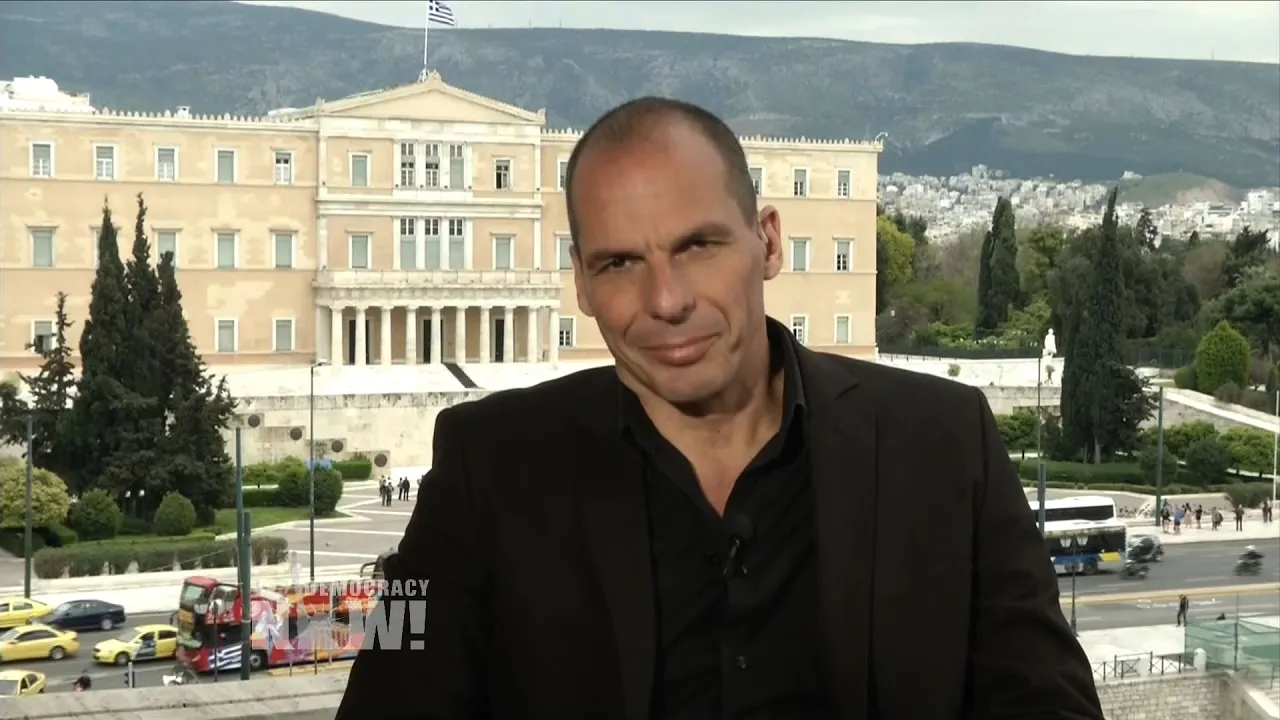
Why this video: Former Greek Finance Minister Yanis Varoufakis discusses the impact of Eurozone-imposed austerity on Greece. He outlines the challenges of managing structural adjustments in a debt-deflationary spiral.

Why this video: This video examines the empirical case of the United Kingdom's post-2010 austerity program, showing how the premise of "expansionary fiscal contraction" (the idea that cutting deficits raises confidence and economic growth) failed as debt-to-GDP rose rather than fell.
Module 5 Knowledge Checkpoint
- Explain why the IMF (via Blanchard & Leigh, 2013) adjusted its assumed fiscal multiplier from 0.5 to 1.5 during the Great Recession.
- Contrast the economic growth of the US and the Eurozone between 2010 and 2015, linking the outcomes to their fiscal policy choices.
- Explain how a "debt-deflation" trap works, detailing how budget cuts can result in a higher debt-to-GDP ratio.
Course Map
This map outlines the path through the curriculum, starting from foundational macroeconomics, splitting into the mechanics of stimulus and debt limits, and combining both threads in the empirical case studies of Module 5.
Key People Index
- John Maynard Keynes (1883–1946): British economist who developed the macroeconomic theory that aggregate demand drives economic activity, advocating for active government intervention during recessions.
- Friedrich Hayek (1899–1992): Austrian-British economist who defended free-market price signals, warning that government economic planning and debt lead to inflation and structural distortions.
- Olivier Blanchard (1948–Present): Former Chief Economist of the International Monetary Fund (IMF) whose 2013 research with Daniel Leigh reshaped fiscal policy by demonstrating that the IMF had underestimated the impact of austerity on economic output.
- Yanis Varoufakis (1961–Present): Greek economist and politician who served as Greece’s Finance Minister in 2015, known for his opposition to austerity measures during the European sovereign debt crisis.
- Mohamed El-Erian (1958–Present): Renowned market strategist and economist who analyzes modern debt dynamics and sovereign solvency risks.
Final Self-Assessment
To verify your mastery of this curriculum, ensure you can confidently complete each task:
- Draw the AD-AS model illustrating a recessionary gap, and show how expansionary fiscal policy corrects it.
- Calculate the final change in national output for a $50 billion infrastructure bill when the Marginal Propensity to Consume (MPC) is 0.8.
- Explain why a direct injection of government spending has a larger initial multiplier than an equivalent tax cut.
- Explain the concept of the "fallacy of composition" as it applies to public sector deficit spending during a private sector deleveraging cycle.
- Outline the crowding-out effect, showing how expansionary deficit spending can increase private sector borrowing costs.
- Define the debt-to-GDP ratio and identify the conditions under which a government can run deficits without increasing this ratio.
- Describe the structural triggers that lead to a sovereign debt crisis, including how bond yield spreads signal default risks.
- Explain the findings of the 2013 Blanchard-Leigh IMF working paper and its impact on the economic consensus surrounding fiscal multipliers.
- Compare the economic recovery paths of the United States and the Eurozone from 2009 to 2015, referencing the specific fiscal actions of each.
- Explain the process of "debt-deflation" and evaluate whether austerity or stimulus is more effective at preventing it during a balance-sheet recession.