Business Entities (LLC, S-Corp & C-Corp)
Learning Goal: Evaluating the legal differences between LLCs, C-Corporations, and S-Corporations to determine the optimal business entity structure for a new commercial venture.
- Prerequisites: None. This curriculum is designed to take you from a complete beginner to a highly informed strategist capable of making foundational corporate structure decisions.
- Estimated Total Study Time: 8 Hours
Module 1: Foundations of Business Legal Structures
This module introduces the fundamental legal concepts of business entities. You will explore the distinctions between informal, default business structures (such as sole proprietorships) and formal, registered entities. Key emphasis is placed on the core legal doctrine of personal limited liability and the strict, US-specific legal conditions under which courts may "pierce the corporate veil," exposing business owners to personal financial ruin.
Recommended Videos
- Why this video: This video provides an excellent high-level taxonomy of the fundamental entity options available to business owners. It contrasts the structural simplicity of a sole proprietorship with the operational, liability, and tax configurations of registered entities, providing a solid starting block for the curriculum.
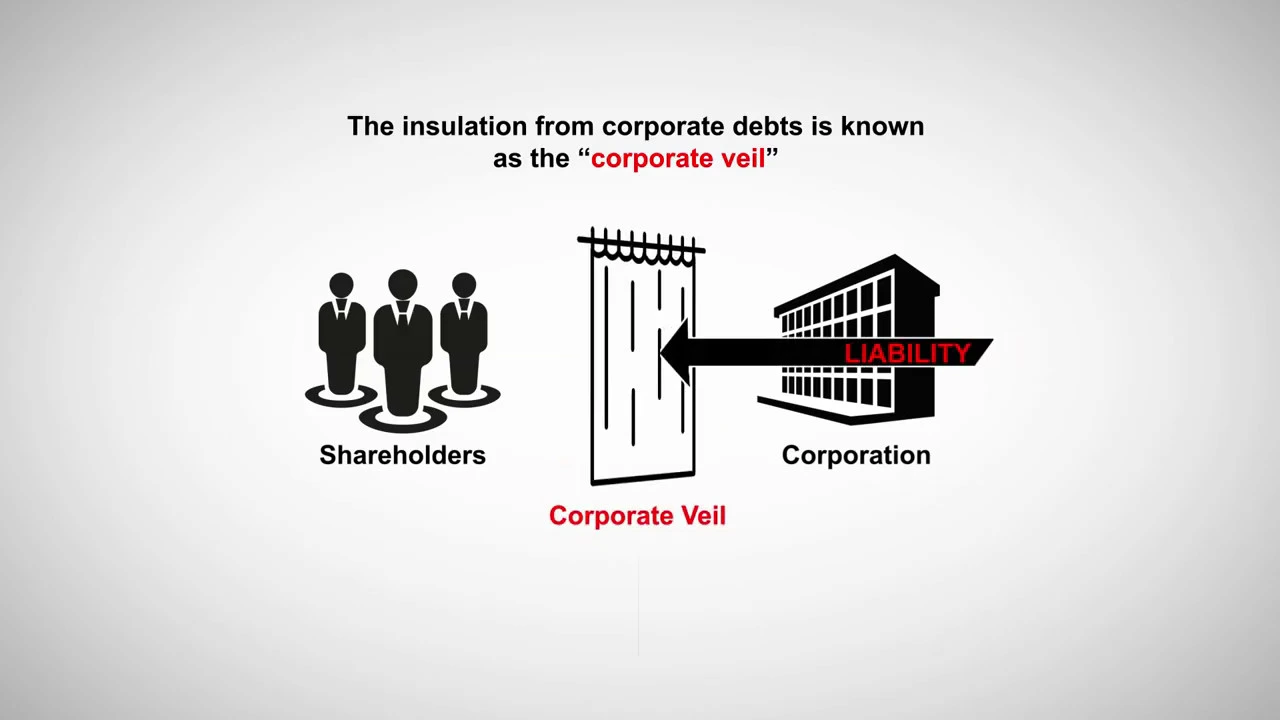
- Why this video: Addressing a critical curriculum gap, this video provides a highly technical, US-focused legal breakdown of the "piercing the corporate veil" doctrine. It systematically reviews how courts evaluate corporate separateness, highlighting the specific scenarios (such as severe undercapitalization or fraud) that strip business owners of their limited liability protections.

- Why this video: Hosted by a practicing corporate attorney, this video explains the practical, day-to-day mistakes business owners make that compromise their corporate veil. It delivers clear guidance on avoiding the commingling of personal and business funds, signing contracts incorrectly, and failing to maintain basic entity hygiene.
Knowledge Checkpoint
- Explain the fundamental operational and liability differences between a default sole proprietorship and a registered Limited Liability Company (LLC).
- List the three primary legal factors US courts evaluate when deciding whether to disregard an entity's legal structure and "pierce the corporate veil."
- Identify at least three administrative and financial practices a business owner must implement to preserve their personal liability shield.
Module 2: LLC Mechanics: Flexibility & Pass-Through Taxation
This module explores the mechanics of the Limited Liability Company (LLC). Known for its operational fluidity, the LLC bridges the gap between partnership-style flexibility and corporate-style liability protection. You will learn about key internal documents like Operating Agreements, analyze how the IRS treats LLCs via default pass-through taxation, and compare the strategic distinctions of Member-managed versus Manager-managed LLCs.
Recommended Videos

- Why this video: This video defines the exact nature of the LLC, illustrating the "protective bubble" it creates around personal assets. It serves as a clear primer on how LLCs handle liabilities differently from corporate structures and explains the concept of "members" as owners.
- Why this video: An LLC's governing power lies entirely within its Operating Agreement. This comprehensive guide walks through the essential terms of an Operating Agreement, detailing how ownership percentages, voting rights, profit distributions, and dissolution protocols must be structured legally.
- Why this video: This video addresses a key operational distinction: Member-managed vs. Manager-managed LLCs. It details who holds the authority to legally bind the company in contracts, make daily operational decisions, and represent the company to external parties.

- Why this video: This specialized video deepens your understanding of LLC management types. It explains the strategic and privacy advantages of appointing a manager to run day-to-day operations, especially when passive investors (members) want to limit their active liability and operational exposure.
Knowledge Checkpoint
- Define "pass-through taxation" and explain how the IRS taxes a single-member LLC compared to a multi-member LLC by default.
- Differentiate between a Member-managed and a Manager-managed LLC, detailing who has the legal authority to sign contracts in each.
- List the core sections that must be included in a robust LLC Operating Agreement to prevent member disputes and protect the entity's liability shield.
Module 3: C-Corporations: Funding, Governance, and Double Taxation
This module examines the traditional C-Corporation (C-Corp), the standard structure for high-growth and venture-backed startups. We demystify the corporate governance hierarchy—dissecting the separate roles of Shareholders, the Board of Directors, and Officers. Additionally, we analyze the mechanics of double taxation and explore why institutional venture capitalists overwhelmingly require startups to incorporate as Delaware C-Corporations.
Recommended Videos
- Why this video: This video explains the legal architecture of a corporation. It illustrates how ownership is completely decoupled from daily management through the issuance of stock, setting the stage for understanding complex corporate governance.

- Why this video: Resolving a core feedback gap, this detailed lecture clarifies corporate governance. It explains how shareholders (owners) elect the Board of Directors (fiduciaries who set policy), who in turn appoint Officers (executives like the CEO and CFO who run daily operations).
- Why this video: This video, hosted by a CPA, explains C-Corp taxation and structure. It walks through how corporate profits are calculated, how corporate taxes are paid at the entity level, and how dividends distributed to shareholders are taxed again, illustrating the double taxation process.

- Why this video: This concise video addresses the venture capital gap by explaining why corporate structures—particularly those formed in Delaware—are favored by investors. It highlights a corporation's unique ability to easily issue stock, allocate stock options, and handle structured venture equity.
Knowledge Checkpoint
- Draw the three-tier governance hierarchy of a C-Corporation and define the distinct legal roles and responsibilities of shareholders, directors, and officers.
- Explain the concept of "double taxation," identifying at what points and rates corporate profits are taxed at the entity and individual shareholder levels.
- Outline the corporate advantages that make a Delaware C-Corporation the industry standard for institutional venture capital firms.
Module 4: S-Corporations: The Tax-Saving Election
This module reviews S-Corporation (S-Corp) status. You will learn that an S-Corp is not a unique legal entity, but rather a special tax election that can be applied to an LLC or a Corporation. We will analyze the strict IRS eligibility requirements, calculate how S-Corps help self-employed individuals minimize self-employment taxes through salary-and-distribution splits, and walk through the federal filing process.
Recommended Videos

- Why this video: This detailed comparison explains the tax-saving mechanics of S-Corps. It demonstrates how to legally split net business income into a "reasonable salary" (subject to FICA/payroll taxes) and shareholder "distributions" (exempt from self-employment taxes) to save thousands of dollars annually.

- Why this video: This video uses concrete mathematical scenarios to show the threshold where an S-Corp election becomes financially beneficial. It breaks down the numbers for businesses generating varying levels of net profit, illustrating the financial tipping point for making the election.

- Why this video: This technical walkthrough details IRS Form 2553, the document required to elect S-Corp status. The video reviews the strict eligibility requirements—including the 100-shareholder limit, domestic entity rules, and single-class-of-stock restriction—providing a complete compliance guide.
Knowledge Checkpoint
- Explain why an S-Corporation is categorized as a "tax election" rather than a distinct legal entity structure.
- State the maximum number of shareholders an S-Corp can have, along with the citizenship and entity-type restrictions imposed on those shareholders.
- Calculate the self-employment tax savings for a business with 70,000 "reasonable salary" split.
Module 5: The Decision Matrix: Selecting the Optimal Entity
In this synthesis module, you will bring together the legal, operational, and tax rules of LLCs, C-Corps, and S-Corps. By analyzing real-world operational trade-offs, ownership constraints, and long-term growth plans, you will build a dynamic decision matrix to determine the optimal business entity structure for any new commercial venture.
Recommended Videos

- Why this video: This video compares C-Corps, S-Corps, and LLCs side-by-side across four key dimensions: tax classification, allowable business deductions, ownership restrictions, and regulatory paperwork, establishing a strong foundation for your decision matrix.

- Why this video: This extensive comparison dives into the administrative burdens and operational differences between maintaining a standard LLC and running an S-Corp. It covers key details like quarterly payroll filings, annual meeting minutes, and state-level compliance costs.
- Why this video: This video ties everything together by separating a business's legal form from its tax classification. It shows how a business can grow and change its tax status over time without needing to dissolve or disrupt its underlying legal operations.
Knowledge Checkpoint
- Construct a comparative matrix evaluating LLCs, S-Corps, and C-Corps across five areas: Liability Protection, Tax Treatment, Owner Limitations, Maintenance/Setup Complexity, and Venture Capital Appeal.
- Determine which entity structure is best for a local, family-owned service business aiming to minimize taxes with minimal administrative overhead.
- Determine the optimal structure for a high-tech software startup intending to raise institutional capital from venture capital firms within its first 12 months.
Course Map
The following flowchart illustrates the prerequisite dependencies and the conceptual progression of the modules.
Key People Index
The following professionals and organizations featured in this curriculum provide valuable insights on corporate structure, tax compliance, and business formation:
- Mark J. Kohler (@MarkJKohler): A leading CPA, national corporate attorney, and author. He is recognized for his focus on tax-saving strategies, entity asset protection, and structural education for small business owners.
- Elizabeth Potts Weinstein (@ElizabethPW): A business attorney who specializes in helping entrepreneurs, freelancers, and small businesses navigate the legal complexities of business formation, contracts, and IP protection.
- LawShelf (@LawShelf): An educational legal resource platform that provides structured, comprehensive video tutorials on core US legal doctrines, business law, and corporate liability concepts.
- LYFE Accounting (@LYFEAccounting): A prominent accounting firm and educational channel led by CPAs, specializing in small business taxation, S-Corp strategy, and wealth-building structures.
Final Self-Assessment
Complete this comprehensive self-assessment to verify your mastery of the legal, operational, and tax elements of business entities.
- I can define limited liability and identify the personal financial risks associated with operating as an unregistered sole proprietorship.
- I can list the legal requirements that must be met to preserve the "corporate veil" and protect personal assets from business liabilities.
- I can explain the operational differences between a Member-managed LLC and a Manager-managed LLC, including who has authority to sign contracts.
- I can outline the main parts of an Operating Agreement and explain why it is essential for multi-member LLCs.
- I can explain the three tiers of C-Corp governance, defining the separate roles and responsibilities of shareholders, directors, and officers.
- I can calculate double taxation mechanics, showing how corporate earnings are taxed at both the entity and shareholder level.
- I can explain why institutional investors prefer Delaware C-Corps, focusing on corporate governance, stock options, and Delaware's legal system.
- I can state the IRS eligibility criteria for S-Corps, including rules regarding shareholder count, citizenship, and classes of stock.
- I can calculate the tax benefits of an S-Corp split, separating business income into a reasonable salary and shareholder distributions.
- I can list the steps to elect S-Corp status, including deadlines and requirements for filing IRS Form 2553.
- I can compare LLCs, S-Corps, and C-Corps across liability, tax treatment, ownership limits, and administrative complexity.
- I can select the optimal business entity for any given venture based on its funding needs, growth plans, and tax objectives.