Enforcing Online Contracts: Clickwrap & ToS
Learning Goal: "Analyze the legal enforceability of online terms of service and 'clickwrap' agreements under contract law to evaluate consumer rights and business liability."
- Estimated Total Study Time: 12 Hours
- Prerequisites: None. This curriculum is designed to take you from a complete beginner in contract law to a specialist in digital contract design and dispute evaluation.
Module 1: Introduction to Contract Law Basics
This module establishes the foundational pillars of contract law. You will learn the core requirements for an agreement to become a legally binding contract enforceable by a court of law, focusing on offer, acceptance, consideration, and mutual assent.
Recommended Videos

- Why this video: It offers a clear, highly structured breakdown of the essential elements of contract formation. By framing contracts through the famous definition by Sir Frederick Pollock ("a promise or set of promises which the law will enforce"), it explains the "ingredients" of legal binding agreements in an accessible way.

- Why this video: This formal law lecture dives deeper into the nuance of contract formation. Critically, it distinguishes a legal "offer" from an "invitation to treat" (such as advertisements or products displayed on a store shelf), which is a vital distinction when evaluating how digital terms are presented online.
- Why this video: It provides a highly practical walkthrough of the mechanics of contract law, highlighting the "meeting of the minds" (mutual assent) and the exchange of "consideration" (something of value given by each party). It sets the stage for analyzing how these physical-world concepts translate into the digital realm.
Knowledge Checkpoint
- Explain the difference between a legal "offer" and an "invitation to treat."
- Define the concept of "consideration" and give an example of what constitutes consideration in a standard transaction.
- Describe the meaning of "mutual assent" or the "meeting of the minds."
- Identify what makes a verbal agreement legally binding and understand its limitations.
Module 2: The Evolution of Online Agreements
As commerce shifted online, physical signatures and handshakes were replaced by digital flows. This module analyzes the distinct types of digital contracts—namely clickwrap, browsewrap, scrollwrap, and sign-in-wrap—and explores how platforms bind users.
Recommended Videos

- Why this video: This video is the gold standard for defining the functional and legal differences between clickwrap and browsewrap. It details how clickwrap requires active consent, while browsewrap relies on passive, implied consent through continued browsing—a difference that heavily influences whether a court will enforce the terms.
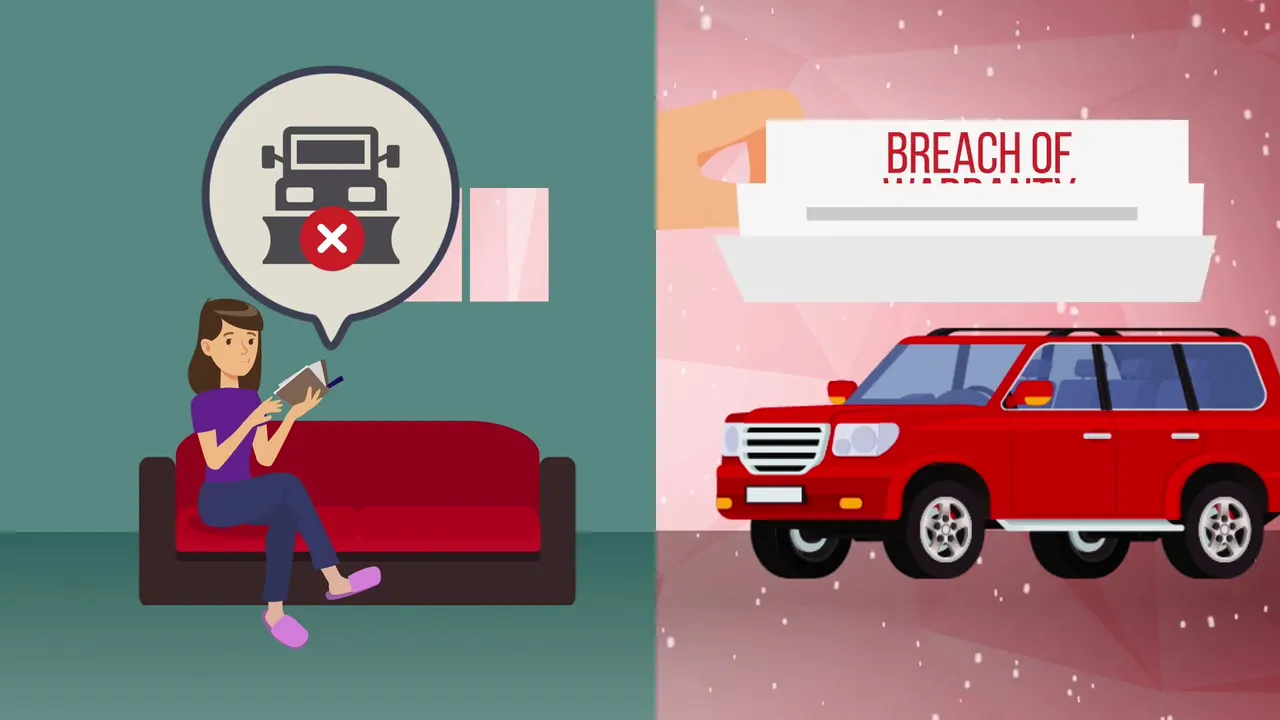
- Why this video: This quick conceptual breakdown explains how websites attempt to limit warranties and liabilities through digital contracts, categorizing clickwrap vs. browsewrap agreements under commercial law standards.
Knowledge Checkpoint
- What is the core mechanical difference between a browsewrap agreement and a clickwrap agreement?
- Why do courts generally find browsewrap agreements harder to enforce than clickwrap agreements?
- Define "scrollwrap" and explain how it differs from a simple clickwrap checkbox.
- What constitutes "implied consent" in the context of digital agreements?
Module 3: Legal Enforceability & Key Court Precedents
How do courts decide if a digital contract is valid? This module explores seminal court cases that established the rules for reasonable notice and the clear manifestation of assent in digital interfaces.
Recommended Videos

- Why this video: Specht v. Netscape (2002) is the most critical landmark case in online contract law. This brief summary explains how the Second Circuit Court of Appeals ruled that users downloading free software were not bound by a hidden license agreement because the download button did not provide reasonable notice of the terms.

- Why this video: An in-depth, lawyer-led analysis of a real court case where a company's hybrid clickwrap/browsewrap implementation failed to hold up in court. This video demonstrates how courts dissect user flows to check if "reasonable notice" was actually achieved.
Knowledge Checkpoint
- What were the key facts in Specht v. Netscape, and why did the court rule the agreement unenforceable?
- Explain the concept of "reasonable notice" as applied by modern courts.
- Under what conditions will a court deem a hyperlink to "Terms & Conditions" insufficient to bind a user?
- What did the Redbox case reveal about the vulnerability of "hybrid" or poorly structured digital flows in litigation?
Module 4: Consumer Rights and Unconscionable Terms
Academic Note: Online terms are almost always "contracts of adhesion" (take-it-or-leave-it agreements). While businesses have the right to draft standard terms, they cannot enforce terms that are "unconscionable." Unconscionability contains two prongs, both of which must generally be present to void a contract: procedural unconscionability (unfairness in the bargaining process, e.g., fine print, complex legalese, lack of choice) and substantive unconscionability (terms that are so outrageously one-sided they "shock the conscience").
This module analyzes these elements of consumer protection in digital spaces.
Recommended Videos

- Why this video: This Yale Law School lecture focuses on Williams v. Walker-Thomas Furniture Co., the foundational common-law case establishing the modern doctrine of unconscionability. It explores how courts balance freedom of contract against protecting vulnerable parties from oppressive terms.

- Why this video: An academic lecture explaining unconscionability as a key "vitiating factor" that invalidates contracts. It covers how courts intervene when one party exploits the "special disability" or extreme lack of bargaining power of another.

- Why this video: This modern case analysis breaks down the concept of an adhesion contract (a standardized "take-it-or-leave-it" agreement) and why courts subject them to stricter scrutiny, particularly when contestants or users are forced to waive basic legal rights.
Knowledge Checkpoint
- Define a "contract of adhesion" and explain why they dominate digital platforms.
- Distinguish between procedural unconscionability and substantive unconscionability.
- How did Judge Jay Skelly Wright define unconscionability in Williams v. Walker-Thomas Furniture Co.?
- What rights can a consumer never legally waive in a contract (such as rights protected by public policy or anti-fraud laws)?
Module 5: Arbitration Clauses and Business Liability
Perhaps the most controversial development in modern terms of service is the inclusion of mandatory binding arbitration clauses and class-action waivers. This module evaluates how corporations use these terms to insulate themselves from public class-action lawsuits, and the legal battleground surrounding their enforceability.
Recommended Videos

- Why this video: This news segment highlights a real-world case that sparked national debate: Disney trying to compel arbitration in a wrongful death lawsuit because the plaintiff had signed up for a Disney+ free trial years prior. It exemplifies the extreme, far-reaching scope of modern corporate arbitration clauses.

- Why this video: This video explains how major platforms like Airbnb successfully shield themselves from massive class-action liabilities by routing all disputes into private, individual arbitration rather than public courtroom trials.

- Why this video: This legal analysis details how unconscionability is used to challenge arbitration agreements in court. It details the California Supreme Court’s Armendariz standard, illustrating how procedural and substantive unconscionability are weighed in arbitration challenges.
- Why this video: This lawyer's breakdown explores how "class action waivers" work in tandem with arbitration clauses to require consumers to pursue claims strictly on an individual basis, preventing collective legal pushback against systematic business practices.
Knowledge Checkpoint
- What is "binding arbitration," and how does it differ from a public trial by jury?
- What is a "class-action waiver," and how does it protect businesses from massive, aggregate financial liabilities?
- How did Disney's legal team attempt to use Disney+ Terms of Service to defend against a physical-world wrongful death claim?
- Under what circumstances will a court strike down an arbitration clause using the Armendariz unconscionability test?
Module 6: Designing Compliant and Enforceable UX
Implementation Gap Note: Designing legally compliant user experiences (Legal Design) requires careful execution. Standard video tutorials on UX often focus on friction reduction, which can inadvertently lead to legally unenforceable interfaces. To bridge this gap, this module focuses on both the technical setup and strict UI guidelines required to withstand litigation.
To dive deeper into this specialized field, search for the following terms independently:
- "How to design legally binding clickwrap agreements UI UX"
- "Legal design patterns for online terms of service"
Recommended Videos

- Why this video: This short technical overview demonstrates how enterprise software tools manage legally binding online agreements, ensuring that versions are tracked, consent is logged, and clean audit trails are kept to survive court scrutiny.
- Why this video: This continuing legal education segment lays out direct practical guidelines for business interface design: (1) requiring users to scroll through the agreement to reach the submission button, and (2) requiring an active, affirmative click of acceptance to ensure enforceability.

- Why this video: An exploration of "Legal Design"—a growing discipline that merges law, human-centric design, and technology. It highlights how businesses can present complex legal obligations in formats that respect human dignity and are easy to comprehend.
Deep Dive: Strict UI Guidelines for Enforceable Terms
When designing user interfaces that feature legal agreements, you must implement the following four principles to avoid "browsewrap" traps:
- Explicit Affirmation (Clickwrap): Never pre-check the "I accept" checkbox. The user must manually click a checkbox confirming agreement.
- Clear Font and Contrast: The text pointing to the Terms of Service and Privacy Policy must be easily readable (not hidden in microscopic, low-contrast footer text) and positioned in immediate proximity to the action button (e.g., "Sign Up" or "Place Order").
- Hyperlinked & Accessible Text: All terms must be formatted as highly visible, clickable links that direct the user to the exact text of the agreements.
- Clean Logging & Audits (The Back-End): You must capture and store metadata for every consent event: the User ID, Timestamp, IP Address, and the exact version of the Terms of Service agreed to at that moment.
Knowledge Checkpoint
- Explain why pre-checked "I agree" boxes are generally considered legally risky.
- What metadata must a database capture to prove in court that a specific user agreed to a specific version of a terms of service document?
- Describe "Legal Design" and explain how it contrasts with traditional "fine print" legal formatting.
- Why is forcing a user to scroll to the bottom of terms before clicking "Accept" (scrollwrap) considered the safest legal UX design pattern?
Course Map
Below is the recommended sequence of modules. You must master contract basics (M1) and online types (M2) before evaluating court cases (M3), consumer protections (M4), liability limitations (M5), and UX implementation (M6).
Key People Index
The following notable legal figures, judges, and educators are discussed across the curriculum:
- Sir Frederick Pollock (Module 1): Celebrated English jurist whose seminal definition of a contract ("a promise or set of promises which the law will enforce") laid the groundwork for modern common-law contract interpretation.
- Judge Jay Skelly Wright (Module 4): The US Court of Appeals judge who penned the landmark decision in Williams v. Walker-Thomas Furniture Co., establishing the legal definition and modern boundaries of the doctrine of unconscionability.
- Judge Sonia Sotomayor (Module 3): Wrote the influential circuit court opinion in Specht v. Netscape (before her Supreme Court appointment), establishing the "reasonable notice" requirement for digital interfaces.
Final Self-Assessment
Test your mastery of the entire curriculum by assessing whether you can confidently complete these tasks:
- Identify and define the three essential requirements of a binding contract: offer, acceptance, and consideration.
- Differentiate between clickwrap, browsewrap, scrollwrap, and sign-in-wrap agreements.
- Analyze a sign-up screen and identify any browsewrap elements that could make its terms unenforceable in a court of law.
- Summarize the primary holding of Specht v. Netscape (2002).
- Define the two prongs of unconscionability (procedural vs. substantive) and apply them to a digital terms of service contract.
- Define "contract of adhesion" and explain why they are legal but subjected to heightened judicial scrutiny.
- Explain how a mandatory arbitration clause with a class-action waiver blocks consumers from utilizing the civil court system.
- Critique a digital onboarding user flow from a legal perspective and recommend changes to make its online terms highly enforceable.
- List the back-end database parameters required to construct a valid, court-ready audit trail of a user's consent.