Metafiction: Postmodern Irony, Truth & Reality
Learning Goal: Analyze the techniques and philosophical implications of Postmodern Metafiction, examining how self-reflexive narratives, intertextuality, and playful irony challenge the boundaries between fiction and reality.
- Prerequisites: Basic familiarity with narrative structures and introductory literary analysis.
- Estimated Total Study Time: 14 hours
Module 1: Foundations of Postmodernism and Literary Theory
This module introduces the cultural and historical shift from Modernism to Postmodernism in the mid-to-late 20th century. It explores how the collapse of "grand narratives" and a deep-seated crisis of representation altered how writers approach narrative, truth, and the construction of reality.
Recommended Videos

- Why this video: This video provides an essential conceptual baseline, defining Postmodernism as an intellectual movement that challenges the binary distinctions of high and low art, original and copy, and reality and simulation. It maps out how everything within this framework is treated as a text.
- Knowledge Checkpoint:
- Understand the core distinctions between an original and a simulated copy.
- Identify how Postmodernism challenges historical hierarchies of high versus low art.
- Explain the concept of "everything as text" in the postmodern paradigm.
![John Bishop - Modernism and Post-Modernism [in Literature]](https://i.ytimg.com/vi/l9m5-VXqFJU/hqdefault.jpg)
- Why this video: This is a deep-dive academic lecture tracking the historical evolution from the Modernist era (roughly 1910–1939) to Postmodernism. It highlights how Modernist aesthetic self-reflexiveness, fragmentation, and skepticism toward grand narratives laid the groundwork for Postmodernism's radical narrative games.
- Knowledge Checkpoint:
- Explain the historical transitions and cultural forces that separated Modernism from Postmodernism.
- Contrast Modernist fragmentation (which still mourns a lost coherence) with Postmodernist fragmentation (which playfully celebrates it).
- Detail how modern literature transitioned into self-reflexive modes of storytelling.
- Why this video: This segment cleanly outlines the crucial transition from the epistemological focus of Modernism (which asks: "How can I know my world?") to the ontological focus of Postmodernism (which asks: "Which world is this, and what is my place in it?").
- Knowledge Checkpoint:
- Define the shift from epistemological inquiry to ontological inquiry in literature.
- Understand how Thomas Pynchon's work serves as a prime model for this shift.
- Analyze how unstable narrative worlds challenge the reader's expectation of absolute objective truth.
Module 2: Decoding Metafiction and Self-Reflexivity
This module investigates the core mechanisms of metafiction: narratives that self-consciously address their own status as artificial constructs. It also examines the expansion of metafiction into digital and interactive media, where interactive design makes the boundaries between participant, creator, and text incredibly thin.
Note on Literary Metafiction: Since video resources focusing purely on literary-theoretical definitions of metafiction are brief, it is highly recommended to read external theoretical texts (such as Patricia Waugh's Metafiction: The Theory and Practice of Self-Conscious Fiction) alongside these media-centric studies.
Recommended Videos
- Why this video: This short presentation delivers a clear, intuitive introduction to metafiction as "stories about stories" and explores the classic narrative device of "breaking the fourth wall" to intentionally rupture the illusion of reality.
- Knowledge Checkpoint:
- Define "metafiction" in plain terms and contrast it with traditional realist storytelling.
- Explain the narrative impact of "breaking the fourth wall."
- Describe how acknowledging a story's status as a construct affects reader immersion.

- Why this video: This video transitions our study into digital metafiction, analyzing how interactive software can structurally mislead, parody, and directly subvert players' genre expectations to expose the artificial rules of the medium itself.
- Knowledge Checkpoint:
- Analyze how interactive software can subvert player expectations to critique standard rules.
- Detail the connection between game mechanics and narrative self-reflexivity.
- Explain how humor and surprise can dismantle the illusion of a standard "user interface."
- Why this video: A focused analysis of Black Mirror: Bandersnatch that demonstrates how the work forces the viewer/player into a metafictional loop. It illustrates how the protagonist becomes aware of the external "authorial" choices of the viewer, mirroring postmodern anxieties about agency and control.
- Knowledge Checkpoint:
- Identify how choose-your-own-adventure mechanics function as an allegory for authorial control.
- Analyze the narrative loops that occur when a fictional character becomes aware of their creator/viewer.
- Explain how digital formats highlight the artificial nature of narrative choices.
Module 3: Intertextuality, Pastiche, and Playful Irony
This module explores how postmodern texts discard the illusion of a singular "original" voice. It examines intertextuality—the idea that texts are woven entirely from other texts—alongside pastiche (the playful assembly of multiple historical styles without satirical hostility) and Roland Barthes' famous assertion of the "Death of the Author."
Recommended Videos
- Why this video: This lecture traces the roots of the term "intertextuality" to theorist Julia Kristeva in the late 1960s, showing how meaning is constructed through connections, allusions, and dynamic relationships between different texts rather than in isolation.
- Knowledge Checkpoint:
- Trace the etymology and theoretical origin of "intertextuality" (Julia Kristeva).
- Differentiate between deliberate literary allusion and the fundamental intertextual nature of language.
- Describe how intertextuality challenges traditional ideas of original authorship.

- Why this video: This lecture distinguishes between parody and pastiche under the postmodern lens. Drawing on literary theory, it highlights how parody requires an ironic imitation with critical distance, whereas pastiche is a blank, neutral collage of styles devoid of direct mockery.
- Knowledge Checkpoint:
- Define and contrast "parody" and "pastiche" with precise literary examples.
- Explain Fredric Jameson's view of pastiche as "blank parody."
- Analyze how pastiche borrows from historical styles to assemble new meanings.
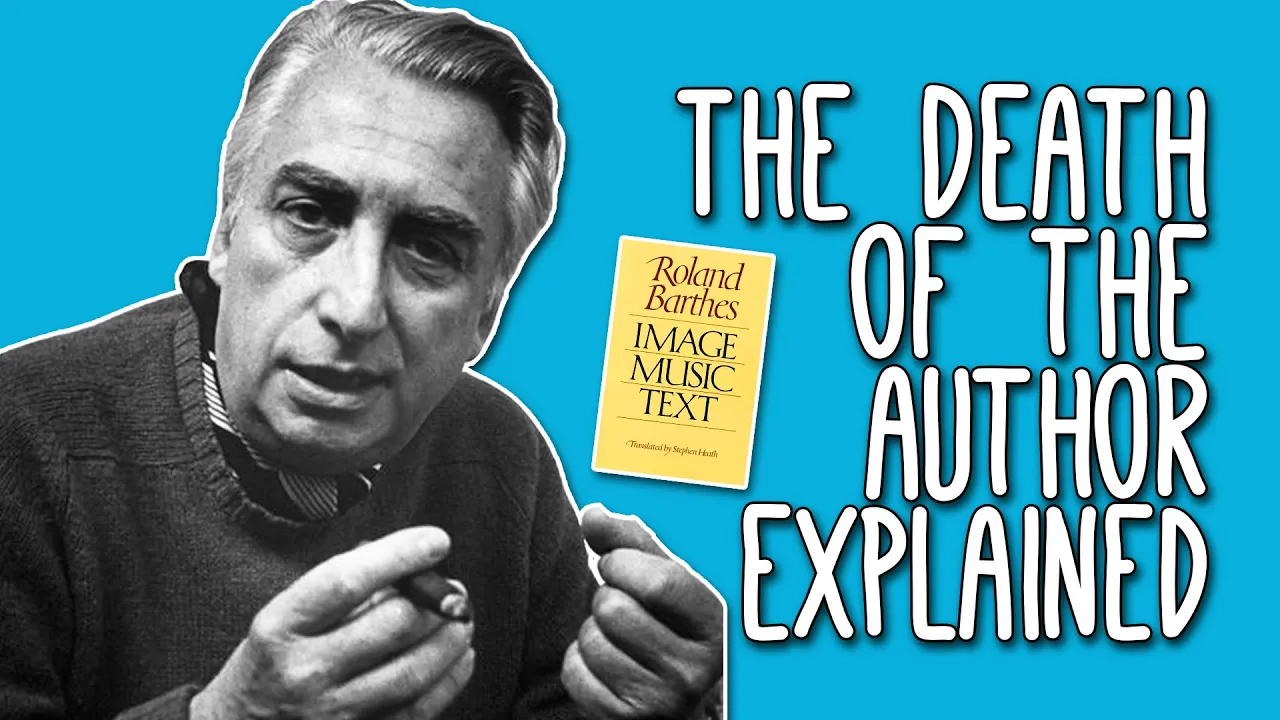
- Why this video: A comprehensive explanation of Roland Barthes' classic 1967 essay. This video details how Barthes strips the historical author of their absolute authority, moving the focus of meaning-making directly to the destination—the reader.
- Knowledge Checkpoint:
- Summarize the primary argument of Roland Barthes' "The Death of the Author."
- Explain how a text's meaning is freed when we remove the author's biography as the "ultimate" interpretation.
- Analyze the role of the reader as the central venue where diverse intertextual threads are synthesized.
Module 4: Philosophical Implications: Simulating Reality
This module addresses the philosophical stakes of postmodern fiction. It centers on Jean Baudrillard’s theories of simulacra, simulation, and hyperreality, examining how fictional worlds, media spaces, and technological constructs systematically replace authentic reality.
Recommended Videos
![Simulacra and Simulation by Jean Baudrillard [Part 1]](https://i.ytimg.com/vi/3g-GVXAeXVw/maxresdefault.jpg)
- Why this video: This video offers a thorough, deep-dive examination of Jean Baudrillard's theoretical masterpiece. It maps how representations transition through successive phases—starting as reflections of a basic reality, eventually masking the absence of a basic reality, and finally bearing no relation to any reality whatsoever to become pure simulacra.
- Knowledge Checkpoint:
- Outline the four distinct phases of the sign according to Baudrillard.
- Define "simulacra" and "simulation," explaining how they differ from simple imitation.
- Apply Baudrillard’s stages of simulation to analyze fictional settings and narrative structures.
- Why this video: An accessible, clear presentation of Baudrillard's concepts that shows how media saturation has turned our daily lives into a hyperreal environment, where media representations of real events become more influential than the events themselves.
- Knowledge Checkpoint:
- Define "hyperreality" and explain how media saturation distorts physical and social reality.
- Identify real-world examples where the copy has replaced the original.
- Connect hyperreality to the ontological themes of postmodern novels.
- Why this video: This video uses contemporary media (specifically Nathan Fielder's The Rehearsal) to illustrate Baudrillard's concepts in action. It examines how constructing elaborate, high-fidelity simulations of life events eventually erodes any meaningful boundary between the simulation and authentic real-world experiences.
- Knowledge Checkpoint:
- Analyze how modern documentary/experimental television uses simulations to disrupt genuine human experiences.
- Describe the psychological and narrative consequences of operating inside nested layers of simulated realities.
- Explain how meta-rehearsals expose the constructed nature of daily social interactions.
Module 5: Case Studies: Masterworks of Postmodern Metafiction
This module brings our theoretical toolkit into contact with seminal postmodern masterworks. We look at the mind-bending short stories of Jorge Luis Borges, the multi-layered reader-focused framing of Italo Calvino, and the intricate, nested structure of Vladimir Nabokov’s Pale Fire.
Note on Vladimir Nabokov's Pale Fire: While excellent videos analyze Pale Fire's connections to cinematic narratives like Blade Runner 2049, a dedicated literary video essay focusing purely on its complex formatting (the relation between Shade’s poem and Kinbote’s footnotes) is rare in this pool. Learners are encouraged to directly read and analyze the physical layout of Pale Fire to supplement these video case studies.
Recommended Videos
- Why this video: This video essay traces how Borges pioneered magical realism and metafiction by placing impossible, infinite, and paradoxical structures—like endless libraries and fictional encyclopedias that leak into our universe—inside realistic settings, using scholarly footnotes to make them feel authentic.
- Knowledge Checkpoint:
- Explain how Borges uses pseudo-scholarship, fake citations, and academic framing to blur the lines between reality and fiction.
- Analyze the concept of infinity and paradox in Borges' short stories (e.g., "The Library of Babel" or "Tlön, Uqbar, Orbis Tertius").
- Describe how Borges' concise narrative format functions as a philosophical thought experiment.
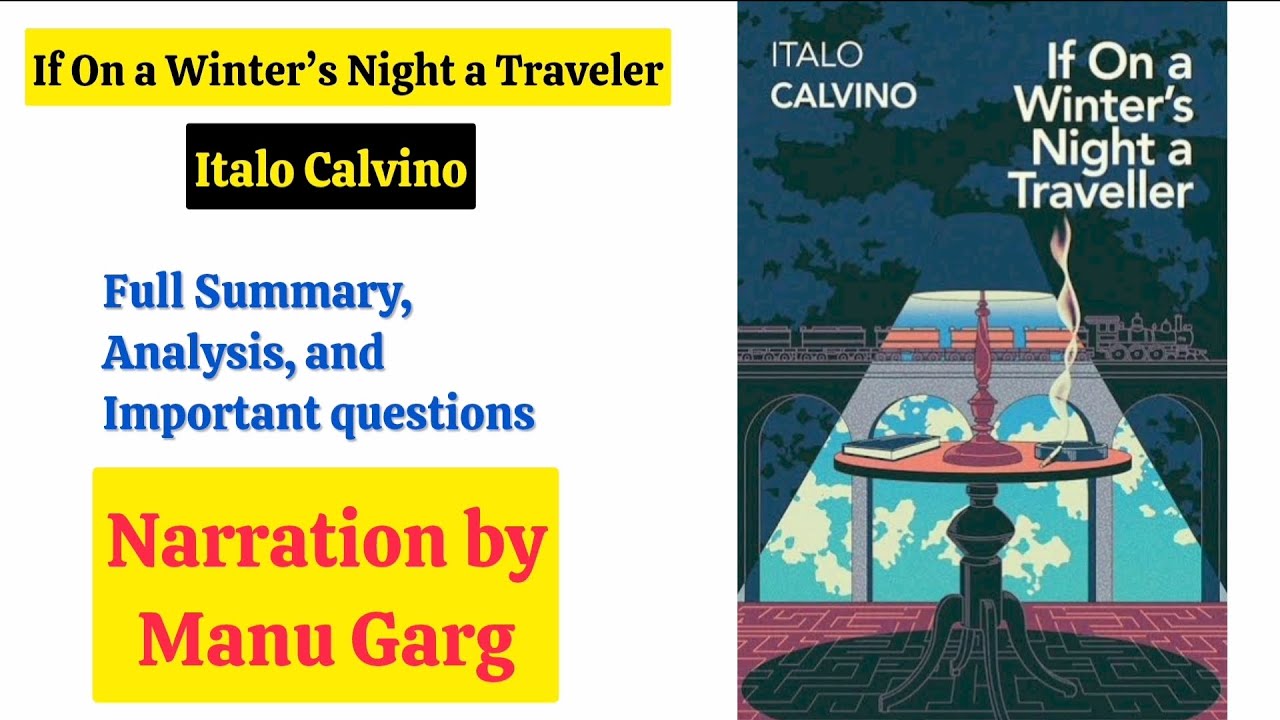
- Why this video: This video analyzes Italo Calvino's legendary 1979 novel, which is written in the second person ("You"). It details how Calvino deconstructs traditional narrative pacing and expectations by leading the reader through ten distinct, incomplete opening chapters of different novels.
- Knowledge Checkpoint:
- Analyze the narrative impact of Calvino writing in the second person, addressing "You, the Reader."
- Explain how Calvino deconstructs the traditional process of reading and publishing a book.
- Evaluate how incomplete framing narratives comment on our desire for neat, satisfying endings.

- Why this video: This literary and cinematic analysis explores the thematic connection between Vladimir Nabokov's novel Pale Fire and Denis Villeneuve's Blade Runner 2049. It provides a creative way to examine Nabokov’s structure, which consists of a 999-line poem written by poet John Shade and annotated by his delusional, highly unreliable neighbor, Charles Kinbote.
- Knowledge Checkpoint:
- Explain the structural layout of Nabokov’s Pale Fire (the poem versus the surrounding critical apparatus).
- Define the role of the unreliable narrator in metafictional storytelling.
- Analyze how Nabokov parodies academic scholarship and literary criticism within his novel.
Course Map
This flowchart tracks the recommended learning order and dependencies across the five modules.
Key People Index
- Roland Barthes (1915–1980): French literary theorist who revolutionized cultural and textual studies. His landmark 1967 essay, "The Death of the Author," argues against looking to an author's life or intentions to find the "ultimate" meaning of a text, establishing the reader as the main site of interpretation.
- Jean Baudrillard (1929–2007): French cultural theorist and philosopher famous for his work on media, simulation, and consumer culture. His concept of hyperreality describes a world where simulations of reality replace the real thing.
- Jorge Luis Borges (1899–1986): Argentine writer, essayist, and translator who pioneered magical realism and metafiction. His short stories (collected in Ficciones and The Aleph) use scholarly framing to explore complex ideas like infinity, labyrinths, and fictional realities.
- Italo Calvino (1923–1985): Italian journalist and writer who experimented with diverse narrative styles. His novel If on a Winter's Night a Traveler is a premier example of metafiction, focusing on the act of reading itself.
- Julia Kristeva (born 1941): Bulgarian-French philosopher and literary critic who coined the term "intertextuality" in the late 1960s, arguing that every text is built as a mosaic of citations and references to other texts.
- Vladimir Nabokov (1899–1977): Russian-American novelist known for his linguistic virtuosity and complex narrative structures. His masterpiece Pale Fire is a key text of early postmodern metafiction, structured as a long poem with extensive, unreliable footnotes.
Final Self-Assessment
Test your understanding of the concepts across the entire curriculum by checking off the following items:
- I can explain the transition from the epistemological questions of Modernism to the ontological focus of Postmodernism.
- I can define "metafiction" and identify three narrative techniques used to create self-reflexivity.
- I can explain how interactive digital media (like The Stanley Parable or Bandersnatch) expand the boundaries of traditional literary metafiction.
- I can distinguish between "parody" and "pastiche" and apply Fredric Jameson’s concept of "blank parody" to modern works.
- I can articulate Julia Kristeva's concept of "intertextuality" and explain how it challenges traditional ideas of original authorship.
- I can summarize the core argument of Roland Barthes' "The Death of the Author" and detail its implications for literary criticism.
- I can outline Jean Baudrillard’s four phases of the sign, tracing how a representation evolves into pure simulacra.
- I can define "hyperreality" and explain how simulated spaces can systematically replace physical and social reality.
- I can describe how Jorge Luis Borges uses academic framing, fake bibliographies, and footnotes to play with the boundaries of fiction.
- I can analyze how the second-person point of view in Calvino's If on a Winter's Night a Traveler shifts the focus of the novel onto the act of reading.
- I can explain the unique literary structure of Nabokov’s Pale Fire and show how its dual-narrator setup highlights narrative unreliability.