Flow State: Psychology, Motivation & Deep Work
Learning Goal: Deconstruct the psychological architecture of flow state and intrinsic motivation, and design a cognitive-behavioral framework to systematically induce peak performance and deep work in professional settings.
- Prerequisites: None (Introduction to cognitive psychology or basic neuroscience is helpful but not required).
- Estimated Total Study Time: 12 Hours
Module 1: Foundations of Motivation & the Brain
This module explores the foundational pillars of human motivation. You will deconstruct the psychological transition from extrinsic carrot-and-stick systems to self-sustained intrinsic motivation, dive into Self-Determination Theory (SDT), and analyze how the brain's dopamine pathways dictate our reward-seeking behaviors.
Recommended Videos
Why this video
This video provides an elegant, animated breakdown of Self-Determination Theory (SDT). It clearly conceptualizes the three fundamental human needs—Autonomy, Competence, and Relatedness (Connection)—which serve as the bedrock for intrinsic motivation. Understanding these psychological needs is crucial before attempting to engineer high-performance work routines.
Knowledge Checkpoint
- Define the three core pillars of Self-Determination Theory (Autonomy, Competence, Connection).
- Contrast how environments that support autonomy differ from those that rely heavily on controlling extrinsic rewards.
- Identify at least two daily work tasks where you can consciously increase your sense of competence.
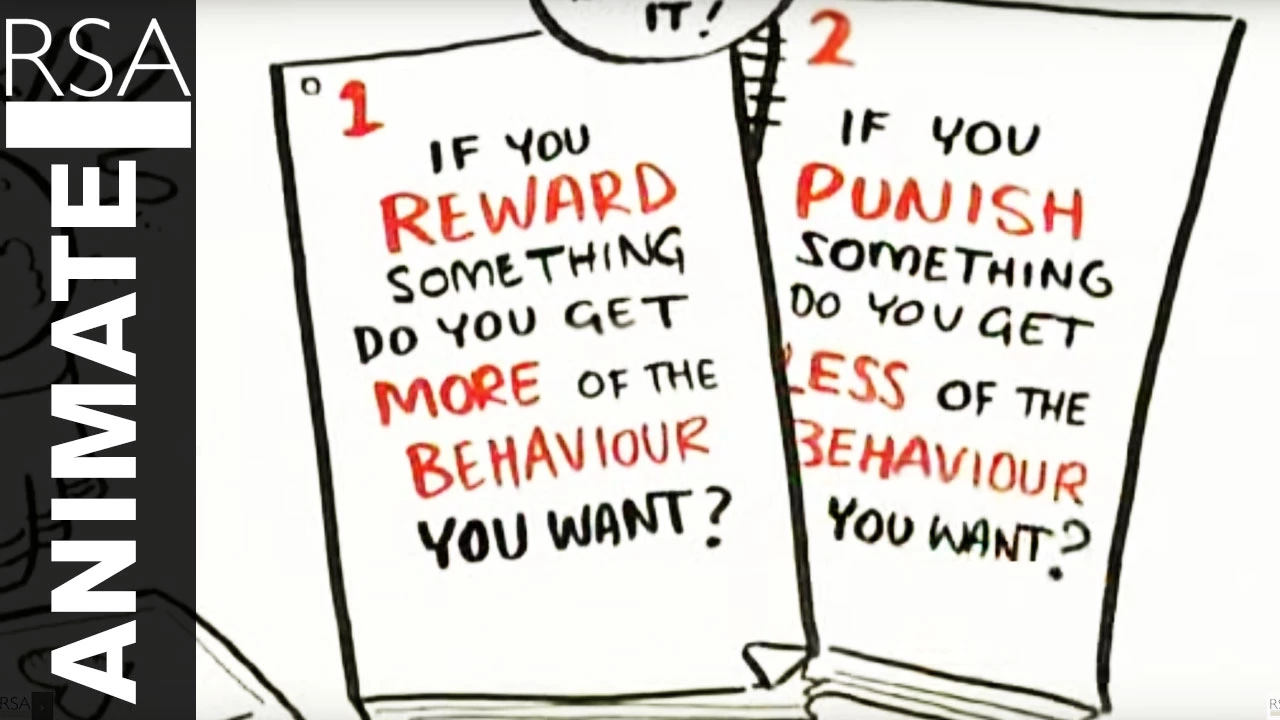
Why this video
Based on Daniel Pink’s groundbreaking work, this world-famous animated lecture dismantles the myth that monetary incentives improve cognitive performance. It demonstrates that while mechanical tasks respond well to commission-style rewards, complex cognitive problem-solving requires intrinsic drivers: Autonomy (the urge to direct our own lives), Mastery (the desire to get better at something that matters), and Purpose (the yearning to do what we do in the service of something larger than ourselves).
Knowledge Checkpoint
- Explain why traditional "carrots and sticks" (extrinsic motivators) can actually impair cognitive and creative task performance.
- Distinguish between algorithmic (rule-following) and heuristic (creative/problem-solving) tasks in relation to motivational frameworks.
- Map your current professional role across Daniel Pink's triad: Autonomy, Mastery, and Purpose.
Why this video
Dr. Andrew Huberman explains the neurobiology of dopamine pathways. Crucially, he details the Stanford Nursery School experiment, showing how reinforcing an intrinsically enjoyable activity with an extrinsic reward actually decreases subsequent motivation. This segment illustrates the biological mechanism of the overjustification effect and teaches you how to protect your intrinsic drive.
Knowledge Checkpoint
- Explain the "overjustification effect" from a neurobiological perspective.
- Describe how dopamine baseline levels fluctuate when shifting from intrinsic enjoyment to extrinsic reward structures.
- Identify a personal hobby or work task that was "ruined" or devalued by external tracking or rewards, and explain why.
Module 2: The Psychology of Flow State
This module introduces the historical and theoretical framework of "Flow"—the optimal state of consciousness where we feel and perform our best. Coined and researched by Mihaly Csikszentmihalyi, you will study the 8 dimensions of optimal experience, with a specific focus on the vital challenge-skills balance.
Recommended Videos

Why this video
This is the foundational text of modern flow research. Mihaly Csikszentmihalyi outlines how his research into artists, scientists, and athletes led to the discovery of "Flow." He explains how the nervous system can process only a limited amount of information per second, and why complete absorption in a task temporarily suspends self-consciousness, physical fatigue, and time perception.
Knowledge Checkpoint
- Explain how the limited bandwidth of human conscious attention (approx. 110 bits per second) prevents us from feeling self-conscious or tired during flow.
- Outline Csikszentmihalyi's original chart detailing the psychological relationship between challenge levels and skill levels.
- Explain the concept of an "autotelic" activity.

Why this video
An exceptional visual and narrative essay analyzing how flow manifests in modern disciplines. Nerdwriter breaks down the friction of consciousness and details how structured goals and immediate, unambiguous feedback loops allow an individual to bypass executive hesitation and enter a state of deep, effortless concentration.
Knowledge Checkpoint
- Define the role of "unambiguous feedback" in maintaining flow within an active feedback loop.
- Describe the shift from conscious, laborious step-by-step thinking to automatic, fluid execution.
- Explain how a loss of reflective self-consciousness (ego dissolution) improves immediate performance.
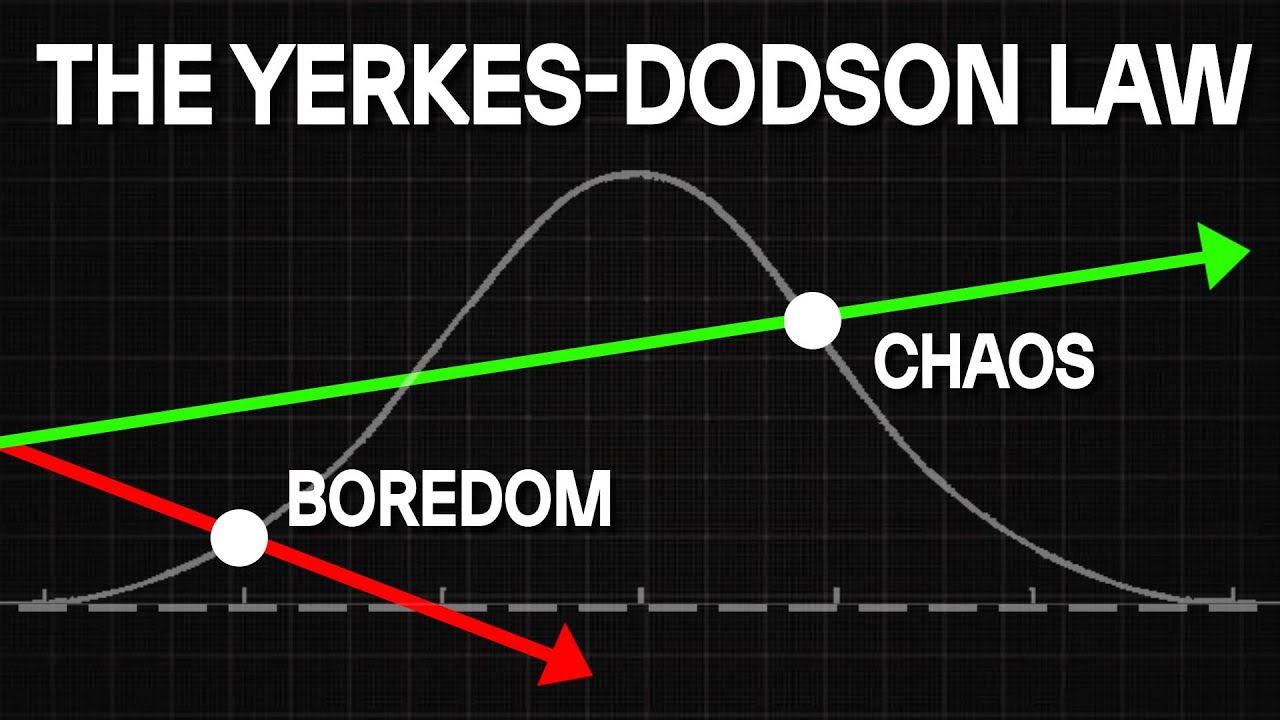
Why this video
This concise breakdown highlights the challenge-skills balance as the most critical trigger and precondition for flow. It explains how this delicate ratio sits at the interface of boredom (skills exceed challenge) and anxiety (challenge exceeds skills), acting as a gateway to focus.
Knowledge Checkpoint
- State the "Golden Rule of Flow" regarding the exact percentage by which challenge should exceed skill (the 4% rule).
- Diagnose a current professional bottleneck: is it causing boredom or anxiety?
- Formulate one practical adjustment to realign a low-challenge task back into the "Flow Channel."
Module 3: The Neurobiology of High Performance
In this module, you will step away from subjective psychology and look under the hood of the biological engine. You will explore transient hypofrontality (the temporary deactivation of the inner critic), changes in EEG brain waves (specifically the Alpha-Theta transition), and the neurochemical cocktail that elevates cognitive capacity.
Recommended Videos
Why this video
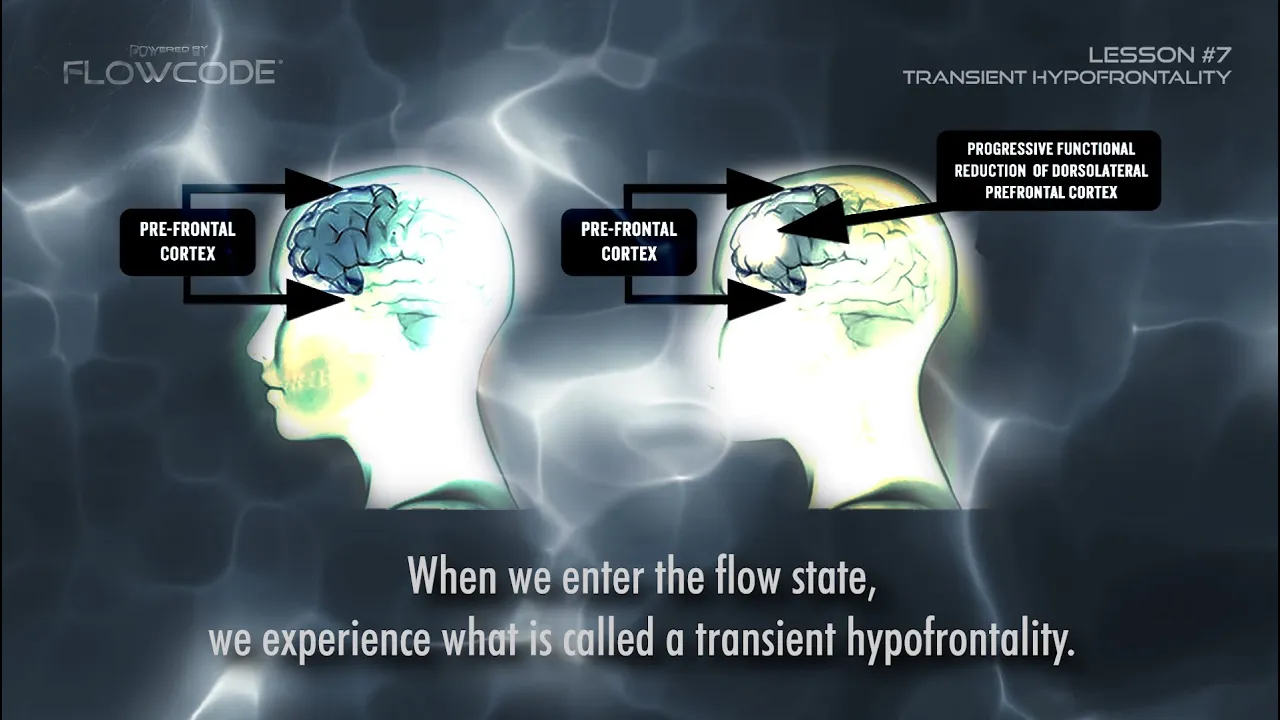
This video offers a focused explanation of Dr. Arne Dietrich's "Transient Hypofrontality Hypothesis." It illustrates how the prefrontal cortex—the brain's seat of logic, time tracking, and self-evaluation—temporarily downregulates during flow, allowing the brain to redirect precious metabolic energy to faster, subconscious processing areas.
Knowledge Checkpoint
- Explain the term "transient hypofrontality" by breaking down its etymology (transient, hypo, frontality).
- Identify which cognitive functions (e.g., self-monitoring, temporal tracking) shut down when the prefrontal cortex deactivates.
- Explain why the downregulation of the Dorsolateral Prefrontal Cortex (DLPFC) results in the silencing of your inner critic.

Why this video
Steven Kotler debuts a radical neurological paradigm shift: flow is an efficiency play, not a hyper-active state. Since the brain consumes 20% of the body's total energy despite making up only 2% of its mass, flow operates by shutting down unnecessary cognitive systems to maximize output in high-priority visual, motor, and pattern-recognition networks.
Knowledge Checkpoint
- Dismantle the "10% brain usage myth" using Kotler’s energy trade-off argument.
- Explain how flow acts as an energy-saving mechanism for the central nervous system.
- Contrast the metabolic cost of conscious, analytical thought with the efficiency of flow-based execution.

Why this video
Neuroscientist Friederike Fabritius details the exact chemical recipe required for optimal performance: the precise balance of Dopamine (for focus/novelty), Noradrenaline (for slight stress/alertness), and Acetylcholine (for deep learning). This "neurochemical cocktail" must be deliberately cultivated to access high-performance states.
Knowledge Checkpoint
- Describe the Yerkes-Dodson law of arousal and how it links to noradrenaline levels in the brain.
- Explain why peak performance requires both enjoyment (dopamine) and a touch of productive urgency (noradrenaline).
- Identify concrete methods to increase noradrenaline (e.g., tight deadlines) or dopamine (e.g., gamification) in your work tasks.
Why this video
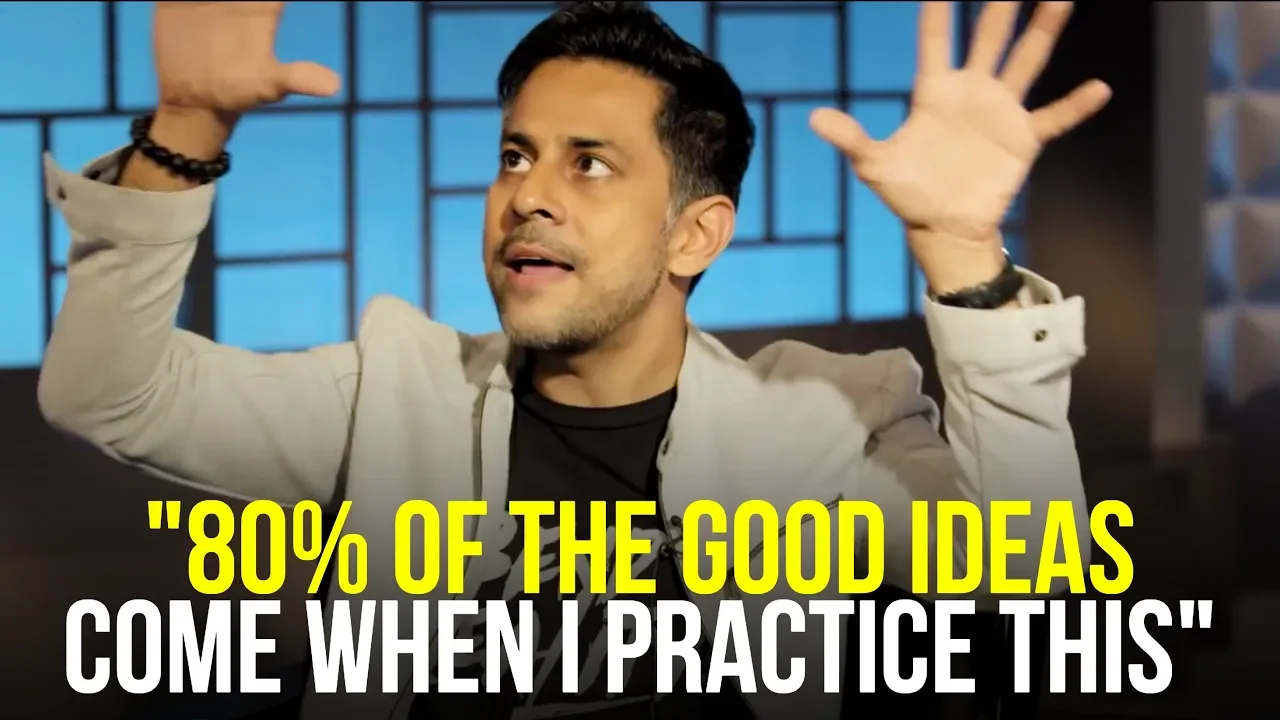
This video addresses the EEG signature of flow. It explains how shifting out of high-frequency stress waves (Beta) into slower, synchronized waves (Alpha and Theta) enables remote areas of the brain to communicate. This neuroelectrical bridge allows subconscious patterns to surface as creative breakthroughs.
Knowledge Checkpoint
- Distinguish between Beta brain waves (active stress, analytical thinking) and Alpha/Theta brain waves (relaxed focus, hypnagogic state).
- Explain how the Alpha-Theta transition state facilitates "lateral thinking" and novel connections.
- Describe how structured relaxation techniques can lower your neuroelectrical frequency to support deep focus.
💡 Independent Research Suggestion: While the provided pool introduces Alpha-Theta transitions, direct EEG laboratory studies of flow are highly specialized. To deepen your understanding of neuroelectrical mechanics, search YouTube for: "Alpha and theta brain waves flow state neuroscience".
Module 4: Deep Work and Attention Management
This module translates psychology and neuroscience into daily cognitive mechanics. You will analyze Cal Newport's concept of "Deep Work," examine the high metabolic cost of "Attention Residue" caused by rapid task-switching, and integrate cognitive-behavioral framing strategies to protect your focus.
Recommended Videos

Why this video
This clip provides a high-yield exploration of Cal Newport’s "Attention Residue" concept. Newport details the psychological mechanism of task-switching: when you glance at an email or phone notification for just 30 seconds, a portion of your cognitive capacity remains anchored to that distraction. This residue severely reduces your performance on your primary task for the next 10 to 20 minutes.
Knowledge Checkpoint
- Define "Attention Residue" and explain how it impairs working memory capacity.
- Quantify the performance penalty (in minutes) associated with a single "quick check" of an inbox.
- Identify your most common "quick switch" behaviors during your daily work routine.

Why this video
This animated summary outlines Cal Newport's core thesis: deep work is a rare, highly valuable skill in the modern economy. It contrasts deep work (distraction-free, cognitively demanding tasks that push your abilities to their limit) with shallow work (administrative, easily replicable, low-cognitive tasks like emails or scheduling).
Knowledge Checkpoint
- Differentiate between "Deep Work" and "Shallow Work" using Newport's criteria.
- Explain why shallow work prevents you from entering a flow state.
- Draft a preliminary audit dividing your weekly responsibilities into deep and shallow categories.
Why this video
This comprehensive guide presents actionable cognitive-behavioral strategies designed to manage high cognitive loads. It focuses on task-matching, energy rhythm management, and environment setup to bypass executive dysfunction. These practical tactics are essential for anyone building a distraction-free professional framework.
Knowledge Checkpoint
- Map your personal daily energy rhythms to determine your peak focus hours.
- Apply the "environmental containment" strategy to eliminate task-switching triggers.
- Design a simple cognitive-behavioral transition ritual to signal your brain that it is time to move from shallow to deep work.
💡 Independent Research Suggestion: To further study the cognitive math behind task-switching penalties, consider searching YouTube for: "Cal Newport attention residue and task switching cognitive psychology".
Module 5: Designing Your Personal Flow Framework
In this final synthesis module, you will merge psychology, neurobiology, and attention management to build a customized, actionable protocol. You will study Steven Kotler’s four-stage flow cycle and design a distraction-free workspace that serves as a reliable launchpad for flow state on demand.
Recommended Videos
Why this video
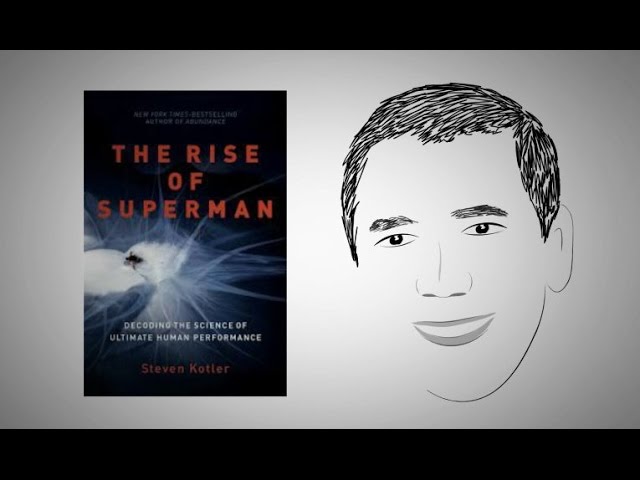
This video introduces Steven Kotler's "Flow Cycle." Entering flow is not like flipping a light switch; it is a four-stage process: (1) Struggle, (2) Release, (3) Flow, and (4) Recovery. Understanding this cycle helps you recognize that feelings of initial frustration (struggle) are actually a necessary step before entering flow, preventing you from giving up prematurely.
Knowledge Checkpoint
- Name and define the four distinct phases of the Flow Cycle.
- Explain why the "Struggle" phase is characterized by elevated cortisol and stress, and how to navigate it without quitting.
- Explain why the "Recovery" phase is critical to replenish depleted neurochemicals like dopamine and serotonin.
Why this video
Steven Kotler breaks down flow triggers that you can build into your daily routine. He explains how to shorten feedback cycles and combine physical preparation (such as box breathing) with cognitive focus to drop into flow state quickly and reliably.
Knowledge Checkpoint
- Explain how tightening your feedback loops (e.g., measuring progress daily rather than monthly) acts as a reliable flow trigger.
- Describe how box breathing regulates the autonomic nervous system to hit the optimal noradrenaline arousal threshold.
- Identify at least three flow triggers you can build directly into your work environment today.
Why this video
This video shifts focus to environmental engineering. It argues that willpower alone is not enough to maintain concentration; you must actively shape your workspace. It details how to spot and eliminate physical and digital distractions before they break your flow.
Knowledge Checkpoint
- Define "environmental engineering" in contrast to relying purely on willpower.
- Map and eliminate visual and digital cues in your immediate workspace that trigger task-switching.
- Design a simple protocol to handle physical interruptions from colleagues or housemates during deep work.

Why this video
This clip highlights the power of a daily setup ritual to consistently trigger deep work. It shows how combining physical actions (like clear spatial setup, mindful breathing, and structured journaling) primes the brain to drop into a deep workflow, removing the friction of getting started.
Knowledge Checkpoint
- Explain why a repetitive, physical starting ritual lowers your resistance to starting hard work.
- Design your personal 3-step setup ritual (incorporating physical, sensory, and cognitive preparation).
- Commit to a specific time block and location to run your framework for five consecutive days.
💡 Independent Research Suggestion: For a comprehensive, masterclass-level guide analyzing all 17 flow triggers defined by Steven Kotler, search YouTube for: "Steven Kotler 17 flow triggers list explained".
Course Map
Key People Index
- Mihaly Csikszentmihalyi
- Context: Renowned Hungarian-American psychologist, author of "Flow: The Psychology of Optimal Experience," and the recognized "Godfather of Flow Psychology."
- Steven Kotler
- Context: New York Times best-selling author, peak performance expert, and founder of the Flow Research Collective. Best known for mapping the 17 flow triggers and the 4-stage flow cycle.
- Cal Newport
- Context: Computer science professor at Georgetown University and author of "Deep Work." He pioneered the concepts of "Attention Residue" and distraction-free professional routines.
- Daniel Pink
- Context: Renowned behavioral science author who synthesized modern motivational psychology in his book "Drive," identifying the fundamental drivers of Autonomy, Mastery, and Purpose.
- Dr. Andrew Huberman
- Context: Neurobiologist and tenured professor in the Department of Neurobiology at the Stanford University School of Medicine. Host of the Huberman Lab Podcast.
- Dr. Friederike Fabritius
- Context: Neuroscientist, pioneer in the field of Neuroleadership, and author of "The Leading Brain," specializing in the neurochemical cocktail of peak performance.
Final Self-Assessment
Navigate your transition from theory to practice using this comprehensive final diagnostic checklist:
- Intrinsic Drive Audit: I have clearly defined the Autonomy, Mastery, and Purpose parameters of my primary professional role, removing over-reliance on extrinsic carrots and sticks.
- Protecting Dopamine: I have structured my personal project tracking to prioritize the process of work rather than purely relying on external rewards, avoiding the overjustification effect.
- Finding the Flow Channel: I can diagnose whether my work bottlenecks stem from boredom or anxiety, and I know how to adjust the difficulty of my tasks by ~4% to balance my challenge-skills ratio.
- Silencing the Inner Critic: I understand the mechanism of transient hypofrontality and can recognize when my prefrontal cortex begins to downregulate during deep focus.
- Neurochemical Balance: I can identify my position on the Yerkes-Dodson arousal curve and use tools like box breathing or time constraints to adjust my dopamine and noradrenaline levels.
- Mitigating Attention Residue: I have eliminated "quick check" behaviors of emails or messaging apps during focused work blocks, protecting my working memory from attention residue.
- Deep Work Scheduling: I have audited my weekly calendar, clearly separating shallow tasks from deep work blocks that run for at least 90 minutes.
- Navigating the Flow Cycle: I can recognize the physiological signs of the "Struggle" phase and navigate it with deliberate focus rather than treating it as a failure.
- Environmental Design: I have redesigned my physical and digital workspace to remove distracting visual cues and notification triggers.
- Executing My Custom Protocol: I have a written, 3-step setup ritual that consistently primes my brain for flow before beginning deep work.