Online Polarization: Psychology & Dialogue
Learning Goal: Evaluate the social-psychological dynamics of online echo chambers and polarization, and design communication strategies to reduce hostility and foster constructive civic dialogue in digital spaces.
- Prerequisites: None. This curriculum is interdisciplinary, integrating concepts from computer science (algorithms), social psychology, and platform design.
- Estimated Total Study Time: 14 hours (including video content, reflection exercises, and practical communication drills).
Module 1: The Attention Economy and Algorithmic Curation
This module explores the commercial incentives underpinning modern digital media. You will analyze how algorithmic design choices, engagement loops, and attention economy business models capture human focus, prioritize outrage, and systematically cultivate partisan division.
Recommended Videos

Why this video: This video introduces the core mechanic of the modern attention economy: how advertising-revenue business models force platforms to maximize user engagement. It explains how designers leverage moral emotions—especially outrage—to keep eyes on screens, showing that polarization is a structural byproduct of profit optimization.

Why this video: Using a satirical yet analytically sharp lens, this clip highlights how Facebook's underlying code rewards negative political feelings. It serves as an accessible bridge to understanding how platform algorithms function as systemic distributors of moral outrage and ideological alignment.

Why this video: This concise explainer offers historical context for the attention economy model, contrasting it with traditional transaction-based economies. It charts the shift from 19th-century penny-press newspapers selling physical copies to modern giants selling user behavioral data to advertisers.

Why this video: This clip introduces how feed algorithms translate user interactions (likes, shares, watch duration, comments) into personalized curation rules. It highlights how these automated choices gradually alter what information is prioritized or hidden from view.
Pedagogical Note on Technical Gaps: While the videos above explain the social implications of the outrage cycle and business models, they do not provide a detailed mathematical overview of modern recommendation architectures. To deeply master this module's objectives, we highly recommend searching independently for: "How algorithms curate your feed computer science lecture" or reading technical papers on collaborative filtering and deep neural network recommenders.
Module 1 Knowledge Checkpoint
- Explain how an advertisement-based revenue model structurally incentivizes platforms to favor sensationalist over informative content.
- Define the biological role of the amygdala in processing the moral outrage amplified by feed algorithms.
- Differentiate between a traditional transaction business model and the modern attention economy model.
Module 2: Social Psychology: Identity and Cognitive Biases
This module investigates why human minds are vulnerable to algorithmic manipulation. You will study social identity theory, in-group/out-group dynamics, and the cognitive biases (such as motivated reasoning) that drive tribalization and collective hostility online.
Recommended Videos
Why this video: This video provides a foundational overview of Social Identity Theory. It outlines how categorization shifts self-perception from individual identity ("me") to collective group identity ("us"), laying the psychological groundwork for systemic in-group favoritism and out-group hostility.

Why this video: Renowned moral psychologist Jonathan Haidt explains how human moral psychology evolved to bind groups together for competitive evolutionary advantage. He discusses how online platforms weaponize this "tribal" framework, replacing healthy, playful rivalries with deep, destructive animosity.

Why this video: This talk introduces Julia Galef's concepts of "soldier mindset" (defending pre-existing beliefs) and "scout mindset" (seeking objective truth, even when it is uncomfortable). It provides an accessible framework for identifying how motivated reasoning distorts your own cognitive processing.
Why this video: This excerpt focuses directly on the psychology of moral reasoning. Haidt argues that we are highly skilled at starting with an intuitive conclusion we want to believe, and then working backward to construct plausible rationalizations to justify it.
Module 2 Knowledge Checkpoint
- Define Social Identity Theory and describe how group categorization alters individual self-perception.
- Distinguish between the "soldier mindset" and the "scout mindset," listing two behavioral indicators of each.
- Explain how motivated reasoning functions as a cognitive defense mechanism when an individual is confronted with contradictory facts.
Module 3: Echo Chambers vs. Filter Bubbles
This module clarifies a common misunderstanding in digital sociology. You will learn to distinguish between filter bubbles (passive, algorithmically generated information environments) and echo chambers (active social-epistemic networks that systematically discredit external sources of information).
Recommended Videos

Why this video: This is the landmark TED Talk by Eli Pariser that popularized the term "filter bubble." It is an essential watch that illustrates how invisible algorithmic personalization shields users from challenging viewpoints, creating customized informational feedback loops.
Why this video: Philosopher C. Thi Nguyen explicitly contrasts filter bubbles and echo chambers. He explains that while filter bubbles are passive environments where you are simply shielded from other opinions, echo chambers actively teach users to distrust outside sources.

Why this video: This video offers a deeper academic dive into Nguyen's definitions. It details how an epistemic bubble filters information through omission (often by accident or selection preference), whereas an echo chamber operates through active, defensive epistemic exclusion.

Why this video: This video explores the practical consequences of these structures on decision-making. Duke illustrates how individuals trapped in closed epistemic networks process reality differently, and shows how exposing them to objective information is often insufficient once an echo chamber has discredited the source.
Module 3 Knowledge Checkpoint
- Define a "filter bubble" and explain the role algorithmic personalization plays in its development.
- Differentiate between an "epistemic bubble" and an "echo chamber" based on how they handle counter-evidence and external voices.
- Explain why simply providing accurate data or fact-checking is often ineffective at dismantling an active echo chamber.
Module 4: Depolarizing Communication & Conflict De-escalation
In this module, you will develop practical, evidence-based communication skills. You will learn to transition from defensive "soldier" interactions to constructive dialogue, leveraging techniques from Nonviolent Communication (NVC) and the Braver Angels framework to navigate online conflict.
Recommended Videos
Why this video: Jefferson Fisher offers highly practical communication strategies. He teaches viewers not to argue opinions directly, but instead to uncover the underlying needs and anxieties (often rooted in fear) that drive hostile perspectives.

Why this video: This video demonstrates the official Braver Angels framework in a civic setting. It breaks down the three core conversational skills: active listening (without formulating counter-arguments), validation/acknowledgment of the other's perspective, and constructive pivoting.

Why this video: Content creator Dylan Marron shares his experiences of calling his online detractors on the phone. This talk offers a vital conceptual breakthrough: showing that empathizing with an opponent's humanity does not mean endorsing their political or moral viewpoints.

Why this video: This is a comprehensive, foundational seminar by Marshall Rosenberg, the creator of Nonviolent Communication (NVC). It teaches the systematic four-step process of NVC: Observation (without evaluation), Feelings, Needs, and Requests. This system serves as a powerful toolkit for de-escalating online arguments.
Pedagogical Note on Online Text Gaps: While these videos provide excellent framework training, most online conflicts occur asynchronously via text-based platforms (e.g., X, Reddit, Facebook comments). To master text-specific de-escalation, we suggest searching independently for: "How to have constructive conversations online social media" to study patterns of text-based pacing, visual tone (avoiding aggressive punctuation), and the strategic use of direct messaging (DMs) to resolve public arguments privately.
Module 4 Knowledge Checkpoint
- Detail the four steps of Marshall Rosenberg’s Nonviolent Communication (NVC) protocol.
- Explain the difference between "empathy" and "endorsement" in a high-stakes political discussion.
- Outline the Braver Angels conversational triad: Listening, Acknowledging, and Pivoting.
Module 5: Architecting Digital Spaces for Civic Dialogue
This final module shifts focus from individual behavior to system architecture. You will analyze and evaluate civic technologies, digital systems, and collaborative platform models (such as Taiwan's vTaiwan initiative and the Pol.is consensus engine) that incentivize consensus and mutual understanding rather than conflict.
Recommended Videos

Why this video: Taiwan's former Digital Minister Audrey Tang explains the design principles of the civic platform Pol.is. She details how removing traditional engagement features (like "reply" or "retweet" buttons) and allowing users only to upvote or downvote statements prevents trolling and encourages users to discover shared viewpoints.

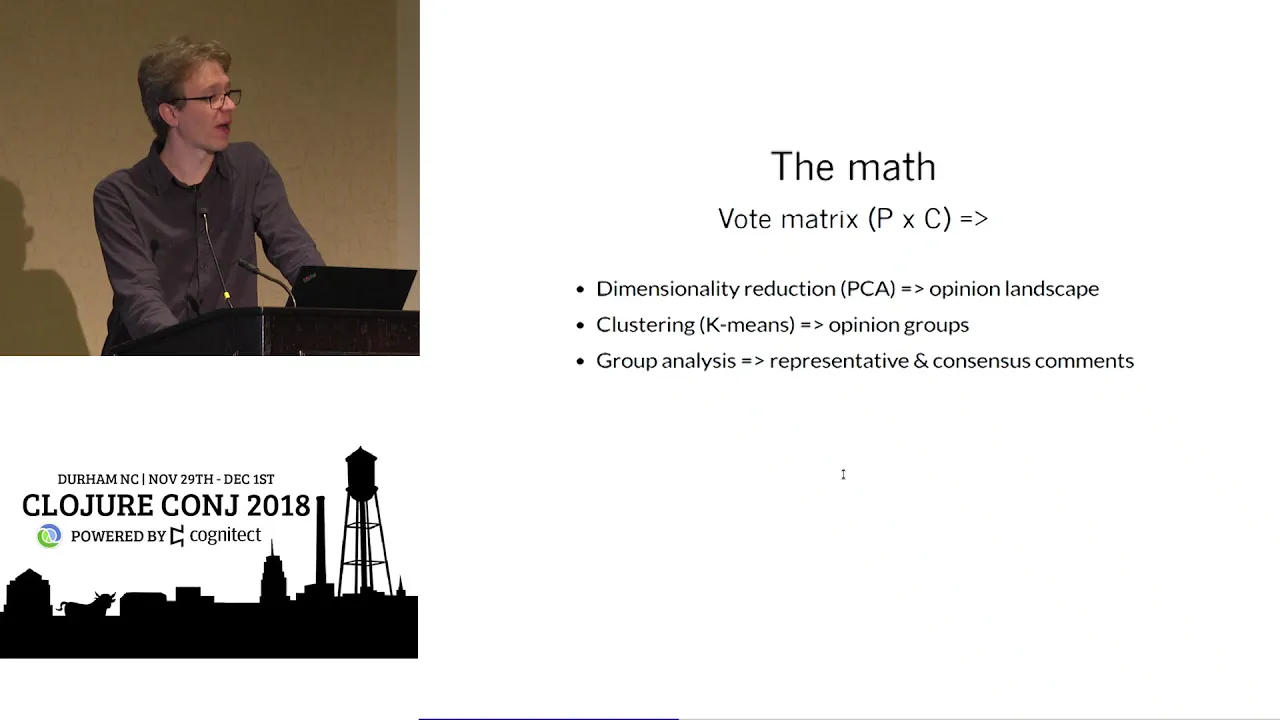
Why this video: This lecture explores the machine learning mechanisms behind Pol.is. It explains how high-dimensional opinion spaces are mathematically projected onto 2D visualizations to help massive, diverse groups map out and build consensus.
Why this video: This video shares the real-world history of Taiwan's Sunflower Movement and the development of the "g0v" open-source coding community. It shows how civic tech can build the digital infrastructure needed to turn political protests into collaborative lawmaking.

Why this video: Internet activist Wael Ghonim argues that we must look beyond policing symptoms (like trolling or harassment) and instead fundamentally redesign the incentives of our communication networks. He calls for platforms built around collaboration, deliberative discourse, and verified civic participation.
Pedagogical Note on Polis Gaps: While Video 19 outlines the mathematics of multidimensional projection in Pol.is, visual and non-technical explainers can be rare. If you are struggling with the mathematical overview, we suggest searching independently for: "How Polis software works digital democracy consensus" to see step-by-step user interface walkthroughs and interactive case studies.
Module 5 Knowledge Checkpoint
- Explain how removing the "reply" option on Pol.is reduces trolling and personal attacks.
- Describe the vTaiwan model and outline the steps of its open-source lawmaking process.
- Discuss how multidimensional sentiment projection helps identify "hidden consensus" in highly polarized crowds.
Course Map
Below is the recommended learning progression. Each module provides essential conceptual frameworks for the ones that follow.
Key People Index
- Eli Pariser: Author and activist who coined the term "Filter Bubble." He focuses on the social consequences of algorithmic personalization.
- C. Thi Nguyen: Associate Professor of Philosophy at the University of Utah. He specializes in how games, gamification, and digital spaces shape our social-epistemic landscapes.
- Jonathan Haidt: Social psychologist at NYU Stern School of Business and author of The Righteous Mind. He is a pioneer in Moral Foundations Theory.
- Julia Galef: Co-founder of the Center for Applied Rationality and author of The Scout Mindset. Her work explores self-deception, decision-making, and intellectual honesty.
- Marshall Rosenberg (1934–2015): Renowned psychologist and creator of the Nonviolent Communication (NVC) process.
- Audrey Tang: Pioneering software programmer and Taiwan's former Digital Minister. She is a global leader in open-source digital democracy and civic technology.
Final Self-Assessment
Review your progress across the entire course. Can you confidently check off each of these milestones?
- Systemic Understanding: I can explain how platform business models monetization strategies naturally lead to algorithmic outrage loops.
- Theoretical Distinction: I can accurately explain the differences between a filter bubble, an epistemic bubble, and an echo chamber.
- Psychological Awareness: I can identify my own cognitive tendencies toward motivated reasoning and describe how to shift from a "soldier mindset" to a "scout mindset."
- In-Group Analysis: I can describe the evolutionary purpose of tribalism and point out where my own group identities bias my assessment of political news.
- Active NVC Application: I can convert a defensive, judgmental statement into a four-step Nonviolent Communication statement (Observation, Feeling, Need, Request).
- Conversational Agility: I can apply the Braver Angels framework to hear an opposing viewpoint, acknowledge its core concern, and pivot to a constructive question.
- Empathy Distinction: I can engage with someone whose views I disagree with, demonstrating empathy for their humanity without endorsing their ideas.
- Architectural Literacy: I can outline the structural mechanics of Pol.is and explain how its design choices prevent trolling and help large groups find consensus.
- Civic Tech Application: I can analyze a toxic digital community and design three platform modifications (such as changes to moderation, commenting, or feedback loops) to encourage healthier conversation.