Oncogenesis: Checkpoints, Genes & Metastasis
Learning Goal: Investigate the molecular biology of oncogenesis, focusing on cell cycle checkpoints, tumor suppressor genes, angiogenesis, and the metastatic cascade.
- Prerequisites: Basic knowledge of cellular biology, genetics (transcription and translation), and biochemistry.
- Estimated Total Study Time: 20 hours (including video lectures, recommended reading, and independent analysis of molecular pathways).
Module 1: Foundations of Cell Biology and Cancer Basics
To understand how cancer cells hijack physiological mechanisms to replicate uncontrollably, we must first establish a firm foundation in normal cell biology. This module covers the central dogma of molecular biology, the mechanics of mitosis, and provides a comprehensive introductory overview of how genomic mutations can cause cellular systems to fail.

- Why this video: Establishing a baseline understanding of how information flows from DNA to RNA and finally to functional proteins is critical. This video beautifully animates replication, transcription, translation, and splicing, illustrating how the cellular "blueprint" is executed.
- Knowledge Checkpoint:
- Explain the molecular difference between transcription and translation.
- Describe the role of RNA Polymerase and the spliceosome in generating mature messenger RNA (mRNA).
- Detail how a base substitution in DNA can lead to an altered amino acid sequence in a finished protein.
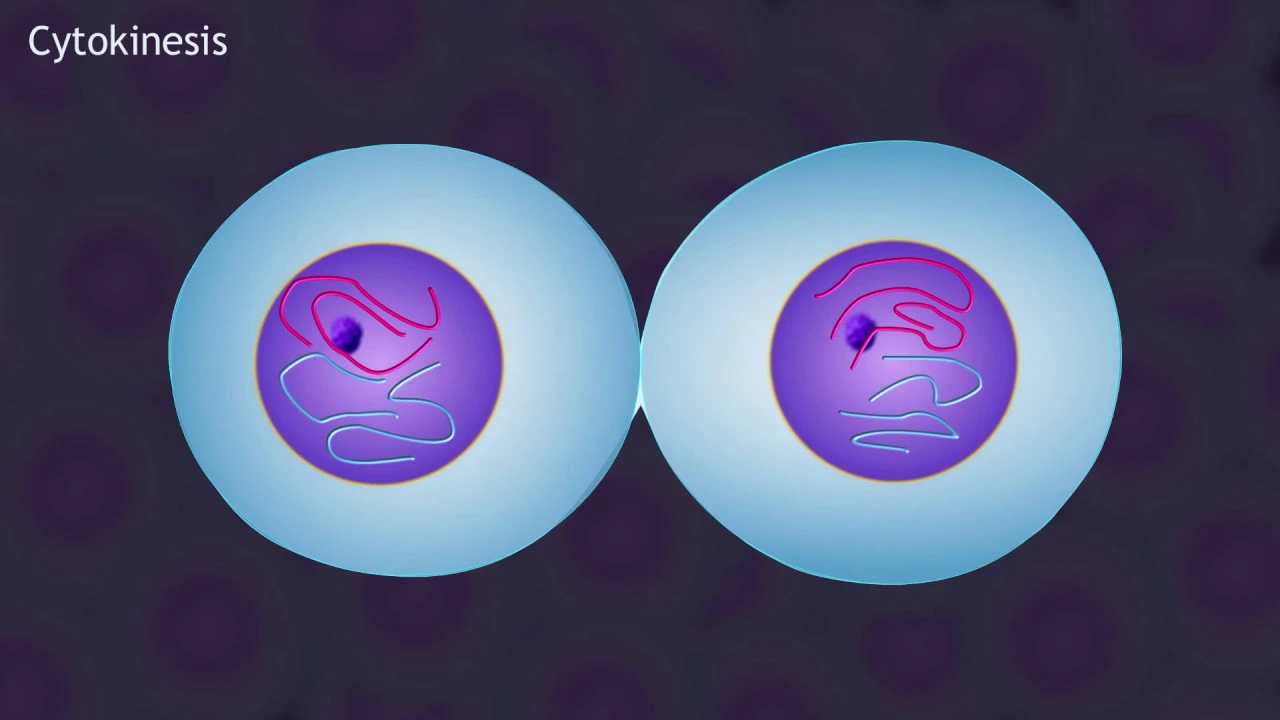
- Why this video: This highly visual animation walks through the physical process of chromosomal replication and segregation. Understanding normal chromatid separation during mitosis is essential before learning how cancer cells bypass cell cycle control systems.
- Knowledge Checkpoint:
- Identify the phases of Interphase (G1, S, G2) and explain what occurs in each.
- Outline the sequential stages of Mitosis (Prophase, Metaphase, Anaphase, Telophase).
- Understand the role of spindle fibers and centromeres in ensuring equal chromosome distribution.

- Why this video: This documentary bridges fundamental biology and oncology. It details how genetic mutations disrupt normal cell division, introducing the twin concepts of oncogene activation and tumor suppressor inactivation.
- Knowledge Checkpoint:
- Define "oncogene" and "tumor suppressor gene" at a conceptual level.
- Explain how mutations accumulate over time to transition a healthy cell into a malignant one.
- Summarize how cellular coordination is disrupted when cancer cells ignore surrounding chemical signals.
Module 2: Cell Cycle Regulation and Checkpoints
Progressing through the cell cycle requires a highly coordinated network of molecular master regulators. In this module, we explore the biochemical logic of cell cycle control, focusing on Cyclins, Cyclin-Dependent Kinases (CDKs), and the specific check systems designed to halt cell division if cellular conditions or DNA integrity are compromised.

- Why this video: Khan Academy provides an excellent conceptual framework of the two main cell cycle checkpoints (G1/S and G2/M). This video explains the biological "decision-making" process that determines if a cell is prepared to replicate its genome and divide.
- Knowledge Checkpoint:
- State what the cell evaluates at the G1/S transition before committing to DNA replication.
- Describe the primary checks executed during the G2/M checkpoint.
- Explain what happens to cells that fail checkpoint criteria (e.g., arrest, repair, or apoptosis).
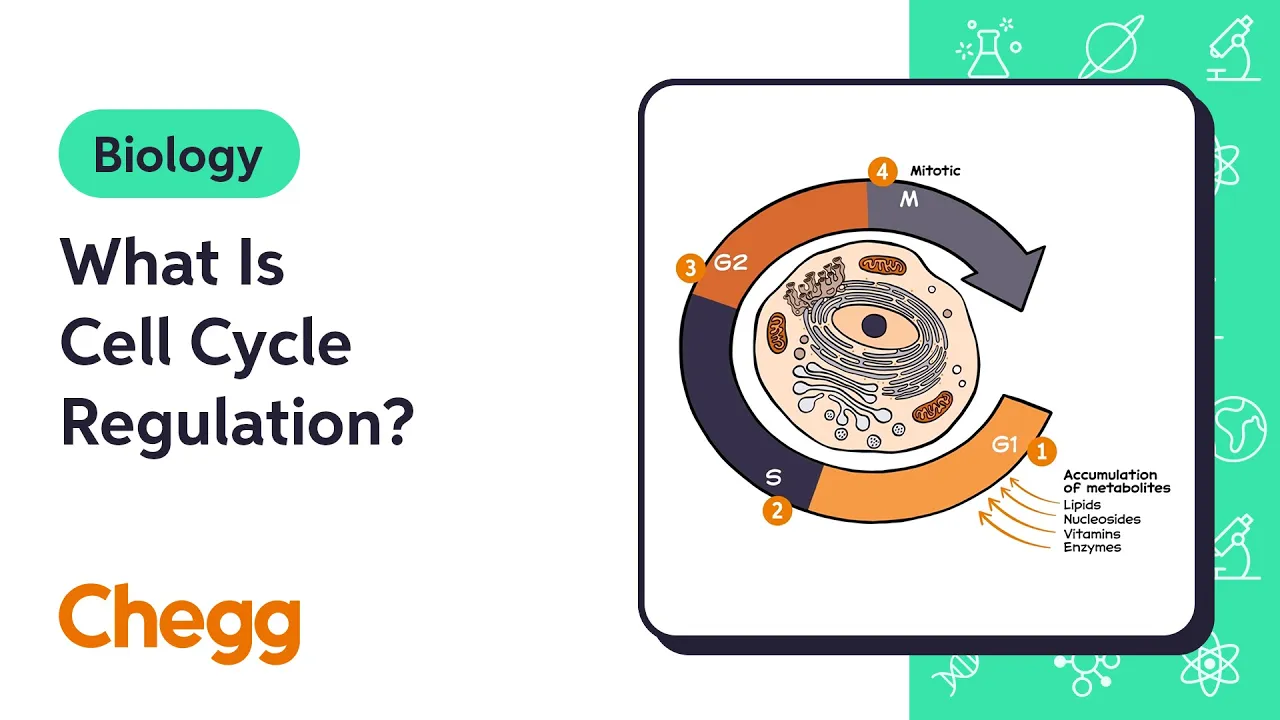
- Why this video: This video introduces the biochemical engine of the cell cycle: Cyclins and Cyclin-Dependent Kinases (CDKs). It explains the structural biochemistry of how CDK activity rises and falls based on cyclin abundance.
- Knowledge Checkpoint:
- Define the enzymatic function of CDKs and explain why they require cyclins to be active.
- Explain how cyclins are temporally regulated and degraded by cellular machinery.
- Identify which specific Cyclin-CDK complexes govern early G1, S phase, and entry into mitosis.

- Why this video: Presented by a world-class researcher from UCSF, this video offers an advanced biochemical explanation of how Cyclin-CDK complexes function as a cellular computer. It explores phosphorylation events that switch protein networks from inactive to active states.
- Knowledge Checkpoint:
- Describe how CDKs target specific substrates via phosphorylation to initiate cellular machinery.
- Explain the evolutionary conservation of cell cycle machinery across eukaryotes.
- Analyze how a breakdown in CDK inhibitory phosphorylation pathways can lead to premature checkpoint override.
Module 3: Oncogenes and Tumor Suppressor Genes
This module covers the genetic dual-force driving oncogenesis. We analyze proto-oncogene activation using the Ras/MAPK signaling cascade as a key example. We also explore the function of tumor suppressors like p53 and Rb, and study how "gain-of-function" and "loss-of-function" mutations lead to unchecked cell proliferation.
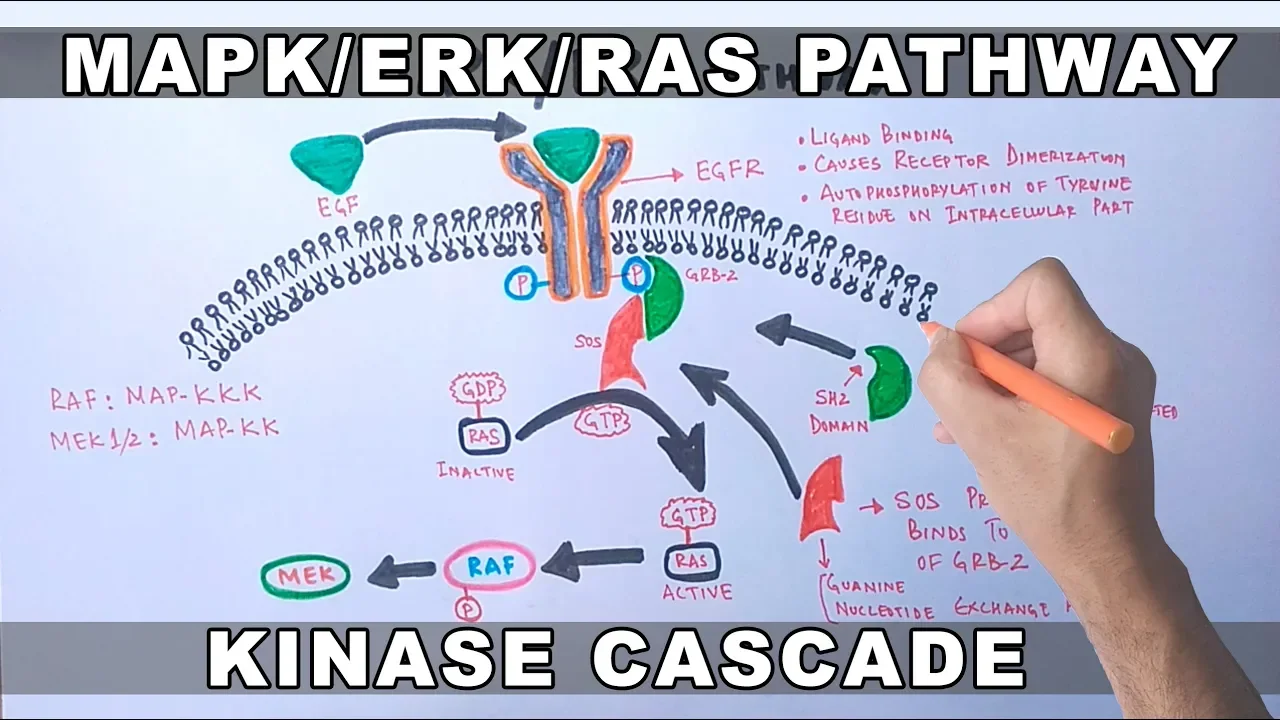
- Why this video: Addresses a critical curriculum gap. This video provides a detailed, step-by-step breakdown of the Mitogen-Activated Protein Kinase (MAPK/ERK) pathway. This signaling cascade downstream of growth factor receptors is frequently hyper-activated in human cancers.
- Knowledge Checkpoint:
- Trace the signal transduction cascade starting from Receptor Tyrosine Kinase (RTK) activation to nuclear transcription factors.
- Explain the sequential phosphorylation of Ras, Raf, MEK, and ERK.
- Identify which transcription factors (such as c-Fos and c-Jun) are activated by phosphorylated ERK to drive cell cycle entry genes.

- Why this video: Addresses a critical curriculum gap. In this MIT lecture segment, the molecular mechanism of Ras activation is dissected. It details how a single nucleotide substitution at codon 12 locks the Ras small GTPase in a permanent "GTP-bound" active state, eliminating its self-terminating GTP-hydrolysis capability.
- Knowledge Checkpoint:
- Distinguish between the inactive (GDP-bound) and active (GTP-bound) conformations of the Ras protein.
- Explain how a G-to-T transversion mutation at codon 12 structurally prevents GTP hydrolysis.
- Define "dominant mutation" and explain why only one mutated copy of a proto-oncogene like Ras is required to promote cancer.
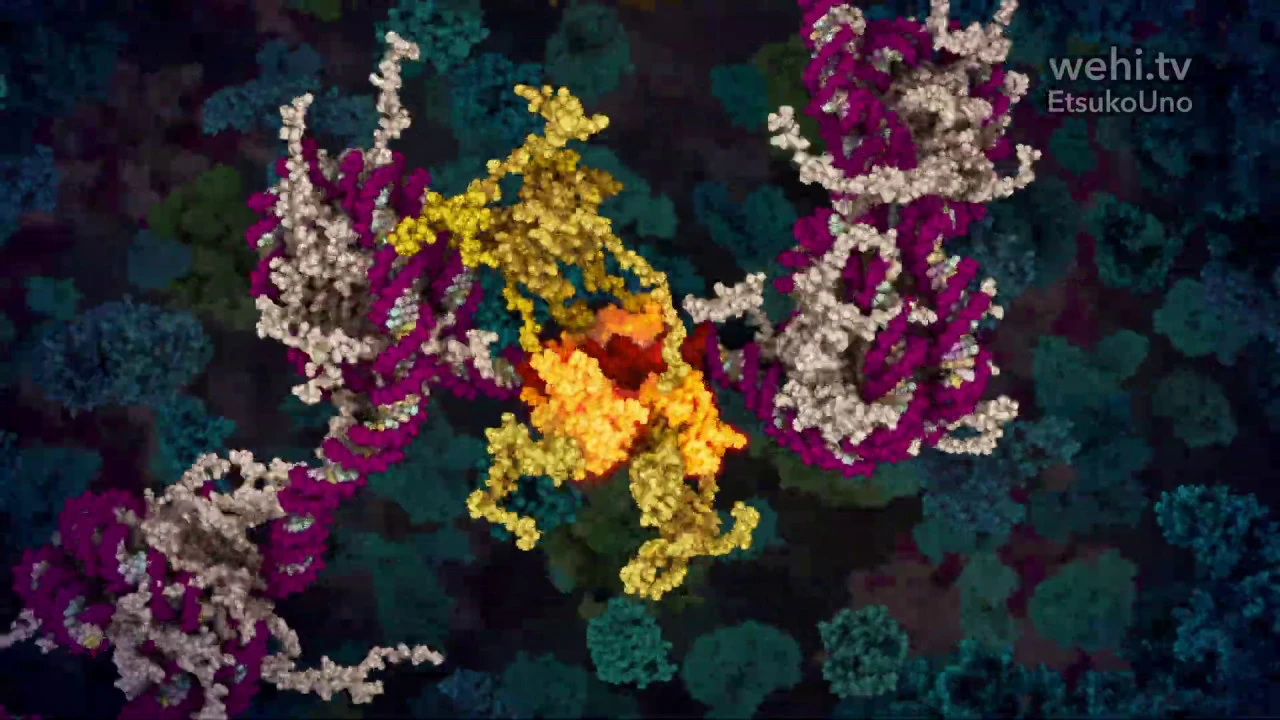
- Why this video: This animation details the structure and function of the "guardian of the genome," p53. It demonstrates how p53 functions as a tetrameric transcription factor that binds to DNA to orchestrate either cell-cycle arrest, DNA repair, or apoptosis.
- Knowledge Checkpoint:
- Explain how p53 is stabilized and activated in response to double-stranded DNA breaks.
- Describe the molecular mechanism of p53-mediated G1/S arrest through the transcriptional upregulation of p21 (a CDK inhibitor).
- Contrast "loss-of-function" mutations in tumor suppressors with "gain-of-function" mutations in proto-oncogenes.
Module 4: Angiogenesis and the Tumor Microenvironment
As a tumor grows, it reaches a physical limit where simple diffusion can no longer deliver sufficient oxygen and nutrients. To survive, tumors must initiate the "angiogenic switch." This module covers the signaling networks that recruit new blood vessels, as well as the surrounding tumor microenvironment, which includes stromal cells and mechanisms for immune evasion.

- Why this video: This video offers an excellent primer on the angiogenic switch. It describes how local hypoxia triggers cells to release angiogenic growth factors, overcoming endogenous anti-angiogenic inhibitors.
- Knowledge Checkpoint:
- Define the "angiogenic switch" and describe the physical size constraints (approx. 1-2 mm) of a non-vascularized tumor.
- Identify the triggers of cellular hypoxia and how they shift the balance between pro- and anti-angiogenic factors.

- Why this video: This molecular-level animation traces the signaling cascade of Vascular Endothelial Growth Factor (VEGF). It explains how tumor-secreted VEGF binds to tyrosine kinase receptors on nearby endothelial cells, driving migration and vessel sprouting.
- Knowledge Checkpoint:
- Map the VEGF pathway: identify the ligand, the receptor (VEGFR), and the downstream cellular responses in endothelial cells.
- Describe the structural characteristics of tumor-associated blood vessels (e.g., hyperpermeability, disorganized architecture).
- Explain how anti-VEGF therapies (such as monoclonal antibodies) attempt to disrupt this signaling loop.
- Why this video: Addresses a critical curriculum gap. The tumor microenvironment is more than just blood vessels; it includes an immunosuppressive stromal matrix. This talk discusses how tumors construct physical and chemical barriers to exclude, exhaust, and deactivate tumor-infiltrating immune cells.
- Knowledge Checkpoint:
- Describe how the tumor microenvironment functions as an active barrier against cytotoxic T-lymphocytes.
- Explain the concept of "immune escape" and how tumor-derived signals downregulate local immune responses.
- Discuss the goal of immune checkpoint inhibitors in restoring the host immune system's ability to infiltrate and clear tumor masses.
Module 5: The Metastatic Cascade and EMT
Metastasis causes approximately 90% of cancer-related deaths. This module traces how tumor cells acquire invasive features, cross physical tissue boundaries, survive transit through the circulatory system, and establish secondary colonies. We focus on the Epithelial-to-Mesenchymal Transition (EMT) and the mechanical steps of colonization.

- Why this video: This video details the localized steps of the metastatic cascade. It describes how cells alter their surface adhesion molecules to detach from neighboring cells and degrade structural barriers.
- Knowledge Checkpoint:
- Explain how the loss of E-cadherin expression permits cancer cells to detach from the primary tumor mass.
- Describe the function of Matrix Metalloproteinases (MMPs) in degrading the basement membrane and extracellular matrix.
- Distinguish between the cellular features of benign and malignant neoplasms.

- Why this video: Addresses a critical curriculum gap. A high-quality 3D animation that details the physical journey of metastatic cells: intravasation, survival against circulatory shear stress, extravasation, and colonization of distant organs.
- Knowledge Checkpoint:
- Define "intravasation" and "extravasation" as mechanical steps in the cascade.
- Detail the physical hazards a circulating tumor cell faces in the bloodstream (e.g., shear forces, immune detection) and how aggregating with platelets can assist in survival.
- Explain why metastatic colonization is highly inefficient, with most extravasated cells failing to establish viable secondary tumors.
- Why this video: Presented by Dr. Robert Weinberg, a foundational figure in cancer biology, this comprehensive lecture explains the Epithelial-Mesenchymal Transition (EMT). He connects embryonic developmental programs to the genetic rewiring cancer cells undergo to gain motility and self-renewal properties.
- Knowledge Checkpoint:
- Define EMT and list the key morphological changes a cell undergoes when transitioning from an epithelial state to a mesenchymal state.
- Explain how transcription factors (such as Snail, Slug, and Twist) repress epithelial genes and activate mesenchymal programs.
- Discuss the relationship between EMT, cancer stem cells, and resistance to standard chemotherapeutic treatments.
Course Map
The following flowchart illustrates the dependency structure of the curriculum modules. Solidifying your understanding of cell biology foundations and checkpoint kinetics is essential before exploring targeted genetic dysregulation and macroscopic tumor expansion.
Key People Index
- Dr. Robert A. Weinberg (Whitehead Institute/MIT): A pioneer in cancer research, Dr. Weinberg discovered the first human oncogene (Ras) and the first tumor suppressor gene (Rb). He is also known for co-authoring the landmark papers The Hallmarks of Cancer, which organized the complex biology of cancer into a set of logical principles.
- Dr. David O. Morgan (UCSF): A leading authority on cell cycle control, whose structural and biochemical research on Cyclins and Cyclin-Dependent Kinases has helped map the molecular machinery driving eukaryotic cell division.
- Dr. Judah Folkman (Boston Children's Hospital/Harvard): The clinician-scientist who first proposed the hypothesis that tumor growth is dependent on angiogenesis, laying the foundation for modern anti-VEGF therapies.
Final Self-Assessment
Complete this comprehensive self-assessment to verify your mastery of the molecular biology of oncogenesis.
- The Central Dogma: Can you map out how a genomic mutation alters an mRNA transcript, resulting in a protein with altered structure and function?
- Cell Cycle Machinery: Can you explain the specific biochemical interaction between Cyclins and Cyclin-Dependent Kinases (CDKs), including how they are regulated?
- Checkpoint Decisions: Can you list the cellular conditions monitored at the G1/S checkpoint and the consequences of failing those criteria?
- Ras Activation Mechanics: Can you describe the molecular mechanism by which a mutation at codon 12 in the Ras gene prevents GTP hydrolysis, resulting in a constitutively active state?
- MAPK/ERK Pathway Cascade: Can you trace the activation sequence from receptor tyrosine kinases (RTKs) through Ras, Raf, MEK, and ERK to nuclear transcription factors?
- The Two-Hit Hypothesis: Can you explain why proto-oncogene activation requires only one mutated allele (dominant), whereas tumor suppressor inactivation typically requires both alleles to be compromised (recessive)?
- p53-Mediated Arrest: Can you explain how p53 is stabilized by DNA damage and how it halts the cell cycle via the transcriptional upregulation of p21?
- The Angiogenic Switch: Can you describe how tissue hypoxia triggers the upregulation of VEGF and its subsequent binding to receptor tyrosine kinases on endothelial cells?
- Tumor Microenvironment Dynamics: Can you describe how tumor stromal cells and the extracellular matrix can prevent active immune cell infiltration?
- Basement Membrane Degradation: Can you identify the roles of E-cadherin loss and Matrix Metalloproteinase (MMP) secretion during localized tumor invasion?
- Metastatic Colonization Obstacles: Can you list the physical barriers and hazards a circulating tumor cell faces during transit in the bloodstream, and explain why colonization is highly inefficient?
- EMT Execution: Can you explain how developmental transcription factors (e.g., Snail, Twist) coordinate the down-regulation of epithelial markers and the up-regulation of mesenchymal characteristics?