Medicinal Chemistry: Drugs, Receptors & ADME
Learning Goal: Students will master the fundamentals of medicinal chemistry, detailing the chemical forces driving drug-receptor interactions, predicting pharmacokinetics (ADME) through mathematical and physiological parameters, and applying structure-activity relationships (SAR) alongside modern computer-aided drug design (CADD) pipelines to optimize lead compounds.
- Prerequisites: Basic organic chemistry (understanding covalent bonds, polarity, and resonance) and introductory cell biology.
- Estimated Study Time: 18 Hours
Module 1: Foundations of Chemistry & Biology in Drug Design
This module establishes the chemical and biological foundations of medicinal chemistry. You will explore the architecture of the drug discovery pipeline, trace the timeline of therapeutic development, and learn to identify key organic functional groups on real pharmaceutical compounds that dictate target interaction and solubility.
Why this video is valuable
This lecture maps out the multi-year, high-stakes journey of drug development. Understanding the broad phases—from disease identification and target validation to clinical trials—is crucial before zooming into molecular details. It frames the biological and economic constraints that modern medicinal chemists operate under.
Knowledge Checkpoint
- Outline the sequential stages of the drug discovery pipeline and their typical time scales.
- Differentiate between target identification and target validation.
- Understand the financial and clinical attrition rates associated with bringing a drug candidate to market.
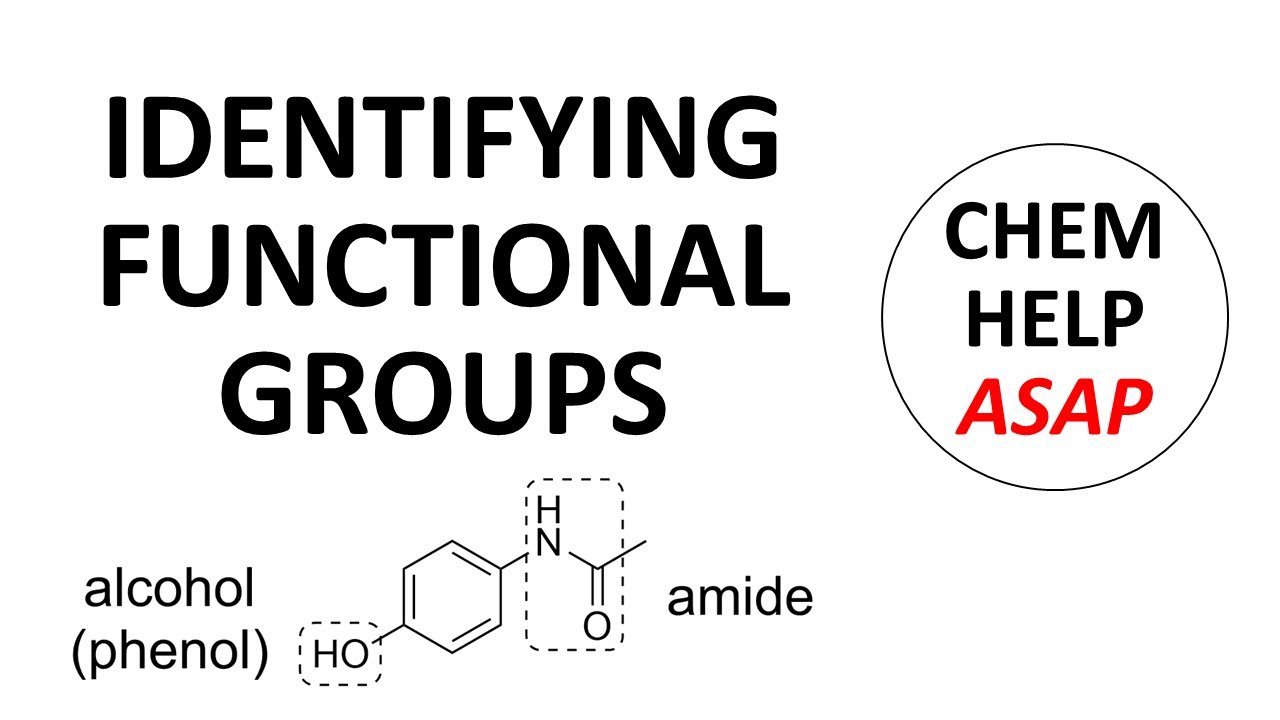
Why this video is valuable
Medicinal chemistry operates on the language of functional groups. This video uses eight real, high-volume prescription drugs to teach you how to visually isolate and identify groups such as alcohols, amines, carboxylic acids, amides, and phenols within complex, non-trivial chemical structures.
Knowledge Checkpoint
- Identify at least 10 key organic functional groups within complex chemical structures.
- Classify nitrogen-containing functional groups (e.g., amines vs. amides) and explain their structural differences.
- Predict how functional groups such as carboxylic acids and phenols change ionization states under physiological pH.
Module 2: Drug-Receptor Interactions and Pharmacodynamics
This module delves into the physical chemistry of the binding pocket. You will study how drugs interact with macromolecules, analyze the thermodynamics of binding forces (ranging from reversible hydrogen bonds to irreversible covalent bonds), and mathematically define affinity, efficacy, and different pharmacological modes of receptor modulation.
Why this video is valuable
This presentation details the precise physical forces governing target binding. By looking at drug-receptor interactions from a chemical perspective, you will learn to rank the strength of binding forces (covalent, ionic, hydrogen, hydrophobic, and van der Waals forces) and understand how they cooperate within a protein's active site.
Knowledge Checkpoint
- Rank intermolecular binding forces in drug-receptor complexes from strongest to weakest.
- Explain why covalent bonds usually lead to irreversible receptor inhibition and define the clinical consequences of this.
- Describe how hydrophobic interactions drive thermodynamic stability by releasing structured water molecules from binding pockets.

Why this video is valuable
This tutorial bridges chemistry and pharmacology by demystifying concentration-response curves (CRCs). It breaks down the thermodynamic concepts of affinity () and efficacy (), helping you visually analyze how competitive, non-competitive, and uncompetitive antagonists modify agonist profiles.
Knowledge Checkpoint
- Define the mathematical relationship between drug affinity () and receptor occupancy.
- Differentiate between drug affinity (binding strength) and drug efficacy (biological response generation).
- Analyze concentration-response curves to identify competitive, non-competitive, and irreversible antagonism.
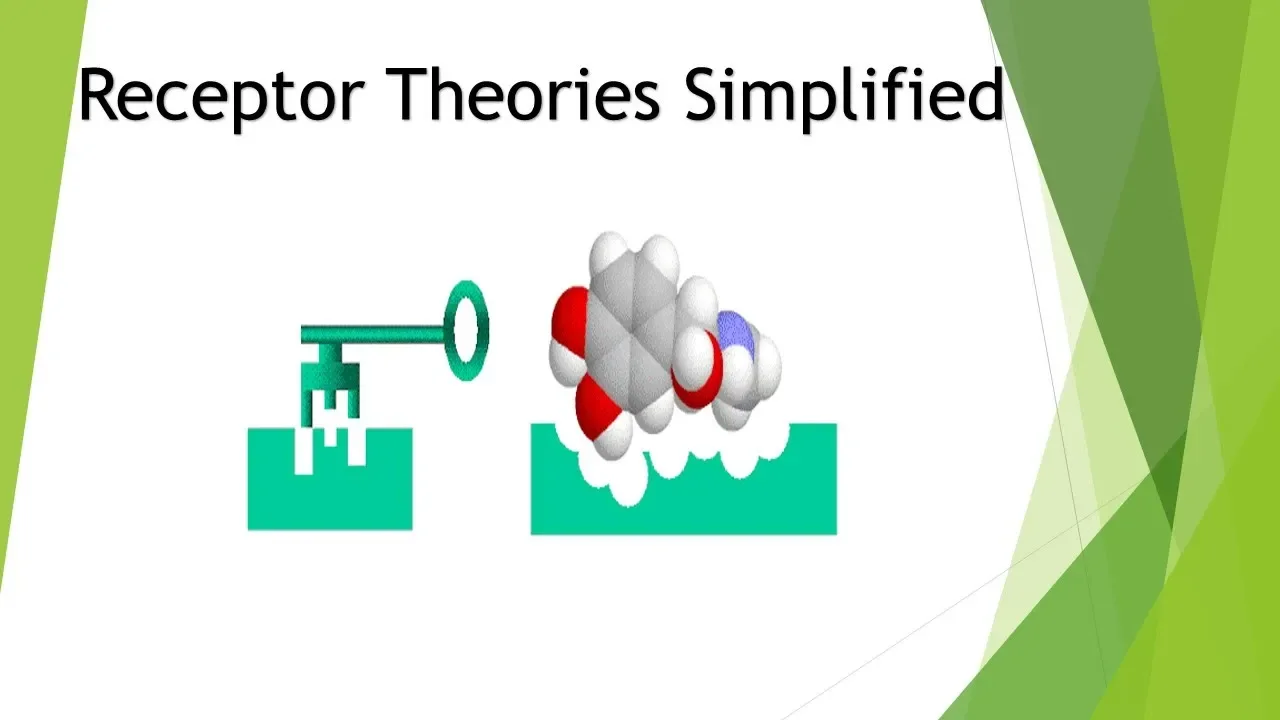
Why this video is valuable
Receptor theory has evolved through several mathematical models. This video systematically introduces six foundational models, including Clark's Occupation Theory, Paton’s Rate Theory, and the modern Two-State Model, which explains the molecular nature of inverse agonists, partial agonists, and constitutive receptor activity.
Knowledge Checkpoint
- Describe the primary assumptions and limitations of Clark's Receptor Occupation Theory.
- Compare Occupation Theory with Rate Theory regarding how drug response is sustained or terminated.
- Explain the Two-State Model and show how inverse agonists reduce baseline (constitutive) receptor signaling.
Module 3: Pharmacokinetics: How the Body Processes Drugs (ADME)
While pharmacodynamics covers what a drug does to the body, pharmacokinetics (PK) addresses what the body does to the drug. This module explains ADME (Absorption, Distribution, Metabolism, and Excretion), alongside the essential mathematical calculations for volume of distribution, clearance, and half-life.
Why this video is valuable
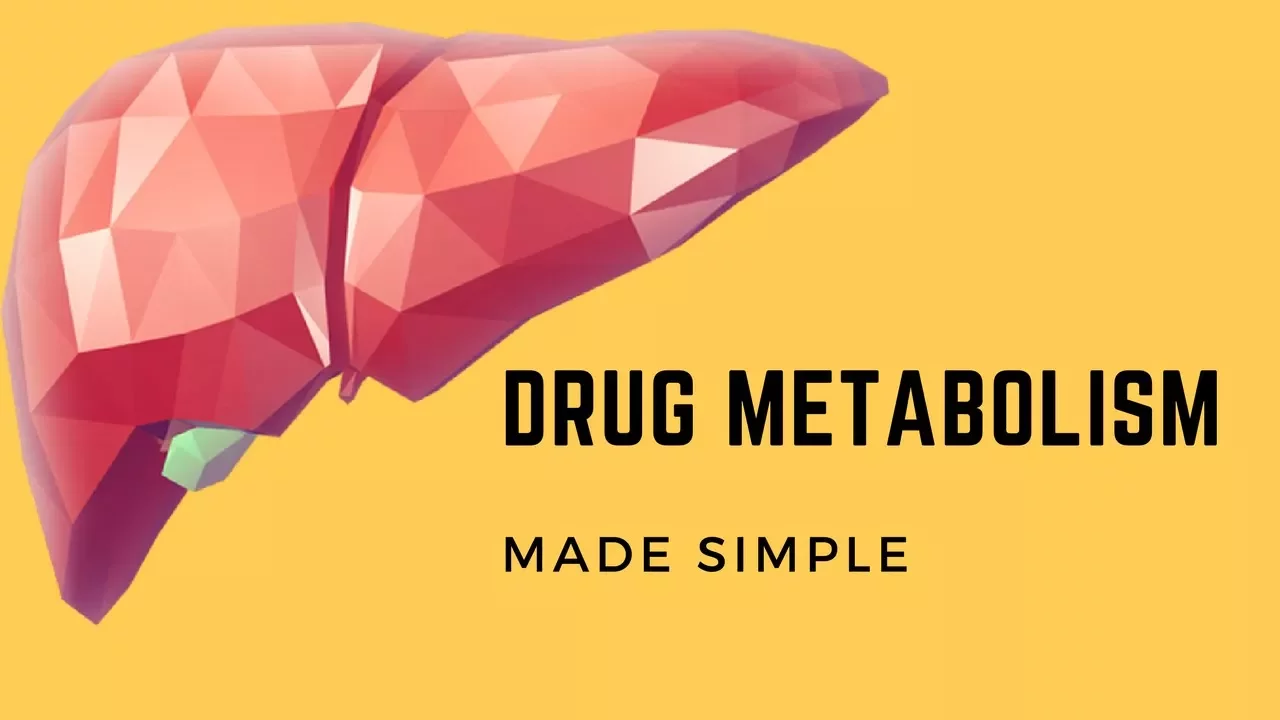
Using clear, step-by-step animations, this video simplifies liver biotransformation. It details Phase I functionalization reactions (oxidation, reduction, hydrolysis, largely driven by Cytochrome P450 enzymes) and Phase II conjugation reactions, showing how they make lipophilic molecules water-soluble for excretion.
Knowledge Checkpoint
- Explain the biological purpose of drug metabolism and why lipophilic compounds must be biotransformed.
- Distinguish between Phase I reactions (functionalization) and Phase II reactions (conjugation) in terms of chemical modifications and enzymes involved.
- Describe the first-pass effect and how oral administration impacts systemic bioavailability.
Why this video is valuable
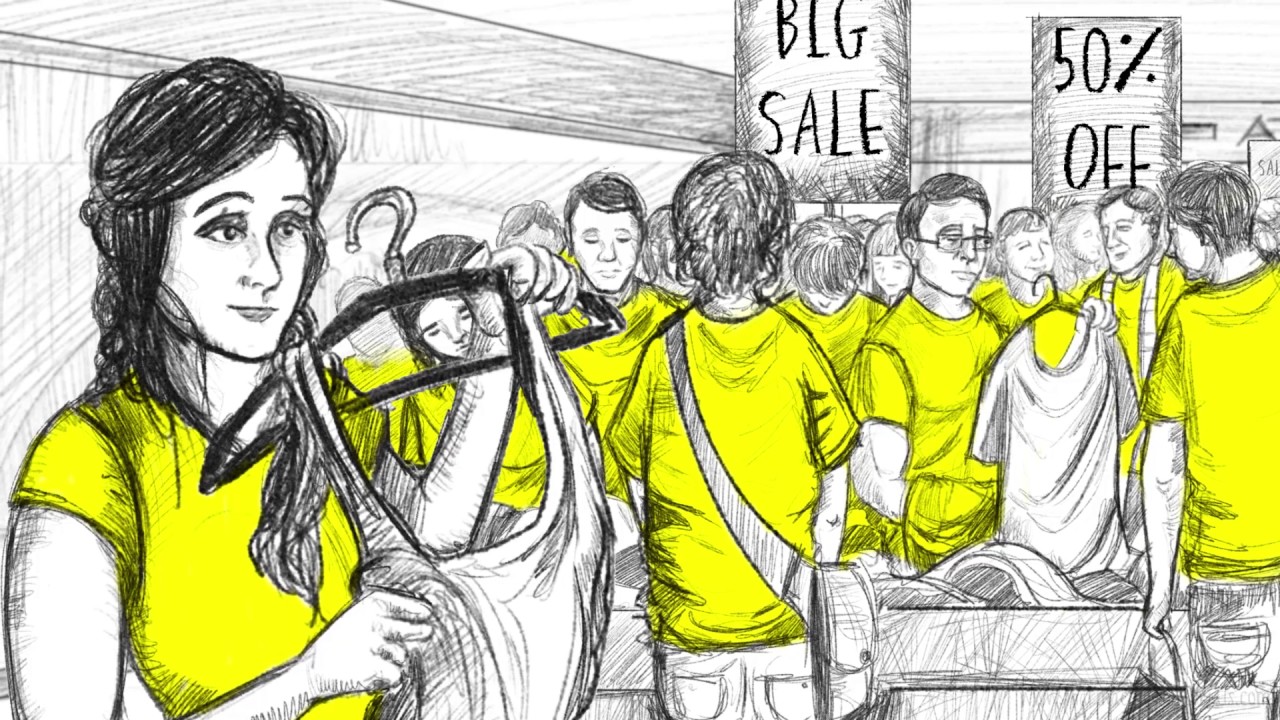
Volume of Distribution () is a notoriously abstract concept. This short, highly quantitative tutorial uses visual balance models to explain as a mathematical parameter. It shows how plasma protein binding and tissue accumulation determine whether a drug remains in the blood or penetrates deep tissues.
Knowledge Checkpoint
- Write the mathematical formula for Volume of Distribution () and identify its variables.
- Explain why some drugs have a calculated that exceeds the physical fluid volume of the human body.
- Predict how high plasma protein binding affects a drug's and its therapeutic window.

Why this video is valuable
This lecture explains clearance () and elimination rates. You will learn to calculate how much plasma volume is cleared of a drug per unit of time, understand first-order kinetics, and use these values to design dosing regimens that maintain therapeutic concentrations.
Knowledge Checkpoint
- Define clearance () mathematically and state its units.
- Derive the relationship between clearance, plasma concentration, and the overall rate of drug elimination.
- Calculate a drug's half-life () using clearance () and volume of distribution ().
Module 4: Lead Compound Discovery & Chemical Optimization
Once a target is validated and a screening hit is found, medicinal chemists must optimize that molecule. This module covers Structure-Activity Relationships (SAR), structural optimization strategies, and the use of isosteres and bioisosteres to bypass metabolic liabilities while preserving binding affinity.

Why this video is valuable
This lecture bypasses the common search engine noise around satellite radar (which shares the SAR acronym) to focus purely on chemistry. It explains how systematically changing functional groups on a core scaffold reveals which parts of a molecule are essential for binding (the pharmacophore) and which can be modified to improve drug-like properties.
Knowledge Checkpoint
- Define Structure-Activity Relationship (SAR) and describe how to map a drug's pharmacophore.
- Explain how introducing a single methyl group or halogen can drastically alter binding interactions and metabolic stability.
- Distinguish between structural modifications that enhance pharmacodynamics (binding) vs. those that improve pharmacokinetics (solubility, absorption).

Why this video is valuable
Bioisosterism is a key tool in lead optimization. This advanced video covers classical and non-classical bioisosteres, showing how chemists substitute vulnerable functional groups with structurally similar equivalents to extend half-life, reduce toxicity, and secure intellectual property.
Knowledge Checkpoint
- Explain the fundamental concept of bioisosterism and its primary goals in optimization.
- Differentiate between classical bioisosteres (based on valence electron configurations) and non-classical bioisosteres.
- Identify a classic bioisosteric replacement used to block metabolic oxidation (e.g., swapping hydrogen for fluorine).

Why this video is valuable
This video covers Quantitative Structure-Activity Relationships (QSAR), which add mathematical rigor to structural modifications. It explains how electronic, steric, and hydrophobic properties are quantified and combined into equations (such as the Hansch formulation) to predict biological activity.
Knowledge Checkpoint
- Define QSAR and list the three main physicochemical parameters used in QSAR models.
- Explain what the partition coefficient () measures and how it relates to drug transport and activity.
- Interpret a standard Hansch equation to determine if hydrophobic, steric, or electronic factors dominate a drug's biological response.
Module 5: Modern Computer-Aided Drug Design (CADD)
Modern drug discovery relies heavily on computational modeling. This module introduces Computer-Aided Drug Design (CADD). You will study the mechanics of molecular docking, learn to use industry-standard software tools (such as PyMOL and AutoDock Vina), and explore how machine learning models are used for virtual screening and de novo molecular generation.

Why this video is valuable
This video explores the intersection of computer science and molecular biology. It details how AI, deep learning, and generative machine learning models (such as graph neural networks and transformers) are transforming lead generation, allowing researchers to screen billions of virtual molecules in days.
Knowledge Checkpoint
- Differentiate between ligand-based drug design (LBDD) and structure-based drug design (SBDD).
- Explain how generative AI architectures (e.g., GNNs) design de novo structures compared to traditional high-throughput screening (HTS).
- Understand the role of machine learning in predicting ADMET properties early in the pipeline.
Why this video is valuable
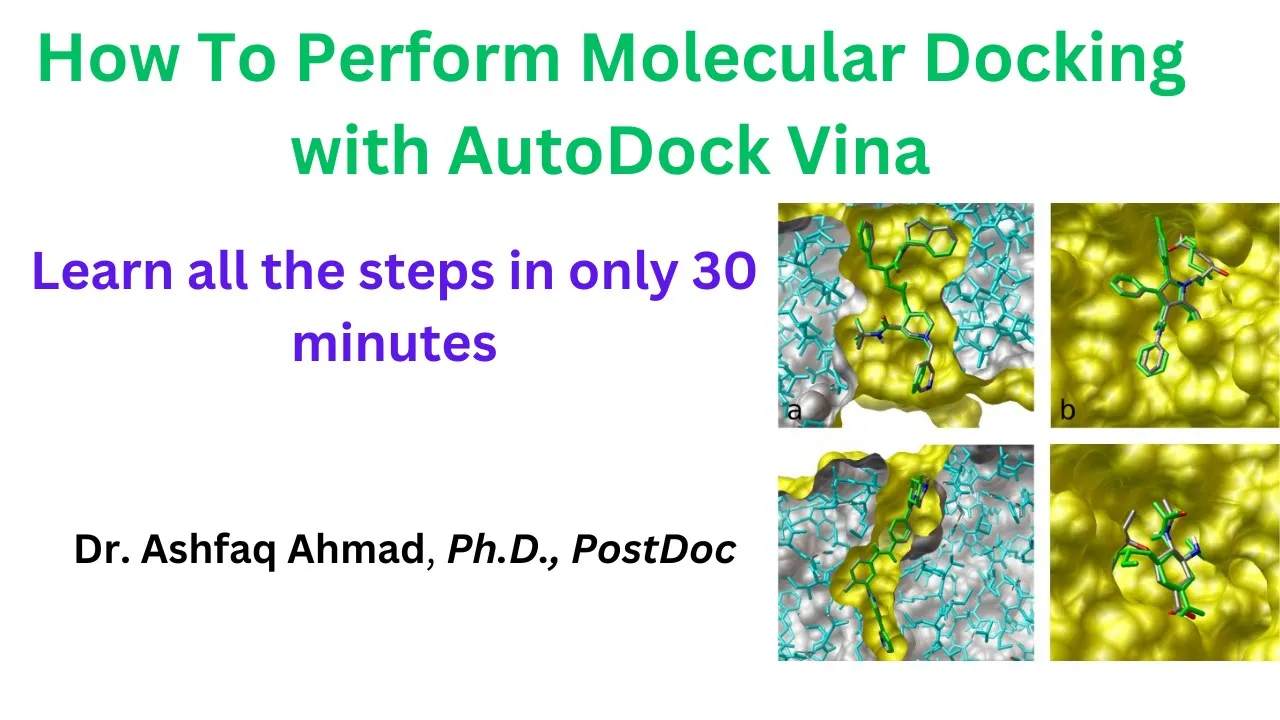
This practical tutorial provides a complete guide to running a molecular docking simulation. It walks you through setting up AutoDock Vina, preparing protein receptors and ligands, defining grid boxes, and running the simulation on your local computer.
Knowledge Checkpoint
- Describe the process of preparing raw PDB files for molecular docking (e.g., removing water, adding polar hydrogens).
- Explain why converting files to the
.pdbqtformat is necessary for docking calculations. - Configure a docking grid box to target a specific active site pocket on a receptor.
Why this video is valuable
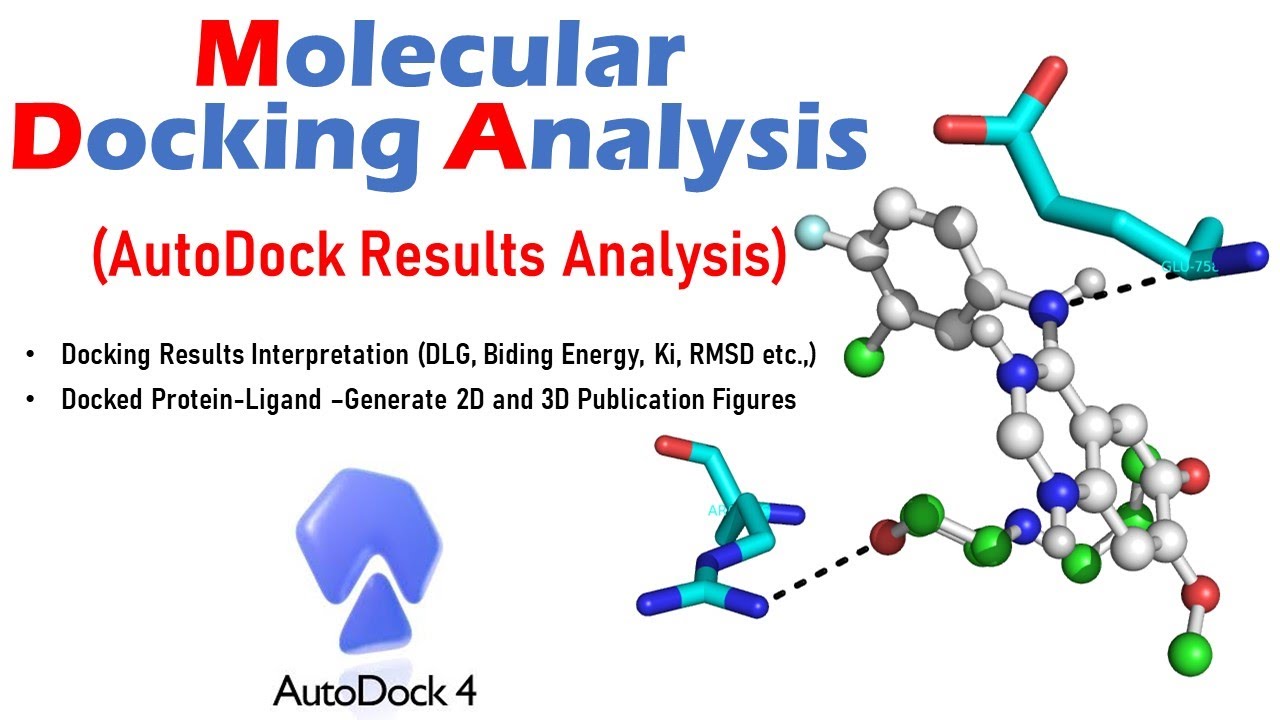
Once your docking runs are complete, you must interpret the results. This tutorial demonstrates how to load output conformations into PyMOL, evaluate binding free energies (), measure RMSD values, and identify specific hydrogen bonds and hydrophobic contacts.
Knowledge Checkpoint
- Interpret the binding affinity output table from AutoDock Vina and explain the physical meaning of lower (more negative) binding energy scores.
- Define Root Mean Square Deviation (RMSD) and explain how it is used to evaluate docking pose accuracy.
- Use PyMOL or similar visualization software to map and export high-resolution figures showing key protein-ligand hydrogen bonds.
Course Map
This flowchart shows the recommended progression through the modules. Each module provides essential concepts for the next step in the pipeline.
Key People Index
- Sir James Black (1924–2010): A pioneer in rational drug design who shifted drug discovery from random screening to targeted pharmacology, leading to the development of beta-blockers (propranolol) and receptor antagonists (cimetidine).
- Dr. David Goodsell: A structural biologist and software developer at the Scripps Research Institute who made major contributions to the development of AutoDock, enabling automated docking simulations for open-source drug discovery.
- Dr. Daphne Koller: Co-founder of Coursera and CEO of insitro, she is a leading voice in applying machine learning and high-throughput biological data to accelerate lead discovery and optimize drug development pipelines.
Final Self-Assessment
Review your understanding of the curriculum by completing this comprehensive self-assessment checklist:
- Functional Group Analysis: Can you quickly identify and locate polar, non-polar, acidic, and basic functional groups on a newly discovered drug molecule?
- Thermodynamic Forces: Can you explain why non-covalent interactions (like hydrogen bonding and salt bridges) are preferred over covalent interactions for most therapeutic drugs?
- Affinity vs. Efficacy: Can you explain to a colleague why a drug with high affinity for a receptor might have zero efficacy?
- Receptor Theory Models: Can you draw a diagram of the two-state receptor model and show how a partial agonist, full agonist, neutral antagonist, and inverse agonist affect the equilibrium?
- Volume of Distribution (): Given a drug dose and its plasma concentration, can you calculate the and predict whether the drug is bound to plasma proteins or sequestered in tissue fats?
- Clearance and Half-life: Can you calculate a drug's half-life if given its volume of distribution () and system clearance ()?
- Structure-Activity Relationships: Can you design a basic SAR experiment, systematically swapping substituents on a core scaffold to map out a pharmacophore?
- Bioisosterism: Can you suggest a non-classical bioisosteric replacement for a carboxylic acid group that maintains binding affinity while improving cell permeability?
- QSAR Equations: Can you interpret a Hansch equation and determine if adding a bulky halogen substituent will increase or decrease biological activity?
- Virtual Docking Workflows: Can you set up and run a local docking simulation with AutoDock Vina, and verify the resulting binding pose and free energy using PyMOL?