Trade Protectionism: Tariffs, Quotas & Welfare
Learning Goal: Evaluate the welfare effects and market distortions of trade protectionist policies, comparing the economic impacts of tariffs, import quotas, and export subsidies on global supply chains.
- Prerequisites: Basic understanding of supply and demand curves, and introductory microeconomic principles (market equilibrium).
- Estimated Total Study Time: 12 Hours
Module 1: Foundations of Free Trade and Market Surplus
This module establishes the foundational economic frameworks necessary to evaluate trade policies. You will master the concepts of consumer surplus, producer surplus, and allocative efficiency. From there, you will transition to international trade theory, contrasting a closed economy (autarky) with an open market to mathematically and visually demonstrate why opening up to free trade increases net societal welfare.
Recommended Videos
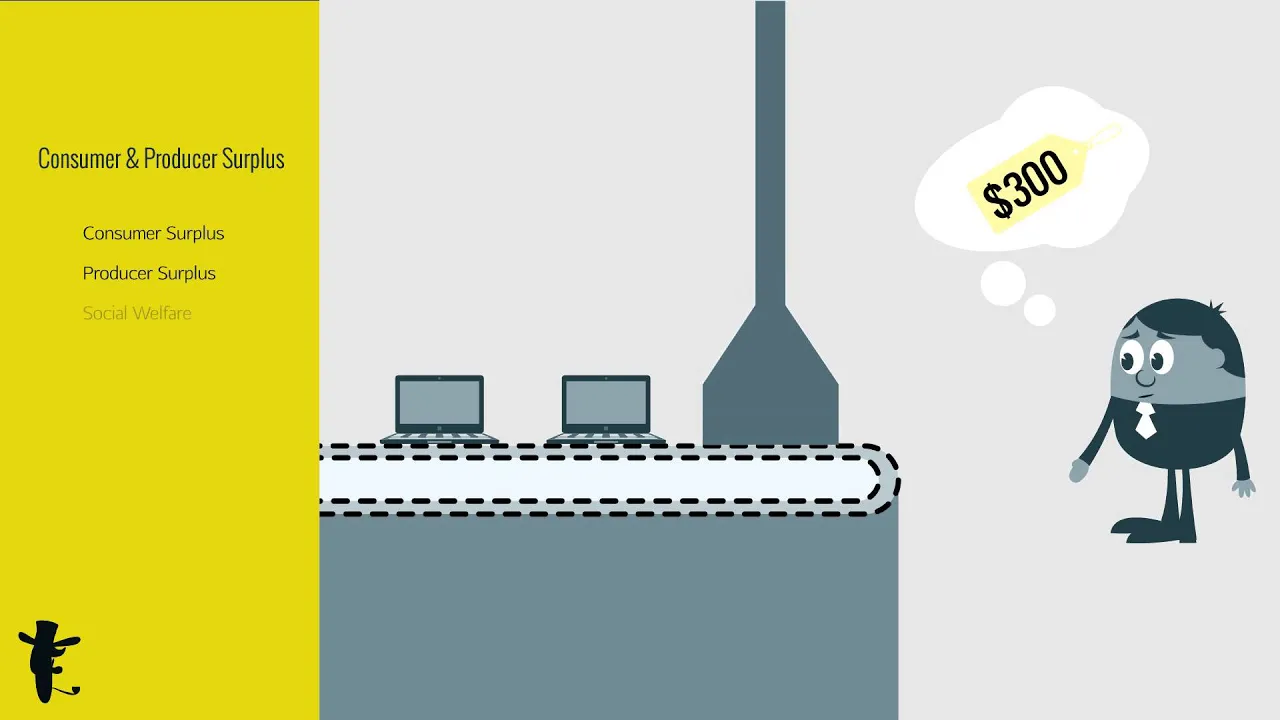
- Why this video: This video provides a clear baseline introduction to welfare economics. It defines consumer and producer surplus visually, helping you understand how market transactions generate value for both buyers and sellers before trade barriers are introduced.
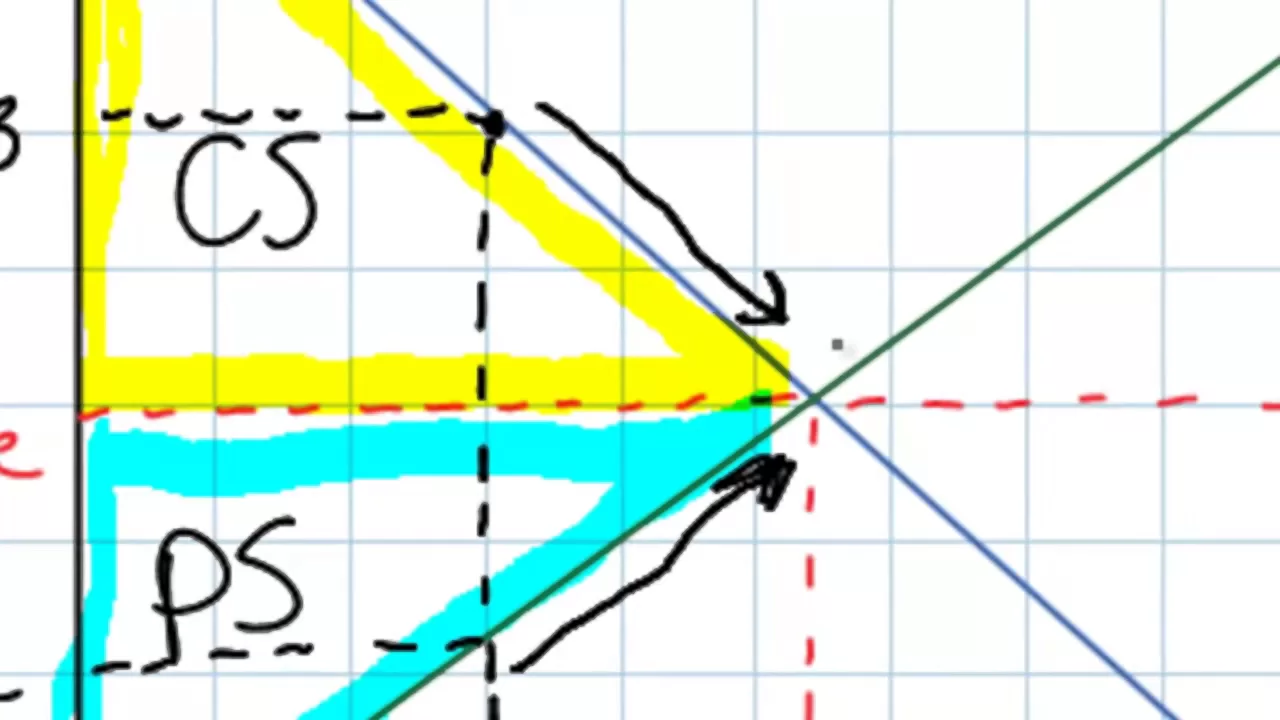
- Why this video: This video links economic surplus directly to allocative efficiency (where marginal benefit equals marginal cost). It illustrates how competitive markets naturally maximize total societal welfare—a benchmark critical for assessing the distortive effects of protectionist policies later.

- Why this video: This lecture bridges basic welfare theory to international trade. It uses standard microeconomic models to contrast autarky (self-sufficiency) with free trade. It step-by-step tracks the shifts in consumer and producer surplus when a nation opens up to a lower world price.
Knowledge Checkpoint
- Define consumer surplus and producer surplus on a standard supply and demand graph.
- Explain how allocative efficiency is achieved when marginal benefit (MB) equals marginal cost (MC).
- Identify which domestic group (consumers or producers) gains and which loses when a country transitions from autarky to free trade under a world price lower than the domestic autarky price.
- Calculate the net change in total welfare (gains from trade) using the area of surplus triangles.
Module 2: The Economics of Tariffs
With the foundations of free trade established, this module introduces the first major protectionist tool: the tariff (a per-unit tax on imported goods). You will learn how tariffs artificially raise domestic prices, protect domestic producers at the expense of consumers, generate government tariff revenue, and create irreversible deadweight loss (DWL) through production and consumption distortions.
Recommended Videos
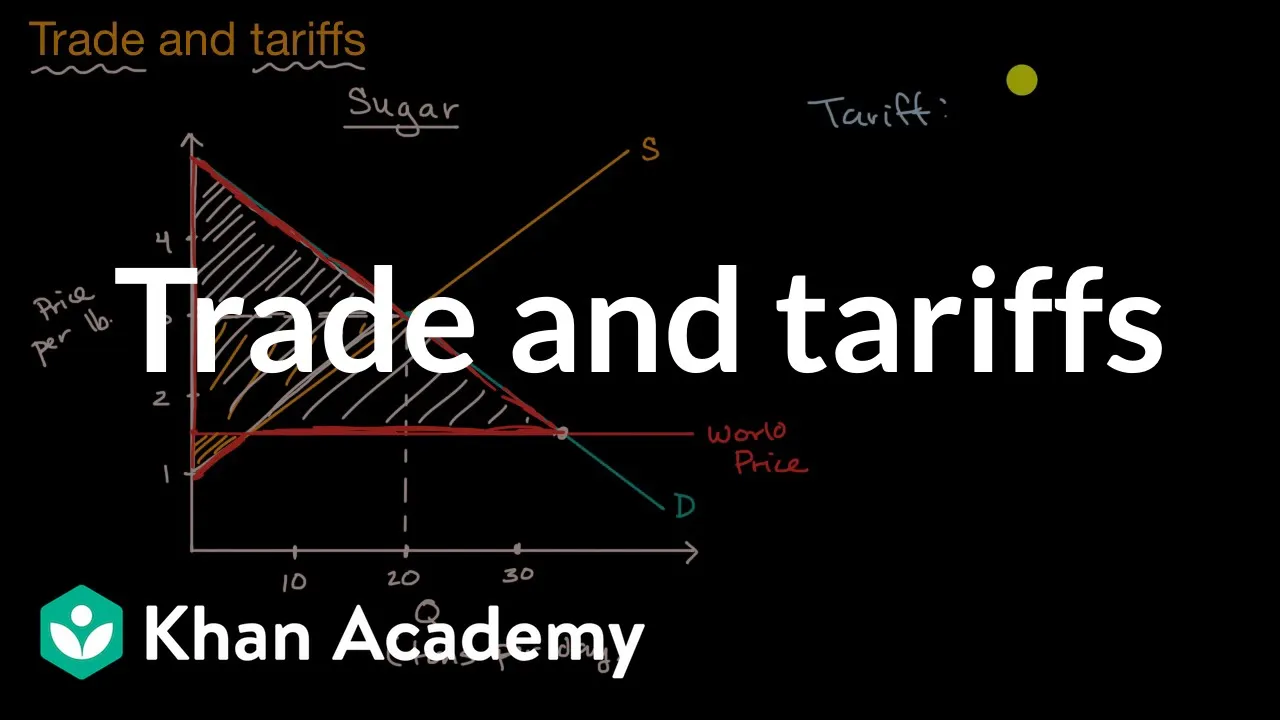
- Why this video: Sal Khan provides a clean, standard graphical dissection of a tariff's impact. He traces how domestic prices rise above the world price, and labels the resulting areas of consumer surplus loss, producer surplus gain, government revenue, and deadweight loss.
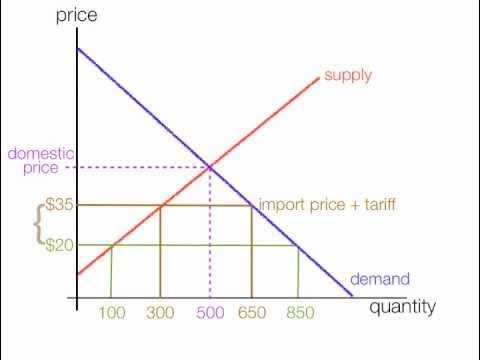
- Why this video: This video focuses on the mathematical application of tariff theory. It walks through actual calculations of price increases, import reductions, changes in surplus areas, and the precise mathematical derivation of deadweight loss triangles.

- Why this video: This clip introduces critical real-world context regarding tariff incidence. It clarifies the economic consensus that domestic importing businesses—not foreign exporters—physically pay tariffs at the border, illustrating how those costs ultimately pass through to domestic consumers.
Knowledge Checkpoint
- Diagram a domestic market under a tariff, clearly identifying the tariff rate, domestic production expansion, and import contraction.
- Identify the two components of deadweight loss created by a tariff: production distortion (inefficient domestic production) and consumption distortion (underconsumption).
- Mathematically calculate government tariff revenue as .
- Explain the concept of "tariff incidence" and why domestic importing companies bear the direct financial burden of a tariff at the port of entry.
Module 3: Import Quotas and Quota Rents
This module explores import quotas—direct physical limits on the quantity of a good that can be imported. While quotas look graphically similar to tariffs, they differ fundamentally in how they distribute the "quota rent" (the economic profit generated by the artificial scarcity).
Addressing the Literature Gap: License Allocation Methods
To address the gap identified in the review feedback, please note how quota rents are distributed depending on how the government allocates import licenses:
- Competitive Auctions: The government sells import licenses to the highest bidder. This captures the entire quota rent for the state, making the welfare outcome identical to a tariff.
- Historical Allocation (Grandfathering): Licenses are given for free to traditional domestic importers. The quota rent is captured as windfall profit by these domestic firms, keeping the wealth within the importing country.
- Licensing to Foreign Exporters (Voluntary Export Restraints): Licenses are given to foreign governments or companies. The quota rent is captured entirely by foreign entities, which significantly increases the net national welfare loss for the importing country.
Recommended Videos
- Why this video: Marginal Revolution University delivers a strong conceptual comparison of tariffs and quotas. It highlights the critical difference: who captures the quota rents. It clearly details how allocation methods change the national welfare outcome.

- Why this video: This video is a detailed, step-by-step graphical tutorial showing how to map and calculate changes in consumer surplus, domestic producer surplus, and quota holder rents under a restrictive import quota.

- Why this video: A concise professional breakdown explaining the financial mechanics of quota rents. It highlights how exporters capture additional profits by charging higher prices in the restricted market and outlines the resulting deadweight loss variations.
Knowledge Checkpoint
- Define "quota rent" and explain how it is graphically represented as a rectangle between the world price and the quota-induced domestic price.
- Contrast the three main allocation methods (auctions, historical licensing, foreign licensing) and evaluate which method minimizes net welfare loss for the importing country.
- Explain why a quota allocated via a public auction is welfare-equivalent to an import tariff.
- Describe how a quota creates domestic deadweight loss even if the government successfully captures the quota rents.
Module 4: Export Subsidies and Domestic Distortions
While tariffs and quotas restrict imports, export subsidies actively encourage outward trade by paying domestic firms to sell products abroad. This module covers the welfare distortions of export subsidies, explicitly analyzing how these interventions differ depending on whether the exporting nation is a "small country" or a "large country."
Addressing the Literature Gap: Small vs. Large Country Welfare Analysis
- Small Country Case (Price Taker): The country's exports are too small to affect the global price. When the government provides a subsidy, the domestic price rises by the exact amount of the subsidy. Domestic consumers lose surplus, domestic producers gain surplus, and the government pays the subsidy. Total national welfare falls due to production and consumption deadweight losses.
- Large Country Case (Price Maker): The country's export volume is large enough to shift global supply. The export subsidy pushes massive volumes of goods onto the world market, forcing the world price down. This causes a worsening of the terms of trade for the exporting nation (they get less money for their exports relative to what they pay for imports). The welfare loss is severe: it includes both the domestic deadweight loss and a massive terms-of-trade transfer of wealth to foreign consumers.
Recommended Videos

- Why this video: This video offers a rigorous graphical analysis of an export subsidy in a small country. It tracks how domestic prices rise above the world price by the exact subsidy amount, and visualizes the resulting consumer loss, producer gain, and government budget drain.
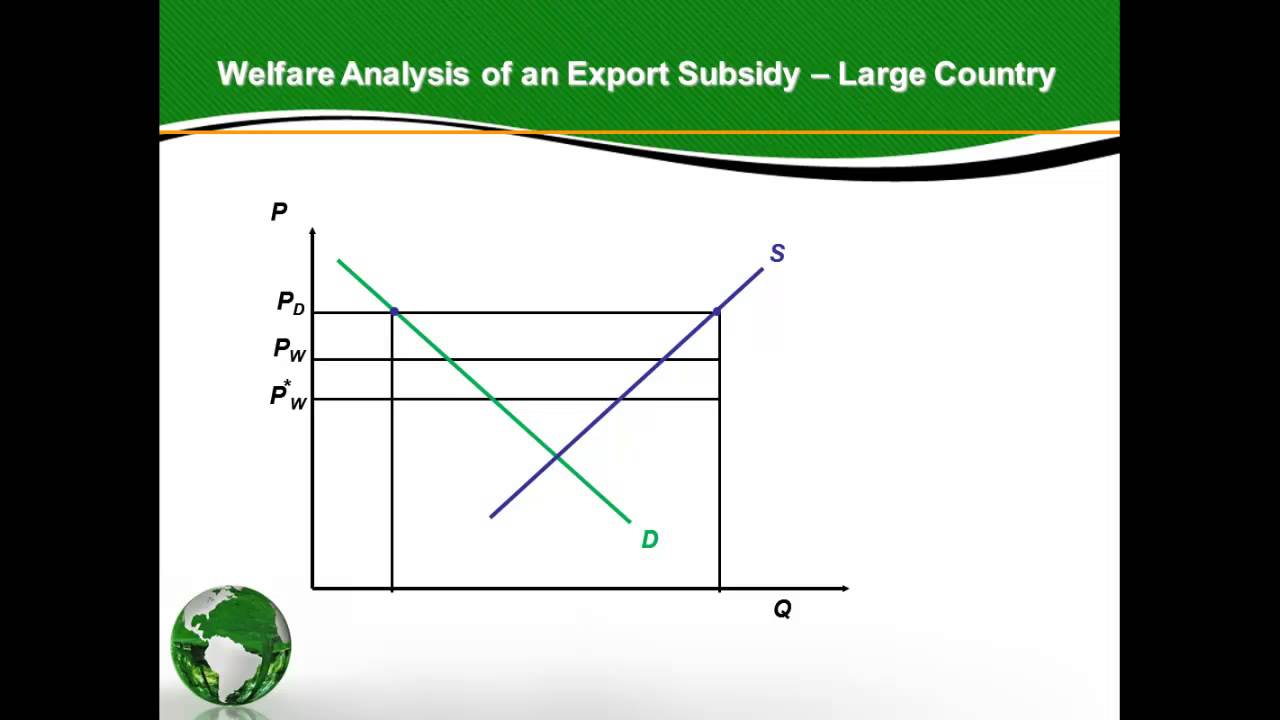
- Why this video: This lecture specifically targets the "large country" case. It details how a large country's export subsidy drives down world prices, worsens its terms of trade, and compounds national welfare losses compared to the small country scenario.

- Why this video: A practical documentary segment illustrating the real-world consequences of large-scale export distortions, focusing on European agricultural subsidies. It shows how subsidized exports artificially lower world prices and destabilize farmers in developing nations.
Knowledge Checkpoint
- Explain why domestic consumers face higher prices and lower consumption when their own government implements an export subsidy.
- Describe the "terms of trade" effect and explain why a large country's terms of trade worsen when it implements an export subsidy.
- Graphically identify the cost of an export subsidy to the government treasury () and compare it to the gains in producer surplus.
- Explain how the WTO categorizes agricultural subsidies (e.g., Amber Box vs. Green Box) based on their trade-distorting impacts.
Module 5: Protectionism in Global Supply Chains
Modern production is rarely self-contained. Today’s global economy relies on complex, fragmented Global Value Chains (GVCs) where intermediate goods (parts, components, services) cross international borders multiple times before final assembly. This module applies the trade theories learned in previous modules to these networks, illustrating how protectionism cascades, stacks costs, and disrupts global production.
Recommended Videos

- Why this video: This advanced academic lecture by renowned trade economist Elhanan Helpman presents a theoretical model of tariffs on intermediate inputs. He details how trade barriers disrupt highly integrated networks through search and bargaining frictions, compounding deadweight losses beyond traditional single-market models.
- Why this video: This visual explainer simplifies the intermediate goods trade concept. It uses regional North American trade examples (like semiconductors and automotive parts crossing borders multiple times) to demonstrate how intermediate input tariffs cascade throughout supply chains.

- Why this video: This video draws parallels between tariffs and supply shocks (like the 1970s oil crisis). It explains why imposing tariffs on basic intermediate inputs (like steel or fertilizer) creates broad inflationary pressures across multiple downstream manufacturing sectors.
Knowledge Checkpoint
- Define "intermediate goods" and explain why they make up a massive share of modern global trade.
- Explain the concept of "tariff cascading" (how taxing imported components multiple times as they cross borders stacks final product costs).
- Describe how a tariff on an intermediate input (e.g., steel) can destroy jobs and reduce competitiveness in a downstream domestic industry (e.g., auto manufacturing).
- Explain why modern, highly integrated global value chains are more sensitive to tariff increases and trade policy uncertainty than traditional, self-contained manufacturing processes.
Course Map
This flowchart outlines the progression of topics, highlighting how you must establish basic welfare foundations before assessing trade protectionism and its systemic supply chain impacts.
Key People Index
- Elhanan Helpman (Harvard University): Co-founder of the "New Trade Theory" and "New Growth Theory." His research in Module 5 formalizes how global supply chains organize across borders and how trade barriers create friction in intermediate goods markets.
- Paul Krugman (CUNY Graduate Center / Nobel Laureate): Developed foundational models of modern trade, economies of scale, and global supply chain clustering. Referenced across modules for his work on trade policy uncertainty and economic integration.
- Larry Summers (Harvard University / Former US Treasury Secretary): Prominent macroeconomist who critiques tariff policies on intermediate inputs (Module 5), pointing out their self-defeating nature when they raise production costs for domestic manufacturers.
- Jeffrey Sachs (Columbia University): Renowned development economist who analyzes the systemic effects of trade wars and tariffs on global diplomatic relations and long-term supply chain realignments.
Final Self-Assessment
Complete this comprehensive self-assessment to verify that you have achieved the core learning goals of this curriculum.
- Surplus Visualization: I can draw freehand diagrams of autarky and free trade, accurately identifying the shifts in consumer and producer surplus.
- Tariff Mechanics: I can calculate domestic price increases, import contraction, government revenues, and domestic deadweight loss under a tariff.
- Tariff Incidence: I can explain why domestic importing firms bear the legal tariff burden and how these costs pass through to retail pricing.
- Tariff vs. Quota: I can list the key differences between tariffs and quotas, focusing primarily on the generation and distribution of quota rents.
- License Allocation: I can explain how quota rent is captured under competitive auctions, historical grandfathering, and foreign licensing.
- Export Subsidies (Small Country): I can demonstrate graphically why an export subsidy in a small country causes domestic prices to rise and creates deadweight loss.
- Export Subsidies (Large Country): I can explain how a large country's export subsidy drives down world prices, leading to a worsening of the terms of trade.
- WTO Box Subsidies: I can differentiate between Amber Box (trade-distorting) and Green Box (non-distorting) subsidies under WTO guidelines.
- Intermediate Goods Impact: I can explain how tariffs on intermediate inputs stack and cascade throughout global value chains, reducing domestic competitiveness in downstream sectors.
- Global Production Friction: I can apply Helpman's theoretical models to explain why modern trade friction hurts economic growth more than historic, single-country trade policies.