Picaresque Novel: Satire, Structure & Evolution
Learning Goal: Analyze the satirical mechanisms and structural episodic form of the Picaresque novel, tracking how this genre evolved from early modern Spain to contemporary literature to critique class, corruption, and social hierarchy.
- Prerequisites: Basic understanding of literary terms (satire, narrative structure, protagonist vs. antagonist).
- Estimated Study Time: 14 Hours
Module 1: Anatomy of the Picaro: Defining the Genre
This module establishes the core characteristics of the picaresque genre. You will study the anatomy of the "picaro" (the roguish antihero of low social standing), analyze the structural differences between linear and episodic plotlines, and understand how first-person narrative voice is used as a tool of democratization to challenge traditional heroic arcs.
Recommended Videos

- Why this video: This academic lecture provides an in-depth literary definition of the picaresque novel, detailing its historical emergence in Europe, its episodic narrative framework, and the defining characteristics of the "picaro" as a low-born outsider navigating a corrupt world.
- Knowledge Checkpoint:
- Define the term picaro and list at least three of their primary character traits.
- Explain how an episodic narrative structure differs from a standard linear plot-driven arc.
- Identify the primary socio-economic status of a typical picaresque protagonist.

- Why this video: This concise philosophical analysis highlights how the 16th-century emergence of the picaresque represented a radical "democratization of the heroic adventure," swapping high-born epic heroes for marginalized survivors.
- Knowledge Checkpoint:
- Contrast the romanticized "Hero's Journey" with the realistic survival narrative of the picaresque.
- Explain why depicting a lower-class protagonist was considered a radical literary shift in early modern Europe.

- Why this video: This archival creative reading lecture examines the intrinsic relationship between the picaresque format and the concept of the antihero, citing seminal early precursors to demonstrate how these characters operate on the fringes of acceptable society.
- Knowledge Checkpoint:
- Explain why the picaresque form is structurally inseparable from the concept of the antihero.
- Discuss how early proto-picaresque works set the stage for later structural critiques of moral corruption.
Module 2: Spanish Golden Age Roots and Social Critique
In this module, you will explore the historical and cultural soil that gave birth to the picaresque novel: 16th-century Golden Age Spain (Siglo de Oro). We will analyze how anonymous authors and satirists used works like Lazarillo de Tormes and Quevedo's El Buscón to bypass the Spanish Inquisition, exposing religious hypocrisy, the decay of the nobility, and the economic desperation behind the myth of imperial glory.
Recommended Videos

- Why this video: It establishes the historical backdrop of Spain's Siglo de Oro under Habsburg rule, providing context on how immense colonial wealth coexisted with deep domestic class divides and intense religious censorship.
- Knowledge Checkpoint:
- Identify the approximate historical timeframe of the Spanish Golden Age.
- Describe the societal contradictions under Habsburg rule that fueled underground satirical literature.
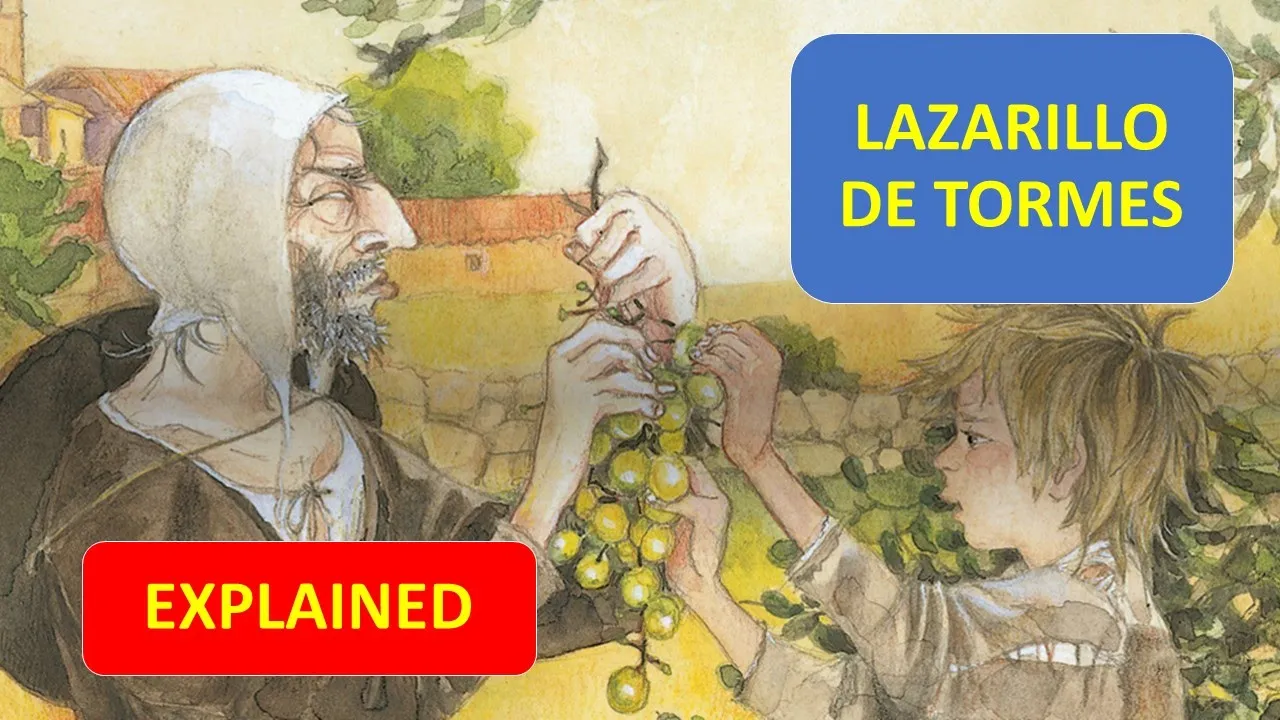
- Why this video: This lecture delivers a comprehensive analysis of the plot, historical significance, and structural core of Lazarillo de Tormes (1554), explaining why its biting social commentary forced its author to remain anonymous.
- Knowledge Checkpoint:
- Explain why Lazarillo de Tormes was published anonymously and later banned by the Spanish Inquisition.
- Track Lazarillo's moral trajectory as he transitions from a vulnerable boy to a cunning survivor.

- Why this video: It provides a critical reading of Francisco de Quevedo’s El Buscón (The Swindler), illustrating a darker, more cynical variation of the Spanish picaresque that highlights the rigidity of social mobility in early modern Spain.
- Knowledge Checkpoint:
- Contrast the tone of El Buscón with the relatively lighter tone of Lazarillo de Tormes.
- Explain how Quevedo uses the protagonist, Pablo, to critique the social-climbing ambitions of the lower classes.
Module 3: Satirical Mechanisms and the Master-Servant Dynamic
Note: Video coverage of the highly specific "servant of many masters" trope is limited in the primary media pool. We anchor this module with essential lectures on literary satire and historical master-servant relationships, supplemented by targeted independent study directions.
This module deconstructs the architectural mechanics of picaresque satire. You will examine the "servant of many masters" trope—a structural device where the picaro serves masters of various social strata (priests, nobles, soldiers, merchants)—acting as an invisible lens that exposes the hidden corruption, greed, and hypocrisy of every class in the social hierarchy.
Recommended Videos
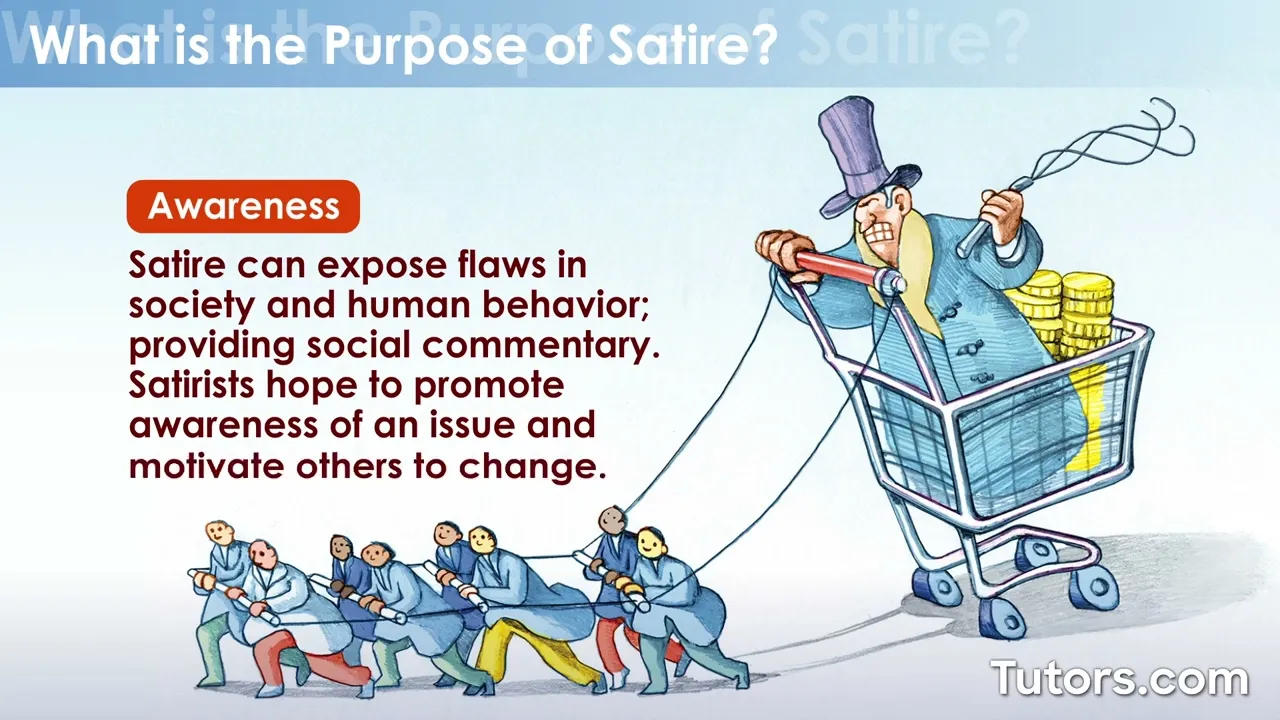
- Why this video: This video breaks down the essential literary devices of satire, including caricature, irony, and understatement, which are critical to dissecting the picaresque style of social critique.
- Knowledge Checkpoint:
- Define Horatian versus Juvenalian satire and assess which style aligns closest with Lazarillo de Tormes.
- Identify how caricature is used to expose flaws in powerful authority figures.

- Why this video: This clip introduces a philosophical examination of the master-servant dynamic, exploring how servants are expected to suppress their own identities to accommodate their masters' desires—a fundamental dynamic that the picaro exploits through irony.
- Knowledge Checkpoint:
- Describe the asymmetrical power dynamic inherent in the master-servant relationship.
- Explain how a servant's forced "invisibility" provides them with unique opportunities to observe and critique their master's flaws.
🔍 Independent Research Focus: To bridge the gap regarding the "servant-of-many-masters" trope, independently search for academic resources using the query: "Servant of many masters picaresque literature critique of hierarchy". Focus on analyzing how changing masters acts as a structural transit system, moving the reader through a cross-sectional gallery of societal hypocrisy.
Module 4: The Global Journey: From Europe to the Americas
This module traces the migration of the picaresque beyond Spanish borders during the 17th, 18th, and 19th centuries. You will analyze how the genre was customized to critique different localized systems: Grimmelshausen's critique of war in Germany, Daniel Defoe's critique of gender and survival-based capitalism in England, and Mark Twain's critique of systemic racism along the Mississippi River.
Recommended Videos
- Why this video: This review explores the German Baroque masterpiece Simplicius Simplicissimus (1668), tracing how the picaresque structure was adapted to process the trauma and absurdity of the Thirty Years' War.
- Knowledge Checkpoint:
- Detail how Simplicius's character development mirrors the chaos of 17th-century war-torn Europe.
- Identify key picaresque elements retained in Grimmelshausen's work.
- Why this video: This video offers an extensive summary and structural analysis of Daniel Defoe's Moll Flanders (1721), showing how the picaresque was updated to target English class realities, gender restrictions, and capitalistic survival.
- Knowledge Checkpoint:
- Analyze how economic necessity forces Moll Flanders to repeatedly reinvent her social identity.
- Explain how Defoe uses the first-person biographical framework to construct a realistic portrait of 18th-century crime and redemption.
- Why this video: This analysis positions Mark Twain's masterpiece as a classic American picaresque. It shows how Huck Finn operates as a typical vernacular-speaking picaro to critique the moral failures and institutional hypocrisy of pre-Civil War American society.
- Knowledge Checkpoint:
- Explain how the use of vernacular language in Huckleberry Finn mirrors the classic picaresque voice.
- Identify the primary social institutions Twain satirizes through Huck's episodic encounters.
- Why this video: This deep dive focuses on the mechanics of Twain's setting and narrative progression, demonstrating how the Mississippi River functions as both a literal highway of episodic encounters and a metaphor for moral transition.
- Knowledge Checkpoint:
- Analyze how the river setting structures the episodic narrative shifts in the novel.
- Discuss the controversy surrounding the ending of the novel in terms of its structural and thematic consistency.
Module 5: The Contemporary Picaro and Modern Outsiders
This final module examines how 20th and 21st-century writers have repurposed the picaresque to confront modern alienation, institutionalized racism, and post-war socio-economic exclusion. You will study how Ralph Ellison uses the picaresque's "invisible outsider" structure to examine racial dynamics, how Saul Bellow modernizes the form in Chicago, and how immigrant narratives utilize the genre to critique the American Dream.
Recommended Videos
- Why this video: This video analyzes how Ralph Ellison's Invisible Man utilizes the picaresque structure to navigate through various corrupt institutions in mid-century America, demonstrating how systemic racism forces the narrator to become a literal and symbolic modern picaro.
- Knowledge Checkpoint:
- Explain how the protagonist of Invisible Man fits the definition of a modern, racialized picaro.
- Analyze how the protagonist's transition through different "masters" (e.g., college administration, political organizations) acts as a critique of institutionalized hypocrisy.

- Why this video: This video introduces Younghill Kang's East Goes West, demonstrating how the picaresque framework serves as a vehicle for immigrant critique, moving the protagonist through various social strata to highlight exclusions within the American Dream.
- Knowledge Checkpoint:
- Identify how the immigrant narrative maps structurally onto the traditional picaresque template.
- Describe the critiques of class and race leveled in East Goes West via its episodic form.

- Why this video: This profile features reflections from literary figures like Philip Roth on Saul Bellow, whose novel The Adventures of Augie March revitalized the American picaresque, using an expansive prose style and a restless protagonist to explore identity in mid-century Chicago.
- Knowledge Checkpoint:
- Contrast Saul Bellow's linguistic style in Augie March with the more bleak, classical picaresque styles.
- Explain how Augie March's search for selfhood mirrors the traditional picaro's resistance to social categorization.
Course Map
Key People Index
- Daniel Defoe (1660-1731): Key early English novelist who adapted picaresque structures in Moll Flanders to deliver realistic depictions of economic survival on the margins of British society.
- Ralph Ellison (1913-1994): Celebrated American author whose 1952 masterpiece Invisible Man adapted the picaresque framework to deliver a complex critique of racial hierarchy and systemic social blindness in America.
- Hans Jakob Christoffel von Grimmelshausen (1621-1676): German Baroque writer whose picaresque novel Simplicius Simplicissimus used a wandering antihero to detail the brutal horrors and absurdities of the Thirty Years' War.
- Francisco de Quevedo (1580-1645): Spanish nobleman and poet who wrote El Buscón, crafting a highly stylistic, bleak, and deeply satirical take on the traditional Spanish picaresque.
- Saul Bellow (1915-2005): Nobel Prize-winning Jewish-American author who modernized the genre in The Adventures of Augie March, blending colloquial style with high-culture philosophy to explore mid-century identity.
Final Self-Assessment
Complete this comprehensive self-assessment to verify your mastery of the picaresque novel:
- I can articulate the difference between a traditional romantic hero and a picaresque antihero (picaro).
- I understand how the episodic narrative structure operates as a vehicle for socio-economic satire.
- I can explain how 16th-century Spanish social conditions (including the Inquisition and rapid wealth disparities) contributed to the birth of the genre.
- I can trace the plot of Lazarillo de Tormes and identify its key critiques of the clergy and nobility.
- I can analyze how the "servant of many masters" trope functions as a cross-sectional diagnostic tool for evaluating societal hypocrisy.
- I can identify the stylistic and thematic differences between early Spanish picaresque novels like Lazarillo de Tormes and El Buscón.
- I can detail how Simplicius Simplicissimus adapted the picaresque to comment on the realities of early modern European warfare.
- I can analyze how Daniel Defoe used picaresque elements in Moll Flanders to comment on female agency and the demands of modern capitalism.
- I can explain the role of the Mississippi River in Huckleberry Finn as both a structural device and a moral baseline.
- I can discuss the thematic and structural parallels between Ralph Ellison’s Invisible Man and early classical picaresque models.
- I understand how immigrant narratives utilize picaresque structures to deconstruct and critique myths of the "American Dream."
- I can identify how Saul Bellow’s linguistic style in The Adventures of Augie March revitalized the picaresque format for 20th-century American readers.