Mastering the Physics of Sound Waves, Acoustics, and Musical Instruments
Learning Goal: Develop a comprehensive, mathematically rigorous, and intuitive understanding of sound waves as mechanical phenomena. Master the principles of wave propagation, boundaries, resonance, human audio perception via the decibel scale, architectural acoustics (Sabine's formula), and the mechanics of musical instruments through harmonic and Fourier analysis.
- Prerequisites: Basic high-school algebra, introductory trigonometry, and fundamental concepts of classical mechanics (force, mass, and acceleration).
- Estimated Total Study Time: 18 Hours
Module 1: Foundations of Waves and Sound
This module establishes what sound is at the particle and macroscopic levels. You will explore how physical disturbances produce longitudinal waves in medium particles, creating regions of compression and rarefaction. You will also learn the mathematical relationships between wave velocity (), frequency (), wavelength (), and period (), and understand why the speed of sound depends on the physical properties of the medium through which it propagates.
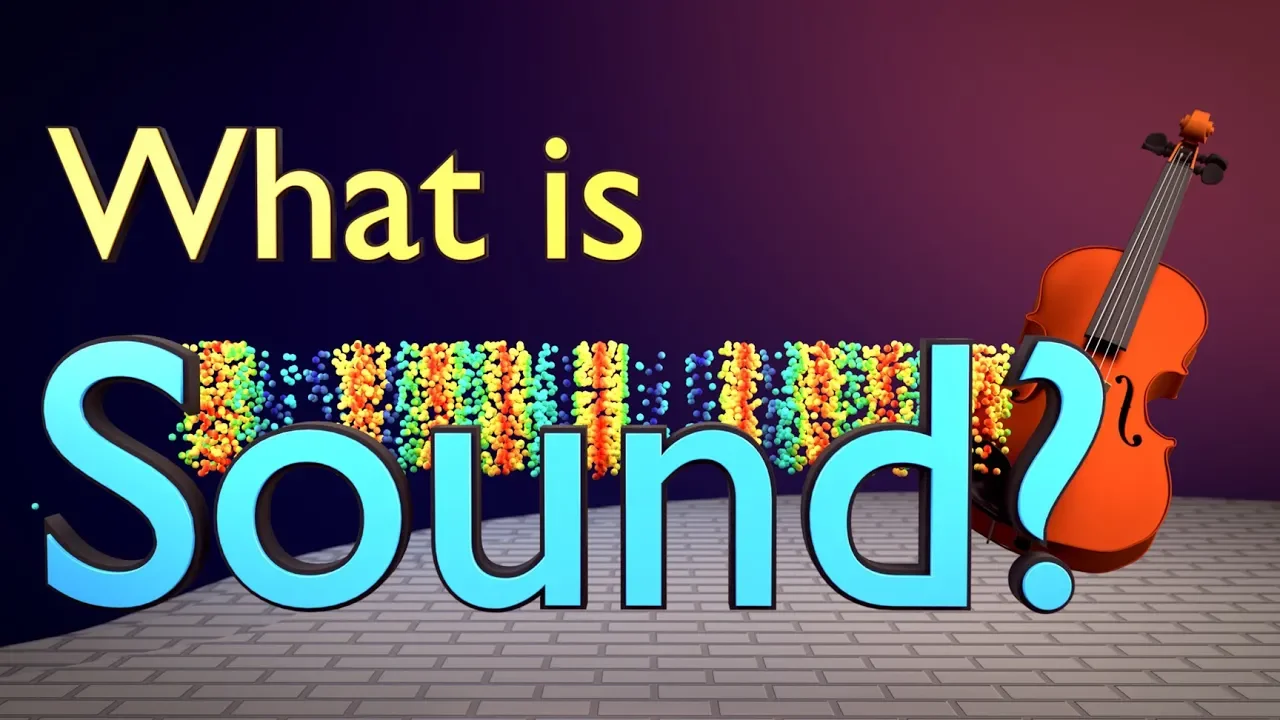
Why this video
This video provides an outstanding 3D animated visualization of particle physics. It bridges the micro-vibrations of individual molecules with macro-scale pressure waves. Watching this will help you build an intuitive mental model of how kinetic energy travels through media without net particle displacement.
Knowledge Checkpoint
- Explain how a vibrating diaphragm generates alternating regions of compression and rarefaction in the surrounding air.
- Distinguish between the direction of particle motion and wave propagation in longitudinal versus transverse waves.
- Describe how pressure fluctuations map to the visual peaks and troughs of an idealized sine wave.
Why this video
This explainer breaks down the core structural variables of a wave. It introduces the anatomical components of wave representations—specifically frequency, wavelength, and amplitude—explaining how variations in these variables change how humans perceive pitch and loudness.
Knowledge Checkpoint
- Define the amplitude of a sound wave and associate it with its physical energy and perceived loudness.
- Contrast high-frequency sounds with low-frequency sounds in terms of their physical wavelength and perceived pitch.
- Solve basic conceptual problems showing the inverse relationship between frequency and wavelength.

Why this video
This classic Khan Academy tutorial reinforces the mathematical relationships of wave variables. It teaches you how to express period () as the reciprocal of frequency () and guides you through the fundamental wave equation:
Knowledge Checkpoint
- State the units of measurement for period, frequency, wavelength, and speed.
- Mathematically derive frequency when given the period of a wave, and vice versa.
- Calculate the wavelength of a sound wave traveling through air (at standard temperature) given its frequency.
Why this video
This concise video explains why sound travels at different velocities across solid, liquid, and gaseous mediums. It explains how molecular proximity and bonding dictate the speed of energy transmission, establishing a clear link between material properties and wave velocity.
Knowledge Checkpoint
- Rank the speed of sound through solids, liquids, and gases from fastest to slowest, and explain why this order occurs based on molecular structure.
- State the approximate speed of sound in dry air at room temperature ().
- Explain how temperature changes in a medium affect the velocity of a sound wave.
Module 2: Wave Phenomena and Sound Behavior
Once sound waves are generated, they rarely travel unimpeded. This module explores wave behaviors at boundaries and during multi-wave interactions. You will study wave reflection, refraction, and diffraction, understand how the superposition principle governs wave interference, learn how frequency mismatches produce acoustic beats, and analyze the apparent frequency shifts caused by relative motion (the Doppler effect).

Why this video
This instructional segment reviews the core behaviors of reflection, refraction, and diffraction. It explains the mechanics of how sound waves bend around obstacles (diffraction) and change direction when transitioning across mediums with varying temperatures or density gradients (refraction).
Knowledge Checkpoint
- Explain the law of reflection and how it dictates the formation of echoes.
- Describe why sound waves bend downward toward cooler air near the ground on a warm day (sound refraction).
- Explain how diffraction allows sound waves to bend around corners, comparing how well low frequencies diffract compared to high frequencies.

Why this video
Addressing a critical feedback gap regarding comprehensive wave interference and beats, this video offers a deep-dive tutorial. It shows how overlapping sound waves superimpose to create constructive and destructive interference patterns, leading to the periodic pulsing sound known as beats.
Knowledge Checkpoint
- State the principle of superposition and apply it to two waves that are perfectly in phase versus out of phase.
- Define constructive and destructive interference.
- Calculate the beat frequency produced by two simultaneous sound sources of and .

Why this video
This tutorial provides visual animations alongside mathematical derivations of the Doppler effect. It traces exactly how a moving source bunches up wavefronts in front of its path while stretching them out behind, shifting the frequency heard by stationary and moving observers.
Knowledge Checkpoint
- Explain why the perceived pitch of a vehicle's horn increases as it approaches you and decreases as it moves away.
- Write down the standard Doppler effect equation and define each variable (velocity of sound, velocity of observer, velocity of source).
- Determine whether to use a plus or minus sign in the Doppler formula when a source is moving toward a stationary observer.
Module 3: Resonance and Standing Waves
This module explores the physics of bound waves. You will study how reflecting waves interfere with incoming waves to produce standing wave patterns in strings and air columns. You will also learn to identify nodes and antinodes, calculate harmonic frequencies, and understand how external periodic forces drive physical systems into resonance.

Why this video
This visual demonstration of a mechanical string driver shows standing waves forming in real time. It clearly highlights how boundary reflections create nodes (points of zero motion) and antinodes (points of maximum motion) as frequency changes.
Knowledge Checkpoint
- Define a standing wave and describe the conditions required for one to form on a string.
- Identify the physical locations of nodes and antinodes on a vibrating string.
- Explain how increasing the excitation frequency on a fixed string changes the number of nodes and antinodes.

Why this video
This focused educational lesson bridges visual standing wave phenomena with introductory physics mathematics. It derives the formulas for the fundamental frequency () and subsequent harmonic integers () for a string fixed at both ends.
Knowledge Checkpoint
- Write the equation relating string length () to wavelength () for the fundamental frequency of a string fixed at both ends.
- Calculate the frequencies of the second and third harmonics of a string if its fundamental frequency is .
- Explain how changing string tension or linear mass density alters the speed of a wave on a string, and how that affects its resonant frequencies.

Why this video
This video provides a thorough comparison of standing waves in open versus closed air columns. It demonstrates why open pipes (with antinodes at both ends) can produce all integer harmonics, while pipes closed at one end (node at closed end, antinode at open end) only produce odd-numbered harmonics.
Knowledge Checkpoint
- Sketch the fundamental mode of vibration for both an open-ended pipe and a pipe closed at one end.
- Explain mathematically why a closed pipe of length has a fundamental wavelength of , while an open pipe of the same length has a fundamental wavelength of .
- Calculate the third harmonic frequency for a closed pipe of a given length, ensuring you do not mistakenly calculate the second harmonic.
Module 4: Acoustics, Decibels, and Human Perception
This module bridges physical sound pressure waves with biological hearing and psychological perception. You will study how human ears process sound waves, learn how the logarithmic decibel scale quantifies sound intensity, and explore architectural acoustics using Sabine's formula to calculate the decay of sound in enclosed spaces.

Why this video
This tutorial details the physics of the decibel scale (). It explains why we use a logarithmic scale to map sound intensity, showing how the human ear can perceive a wide range of sound intensities.
Knowledge Checkpoint
- State the absolute threshold of human hearing intensity () in units of .
- Calculate the decibel level () of a sound wave with an intensity of .
- Explain how many times more intense a sound is compared to a sound.

Why this video
This 3D medical animation shows how physical sound waves are converted into biological signals. It tracks sound through the outer, middle, and inner ear, explaining how mechanical waves are converted into neural impulses.
Knowledge Checkpoint
- Describe the function of the tympanic membrane (eardrum) and the ossicles (hammer, anvil, stirrup) in transmitting and amplifying sound pressure.
- Explain how sound waves of different frequencies are detected at specific points along the basilar membrane inside the cochlea.
- Define the process of sensory transduction as it applies to human hearing.

Why this video
Addressing a critical feedback gap, this video replaces conceptual talks with a technical tutorial on architectural acoustics. It shows you how to use Sabine's formula to calculate reverberation time () based on room volume and surface absorption coefficients.
Knowledge Checkpoint
- State the definition of (reverberation time).
- Write down Sabine's formula () and identify what each variable (, , and absorption coefficient ) represents.
- Calculate the total absorption () of a room with known surface areas and absorption coefficients, and use it to find the room's reverberation time.
Module 5: The Physics of Musical Instruments
This final module applies your understanding of waves to musical acoustics. You will study how string, wind, and percussion instruments generate sound. You will also learn how Fourier analysis decomposes complex waveforms into individual sine-wave components, explaining why different instruments have distinct timbres even when playing the same fundamental pitch.

Why this video
Addressing a major gap in the original curriculum (which relied on very short video clips), this lecture provides a comprehensive look at musical instrument physics. It covers wave speeds on strings, standing waves in air columns, boundary conditions, and how instruments produce their unique sounds.
Knowledge Checkpoint
- Compare string instruments (like a guitar) with wind instruments (like a flute) in terms of how they generate sound and change pitch.
- Explain how a performer uses fingers, valves, or slides to alter the effective length of a resonant column or string.
- Describe the role of a soundboard or acoustic cavity in amplifying the sound of stringed instruments.
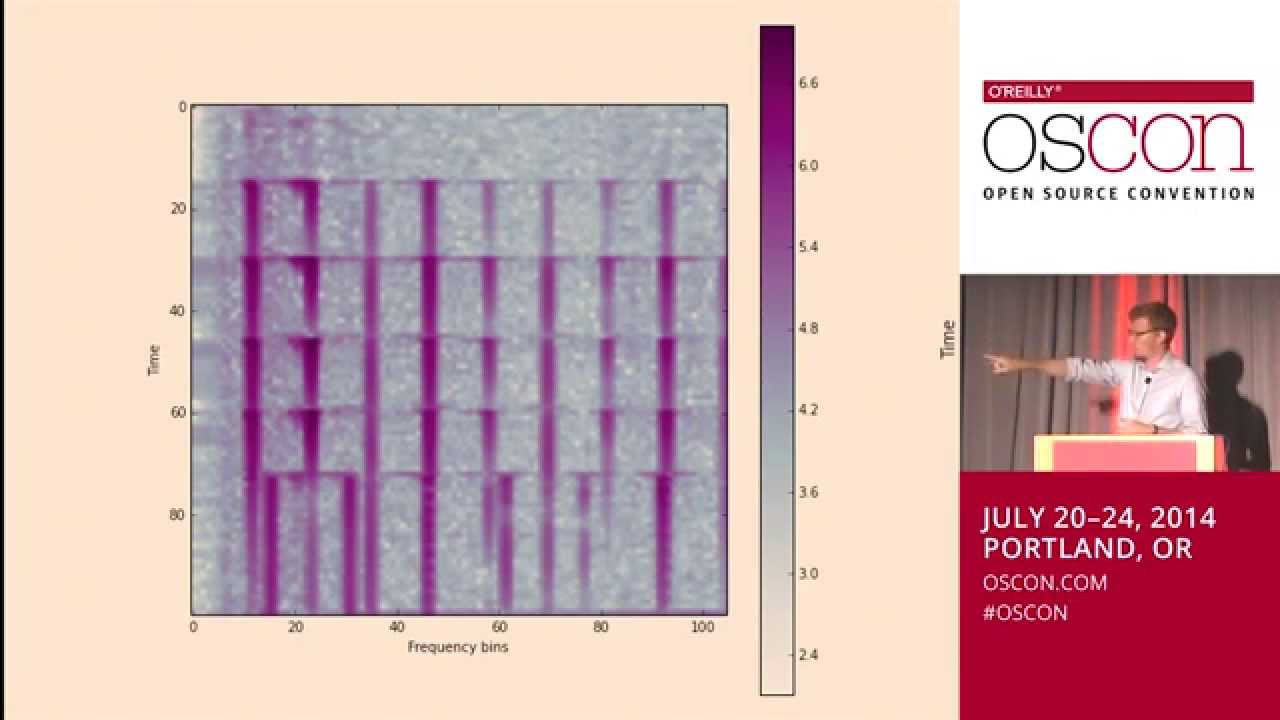
Why this video
This long-form video provides a visual and mathematical explanation of Fourier transforms. It shows how complex, irregular waveforms can be broken down into a series of pure sine waves, helping you understand how we analyze harmonic spectra.
Knowledge Checkpoint
- Explain the concept behind the Fourier Series—how a complex periodic wave is built from fundamental and harmonic frequencies.
- Describe the difference between the time domain and frequency domain representation of a sound wave.
- Explain how a Fast Fourier Transform (FFT) algorithm converts a recorded audio signal into a frequency spectrum.

Why this video
This video explains timbre and the harmonic series using a piano. It shows how overtones vibrate alongside the fundamental pitch, explaining why a piano, violin, and oboe sound different even when playing the same musical note.
Knowledge Checkpoint
- Define the term "timbre" in the context of musical acoustics.
- Explain why the relative amplitudes of overtones determine the unique tone color of an instrument.
- Explain how the human ear can perceive a fundamental pitch even if that fundamental frequency has been filtered out of the sound.
Course Map
This flowchart shows the recommended order of study and the dependencies between modules:
Key People Index
- Wallace Clement Sabine (1868–1919)
- Context: An American physicist who founded the field of architectural acoustics. He derived the empirical relationship between reverberation time, room volume, and sound absorption (Sabine's formula) while resolving acoustic issues at Harvard University's Fogg Art Museum.
- Jean-Baptiste Joseph Fourier (1768–1830)
- Context: A French mathematician and physicist who showed that any periodic function can be expressed as a sum of simple sine and cosine waves. His work (Fourier analysis) forms the basis of modern signal processing and our understanding of musical timbre.
- Christian Doppler (1803–1853)
- Context: An Austrian mathematician and physicist who proposed that the observed frequency of a wave depends on the relative motion of the source and the observer. This principle applies to sound, light, and radar.
Final Self-Assessment
Use this comprehensive checklist to test your mastery of the material:
- Can you define a mechanical longitudinal wave and explain how energy is transmitted through particle collisions without net particle displacement?
- Can you state the fundamental wave equation () and use it to calculate frequency or wavelength when the speed of sound in a medium is known?
- Do you understand how temperature, density, and elasticity affect the speed of sound in solid, liquid, and gaseous mediums?
- Can you describe the boundary behaviors of reflection, refraction, and diffraction, and provide real-world examples of each?
- Can you calculate the beat frequency produced when two sound sources with slightly different frequencies are played at the same time?
- Can you write and apply the Doppler effect formula for a moving source, a moving observer, or both?
- Can you explain the difference between standing waves and traveling waves, and identify where nodes and antinodes form?
- Can you derive the harmonic frequencies of strings fixed at both ends, open-ended pipes, and pipes closed at one end?
- Do you know how to convert sound intensity ( in ) into decibels ( in ) using the logarithmic scale?
- Can you explain how the human ear converts mechanical pressure waves into nerve impulses in the inner ear?
- Can you use Sabine's formula to calculate the reverberation time () of a room given its dimensions and surface materials?
- Can you explain how Fourier analysis breaks down a complex musical tone into its fundamental frequency and overtone components to explain its timbre?