Designing Green Nudges: Biases & Ethics
Learning Goal: Deconstruct the cognitive biases and heuristics that influence consumer decision-making and design ethical behavioral nudge interventions to promote sustainable choices.
- Prerequisites: None (A basic interest in psychology, design, or economics is helpful).
- Estimated Total Study Time: 12 Hours
Module 1: Foundations of Behavioral Economics & Decision Making
This module introduces the foundational theories of behavioral economics, contrasting them with classical economic assumptions of perfect rationality. You will explore Daniel Kahneman and Amos Tversky's dual-process theory, which divides human cognitive processing into two systems: System 1 (fast, automatic, and intuitive) and System 2 (slow, deliberative, and analytical). Understanding how these systems interact is critical to recognizing why consumers make systematically irrational decisions in everyday life.
Recommended Videos

- Why this video: This highly visual, animated summary provides an accessible entry point into Daniel Kahneman’s dual-process theory. It breaks down the crucial differences between System 1 (fast, emotional) and System 2 (slow, logical) thinking. Understanding this cognitive division explains why consumers rely on heuristics, laying the perfect foundation for designing effective nudges.

- Why this video: To master dual-process theory, you need to hear directly from its pioneer. In this in-depth lecture, Nobel Laureate Daniel Kahneman details the mechanics of cognitive ease, the illusion of validity, and how System 1 routinely tricks our logical System 2. This high-level academic yet highly applicable discussion explains how automatic associations dictate consumer choice.
- Why this video: This concise explainer contrasts classical economic theory (which assumes a hypothetical, perfectly rational "Homo Economicus") with real-world behavioral economics. It introduces how cognitive limits, emotional factors, and environmental contexts shape risk calculation and consumer decisions, establishing why "nudges" are necessary to bridge the gap between intent and action.
Module 1 Knowledge Checkpoint
- Explain the primary differences in speed, energy consumption, and control between System 1 and System 2 thinking.
- Describe why classical economic models of perfect rationality ("Econs") fail to predict real-world consumer purchasing patterns.
- Identify a daily consumer scenario where System 1 overrides a deliberate, logical System 2 decision.
Module 2: Cognitive Biases & Heuristics in Consumer Behavior
In this module, you will deconstruct the specific mental shortcuts (heuristics) and systematic errors (biases) that shape human choices. We will focus on core principles such as loss aversion, anchoring, and social proof. You will analyze how commercial brands currently leverage these biases to drive consumption, preparing you to repurpose these identical psychological triggers to promote green and sustainable alternatives.
Recommended Videos
- Why this video: This short, highly engaging lesson illustrates the psychological mechanics of loss aversion—the phenomenon where the pain of losing is twice as powerful as the joy of gaining. It explains the evolutionary origin of our cognitive shortcuts and sets up how loss-framed options influence transactional decisions.

- Why this video: This video offers a practical look at how brands exploit cognitive biases to manipulate purchase habits. It details principles like the "left digit effect" and "anchoring" (over-relying on initial price anchors). Studying these commercial tactics allows you to deconstruct and later mirror these mechanisms for positive social defaults.
- Why this video: This talk bridges academic theory and commercial practice. It dissects real cases—such as Amazon Prime's retention strategies—to demonstrate how framing, anchoring, and loss aversion function in live digital transactions. This equips behavioral architects with blueprint tactics for structuring choices.
Module 2 Knowledge Checkpoint
- Define loss aversion and explain why a consumer is more motivated by "avoiding a 5 discount."
- Explain how anchoring functions during a price evaluation and how brands set reference points to make premium options look affordable.
- Define the "left digit effect" and how it bypasses logical price calculations.
Module 3: Choice Architecture & Nudging Principles
Here, you will learn the core design philosophy of "Choice Architecture"—the practice of structuring the physical or digital environment to influence how decisions are made. Popularized by Richard Thaler and Cass Sunstein, "Nudges" subtly guide behavior without restricting individual choice or altering economic incentives. This module focuses on the science of default settings, friction reduction, and feedback loops.
Recommended Videos

- Why this video: This direct summary of Richard Thaler and Cass Sunstein’s groundbreaking book Nudge details how choice architecture, default options, and the path of least resistance shape major life decisions. It provides a clear framework for defining what is (and is not) a nudge.

- Why this video: Learn the conceptual boundaries of behavioral engineering straight from Nobel Laureate Richard Thaler. He breaks down the golden rules of nudging (make it easy, maximize transparency) and explains how small shifts in environmental cues dramatically alter public outcomes.
- Why this video: This video focuses on structural implementation, showing how subtle, low-cost modifications to the choice environment guide human decisions predictably. It explains how to build pathways that respect autonomy while leveraging default settings.
Module 3 Knowledge Checkpoint
- Define "Choice Architecture" and list three ways a designer can modify a decision space.
- Explain why default settings are considered the most powerful tool in behavioral economics, referencing Bridget Madrian's 401(k) auto-enrollment study.
- Differentiate between a behavioral nudge and a mandate, economic incentive, or ban.
Module 4: Designing Behavioral Interventions for Social and Environmental Good
Now, you will apply cognitive theory and choice architecture to sustainability challenges. To maximize the availability of highly viewed and robust case studies, we broaden "green nudges" to encompass Behavioral Design for Social and Environmental Good. You will analyze real-world applications in carbon footprint reduction, energy conservation, healthy eating defaults, and digital habit formation.
Recommended Videos

- Why this video: Dr. Christina Gravert shares a stellar real-world green nudge experiment conducted at a Swedish restaurant. By manipulating choice architecture—specifically changing the default layout to highlight vegetarian options—the researchers proved that businesses can significantly lower climate impacts purely through evidence-based behavioral design.

- Why this video: Cass Sunstein explains one of the most successful environmental interventions in history: the "Ambient Orb." By transforming invisible energy consumption into a visible, immediate color cue (lighting red for high energy use and green for low), this simple feedback nudge slashed household peak-time electricity consumption by 40%.
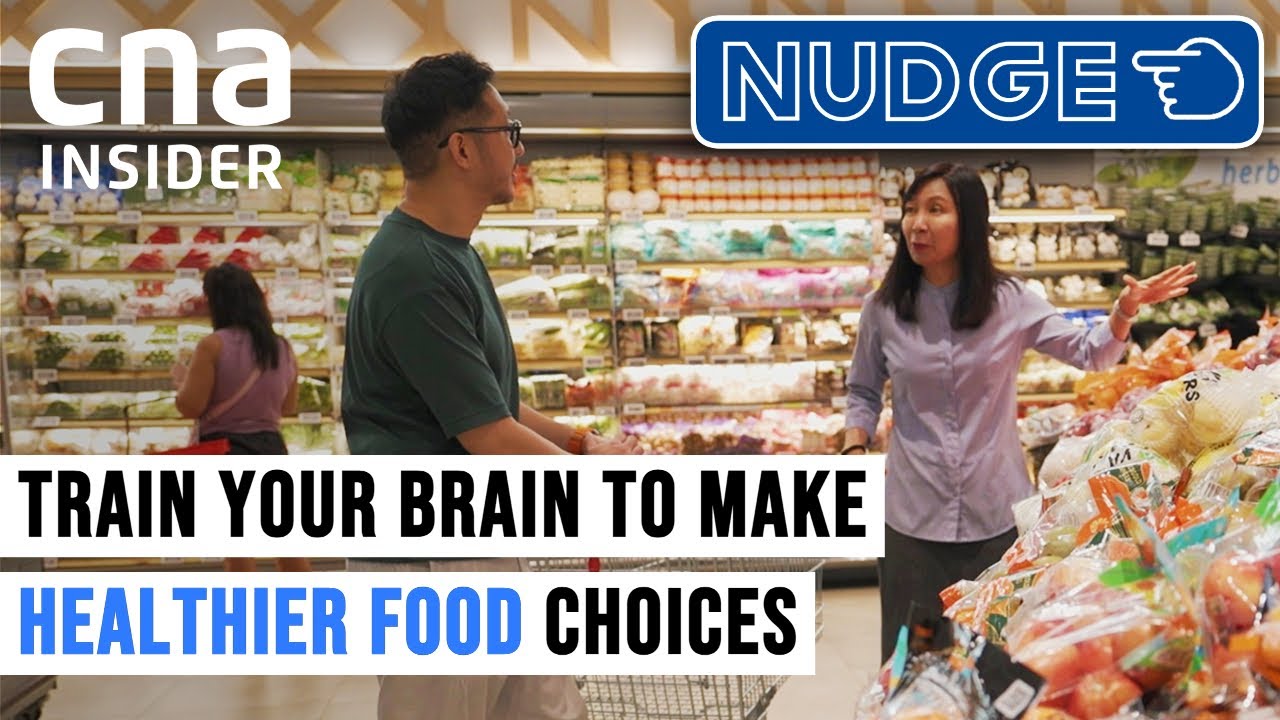
- Why this video: This documentary shows how physical choice design drives public wellness. By making healthier options highly visible and sliding calorie-heavy foods to less accessible shelves, behavioral architects successfully trick System 1 into making better dietary choices, demonstrating the power of friction adjustments in human environments.

- Why this video: A highly creative exploration of habit-formation design. Simone Giertz builds an physical, interactive enclosure where a plant's growth light is linked to keeping her phone docked. It showcases how linking everyday, automatic behaviors to visual feedback loops can successfully reshape modern digital habits.
Module 4 Knowledge Checkpoint
- Deconstruct the restaurant menu experiment: How did altering the presentation sequence function as a green nudge?
- Explain the psychological mechanism behind the "Ambient Orb" and why real-time visual feedback reduces consumption more effectively than a monthly utility bill.
- How does introducing micro-friction (e.g., relocating junk food or docking a phone) reduce immediate, automatic System 1 actions?
Module 5: Ethics of Nudging: Autonomy, Sludge, and Transparency
In this final module, you will evaluate the ethical boundaries of choice architecture. While nudging can promote welfare, it can also cross into manipulation. You will learn to distinguish helpful "nudges" from manipulative "sludge"—the intentional friction used by corporations to trap consumers in bad decisions. Lastly, you will explore ethical design frameworks to ensure your green interventions preserve personal autonomy.
Recommended Videos

- Why this video: Co-author of Nudge Cass Sunstein defines the dark side of behavioral design: "Sludge." Learn how bad-faith players, governments, and corporations deliberately weaponize friction, complex paperwork, and delays to prevent citizens and consumers from acting in their own best interest.

- Why this video: This video directly addresses the ethics of choice design. It explores the core philosophical question: When is a nudge helpful guidance, and when is it unethical paternalism or manipulation? You will learn to use ethical rubrics based on user-benefit and alignment with common societal goals.
- Why this video: This presentation provides a concrete, multi-layered ethical framework for digital choice architecture. It introduces two key concepts: materializing the invisible (making persuasive nudges transparent and visible) and applying John Rawls' Veil of Ignorance to design interventions that are fair and beneficial to all system users.

- Why this video: This segment unpacks the policy framework of Libertarian Paternalism. It addresses how to balance preserving complete freedom of choice (the "libertarian" axis) with intentionally guiding people toward choices that improve their welfare and the common good (the "paternalism" axis).
Module 5 Knowledge Checkpoint
- Differentiate between a "nudge" and "sludge" using concrete examples of each in digital interfaces.
- Explain how John Rawls’ "Veil of Ignorance" applies to the design of ethical digital choice frameworks.
- What are the two core tenets of "Libertarian Paternalism" and how do they defend against claims of manipulative choice engineering?
Course Map
This flowchart maps out your learning path, moving from foundational cognitive psychology to behavioral design principles, applied sustainability interventions, and ethical evaluations.
Key People Index
| Researcher / Expert | Key Concepts | Academic / Professional Context |
|---|---|---|
| Daniel Kahneman | Dual-Process Theory (System 1/2), Prospect Theory, Loss Aversion | Nobel Laureate in Economic Sciences, Princeton University Professor |
| Richard Thaler | Nudge Theory, Choice Architecture, Libertarian Paternalism | Nobel Laureate in Economics, University of Chicago Professor |
| Cass Sunstein | Choice Architecture, Sludge, Regulatory Behavioral Design | Harvard Law School Professor, Co-author of Nudge |
| John Rawls | Veil of Ignorance, Ethical Fairness framework | Renowned 20th-century political philosopher |
| Christina Gravert | Applied Sustainable Choice Architecture, Menu defaults | Behavioral Economist, University of Copenhagen / Green Nudge consultant |
Final Self-Assessment
Complete this comprehensive self-assessment to verify your mastery of behavioral design before deploying green nudges in your community or industry.
- Dual-System Literacy: I can instantly categorize a consumer decision as primarily driven by System 1 or System 2 cognitive processing.
- Bias Deconstruction: I can identify how loss aversion, anchoring, and social proof operate within a commercial or environmental context.
- Default Mechanics: I can explain why default settings are highly effective and how they bypass common choice paralysis.
- Nudge Formulation: I can construct a design proposal for a sustainable default setting (e.g., double-sided printing, green energy opt-out) that preserves full individual liberty.
- Feedback Loop Design: I can explain how to turn invisible environmental impacts into concrete visual feedback loops (similar to the Ambient Orb concept).
- Friction Engineering: I can identify where to add micro-friction to discourage unsustainable consumption (such as plastic cutlery auto-adds in food delivery apps).
- Nudge vs. Sludge Detection: I can analyze a user flow and flag elements of "sludge" designed to confuse or exploit the user.
- Veil of Ignorance Test: I can subject my own green interventions to Rawls' Veil of Ignorance to confirm the design treats all users fairly.
- Libertarian Paternalism Defense: I can successfully defend my green nudge designs against accusations of manipulation by showing that they preserve choice autonomy.
- Ethical Intervention Design: I can draft a transparent, ethical behavioral intervention proposal that promotes sustainability while fully respecting user autonomy and agency.