Analyzing Roman Propaganda: Art & Architecture
Learning Goal: Analyze the use of art and architecture as political propaganda during the transition of Rome from Republic to Empire.
- Prerequisites: None (a basic understanding of classical history is helpful but not required).
- Estimated Total Study Time: 12 hours
Module 1: Foundations of the Roman Republic and Veristic Art
This module establishes the political and artistic baseline of the Roman Republic before its transition to Empire. You will explore how the Roman Republic’s governance model shaped a unique artistic philosophy known as "verism." Unlike the idealized sculptures of classical Greece, Republican portraiture emphasized hyper-realism—complete with wrinkles, baldness, and deep facial lines. This aesthetic was not merely realistic; it was highly calculated political propaganda designed to project the core Republican virtues of gravitas (seriousness), virtus (military valor), and auctoritas (influence born of age and experience).
Recommended Videos

- Why this video: This video offers a thorough academic lecture focusing on Republican art (753 BCE to 27 BCE). It explains how the early Romans adapted Greek artistic methodologies while purposefully carving out their own stylistic niche. Most importantly, it decodes how veristic portraiture was used by the ruling elite to assert their patrician lineage and suitability for public office.
- Knowledge Checkpoint:
- Explain how the Republican concept of imagines (wax ancestral masks) directly influenced the development of veristic portraiture.
- Contrast the political messaging behind Greek idealized sculptures with Roman veristic Republican busts.
- Identify the social class that primarily commissioned veristic art and explain how these portraits legitimized their political power.

- Why this video: This comprehensive, long-form survey lecture details how Roman art emerged from a fusion of Etruscan engineering and Greek aesthetics. It highlights how Rome's pragmatic approach to structural engineering and portraiture served a burgeoning state-level identity, illustrating the structural shifts that occurred as the city grew from a modest regional power into a vast territorial Republic.
- Knowledge Checkpoint:
- Describe the distinct Etruscan influences on early Roman temple architecture, particularly regarding the materials used and the orientation of the structure.
- Explain how early Roman realistic portraiture emphasized the Republican ideals of duty, age, and military discipline.
Module 2: The Collapse of the Republic and the Rise of Octavian
This module examines the chaotic civil wars of the first century BCE that broke the back of the Republican system. You will analyze how late-Republican generals—most notably Julius Caesar—broke long-standing political taboos by manipulating physical media to assert personal authority. This transition period laid the groundwork for Octavian's rise to power, demonstrating how coins and visual iconography were transformed from civic representations into tools of absolute individual dominance.
Recommended Videos
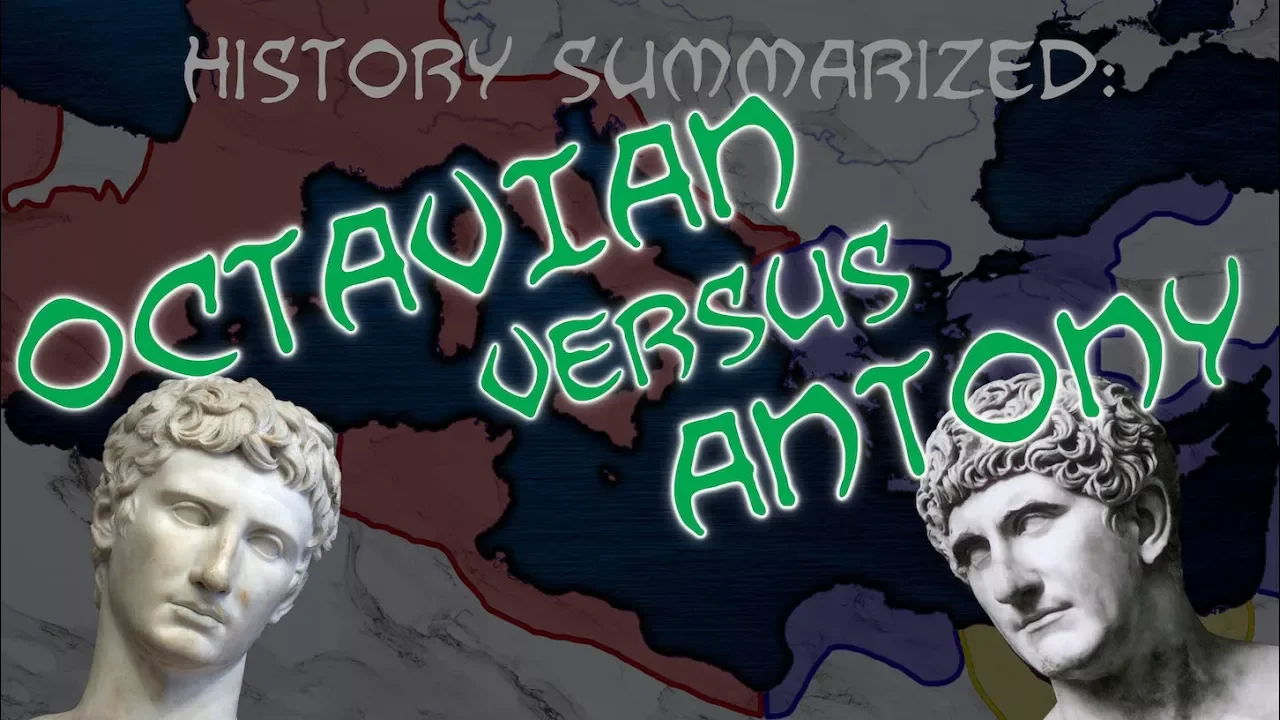
- Why this video: This video provides a highly engaging and accurate breakdown of the power vacuum left by Julius Caesar's assassination. It analyzes the ideological war between Octavian (who branded himself as the restorer of traditional Roman values) and Mark Antony (who aligned himself with the Hellenistic East and Cleopatra). This geopolitical conflict directly dictated the propaganda themes of early Imperial art.
- Knowledge Checkpoint:
- Define the Second Triumvirate and explain how its collapse led to a war of propaganda between the Roman West and the Egyptianized East.
- Describe how Octavian used the Battle of Actium (31 BCE) in visual media to symbolize the victory of traditional Roman order over Eastern decadence.

- Why this video: Although presented within a popular format, this video features a genuine coin appraisal and expert commentary on the Denarius of Julius Caesar. This specific coin, minted just weeks before Caesar’s assassination in 44 BCE, was a radical departure from Roman tradition: it was the first time a living Roman’s portrait appeared on state currency, signaling the death of Republican egalitarianism.
- Knowledge Checkpoint:
- Explain the historical and political significance of Julius Caesar placing his own portrait on the silver denarius while still alive.
- Discuss how the Roman Senate interpreted Caesar’s coinage as an act of monarchical ambition, contributing to the conspiracy to assassinate him on the Ides of March.
Module 3: Augustan Sculpture: Iconography of the First Emperor
Here we analyze the peak masterpieces of early Imperial sculpture commissioned during the reign of Augustus (formerly Octavian). After securing sole power, Augustus initiated a dramatic artistic revolution, discarding the elderly, weathered veristic style of the Republic in favor of an idealized, timeless classicism reminiscent of Golden Age Athens. This module decodes the deep mythological, religious, and political symbols embedded in two of history's most famous monuments: the Augustus of Prima Porta and the Ara Pacis Augustae.
Recommended Videos

- Why this video: This academic art history podcast provides an exceptional, detailed visual analysis of the Ara Pacis Augustae (Altar of Augustan Peace). The video systematically decodes the marble relief carvings, illustrating how themes of abundance, safety, ancestral piety (pietas), and the legendary foundation of Rome by Aeneas were woven together to celebrate the Pax Romana under Augustan rule.
- Knowledge Checkpoint:
- Identify the prominent mythological figures carved onto the Ara Pacis panels (such as Tellus/Pax) and analyze their connection to the concept of agricultural abundance.
- Explain how the imperial family procession carved on the exterior walls of the Ara Pacis set a precedent for dynastic succession.
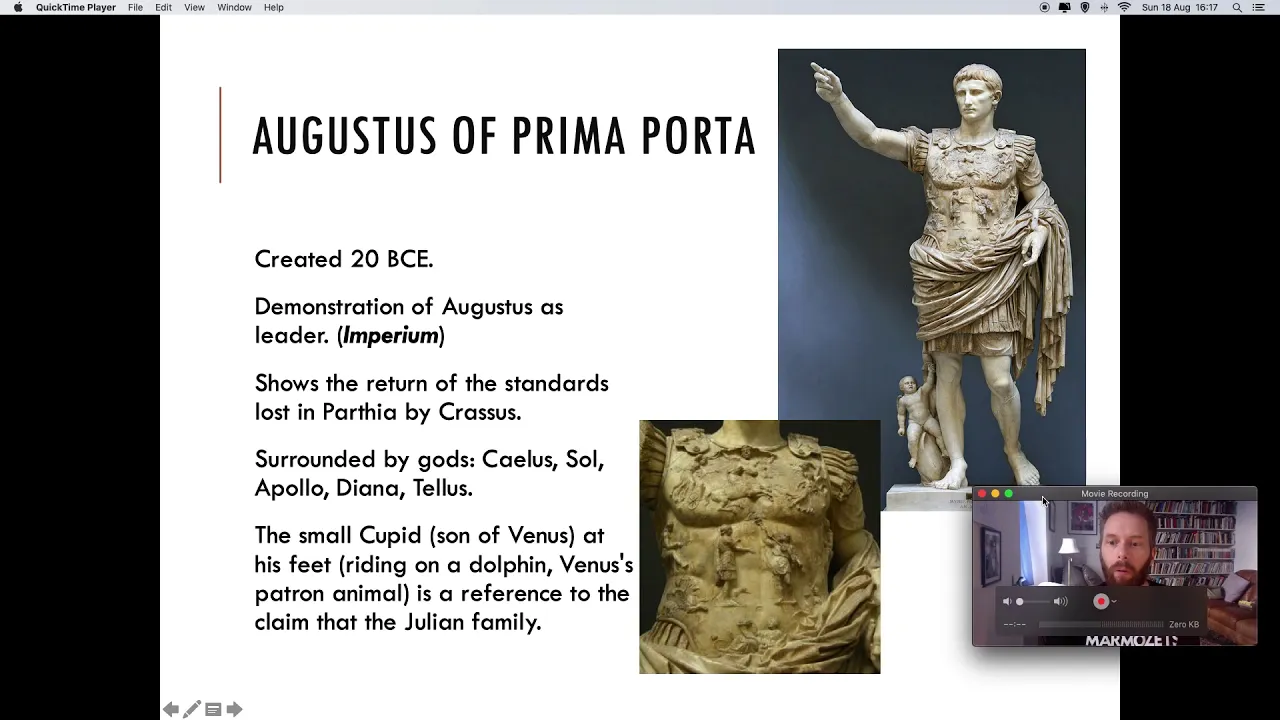
- Why this video: This video introduces the visual syntax of the famous Augustus of Prima Porta statue. It highlights how Augustus utilized classical Greek artistic proportions (specifically Polykleitos’ Doryphoros) to project youth, military triumph, and divine favor, completely divorcing his image from the realistic aging portraits of his Republican predecessors.
- Knowledge Checkpoint:
- Describe the symbolic meaning of the Cupid riding a dolphin at Augustus' feet in the Prima Porta statue.
- Analyze the central scene depicted on the breastplate of the Augustus of Prima Porta and explain its geopolitical significance.
Curriculum Gap Alert: Because the pool lacks a long-form (15+ minute) visual and iconographic analysis of the Augustus of Prima Porta, students are strongly encouraged to independently search for "Smarthistory Augustus of Prima Porta" on YouTube to study the complex cosmic and political allegory on the breastplate in greater depth.
Module 4: Imperial Architecture: Rebuilding Rome in Marble
Suetonius famously wrote that Augustus "found Rome a city of brick and left it a city of marble." This module explores how the physical restructuring of the capital served as urban-scale political propaganda. By building massive projects like the Forum of Augustus and restoring ancient temples, Augustus presented himself as a pious restorer of the gods and a civic benefactor, cementing the transition to autocratic rule through the visual domination of public space.
Recommended Videos
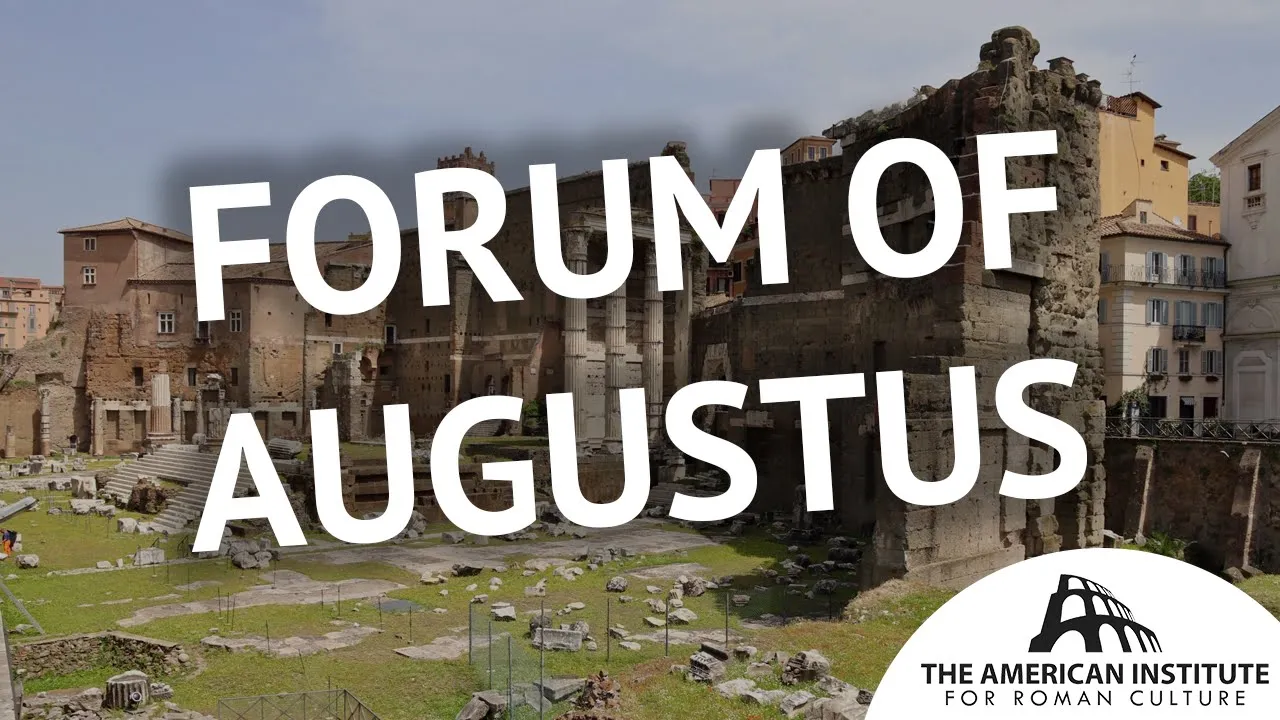
- Why this video: This video explores the Forum of Augustus (completed in 2 BCE), analyzing how it functioned as a showcase of political power. It details how the massive temple of Mars Ultor (Mars the Avenger) and the surrounding colonnades filled with statues of Rome's legendary heroes positioned Augustus as the natural culmination of Roman history.
- Knowledge Checkpoint:
- Detail the political motivation behind dedicating the main temple of the new forum to Mars Ultor (Mars the Avenger).
- Explain how the galleries of statues in the Forum of Augustus (featuring Aeneas on one side and Romulus on the other) rewrote Roman history to legitimize Augustus' family line.

- Why this video: This video features archaeologist Garrett Ryan explaining how the Romans adopted classical Greek architectural styles (the Doric, Ionic, and Corinthian orders) but revolutionized construction through the use of a new material: volcanic concrete (pozzolana). This architectural revolution enabled the construction of colossal structures that served as concrete expressions of imperial power.
- Knowledge Checkpoint:
- Define pozzolana and explain why it gave Roman concrete superior strength and water-resistance compared to previous building materials.
- Discuss how the introduction of concrete allowed Roman emperors to build monuments of a scale and complexity that were impossible using traditional Greek post-and-lintel methods.

- Why this video: This short video contextualizes the shear scale of Augustus' architectural transformation of Rome. It references his official autobiography, the Res Gestae Divi Augusti, explaining how the extensive restoration of dozens of temples was used as a public ledger to prove his religious devotion and civic care to the Roman population.
- Knowledge Checkpoint:
- According to the Res Gestae, how many temples did Augustus claim to have restored in the city of Rome?
- Why was temple restoration considered an essential form of political propaganda for a leader trying to establish an autocracy without looking like a king?
Module 5: Mass Media in Rome: Coins, Gems, and Public Works
While monuments in Rome influenced the Senate and local plebeians, the vast majority of the empire's population lived thousands of miles away and would never visit the capital. How was imperial ideology broadcast to the illiterate masses across Western Europe, North Africa, and the Middle East? This module analyzes Roman "mass media"—specifically everyday coinage, ultra-luxury political cameos like the Gemma Augustea, and the strategic distribution of imperial imagery.
Recommended Videos

- Why this video: Featuring world-renowned classicist Mary Beard, this video explains how the earliest gold coins of the Roman state were developed as tools for political diplomacy and imperial cohesion. It demonstrates how these portable physical objects traveled to the edges of the known world, carrying visual narratives of Roman alliance and power directly into the palms of ordinary people.
- Knowledge Checkpoint:
- Describe the visual scene depicted on Rome's early gold coins and explain how it communicated ideas of treaty-making and alliances.
- Why were coins the most effective form of "mass media" available to ancient Roman authorities?
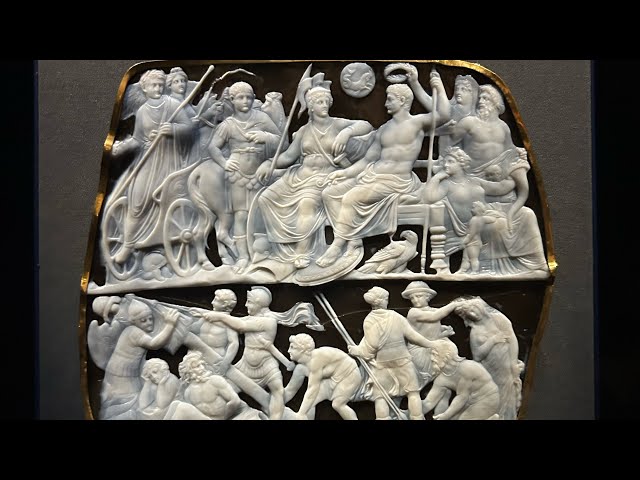
- Why this video: This video offers a detailed iconographical reading of the Gemma Augustea, a magnificent low-relief cameo carved from two-layered onyx. The video explains the dual-register layout of the gem: the celestial upper zone depicting Augustus being crowned with a laurel wreath alongside the goddess Roma, and the lower zone depicting Roman soldiers raising a victory trophy over defeated barbarians.
- Knowledge Checkpoint:
- Contrast the ideological message of the upper register of the Gemma Augustea with the lower register.
- Explain why a highly private, luxurious object like a cameo would feature such heavy political and military propaganda.
Curriculum Gap Alert: Because the pool videos on coinage and cameos are relatively brief, students should independently search for "Smarthistory Gemma Augustea" and "British Museum Roman Imperial Coinage" to access deeper academic analyses of how these mediums functioned systematically as state-sponsored mass communication.
Module 6: The Legacy of Roman Propaganda: Later Imperial Art
In this final module, we examine how later emperors adapted and evolved the propaganda techniques established by Augustus. We will analyze the Flavian Dynasty's pivot towards populist architectural propaganda (the Colosseum) to distance themselves from Nero's tyranny, study Trajan’s monumental narrative column commemorating his military conquests, and look at how late-Empire rulers like Constantine literally recycled historical monuments to absorb the prestige of Rome’s "good emperors."
Recommended Videos
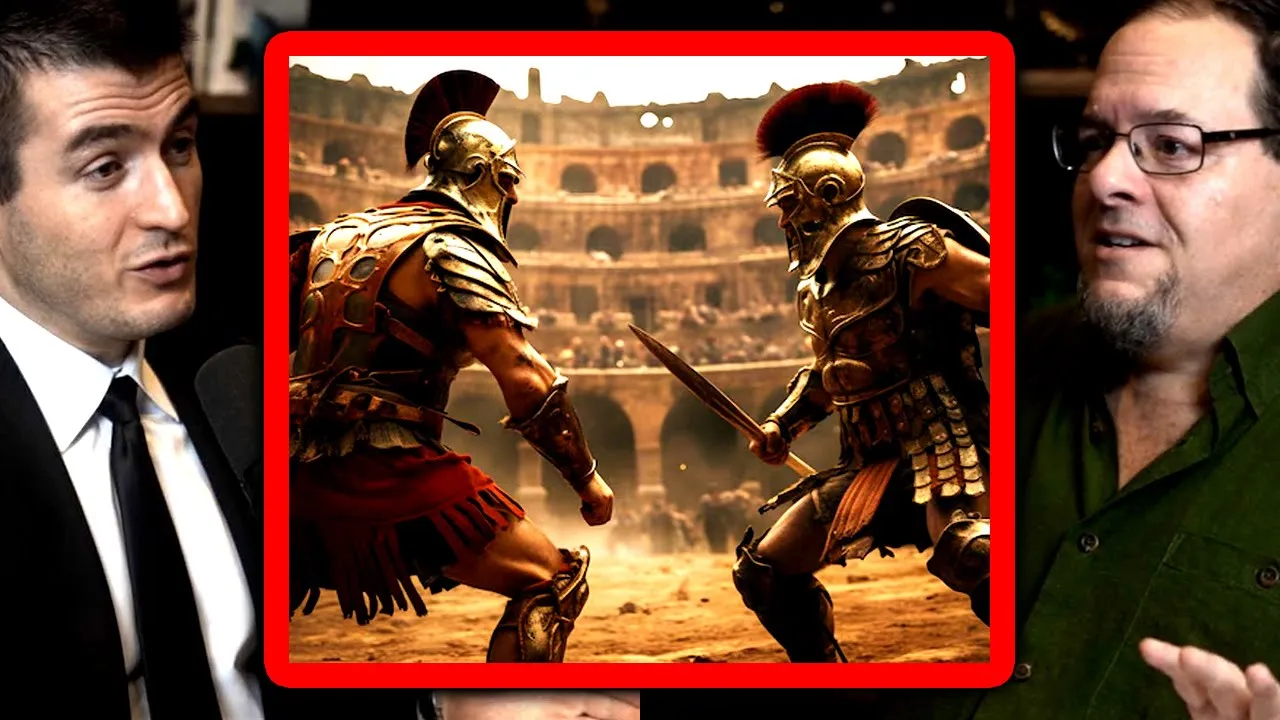
- Why this video: This clip features Dr. Gregory Aldrete explaining the profound political propaganda behind the construction of the Flavian Amphitheater (the Colosseum). Begun under Emperor Vespasian around 72 CE, the building was intentionally constructed on the land previously seized by the hated tyrant Nero for his private Golden House (Domus Aurea), sending a clear message: the Flavians were returning Rome's land to its people.
- Knowledge Checkpoint:
- Explain how the location chosen for the Colosseum functioned as an act of political propaganda against the memory of Nero.
- Define the political concept of "bread and circuses" and describe how the Colosseum was designed to manage public sentiment.

- Why this video: This video offers an excellent analysis of the narrative relief band wrapping around Trajan's Column (completed in 113 CE). It shows how the column served as a visual documentary of the Dacian Wars, highlighting not just battles, but the engineering, building, and organizational genius of the Roman army under Trajan’s direct command.
- Knowledge Checkpoint:
- What event does Trajan's Column commemorate, and how was the construction project funded?
- Analyze how Trajan is depicted throughout the column's narrative relief band. What specific virtues do these depictions highlight?
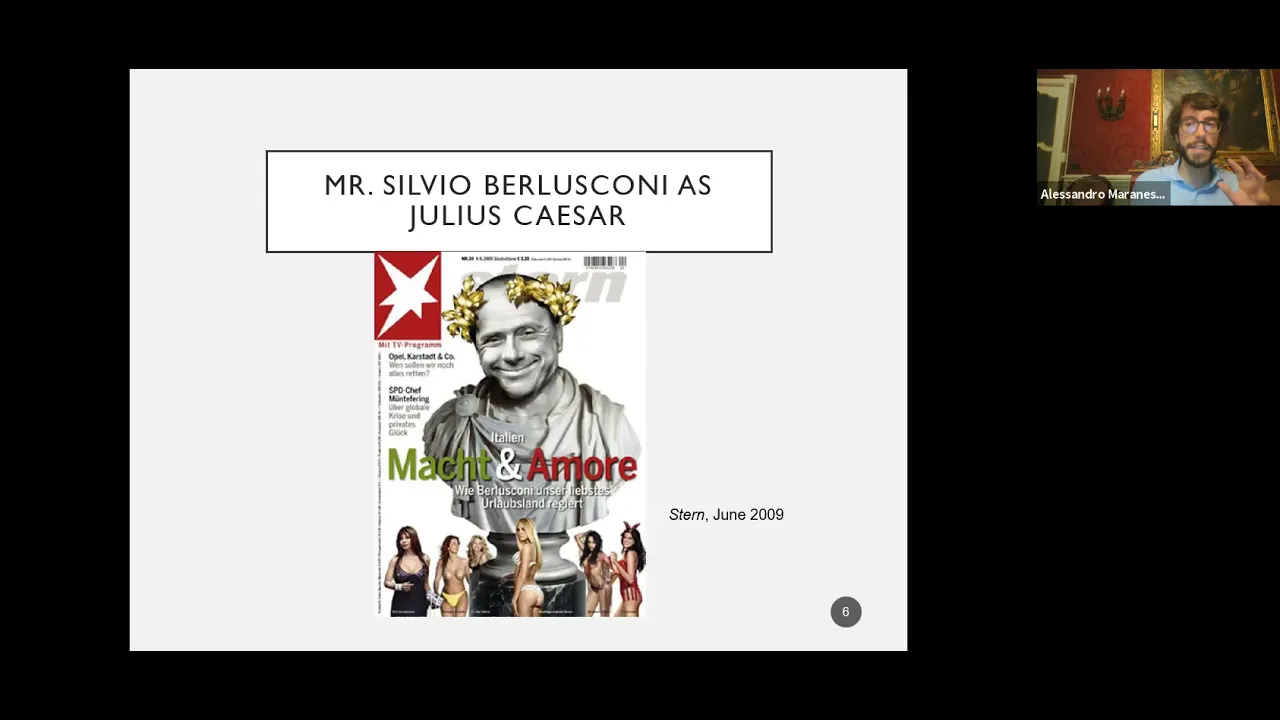
- Why this video: This academic lecture investigates how later emperors, particularly Constantine, used a process called spoliation (the re-use of earlier building material or decorative sculpture on new monuments). By physically taking reliefs from monuments of celebrated emperors like Trajan, Hadrian, and Marcus Aurelius and placing them on his own triumphal arch, Constantine visually linked his controversial reign to Rome's golden past.
- Knowledge Checkpoint:
- Define spolia and explain how its use on the Arch of Constantine served a political purpose.
- Discuss how Constantine's multi-media strategy attempted to unify a fractured empire around a single imperial image.
Course Map
This map outlines the chronological and conceptual dependencies of the modules. It is highly recommended to follow this order, as each step reflects the historical evolution of Roman political and artistic philosophy.
Key People Index
The following scholars, researchers, and educational platforms appear throughout this curriculum:
- Dr. Mary Beard: Dame Commander of the Order of the British Empire (DBE), Professor of Classics at the University of Cambridge. Featured in Module 5 discussing early Roman coinage. She is widely regarded as one of the world's leading experts on Roman culture and political life.
- Dr. Gregory Aldrete: Professor Emeritus of History and Humanistic Studies at the University of Wisconsin-Green Bay. Featured in Module 6 analyzing the physical and sociopolitical structure of the Roman Colosseum.
- Garrett Ryan, PhD (toldinstone): Professional archaeologist and historian with a PhD in Greek and Roman History from the University of Michigan. Featured in Modules 4 and 6 explaining Roman architecture, concrete technology, and imperial monuments.
- Professor Kate Chase: Art historian and academic educator. Featured in Module 1 delivering the foundational structural lecture on early Roman Republican art.
Final Self-Assessment
Complete this comprehensive self-assessment to verify your mastery of Roman political propaganda across art and architecture.
- Define Verism: I can explain how hyper-realistic Republican busts expressed values of gravitas, virtus, and auctoritas, and how this style directly contrasted with classical Greek idealization.
- Analyze the Denarius of Julius Caesar: I understand why putting a living ruler's portrait on state currency was a radical political act and how it contributed to the collapse of the Roman Republic.
- Decode the Augustus of Prima Porta: I can identify and analyze the symbolic meanings of Cupid, the dolphin, the classicized Greek proportions, and the scenes on Augustus' breastplate.
- Interpret the Ara Pacis: I can explain how the relief carvings on the Altar of Peace linked Augustan rule directly to mythological themes of divine peace, fertility, and dynastic stability.
- Assess the Rebuilding of Rome: I can explain the political and religious propaganda purposes of the Forum of Augustus and the Temple of Mars Ultor.
- Understand Roman Concrete: I can describe what pozzolana is and how concrete enabled the creation of architectural monuments that projected the physical dominance of the state.
- Examine Imperial Mass Media: I can discuss how coins and cameo gems like the Gemma Augustea were designed to communicate complex messages of imperial victory and divine legitimacy to a vast, largely illiterate population.
- Contrast Flavian and Julio-Claudian Art: I can explain how Vespasian and Titus used the construction of the Colosseum over Nero's private estate as a populist form of restorative political propaganda.
- Deconstruct Trajan’s Column: I can explain how the continuous narrative relief of Trajan's Column functioned as a visual documentary highlighting the military, structural, and administrative power of the Roman army.
- Deconstruct the Use of Spolia: I can define spolia and explain how Constantine utilized recycled architectural reliefs from earlier "good emperors" to legitimize his own reign.