Mapping the Milky Way: Astrometry & Chemistry
Learning Goal: Reconstructing the formation and evolutionary history of the Milky Way galaxy through astrometry, stellar kinematics, and the chemical mapping of galactic stellar populations.
- Prerequisites: Basic high school physics (mechanics, wave-particle duality) and introductory algebra.
- Estimated Total Study Time: 18 Hours
Module 1: Foundations of Stellar Astrophysics
This module establishes the core astronomical principles needed to decode starlight. You will learn how stars are classified, how they change over their lifetimes, and how the Hertzsprung-Russell (H-R) diagram organizes this data. Additionally, you will discover the science of spectroscopy—splitting stellar light to reveal the chemical compositions of distant stellar atmospheres.
- Why this video: This video provides an elegant conceptual foundation for stellar spectroscopy. It traces the history of how astronomers went from believing stellar composition was completely unknowable to utilizing absorption lines (dark gaps in stellar light spectra caused by specific atmospheric ions and atoms) to reconstruct the exact elemental makeup of stars.
- Knowledge Checkpoint:
- Explain how absorption lines are formed when light passes through a star's photosphere.
- Describe how atomic transition energy levels correspond to unique light wavelengths.
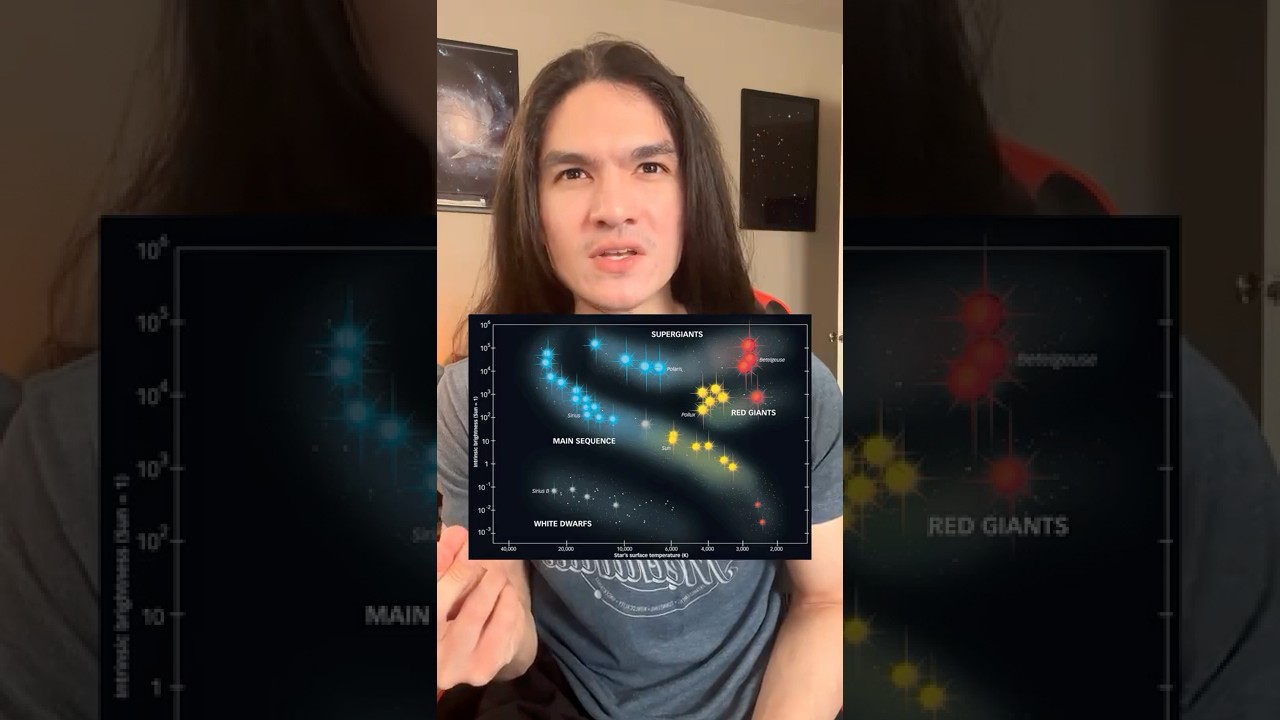
- Why this video: Though brief, this video serves as a visual, high-yield primer on the Hertzsprung-Russell (H-R) diagram. It highlights how a star's evolutionary path and initial mass dictate its coordinates on the H-R diagram and traces how aging stars migrate away from the Main Sequence.
- Knowledge Checkpoint:
- Identify the axes of the H-R Diagram (luminosity/absolute magnitude vs. temperature/spectral class).
- Define where the Main Sequence, giants, and white dwarfs lie on the diagram.

- Why this video: This BBC sequence offers an intuitive, visually stunning explanation of spectroscopy. It shows how starlight acts as a "fingerprint" or "barcode," where dark bands represent specific elements absorbing photon energies. This is critical for understanding the chemical tagging used later in galactic archaeological surveys.
- Knowledge Checkpoint:
- Distinguish between a continuous spectrum, an emission spectrum, and an absorption spectrum.
- Explain why different elements produce distinct configurations of spectral lines.
Module 2: Astrometry and the Gaia Space Mission
Astrometry is the ancient branch of astronomy focused on measuring the precise positions, distances, and movements of stars. This module covers how modern space missions—specifically the European Space Agency's (ESA) Gaia satellite—use geometric parallax and proper motions to transition from a flat, 2D view of the night sky to a highly accurate 3D map of the Milky Way.

- Why this video: Jason Kendall provides a comprehensive academic lecture explaining how nearby stars appear to shift against the distant background of cosmic objects as Earth orbits the Sun. It walks through the foundational mathematical relationships between parallax angle, baseline distance, and stellar distance.
- Knowledge Checkpoint:
- Write down and calculate stellar distance using the parallax formula: (where is in parsecs and is in arcseconds).
- Differentiate between proper motion (angular change across the sky) and radial velocity (motion along the line of sight).

- Why this video: Produced by Cambridge University, this video discusses the engineering and immense scientific objectives of the Gaia mission. It details how the spacecraft continuously scans the celestial sphere to build a highly precise, multi-dimensional stellar catalogue of over a billion stars.
- Knowledge Checkpoint:
- Explain how Gaia measures both positions and stellar colors simultaneously.
- Describe the scale of Gaia's catalog relative to the total estimated stellar population of the Milky Way.

- Why this video: This video reviews how Gaia's highly accurate astrometric dataset has transformed our understanding of the Milky Way's structure. It outlines the precision required to measure micro-arcsecond shifts and explains how this data enables researchers to track stellar trajectories back in time.
- Knowledge Checkpoint:
- Define the target accuracy of Gaia's astrometric measurements (micro-arcseconds) and what that translates to in terms of distance scale.
- Explain how knowing a star's exact 3D position and velocity vectors permits "reversing" its path to find its birth cluster.
Module 3: Stellar Kinematics and Galactic Dynamics
Stars in the Milky Way are not stationary; they are bound by gravity and move in complex orbits around the galactic center. This module covers stellar kinematics—analyzing stellar velocities without directly addressing the forces that cause them—and galactic dynamics, which investigates how the mass distribution of the galaxy (including dark matter) influences these orbits.

- Why this video: This academic presentation details the methodology of calculating galactic rotation curves. It explains how astronomers measure orbital velocities of stars and gas clouds as a function of distance from the galactic core, and how the "flatness" of these curves serves as definitive evidence for a massive dark matter halo surrounding the Milky Way.
- Knowledge Checkpoint:
- Sketch a typical Keplerian rotation curve versus the observed flat rotation curve of the Milky Way.
- Explain why a flat rotation curve requires the presence of non-luminous mass (dark matter) in the outer regions of the galaxy.

- Why this video: Dr. Kathryn Johnston, a leading expert in galactic dynamics, discusses the structure of the Milky Way and contrasts Newtonian dynamics in the presence of dark matter against Modified Newtonian Dynamics (MOND). She also highlights how Gaia's astrometric data helps map out the galaxy's gravitational potential field.
- Knowledge Checkpoint:
- Describe the three main dynamic components of the Milky Way: bulge, disk, and halo.
- Summarize the primary arguments in the debate between the dark matter paradigm and MOND regarding galactic kinematics.
- Why this video: This clip demonstrates how astronomers calculate tangential velocity () using proper motion () and distance (). It provides a practical, mathematical example using Barnard's Star to show how physical velocities in kilometers per second are derived from angular measurements.
- Knowledge Checkpoint:
- Use the formula to explain how angular proper motion ( in arcseconds/year) and distance ( in parsecs) yield tangential velocity in km/s.
- Construct a velocity vector diagram combining radial velocity () and tangential velocity () to find a star's true space velocity ().
Module 4: Galactic Nucleosynthesis and Chemical Abundances
Stars act as chemical factories. This module explores how the earliest stars formed from pristine hydrogen and helium, and how subsequent generations of stars forged heavier elements (historically called "metals" in astronomy). You will learn how astronomers utilize massive spectroscopic surveys to read these chemical barcodes and map the populations of the Milky Way.
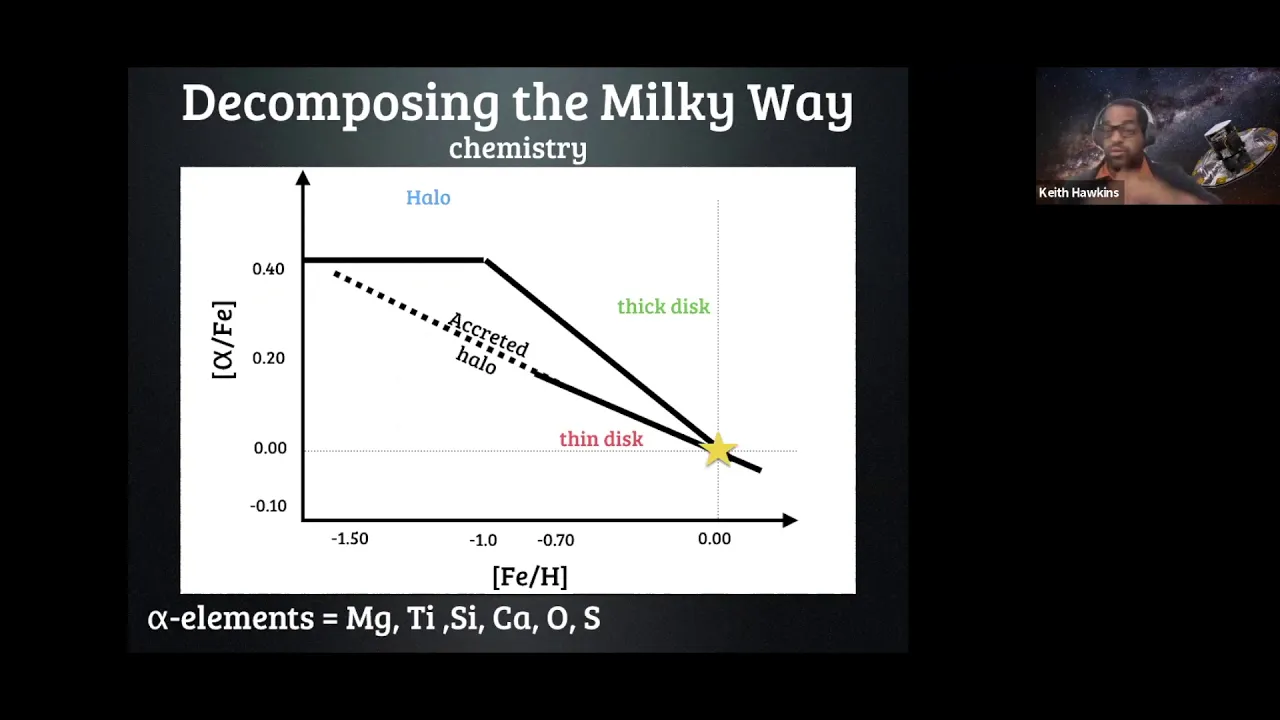
- Why this video: This advanced colloquium by Dr. Keith Hawkins explains how modern astronomical surveys (like APOGEE, GALAH, and LAMOST) capture chemical abundances for hundreds of thousands of stars. It details how the chemical patterns (such as the iron-to-hydrogen ratio and alpha-elements-to-iron ratio ) act as fossil records to trace stellar birthplaces and birth times.
- Knowledge Checkpoint:
- Explain how large-scale multiplexed fiber spectroscopic surveys operate to collect spectra for thousands of stars simultaneously.
- Interpret a standard chemical abundance plot displaying vs. .
- Describe how chemical tagging allows astronomers to link stars scattered across the galaxy back to a common parent cluster.
- Why this video: This in-depth discussion breaks down the classification of Stellar Populations I, II, and III. It explains their historical classification by Walter Baade, their typical locations in the Milky Way (disk vs. halo), and how their metal content maps directly to their age and the generation of gas from which they formed.
- Knowledge Checkpoint:
- Compare Population I, Population II, and Population III stars in terms of metallicity, age, and galactic location.
- Explain why Population III stars have remained elusive to direct observation and what their expected masses were.

- Why this video: This lecture outlines how stellar nucleosynthesis populates the periodic table. It introduces the astrophysical shorthand (representing the mass fractions of Hydrogen, Helium, and all heavier elements, respectively) and details how abundance scales are calibrated using meteorites and solar values.
- Knowledge Checkpoint:
- State what , , and represent in stellar astrophysics, and explain why solar metallicity is an important baseline.
- Describe the difference between alpha elements (e.g., Oxygen, Magnesium, Silicon, Calcium) and iron-peak elements in terms of their nucleosynthetic origins.
Module 5: Galactic Archaeology: Reconstructing Milky Way History
Galactic Archaeology is the practice of combining astrometry, kinematics, and chemistry to reconstruct the assembly history of the Milky Way. In this final module, you will synthesize everything you have learned to map out the Milky Way's primary components (the thin disk, thick disk, and stellar halo) and trace ancient galactic merger events, such as the collision with the Gaia-Sausage-Enceladus galaxy.
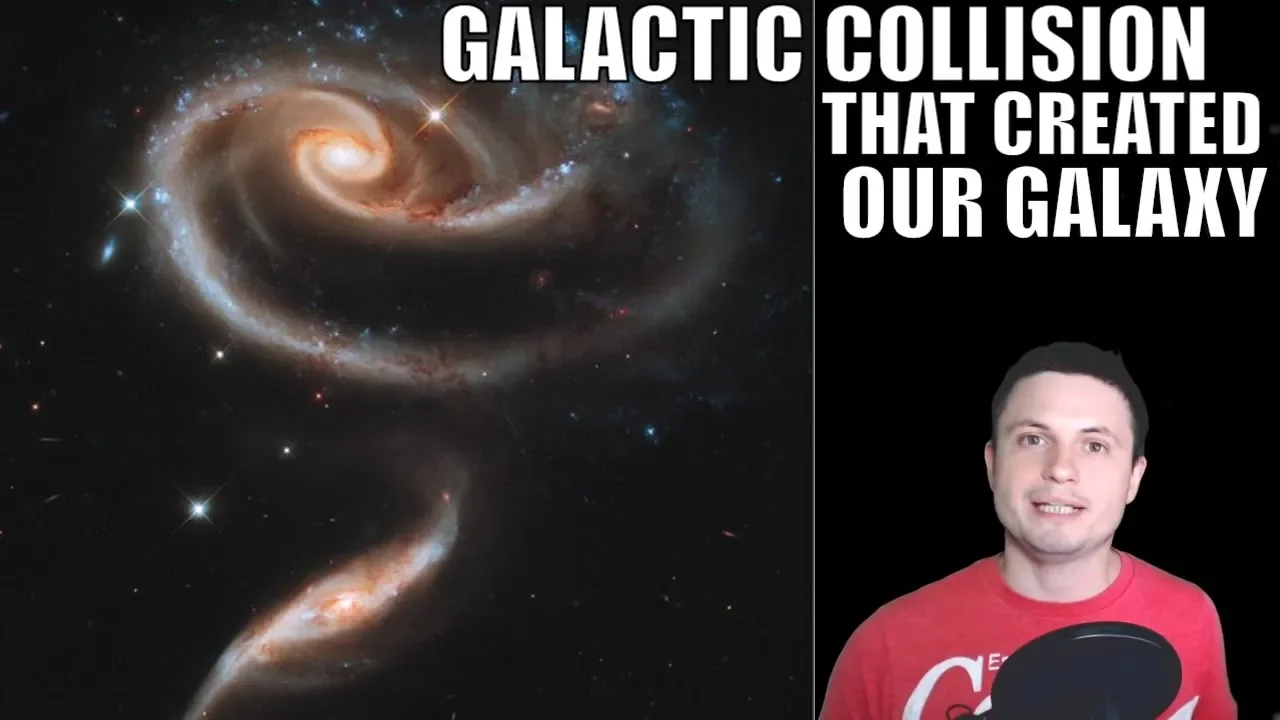
- Why this video: This highly accessible video explains how astronomers used Gaia's 3D motion and stellar chemistry data to discover that the Milky Way collided with a dwarf galaxy named Gaia-Enceladus (also known as the "Gaia Sausage") about 10 billion years ago. It explains how this massive merger deposited stars into the galactic halo and helped form the thick disk.
- Knowledge Checkpoint:
- Explain how stars from an accreted dwarf galaxy like Gaia-Enceladus can be identified today by their unique retro-grade or highly eccentric orbits.
- Describe how the chemical fingerprint of Gaia-Enceladus stars (lower at a given ) differs from native Milky Way disk stars.

- Why this video: This academic, mid-length lecture from Toronto's Dunlap Institute offers a detailed exploration of galactic accretion. It explains how researchers build phase-space structures to locate tidal stellar streams and stellar debris left over from ancient dwarf galaxies that were torn apart by the Milky Way's gravitational tidal forces.
- Knowledge Checkpoint:
- Define what a stellar stream is and how tidal forces strip stars from infalling globular clusters or dwarf galaxies.
- Describe how the total energy () and angular momentum () of stellar orbits remain conserved over long periods, allowing astronomers to group merged stars in "action-angle" space.

- Why this video: This video offers a clear spatial comparison of the major structural sub-components of our galaxy. It delineates the physical boundary systems of the thin disk (~1,000 light-years thick), the thick disk (~3,000 light-years thick), and the surrounding stellar halo which extends hundreds of thousands of light-years out.
- Knowledge Checkpoint:
- Compare the thin disk, thick disk, and halo across three parameters: average age, metallicity, and orbit geometry (ordered vs. random).
- Explain why older, metal-poor stars are primarily located in the thick disk and the halo, while young, metal-rich stars reside in the thin disk.
Course Map
Key People Index
- Dr. Keith Hawkins: Assistant Professor of Astronomy at UT Austin. Known for his work using massive stellar spectroscopic surveys (like APOGEE and GALAH) to chemically map the Milky Way galaxy and track down accreted stellar populations.
- Dr. Kathryn Johnston: Professor of Astronomy at Columbia University. A world expert in galactic dynamics, specializing in using stellar streams and debris to understand the formation history and dark matter distribution of the Milky Way.
- Jason Kendall: NASA Jet Propulsion Laboratory Solar System Ambassador and astronomy educator. Known for his clear, rigorous lectures on observational astronomy, parallax math, and stellar properties.
- Walter Baade: German astronomer who in 1944 first proposed dividing stars into Populations I and II based on their locations, metallicities, and velocities, forming the historical foundation for modern chemical evolution models.
- Vera Rubin: American astronomer who pioneered the measurement of spiral galaxy rotation curves. Her work provided the first robust, observational evidence for the presence of massive dark matter halos.
Final Self-Assessment
Test your understanding of the entire curriculum by verifying that you can confidently perform and explain each of the following:
- Draw a diagram showing the Earth's orbit around the Sun and explain how it acts as a baseline to measure the trigonometric parallax of a nearby star.
- Calculate the distance to a star (in parsecs and light-years) if its measured parallax angle is 0.05 arcseconds.
- Write down the formula relating tangential velocity, proper motion, and distance, and calculate for a star with proper motion at a distance of 100 parsecs.
- Explain the physical mechanism by which a star's atmosphere absorbs specific wavelengths of light, creating dark absorption lines in its spectrum.
- Describe the difference in origin and typical enrichment timescales between alpha () elements (produced primarily in core-collapse Type II supernovae) and iron-peak elements (produced in Type Ia supernovae).
- Locate where Population I, Population II, and the theoretical Population III stars reside on an evolutionary timeline and within the structural components of the Milky Way.
- Contrast the physical dimensions, kinematic behavior (average velocity dispersion), and chemical metallicity profiles of the Milky Way's thin disk and thick disk.
- Explain how a "flat" galactic rotation curve differs from a "Keplerian" curve, and explain why this requires a massive, spherical dark matter halo.
- Define the scientific objectives of "Galactic Archaeology" and describe how combining Gaia’s astrometric parameters with high-resolution spectroscopy allows us to discover ancient mergers like the Gaia-Sausage-Enceladus collision.
- Explain why the total orbital energy () and angular momentum () of a star remain relatively constant over billions of years, and how astronomers use these quantities to group stars from disrupted companion galaxies.