Precision Fermentation: Yeast & Dairy Proteins
Learning Goal: Developing a precision fermentation process for producing recombinant dairy proteins in Pichia pastoris, covering expression vector design, high-density yeast fermentation, and purification of food-grade beta-lactoglobulin.
- Prerequisites: Basic understanding of biochemistry, general biology, and college-level chemistry.
- Estimated Total Study Time: 24 hours
Module 1: Foundations of Molecular Biology & Precision Fermentation
This module introduces the core tenets of molecular biology that make precision fermentation possible. You will study how genetic information is transcribed and translated (the central dogma), and discover how these foundational principles are applied in the alternative protein industry to program microbial "cell factories" to produce bio-identical dairy proteins.
Recommended Videos

- Why this video: This interview segment provides a clear, high-level industry case study on precision fermentation. It explains how microorganisms are engineered as biological factories to express target functional proteins (such as egg or dairy equivalents), bridging the gap between basic molecular biology and its commercial applications in food technology.

- Why this video: This video introduces the concept of precision fermentation as an emerging technology. It outlines the basic process of inserting target genetic sequences into host organisms to synthesize specific, high-purity food molecules without animal input.
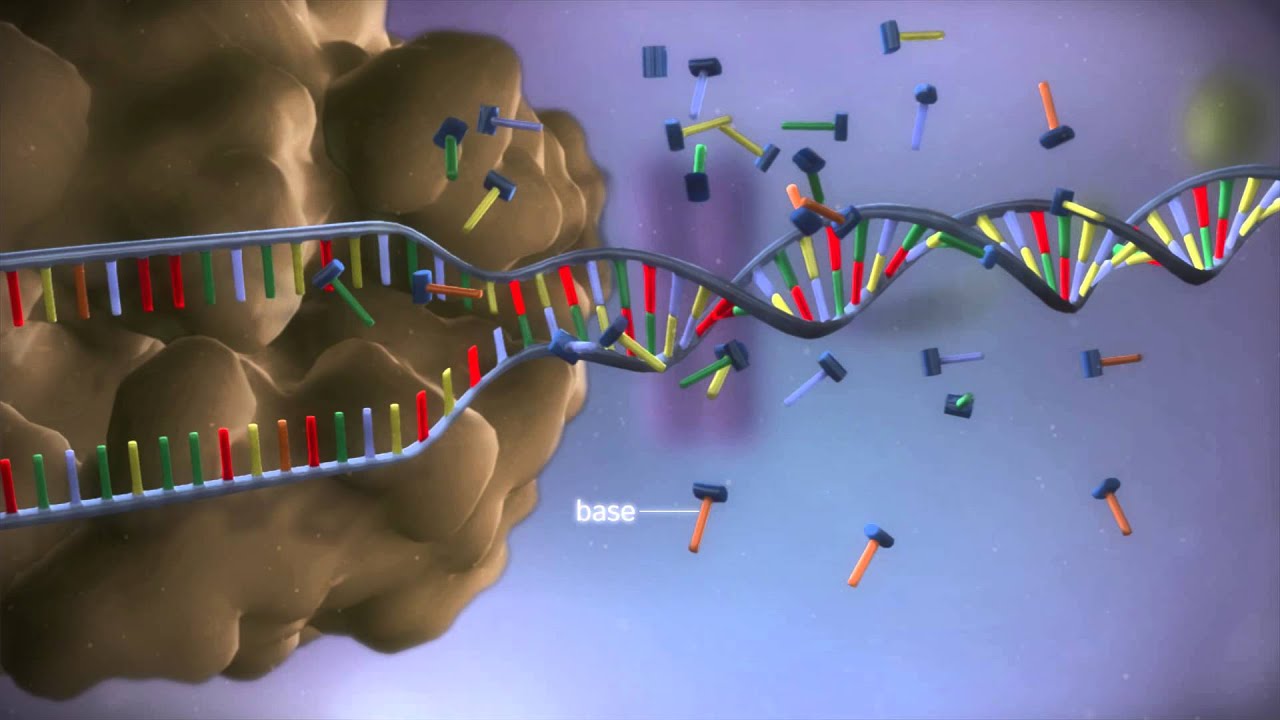
- Why this video: A high-quality 3D molecular animation is essential for visualizing transcription and translation in real-time. This video illustrates the machinery of RNA polymerase, tRNA, and the ribosome, reinforcing the physical mechanics behind the central dogma that you will hijack to express beta-lactoglobulin.
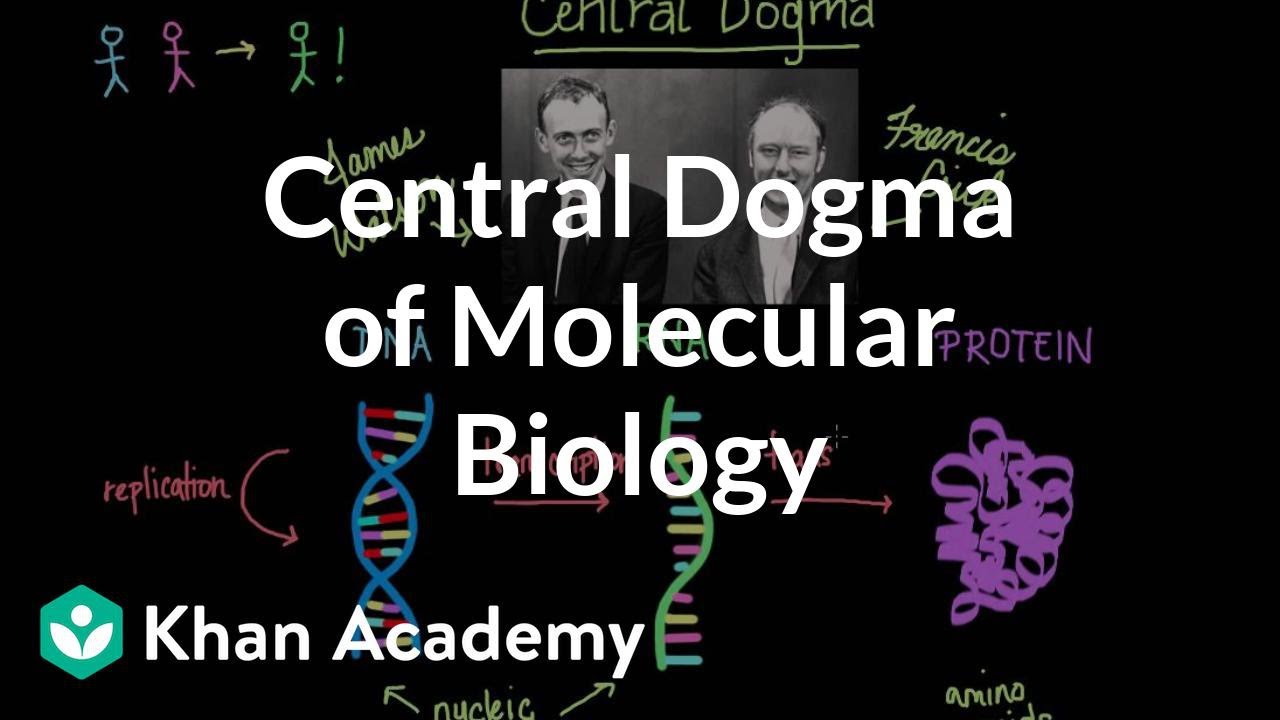
- Why this video: This lecture breaks down the central dogma into a clear academic framework. It explains how genetic blueprints flow unidirectionally from replication to transcription and translation, which is key to understanding how your inserted beta-lactoglobulin gene translates into physical protein.
Knowledge Checkpoint
- Explain how precision fermentation differs from traditional fermentation (e.g., beer or yogurt production).
- Diagram the flow of genetic information from a double-stranded DNA template to a mature, folded polypeptide chain.
- Define the terms "transcription," "translation," and "recombinant protein expression."
Module 2: Yeast Biology and Pichia pastoris as an Expression Host
This module explores why the methylotrophic yeast Pichia pastoris (Komagataella phaffii) is highly favored for producing complex recombinant proteins. We will cover the eukaryotic secretory pathway and post-translational modifications (PTMs), contrasting them with prokaryotic hosts.
Recommended Videos

- Why this video: This protocol preview provides a visual overview of working specifically with Pichia pastoris. It illustrates the experimental workflow, from initial culture preparation to methanol induction, serving as an excellent visual introduction to this specific host system.
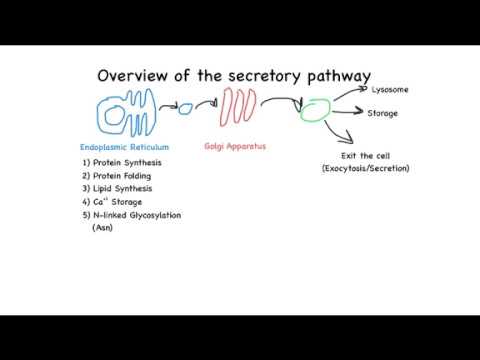
- Why this video: This video details how eukaryotic cells transport proteins from the endoplasmic reticulum (ER) to the Golgi apparatus. This is highly relevant because yeast post-translational modifications (specifically N-linked glycosylation) happen within these compartments, which determines whether the recombinant beta-lactoglobulin will fold correctly and remain stable.
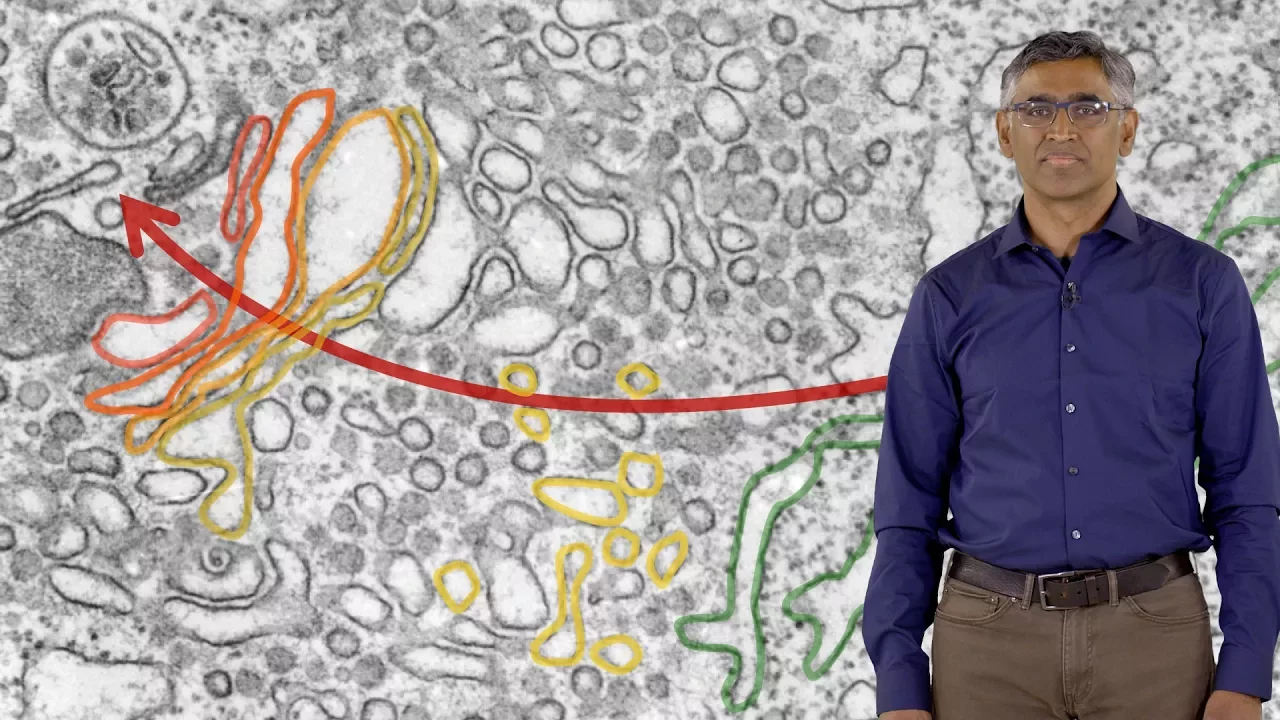
- Why this video: To successfully secret recombinant dairy proteins, you must understand cell compartmentalization. This video utilizes historical pulse-chase experiment insights to explain how proteins are targeted to, and cross through, intracellular membranes to enter the secretory pathway.
Coverage Acknowledgment & Study Guide
Note on Video Gaps: The video pool has limited coverage regarding the biochemical mechanics of the methanol-induced AOX1 (Alcohol Oxidase 1) promoter system.
Independent Study Assignment: Please read up on how Pichia pastoris metabolizes methanol. Specifically, search for:
- Pichia pastoris AOX1 promoter induction mechanism
- Methanol metabolic pathway in methylotrophic yeast
Key Concepts to search:
- AOX1 vs. AOX2: AOX1 is responsible for the vast majority of alcohol oxidase activity in the cell.
- Catabolite Repression: The AOX1 promoter is strongly repressed by glucose or glycerol, and fully induced by the addition of methanol when carbon sources are depleted.
- Mut phenotypes: Learn the difference between
Mut+(Methanol utilization plus),MutS(Methanol utilization slow), andMut-strains, which drastically affect your feeding rates during scale-up.
Knowledge Checkpoint
- Explain why Pichia pastoris is preferred over Escherichia coli for producing complex secretory proteins like beta-lactoglobulin.
- Detail the path a newly synthesized protein takes from the ribosome to the extracellular supernatant.
- What role does the AOX1 promoter play in Pichia pastoris, and what chemical switches it from a repressed state to an active state?
Module 3: Expression Vector Design and Yeast Transformation
Learn how to design plasmids that will integrate your target gene into the host genome. We will cover necessary vector elements (promoters, selection markers, secretion signals) and the electroporation techniques used to deliver this DNA into Pichia cells.
Recommended Videos

- Why this video: This video clearly details the essential structural components of a cloning vector (origin of replication, multiple cloning sites, and antibiotic resistance genes). It provides the foundational knowledge necessary to construct a custom expression vector for yeast.
![[LIVE] Producing Diesel Using Microbes - Whose Gene is it Anyway - #10](https://i.ytimg.com/vi/Y93QWz8m6mk/sddefault.jpg?v=6407fa67)
- Why this video: This segment offers a vital industry concept: using secretion signals (such as the Saccharomyces cerevisiae alpha-mating factor prepro-sequence) to direct synthesized proteins out of the host cell into the culture media. This simplifies downstream purification by preventing the need for cell lysis.
- Why this video: This lab-style tutorial walks you through practical protocols for transforming yeast. It explains the chemical preparation of yeast cells (using lithium acetate and PEG3350) and how transformants are selected on agar plates, bringing theoretical molecular biology into hands-on practice.

- Why this video: For Pichia pastoris, electroporation is the gold-standard transformation method because it yields high transformation efficiency. This video provides a comprehensive technical overview of the biophysical principles behind electroporation, including voltage settings and membrane pore formation.
Coverage Acknowledgment & Study Guide
Note on Video Gaps: While general plasmid design and transformation are covered, yeast-specific integration vector design (e.g., linearizing plasmid DNA to force homologous recombination at the genomic locus) lacks representation in the video pool.
Independent Study Assignment: Search for "Yeast expression vector design secretion signal integration" and review standard plasmid maps like
pPIC9orpPICZ.Ensure you can answer:
- Why do we linearize a Pichia expression vector before transformation? (Hint: It targets integration into the chromosomal AOX1 locus via homologous recombination).
- How does Zeocin or G418 selection work in yeast transformation?
Knowledge Checkpoint
- List the essential components that must be present on a plasmid designed for secretory expression in Pichia pastoris.
- What is the function of the alpha-mating factor signal sequence when fused upstream of your beta-lactoglobulin gene?
- Compare chemical competent yeast transformation (LiAc/PEG) with electroporation in terms of mechanism and efficiency.
Module 4: High-Density Fermentation & Bioreactor Operations
This module shifts focus from micro-scale molecular biology to bioprocess engineering. You will learn the mechanics of industrial-scale bioreactors, strategies for high-density yeast growth, and the importance of oxygen transfer and feeding regimes in fed-batch fermentation.
Recommended Videos
- Why this video: This video demonstrates high cell density cultivations of Pichia pastoris in a scaled-down microbioreactor system. It provides predictive scaling data, showcasing how multi-gram-per-liter protein yields are achieved by optimizing environmental controls under realistic bioreactor conditions.
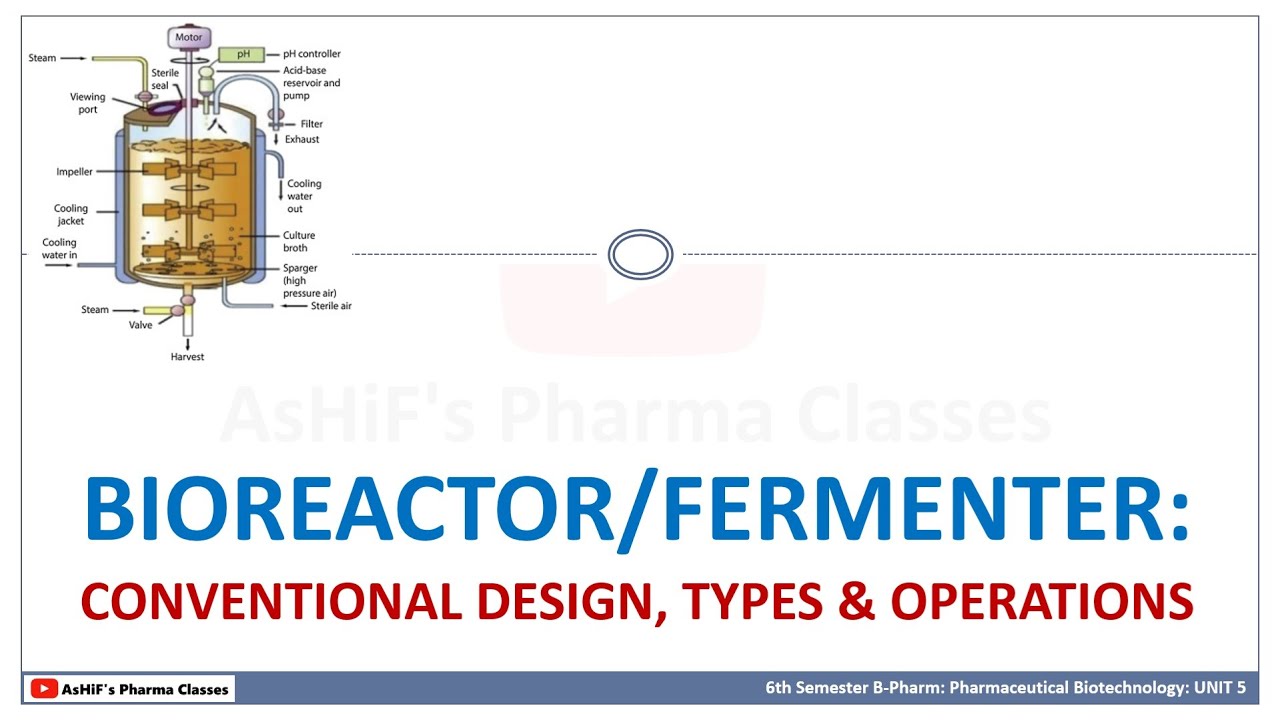
- Why this video: A comprehensive masterclass on physical bioreactor engineering. It covers impeller designs, sparging systems, oxygen transfer efficiency, and automated monitoring arrays (pH, dissolved oxygen, temperature) necessary to run a stable fermentation run.
- Why this video: Although brief, this video explains the underlying rationale of "fed-batch fermentation" (adding nutrients gradually to prevent substrate inhibition and toxic by-product build-up) which is the baseline strategy for Pichia growth phases.
Coverage Acknowledgment & Study Guide
Note on Video Gaps: While general bioreactor operation and high-density growth are covered, the specific multi-step fed-batch profile for Pichia pastoris is not fully mapped in the video pool.
Independent Study Assignment: Research the classic 3-phase Pichia fermentation pipeline:
- Glycerol Batch Phase: High biomass generation while repressing the AOX1 promoter.
- Glycerol Fed-Batch (Transition) Phase: Slow addition of glycerol to transition the metabolic machinery and fully consume residual glycerol (derepression).
- Methanol Induction Phase: Gradual methanol feed to induce beta-lactoglobulin production. Search specifically for "Methanol feeding control strategies Pichia pastoris bioreactor" to learn about DO-stat and temperature-limited fed-batch control.
Knowledge Checkpoint
- Describe the physical components of a bioreactor that regulate dissolved oxygen (DO) levels in a dense yeast culture.
- Why is it dangerous to add high levels of methanol directly to the bioreactor at the beginning of the fermentation run?
- Explain the concept of "oxygen transfer rate" (OTR) and why it becomes a limiting factor in high-density yeast fermentation.
Module 5: Downstream Processing & Food-Grade Purification
After your yeast has secreted beta-lactoglobulin into the culture medium, you must harvest, clarify, and purify the protein. This module covers industrial recovery operations, chromatography principles, and the unique safety and regulatory constraints of food-grade protein processing.
Recommended Videos

- Why this video: This video quickly captures the baseline sequence of industrial downstream processing: harvesting cultures via centrifugation, clarification using 0.2-micron filtration, and employing Tangential Flow Filtration (TFF) for concentration and diafiltration.
- Why this video: This video explains fractional protein precipitation using ammonium sulfate gradients. It demonstrates how "salting out" serves as a cost-effective, bulk separation step during early-stage downstream processing before transitioning to high-resolution chromatography.

- Why this video: An educational animation describing how affinity tags (such as His-tags) interact with chromatographic resins. While His-tags are common in research, understanding this interaction helps you assess whether affinity columns are viable or if you must shift to ion-exchange (IEX) systems for food-grade production.

- Why this video: Provides a quick, clear conceptual map summarizing downstream processing (separation, purification, and final formulation) to organize your experimental steps.
Coverage Acknowledgment & Study Guide
Note on Video Gaps: There is a gap regarding the specific, large-scale purification protocols of recombinant beta-lactoglobulin and food-grade safety constraints (e.g., why you cannot use heavy metal affinity resins or imidazole in final food products).
Independent Study Assignment: Research food-grade downstream processing. Search for "Beta-lactoglobulin purification downstream processing" and check standard food safety guidelines.
Ensure you can answer:
- Why are His-tags and Nickel-NTA columns generally avoided or highly regulated in food-grade bioprocesses?
- How does ion-exchange chromatography (IEX) leverage the isoelectric point (pI) of beta-lactoglobulin (pI ≈ 5.1) to achieve high purity without using biological affinity tags?
- Explain the role of ultrafiltration/diafiltration (UF/DF) in the final formulation step.
Knowledge Checkpoint
- Detail the differences between microfiltration, ultrafiltration, and diafiltration in a downstream workflow.
- Explain how a change in buffer pH can cause beta-lactoglobulin to bind to or elute from an anion-exchange chromatography column.
- List three regulatory/quality control measures required to declare a purified protein "food-grade."
Course Map
Key People Index
- Arturo Elizondo (CEO of The EVERY Co.): Pioneer in the precision fermentation space, focusing on utilizing yeast hosts to scale animal-free proteins (such as egg white proteins) for commercial food systems.
- Dr. Ramanujan Hegde (MRC Laboratory of Molecular Biology): Leading biochemist studying cell compartmentalization and the mechanisms of secretory and membrane protein targeting.
- Francis Crick (Co-discoverer of DNA structure): Formulated the "Central Dogma of Molecular Biology" in 1958, establishing the unidirectional flow of genetic information.
Final Self-Assessment
Review this comprehensive list of competencies. You should be able to check off every box before attempting to design or run a real-world precision fermentation loop:
- I can describe the exact molecular flow from a cloned synthetic beta-lactoglobulin gene to a secreted protein.
- I can explain why Pichia pastoris is preferred over S. cerevisiae or E. coli for high-density, high-yield protein production.
- I understand how the AOX1 promoter regulates transcription and how it reacts to carbon sources (glucose vs. glycerol vs. methanol).
- I can design a yeast expression plasmid with an integration site, selective marker, AOX1 promoter, and mating-factor secretion signal.
- I can outline a protocol for creating electrocompetent Pichia pastoris cells and transforming them via electroporation.
- I understand the 3-step feeding profile (glycerol batch, glycerol fed-batch transition, methanol induction) used in Pichia fermentations.
- I can explain how to handle dissolved oxygen (DO) drops and avoid methanol toxicity in a bioreactor.
- I can outline the steps of downstream processing from crude bioreactor harvest to food-grade spray-dried powder.
- I understand how to purify beta-lactoglobulin using tagless ion-exchange chromatography and TFF.
- I can identify food-safety limitations (heavy metals, organic solvent residues, endotoxins) that apply to recombinant food ingredients.