Miranda Rights: 5th Amendment & Interrogation
Learning Goal: Deconstructing the constitutional scope of Miranda rights and the Fifth Amendment privilege against self-incrimination during law enforcement custodial interrogations.
- Prerequisites: None (Introductory knowledge of US constitutional structure is helpful but not required).
- Estimated Total Study Time: 7 Hours
Module 1: Foundations of the Fifth Amendment
This module introduces the historical origins, text, and core meaning of the Fifth Amendment's privilege against self-incrimination. It traces the legal evolution of the pre-Miranda "voluntariness" standard for confessions, exploring how courts originally evaluated whether a suspect's confession was coerced under the Due Process Clause.
Recommended Videos
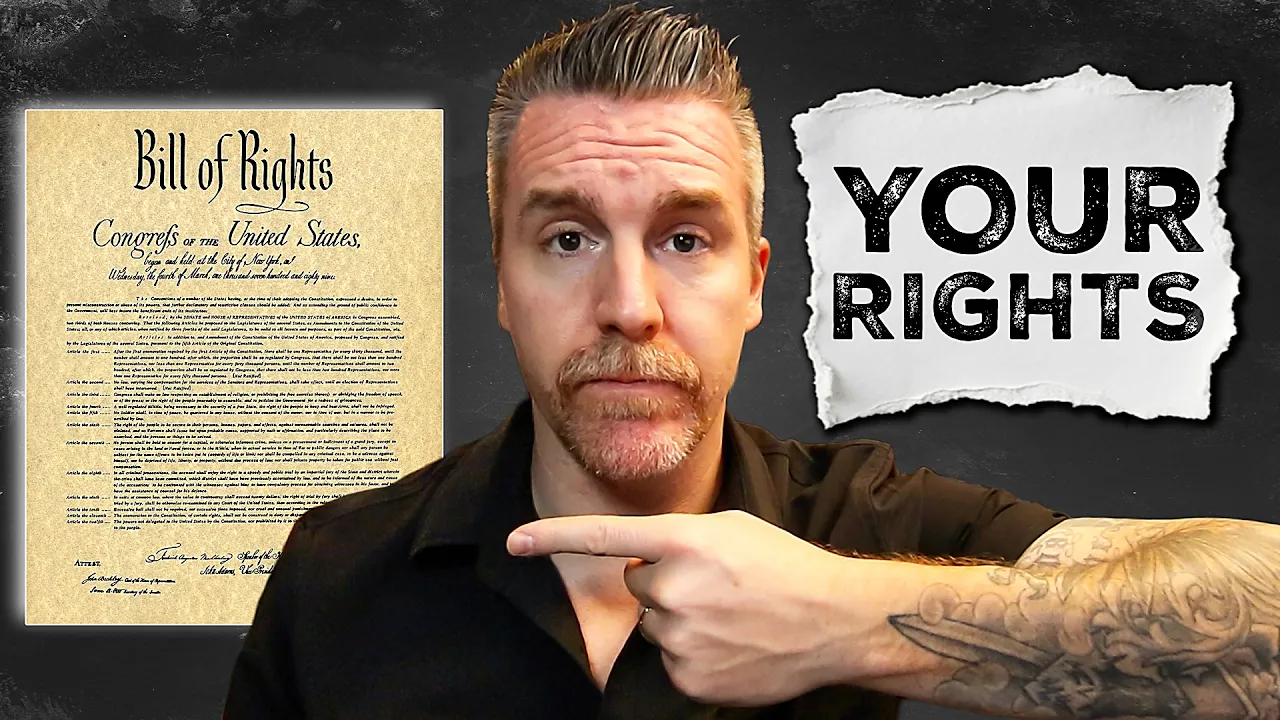
Why this video is valuable: This concise legal primer directly addresses the text and core meaning of the Fifth Amendment's self-incrimination clause. It establishes the constitutional baseline: the government bears the burden of proof in criminal trials, and citizens cannot be forced to act as witnesses against themselves.
Why this video is valuable: Using real-world footage, this video examines the modern application of the voluntariness test under Colorado v. Connelly (1986). It demonstrates how courts assess whether police coercion actually overcame a suspect's free will, proving that mental state alone does not render a confession involuntary without government misconduct.
Why this video is valuable: This short courtroom segment reinforces the criteria required for confessions to be admissible, stressing that they must be made voluntarily, intelligently, and knowingly. It highlights the judicial scrutiny applied to admissions to ensure they were not extracted via impermissible psychological coercion or deception.
Knowledge Checkpoint
- Understand the exact phrasing of the Fifth Amendment's self-incrimination clause.
- Explain how Colorado v. Connelly (1986) limits involuntary confession claims to cases featuring state-sponsored coercion.
- Identify the differences between physical coercion and psychological deception under the traditional voluntariness standard.
⚠️ Curriculum Gap Notice: The historical pre-Miranda "voluntariness" test (e.g., Brown v. Mississippi (1936) torture standard and Spano v. New York (1959) psychological coercion) is lightly represented in the available video pool. Students are highly encouraged to independently search for: "voluntariness test confessions history constitutional law" to understand how the Supreme Court shifted from a subjective "free will" inquiry to a standardized prophylactic rule.
Module 2: The Landmark Case: Miranda v. Arizona (1966)
This module analyzes the historical background, the deep constitutional crisis, the Supreme Court's landmark ruling, and the lasting societal impact of Miranda v. Arizona (1966). You will explore how the Court sought to neutralize the inherently coercive nature of custodial police environments by establishing a mandatory set of warnings.
Recommended Videos
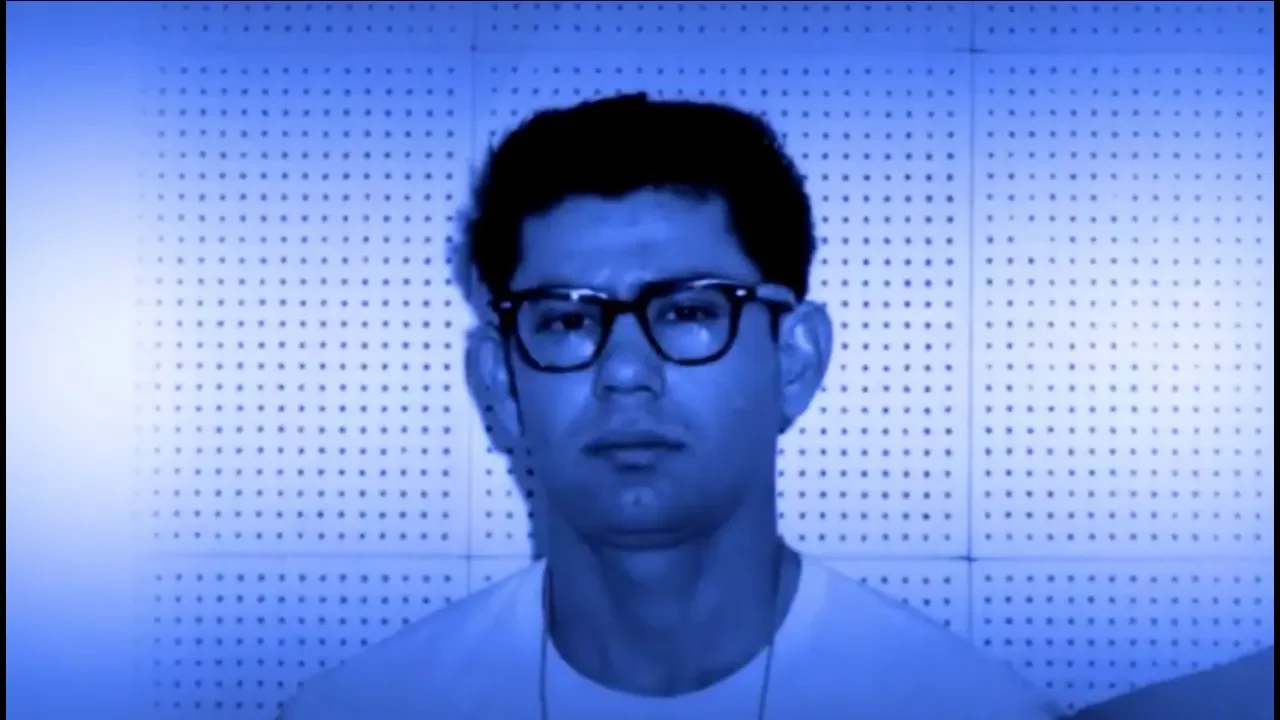
Why this video is valuable: This is the definitive, high-quality educational documentary tracing the entire history of the Miranda case. It walks you through Ernesto Miranda’s arrest, his un-warned interrogation, the dramatic trial, and how the Supreme Court's 5-4 decision fundamentally changed American policing.

Why this video is valuable: This concise, legally rigorous case brief breaks down the core holding, legal reasoning, and the exact constitutional mechanics of the Miranda decision. It explains why the Court found custodial interrogations to be inherently coercive and how the warnings serve as a constitutional shield.
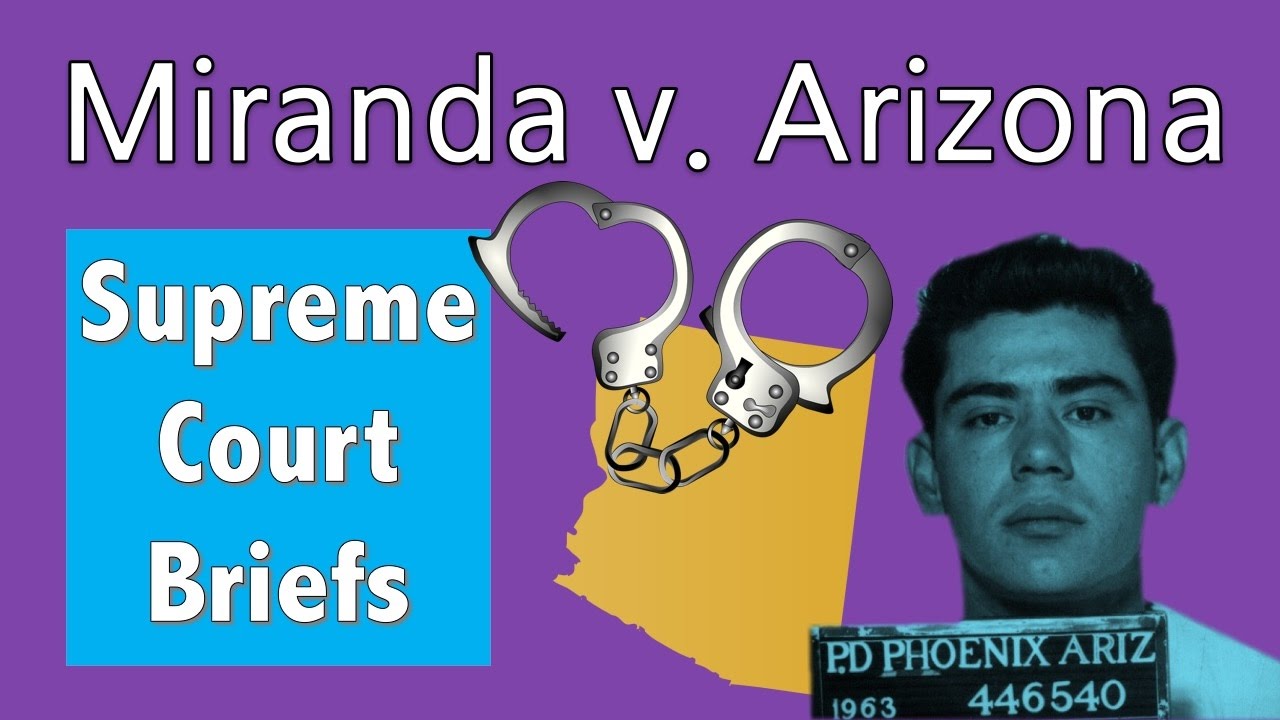
Why this video is valuable: This video provides an accessible, engaging breakdown of the facts of the case, the historical context of the mid-1960s Warren Court, and the subsequent backlash and ultimate acceptance of the Miranda warnings in American culture.
Knowledge Checkpoint
- List the four essential warnings that law enforcement must deliver to a suspect under the Miranda holding.
- Explain Chief Justice Earl Warren's reasoning regarding the "inherently coercive" environment of police custodial interrogation.
- Describe what happened to Ernesto Miranda's original conviction and how his subsequent retrial proceeded without the confession.
Module 3: Triggering Miranda: Custody and Interrogation
Miranda warnings are not required simply because someone talks to a police officer. This module deconstructs the precise legal triggers: Custody and Interrogation. You will learn how courts define these terms using objective legal standards.
Recommended Videos
Why this video is valuable: This video cleanly defines the two-pronged legal test required to trigger Miranda. It explains that custody means a physical deprivation of freedom where a reasonable person would believe they are not free to leave, and interrogation refers to active questioning.

Why this video is valuable: This news-style report introduces the landmark case Rhode Island v. Innis (1980), which established the modern definition of "interrogation." It explains the distinction between express questioning and the "functional equivalent" (words or actions by police that they should know are reasonably likely to elicit an incriminating response).

Why this video is valuable: A concise legal breakdown reiterating that voluntary statements made outside of custody, or statements made in custody but without police interrogation, do not violate the Fifth Amendment and are fully admissible.
Knowledge Checkpoint
- Define the objective "reasonable person" standard used to determine whether a suspect is "in custody."
- Contrast "express questioning" with its "functional equivalent" as outlined in Rhode Island v. Innis (1980).
- Explain why a standard roadside traffic stop generally does not constitute "custody" for Miranda purposes (Berkemer v. McCarty).
⚠️ Curriculum Gap Notice: Detailed, step-by-step breakdowns of the objective factors of custody (such as the location of the questioning, the duration, statements made, and whether the suspect was physically restrained) are not fully explored in the pool. Additionally, the impact of a suspect's age on custody (J.D.B. v. North Carolina) is missing. Please independently search: "custodial interrogation standards 5th amendment" to round out this legal analysis.
Module 4: Invoking vs. Waiving Your Rights
How does a suspect claim or surrender their Miranda protections? This module covers the high legal thresholds required to validly waive rights (knowing, intelligent, and voluntary) and the strict requirements for unambiguously invoking the right to remain silent or the right to an attorney.
Recommended Videos
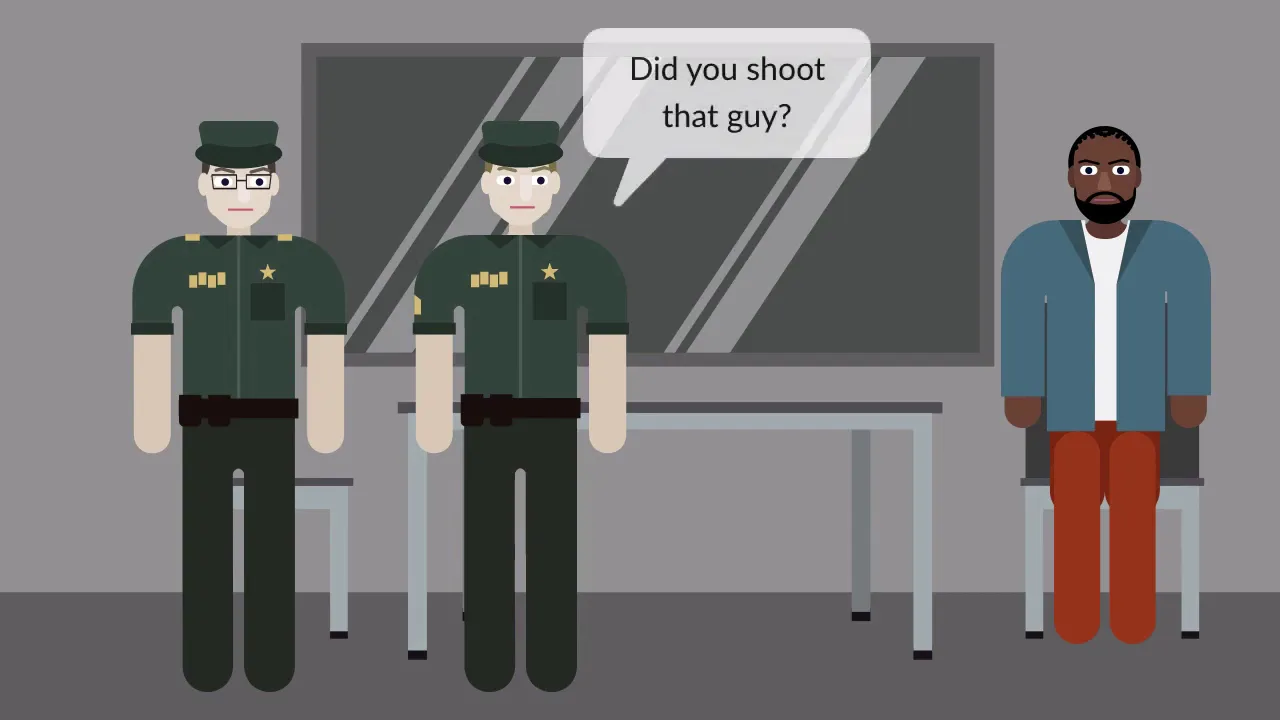
Why this video is valuable: This video summarizes Berghuis v. Thompkins (2010), a crucial Supreme Court decision. It explains that a suspect must invoke their right to remain silent unambiguously. Simply staying silent for hours does not invoke the right, and subsequent voluntary statements can constitute an implied waiver.

Why this video is valuable: This short highlights the powerful, bright-line rule established in Edwards v. Arizona (1981). It explains how invoking the right to counsel ("I want counsel") immediately halts all interrogation until an attorney is present, creating a stronger shield than invoking silence.
Why this video is valuable: This video offers a courtroom-based demonstration of prosecutors and defense attorneys parsing whether a suspect knowingly, intelligently, and voluntarily waived their rights prior to a police interrogation.

Why this video is valuable: This bodycam analysis applies the Colorado v. Connelly standard to waivers. It demonstrates that emotional distress, mental illness, or intoxication alone do not invalidate a waiver; rather, there must be evidence of coercive police exploitation of that vulnerability.
Knowledge Checkpoint
- State the difference between an unambiguous invocation and staying silent during an interrogation under Berghuis v. Thompkins.
- Explain the "bright-line" rule of Edwards v. Arizona regarding the right to counsel.
- Define the three criteria of a valid waiver: Was it knowing, intelligent, and voluntary?
⚠️ Curriculum Gap Notice: The specific re-initiation rules after counsel is requested (e.g., the 14-day break-in-custody rule established in Maryland v. Shatzer) are not detailed in these videos. For a deeper understanding, search: "Edwards v Arizona right to counsel explained" and "Maryland v Shatzer 14 day rule".
Module 5: Exceptions to Miranda and the Exclusionary Rule
What happens when police violate Miranda? This final module explores the consequences of constitutional violations, the Exclusionary Rule, Fruit of the Poisonous Tree, and critical exemptions such as the Public Safety Exception and the rules governing consecutive/successive confessions.
Recommended Videos

Why this video is valuable: This exceptional, in-depth lecture breaks down the core concepts of the Exclusionary Rule and the Fruit of the Poisonous Tree doctrine. It explains how primary evidence and derivative evidence are treated when obtained via constitutional violations (4th, 5th, or 6th Amendments).

Why this video is valuable: This case brief analyzes the "question-first" interrogation technique. It explains the Supreme Court's ruling in Missouri v. Seibert (2004), which struck down the deliberate police tactic of obtaining an un-warned confession, administering Miranda, and then obtaining a second, identical confession.

Why this video is valuable: This rapid-fire review segment details New York v. Quarles (1984), establishing the Public Safety Exception. It explains that if there is an immediate, objective threat to public safety (like locating a discarded loaded gun), police may ask narrow questions without delivering Miranda warnings first.
Knowledge Checkpoint
- Explain the difference between primary evidence suppressed by the Exclusionary Rule and secondary evidence suppressed as "Fruit of the Poisonous Tree."
- Define the scope of the Public Safety Exception created in New York v. Quarles.
- Distinguish the holding of Missouri v. Seibert (coercive consecutive interrogations) from the "good faith" mistake standard in Oregon v. Elstad.
⚠️ Curriculum Gap Notice: While Seibert is covered, the highly nuanced comparative jurisprudence of Oregon v. Elstad (where a voluntary, uncoerced pre-warned statement does not taint a subsequent warned statement) requires additional study. Search: "Oregon v Elstad Missouri v Seibert confessions" for independent analysis.
Course Map
Key People Index
- Ernesto Miranda (Defendant): Arrested in 1963 for kidnapping and rape in Phoenix, Arizona. His signed confession, obtained without warnings, became the center of the landmark Supreme Court challenge.
- Chief Justice Earl Warren (Supreme Court Chief Justice): Author of the majority opinion in Miranda v. Arizona (1966), establishing the constitutional requirement for prophylactic warnings.
- John Thompkins (Defendant): The suspect in Berghuis v. Thompkins (2010), whose long silence and subsequent short answer established that invocation must be explicit and unambiguous.
- Justice Anthony Kennedy (Associate Justice): Wrote the key concurring opinions defining the modern limits of consecutive interrogations (Missouri v. Seibert) and unambiguous waivers.
Final Self-Assessment
Complete this comprehensive self-assessment to verify your mastery of the constitutional scope of Miranda rights and custodial interrogations:
- I can explain the textual basis of the self-incrimination clause within the Fifth Amendment.
- I can articulate why the Supreme Court created the Miranda warnings as a prophylactic safeguard rather than a direct constitutional text.
- I can define "Custody" under the objective "reasonable person" standard.
- I can define "Interrogation" under the Rhode Island v. Innis standard, identifying the concept of the "functional equivalent."
- I can describe the exact legal threshold required to invoke the right to remain silent under Berghuis v. Thompkins.
- I can describe the immediate constitutional consequences when a suspect invokes the right to counsel under Edwards v. Arizona.
- I can identify when the "knowing, intelligent, and voluntary" standard has been met for a valid Miranda waiver.
- I can explain the Public Safety Exception from New York v. Quarles.
- I can explain how the Exclusionary Rule applies to direct violations of the Fifth Amendment, and how physical "Fruit of the Poisonous Tree" is handled differently under Fifth Amendment violations compared to Fourth Amendment violations.
- I can analyze a factual police-suspect encounter and identify the exact moment Miranda warnings are legally required.