Forensic Linguistics: Phonetics & Authorship
Learning Goal: Analyze linguistic evidence in legal contexts by applying principles of forensic phonetics, stylometry, and discourse analysis to determine authorship and evaluate courtroom communication.
- Prerequisites: None (Introductory to Advanced)
- Estimated Total Study Time: 14 Hours
Module 1: Introduction to Forensic Linguistics
This module establishes the foundational intersection of language and the law. You will explore how linguistic variation—specifically individual linguistic "fingerprints" or idiolects—serves as scientific evidence in criminal and civil investigations, and define the scope of a forensic linguist's role from investigator to expert witness.
Recommended Videos

Why this video: This academic lecture traces the historical emergence of forensic linguistics from the 1980s onward. It maps out how linguistic methodologies are systematized to investigate crimes, introducing key terms and defining how language data transforms into admissible forensic evidence.
- Knowledge Checkpoint:
- Trace the historical evolution of forensic linguistics and its emergence as a recognized sub-discipline.
- Explain how raw language data is collected, cleaned, and categorized to serve as legal evidence.
- Distinguish between the work of a forensic linguist and general forensic psychologists or traditional handwriting analysts.

Why this video: This video introduces the concept of the idiolect—the unique, unconscious language patterns specific to an individual. Through the classic case study of Ted Kaczynski (the Unabomber), it illustrates how FBI analysts mapped specific phonetic, lexical, and spelling habits to confirm identity.
- Knowledge Checkpoint:
- Define idiolect and list at least three specific variables (lexical, grammatical, orthographic) that compose it.
- Explain how FBI linguists leveraged idiosyncratic spelling and archaic phrasing to build the authorship profile in the Unabomber investigation.
- Explain how regional dialect markers in written or spoken text can restrict a suspect pool.

Why this video: Featuring real-world applications of language analysis, this presentation details how forensic linguists dissect ransom notes and threatening communications. It breaks down lexical choice, syntactical deviations, and socio-demographic profiling techniques.
- Knowledge Checkpoint:
- Analyze a ransom note or threat letter to identify demographic markers (e.g., age, geographic origin, educational level).
- Contrast how syntactic structures differ between authentic, high-stress ransom notes and fabricated ones.
- Define "linguistic profiling" and explain its limitations in active criminal inquiries.
Module 2: Forensic Phonetics and Voice Identification
This module explores the scientific analysis of speech sounds and voice characteristics in legal contexts. You will learn the mechanics of acoustic phonetics, investigate vocal anatomy, and study the practical application of software (such as Praat) to analyze spectrograms, map formants, and perform forensic speaker comparison.
Recommended Videos
Why this video: This video provides a precise academic introduction to forensic phonetics. It establishes the physiological and acoustic properties of human speech, demonstrating how sound waves function as biological and behavioral identifiers.
- Knowledge Checkpoint:
- Define the fundamental parameters of forensic voice analysis (pitch, timbre, and articulatory patterns).
- Explain how a speaker's physical vocal tract anatomy creates unique, non-counterfeitable acoustic markers.
- Differentiate between organic (anatomical) and inorganic (behavioral/sociolinguistic) voice characteristics.

Why this video: This highly technical tutorial covers acoustic visualization tools. It breaks down how to interpret waveform views (amplitude over time), frequency spectra (amplitude over frequency at a single point), and spectrograms (frequency and amplitude over time).
- Knowledge Checkpoint:
- Locate and explain the axes on an audio spectrogram (Time, Frequency, and Intensity/Amplitude).
- Identify voiceless stops, fricatives, and nasals by reading their unique acoustic signatures on a spectrogram.
- Explain how Fast Fourier Transform (FFT) converts raw audio amplitude into a visual spectrogram.

Why this video: A hands-on guide to using Praat, the industry-standard, open-source software for phonetic analysis. This walkthrough demonstrates how to generate spectrograms and accurately measure vowel formants (F1 and F2).
- Knowledge Checkpoint:
- Load an audio file into Praat, adjust display settings, and generate a clear spectrogram.
- Measure the first two vowel formants (F1 and F2) to plot vowel spaces for speaker comparison.
- Explain the linguistic significance of formant values in identifying regional accents and physiological traits.
Why this video: This video introduces forensic speaker comparison in legal cases, outlining how phoneticians evaluate disputed voice recordings. It details why voice match analysis does not yield absolute, binary matches (unlike DNA or fingerprints) but instead offers probabilistic likelihood ratios.
- Knowledge Checkpoint:
- Explain why a vocal "voiceprint" is not legally or scientifically equivalent to a physical fingerprint.
- Describe how temporal speech parameters, such as speech rate and pause duration, are used to compare speakers.
- Explain how environmental acoustics and recording equipment degradation impact the validity of forensic speaker comparisons.
Module 3: Stylometry and Authorship Attribution
This module covers the quantitative and qualitative analysis of written texts to resolve questions of authorship. You will study stylometry, computational wordprint analysis, and the forensic methods used to analyze anonymous documents, threats, digital communications, and historical texts.
Recommended Videos
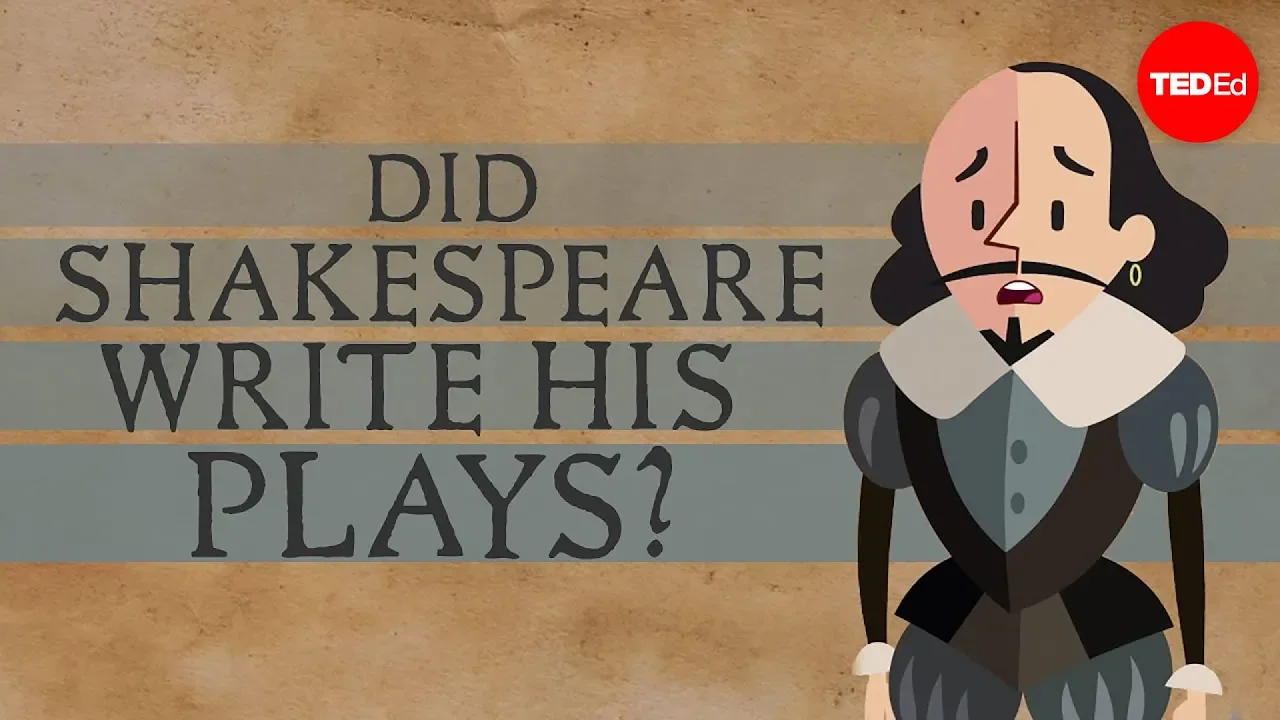
Why this video: This video uses a famous literary debate to introduce the core mechanics of stylometry. It explains how average sentence lengths, function word frequencies, and relative vocabularies form a stable, mathematical "fingerprint" of an author.
- Knowledge Checkpoint:
- Define "stylometry" and list three quantitative metrics used to compute an author’s unique writing style.
- Explain why function words (e.g., the, of, and) are more reliable markers for authorship attribution than content words (nouns and verbs).
- Describe how computational stylometry processes multi-author texts to identify distinct voices.

Why this video: This video examines the forensic application of stylometry in the Unabomber case. It details how investigators compared the Unabomber's 35,000-word manifesto against personal letters, focusing on specific spelling habits, formatting nuances, and rare phrase usage.
- Knowledge Checkpoint:
- Identify how unique orthographic choices (spelling variants) and formatting quirks can serve as diagnostic markers of authorship.
- Describe the process of gathering "known" baseline writings from a suspect to compare with "disputed" target texts.
- Discuss the minimum word count generally required to run a scientifically valid stylometric comparison.

Why this video: An in-depth interview with James Fitzgerald, the pioneering FBI forensic linguist who worked on the Unabomber case. Fitzgerald discusses the real-world pressures of applying developmental linguistics and stylometrics to high-stakes criminal profiling.
- Knowledge Checkpoint:
- Explain "developmental linguistics" and how an individual's dialect and spelling habits reflect the historical era in which they grew up.
- List the operational steps a forensic linguist takes when analyzing threat communications for law enforcement.
- Explain how qualitative analysis of phraseology complements quantitative computational stylometry.

Why this video: This talk explores modern digital forensic profiling. It demonstrates how sociolinguistic theories are applied to online communications, text messages, and social media posts to deduce demographic profiles and combat cybercrime.
- Knowledge Checkpoint:
- Explain how digital communication mediums (text messaging, forums) alter traditional stylistic metrics.
- Describe how socio-demographic variables (such as age, gender, and social background) manifest in online syntax and punctuation.
- Identify the ethical concerns associated with algorithmic profiling of anonymous online users.
Module 4: Discourse Analysis in Courtrooms and Interrogations
This module evaluates speech patterns in legal environments, specifically during police interrogations and inside the courtroom. You will apply the principles of Discourse Analysis and Conversation Analysis to identify conversational asymmetry, power dynamics, verbal deception, coercion, and the linguistic factors that influence confession reliability.
Recommended Videos
Why this video: Drawing from Conversation Analysis, this talk shows how micro-choices in language change conversational trajectories. It illustrates how subtle verb shifts in police interrogations can restructure narratives and alter a suspect's perceived agency.
- Knowledge Checkpoint:
- Define "Conversation Analysis" and its utility in dissecting legal discourse.
- Explain how shifts in transitivity and verb choice (e.g., active versus passive phrasing) change the attribution of blame in police interviews.
- Describe how pauses, hesitations, and micro-delays function as structural indicators of resistance in dialogue.

Why this video: An analysis of interrogation transcripts and audio. This video exposes the defensive linguistic strategies used by interview subjects, detailing how they construct favorable narratives through overemphasis, minimization, and circumlocution.
- Knowledge Checkpoint:
- Identify verbal minimization strategies used by subjects to distance themselves from criminal acts.
- Analyze interview transcripts to find examples of "hedging" and indirect syntax when answering direct questions.
- Distinguish between structural evasion and genuine memory recall issues in suspect interviews.

Why this video: This case study examines the interrogation of Jessie Misskelley (West Memphis 3). It shows how a vulnerable suspect’s confession was linguistically shaped, highlighting inconsistencies, leading questions, and compliance markers.
- Knowledge Checkpoint:
- Analyze interrogation transcripts for "interrogative suggestibility" and leading questions.
- Explain how forensic linguists analyze structural and factual inconsistencies to evaluate the reliability of a confession.
- Describe how "cooperative overlap" and prompt-response structures can lead suspects to adopt police narratives as their own.
Curriculum Gap & Independent Study Guide
While our core video pool introduces the conversational mechanics of interviews, it lacks a dedicated academic lecture on the discourse analysis of Miranda warnings and coercive interrogation structures.
To master this sub-discipline, you are highly encouraged to independently study the following areas:
- Miranda Comprehension: Search Google Scholar for publications by Roger Shuy regarding the linguistic readability, syntax, and processing limitations of standard Miranda warnings.
- Interrogation Coercion: Run the search query
"Forensic linguistics police interrogation discourse analysis"on YouTube or Google Scholar. Pay close attention to how "yes/no" questions constrain conversational agency and how reformulating a suspect's words can lead to false confessions.
Module 5: Expert Testimony, Admissibility, and Forensic Case Studies
This module covers the legal frameworks that govern the admissibility of linguistic science in court. You will learn the difference between the Daubert and Frye standards, study real-world admissibility hearings, and explore the ethical responsibilities of a forensic linguist when drafting reports and defending scientific evidence on the witness stand.
Recommended Videos

Why this video: This legal breakdown covers the core mechanics of the Daubert standard. It details how judges act as "gatekeepers" to verify that scientific testimonies are based on peer-reviewed, empirically tested methodologies with known error rates.
- Knowledge Checkpoint:
- List the five core criteria of the Daubert standard (testing, peer review, error rates, standards/controls, and general acceptance).
- Contrast the Daubert standard with the older Frye standard (which relies purely on "general acceptance" within the scientific community).
- Explain how a forensic linguist must design their research to survive a Daubert challenge.

Why this video: This video summarizes a real-world Daubert hearing in a high-profile homicide trial. It illustrates the adversarial process where defense and prosecution battle over whether expert findings meet evidentiary standards.
- Knowledge Checkpoint:
- Describe the structural format and legal objectives of a pretrial Daubert hearing.
- Identify how opposing attorneys challenge an expert witness's credentials and scientific methodology.
- Explain how a judge makes their final ruling on the admissibility of expert findings under Federal Rule of Evidence 702.

Why this video: Focusing on the Massachusetts Daubert/Lanigan standard, this legal analysis illustrates how state-level rules align with federal guidelines to determine if an expert's testimony genuinely assists the jury.
- Knowledge Checkpoint:
- Explain the "trier of fact" requirement and why expert testimony must go beyond ordinary common knowledge.
- Describe the process of establishing expert qualifications through a professional CV, publications, and prior testimony history.
- Identify the risks when an expert speaks outside their narrow area of scientific expertise.

Why this video: This courtroom analysis shows a judge ruling on a motion to exclude expert testimony. It highlights how the court balances scientific reliability against potential prejudice to decide if an expert's methodology is sound.
- Knowledge Checkpoint:
- Explain how courts balance the "probative value" of linguistic evidence against the danger of "unfair prejudice."
- Define what constitutes a "motion to exclude" and outline the defense's strategy when filing one.
- Discuss the ethical obligations of a forensic linguist when drafting reports, including the need to document limitations and potential error rates.
Course Map
This flowchart maps out the recommended pathway through the five modules.
Key People Index
The following researchers, practitioners, and key historical figures are central to the case studies and methodologies explored in this curriculum:
- James R. Fitzgerald (FBI Ret.): Former FBI Supervisory Special Agent and forensic linguist. He pioneered the use of forensic linguistics, idiolect profiling, and stylometrics to identify Ted Kaczynski in the Unabomber investigation.
- Professor Elizabeth Stokoe: A leading social psychologist and scholar in Conversation Analysis. She developed the Conversation Analytic Role-play Method (CARM), analyzing the second-by-second structures of actual police-suspect interrogations.
- Dr. Jane Setter: A prominent professor of phonetics whose research focuses on acoustic phonetics, speech prosody, and the mechanical, physiological, and behavioral components of forensic speaker comparisons.
- Jessie Misskelley Jr.: A central figure in the West Memphis Three case. His high-coercion interrogation transcript serves as a primary case study for linguists evaluating confession reliability and suggestibility.
Final Self-Assessment
Complete this comprehensive self-assessment to verify your mastery of the curriculum's learning objectives:
- Linguistic Variation: Can you clearly define idiolect and list at least four lexical or orthographic markers that distinguish one speaker's writing from another?
- Spectrographic Identification: Can you map out the X, Y, and Z axes of a speech spectrogram and identify vowel formants (F1, F2) using Praat?
- Acoustic Phonetics: Can you distinguish between physiological (vocal tract) voice characteristics and behavioral (sociolinguistic) voice characteristics?
- Stylometrics: Can you explain why high-frequency function words are more reliable markers for statistical stylometry than content-heavy nouns and verbs?
- Authorship Profiling: Can you design a scientific, step-by-step methodology to compare an anonymous threat letter with baseline writing samples from a suspect?
- Discourse Analysis: Can you analyze a police interrogation transcript and identify instances of leading questions, minimization, and cooperative overlap?
- Confession Reliability: Can you explain the linguistic mechanisms of "interrogative suggestibility" and how vulnerable suspects can be led to adopt an interrogator's language?
- Evidentiary Admissibility: Can you define the five gatekeeping criteria of the Daubert standard and contrast them with the Frye standard's "general acceptance" test?
- Expert Testimony: Can you explain the legal requirements of Federal Rule of Evidence 702 and explain how a forensic linguist defends their scientific methodologies under cross-examination?