Baroque Counterpoint: Synth-Pop & Basslines
Learning Goal: Modernizing Baroque Counterpoint: Applying Two-Part Invention and Voice-Leading Rules to Contemporary Synth-Pop and Electronic Basslines. By the end of this curriculum, you will understand classical voice leading, analyze Bach's contrapuntal frameworks, program classic analog synthesizers, and write independent, harmonically rich, and frequency-clean electronic basslines and lead melodies in a modern DAW environment.
- Prerequisites: None. Designed for complete beginners to music theory, intermediate producers looking to elevate their arrangement skills, and musicians curious about combining classical structures with electronic sounds.
- Estimated Total Study Time: 28 Hours
Module 1: Music Theory & Keyboard Basics
To build complex multi-part textures, you must first master the fundamental building blocks of music: intervals and scales. In this module, you will learn how to identify musical distances, understand scale structures, and navigate a digital audio workstation (DAW) piano roll or physical MIDI controller.
Recommended Videos

- Why this video: Establishing a firm grasp on intervals is vital before diving into counterpoint. This video provides a highly accessible, visual, and practical breakdown of musical distances (seconds, thirds, perfect fourths, etc.) using a major scale framework, ensuring you can hear and see these relationships immediately.
- Why this video: This video focuses heavily on the mechanics of interval numbers by counting alphabetical steps from a starting root note. Understanding this taxonomy is crucial when we begin writing contrary or parallel lines that depend on specific numerical intervals (like thirds, sixths, and octaves).

- Why this video: A rapid, light-hearted, and intuitive introduction to the piano roll interface. The piano roll is the central environment where modern electronic musicians write, draw, and modify MIDI notes without needing traditional sheet music notation.

- Why this video: This tutorial demonstrates how to access, draw, and edit MIDI notes in the DAW piano roll using key tools (pencil, selection, and eraser). It serves as the primary bridge from abstract music theory to actual digital realization.
Knowledge Checkpoint
- Identify the alphabetical name of any white or black key on a MIDI keyboard using Middle C as a starting landmark.
- Calculate major and minor intervals (e.g., major third, perfect fifth) by counting semitones/half-steps.
- Open your DAW's piano roll editor, lock your grid settings to a preferred key signature, and paint in a simple major scale.
Module 2: Fundamentals of Voice Leading & Motion
Voice leading is the art of moving individual voices (melodic lines) smoothly from one chord change to the next. In this module, you will learn the four types of melodic motion and discover the classic counterpoint rules that prevent two lines from blending into a muddy, indistinct mess.
Recommended Videos

- Why this video: This lecture outlines the exact mechanical definitions of the four types of relative motion: parallel, similar, contrary, and oblique. It establishes how to maintain structural clarity and voice independence across successive chords.

- Why this video: A concise explanation of the most famous rule in classical counterpoint: avoiding consecutive fifths and octaves. You will learn how highly consonant intervals cause two independent lines to merge psychoacoustically, destroying the illusion of distinct melodies.

- Why this video: Delves deeper into Species Counterpoint, demonstrating how to write two notes in a countermelody against a single sustained note (the cantus firmus). This is highly applicable to electronic basslines, which often move at twice or half the speed of the lead synth melody.
⚠️ Curriculum Note on Video Gaps: While these videos explain the rules of motion and parallel intervals beautifully, they lack a dedicated step-by-step masterclass on Species Counterpoint designed explicitly for DAW workflows. To supplement your learning, try searching for
"species counterpoint writing two melodies rules tutorial"or manually practice writing contrary melodies over a slow, single-note drone track in your DAW.
Knowledge Checkpoint
- Differentiate between parallel, similar, contrary, and oblique motion.
- Locate and correct consecutive parallel perfect fifths or perfect octaves within your MIDI parts.
- Write a "Second Species" countermelody where one voice plays steady quarter notes and the other plays half notes, maintaining consonance on the strong beats.
Module 3: J.S. Bach and the Two-Part Invention
The master of Baroque counterpoint, Johann Sebastian Bach, created the "Two-Part Invention" as a pedagogical tool. In this module, you will analyze how Bach takes a single musical idea (the "subject") and passes it between two voices using imitation, inversion, and transformation to craft complex, layered, and emotionally rich arrangements.
Recommended Videos
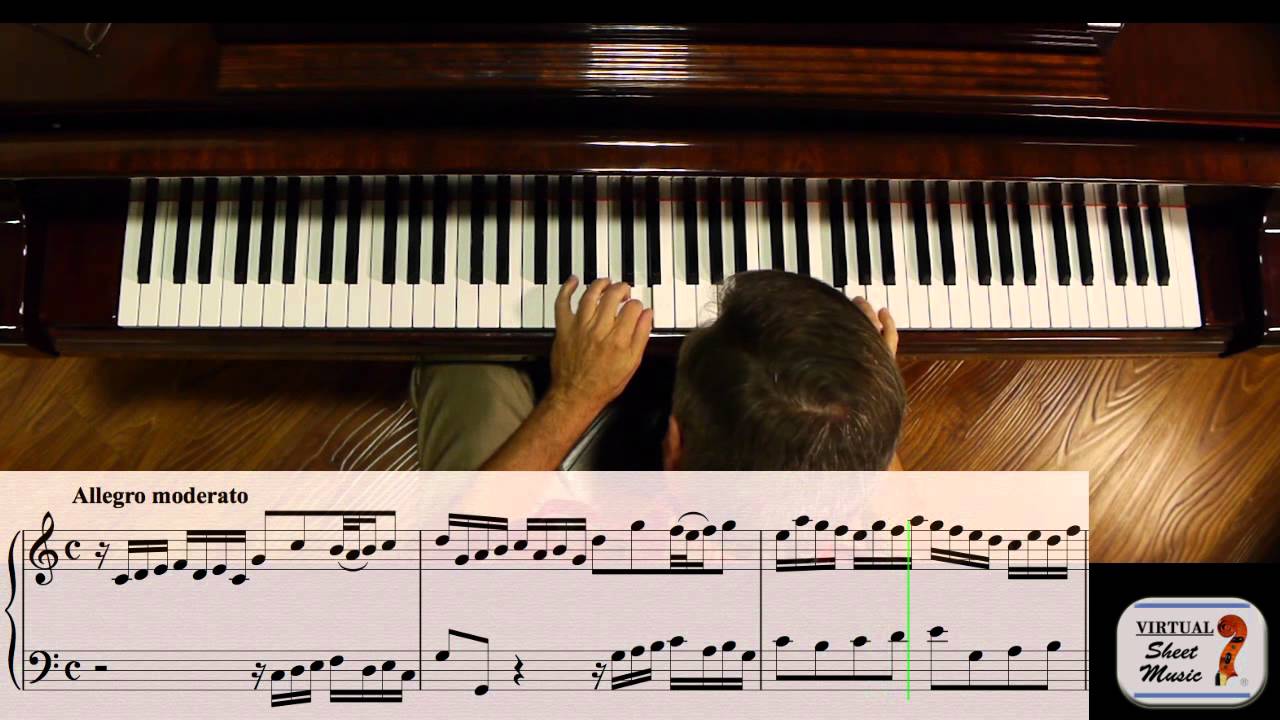
- Why this video: Provides an excellent overview of the structural architecture of an Invention. You'll learn how the subject (the main theme) and the countersubject (the secondary line) cooperate, and how a performer must phrase these lines to ensure both remain distinct.

- Why this video: Explains Bach's Inventions from an improvisational narrative perspective. Pianist Dan Tepfer demonstrates how the subject acts as a protagonist that travels through different keys, showing how a basic motif can establish deep emotional storytelling.
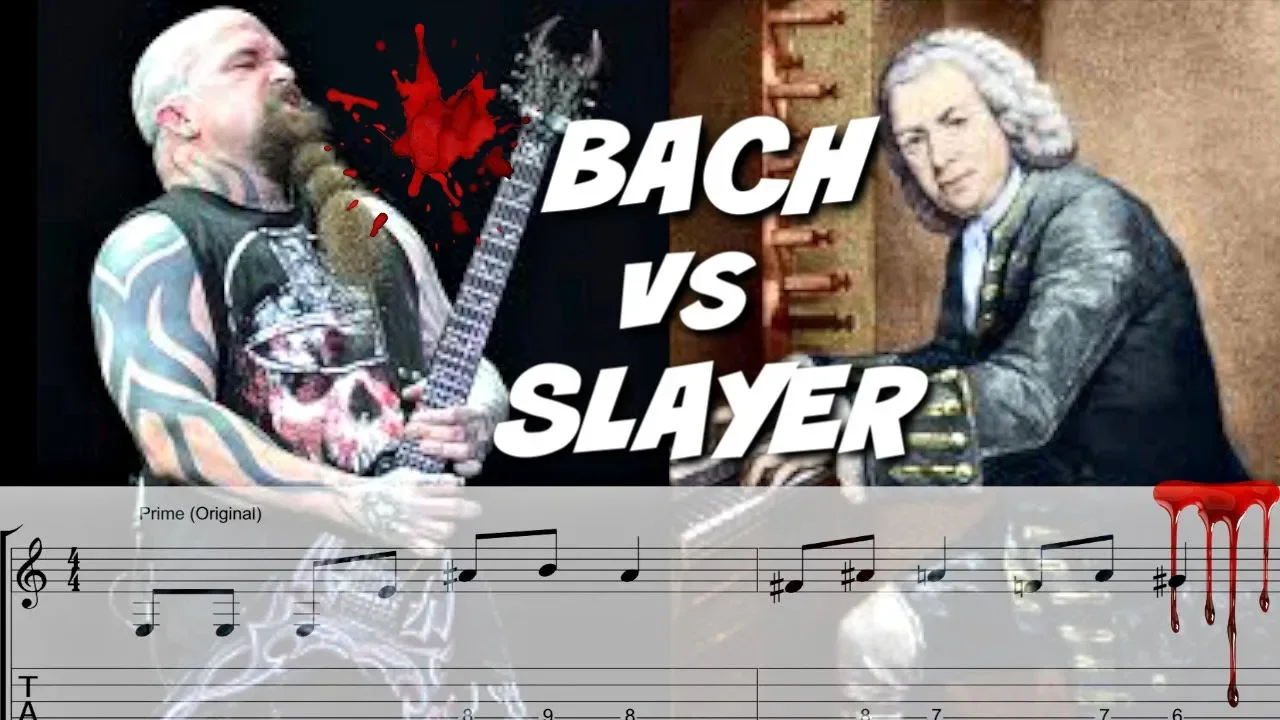
- Why this video: A highly creative demonstration of compositional transformation techniques. It teaches you how to take a core motif and apply the four classical contrapuntal transformations: Prime (original), Inversion (flipped upside down), Retrograde (played backward), and Retrograde-Inversion (backward and upside down).
⚠️ Curriculum Note on Video Gaps: While the visual performances and general concepts of Bach's genius are well-covered here, the video pool lacks a hyper-detailed, note-by-note visual structural analysis of the Inventions. For deeper self-study on this specific structural breakdown, search online for
"Bach Two Part Invention structural analysis motif subject"or consult interactive analysis guides of Invention No. 1 in C Major.
Knowledge Checkpoint
- Define the roles of the "Subject" and "Countersubject" in a Two-Part Invention.
- Explain how a musical motif is "imitated" when passed from a high register (lead synth) to a lower register (bass synth).
- Take a short 4-note MIDI sequence and manually generate its Inversion, Retrograde, and Retrograde-Inversion variations inside your DAW.
Module 4: Synth-Pop & Electronic Bassline Mechanics
With classical foundations established, we now pivot to the technology and history of modern synthesis. This module explores how synth-pop emerged, how subtractive synthesis works (oscillators, filters, and envelopes), and how producers program syncopated, rhythmic, and driving basslines.
Recommended Videos

- Why this video: This essential documentary provides the historical context of the UK synth-pop revolution of the late 70s and 80s (featuring Human League, Depeche Mode, and Yazoo). It highlights how musicians abandoned traditional guitars in favor of affordable, monophonic synthesizers, paving the way for sequenced, contrapuntal pop arrangements.

- Why this video: Synthesizers do not play back samples; they generate waveforms. This masterclass breaks down the three pillars of subtractive synthesizers: Oscillators (VCO - sound source), Filters (VCF - tone shaper), and Envelopes (ADSR - amplitude and timbre over time).

- Why this video: Provides excellent, practical tips on programming synth basslines. It covers why you should write monophonic parts (one note at a time) to prevent muddiness, and how to use envelopes to create short, snappy, and rhythmically defined tones.
Knowledge Checkpoint
- Describe the sonic differences between a Sawtooth wave (bright, harmonic-rich) and a Square/Pulse wave (hollow, woodwind-like).
- Configure a synthesizer ADSR envelope to create a classic, punchy "plucked" bass sound (fast Attack, fast-to-medium Decay, low Sustain, short Release).
- Set your software synthesizer to "Mono" (Monophonic) mode and understand why this setting is vital for clean basslines.
Module 5: Integrating Counterpoint & Synth-Pop Production
Now, we fuse both disciplines. In this final module, you will apply the voice-leading, contrary motion, and motivic imitation rules of the Baroque era directly to modern synth-pop arrangements. You will also learn how to configure synthesizer parameters to prevent frequency overlapping and muddiness in your mix.
Recommended Videos

- Why this video: This deep-dive connects music theory rules directly to your DAW workflow. It demonstrates a systematic method for elevating simple root-note-tracking basslines into engaging, independent melodies using contrapuntal motion and scale-wise voice leading.
- Why this video: Explores how French electronic duo Justice adapted Baroque-era counterpoint principles to write their gritty, distorted synth-pop and electronic tracks. It analyzes how they deliberately constructed their album Cross as an "opera of interweaving lines" instead of relying on basic block chords.

- Why this video: A step-by-step DAW walkthrough of synth patch programming and MIDI execution. It shows you how to design a dual-waveform synth bass patch (combining saw and pulse waves) and program it to support a melody without taking up too much frequency headroom.
⚠️ Curriculum Note on Video Gaps: No single video in the pool perfectly bridges classical voice leading with modern electronic mixing strategies like resolving frequency masking between bass and lead. To bridge this gap yourself, execute these production strategies during your DAW sessions:
- Frequency Allocation: Keep your bass patch's low-pass filter cutoff low (e.g., below 300Hz–500Hz) to isolate its energy in the low-mids, while high-passing your lead melody synth starting around 250Hz.
- Rhythmic Converseness: Avoid writing bass notes and lead melody notes on the exact same subdivisions. If your lead plays sustained on-beat notes, make your bass syncopated on the off-beats.
- Search Terms: For further study, search for
"counterpoint electronic music production MIDI tutorial"and"writing contrapuntal synth pop basslines DAW".
Knowledge Checkpoint
- Compose a 4-bar MIDI section featuring a lead synthesizer melody and an independent bassline that uses contrary motion (i.e., when the lead climbs in pitch, the bass descends, and vice-versa).
- Use EQ or filter cutoffs to prevent frequency masking between a low-frequency bassline and a high-frequency melody.
- Implement motivic imitation in a track: take a short melodic hook from your verse and introduce it as a modified bassline motif in the chorus.
Course Map
Key People Index
- Johann Sebastian Bach (1685–1750): The definitive German Baroque composer, whose keyboard works (like the Two-Part Inventions and The Well-Tempered Clavier) established the rules of functional harmony and strict counterpoint that modern music still relies upon.
- Dan Tepfer: A contemporary jazz pianist, composer, and computer programmer celebrated for using real-time software systems to visualize and perform Bach's algorithmic contrapuntal structures.
- Alex Ball: A synthesizer historian, sound designer, and music producer renowned for his thorough video breakdowns of vintage analog synthesizer architecture and classic pop arrangements.
- Vince Clarke (Yazoo, Depeche Mode, Erasure): A pioneer of British synth-pop who mastered the art of writing incredibly catchy, driving pop songs using only monophonic synthesizers arranged in tight, contrapuntal lines.
Final Self-Assessment
Complete this comprehensive self-assessment project to prove mastery of the curriculum:
- Theory Baseline: I can construct a Major and Minor scale starting on any root note and list the exact interval names and distances (seconds, thirds, fifths, octaves) from the root.
- Piano Roll Fluency: I can quickly navigate my DAW's piano roll, set scale grids, draw MIDI notes, adjust note length, and toggle velocity values.
- Avoiding Parallels: I can audit any two-part MIDI arrangement and successfully find and eliminate consecutive perfect fifths or perfect octaves to ensure my melodies sound completely independent.
- Four Types of Motion: My arrangements actively use a mix of contrary, oblique, similar, and parallel motion to create natural movement between chord transitions.
- Motivic Manipulation: Given a 4-note melodic motif, I can quickly construct its Inverted version (pitch-flipped) and its Retrograde version (time-reversed) to build secondary themes.
- The Bach Blueprint: I can analyze a classical or electronic composition and identify where the "Subject" ends, where the "Countersubject" enters, and how imitation is used between voices.
- Synthesizer Anatomy: I can build a pluck-bass or lead patch from scratch on any virtual subtractive synthesizer using oscillators, low-pass filters, and envelope modulators.
- Contrapuntal Bassline: I have composed a track where the bassline does not simply mimic the root notes of the chords, but instead acts as a secondary, singable counter-melody.
- Frequency Masking Resolution: I have successfully pocketed my bass and lead synths using physical filters, EQ cuts, and rhythmic spacing so they are perfectly distinct in the mix without overlapping in the frequency spectrum.