American Pragmatism: Peirce, James & Dewey
Learning Goal: Analyze the core tenets of American Pragmatism, comparing Charles Sanders Peirce’s theory of inquiry, William James’s pragmatic theory of truth, and John Dewey’s instrumentalism.
- Prerequisites: Introduction to basic epistemology (empiricism and rationalism) is helpful but not required.
- Estimated Total Study Time: 12 hours
Module 1: Introduction to American Pragmatism
This module provides the historical and philosophical context of the late 19th century in the United States. It outlines the rise of the Metaphysical Club in Cambridge, Massachusetts, the collective rejection of Cartesian foundationalism, and the shift from spectator-based theories of knowledge to an active, action-oriented understanding of human belief.
Recommended Videos
Why this video: This video offers an engaging, culturally grounded introduction to the philosophical tradition of Pragmatism. It clearly explains how the movement prioritizes practical consequences over abstract metaphysical speculation, making it an ideal starting point for capturing the core spirit of this distinctively American school of thought.
Why this video: An academic lecture from Wheaton College's classic history of philosophy series. It delivers deep historical context, detailing how Peirce, James, and Dewey responded to Darwinian evolutionary theory and rejected dualistic, spectator-based models of epistemology in favor of organic interaction with the environment.

Why this video: Renowned pragmatist scholar Cheryl Misak introduces the origins of American Pragmatism in the 1870s within the "Metaphysical Club." She details the early efforts of Charles Sanders Peirce, William James, and Chauncey Wright to align philosophical inquiry with actual human experience and scientific methodology.
Module 1 Knowledge Checkpoint
- Explain how Charles Darwin’s evolutionary theory influenced early pragmatists' view of human belief.
- Define the "spectator theory of knowledge" and explain why pragmatists rejected it.
- Identify the historical origins and prominent early members of the "Metaphysical Club."
Module 2: Charles Sanders Peirce and the Theory of Inquiry
This module focuses on the logical foundations of Pragmatism formulated by Charles Sanders Peirce. Learners will analyze Peirce's pragmatic maxim—his method for clarifying intellectual concepts—alongside his classic essay The Fixation of Belief, which presents inquiry as an active struggle to escape the irritation of doubt and achieve stable belief.
Recommended Videos

Why this video: This video directly addresses the technical formulation of Peirce's Pragmatic Maxim. It explains how to determine the semantic meaning of an idea by examining its conceivable practical effects, clearing up the abstract metaphysical confusions that Peirce sought to eliminate.

Why this video: A comprehensive, text-based exploration of Peirce’s seminal 1877 paper. It breaks down his physiological and cognitive description of doubt as an "irritation" that drives inquiry, and evaluates the four primary methods humans use to fixate belief: tenacity, authority, a priori reasoning, and the scientific method.

Why this video: Features legendary philosopher Sidney Morgenbesser providing a clear, historically rich explanation of Peirce's logic. He clarifies how Peirce’s pragmatism was originally meant as a strict logical maxim for clarifying concepts, distinct from the broader subjective theories of truth later popularized by William James.
Module 2 Knowledge Checkpoint
- State Peirce's Pragmatic Maxim in your own words and explain how it determines semantic meaning.
- Compare the four methods of fixating belief: tenacity, authority, a priori, and the scientific method.
- Explain why Peirce views doubt as an "irritating" physiological and psychological state rather than a purely intellectual exercise.
- Contrast Peirce's scientific realism (truth as the ultimate consensus at the limit of inquiry) with traditional correspondence views of truth.
Module 3: William James and the Pragmatic Theory of Truth
This module explores William James's psychological and pluralistic adaptation of pragmatism. Learners will study James's "cash-value" theory of truth, his controversial "Will to Believe" doctrine, and his metaphysical framework of Radical Empiricism, which insists that both objects and the relations between them are directly experienced.
Recommended Videos

Why this video: This video offers an excellent breakdown of James’s pragmatic conception of truth. It explains how James shifts the definition of truth from a passive "copying" of reality to an active, functional assessment: a belief is true if it yields beneficial practical consequences when acted upon (its "cash-value").
Why this video: This lecture explores James's defense of faith and non-rational belief when facing "genuine options." It examines his criteria for decisions that are live, forced, and momentous, arguing that our passionate nature must sometimes step in to decide when intellect cannot provide objective proof.

Why this video: This presentation fills a crucial conceptual gap by explaining William James's metaphysical framework of Radical Empiricism. It details how James challenged traditional dualisms by asserting that relations (conjunctions and disjunctions) are directly experienced within a continuous "stream of consciousness," rather than being constructed by an abstract mind.
Module 3 Knowledge Checkpoint
- Define the "cash-value" of an idea according to William James.
- Identify the three conditions that make a decision a "genuine option" under the Will to Believe doctrine.
- Explain the metaphysical thesis of Radical Empiricism and how it differs from traditional British Empiricism (e.g., Locke or Hume).
- Differentiate James's individualistic, practical view of truth from Peirce's focus on scientific consensus.
Module 4: John Dewey and Instrumentalism
This module analyzes John Dewey's transformation of pragmatism into instrumentalism. It covers his rejection of spectator empiricism, his understanding of ideas as active tools for problem-solving, and his conviction that both classroom education and democratic institutions are continuous, self-correcting processes of social inquiry.
Recommended Videos

Why this video: Part of the classic Wheaton College series, this lecture details Dewey's transition from Hegelian idealism to pragmatic experimental logic. It explains his rejection of subject-object dualism and outlines how he redefined ideas as tentative "hypotheses" or tools designed to resolve real-world problem situations.
Why this video: This video breaks down Dewey's progressive educational philosophy. It demonstrates how his pedagogy directly mirrors his epistemology: education is not the passive transfer of information, but an active, organic cycle of hands-on inquiry, reflection, and problem-solving.

Why this video: This documentary provides key insight into John Dewey’s political theory of democratic inquiry (specifically in the segments on social and educational institutions). It highlights Dewey's argument that genuine democracy is not merely a voting system, but a "way of life" requiring participatory public control over institutions to foster social intelligence.
Module 4 Knowledge Checkpoint
- Define Instrumentalism and explain what it means for an idea to be a "tool" or "instrument."
- Describe the five stages of Dewey’s pattern of reflective inquiry.
- Explain how Dewey's educational philosophy of experiential learning reflects his underlying pragmatist epistemology.
- Analyze Dewey's conception of democracy as a "way of life" and explain how it relates to collective social inquiry.
Module 5: Comparative Analysis and Legacy of Pragmatism
This final module synthesizes the epistemological differences among the three classical American Pragmatists. It also traces the legacy of their ideas through 20th-century Neopragmatism, exploring how thinkers like Richard Rorty integrated pragmatic themes with the linguistic turn in philosophy.
Direct Comparative Synthesis
To address the lack of direct synthesis videos in the historical pool, study the following matrix summarizing the epistemological frameworks of the three classic pragmatists:
| Philosophical Dimension | Charles Sanders Peirce | William James | John Dewey |
|---|---|---|---|
| Primary Definition of Truth | The ultimate, stable consensus reached by scientific inquiry over time. | The functional utility and "cash-value" of an idea in practice. | "Warranted assertibility"—the provisional resolution of a specific problem. |
| Metaphysical Orientation | Scientific Realism / Fallibilism. | Pluralism / Radical Empiricism. | Naturalism / Instrumentalism. |
| Focus of Inquiry | Logical clarity and scientific methodology. | Psychological, moral, and religious beliefs of individuals. | Democratic, educational, and social problem-solving. |
| Rejection of Cartesianism | Rejection of universal doubt; insistence on real doubt as a starting point. | Rejection of absolute rationalist systems in favor of concrete experiences. | Rejection of "spectator" empiricism and mind-body dualism. |
Recommended Videos
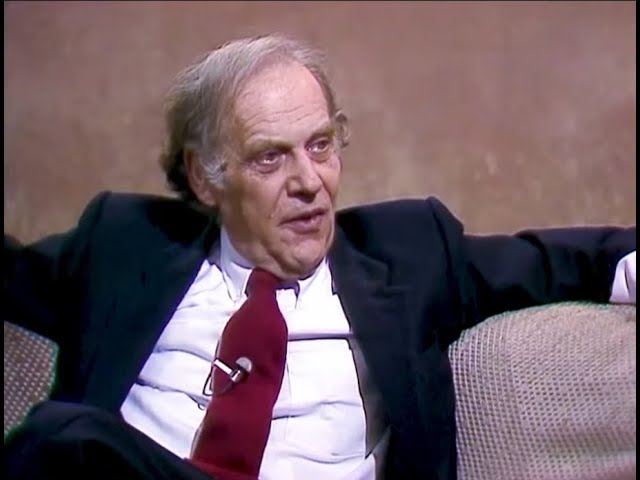
Why this video: This excerpt from the iconic Bryan Magee interview series provides an authoritative summary of classical pragmatism. Sidney Morgenbesser synthesizes the core contributions of Peirce, James, and Dewey, outlining how their shared focus on consequences challenged traditional European metaphysics.

Why this video: This video offers a comparative look at the legacy of pragmatic truth. Featuring modern pragmatists Richard Rorty and Hilary Putnam, it clarifies how classical pragmatism challenged the traditional correspondence theory of truth and examines the resulting debates over relativism.

Why this video: A comprehensive academic lecture explaining how Richard Rorty revived and altered the pragmatist legacy. It shows how Rorty merged Deweyan pragmatism with modern analytic philosophy and the linguistic turn, championing a postmodern neopragmatism that rejects any quest for ultimate philosophical foundations.
Module 5 Knowledge Checkpoint
- Differentiate among Peirce’s logical realism, James's individualistic pluralism, and Dewey's social instrumentalism regarding truth.
- Explain how classical pragmatism’s rejection of the correspondence theory of truth evolved into Richard Rorty's Neopragmatism.
- Define the term "warranted assertibility" and identify which classical pragmatist coined it.
- Analyze the common criticisms leveled against pragmatic theories of truth (e.g., charges of relativism or subjectivism) and formulate a defense based on classical texts.
Course Map
Key People Index
- Charles Sanders Peirce (1839–1914): Polymath, logician, and founder of American Pragmatism. He formulated the pragmatic maxim as a logical rule for clarifying ideas, and developed a realist, semiotic-based theory of inquiry.
- William James (1842–1910): Psychologist and philosopher who popularized pragmatism. He focused on individual experience, the psychological utility of belief ("cash-value"), and developed the metaphysical framework of Radical Empiricism.
- John Dewey (1859–1952): Educational reformer, social theorist, and philosopher who developed Instrumentalism. He championed progressive education, experimental logic, and a view of democracy as a participatory way of life.
- Richard Rorty (1931–2007): A central figure in late 20th-century Neopragmatism. He merged classic pragmatism with the linguistic turn, arguing against foundationalist epistemology and representationalism.
Final Self-Assessment
Complete this comprehensive self-assessment checklist to verify your mastery of American Pragmatism:
- I can articulate the primary historical reasons American Pragmatism emerged in late 19th-century New England.
- I can state Charles Sanders Peirce's Pragmatic Maxim and apply it to clarify a metaphysical concept.
- I can outline Peirce's four methods of fixing belief and explain why the scientific method is logically superior.
- I can explain what William James meant by the "cash-value" of truth and defend it against charges of pure subjectivism.
- I can describe the criteria of a "genuine option" in James's Will to Believe and explain when it is rational to believe without objective evidence.
- I can explain James's Radical Empiricism and how its treatment of experiential relations differs from traditional empiricism.
- I can define John Dewey's Instrumentalism and explain why he preferred the term "warranted assertibility" to "truth."
- I can list and analyze the stages of Dewey's pattern of reflective inquiry.
- I can explain why John Dewey viewed public education and democracy as essential tools for collective, scientific problem-solving.
- I can compare and contrast the epistemological frameworks of Peirce, James, and Dewey side-by-side.
- I can explain how Neopragmatists like Richard Rorty adapted classical pragmatic themes to critique representationalism and Cartesian foundationalism.