Global Governance: IOs, Sovereignty & Veto
Learning Goal: Evaluate the efficacy of international organizations in global governance, analyzing how institutional design, state sovereignty, and veto powers constrain the resolution of global collective action problems.
- Prerequisites: Basic understanding of political science or international relations is helpful, but not required.
- Estimated Total Study Time: 14 hours (including video lectures, supplementary reading, analysis tasks, and self-assessment).
Module 1: Foundations of Global Governance & State Sovereignty
This module introduces the historical and theoretical bedrock of modern international relations. It covers the shift from localized rule to the modern system of sovereign nation-states via the 1648 Peace of Westphalia. Additionally, you will explore what "global governance" actually means in the absence of a singular world government, and analyze how "collective action problems" naturally emerge under international anarchy when sovereign states act in self-interest.
Recommended Videos
- Why this video: This comprehensive lecture serves as an ideal baseline for the module. It defines global governance as a cooperative process among states, international organizations (IOs), and non-governmental organizations (NGOs) targeting global-scale issues. It provides the essential conceptual frameworks needed before examining specific institutions.

- Why this video: This video breaks down the three core pillars of the 1648 Peace of Westphalia. It details how religious sovereignty, territorial integrity, and the concept of state equality created the modern international system, which directly limits any centralized global authority from easily imposing rules on sovereign nations today.

- Why this video: This concise explainer illustrates the "free-rider" challenge in political dynamics. It details how the pursuit of individual rational gains results in suboptimal collective outcomes, laying the groundwork for understanding why sovereign nations struggle to jointly fund and preserve public goods like global security and a stable climate.
Knowledge Checkpoint
- Define "Westphalian sovereignty" and identify its primary historical origins.
- Differentiate between "global governance" and a centralized "world government."
- Explain how the "free-rider" problem behaves as a structural barrier to international treaties.
Module 2: The Architecture of the UN & Bretton Woods Institutions
This module shifts focus to the structural design of major intergovernmental institutions. You will dissect the foundational anatomy of the United Nations system, including the General Assembly and Security Council. From there, you will explore the economic tier of global governance: the Bretton Woods institutions (the International Monetary Fund and the World Bank), understanding how their mandates differ and how their financial voting structures favor wealthy states.
Recommended Videos
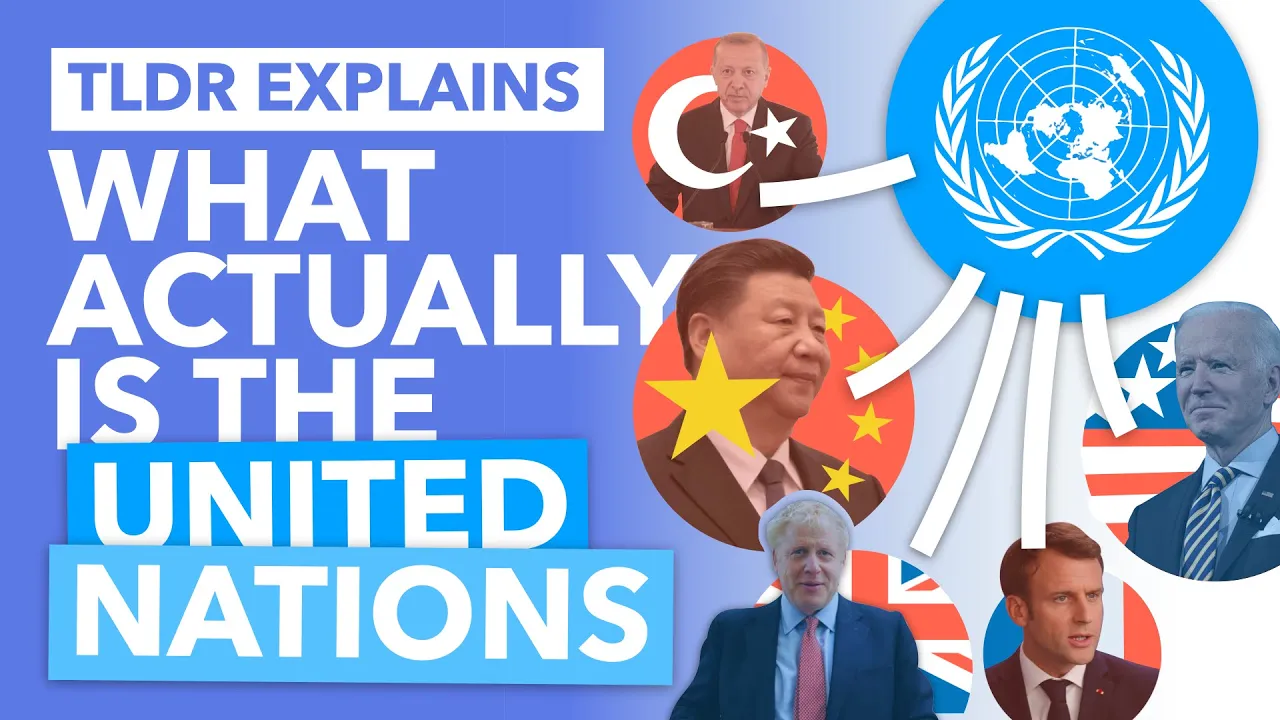
- Why this video: This video provides an overview of the UN's structural organs. It outlines how the 193-member General Assembly and the 15-member Security Council interact, showing how their organizational design divides symbolic representation from actual enforcement power.
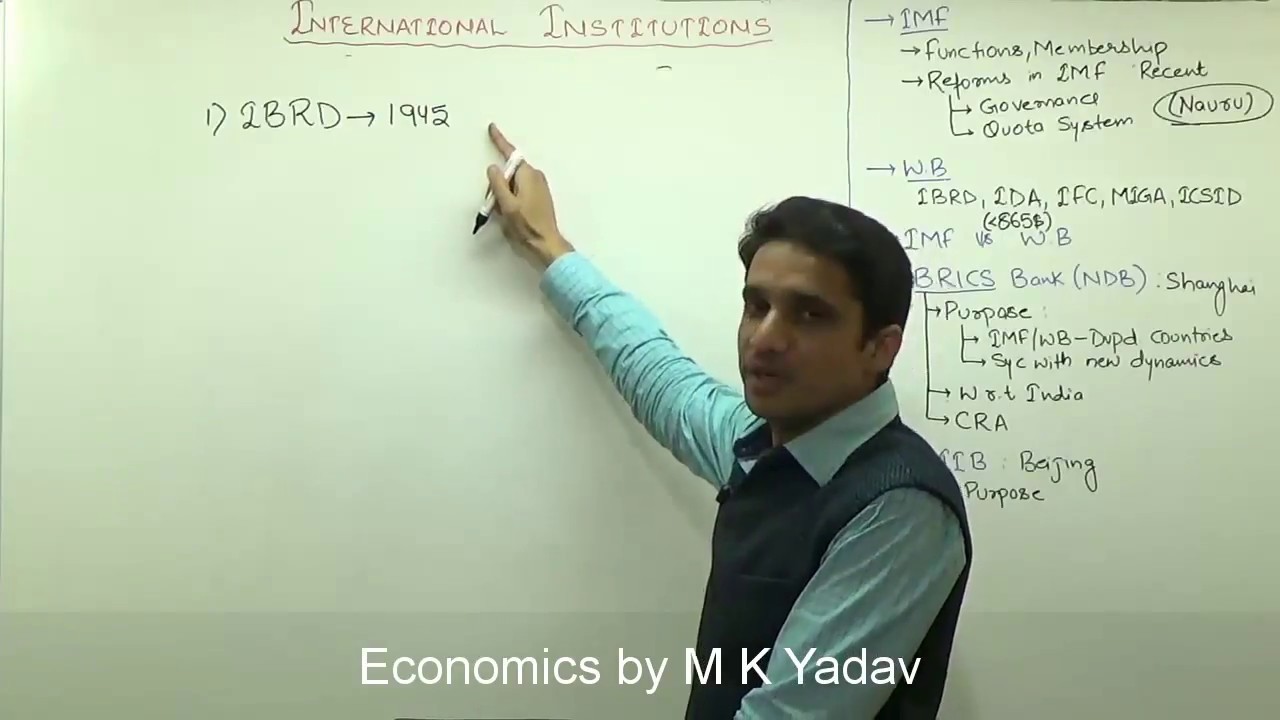
- Why this video: Yadav provides a thorough breakdown of the twin Bretton Woods institutions established in 1944. This video is crucial for filling the gap in understanding the differences between the IMF (focused on monetary stability and balance of payments) and the World Bank (focused on long-term developmental loans and poverty reduction).

- Why this video: This video reinforces the structural overlaps of the Bretton Woods systems. It clarifies how membership in the World Bank is legally contingent upon IMF membership, highlighting the unified, Western-designed axis of international financial governance.
Knowledge Checkpoint
- Differentiate between the primary economic mandates of the IMF and the World Bank.
- Explain how membership requirements connect the IMF and the World Bank.
- Identify the six principal organs of the United Nations and their respective structural roles.
🌐 Independent Study Recommendation: The current video pool has limited coverage of the weighted voting systems in the IMF and World Bank (where votes are tied to financial quotas rather than the "one nation, one vote" principle). To deepen your understanding of this topic, search online for resources on: "IMF quota formulas and weighted voting power disparities."
Module 3: Institutional Design & the Power of the Veto
This module evaluates how voting rules within international bodies distribute power. You will study the UN Security Council's voting architecture, analyzing how the five permanent members (P5) wield the veto to paralyze collective action. By looking at real-world vetoes, you will examine how institutional designs can codify historical power imbalances, often prioritizing great-power interests over global stability.
Recommended Videos

- Why this video: This panel discussion examines how the UNSC veto can paralyze international action during major humanitarian crises. It provides a real-world look at how the geopolitical interests of a single permanent member can block resolutions supported by a global majority.
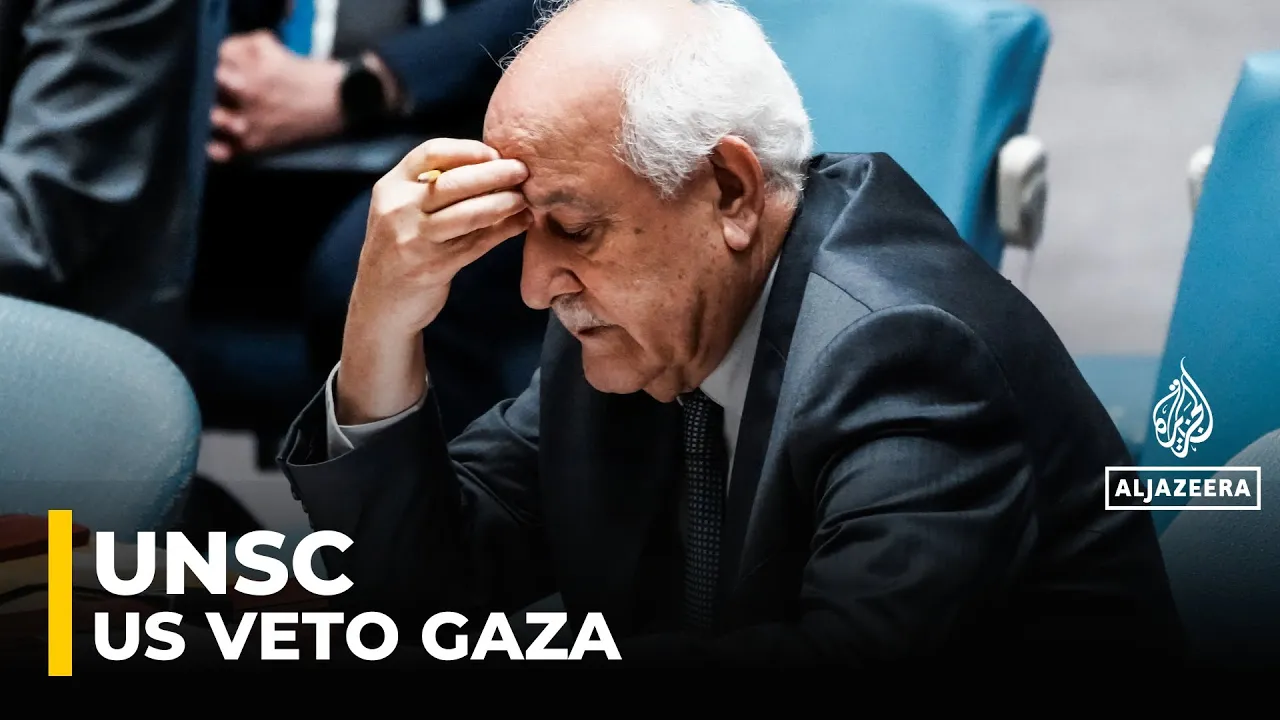
- Why this video: This news analysis illustrates the mechanics of the "14 against 1" vote. It shows how the UNSC's post-WWII voting rules allow a lone permanent member to legally overrule a near-unanimous majority, demonstrating the limits of consensus-based global governance.

- Why this video: Beyond its political commentary, this segment highlights UN Resolution 377 ("Uniting for Peace"). This institutional mechanism allows the General Assembly to recommend collective action when the Security Council is paralyzed by a veto, representing a key structural loophole in the UN Charter.
Knowledge Checkpoint
- Explain how the structural origins of the UN Security Council veto reflect the post-WWII balance of power.
- Analyze the diplomatic and legal mechanics of UN Resolution 377 ("Uniting for Peace") in bypassing a UNSC deadlock.
- Describe how abstentions operate differently from active vetoes during a Security Council vote.
🌐 Independent Study Recommendation: To better understand how voting rules differ across organizations, research the institutional design of the European Union Council's Qualified Majority Voting (QMV). Compare this with the veto system of the UNSC to see how regional bodies balance state sovereignty with collective decision-making.
Module 4: The Enforcement Gap: Sovereignty vs. Compliance
This module tackles the core debate in international relations: is international law "real" law if there is no central authority to enforce it? You will examine the competition between realism (which views IOs as tools of state power in an anarchic world) and liberalism (which views IOs as forums that foster cooperation). You will also analyze compliance theories to understand why rational states choose to follow or ignore international rules.
Recommended Videos

- Why this video: This academic lecture introduces the competing theoretical lenses of Realism, Liberalism, and Constructivism. It offers a useful framework for understanding whether international organizations possess independent agency or merely reflect the interests of their most powerful member states.
- Why this video: This legal lecture addresses the classical jurisprudential debate over international law's status. It contrasts international law with domestic (municipal) law, analyzing how reciprocity, state recognition, and consent function in the absence of a sovereign global police force.
- Why this video: This presentation by leading structural realist John Mearsheimer critiques liberal internationalism. Mearsheimer argues that national interests and power dynamics ultimately override international institutions, making them unreliable for securing long-term compliance.
- Why this video: This brief theoretical video outlines the "enforcement school" of compliance. It explains how rational states weigh the costs and benefits of violating treaties, showing how compliance shifts when international bodies lack strong enforcement mechanisms.
Knowledge Checkpoint
- Contrast how Realism and Liberalism view the power and independence of international organizations.
- Explain why international law is often described as operating under a state of "anarchy."
- Outline the cost-benefit calculations a rational state makes when deciding whether to comply with a treaty, according to the enforcement school of thought.
Module 5: Collective Action Failures & Case Studies
This final module applies these institutional theories to three global challenges: climate change, peacekeeping, and global health crises. By analyzing real-world outcomes, you will evaluate the limits of international organizations when state sovereignty and weak treaty designs get in the way of solving global problems.
Recommended Videos

- Why this video: This lecture uses game theory to analyze climate treaties. It explains why universal agreements often default to the "lowest common denominator" to secure broad participation, weakening their environmental standards and overall efficacy.
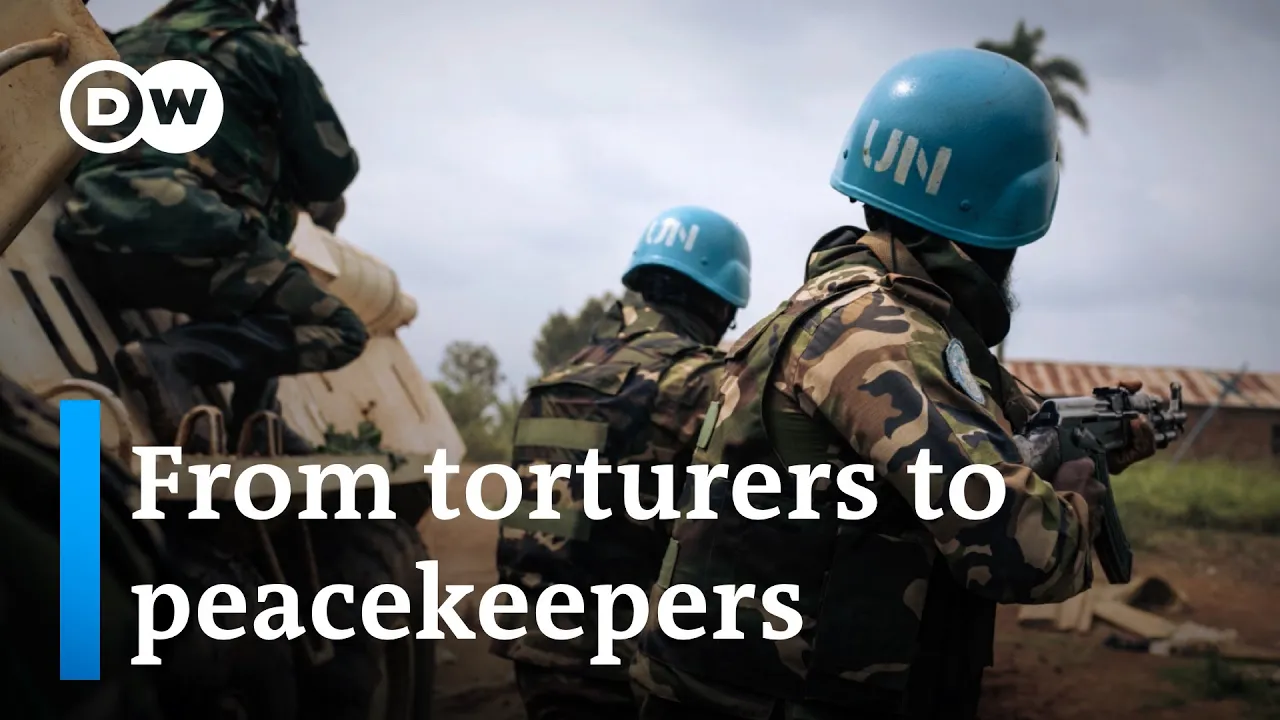
- Why this video: This investigative documentary highlights structural flaws in UN peacekeeping. It reveals how the UN's reliance on troop-contributing countries can lead to accountability failures, exposing the gap between the UN's humanitarian goals and its practical enforcement capacity.
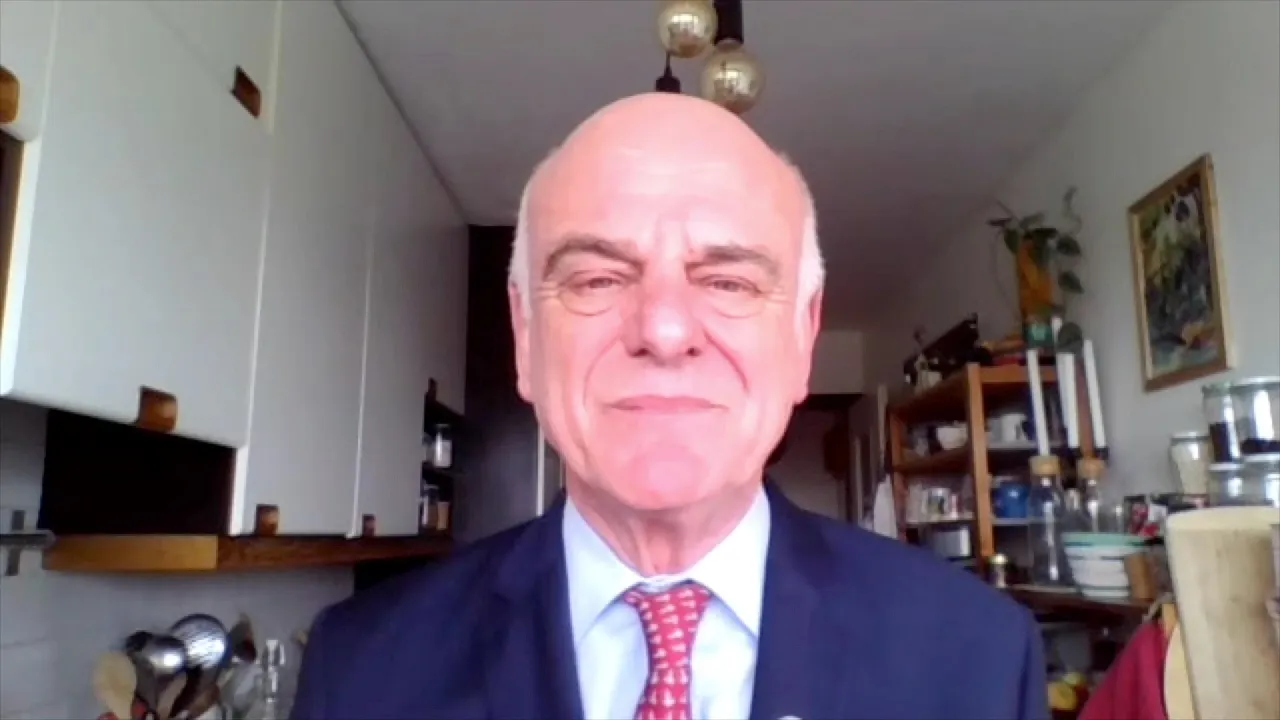
- Why this video: This interview with WHO Special Envoy David Nabarro explores the political challenges of global health governance. It illustrates how the WHO must manage geopolitical tensions and funding constraints while trying to coordinate global pandemic responses without direct authority over sovereign states.
Knowledge Checkpoint
- Explain how universal climate treaties can lead to "lowest common denominator" standards, using game theory.
- Identify two systemic issues that limit the accountability and efficacy of UN peacekeeping missions.
- Describe the structural constraints the World Health Organization (WHO) faces when coordinating a crisis response across sovereign nations.
Course Map
This flowchart outlines the recommended pathway through the curriculum, highlighting how the conceptual, institutional, and empirical modules build upon one another.
Key People Index
The following scholars, public figures, and institutions are central to the debates and frameworks presented in this curriculum:
- John Mearsheimer: A leading figure in Neo-realist theory and a professor at the University of Chicago. He is best known for his theories on offensive realism, arguing that the anarchic international system forces states to compete for power, which structurally limits the long-term effectiveness of liberal international organizations.
- Dr. David Nabarro: Co-Director of the Institute of Global Health Innovation at Imperial College London and a Special Envoy of the WHO on COVID-19. He provides key insights into the practical and political challenges of managing global health initiatives within a system of sovereign states.
- M K Yadav: An expert civil services educator who specializes in breaking down complex multilateral economic agreements and explaining the distinct mandates of the Bretton Woods institutions.
Final Self-Assessment
To evaluate your understanding of the core concepts in this curriculum, verify that you can explain and apply each of the following points:
- Explain how the 1648 Peace of Westphalia established the modern state system and why it continues to limit the authority of international organizations.
- Define a collective action problem and analyze how the "free-rider" effect undermines international cooperation on global issues.
- Differentiate between the mandates of the IMF and the World Bank, and explain how their weighted voting systems distribute power.
- Describe how the UN Security Council's permanent veto power can paralyze collective action during major international crises.
- Explain the purpose of UN Resolution 377 ("Uniting for Peace") and analyze how it can be used to bypass a Security Council deadlock.
- Contrast how Realism and Liberalism interpret the role and independence of international organizations in an anarchic system.
- Analyze the enforcement gap in international law, explaining why sovereign states might choose to comply with or violate treaties.
- Use game theory to explain why universal treaties (such as global climate agreements) often struggle to enforce strong, binding standards.
- Identify the operational and political challenges that can lead to failures in UN peacekeeping operations on the ground.
- Evaluate the structural constraints of global health governance, focusing on how the WHO's mandate compares to its actual enforcement power over sovereign states.