Judicial Review: Activism & Legitimacy
Learning Goal: Analyze the expansion of judicial review, evaluating how constitutional courts navigate the tension between judicial activism and democratic legitimacy.
- Prerequisites: Basic understanding of democratic institutions, the separation of powers, and international governance structures.
- Estimated Total Study Time: 10 Hours
Module 1: Foundations of Judicial Review and Constitutional Supremacy
This module establishes the historical and legal foundations of judicial review. You will explore how the doctrine of separation of powers prevents consolidation of authority, how the principle of constitutional supremacy positions the constitution as the ultimate law of the land, and how the landmark case Marbury v. Madison (1803) altered the balance of power among governmental branches.
Recommended Videos
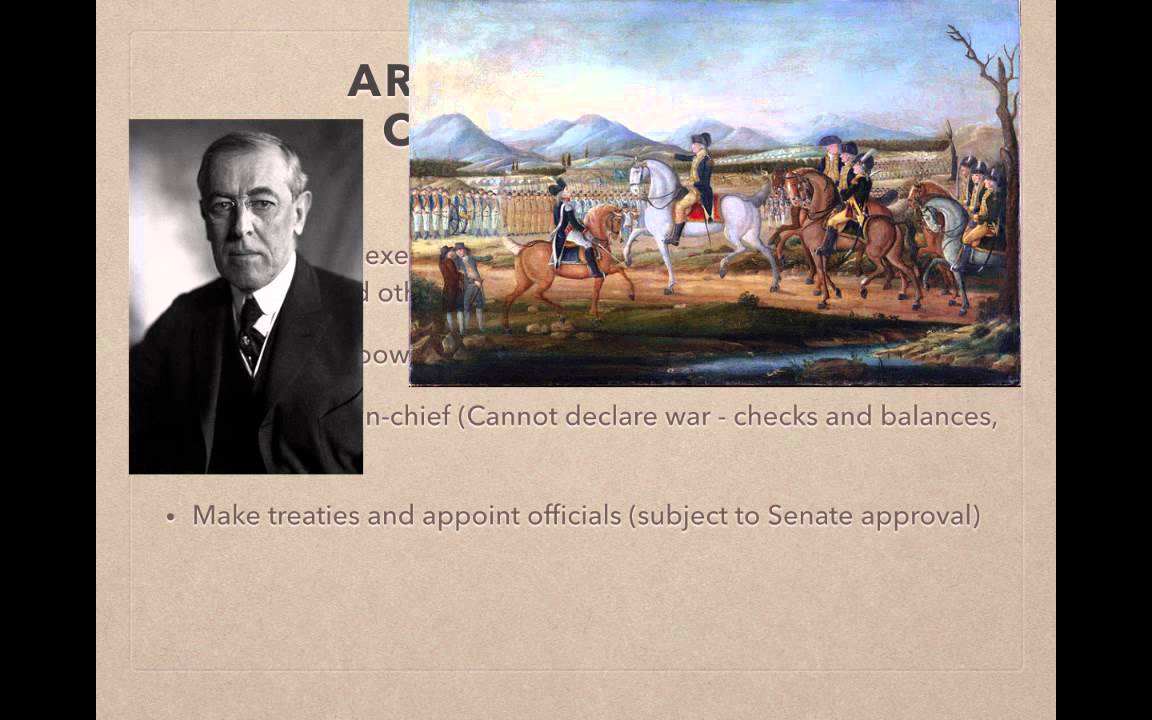
Why this video: This video introduces the core constitutional architecture of separation of powers and checks and balances. It sets the structural stage for understanding where the judicial branch sits in relation to the legislative and executive powers, offering essential baseline knowledge before diving into how courts check other branches.
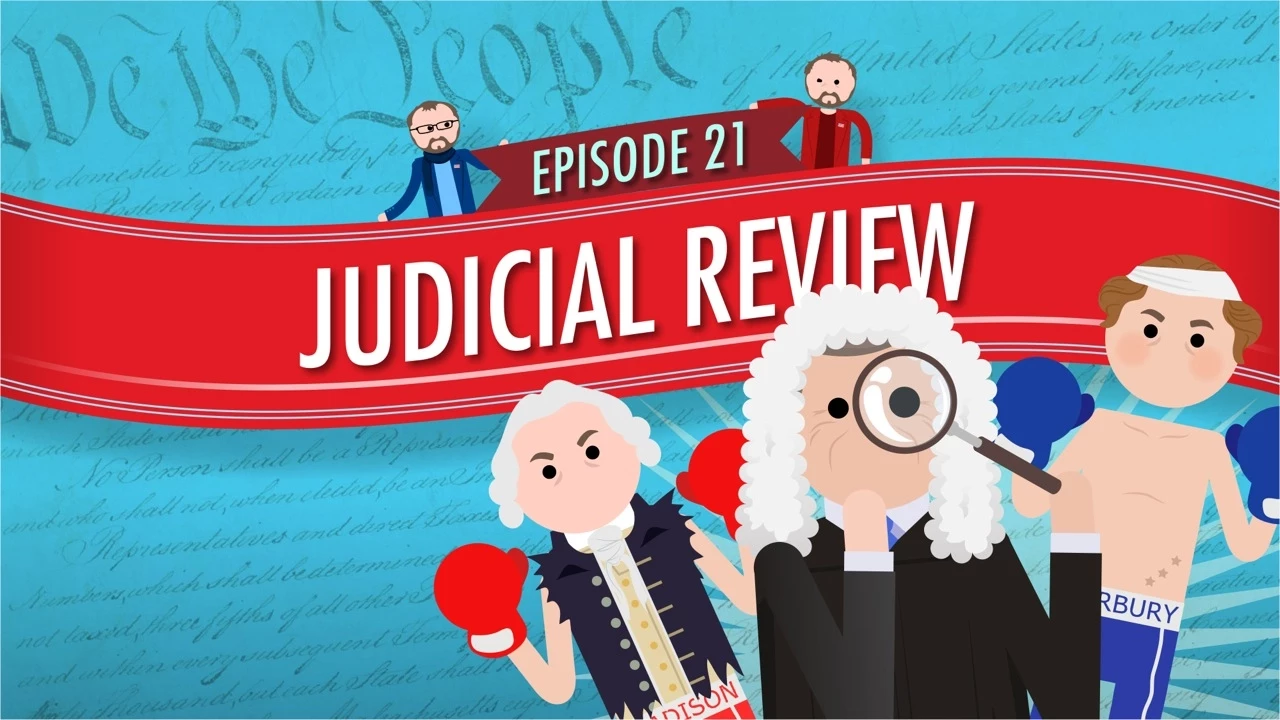
Why this video: This highly visual, engaging video outlines the operational mechanics of judicial review. It details how the Supreme Court secured the authority to invalidate executive actions and congressional statutes, making it the perfect bridge between structural theory and practical jurisprudence.

Why this video: A deep-dive academic and legal explanation of Marbury v. Madison (1803). It explores the political context of the 1801 Judiciary Act, John Adams' midnight appointments, and Chief Justice John Marshall's brilliant tactical ruling that established constitutional supremacy and solidified the court's role as the final arbiter of law.
Knowledge Checkpoint
- Explain how the separation of powers prevents any single branch of government from exercising dictatorial control.
- Summarize the legal and political dilemma Chief Justice John Marshall faced in Marbury v. Madison.
- Define constitutional supremacy and explain why a written constitution requires an independent interpreter.
Module 2: The Philosophy of Interpretation: Activism vs. Restraint
Once judicial review is established, the central question shifts to how judges should interpret the constitution. This module investigates the persistent philosophical battle between originalism (interpreting text based on its original public meaning) and living constitutionalism (interpreting text based on evolving societal standards). You will analyze how these paradigms shape the spectrum of judicial activism versus judicial restraint, and confront the "counter-majoritarian difficulty"—the tension that arises when unelected judges overturn laws enacted by democratic majorities.
Recommended Videos

Why this video: This historic face-to-face debate between Justices Antonin Scalia and Stephen Breyer showcases the two dominant legal methodologies in modern history. Scalia defends textual originalism as a constraint on personal judicial bias, while Breyer explains how living constitutionalism can promote democracy by applying enduring principles to modern circumstances.

Why this video: This video offers a highly critical, analytically rigorous assessment of originalism and textualism. It provides a deep dive into the legal theories of the contemporary conservative judicial movement and contrasts them with alternative theories of evolutionary rights.

Why this video: To ensure global perspective, this video captures a debate between leading legal scholars outside the United States. It specifically dissects the counter-majoritarian difficulty, analyzing why an activist judiciary can be criticized for usurping the policy-making role of elected parliaments.
Knowledge Checkpoint
- Differentiate between originalism and living constitutionalism, noting the primary goals of each interpretative technique.
- Define the "counter-majoritarian difficulty" and explain why it raises concerns about the democratic legitimacy of courts.
- Explain the difference between judicial activism and judicial restraint in terms of institutional deference to legislative policy.
Module 3: Comparative Models of Constitutional Review
Constitutional policing is not uniform across the globe. This module contrasts the decentralized, concrete American model of judicial review with the centralized, abstract European model (pioneered by Hans Kelsen). While the American model relies on real, active court cases to trigger constitutional scrutiny, European constitutional courts are designed to evaluate the abstract constitutionality of statutes separate from active litigation.
Note on Video Coverage: Educational video content detailing Kelsenian constitutional theory is highly limited in mainstream digital archives. To fill this gap, use the available videos below as entry points, and supplement with the recommended independent search terms.
Recommended Videos
Why this video: Although brief, this video serves as a concise, explicit definition contrasting concrete review (which requires a specific court case to trigger a constitutional question) with abstract review (which allows constitutional courts to rule on legislation before it is applied to a specific dispute).
Why this video: This academic clip introduces comparative models of constitutional review across democracies. It examines systems with highly restricted or absent forms of judicial review, such as the Netherlands and Switzerland, demonstrating that judicial oversight is not a prerequisite for constitutional democracy.

Why this video: This representative panel clip highlights the European Continental model of constitutional review, specifically mentioning how Croatia's Constitutional Court sits outside the ordinary judiciary and has direct powers to repeal unconstitutional parliamentary acts.
Independent Study Guide
Because comparative constitutional theory is poorly represented in standard video catalogs, please research the following topics using academic search engines:
- Hans Kelsen & the Austrian Constitutional Court (1920): Learn about the creation of the world's first dedicated, centralized constitutional court.
- Abstract vs. Concrete Review: Analyze how French and German courts review laws before they are promulgated (a priori) compared to the post-facto review in the US common law system.
Knowledge Checkpoint
- Compare the decentralized (American) model of judicial review with the centralized (European/Kelsenian) model.
- Distinguish between abstract review and concrete review, identifying which model requires an active legal injury.
- Explain how a country like the Netherlands operates its constitutional system without judicial review of national legislation.
Module 4: The Global Expansion of Judicial Power
In recent decades, constitutional courts worldwide have expanded their scope into highly contentious, political, and moral arenas—a phenomenon often referred to as "juristocracy" or the "judicialization of politics." This module shifts your focus from domestic legal frameworks to global case studies (such as India and Brazil) to analyze how courts have actively stepped into administrative, executive, and legislative domains.
Note on Video Coverage: Long academic lectures on Ran Hirschl's specific "Juristocracy" text are rare in the video database. Instead, this module uses high-quality real-world global studies to explore this phenomenon in action.
Recommended Videos
Why this video: This video introduces the global scope of this expansion. Legal scholar Tom Ginsburg outlines the historic shift in the late 20th century where parliaments across France, South Africa, and Israel yielded significant policy-making authority to judicial bodies.

Why this video: This video explores a real-world case study of "juristocracy" in Brazil, highlighting the immense scope of Brazil’s Supreme Court. The speaker contrasts Brazil's massive judicial load with the US Supreme Court's selective docket to illustrate what happens when courts oversee everyday administrative governance.
Why this video: This case study of India analyzes the expansion of judicial review through "Krishnaization"—the relaxation of locus standi rules that allowed any citizen to petition the Supreme Court on public interest matters. It explains how this noble mechanism eventually led to accusations of judicial overreach.
Independent Study Guide
To deepen your theoretical understanding of this global trend, read academic articles on:
- Ran Hirschl's Towards Juristocracy: Focus on his theory of "hegemonic preservation," which argues that political elites willingly transfer power to courts to insulate their preferred policies from future democratic majorities.
Knowledge Checkpoint
- Define the term "juristocracy" and outline the primary mechanisms through which courts expand their power.
- Explain how the relaxation of locus standi (standing to sue) in India led to the rise of Public Interest Litigation (PIL) and judicial expansion.
- Identify the political incentives that motivate legislative majorities to delegate contentious moral and political decisions to unelected courts.
Module 5: Navigating Democratic Legitimacy, Backlash, and Dialogue
How do courts survive when their rulings run contrary to public opinion or the political branches? This final module examines how constitutional courts maintain institutional legitimacy. You will evaluate the differences between "strong form" judicial review (where court decisions are final and binding) and "weak form" judicial review (where legislatures can override court decisions, as seen in Canada). You will also study how courts participate in a "constitutional dialogue" with legislative bodies rather than acting as unilateral decision-makers.
Recommended Videos

Why this video: This clip introduces the core structural difference between "strong form" judicial review (where judicial decisions are absolute) and "weak form" judicial review (where courts encourage political branches to reconsider policies without having the final, un-overrideable word).

Why this video: This academic lecture expands on "weak form" review as a means of managing separation of powers conflicts. It explains how iterated, ongoing interactions between courts and legislatures on social and economic rights help ease the counter-majoritarian tension.

Why this video: Delivering a masterclass on democratic responsiveness, this legal lecture explores how courts must navigate political inertia and democratic backlash. It examines what happens when a court misjudges the degree of popular support or opposition to its judicial assertions.

Why this video: This extensive dialogue between Justice D.Y. Chandrachud (former Chief Justice of India) and constitutional expert Tom Ginsburg discusses how constitutional democracies erode gradually. They explore how courts must navigate populist backlashes, institutional capture, and the preservation of democratic processes.
Knowledge Checkpoint
- Explain the constitutional difference between strong-form and weak-form judicial review, using Canada's "notwithstanding clause" or similar legislative override mechanisms as an example.
- Define "constitutional dialogue" and explain how it differs from judicial supremacy.
- Describe the threat of "democratic backlash" and explain how a court's self-restraint protects its long-term institutional legitimacy.
Course Map
This flowchart outlines your path through the curriculum. Completing the foundational and interpretive modules (Modules 1 and 2) is required before exploring global and structural issues (Modules 3, 4, and 5).
Key People Index
- John Marshall (1755–1835): Former Chief Justice of the United States. He authored the opinion in Marbury v. Madison (1803), establishing the legal concept of judicial review in the United States.
- Antonin Scalia (1936–2016): Former Associate Justice of the U.S. Supreme Court. He was a leading advocate of originalism and textualism, arguing for fixed constitutional interpretation.
- Stephen Breyer (born 1938): Retired Associate Justice of the U.S. Supreme Court. He is a prominent proponent of living constitutionalism, emphasizing the pragmatic, democratic consequences of judicial rulings.
- Tom Ginsburg (born 1972): Professor of International Law at the University of Chicago. He is a leading scholar on comparative constitutional law, the global expansion of judicial review, and democratic erosion.
- D.Y. Chandrachud (born 1959): Former Chief Justice of the Supreme Court of India. He is widely recognized for his academic approaches to the preservation of constitutional democracy and the defense of civil liberties.
- Hans Kelsen (1881–1973): Austrian jurist and philosopher. He designed the European "centralized" model of constitutional review, which features a single, dedicated court separate from the ordinary judicial hierarchy.
Final Self-Assessment
Review this checklist once you have completed the materials to evaluate your understanding of the curriculum's core concepts.
- I can explain the political and legal details of Marbury v. Madison and how it established judicial review without a constitutional amendment.
- I can articulate the fundamental differences between originalism (textualism) and living constitutionalism.
- I can describe the "counter-majoritarian difficulty" and its implications for democratic theory.
- I can compare the decentralized, concrete American model of judicial review with the centralized, abstract European (Kelsenian) model.
- I understand how a constitutional democracy can function with weak or absent judicial review (e.g., the Netherlands).
- I can define "juristocracy" and discuss the political and social incentives that lead to the "judicialization of politics."
- I can explain how India’s relaxation of standing (locus standi) altered the balance of power between its courts and its parliament.
- I can explain the difference between strong-form and weak-form judicial review.
- I understand the concept of "constitutional dialogue" and how it helps resolve disputes between the judiciary and legislatures.
- I can identify the primary ways courts maintain their legitimacy when facing populist backlash or institutional erosion.