Migration Policy: Borders, Labor & Refugees
Learning Goal: Analyze the political economy of international migration, evaluating how sovereign states balance border control, domestic labor market demands, and humanitarian obligations under refugee conventions.
- Prerequisites: Basic knowledge of international relations (the Westphalian state system) and introductory micro/macroeconomics.
- Estimated Total Study Time: 15 hours
Module 1: Foundations of Global Migration
This module introduces the foundational concepts, vocabulary, and historical patterns of human mobility. Learners will explore the push-pull framework that dictates why individuals cross borders, the historical waves of migration that shaped modern demographics, and the core distinction between voluntary economic migration and forced displacement.
Recommended Videos

Why this video: This short introductory video from Crash Course Geography establishes the basic spatial framework of human geography. It explains the dual forces of push and pull factors that influence spatial decision-making, offering an essential terminology baseline.
Knowledge Checkpoint:
- Define what constitutes a spatial "push factor" (negative localized conditions).
- Define what constitutes a spatial "pull factor" (positive external opportunities).

Why this video: This video scales out to a historical perspective, tracing human migration from the original "Out of Africa" wave (70,000–50,000 years ago) through classical history. Understanding migration as an ancient, structural feature of human civilization is crucial before studying modern policy boundaries.
Knowledge Checkpoint:
- Describe the timeline of early human dispersal from East Africa across Eurasia.
- Explain how historical migration patterns shaped early economic developments and settlement behaviors.

Why this video: This creative pedagogical video uses a fictional zombie apocalypse framing to illustrate extreme push-pull dynamics, helping learners isolate variables like physical safety, disease, and war as absolute push factors versus economic incentives.
Knowledge Checkpoint:
- Distinguish between choice-driven pull factors (e.g., wage differentials) and crisis-driven push factors (e.g., conflict or environmental collapse).
- Identify why systemic security breakdowns serve as absolute push forces in migration modeling.
Module 2: Labor Economics and Migration
This module evaluates how the movement of human capital across borders alters domestic economies. It analyzes the direct impacts on labor markets, the fiscal ledger of host nations, and the vital role of remittances—where immigrants send earned capital back to developing home countries, serving as a pillar of global developmental finance.
Recommended Videos
Why this video: This video provides a comprehensive economic overview of immigration, using standard labor market models to weigh the overall GDP and productivity gains against distribution effects, such as localized low-skilled wage suppression.
Knowledge Checkpoint:
- Explain how immigration expands a country's aggregate production possibilities frontier (PPF).
- Differentiate between the aggregate economic benefits to a host country and the localized labor competition impacts on native-born workers.
- Evaluate how low-skilled versus high-skilled labor inflows affect different parts of the domestic wage structure.
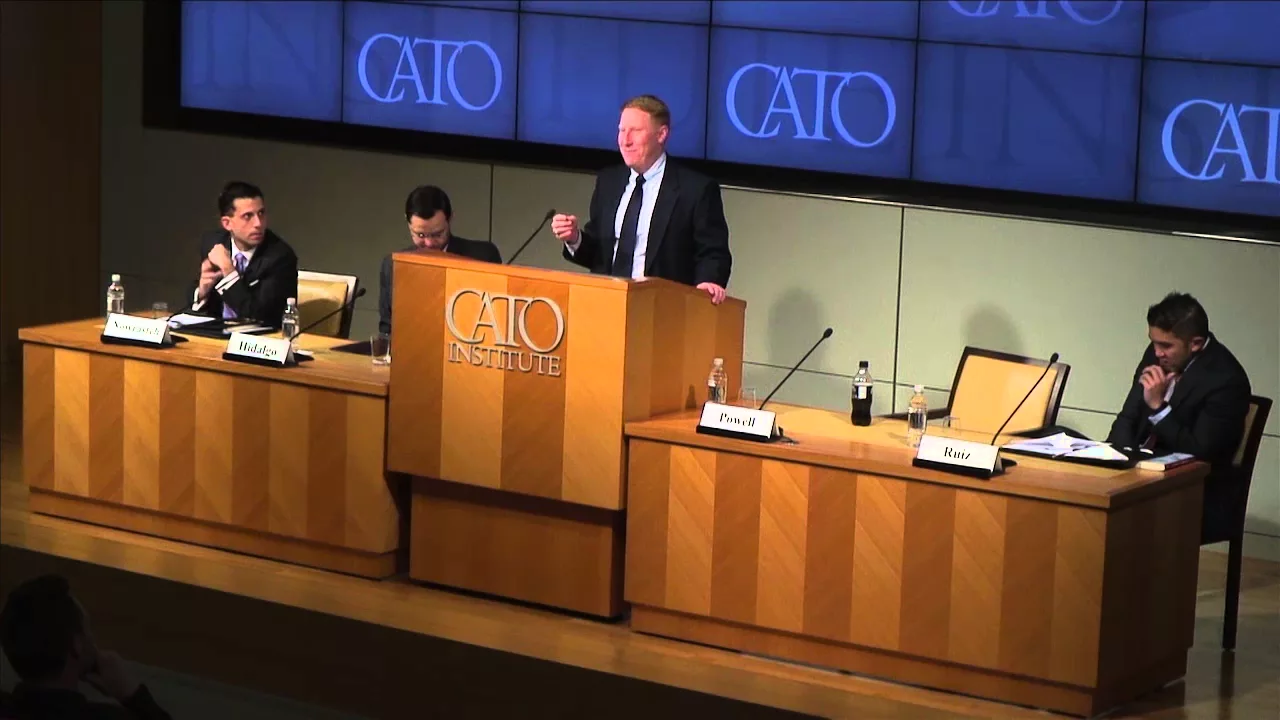
Why this video: Benjamin Powell presents the free-market libertarian argument for labor mobility. He introduces the critical academic concept of the "place premium"—how moving a worker from a low-productivity institutional environment to a high-productivity one instantly unlocks massive human capital and expands global GDP.
Knowledge Checkpoint:
- Define the concept of "place premium" and explain why a worker's productivity is tied to their geographic/institutional location.
- State the estimated percentage range of global GDP expansion that economists predict would occur under a regime of fully open borders.

Why this video: Dennis Egger’s Oxford lecture expands the economic analysis beyond simple labor-market models. He details how migrants stimulate innovation, act as entrepreneurs, generate trade networks, and send crucial remittance flows.
Knowledge Checkpoint:
- Identify non-labor market economic contributions of migrants, including entrepreneurship and innovation rates.
- Analyze how migration patterns foster international trade networks between host and home countries.
Why this video: This segment focuses on the macroeconomics of sending nations, showing how remittances represent a massive flow of global capital—often dwarfing official foreign aid (ODA) and foreign direct investment (FDI) for developing economies.
Knowledge Checkpoint:
- Define "remittances" and state their scale in terms of global financial flows.
- Contrast the economic stability of remittance flows with the volatility of official foreign aid or speculative foreign investments.
Module 3: Sovereignty and Border Control
This module examines how modern states conceptualize and enforce physical borders as a direct expression of Westphalian sovereignty. Learners will analyze the legal and political theories behind border control, the historical rise of labor commodification, and the structural tension between absolute state sovereignty and globalized markets.
Recommended Videos
Why this video: This clip presents the realist international relations perspective: border enforcement is not merely a policy preference but a fundamental, defining act of Westphalian state sovereignty and national security.
Knowledge Checkpoint:
- Relate the ability to control geographic borders directly to the theoretical definition of a sovereign nation-state.
- Articulate the national security and administrative arguments used to justify state monopoly over territorial entry.

Why this video: This video captures sovereignty debates surrounding the UK and the European Union, illustrating how regional integration agreements can dilute border autonomy and trigger political counter-pressures to reclaim national borders.
Knowledge Checkpoint:
- Analyze how supranational organizations (like the European Union) affect individual member states' sovereignty over immigration.
- Define "self-governance" and explain why border control is a primary flashpoint in anti-globalization movements.

Why this video: This critical history video challenges the naturalness of modern borders, linking their development directly to the decline of serfdom in the 15th and 16th centuries and the rise of capitalistic wage labor containment.
Knowledge Checkpoint:
- Outline the historical transition from feudal serfdom to mobile wage labor, and explain why states began regulating movement to manage labor pools.
- Critically evaluate the argument that modern borders function to commodify human labor by keeping workers in low-wage jurisdictions.
Module 4: Humanitarian Obligations & Refugee Law
This module covers the international legal frameworks that govern individuals fleeing persecution. It explores the 1951 UN Refugee Convention, its 1967 Protocol, and the core legal principle of non-refoulement, analyzing how these international treaties legally constrain state sovereignty.
Recommended Videos

Why this video: This academic video from a leading refugee research center offers a deep dive into international law. It details how the 1951 Refugee Convention defines a refugee based on a "well-founded fear of persecution" and traces how subsequent regional treaties expanded this framework.
Knowledge Checkpoint:
- List the five specific grounds of persecution (race, religion, nationality, membership of a particular social group, or political opinion) required to meet the legal definition of a refugee.
- Explain how the 1967 Protocol removed the geographic (European-only) and temporal (post-WWII events only) limitations of the original 1951 Convention.

Why this video: This video focuses on the fundamental human rights guaranteed to refugees once they enter a host territory under international law, demonstrating how these treaties require states to provide baseline legal protections.
Knowledge Checkpoint:
- Identify key civil and social rights (such as access to education, justice, and freedom of religion) that signatory states are obligated to extend to refugees.
- Explain how international treaties protect refugees from being penalized for unauthorized entry when seeking asylum.

Why this video: This video provides a technical explanation of the most important concept in international refugee law: the principle of non-refoulement, which acts as an absolute legal prohibition against returning a refugee to a place where they face persecution.
Knowledge Checkpoint:
- Define the legal principle of non-refoulement.
- Explain why non-refoulement is considered a rule of customary international law (and potentially jus cogens), meaning it binds states regardless of whether they signed the 1951 Convention.
Module 5: The Political Economy of Migration Policy
This final module synthesizes the economic, legal, and political dynamics of migration. Learners will study the "liberal paradox" (the systemic conflict in liberal democracies between economic forces pushing for open borders and political forces pushing for closure) and Gary Freeman's "client politics" model (which explains how concentrated interest groups shape immigration policy).
Recommended Videos

Why this video: Distinguished political sociologist Christian Joppke delivers an academic lecture tracing the roots of the "liberal paradox." He explains how liberal states are caught between the economic pull of globalization and the cultural demands of national citizenship, highlighting how the independent judiciary often protects non-citizen rights even when the public demands restriction.
Knowledge Checkpoint:
- Define James Hollifield's "liberal paradox" (the clash between economic openness and political closure).
- Explain the role of the domestic judiciary in liberal states in limiting the executive branch's capacity to deport or restrict migrants.
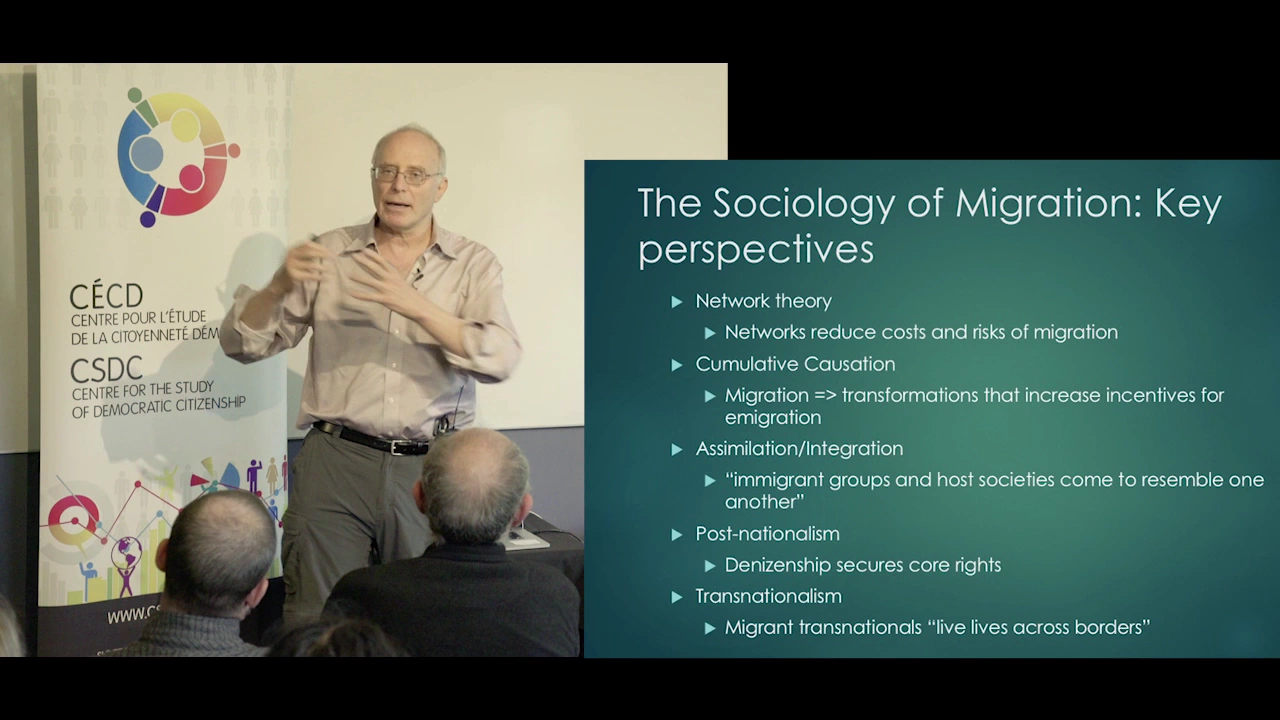
Why this video: This lecture introduces Gary Freeman's classic "client politics" model of immigration policy. It explains how concentrated interest groups (like corporate employers, agricultural lobbies, and ethnic advocacy groups) gain outsized influence over migration policy because they reap the benefits of immigration while the costs are diffused across the general public.
Knowledge Checkpoint:
- Describe Gary Freeman's "client politics" model as it applies to immigration policymaking.
- Contrast how concentrated interest groups mobilize in favor of expansionary migration policies compared to how the general public mobilizes around restrictionist policies.

Why this video: This comprehensive, academic panel debate uses recent political events to test whether the liberal paradox can be disrupted. It analyzes the limits of populist restrictionist policies when they collide with deep-seated corporate labor demands.
Knowledge Checkpoint:
- Analyze how a state's economic dependence on immigrant labor undermines political rhetoric calling for zero-migration or mass deportations.
- Evaluate the political-economy costs that a country faces when it prioritizes political/cultural closure over economic integration.

Why this video: This classic clip outlines Milton Friedman's famous political economy critique: a state cannot support both an open border policy and a generous, tax-funded welfare state, as the fiscal incentives of the safety net alter the self-selecting economic nature of migration.
Knowledge Checkpoint:
- Articulate Milton Friedman's core argument regarding the incompatibility of free migration and a public welfare state.
- Analyze how the presence of a social safety net alters the fiscal cost-benefit analysis of immigration for host-state taxpayers.
Course Map
Key People Index
- James Hollifield: Renowned political scientist who coined the term "the liberal paradox" to describe the structural tension in modern democracies between economic forces (demanding openness for capital/labor) and political forces (demanding closure for sovereignty/identity).
- Gary Freeman: Political scientist who developed the "client politics" framework for immigration, explaining why immigration policies in liberal democracies tend to be more expansionary than public opinion would suggest due to concentrated employer lobbying.
- Christian Joppke: Leading sociologist who studies citizenship, multiculturalism, and immigration. He is famous for explaining how constitutional courts and domestic legal systems in liberal states protect immigrant rights against restrictionist executive branches.
- Milton Friedman: Nobel laureate economist who famously posited that free immigration is incompatible with a welfare state, shaping decades of free-market policy debates on immigration.
- Benjamin Powell: Free-market economist who specializes in the economic analysis of human mobility, specializing in quantifying global GDP gains from reducing barriers to migration.
Final Self-Assessment
Complete this comprehensive self-assessment to verify your mastery of the political economy of international migration:
- I can clearly define the difference between a spatial push factor and a pull factor and provide three distinct economic and non-economic examples of each.
- I can explain the economic concept of the "place premium" and summarize how it affects global human capital productivity and global GDP.
- I can detail how remittances function as a tool of global development finance and compare their volume and stability to official foreign aid.
- I can explain the Westphalian concept of sovereignty and trace how borders became institutionalized as mechanisms to regulate and commodify wage labor.
- I can state the formal international legal definition of a refugee under the 1951 UN Convention, listing all five grounds of protected persecution.
- I can define the principle of non-refoulement and explain why it legally constrains state sovereignty even for states that have not signed specific refugee treaties.
- I can articulate James Hollifield's "liberal paradox" and provide real-world examples of how this paradox plays out in modern democracies.
- I can explain Gary Freeman's "client politics" model, explaining why concentrated business interest groups are often more politically effective than the restrictionist general public.
- I can construct a nuanced political economy argument evaluating the trade-offs a nation faces when trying to balance cheap foreign labor demands with domestic welfare state preservation.