Bystander Effect: Psychology & Intervention
Learning Goal: Analyze the socio-psychological factors underlying the bystander effect and deindividuation in emergency situations, and design intervention strategies to promote active bystander behavior in community settings.
- Prerequisites: None. A basic interest in cognitive psychology, sociology, or behavioral design is recommended.
- Estimated Study Time: 15 Hours
Module 1: Introduction to Social Influence and Conformity
This module explores the foundational mechanisms of how group dynamics, social norms, and peer pressure shape individual choices. You will analyze Solomon Asch's landmark conformity studies to understand why individuals routinely prioritize group alignment over objective reality, laying a necessary cognitive foundation for analyzing bystander behavior in emergencies.
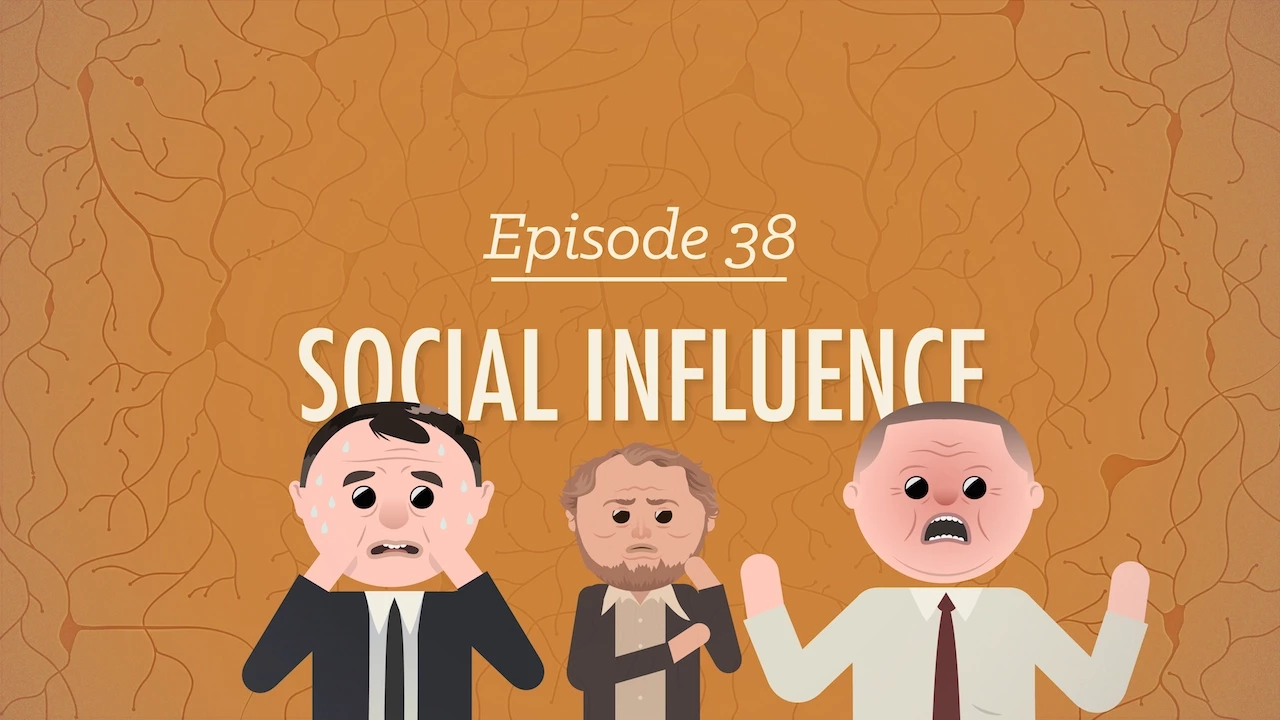
Why this video is valuable: This video serves as an engaging and highly visual primer on Solomon Asch’s classic 1950s experiments. It explains normative versus informational social influence, illustrating how the psychological pressure to fit in alters our public assertions and physical choices.
Knowledge Checkpoint:
- Define the core differences between normative social influence and informational social influence.
- Describe the design and execution of Solomon Asch's line-judgment conformity experiment.
- Identify how group consensus influences an individual's willingness to report obvious errors.
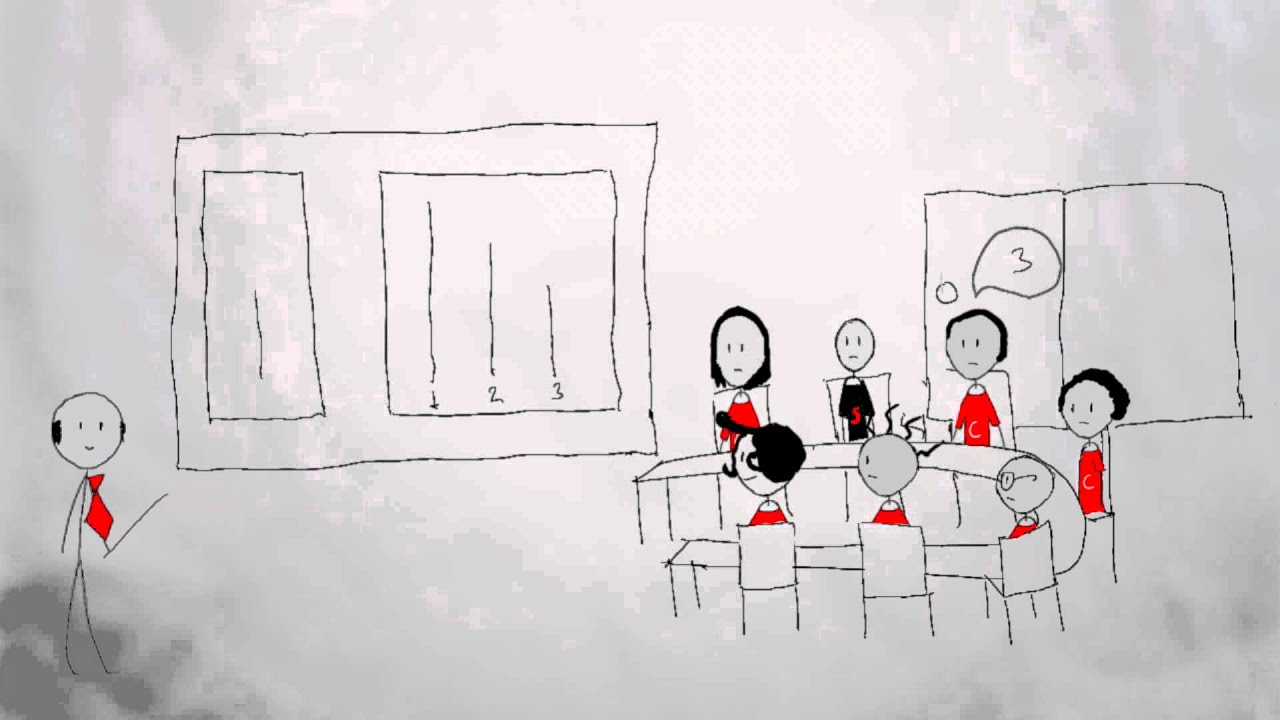
Why this video is valuable: This video features real archival experimental footage of the Asch conformity trials. Seeing actual human subjects experience the internal conflict of standing alone against a room of actors provides deep insight into the psychological friction generated by group pressure.
Knowledge Checkpoint:
- Analyze the physical and non-verbal signs of discomfort displayed by subjects when group consensus contradicts sensory reality.
- State the approximate percentage of participants who conformed to the incorrect majority at least once.
- Explain how introducing a single dissenting confederate (an ally) impacts the subject's conformity rate.

Why this video is valuable: A comprehensive, university-level academic lecture that contextualizes social influence within broader sociological structures. It covers social contagion, behavioral alignment, and the subtle mechanics of how communities establish implicit behavioral guardrails.
Knowledge Checkpoint:
- Differentiate between compliance, obedience, and conformity from a structural standpoint.
- Define the process of "social contagion" and trace its developmental stages within a crowd setting.
- Discuss how social norms evolve dynamically when individuals face highly ambiguous situational cues.
Module 2: The Bystander Effect & Diffusion of Responsibility
This module investigates the core socio-psychological mechanics behind public inaction. By focusing on the historical catalyst of the Kitty Genovese murder and subsequent field studies, you will learn how the presence of others dilutes individual accountability and generates a shared state of behavioral paralysis.

Why this video is valuable: This investigative documentary unpacks the true story of Kitty Genovese's 1964 murder in Queens, New York. It contrasts the myth of the "38 silent witnesses who did nothing" with documented facts, providing a critical perspective on how the case spurred the academic discovery of the bystander effect.
Knowledge Checkpoint:
- Contrast the original sensationalized New York Times reporting with the historically verified actions of neighbors on the night of the attack.
- Explain how early media framing established the public (and initially flawed) concept of bystander "apathy."
- Discuss why this case acted as a psychological trigger for researchers John Darley and Bibb Latané.

Why this video is valuable: This talk breaks down John Darley and Bibb Latané’s classic lab studies, including the famous stroke-simulation headset experiment. It moves beyond simple definitions to explain why diffusion of responsibility scales in direct response to group size.
Knowledge Checkpoint:
- Explain the experimental parameters of Darley and Latané's original headset simulation study.
- Detail how the statistical likelihood of intervention changes as the perceived size of the group increases.
- Define "diffusion of responsibility" in your own words, using cognitive-load terms.

Why this video is valuable: This hidden-camera field experiment acts as a live case study on the bystander effect. It highlights how passive observers exhibit diffusion of responsibility, while mapping out the exact verbal and physical cues that finally push an active bystander to break the gridlock.
Knowledge Checkpoint:
- Identify non-verbal signs of discomfort or cognitive dissonance in bystanders who choose not to intervene.
- Analyze the situational triggers that distinguish passive onlookers from the active bystanders who step in.
- Discuss how demographic variables or social assumptions affect intervention rates in public spaces.
Module 3: Deindividuation and Crowd Behavior
This module examines how large groups, visual anonymity, and high-arousal environments can strip away an individual's self-awareness. You will analyze classic experiments and crowd dynamics to understand how deindividuation shifts personal moral guidelines and alters behavior during public emergencies.

Why this video is valuable: This video reviews Philip Zimbardo's classic 1969 deindividuation study, where hooded and nameless subjects delivered twice the level of electric shocks to confederates. It connects physical anonymity directly to reduced self-evaluation and altered moral frameworks.
Knowledge Checkpoint:
- Describe the design and behavioral outcomes of Zimbardo's 1969 anonymity experiment.
- Explain how physical symbols of anonymity (such as hoods, masks, or uniforms) alter an individual's locus of control.
- Connect the reduction of self-awareness to changes in empathy and aggression.
Why this video is valuable: This video explains how systemic factors combine to strip away personal accountability. It bridges the gap between obedience to authority, group deindividuation, and the psychological dehumanization that can occur in large crowds.
Knowledge Checkpoint:
- Name the three interconnected social mechanisms that allow otherwise pro-social individuals to participate in group violence or neglect.
- Explain how deindividuation diminishes a person's fear of social evaluation and punishment.
- Discuss how authority structures accelerate the loss of individual accountability in crowds.

Why this video is valuable: This video reviews classic crowd theories, including Leon Festinger’s deindividuation theory and Gustave Le Bon’s early crowd psychology concepts. It details how anonymity, group unity, and physical arousal lower personal behavioral controls.
Knowledge Checkpoint:
- Define "deindividuation" according to Festinger's socio-psychological framework.
- Explain how high physical arousal within a group lowers cognitive barriers to anti-social behavior.
- Detail how crowd unity shifts an individual's focus from personal standards to group-level impulses.
Module 4: Cognitive Barriers: The 5-Step Decision Model
This module breaks down Latané and Darley’s 5-step cognitive model of helping. You will analyze why bystanders fail at key points in this process, focusing on the cognitive roadblocks of pluralistic ignorance, audience inhibition, and evaluation apprehension.
Academic Gap Note: High-quality video assets explaining the exact academic nuances of Darley & Latané's 5-step model are historically rare online. To supplement these videos, we highly recommend reading peer-reviewed social psychology literature covering the five distinct stages of prosocial intervention.

Why this video is valuable: A precise academic lecture that lists Latané and Darley's exact 5-step model of helping. It acts as an excellent conceptual reference for this module, explaining the sequential cognitive tasks a bystander must complete to take action.
Knowledge Checkpoint:
- List all five steps of Latané and Darley’s cognitive model of helping behavior in correct sequence.
- Explain how a failure at Step 1 (Noticing the Event) differs cognitively from a failure at Step 2 (Interpreting the Event).
- Identify the exact step where diffusion of responsibility exerts its primary influence.

Why this video is valuable: Dr. Matthew Lieberman of UCLA analyzes the cognitive processes involved in noticing, interpreting, and deciding to act in public settings, explaining why high-ambiguity situations make it difficult to progress through the early stages of the decision model.
Knowledge Checkpoint:
- Define "evaluation apprehension" and explain how it blocks a bystander from taking action.
- Describe how situational ambiguity slows down cognitive processing at Step 2 of the decision model.
- Explain how the fear of a negative social reaction affects Step 5 (Deciding to Help).

Why this video is valuable: This video provides a clear explanation of "pluralistic ignorance." It shows how people look to others to gauge whether a situation is a true emergency, creating a feedback loop of shared inaction.
Knowledge Checkpoint:
- Explain the concept of pluralistic ignorance within the context of an emerging crisis.
- Describe how a group of silent, observing bystanders mutually reinforces the belief that "nothing is wrong."
- Outline how John Darley and Bibb Latané's classic "smoke-filled room" experiment demonstrates pluralistic ignorance in action.

Why this video is valuable: This hidden-camera experiment demonstrates pluralistic ignorance and evaluation apprehension in a realistic setting. It shows the internal and external conflicts bystanders experience as they try to interpret a high-stakes, ambiguous event.
Knowledge Checkpoint:
- Identify how bystanders in this video use the reactions of others to interpret a potential drink-spiking incident.
- Analyze how gender and social stereotypes affect a bystander's willingness to progress from Step 2 (Interpreting) to Step 3 (Assuming Responsibility).
- Explain how audience inhibition shows up as hesitancy or whispered side-conversations instead of direct action.
Module 5: Designing Interventions: The Active Bystander
This module shifts focus from psychological analysis to behavioral design. You will study practical intervention frameworks, such as the "5 Ds," and learn how to build community-level programs that reduce cognitive barriers and encourage active, safe bystander behavior.
Academic Gap Note: Mainstream video media rarely focuses on structured, step-by-step active bystander training frameworks. The video with Emily May below is a vital resource that directly addresses this gap, providing a clear look at the "5 Ds" framework.

Why this video is valuable: This conversation introduces the structured "5 Ds" of bystander intervention (Distract, Delegate, Document, Delay, Direct). It serves as the design foundation for this module, offering a practical toolkit to bypass cognitive paralysis and address public harassment safely.
Knowledge Checkpoint:
- List and define each of the "5 Ds" of active bystander intervention.
- Give a real-world example of how the "Distract" technique can de-escalate a tense situation without a direct confrontation.
- Explain how "Delegation" shifts responsibility to others, bypassing the bystander effect.

Why this video is valuable: Dr. Ervin Staub, a leading researcher in prosocial behavior, discusses his empirical studies on active bystandership. He explains how structured training programs can help people overcome social and biological inhibitions to intervene in schools, workplaces, and communities.
Knowledge Checkpoint:
- Describe the training methodologies Dr. Staub recommends to help people overcome the fear of social evaluation.
- Explain how early education and role-playing can help individuals internalize active bystander behaviors.
- Discuss why building a "prosocial school climate" helps reduce the occurrence of deindividuation-fueled bullying.

Why this video is valuable: This video provides a tactical, safety-focused analysis of a "Direct" public intervention. It highlights the physical risks, safety boundaries, and situational awareness required when an active bystander decides to step in directly.
Knowledge Checkpoint:
- Contrast the physical and psychological risks of a "Direct" intervention with indirect strategies like "Delegate" or "Distract."
- Explain how an active bystander should assess personal safety and situational boundaries before taking action.
- Identify key de-escalation practices that can prevent a direct verbal intervention from turning into physical violence.
Course Map
This flowchart shows how the modules build on each other. It is recommended to complete them in this order to transition smoothly from core psychological theory to behavioral design.
Key People Index
- Solomon Asch (1907–1996): A pioneer in social psychology, famous for his 1951 line-judgment experiments showing how group pressure drives individual conformity.
- John Darley & Bibb Latané: The research team who co-coined the terms "bystander effect" and "diffusion of responsibility" following the Kitty Genovese tragedy. They also developed the "5-step cognitive decision-making model of helping."
- Philip Zimbardo: Best known for the Stanford Prison Experiment. His 1969 work on anonymity showed how visual de-identification lowers self-awareness and triggers deindividuated, anti-social behavior.
- Dr. Ervin Staub: Professor Emeritus at UMass Amherst. A leading voice on altruism and active bystandership, he developed early training models to encourage active help in schools and organizations.
- Emily May: Co-founder of Right To Be (formerly Hollaback!). She popularized the "5 Ds" framework, turning academic research on social psychology into a practical public toolkit.
Final Self-Assessment
Complete this checklist to verify your understanding of the concepts covered in this curriculum:
- I can explain the difference between normative and informational social influence using Solomon Asch’s work.
- I can describe the real events of the 1964 Kitty Genovese case and contrast them with early, sensationalized media reports.
- I can explain how the presence of other people dilutes individual responsibility in a group.
- I can identify the three main factors that trigger deindividuation in large crowds (anonymity, group size, and physical arousal).
- I can list all five stages of Latané and Darley's Cognitive Decision Model of Helping in order.
- I can define pluralistic ignorance and explain how it prevents people from recognizing a true emergency.
- I can explain what evaluation apprehension is and how the fear of social judgment causes bystander inaction.
- I can list and explain the "5 Ds" of bystander intervention (Distract, Delegate, Document, Delay, Direct).
- I can analyze a public emergency and determine which of the "5 Ds" is the safest and most effective strategy to use.
- I can design a basic community intervention program that uses behavioral psychology to encourage active bystander behavior.