Fostering Grit: Mindsets & Resilience
Learning Goal: Analyze the developmental and motivational differences between growth and fixed mindsets, and design an evidence-based pedagogical intervention to foster grit and academic resilience in adolescents.
- Prerequisites: None (Introductory background in educational psychology or adolescent development is helpful but not required).
- Estimated Total Study Time: 14 Hours
Module 1: Foundations of Mindset Theory
Overview
This module introduces the foundational psychological frameworks established by Dr. Carol Dweck. Learners will analyze the core conceptual differences between fixed and growth mindsets, tracing how these belief systems dictate human behavior, academic achievement, and individual responses to challenge.
Recommended Videos

- Why this video is valuable: This comprehensive keynote by Dr. Carol Dweck provides the essential theoretical foundation of mindset theory. Dweck directly explains the paradigm shift from a fixed view of ability to a malleable view, outlining the direct implications of these mindsets on student achievement, motivation, and resilience.
- Knowledge Checkpoint:
- Explain the difference in how fixed and growth mindset individuals perceive the concept of "effort."
- Identify the academic and personal consequences of viewing intelligence as a static trait versus a malleable muscle.
- Describe how a growth mindset buffers students against the fear of failure.

- Why this video is valuable: In this focused address, Dr. Dweck synthesizes how specific pedagogical signals (such as process-based praise) can pivot an individual's mindset. It serves as a bridge between pure psychological theory and actionable relational feedback.
- Knowledge Checkpoint:
- Explain why praising innate ability ("you are so smart") can inadvertently foster a fixed mindset.
- Define "process-oriented praise" and provide two explicit examples.
- Describe the behavioral changes observed in students when shifted from outcome-based feedback to process-based feedback.

- Why this video is valuable: A concise conceptual summary detailing how individuals with distinct mindsets approach challenges. It serves as an excellent visual quick-reference for the core cognitive differences.
- Knowledge Checkpoint:
- Contrast how growth mindset and fixed mindset individuals react when presented with a highly challenging task.
- Describe the differing attitudes towards obstacles, criticism, and the success of others between the two mindsets.
Module 2: Grit and Adolescent Motivation
Overview
This module explores Angela Duckworth's groundbreaking research on grit—defined as passion and perseverance for long-term goals. To understand how grit manifests in teenagers, we cross-reference this with the unique neurological and socio-emotional landscape of the adolescent brain and the mechanics of Self-Determination Theory (SDT).
Recommended Videos

- Why this video is valuable: Featuring premier researchers David Yeager and Angela Duckworth, this in-depth discussion targets the developmental window of ages 10 to 25. It explains that adolescents are highly sensitive to status, respect, and autonomy; motivating them requires aligning growth challenges with their natural developmental needs rather than treating them as biologically incompetent or defiant.
- Knowledge Checkpoint:
- Identify the core psychological needs (status and respect) that drive adolescent motivation according to Yeager and Duckworth.
- Explain how standard compliance-oriented feedback can trigger defensive, uncooperative behaviors in adolescents.
- Describe how educators can frame challenges to respect and leverage an adolescent’s desire for status and contribution.

- Why this video is valuable: Dr. Duckworth details the operational definition of grit, clarifying that grit is not merely raw willpower, but the sustained intersection of long-term passion and deliberate, long-term practice.
- Knowledge Checkpoint:
- Distinguish between short-term intensity (enthusiasm) and long-term consistency (passion and perseverance).
- Explain how cultivating a growth mindset acts as a psychological prerequisite for sustaining grit.
- Name the environments or systemic supports that help transition a passing interest into a grit-supporting passion.

- Why this video is valuable: Led by Edward Deci (co-founder of Self-Determination Theory), this video outlines the critical differentiation of motivation. It demonstrates why autonomous motivation (internal drive) sustains long-term behavior far better than controlled motivation (external rewards or pressures), which is vital for building adolescent grit.
- Knowledge Checkpoint:
- Define the three basic psychological needs of Self-Determination Theory: autonomy, competence, and relatedness.
- Contrast "autonomous motivation" with "controlled motivation" and describe their respective impacts on long-term persistence.
- Explain why offering extrinsic rewards for a task can sometimes undermine a student's intrinsic motivation (the overjustification effect).
Module 3: Neurological & Behavioral Responses to Failure
Overview
How do mindsets translate into physical brain activity and behavioral choices when mistakes happen? This module examines the neuroscience of error-processing—using electroencephalogram (EEG) research to analyze Event-Related Potentials (ERPs) like Error-Related Negativity (ERN)—alongside the physiological and psychological impacts of adult feedback.
Recommended Videos

- Why this video is valuable: Neurobiologist Dr. Andrew Huberman explains the neurobiological mechanisms underlying Dweck's mindset theory. He details Event-Related Potential (ERP) studies showing how fixed vs. growth mindsets change neural processing of mistakes in real-time, pointing specifically to the rostral anterior cingulate cortex (rACC).
- Knowledge Checkpoint:
- Describe how the brains of fixed mindset individuals process errors differently from those of growth mindset individuals, according to ERP studies.
- Explain the role of the rostral anterior cingulate cortex (rACC) in error detection and emotional regulation.
- Detail how dopamine signaling can be trained to reward the effort and process of learning rather than merely the end result.

- Why this video is valuable: This video reviews peer-reviewed EEG research on error processing. It provides direct evidence that growth-minded individuals display significantly larger error-related positivity (Pe) signals, indicating heightened conscious attention to mistakes and an active cognitive attempt to learn from them.
- Knowledge Checkpoint:
- Define Error-Related Negativity (ERN) and Error-Related Positivity (Pe) in the context of EEG error monitoring.
- Explain how a larger Pe amplitude correlates with post-error behavioral adjustment (improved performance after a mistake).
- Why do fixed-mindset individuals show minimal neural activity upon making a mistake? Detail the cognitive avoidance mechanism.
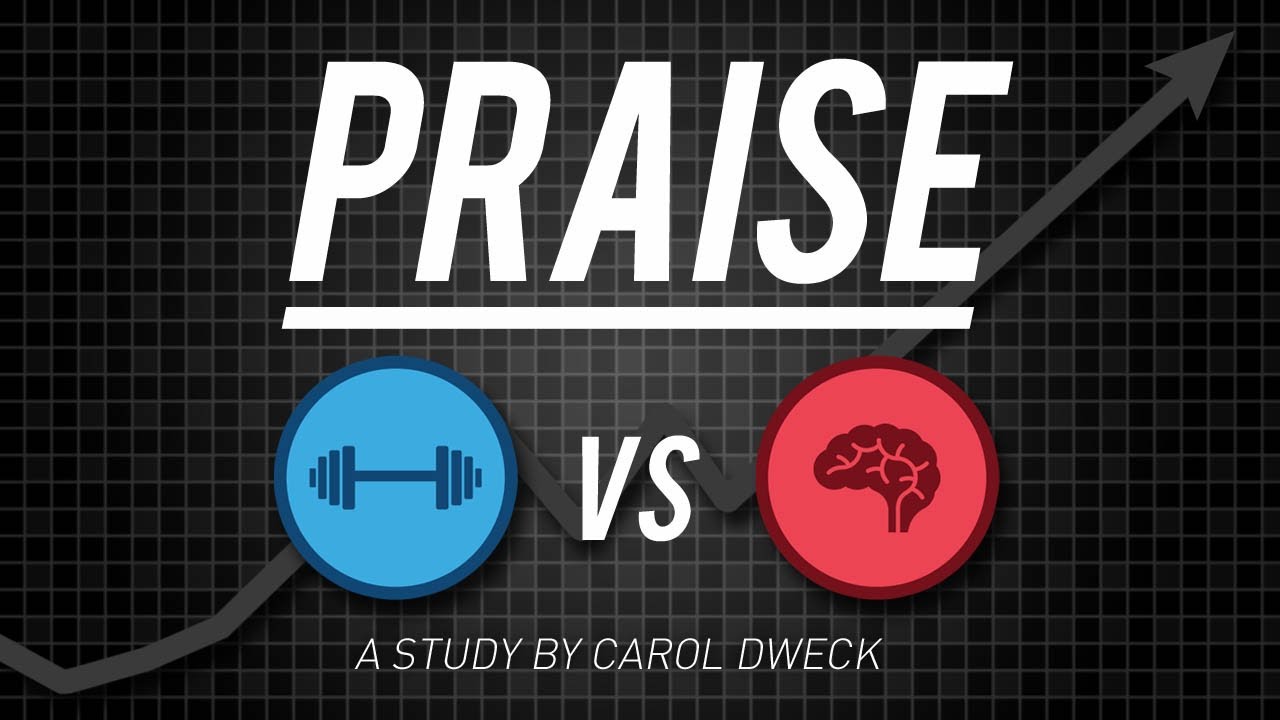
- Why this video is valuable: This video animates and breaks down Carol Dweck and Claudia Mueller's landmark 1998 study on praise. It shows how a single line of intelligence-based vs. effort-based praise drastically altered students' responses to failure, task selection, and performance.
- Knowledge Checkpoint:
- Describe the methodology and three phases of the Dweck & Mueller (1998) praise study.
- Contrast the behavioral choices of "smart-praised" children and "effort-praised" children when offered a choice between an easy task and a challenging task.
- Explain the ethical and practical lessons this study offers to educators designing classroom feedback models.

- Why this video is valuable: Outlines the empirical work of Dr. Jason Moser. This short clip highlights Moser's "voltage maps" of the brain, which illustrate "red-hot" neural activity during error-processing in growth-minded students, compared to relative dormancy in fixed-minded students.
- Knowledge Checkpoint:
- What do the "voltage maps" of Jason Moser's research visually demonstrate about the brain during error-making?
- Summarize how a teacher can use this biological fact to reassure students that "making mistakes makes your brain grow."
Module 4: Designing Pedagogical Interventions
Overview
In this module, theoretical and neurological insights are translated into actionable, school-based interventions. Educators will learn to design curricula and structural classroom environments that protect adolescent autonomy while systematically scaffolding their academic resilience.
Recommended Videos

- Why this video is valuable: An excellent primary source showing how a high school teacher plans and structures a comprehensive growth mindset unit. This video is highly practical, walking through lesson pacing, interactive activities, and incorporating mindset assessments in a real secondary school classroom.
- Knowledge Checkpoint:
- Outline a three-step progression for introducing mindset concepts to secondary students.
- Identify two pedagogical artifacts (e.g., interactive notebooks, read-alouds, self-surveys) used in this classroom unit to anchor the lesson.
- Detail how a teacher can address immediate student skepticism when presenting mindset curriculum.

- Why this video is valuable: Dr. Dweck highlights a critical implementation detail: interventions for teenagers will backfire if they feel condescending or manipulative. Successful programs must treat adolescents as active partners, respecting their critical thinking and agency.
- Knowledge Checkpoint:
- Why do traditional, top-down "mindset training" programs often fail or produce mixed results with high school students?
- Explain how to position adolescents as "experts" or "co-designers" of their own growth processes to respect their developmental need for autonomy.

- Why this video is valuable: This video provides explicit, tactical guidance for teachers on delivering effective growth feedback in real-time, focusing on student strategies, processes, and persistence over static intelligence.
- Knowledge Checkpoint:
- Contrast "person-focused feedback" with "process-focused feedback."
- Write three specific phrases an educator can use when a student is stuck, highlighting their strategy rather than simply telling them to "try harder."
Module 5: Measuring Intervention Efficacy
Overview
Educational interventions are only as strong as their measurement tools. This module teaches you how to scientifically evaluate the impact of your growth mindset and grit designs. We will explore quantitative instruments, psychometric evaluation, and the qualitative measures required to construct a valid, research-grade evaluation framework.
Recommended Videos

- Why this video is valuable: Dr. Duckworth explains the basic scoring, structure, and design of the 10-item Grit Scale. Understanding the psychometric construction of this scale is vital for conducting any quantitative pre- and post-intervention evaluations.
- Knowledge Checkpoint:
- Identify the two primary subscales within the Grit Scale (Perseverance of Effort and Consistency of Interest).
- Describe the scoring layout (1 to 5 Likert scale) and how reverse-coded items are utilized to limit response bias.

- Why this video is valuable: Addresses the core psychometric requirements of scale design. It explains "discriminant validity"—ensuring your grit or mindset questionnaire is actually measuring grit or mindset, rather than conflating with other psychological traits like conscientiousness or compliance.
- Knowledge Checkpoint:
- Define "discriminant validity" and explain why it is crucial when evaluating novel educational interventions.
- Describe how to test if your questionnaire items are distinct from conceptually similar established measures.
- Explain the threat of "acquiescence bias" in student self-reporting scales and how to mitigate it.

- Why this video is valuable: Provides a critical look at psychometric validation. Dr. Peterson discusses the necessity of validating any new scale against established measures (like IQ or the Big Five personality traits, particularly Conscientiousness) to ensure the scale has true incremental predictive power.
- Knowledge Checkpoint:
- Explain why a newly designed mindset or grit measurement tool must be statistically validated against established personality traits like Conscientiousness.
- Define "incremental validity" in educational psychology research.

- Why this video is valuable: Offers a localized, classroom-level example of survey administration. A teacher shows how to use a basic 20-item mindset diagnostic survey to collect baseline quantitative data directly from students.
- Knowledge Checkpoint:
- Explain how a teacher can design and administer a 20-item growth mindset baseline survey.
- Describe how to score strongly-agree to strongly-disagree choices to identify whether a student leans toward a fixed or growth mindset.
Core Gap-Bridging Guidance: Quantitative and Qualitative Intervention Evaluation
To resolve the evaluation gaps identified in educational literature, design a Mixed-Methods Evaluation Framework for your intervention:
1. Quantitative Evaluation
- Pre- and Post-Testing: Administer Dweck's Implicit Theories of Intelligence Scale (8-item) and Duckworth's Short Grit Scale (Grit-S) (8-item) immediately before the intervention starts and 4 weeks post-intervention.
- Control Group Matching: To establish true efficacy, compare the intervention cohort to a randomized or matched control group that receives standard academic lessons during the same time frame.
- Statistical Analysis: Use paired -tests to evaluate within-group change over time, and independent -tests or ANCOVA (using pre-test scores as covariates) to evaluate between-group differences post-intervention.
2. Qualitative Evaluation
- Focus Groups: Conduct structured, 30-minute focus groups with a subset of adolescents. Ensure the questions respect their autonomy (e.g., "How did the strategies we discussed fit into your actual workflow?" or "In what ways did you find our mindset discussions unrealistic or overly simplistic?").
- Behavioral Trace Data: Track objective, non-reported changes in student behavior, such as:
- The number of times a student chooses to revise and resubmit an assignment.
- Changes in homework submission rates following a failed test.
- Attendance rates on high-stakes testing days.
Course Map
The diagram below maps your progression through the curriculum. Completing Module 1 is required before analyzing specific motivational frameworks or neurological mechanisms.
Key People Index
- Dr. Carol Dweck (Stanford University): Pioneer of Mindset Theory. Her work established how implicit beliefs about intelligence (malleable vs. fixed) dictate achievement and responses to challenges.
- Dr. Angela Duckworth (University of Pennsylvania): Leading authority on Grit and Self-Control. She developed the Grit Scale and proved that passion combined with long-term perseverance is a primary predictor of success.
- Dr. David Yeager (University of Texas at Austin): Development researcher specializing in adolescent mindsets and motivations. He works closely with Dweck and Duckworth to design scalable interventions tailored for high-schoolers.
- Dr. Edward Deci (University of Rochester): Co-founder of Self-Determination Theory (SDT). His work explains the psychological needs of autonomy, competence, and relatedness that undergird intrinsic motivation.
- Dr. Jason Moser (Michigan State University): Neuroscientist who uses electrophysiology (EEG) to map cognitive processing. His work shows the physiological differences in error processing between growth- and fixed-minded individuals.
Final Self-Assessment
Review the checklist below to assess your understanding of the entire curriculum:
- Explain the core theoretical differences between fixed and growth mindsets regarding intelligence, talent, and effort.
- Define "grit" according to Angela Duckworth and identify its two primary psychometric subscales.
- Describe the three core psychological needs outlined in Self-Determination Theory (SDT) and explain how they relate to intrinsic student motivation.
- Explain how adolescent developmental characteristics (the desire for status and respect) affect their response to adult motivational feedback.
- Contrast how growth-minded and fixed-minded individuals respond to mistakes, using EEG terms like Error-Related Negativity (ERN) and Error-Related Positivity (Pe).
- Describe the brain region associated with error monitoring and emotional processing that is highly active during mindful error correction (rostral anterior cingulate cortex).
- Detail the negative behavioral and cognitive effects of intelligence-based praise versus the benefits of effort-based (process) praise on children's task selection.
- Outline how to design a classroom growth mindset intervention that respects adolescent autonomy and avoids appearing condescending.
- Define "discriminant validity" and explain how to ensure your mindset evaluation scale is not accidentally measuring separate traits like Conscientiousness.
- Design a mixed-methods evaluation plan using both quantitative pre/post survey tools and qualitative behavioral indicators to measure the efficacy of a school-based grit intervention.