Aid Power Dynamics: NGOs, Camps & Resistance
Learning Goal: Deconstruct the power dynamics of international development and humanitarian aid by analyzing NGO cultures, refugee camps, and community-led resistance to top-down projects.
- Estimated Total Study Time: 12 Hours (comprising video lectures, academic readings, case study analysis, and reflection assignments).
- Prerequisites: None. A basic understanding of modern history, human rights concepts, and global geography is recommended.
Module 1: Colonial Roots & The 'White Savior' Complex
This module traces the historical evolution of modern international development from its nineteenth-century colonial roots to contemporary humanitarian frameworks. Learners will analyze how historical colonial power relations persist in modern "helping" structures and explore the psychological and structural realities of the "white savior" complex—wherein humanitarian intervention functions to validate the historical privileges of the global North rather than secure political self-determination for the global South.
Why this video
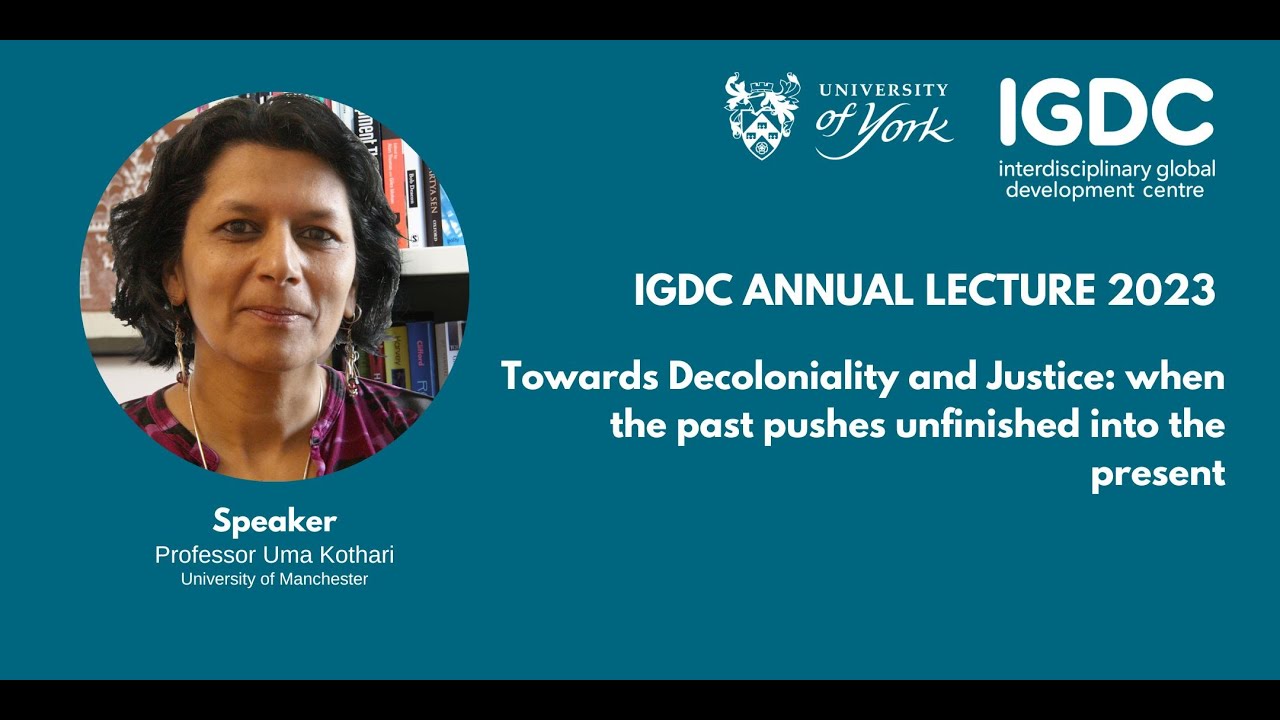
This academic lecture provides a deep historical analysis of how international development did not suddenly emerge with the Truman speech in 1947, but rather evolved directly out of British colonial administrative networks. It details how colonial administrators who lost their roles during decolonization simply transitioned their careers into the newly formed "development" sector, carrying colonial-era paternalism and top-down methodologies into the modern institutional framework.
Knowledge Checkpoint
- Detail the historical transition of British colonial administrators into modern international development institutions post-independence.
- Explain how early developmental concepts framed the West as the universal model of progress and colonized societies as "underdeveloped" objects of paternalistic intervention.

Why this video
This short, highly-viewed conceptual explainer introduces author Teju Cole's seminal term: the "White Savior Industrial Complex." The video unpacks how humanitarian interventions can often serve as emotional mechanisms that validate the savior's moral identity while obscuring the structural, historical causes of global inequality.
Knowledge Checkpoint
- Define the term "White Savior Industrial Complex" as coined by Teju Cole.
- Describe how savior narratives depoliticize historical structural inequalities and turn systemic crises into moral dramas of individual charity.
Why this video
This analysis positions the white savior complex not merely as a localized psychological issue, but as a systemic manifestation of white supremacy. It links the individual urge to "save" directly to the historical ideologies used to justify colonialism, slavery, and imperial expansion.
Knowledge Checkpoint
- Explain how individual saviorship functions to reinforce broader white supremacist and imperial structures.
- Contrast how colonial-era civilizing missions parallel modern paternalistic charity campaigns.

Why this video
This video provides a conceptual foundation for how modern development frameworks were built on nineteenth-century colonial policies. It outlines how development was initially conceptualized as a top-down "civilizing" framework, cementing the global North's position as the arbiter of human progress.
Knowledge Checkpoint
- Trace the evolution of the term "development" from nineteenth-century colonial civilizing missions to modern development frameworks.
- Critically evaluate how standardizing "progress" under Western parameters devalues alternate indigenous economic systems.
Module 2: The NGO Bureaucracy and Funding Dilemma
This module deconstructs the structural, financial, and political machinery of the Non-Governmental Organization (NGO) sector. It exposes how donor-driven funding frameworks systematically force organizations into "upward accountability" (satisfying the metrics, reporting systems, and political agendas of donor states and philanthropic foundations) rather than maintaining "downward accountability" to the local communities they are meant to serve.
We will contrast these top-down, conditional structures of institutional philanthropy with horizontal, solidarity-based mutual aid networks (elaborated on in Module 4).
Why this video
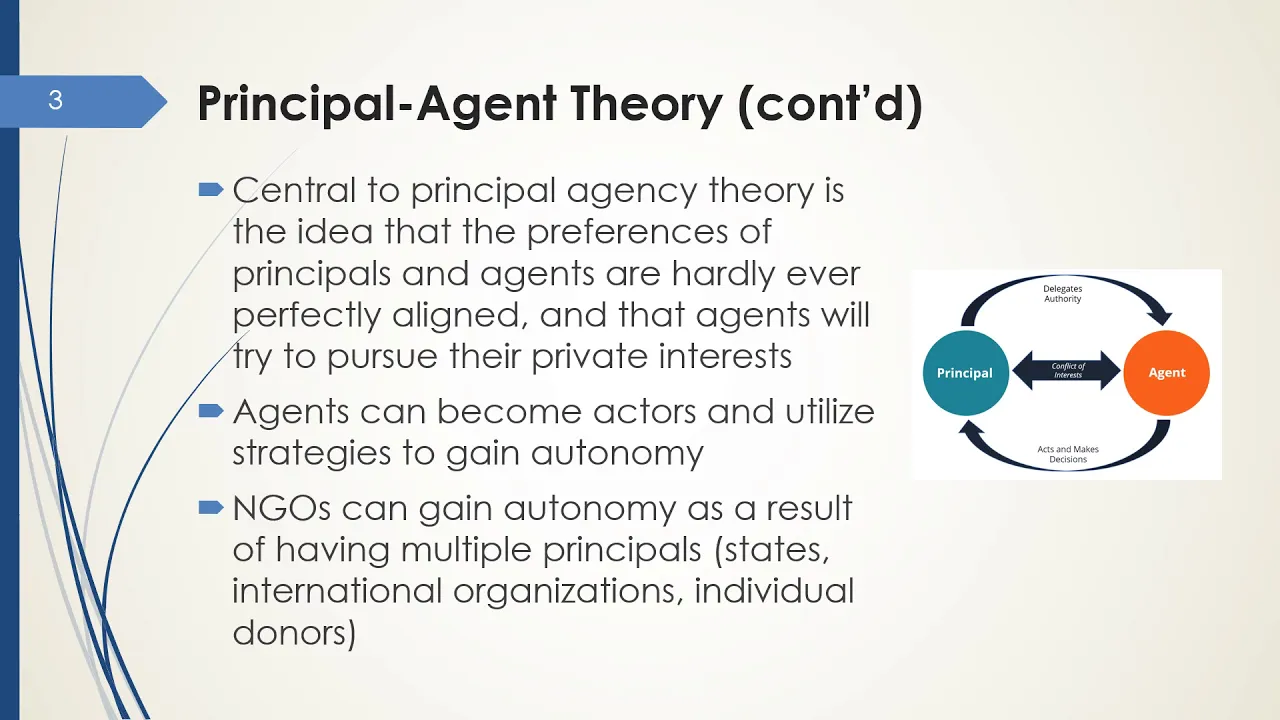
This academic lecture provides a rigorous framework for analyzing how state actors exercise control over NGOs through financial levers. It explicitly details how competitive contracting, funding earmarks, and threats of capital withdrawal undermine NGO autonomy, forcing them to align with donor state priorities over community needs.
Knowledge Checkpoint
- Define the difference between "upward accountability" to state/institutional donors and "downward accountability" to beneficiary communities.
- Describe the administrative mechanisms (such as conditional grant frameworks and competitive contracting) through which states restrict NGO self-determination.
Why this video
This video maps the direct financial pipeline from national assemblies (specifically the U.S. Congress) down through institutions like the State Department and USAID to sub-contracted NGOs. It demonstrates how public funds are transformed into political tools via NGO intermediaries while consuming immense percentages of capital in overhead and administrative costs.
Knowledge Checkpoint
- Outline the financial flow of donor state funds from legislation down to sub-contracted non-profits.
- Analyze the structural reasons why intermediate administrative costs and overhead diminish the actual volume of aid reaching local communities.

Why this video
In this historic speech, renowned author Arundhati Roy presents a critique of the "NGO-ization of resistance." She explains how global funding agencies, multilateral banks, and state agencies transform radical grassroots liberation and resistance struggles into professionalized, bureaucratized NGO sectors, thereby neutralizing their political power and aligning them with neoliberal agendas.
Knowledge Checkpoint
- Define "NGO-ization of resistance" as articulated by Arundhati Roy.
- Explain how institutional funding pacifies grassroots social movements by turning systemic political demands into projects focused on depoliticized indicators.

Why this video
This segment addresses the specific influence of private global philanthropic foundations (such as the Bill & Melinda Gates Foundation). It critiques how private capital flows directly into global South nations with prescriptive conditions, bypassing democratic national processes and imposing technocratic solutions from above.
Knowledge Checkpoint
- Analyze how private philanthropic foundations exert policy influence on developing nation-states.
- Identify the democratic implications of allowing unaccountable billionaire philanthropists to set national healthcare, agricultural, or educational policies.
Curriculum Gap Note & Self-Directed Search: Traditional media formats often skip over the tedious paperwork of institutional grant compliance. To understand the exact mechanical compliance frameworks that force NGOs into upward accountability, search Google Scholar or academic databases for:
"NGO donor grant reporting structures upward accountability""USAID/DFID Logical Framework Approach (LFA) critique""The professionalization of grassroots non-profits funding dynamics"
Module 3: Biopolitics of Refugee Camps: Control vs. Care
This module deconstructs the spatial, political, and philosophical design of refugee camps. Utilizing Michel Foucault’s theory of biopolitics and Giorgio Agamben’s concept of bare life (Homo Sacer), we analyze how humanitarian agencies and nation-states manage displaced populations. Rather than treating refugees as political agents with full civil and human rights, modern humanitarian governance often reduces them to biological bodies requiring physical maintenance (dietary metrics, shelter square footage) within highly secure, fenced, and surveilled enclosures.

Why this video
This creative conceptual animation clearly introduces Giorgio Agamben's philosophical concept of Homo Sacer and the distinction between bios (political life with full rights) and zoe (bare life—pure biological existence). This concepts form the theoretical foundation required to understand how refugee camps treat displaced individuals not as citizens, but as biological units to be managed.
Knowledge Checkpoint
- Define Agamben’s distinction between bios (political/social life) and zoe (bare biological life).
- Explain how sovereign power strips subjects of their political identity, rendering them homini sacri who exist inside a physical space but outside the protection of the law.

Why this video
This comprehensive London School of Economics (LSE) panel addresses the architecture and spatial politics of humanitarian shelter design. The scholars examine how shelter solutions focus on metrics, control, and standardisation, often stripping refugees of their autonomy, domestic choices, and historical spatial agency.
Knowledge Checkpoint
- Describe how the physical layout and design of refugee shelters can prioritize administrative surveillance and metric monitoring over the spatial autonomy of families.
- Differentiate between shelter as a passive noun (imposed on displaced populations by designers) and shelter as an active verb (designed and shaped by refugees themselves).
Why this video
Distinguished political theorist Seyla Benhabib critiques modern humanitarian reason, connecting Hannah Arendt's "right to have rights" to refugee camps and detention zones (such as Melilla or Lampedusa). She explains how placing individuals in permanent legal exceptions strips them of their political voice, substituting political justice with humanitarian pity.
Knowledge Checkpoint
- Explain Hannah Arendt’s concept of the "right to have rights" and how it applies to displaced populations.
- Detail how "humanitarian reason" can replace active political advocacy with depoliticized charity and physical containment.
Why this video
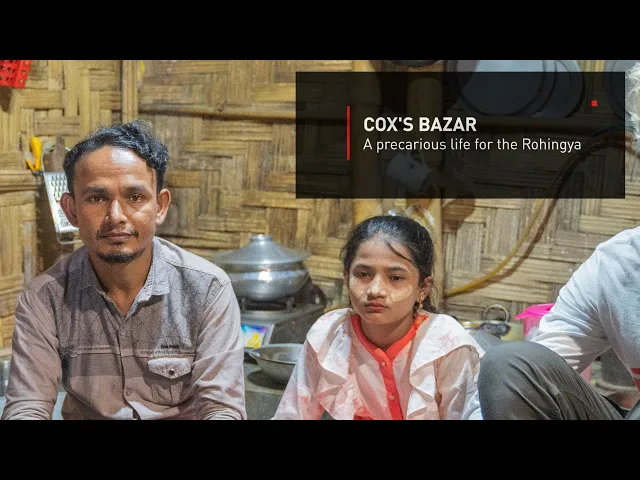
This on-the-ground footage from Cox's Bazar illustrates the physical reality of spatial control. It shows how fencing and checkpoints restrict internal and external movement, transforming refugee camps into secure enclosures where residents are entirely dependent on aid.
Knowledge Checkpoint
- Identify the physical containment measures (e.g., barbed wire, checkpoints) used to manage populations inside Cox's Bazar.
- Analyze how absolute material dependency on external aid restricts the political and economic self-determination of the Rohingya.

Why this video
Philosopher Slavoj Žižek argues that the global refugee crisis is fundamentally a geopolitical, economic, and political issue rather than a humanitarian emergency. He critiques the Western humanitarian instinct for reducing refugees to passive victims, arguing that this sentimentalized pity prevents the structural critique needed to address the root causes of displacement.
Knowledge Checkpoint
- Explain how sentimentalizing suffering depoliticizes refugees and obscures global geopolitical causes of migration.
- Critique the assertion that humanitarian assistance is politically neutral, detailing how it can stabilize highly unequal global dynamics.
Module 4: Top-Down Failures & Grassroots Resistance
This module contrasts standard, top-down development projects with horizontal, community-driven alternatives. Learners will examine how projects fail when they ignore local knowledge, analyze how indigenous communities resist developmental land grabs and "green colonialism" (the enclosure of indigenous lands under the banner of ecological conservation), and explore horizontal mutual aid as a direct counter-model to top-down institutional charity.

Why this video
In this widely cited talk, Ernesto Sirolli details his experiences working with Italian aid projects in Zambia. It serves as a case study in how patronizing, top-down development schemes ignore local ecological expertise and fail because they prioritize external "expertise" over community input.
Knowledge Checkpoint
- Analyze why the Italian agricultural project in Zambia failed, detailing what the external experts failed to understand about the local ecosystem.
- Explain why Sirolli advocates for "listening" and local initiative rather than paternalistic project planning.

Why this video
This panel introduces the critical concept of "green colonialism." It details how corporate and governmental entities acquire indigenous territories under the guise of environmental conservation and carbon offset development, showing how local communities resist these dispossessions.
Knowledge Checkpoint
- Define the term "green colonialism" and how it uses conservation rhetoric to dispossess indigenous communities.
- Describe the tactics used by local communities to resist corporate and developmental land grabs.

Why this video
Focusing on the late 1970s Alta Dam protests, this video examines Sami resistance to state-led infrastructural projects. It provides a historical model of how indigenous groups use civil disobedience, hunger strikes, and geographical alliance-building to challenge top-down development.
Knowledge Checkpoint
- Analyze the Alta Dam conflict as a clash between state-led energy modernization and Sami land sovereignty.
- Identify the organizing methods utilized by Sami activists to build coalitions and resist state infrastructure projects.
Why this video
This segment features organizer Dean Spade explaining the principles of "Mutual Aid." It defines mutual aid as a horizontal survival strategy based on direct action and solidarity, contrasting it with top-down, conditional institutional charity networks that often demand submission to bureaucratic criteria.
Knowledge Checkpoint
- Explain how mutual aid differs from bureaucratic charity in both structure and political objectives.
- Describe how horizontal networks build long-term political power instead of creating dependency.

Why this video
Dr. Mads Gilbert deconstructs the conceptual boundaries between solidarity and charity. He argues that charity creates hierarchical, dependency-inducing relationships of power, whereas solidarity is a horizontal, mutual struggle for shared liberation.
Knowledge Checkpoint
- Contrast the power dynamics inherent in acts of "charity" with those of "solidarity."
- Explain how "decolonizing solidarity" shifts the focus from victimhood to active resistance and partnership.
Course Map
Key People Index
- Teju Cole
Writer and art historian who coined the term "White Savior Industrial Complex" in 2012. Cole critiques how Western sentimentalism and humanitarian intervention can prioritize the emotional validation of the helper over systemic structural change. - Arundhati Roy
Celebrated Indian author and political activist. Roy’s analysis of the "NGO-ization of resistance" exposes how global philanthropic funds and institutional donor structures can turn radical grassroots liberation movements into professionalized, depoliticized NGO sectors. - Giorgio Agamben
Italian philosopher whose work on biopolitics and Homo Sacer explains how modern sovereign power strips individuals of their political and civil status, reducing them to "bare life" within spaces of legal exception like refugee camps and detention zones. - Dean Spade
Trans activist, lawyer, and academic. Spade’s work on Mutual Aid provides a practical and theoretical framework for horizontal, community-led survival networks, contrasting them with the top-down, conditional structures of the non-profit industrial complex. - Seyla Benhabib
Political theorist and Professor Emerita at Yale University. Benhabib critiques modern humanitarian reason, connecting Hannah Arendt's "right to have rights" to refugee camps and detention zones. She explains how placing individuals in permanent legal exceptions strips them of their political voice, substituting political justice with humanitarian pity.
Final Self-Assessment
Review the checklist below to evaluate your understanding of the concepts covered in this curriculum:
- Explain how nineteenth-century colonial administrations transitioned into modern international development networks.
- Define the "White Savior Industrial Complex" and identify three ways it manifests in NGO campaigns.
- Analyze the difference between "upward accountability" to Western donors and "downward accountability" to local communities.
- Outline the financial pipeline of USAID/State Department grants down to NGO subcontractors, noting where structural inefficiencies occur.
- Describe the "NGO-ization of resistance" and explain how institutional funding can depoliticize radical grassroots social movements.
- Define Giorgio Agamben’s concepts of bare life (zoe) and political life (bios) within the context of humanitarian aid.
- Detail how spatial layout and design in refugee camps prioritize administrative surveillance over the autonomy of residents.
- Critique the "humanitarian reason" framework using Hannah Arendt's concept of the "right to have rights."
- Explain the term "green colonialism" and provide an example of how conservation initiatives can dispossess indigenous communities.
- Contrast horizontal "mutual aid" with top-down, conditional institutional "charity" in terms of their structures and political goals.