Art Nouveau: Fine Art, Design & Architecture
Learning Goal: Examine the Art Nouveau movement's synthesis of fine and applied arts, analyzing its use of biomorphic forms, whip-lash curves, and innovative materials in graphic design and architecture.
- Prerequisites: None (a basic interest in art history or design principles is helpful).
- Estimated Total Study Time: 10 Hours
Module 1: Origins and Philosophy of Art Nouveau
This module explores the late 19th-century origins of Art Nouveau as a fierce rebellion against industrialization and academic historicism. You will study how artists turned to the natural world to establish a brand-new visual language. Crucially, this module examines the core philosophy of the Gesamtkunstwerk (the "total work of art"), which sought to collapse the hierarchy between "high" fine arts (like painting and sculpture) and "low" applied arts (such as furniture, textiles, and everyday household design).
Recommended Video: History of Industrial Design Week 4 Part 3: Art Nouveau

- Why this video: This academic lecture offers an extensive, foundational breakdown of the historical context in which Art Nouveau arose (1884–1914). It explains the socio-economic transition from the Arts and Crafts movement, the role of industrialization, and how the movement spread globally under different names (like Jugendstil or Stile Liberty).
- Knowledge Checkpoint:
- Explain how industrial mass production triggered the artistic backlash that birthed Art Nouveau.
- Describe the primary differences in attitude toward machine manufacturing between the Arts and Crafts movement and Art Nouveau.
- Identify the main regional variations and names of the Art Nouveau movement across Europe.
Recommended Video: SIEGFRIED BING ART NOUVEAU
- Why this video: This video focuses on Siegfried Bing, the legendary art dealer whose Parisian gallery (Maison de l'Art Nouveau) gave the movement its name. It provides a deep dive into how Bing championed the concept of the Gesamtkunstwerk, synthesizing interior environments where every element—from the woodwork to the glass fixtures—cohered into a unified artistic statement.
- Knowledge Checkpoint:
- Define the term Gesamtkunstwerk and explain its origins and meaning within interior design.
- Explain the historical importance of Siegfried Bing’s Paris gallery in commercializing and legitimizing Art Nouveau.
- Analyze how the integration of multiple artistic disciplines (wood, metal, glass) created a singular "unified environment."
Recommended Video: Historicism to Art Nouveau: Klimt and Ornament
- Why this video: Produced by the Museum of Fine Arts, Boston, this video showcases the stylistic shift away from conservative Historicism (copying classical architectural and decorative styles of the past). It uses the work of pioneer Otto Wagner and the Secessionist work of Gustav Klimt to show how artists rejected traditional mimicry in favor of modern, nature-focused ornamentation.
- Knowledge Checkpoint:
- Detail what "historicism" meant in late 19th-century academic art and why younger artists rejected it.
- Identify how Otto Wagner incorporated modern engineering and stylized ornamentation into structures like the Karlsplatz station.
- Explain how Gustav Klimt and the Vienna Secessionists used ornamentation to break down institutional barriers in art.
Module 2: The Visual Vocabulary: Whiplash Curves, Biomorphism, and Organic Structure
This module breaks down the formal visual language of Art Nouveau. You will conduct close visual analyses of its signature design elements: the dynamic "whiplash curve," biomorphic (life-resembling) forms, and asymmetrical natural geometries. This module bridges the transition from flat, two-dimensional graphic illustrations to complex, three-dimensional architectural spaces.
Recommended Video: 13 Art Nouveau Architecture & Decor
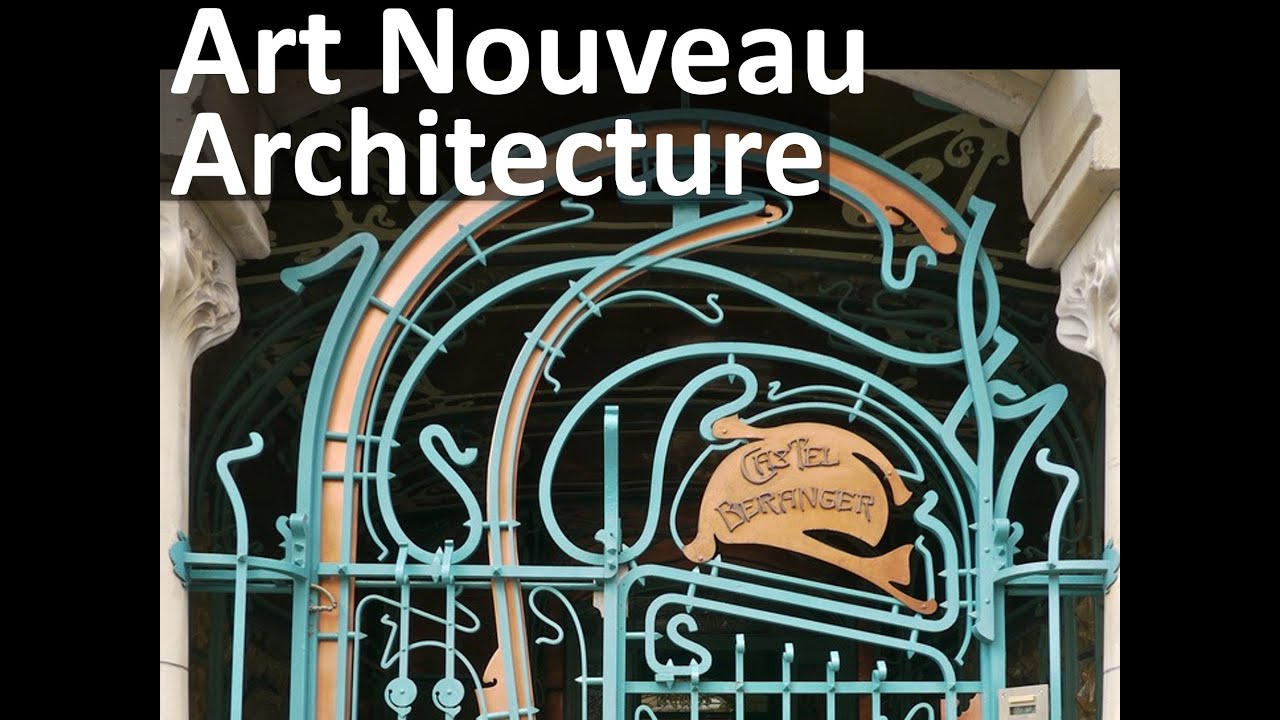
- Why this video: This academic slide-lecture provides a rigorous visual analysis of Art Nouveau’s ornamental principles. The instructor breaks down the movement into its two major stylistic branches: the organic, flowing curvilinear style (predominant in France and Belgium) and the structured, geometric rectilinear style (favored in Austria and Scotland).
- Knowledge Checkpoint:
- Distinguish between the curvilinear (organic) and rectilinear (geometric) schools of Art Nouveau.
- Describe the formal geometry and visual kinetics of the "whiplash curve."
- Explain how two-dimensional nature motifs (like vines, lilies, and roots) are structurally translated into physical, structural building materials.
Recommended Video: Exploring Art Nouveau! A look into this beautiful Design style!

- Why this video: This video focuses on the interior design and decorative attributes of the movement, highlighting how biomorphic shapes and plant-like silhouettes are applied to domestic spaces. It details how the stylized female form, natural flora, and winding asymmetry are utilized to create visual harmony and tension.
- Knowledge Checkpoint:
- Identify three common plant or animal motifs frequently used as decorative elements in Art Nouveau interiors.
- Explain how asymmetry is intentionally used in Art Nouveau to replicate the organic growth patterns of nature.
- Describe how the female figure is stylized and integrated into ornamental patterns (e.g., as part of vines or flowing hair).
Recommended Video: Art Deco vs Art Nouveau! #history #design
- Why this video: A short but highly effective visual contrast that sharply isolates Art Nouveau's design philosophy from its successor, Art Deco. By understanding what Art Nouveau is not (the streamlined, geometric, machine-age Art Deco), you will solidify your understanding of its hand-crafted, biomorphic, and organic core.
- Knowledge Checkpoint:
- Contrast the organic, asymmetrical lines of Art Nouveau with the geometric, symmetrical lines of Art Deco.
- Explain how each movement reacted differently to the rise of industrialized machine production.
Module 3: Graphic Design, Typography, and Poster Art
Art Nouveau revolutionized the fields of printmaking, commercial advertising, and typography. This module analyzes the development of color lithography and poster design, focusing on how Alphonse Mucha and Henri de Toulouse-Lautrec elevated commercial advertisements into high art.
Recommended Video: Through the Eyes of the Artist: Alphonse Mucha

- Why this video: This comprehensive, scholarly presentation offers a deep biographical and formal analysis of Alphonse Mucha’s iconic graphic style. It explores his breakthrough posters for actress Sarah Bernhardt, his integration of stylized typography, and how his commercial work defined the Parisian aesthetic of the Belle Époque.
- Knowledge Checkpoint:
- Explain how Alphonse Mucha’s accidental breakthrough in 1894 for Sarah Bernhardt redefined commercial poster art in Paris.
- Analyze the key compositional elements of the "Mucha Style," including the halo backdrop, Byzantine patterns, and elongated female figures.
- Discuss how Mucha seamlessly merged hand-drawn typography with organic botanical framing.
Recommended Video: Toulouse-Lautrec: The Art of Parisian Nightlife | Documentary
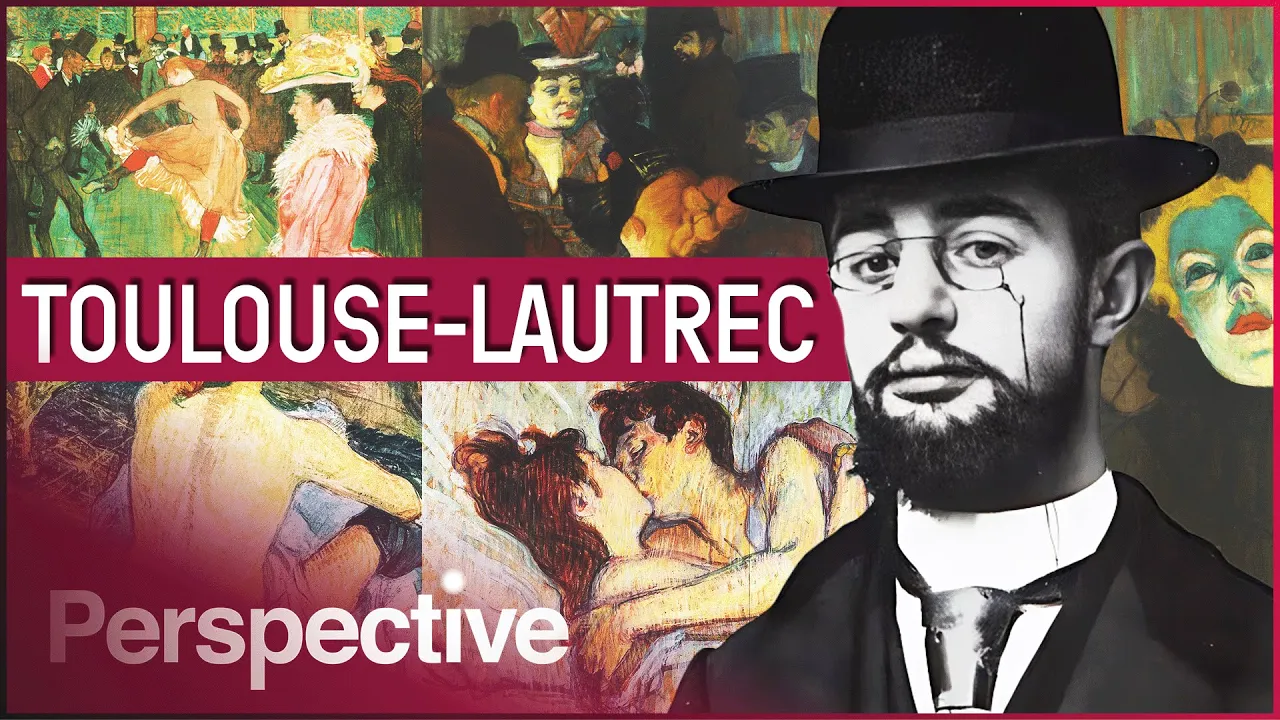
- Why this video: This documentary offers an intimate look at Henri de Toulouse-Lautrec's life and work in Montmartre. It highlights how his physical disabilities shaped his perspective and examines his revolutionary lithographic posters for the Moulin Rouge, demonstrating how he used flat color fields and bold silhouettes inspired by Japanese woodblock prints (ukiyo-e).
- Knowledge Checkpoint:
- Detail how Toulouse-Lautrec used simplified, bold lithographic forms to capture the energy and decadence of Parisian nightlife.
- Describe the influence of Japanese ukiyo-e woodblock prints on Toulouse-Lautrec’s spatial composition and flat fields of color.
- Explain how his commercial work bridged the gap between fine art galleries and street-level advertising.
Recommended Video: 6 Tips to Paint Like Mucha - Art Nouveau Speedpaint
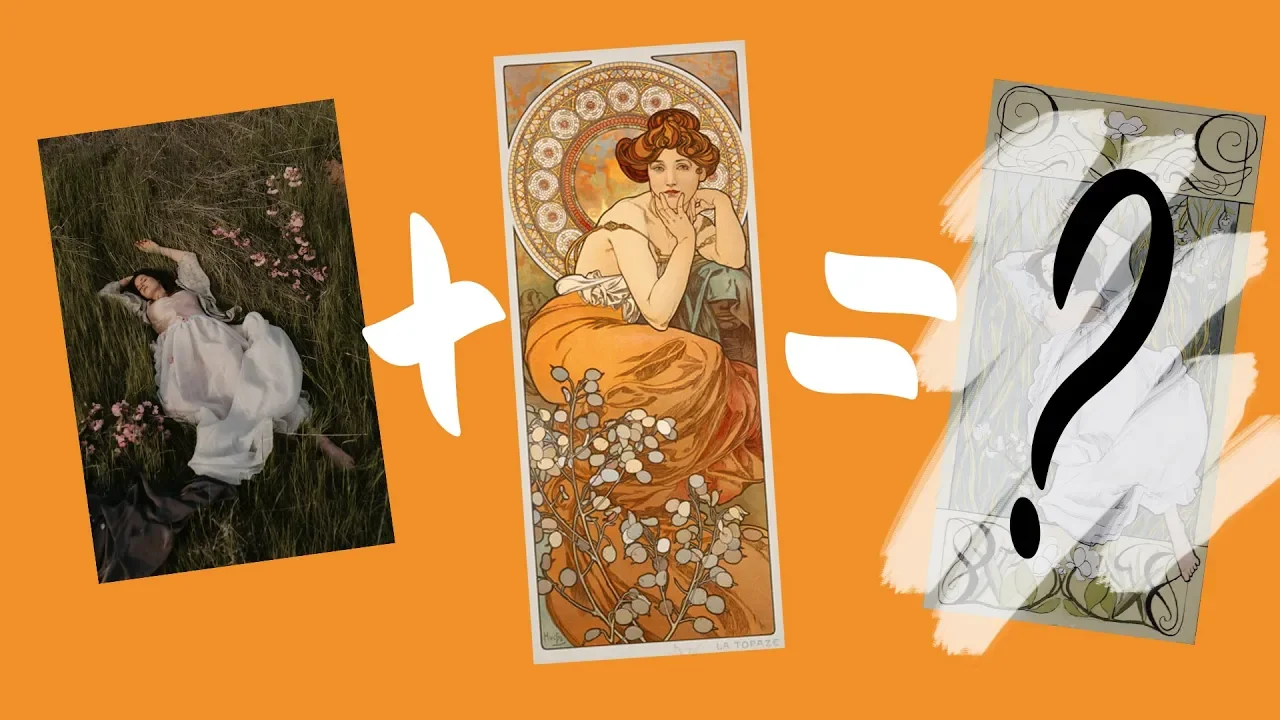
- Why this video: A practical, technical breakdown of how Mucha’s illustrations were structurally composed and painted. By watching the modern re-creation of this style, you will understand the technical execution of line weights, color selection, and the iconic "spaghetti hair" (macaroni) linework.
- Knowledge Checkpoint:
- Explain the technical process of using variable line weights (thick outlines vs. delicate inner lines) to construct depth in Art Nouveau illustration.
- Describe how Mucha structured and stylized hair into flowing, dynamic, three-dimensional ribbons.
- Identify the typical color palette (muted pastels, jewel tones, and gold highlights) used in Art Nouveau graphic arts.
Module 4: Revolution in Architecture: Iron, Glass, and Stone
This module explores how Art Nouveau architects revolutionized structural engineering. You will study how Victor Horta, Hector Guimard, and Antoni Gaudí utilized industrial materials like cast iron and plate glass, treating them not just as structural supports, but as plastic, sculptural mediums capable of expressing organic life.
Recommended Video: Major Town Houses of the Architect Victor Horta ... (UNESCO/NHK)

- Why this video: This UNESCO profile highlights Victor Horta’s townhouses in Brussels (including Hôtel Tassel and Hôtel Solvay), which are widely regarded as the first true Art Nouveau buildings. It showcases how Horta introduced exposed iron columns that branched out like natural stems, seamlessly blending engineering with decoration.
- Knowledge Checkpoint:
- Explain how Victor Horta's Hôtel Tassel revolutionized interior spatial layout using open plans and exposed iron.
- Describe how Horta used iron to transition from a load-bearing column into a decorative whiplash curve.
- Detail how natural light was integrated into Horta's townhouses using central skylights and glass partitions.
Recommended Video: Hector Guimard, Entrance Gate to Paris Subway (Métropolitain) Station, Paris, France

- Why this video: Smarthistory's experts provide an art-historical analysis of Hector Guimard’s Paris Metro entrances. The video explains how Guimard used mass-produced cast iron to create biomorphic, skeletal structures that brought Art Nouveau style out of private townhouses and into the public municipal infrastructure of Paris.
- Knowledge Checkpoint:
- Analyze how Guimard’s Metro entrances utilize biomorphic styling (e.g., resemblance to dragonfly wings, insect legs, or flower buds).
- Discuss the public reaction to Guimard's designs in 1900 and how they challenged conventional Victorian design tastes.
- Explain the technical achievement of using prefabricated, modular cast-iron components to build organic, hand-crafted shapes.
Recommended Video: ANTONIO GAUDI Documentary Film.....The Unfinished Vision (English)

- Why this video: A deep documentary on the life, faith, and structural genius of Catalan architect Antoni Gaudí. It focuses on how Gaudí completely bypassed traditional geometry (like straight lines and flat walls), studying the structural efficiency of trees, bones, and mountains to create his unique organic architectural style in Barcelona.
- Knowledge Checkpoint:
- Explain Gaudí’s core belief regarding the relationship between nature, geometry, and divine creation.
- Analyze how Gaudí engineered architectural columns to function like "stone tree trunks" that naturally distribute weight.
- Describe his use of trencadís (shattered ceramic mosaic tilework) to cover complex, undulating curves.
Recommended Video: How SoHo NYC Became The Cast Iron District | Walking Tour | Architectural Digest

- Why this video: This brief architectural highlight features the Little Singer Building in New York. It shows how the sculptural potential of iron (wrought iron hammered into organic curves paired with stamped cast iron) was utilized to construct slender, decorated, lightweight facades outside of Europe.
- Knowledge Checkpoint:
- Explain how the structural properties of wrought iron and cast iron differ in terms of their load-bearing capacity and sculptural flexibility.
Module 5: The Applied Arts: Glass, Jewelry, and Furniture
In this final module, you will examine the exquisite craftsmanship of Art Nouveau decorative arts. You will study how masters of glassmaking, jewelry design, and woodworking eliminated the boundaries between fine art and functional objects, focusing on the techniques of Louis Comfort Tiffany, René Lalique, and Émile Gallé.
Recommended Video: Emile Gallé: Artistry in Glass
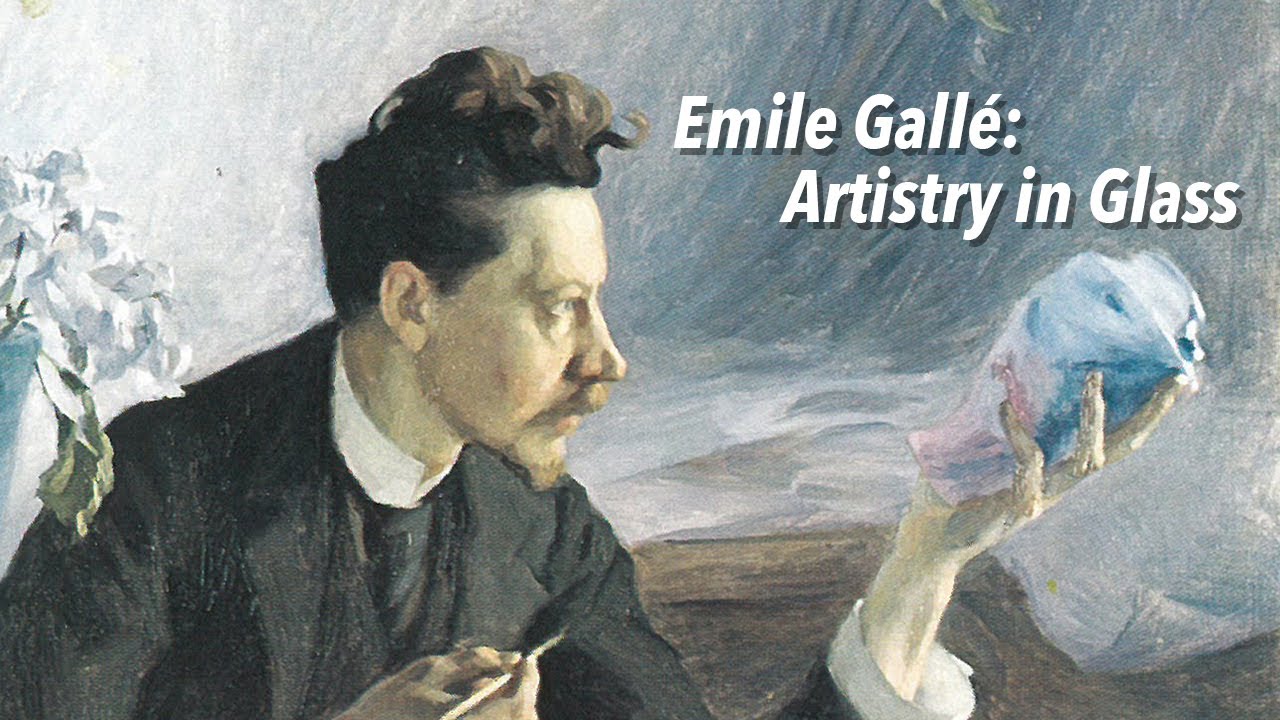
- Why this video: This video focuses on Émile Gallé, the founder of the Nancy School (École de Nancy) in France. It highlights his highly complex chemical and physical glass techniques, including acid etching, wheel carving, and his poetic integration of dark, naturalistic plant and insect motifs.
- Knowledge Checkpoint:
- Describe the process of creating cameo glass using layered glass and acid etching or wheel carving.
- Explain how the Nancy School integrated natural science and botany directly into physical glass and furniture craftsmanship.
- Define marqueterie de verre (glass marquetry) and how it differed from traditional hot-glass applications.
Recommended Video: 🔴 LIVE: Greatest Finds: Remarkable Rings From '00s Antiques Roadshow | BBC Antiques Roadshow UK
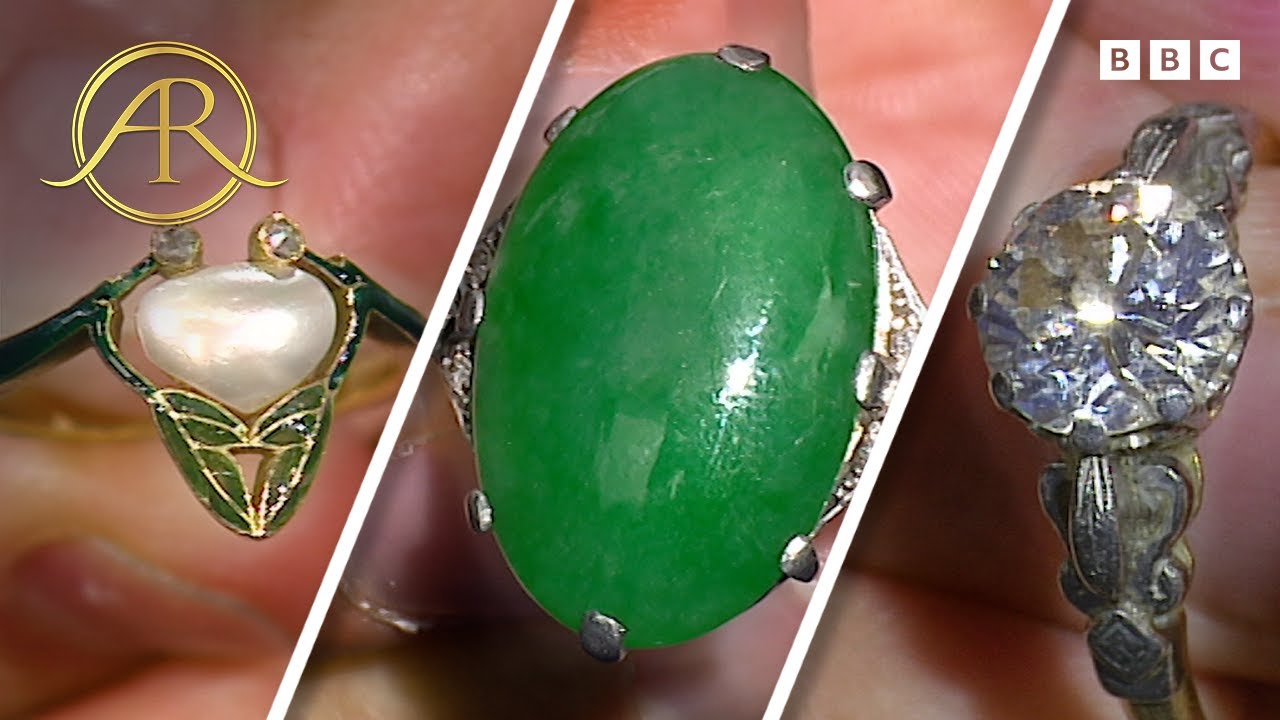
- Why this video: This segment explores the revolutionary jewelry designs of René Lalique. It showcases his signature plique-à-jour enamel work, which suspends translucent colored enamels without a backing to replicate the translucent quality of butterfly wings and leaves, highlighting how Lalique valued artistic execution over the raw karat weight of diamonds.
- Knowledge Checkpoint:
- Explain the technical process of plique-à-jour enamel and why it was ideal for replicating nature-inspired motifs.
- Contrast René Lalique's philosophy of jewelry design (using horn, glass, and enamel) with traditional, diamond-heavy Victorian jewelry.
- Identify how the insect, plant, and female forms are blended in Lalique's wearable artwork.
Recommended Video: Greatest Finds: Valuable Antiques From Series 24 | BBC Antiques Roadshow UK

- Why this video: Focuses on Louis Comfort Tiffany's monumental contributions to stained glass and decorative lamps. It details how Tiffany bypassed the traditional method of painting on clear glass by inventing Favrile glass, a process where color and metallic luster are chemically mixed into the molten glass itself to achieve rich organic textures.
- Knowledge Checkpoint:
- Define Favrile glass and describe how its manufacture differed from traditional painted medieval stained glass.
- Explain how Tiffany structured his signature lampshades to reflect naturalistic patterns (e.g., wisteria, dragonflies, and water lilies).
- Detail how copper-foil techniques allowed Tiffany craftsmen to assemble thousands of tiny, complex glass shards into curved shapes.
Recommended Video: Louis Majorelle Art Nouveau Designer

- Why this video: A comprehensive masterclass on Louis Majorelle, one of the premier French furniture designers of the Art Nouveau period. It shows how Majorelle sculpted heavy exotic woods into fluid, growing structures, often incorporating gilt-bronze (ormolu) fittings shaped like plants to reinforce the structural narrative of organic growth.
- Knowledge Checkpoint:
- Describe how Louis Majorelle adapted the whiplash curve to wooden furniture without compromising its structural integrity.
- Explain the role of gilt-bronze (ormolu) mounts in Majorelle’s woodwork, both ornamentally and structurally.
- Identify how the École de Nancy philosophy of unified design influenced the production of high-end domestic furniture.
Course Map
Key People Index
- Siegfried Bing (1838–1905): A German-French art dealer whose Paris gallery, Maison de l'Art Nouveau, became the epicenter of the movement and gave it its permanent name. He was a crucial patron of the Gesamtkunstwerk concept.
- Victor Horta (1861–1947): A Belgian architect widely credited with designing the first Art Nouveau building, Hôtel Tassel, in Brussels. He pioneered the translation of the organic whiplash curve into cast iron and open floor plans.
- Alphonse Mucha (1860–1939): A Czech painter and graphic designer whose distinctive theatrical posters for Sarah Bernhardt defined the Parisian graphic style. His compositions integrated elongated female figures, botanical frames, and stylized typography.
- Henri de Toulouse-Lautrec (1864–1901): A French painter and printmaker who captured late-19th-century Parisian nightlife in Montmartre. He revolutionized color lithography and commercial advertising posters.
- Antoni Gaudí (1852–1926): A Catalan architect who integrated organic structural logic (such as catenary arches, bone-like columns, and tree structures) into architectural marvels, most famously the Sagrada Família.
- Hector Guimard (1867–1942): A French architect who designed the famous Paris Metro entrances, utilizing mass-produced, modular cast iron sculpted into skeletal, biomorphic shapes.
- Louis Comfort Tiffany (1848–1933): An American artist and designer famous for his innovative glassmaking techniques (including Favrile glass and copper-foil construction) and stained-glass dragonfly and floral lamps.
- René Lalique (1860–1945): A French jeweler and glass artist who revolutionized jewelry design through his focus on organic motifs and advanced physical techniques like plique-à-jour enameling.
- Émile Gallé (1846–1904): A French glassmaker, woodworker, and founder of the École de Nancy. He was a pioneer in applying scientific botanical observations to acid-etched cameo glass.
Final Self-Assessment
Complete this comprehensive self-assessment to verify your mastery of the Art Nouveau movement:
- I can define Gesamtkunstwerk and explain how it was visually realized in an Art Nouveau interior.
- I can describe the cultural and artistic reaction against Historicism that sparked the birth of Art Nouveau.
- I can identify the formal aesthetic difference between the Curvilinear (organic) and Rectilinear (geometric) branches of Art Nouveau.
- I can explain the visual tension, geometry, and origins of the "whiplash curve."
- I can outline the key compositional elements of the "Mucha Style," specifically describing how organic shapes and typography are synthesized.
- I can explain how Henri de Toulouse-Lautrec utilized flat color fields and bold silhouettes under the influence of Japanese ukiyo-e woodblock prints.
- I can identify Victor Horta's structural innovations in the Hôtel Tassel, focusing on the use of exposed iron as a load-bearing and decorative element.
- I can analyze how Hector Guimard successfully applied organic, biological styling to mass-produced, modular cast-iron components for the Paris Metro.
- I can explain how Antoni Gaudí replaced classical straight-line geometry with structural designs derived directly from natural forms (e.g., bones, trees, mountain shapes).
- I can explain the technical difference between Émile Gallé's carved cameo glass and traditional hand-painted glass.
- I can describe René Lalique’s plique-à-jour enameling technique and discuss why it was preferred over traditional diamond settings.
- I can detail how Louis Comfort Tiffany developed and manufactured Favrile glass to achieve unique, mottled, organic colors.