Bauhaus: Art, Craft & Mid-Century Design
Learning Goal: Examine how the Bauhaus school's design principles integrated art, craft, and technology to shape global mid-century modern architecture and industrial design.
- Prerequisites: None (An open mind for design, modern history, and art is recommended!)
- Estimated Total Study Time: 10 Hours
Module 1: Origins and the Weimar Context
This module explores the historical, socio-political, and economic environment of post-World War I Germany that catalyzed the founding of the Bauhaus in 1919. You will explore Walter Gropius’s revolutionary manifesto, the synthesis of fine art and manual craft, and the utopian goal of rebuilding a fractured society through human-centered design.

Why this video: This comprehensive BBC documentary acts as the cornerstone for your historical understanding. It provides an exhaustive deep dive into Weimar's post-war trauma and chronicles how Walter Gropius established the school to merge fine arts and functional trade skills into a single, cohesive educational framework.

Why this video: A concise, visually engaging overview that solidifies the primary concepts of the Bauhaus timeline (1919-1933). It serves as an excellent primer to synthesize the aesthetic transitions from Weimar to Dessau and finally to Berlin.
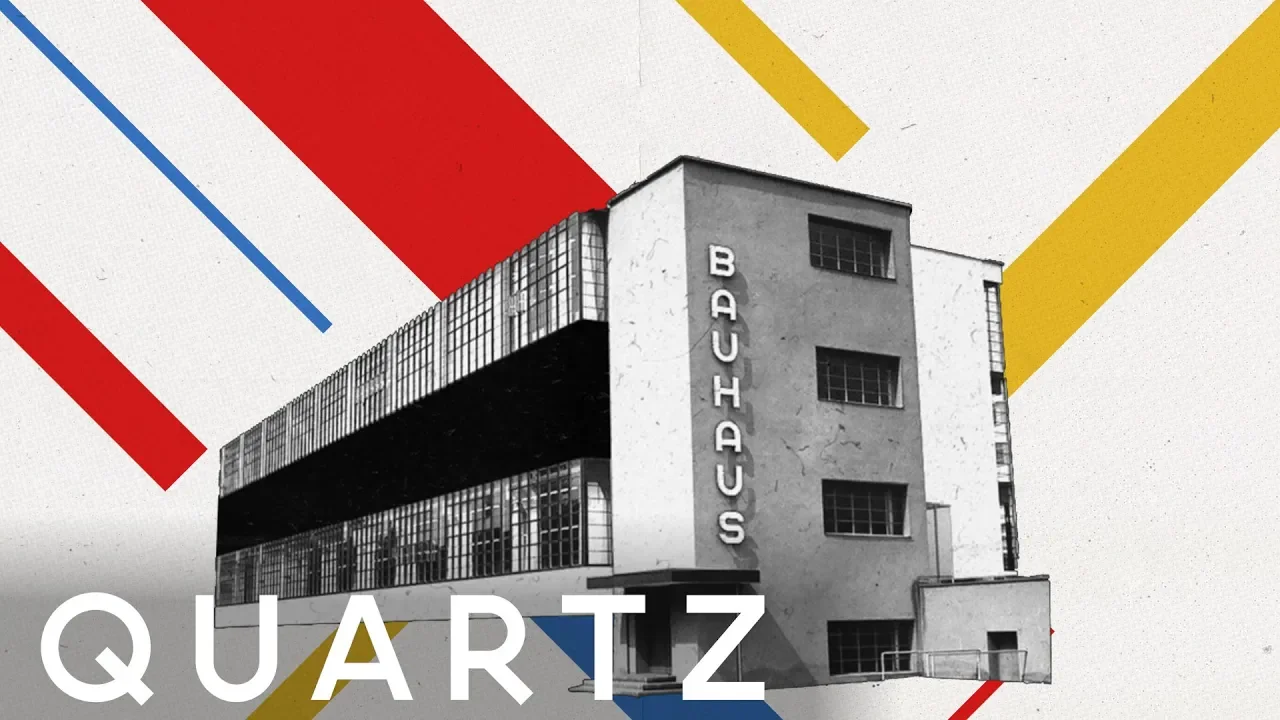
Why this video: This video frames the school's structural decisions as direct responses to political instability. It highlights how avant-garde artists leveraged functional design as a form of social and political transformation during the Weimar Republic.
Knowledge Checkpoint
- What socio-political factors in post-WWI Germany inspired Walter Gropius to write the Bauhaus Manifesto in 1919?
- How did Gropius's definition of the "ultimate aim of all creative activity" challenge traditional 19th-century academic art institutions?
- In what ways did the political shifts of the Weimar Republic directly impact the school's funding and eventual relocation?
Module 2: Core Philosophy: Art, Craft, and the Vorkurs
This module examines the innovative educational framework of the Bauhaus, centered on the Vorkurs (preliminary course). You will study how Johannes Itten, Wassily Kandinsky, and Paul Klee reshaped design pedagogy. Additionally, we address historical gender disparities by highlighting the foundational, yet often marginalized, contributions of the Bauhaus weaving workshop and its female pioneers.

Why this video: This essential documentary critiques the gender dynamics of the school. While Gropius promised absolute equality, women were systematically funneled into the weaving workshop. This video documents how these brilliant artists transformed weaving into a profitable, highly technical hub of industrial textile design.
Why this video: This video outlines the radical nature of Johannes Itten’s Vorkurs. It highlights how he deconstructed traditional academic habits, forcing students to engage directly with raw materials, textures, and geometric forms.

Why this video: A focused look at Gunta Stölzl, who became the school's first female Master. This profile demonstrates how her mastery of color and technical weaving principles established textiles as a primary financial driver for the school.

Why this video: Ellen Lupton explains the underlying philosophy of the Basic Course, which was designed to strip away conventional decorative habits and foster direct, unmediated expression using fundamental forms and lines.
Curriculum Gap Alert: While Johannes Itten's pedagogical structure is introduced here, his detailed theories on color contrast (such as his seven color contrasts) and the spiritual dimensions of his teachings are not covered in depth.
- Recommended independent search: "Johannes Itten's seven color contrasts" and "Wassily Kandinsky Point and Line to Plane theory".
Knowledge Checkpoint
- What was the primary objective of Johannes Itten’s Vorkurs, and how did it differ from traditional art school training?
- Despite the manifesto's promise of gender equality, how did Gropius and the administration restrict female students, and how did they adapt?
- How did Gunta Stölzl and her contemporaries elevate the weaving workshop into a highly successful commercial enterprise?
Module 3: Architectural Revolution: Dessau and Beyond
This module transitions to the structural and spatial innovations of the iconic Dessau campus. You will analyze Walter Gropius’s architectural philosophies, study the transition of leadership, and explore Mies van der Rohe’s minimalist, structural-steel approach.
![[ARTE] Architecture Collection - Episode 01: Gropius - The Dessau Bauhaus](https://i.ytimg.com/vi/_szmgy_YrN8/hqdefault.jpg?sqp=-oaymwEmCOADEOgC8quKqQMa8AEB-AHOBYACkAOKAgwIABABGGUgWyhMMA8=&rs=AOn4CLBolyDrYoeZKF2nh8FI79X2acLX2g)
Why this video: This documentary provides an analytical tour of the Dessau building. It highlights how the architectural layout reflected the school’s collaborative, interdisciplinary curriculum, using glass curtain walls and reinforced concrete.
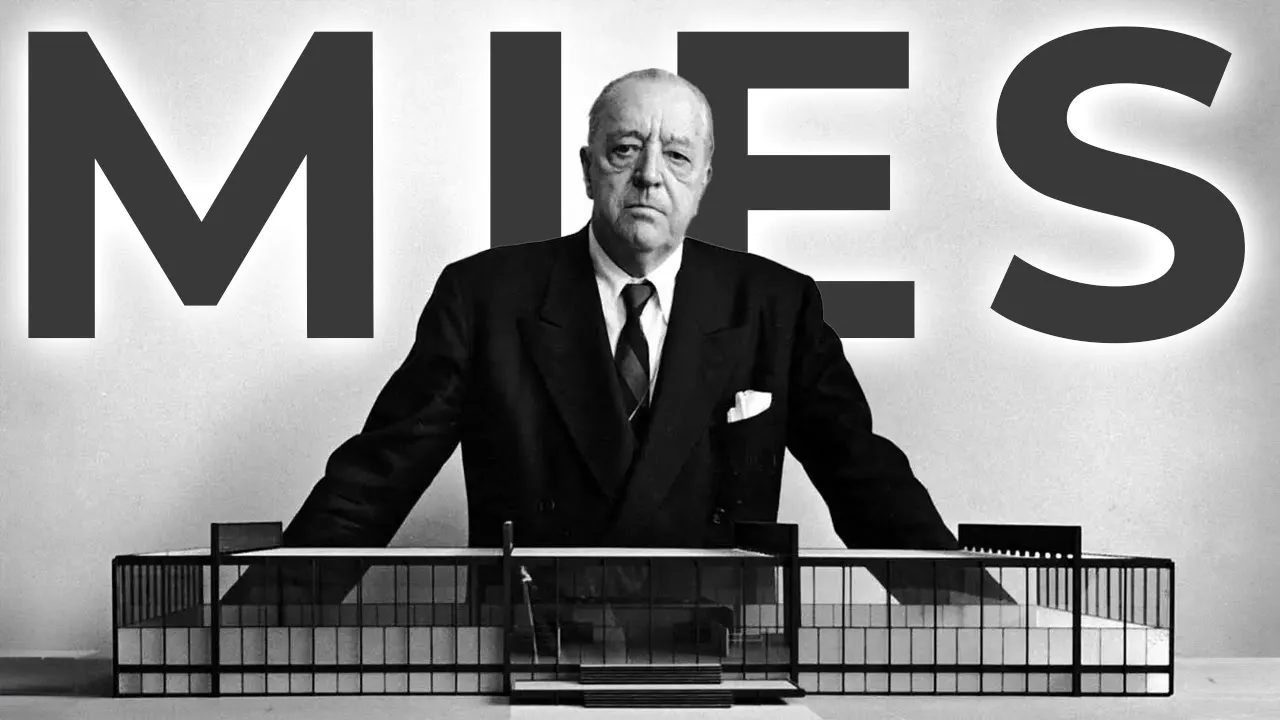
Why this video: A thorough examination of Ludwig Mies van der Rohe's life and design philosophy. As the third director of the school, Mies steered the curriculum toward structural clarity, refining his signature "less is more" ethos.
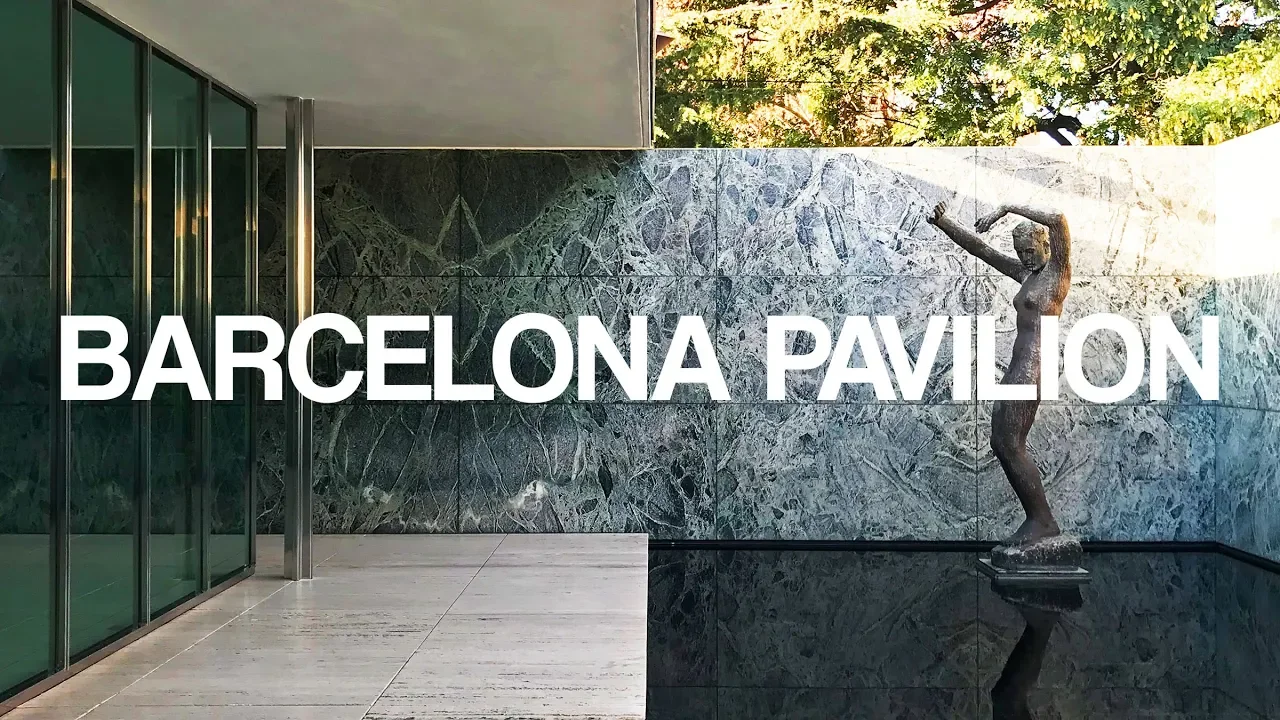
Why this video: This high-fidelity walk-through of the reconstructed Barcelona Pavilion (1929) highlights how Mies van der Rohe masterfully used "skin and bones" architectural principles, free-standing walls, and rich, continuous materials.
Curriculum Gap Alert: This module highlights Walter Gropius and Ludwig Mies van der Rohe, but the tenure of the second Bauhaus director, Hannes Meyer, is not represented in the video pool. Meyer shifted the school’s focus toward socially responsible design, cooperative housing, and affordable production.
- Recommended independent search: "Hannes Meyer Bauhaus director social co-op architecture" to understand his slogan: "Co-op / Peoples' needs instead of luxury needs."
Knowledge Checkpoint
- How did the physical design of the Dessau Bauhaus building (e.g., the glass curtain wall and separate functional wings) reflect its core pedagogical philosophy?
- What is the "skin and bones" architectural approach coined by Mies van der Rohe, and how does it manifest in the Barcelona Pavilion?
- How did the focus of the school shift when Mies van der Rohe took over leadership in its final years?
Module 4: Industrial Design: Furniture, Typography, and Metalwork
In this module, you will discover how the Bauhaus revolutionized everyday objects. We will focus on Marcel Breuer’s pioneering tubular steel furniture, Marianne Brandt’s functional metalwork, and the typographic reforms that paved the way for modern graphic design.

Why this video: This video traces the evolution of the iconic Model B3 (the Wassily Chair). You will learn how Breuer, inspired by his bicycle's steel handlebars, adapted industrial steel tubing to create lightweight, mass-producible furniture.

Why this video: A deep dive into the graphic design legacy of the school. This lecture explores how Bauhaus typographers stripped away ornamental German Gothic scripts in favor of clean, sans-serif letterforms designed for legibility and mass reproduction.

Why this video: This history presentation traces the trajectory of tubular steel design, showing how experimental prototypes developed in Germany evolved into iconic commercial products across the globe.

Why this video: A short spotlight on Marianne Brandt, the trailblazing artist who overcame institutional bias to lead the metal workshop. Her beautiful, geometric teapots and lamps became quintessential examples of Bauhaus design.
Curriculum Gap Alert: While this module highlights graphic design reforms, Herbert Bayer’s development of the Universal typeface (1925) is not discussed in deep detail.
- Recommended independent search: "Herbert Bayer Bauhaus typography Universal typeface 1925" to see how he eliminated capital letters to optimize efficiency.
Knowledge Checkpoint
- What material breakthrough inspired Marcel Breuer to design the Wassily Chair, and why was it a departure from historic furniture design?
- How did Marianne Brandt incorporate primary geometric shapes (circles, cylinders, hemispheres) into her functional household metalwork?
- Why did Bauhaus typographers reject capital letters and serif fonts, and what were they trying to achieve culturally?
Module 5: The Global Diaspora and Mid-Century Modernism
This final module traces the legacy of the Bauhaus after its forced closure by the Nazi regime in 1933. You will follow the migration of key faculty members as they established new centers of design in America and adapted their principles to shape the international landscape of Mid-Century Modernism.
Why this video: This lecture covers László Moholy-Nagy's journey to Chicago in 1937 to establish "The New Bauhaus" (now the IIT Institute of Design). It shows how he adapted Weimar's experimental pedagogy to suit American industrial manufacturing.
Why this video: This PBS special shows how Bauhaus principles transformed post-war American architecture. It examines the shift toward open-plan living, functional spaces, and the rejection of 19th-century domestic ornamentation.

Why this video: This classic home tour of Walter Gropius's personal residence in Lincoln, Massachusetts (built in 1938), demonstrates how he adapted traditional New England building materials (wood, fieldstone) alongside industrial Bauhaus elements (glass blocks, chrome details).
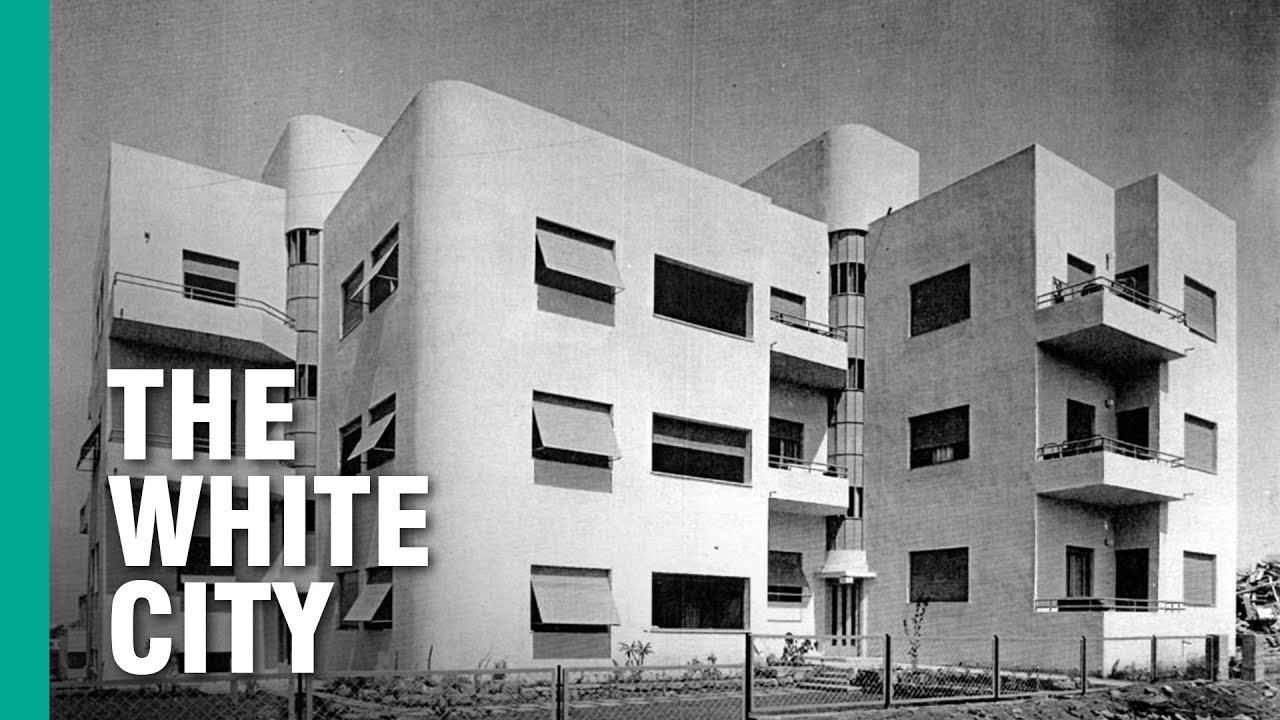
Why this video: An insightful case study of Tel Aviv's "White City," which contains over 4,000 Bauhaus-style buildings. This video shows how Jewish architects fleeing Nazi persecution adapted European design principles to suit a hot, Mediterranean climate.
Knowledge Checkpoint
- How did László Moholy-Nagy's "New Bauhaus" in Chicago adapt the original German curriculum to align with American corporate and industrial realities?
- In what ways did Walter Gropius compromise or modify classic Bauhaus principles when constructing his family home in Massachusetts?
- How did Bauhaus-trained architects adapt their designs for the hot climate of Tel Aviv (e.g., modifying window sizes and introducing balconies)?
Course Map
Below is the recommended learning progression. You can see how the fundamental concepts introduced in Module 1 and 2 branch out into architectural and industrial designs, before converging on the global diaspora.
Key People Index
| Practitioner / Educator | Primary Context & Contribution |
|---|---|
| Walter Gropius | Founder and first director of the Bauhaus (1919–1928). Designed the Dessau campus and drafted the manifesto to unite art, craft, and technology. |
| Johannes Itten | Creator of the preliminary course (Vorkurs). Known for his expressive teaching style, material explorations, and foundational theories on color contrast. |
| Gunta Stölzl | Student turned Master of the Bauhaus weaving workshop. She transformed hand-weaving into a highly technical, commercially successful industrial craft. |
| Marianne Brandt | Student who rose to lead the metal workshop. Her beautiful, geometric teapots and lighting fixtures are classic examples of Bauhaus design. |
| Marcel Breuer | Head of the cabinetmaking workshop in Dessau. He pioneered tubular steel furniture design, inspired by modern bicycle construction. |
| Ludwig Mies van der Rohe | Third Bauhaus director (1930–1933). He popularized the "less is more" philosophy and championed structural steel frame architecture. |
| László Moholy-Nagy | Faculty member who later emigrated to America to found "The New Bauhaus" in Chicago, introducing experimental German principles to US manufacturing. |
Final Self-Assessment
Complete this self-assessment to test your understanding of the entire curriculum:
- I can describe the economic, political, and social conditions of the post-WWI Weimar Republic that led to the creation of the Bauhaus.
- I can explain the structure of the Vorkurs and why it was a radical departure from traditional academic art education.
- I can discuss the gender barriers women faced at the Bauhaus and how they built a highly successful textile industry despite these restrictions.
- I can identify the architectural features of the Dessau campus and explain how they reflected Gropius's design philosophies.
- I can outline the core differences in philosophy between Walter Gropius, Hannes Meyer, and Ludwig Mies van der Rohe.
- I can explain how Marcel Breuer developed the Wassily Chair and why tubular steel was such a breakthrough material.
- I can describe the geometric design elements that characterize Marianne Brandt's metalwork.
- I can explain how Bauhaus typography and graphic design modernized print media and why they favored sans-serif typefaces.
- I can trace the path of the Bauhaus diaspora to the United States and identify key figures who led institutions like "The New Bauhaus" in Chicago.
- I can identify the key characteristics of Mid-Century Modern architecture and trace its roots back to early German modernist experiments.