Building Wind Turbines: Blade Pitch & DC Motors
Learning Goal: Construct a functional desktop-scale wind turbine, optimizing blade pitch and surface area to maximize voltage output generated from a DC motor.
- Prerequisites: High school physics (basic electricity and mechanics), familiarity with using a digital multimeter, and basic hand tools.
- Estimated Total Study Time: 14 Hours
Module 1: Wind Energy Fundamentals & Turbine Mechanics
In this module, you will explore the core physics of wind energy. You will learn how modern horizontal-axis wind turbines (HAWTs) capture kinetic energy from moving air and convert it to rotational mechanical energy. Most importantly, you will study Betz's Law, which defines the physical limit of wind power extraction (59.3%), and understand why a turbine cannot extract 100% of the wind's energy.
Recommended Videos
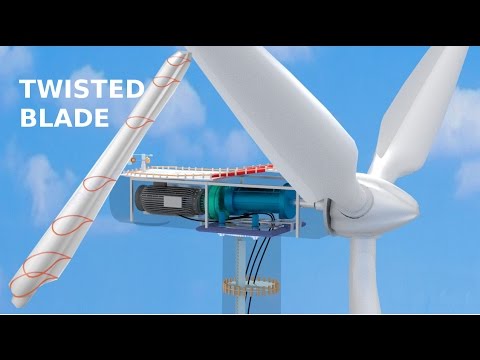
- Why this video: This video provides an intuitive and visually rich introduction to the physical design of modern wind turbines. It explains how wind generates aerodynamic lift to spin blades and outlines the foundational mechanical components that convert this motion into electricity.

- Why this video: Understanding efficiency limits is critical when optimizing a custom-built model. This video walks through the derivation and application of Betz's Law, demonstrating why a turbine that stops the wind entirely cannot generate continuous power.

- Why this video: A conceptual masterpiece, this quick animation clarifies a common misconception by contrasting water turbines (which work by volume and pressure drops inside pipes) with wind turbines (which operate in an open fluid system where air must flow around and through the rotor sweep area).
Knowledge Checkpoint
- Explain why a wind turbine that extracts 100% of kinetic energy from the wind would actually perform at 0% efficiency.
- State the maximum theoretical limit of wind turbine efficiency (Betz Limit) and the physical reasons behind it.
- Describe the difference between the drag-based wind extraction seen in ancient windmills and the lift-based extraction used by modern high-efficiency turbines.
Module 2: DC Motors as Electrical Generators
To generate power from your desktop turbine, you must understand electromagnetic induction. In this module, you will learn how a standard brushed DC motor can run in reverse to function as an electrical generator. We will explore how rotational speed (RPM) directly impacts the output voltage (Back EMF) and learn how to characterize and select a small motor that will yield the highest voltage at low desktop wind speeds.
Recommended Videos

- Why this video: This video clearly demonstrates the physical connection between mechanical rotation and electrical generation using basic permanent magnet DC motors, explaining how rotational direction dictates output current polarity.
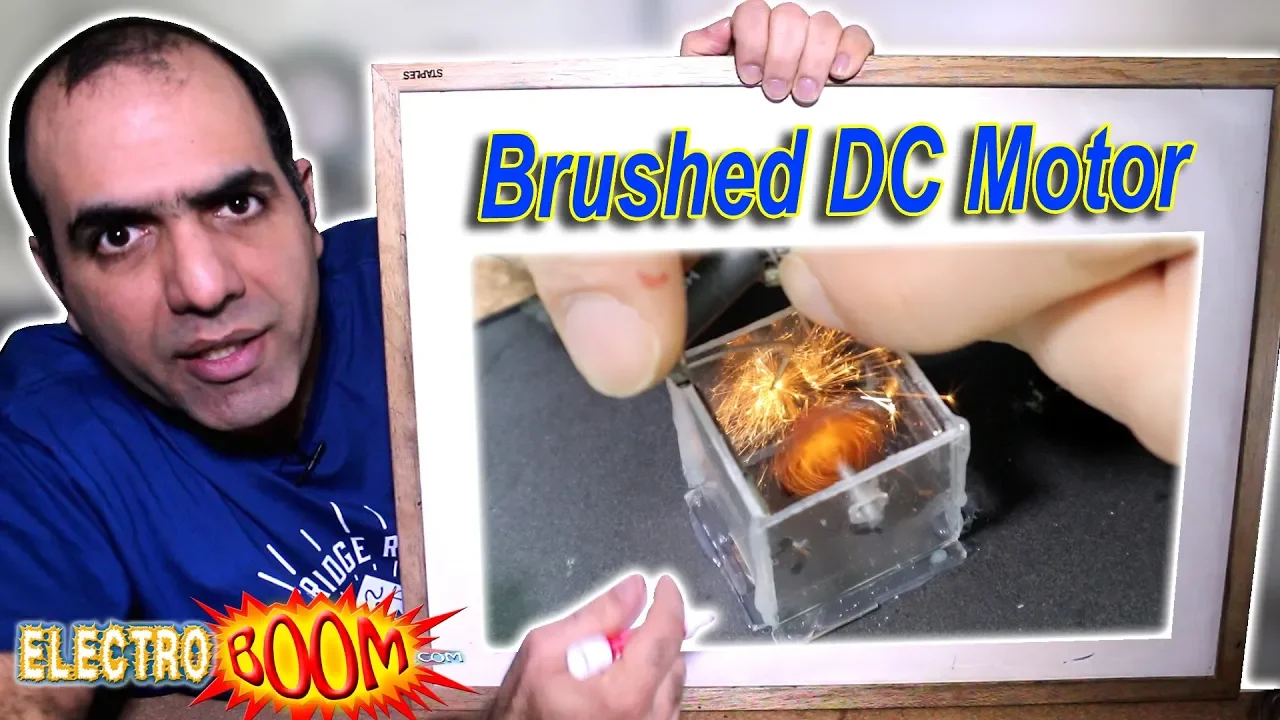
- Why this video: A concise deep dive into the internal physics of brushed motors. It introduces the concept of Back Electromotive Force (Back EMF)—the internal voltage produced by the motor windings cutting through magnetic fields, which serves as the generator voltage when mechanically spun.

- Why this video: This video offers a highly practical method for analyzing motors using a hand drill and a digital multimeter. You will learn how to measure output voltage at specific RPM intervals to calculate your generator's efficiency and constants.
Knowledge Checkpoint
- Explain how spinning the shaft of a brushed permanent magnet DC motor produces electrical voltage.
- What is Back EMF, and how does it relate to the voltage you can expect to measure from your DIY wind turbine generator?
- Detail the physical setup required to calculate a DC motor's Voltage-to-RPM ratio using a drill and a multimeter.
Module 3: Blade Aerodynamics: Lift, Drag, and Pitch
Designing turbine blades for a desktop-scale system requires balancing aerodynamics with torque constraints. This module covers how wind velocity vectors interact with your blade to create a relative wind angle. We will simplify complex aerodynamics, focusing on the relationship between blade surface area (which provides starting torque) and blade pitch (which optimizes rotational speed).
Recommended Videos
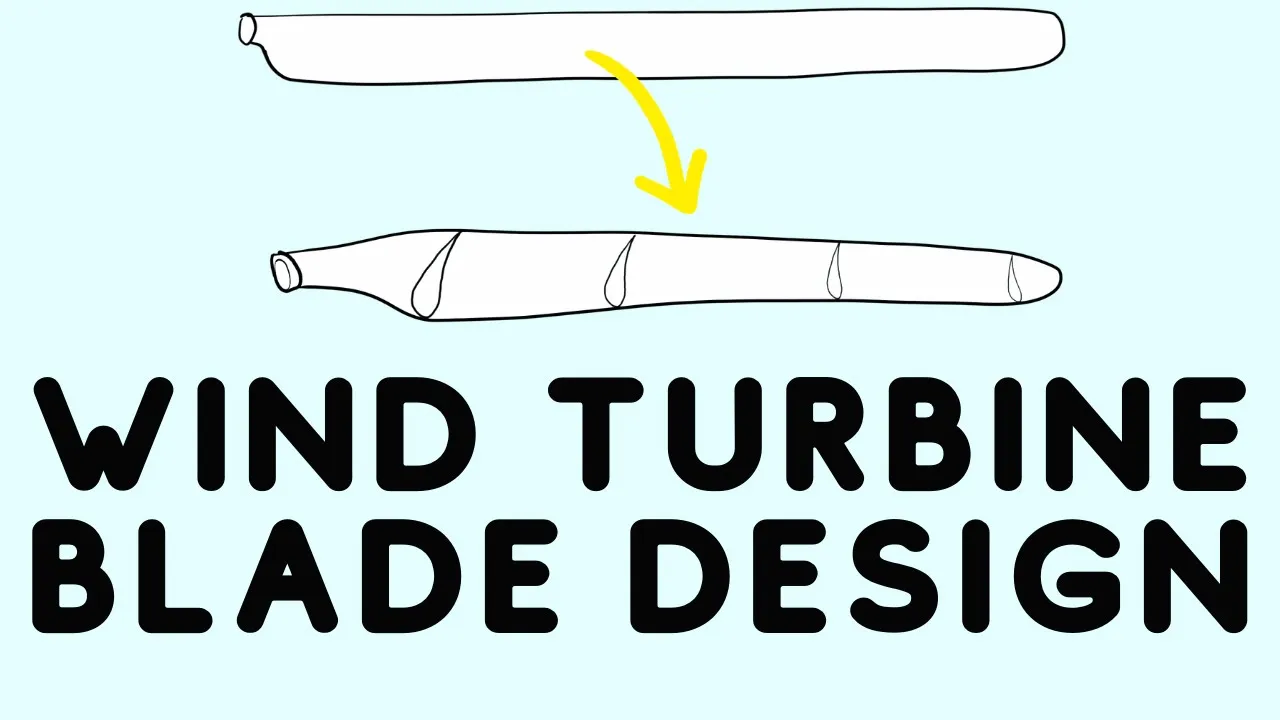
- Why this video: This video bridges aerodynamic theory and physical shape, demonstrating how chord length and blade twist vary along the span of a blade. It explains how to maintain an optimal angle of attack from the root to the tip.

- Why this video: This video provides an intuitive and accessible visual explanation of blade pitch—the angle at which the blade is turned relative to its plane of rotation—and how adjusting this angle directly alters lift and drag forces.

- Why this video: Although focused on propellers, this short clip uses excellent physical models to show why rotational speed is faster at the tip of a blade than near the center, highlighting why blade twist is useful to prevent stalling.
Gap Note & Self-Directed Search: Because desktop-scale wind turbines operate at very low Reynolds numbers, mathematical models like Blade Element Momentum (BEM) are less practical than real-world trial and error. If you find yourself struggling to transition from theory to practice, search YouTube for: "Wind turbine blade pitch angle of attack explained DIY" or "Optimizing wind turbine blade surface area and torque" to see manual adjustments in classroom wind tunnels.
Knowledge Checkpoint
- Define blade pitch and sketch how changing the pitch alters the blade's angle of attack.
- Why do turbine blades require a higher pitch angle near the hub (center) and a flatter pitch angle near the tips?
- What is the trade-off between a blade with a high surface area (wide chord) and one with a low surface area (narrow chord) regarding starting torque and high-speed rotation?
Module 4: Prototyping and Fabricating Turbine Blades
Now, you will apply your aerodynamic knowledge to construct actual blades. This module covers practical manufacturing methods using cheap, everyday materials like PVC pipes and cardboard, as well as digital fabrication using 3D printers. You will learn to construct strong, lightweight blades and build a secure central hub.
Recommended Videos

- Why this video: One of the most effective DIY blade-making techniques uses the natural curve of PVC pipes. This video demonstrates a step-by-step method to safely trace, cut, and bevel PVC sections into high-performing airfoil blades.
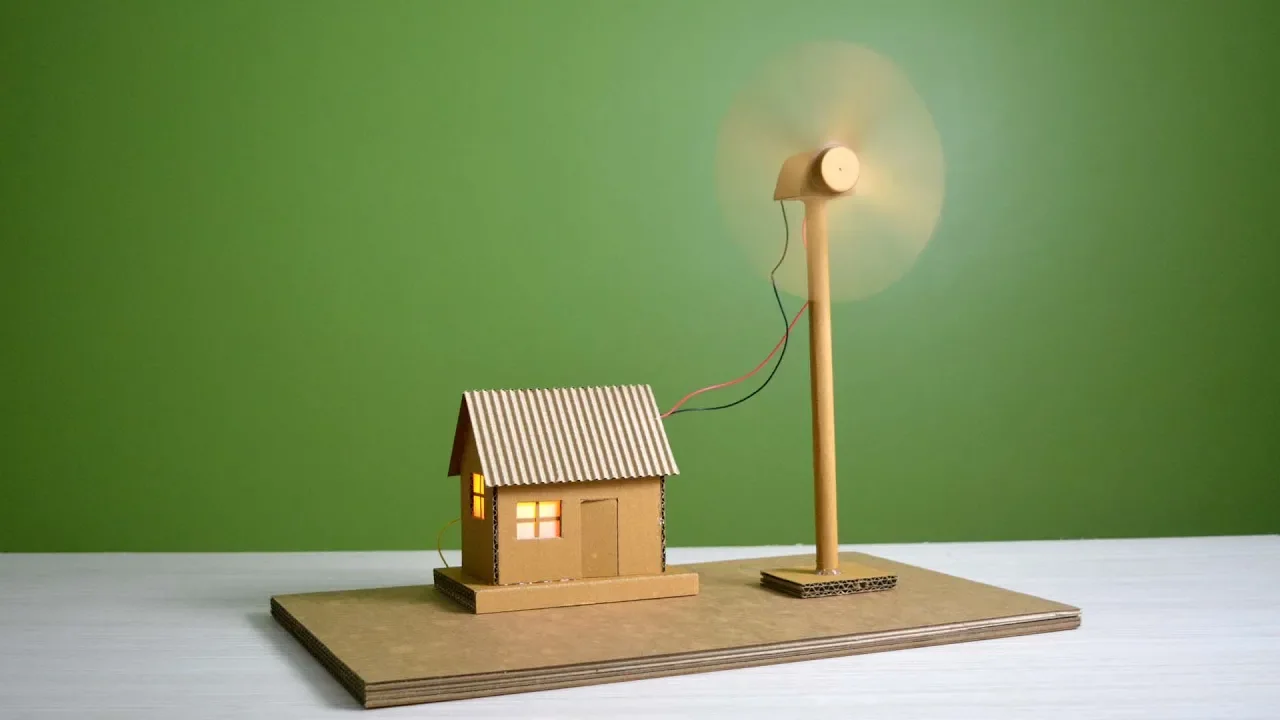
- Why this video: If you lack heavy power tools, cardboard is an excellent rapid-prototyping material. This video shows how to build a basic working turbine structure using cardboard and hot glue to prove your electromechanical connections.

- Why this video: For students with access to 3D printers, this design workflow tutorial outlines how to use CAD loft features. It details how to construct clean, mathematically accurate airfoils that translate beautifully from CAD software to a physical build.
Knowledge Checkpoint
- Why does cutting a blade profile out of a curved PVC pipe naturally yield a high-performing aerodynamic profile compared to a flat piece of wood or plastic?
- List two methods for securing blades to a central rotor hub to prevent slipping during high-speed rotation.
- Identify the safety hazards of fabricating PVC blades and explain how to mitigate them (e.g., eye protection, proper cutting speed).
Module 5: Assembly, Testing, and Voltage Optimization
In this final module, you will assemble your desktop turbine, set up a controlled testing environment using a household box fan, and run systematic experiments. You will learn to use a digital multimeter to measure your output voltage under load, and adjust your blade pitch and surface area to find the exact combination that maximizes voltage output.
Recommended Videos

- Why this video: This video showcases the ideal classroom/DIY testing methodology. It features the KidWind platform, demonstrating how to use adjustable wooden dowel blades to easily alter pitch and quickly measure performance changes in real-time.

- Why this video: To optimize your turbine, you must measure your output accurately. This video explains how to configure a multimeter to measure DC voltage and current across a load resistor, helping you calculate actual power output ().

- Why this video: This video provides a great practical example of troubleshooting. It demonstrates how refining blade shape and flattening profiles to reduce drag can boost output voltage to a level capable of charging a battery.
Gap Note & Self-Directed Search: Because video tutorials on systematic, variable-by-variable testing are rare, you should set up a structured logbook for your testing. To explore similar educational testing designs online, search for: "KidWind blade design and pitch experiment" or "How to measure wind turbine voltage output multimeter fan".
Knowledge Checkpoint
- How do you configure a digital multimeter to measure DC voltage from your turbine? Where do you connect the positive and negative probes?
- Explain the steps of a pitch optimization experiment: What are your independent, dependent, and controlled variables?
- Why might a turbine with 6 blades generate less voltage in high winds than a turbine with 3 blades, even though the 6-blade design has more starting torque?
Course Map
Key People Index
- Albert Betz (1885–1968): A German physicist and pioneer of wind turbine technology. In 1919, he formulated "Betz's Law," proving that no wind turbine can capture more than 59.3% of the kinetic energy of wind, regardless of its design.
- Michael Faraday (1791–1867): The English scientist who discovered electromagnetic induction. His principles explain how moving wire coils through magnetic fields generates the electrical current utilized in DC motor generators.
Final Self-Assessment
Perform this checklist to verify your understanding and successfully complete this course:
- Theory: I can write down the formula for wind power () and explain how wind speed () and rotor swept area () impact output.
- Theory: I can explain the physical limit defined by Betz's Law and why wind speed cannot drop to zero after passing through a turbine.
- Electromagnetism: I can explain the difference between a motor converting electrical energy to mechanical energy, and a generator doing the reverse.
- Practical Testing: I have successfully spun a small DC motor using a hand drill and measured the resulting voltage with a digital multimeter.
- Aerodynamics: I can explain the relationship between angle of attack, blade pitch, and how relative wind velocity changes as you move from the blade root to the tip.
- Fabrication: I have successfully fabricated at least one set of turbine blades (using cardboard, PVC, or 3D printing).
- Assembly: I have assembled a complete desktop turbine where my fabricated blades are securely fixed to a central hub that drives the DC generator shaft without slipping.
- Systematic Optimization: I have tested at least three different blade pitch angles (e.g., , , and ) in front of a controlled fan and recorded the resulting voltage to find the optimum pitch angle.
- Analysis: I can explain why my chosen blade pitch and surface area maximized voltage output for my specific motor and wind source.