Temporal Editing: Match Cuts & Subjective Time
Learning Goal: Deconstruct the use of temporal editing techniques, such as match cuts, jump cuts, and parallel editing, in modern cinema to analyze how filmmakers manipulate the viewer's perception of subjective time.
- Prerequisites: None (an interest in film grammar, editing techniques, and cinematic history is highly recommended).
- Estimated Study Time: 12 Hours.
Module 1: Foundations of Film Editing and Cinematic Time
This module establishes the foundational principles of cinematic time. You will explore how early filmmakers moved from theatrical, continuous time to "invisible" continuity editing. You will analyze the Kuleshov Effect, which demonstrates how the human brain actively constructs narrative connections and temporal relationships between separate shots, laying the groundwork for subjective temporal manipulation.

Why this video
This video is essential for understanding the structural dichotomy of editing: continuity (invisible) vs. discontinuity (visible) editing. It provides direct, academic explanations of the rules of screen geography (e.g., the 180-degree rule, match-on-action, and the 30-degree rule) that filmmakers must master before they can systematically break them to alter our perception of time.
Why this video
Understanding subjective time requires grasping how the brain processes sequential images. This video essay details Lev Kuleshov’s landmark Soviet montage experiment. It demonstrates that viewers do not merely view shots in isolation; instead, they project complex psychological states, emotional context, and temporal proximity onto juxtaposed images.
Knowledge Checkpoint
- Define the primary difference between continuity editing and discontinuity editing.
- Explain how the 180-degree rule maintains spatial and temporal clarity for the viewer.
- Describe the Kuleshov Effect and how it proves that cinematic meaning is generated between cuts rather than within single shots.
- Differentiate between "real-world time" (diegetic, continuous flow) and "cinematic time" (manipulated screen duration).
Module 2: The Jump Cut and Temporal Compression
In this module, you will analyze how filmmakers compress continuous action using jump cuts and temporal ellipses. You will explore the historic transition from standard continuity editing to radical discontinuity, examining how French New Wave directors like Jean-Luc Godard rejected traditional Hollywood pacing to create a jarring, highly stylized, and urgent experience of subjective time.

Why this video
This comprehensive tutorial serves as the technical anchor for this module. It deconstructs the mechanics of the jump cut—specifically, how removing frames within a continuous shot creates an intentional visual and temporal stutter. It outlines five practical narrative use cases: displaying disorientation, speeding up repetitive tasks, conveying psychological distress, showing the passage of time, and building comedic or dramatic tension.
Why this video
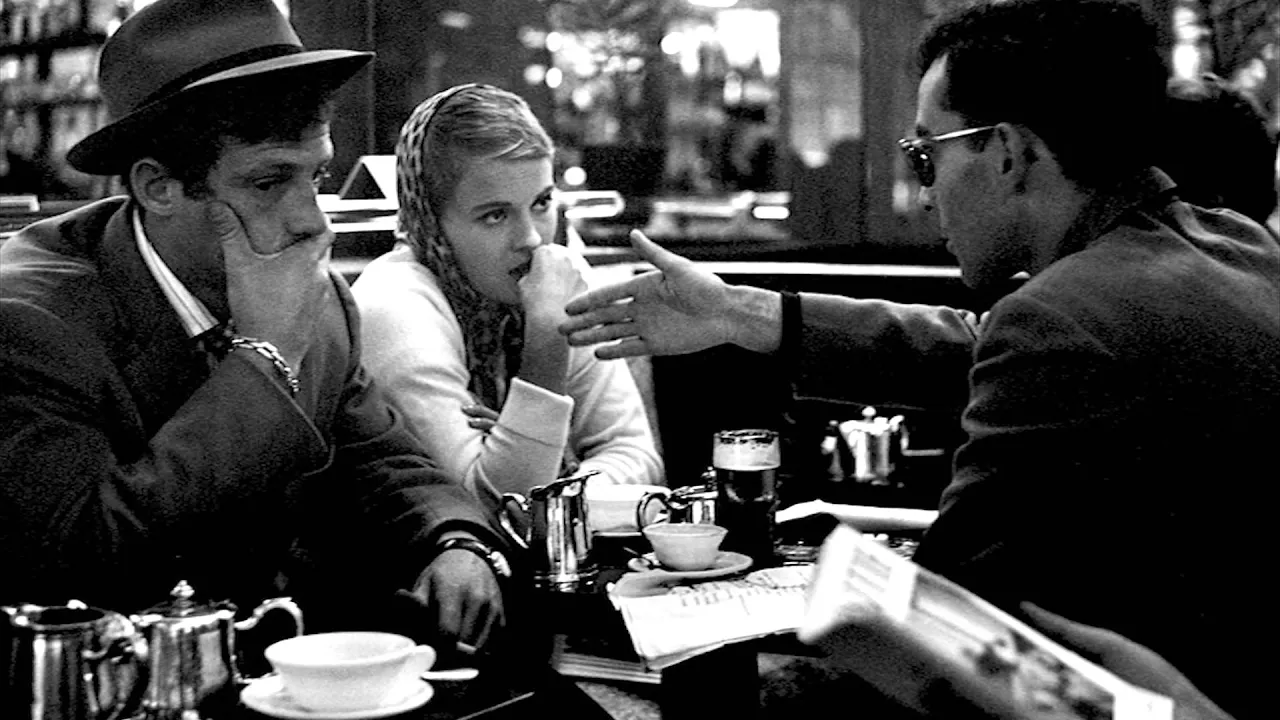
To truly understand the jump cut, one must study its artistic genesis. This video essay explores how Jean-Luc Godard’s 1960 masterwork Breathless (À bout de souffle) revolutionized modern cinema. It details how the film’s iconic, accidental discovery of the jump cut broke Hollywood’s rules, transforming temporal compression from an amateur error into a bold signature of existential, modern subjectivity.

Why this video
This short but dense overview provides the essential cultural and stylistic context of the French New Wave (Nouvelle Vague). It highlights how their budget constraints, handheld camera setups, and rejection of "traditional studio quality" allowed them to play with non-linear, fragmented editing to capture the chaotic reality of youth culture.
Knowledge Checkpoint
- Define a "jump cut" and explain how it violates the traditional 30-degree rule of editing.
- Analyze why Jean-Luc Godard utilized jump cuts in Breathless and how this affected the audience's perception of narrative urgency and character psychology.
- Describe how a "cinematic ellipsis" functions to compress narrative time without confusing the viewer.
- Identify three distinct psychological states that can be communicated to an audience through rapid jump-cut sequences.
Module 3: Match Cuts: Linking Disparate Moments in Time
This module focuses on match cuts—graphic, action, and audio transitions that seamlessly bridge different temporalities, spaces, and conceptual states. You will analyze how visual similarities can create immediate thematic connections between separate eras, allowing filmmakers to compress thousands of years or jump across environments in a single frame.
Independent Research Note: While the video pool contains brief, practical breakdowns of match cuts, students are highly encouraged to independently search for longer-form analysis of monumental cinematic match cuts, such as the bone-to-spaceship graphic match cut in Stanley Kubrick's 2001: A Space Odyssey or the blown-out match to the desert sunrise in David Lean's Lawrence of Arabia. Suggested search queries: "graphic match cut cinema history video essay" and "the art of the match cut film analysis".

Why this video
This video explains the practical, fundamental mechanics behind constructing a successful match cut. It emphasizes how editors align visual elements—such as geometric shapes, motion paths, or color schemes—across two entirely different scenes to guide the viewer’s eye smoothly from one shot to the next.

Why this video
This short video essay provides concrete visual proof of how graphic matches function dynamically in finished films. By comparing the alignment of physical shapes, colors, and compositions, it illustrates how filmmakers symbolically link disparate scenes to build subtextual and thematic relationships without relying on dialogue.
Why this video
This concise guide highlights how graphic match cuts go beyond simple technical transitions to active narrative devices. It explains how combining or replacing the visual and emotional context of an image forces the audience to intellectually connect the two scenes, shifting our perspective of the timeline.
Knowledge Checkpoint
- Define the three primary types of match cuts: graphic match cuts, match-on-action cuts, and audio (sound) match cuts.
- Explain how a graphic match cut can create a symbolic or metaphorical link between two completely different narrative settings or historical eras.
- Deconstruct how a match-on-action cut maintains visual continuity and masks the edit, even when the environment around the subject changes drastically.
- Explain how the edit in 2001: A Space Odyssey (bone to satellite) serves as both a literal temporal jump of millions of years and a thematic argument about human technology.
Module 4: Parallel Editing, Cross-Cutting, and Simultaneous Time
This module covers parallel editing and cross-cutting—techniques that alternate between two or more events unfolding in different locations. You will master how these structures can imply simultaneity, stretch or compress subjective dramatic tension, and construct intricate, multi-layered climaxes, with a special emphasis on the complex, multi-tiered cross-cutting styles of Christopher Nolan.
Why this video
This foundational video explains the historical origin of cross-cutting, tracing it back to silent film pioneer Edwin S. Porter's The Life of an American Fireman. It details how early cinema moved from static theatrical tableaus to active spatial and temporal cross-cutting, showing how cutting between two locations creates suspense and narrative unity.
Why this video
This technical overview explains how cross-cutting alternates between two or more lines of action occurring simultaneously in different locations. It highlights how pioneers like D.W. Griffith used this technique to build suspense during rescue sequences, establishing the blueprint for the classic action climax.
Why this video
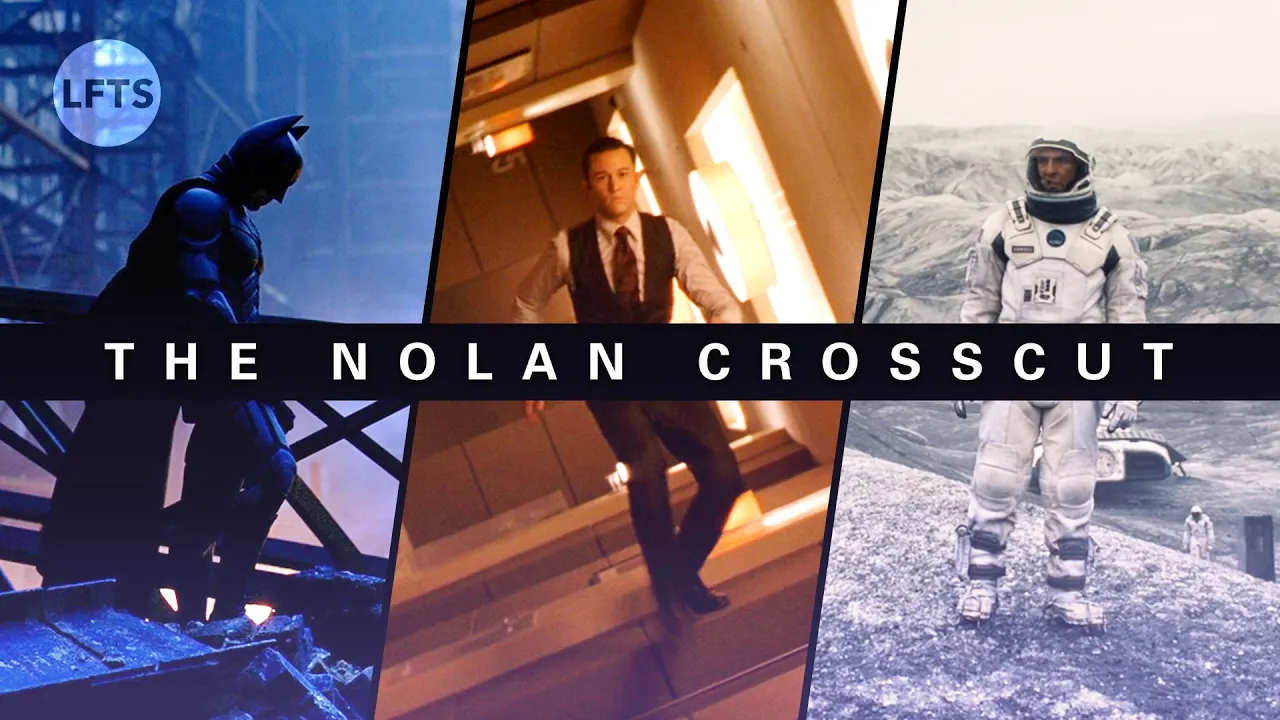
This masterclass video essay analyzes the modern pinnacle of cross-cutting: Christopher Nolan’s work on Interstellar. It explores the three structural requirements of an effective, high-stakes cross-cutting sequence: comparable stakes across all timelines, equal urgency/immediate threats, and clear visual/auditory motifs that unify the storylines. It shows how Nolan stretches and compresses time across vast cosmic distances.
Knowledge Checkpoint
- Define "cross-cutting" (or parallel editing) and explain how it manipulates the viewer's understanding of simultaneous events.
- Analyze the three structural conditions necessary to sustain a high-tension cross-cut sequence, as outlined in the Interstellar video essay.
- Explain how cross-cutting can be used to generate dramatic irony by showing information to the audience that characters in separate locations do not know.
- Describe how rhythmic pacing (the duration of shots in each thread) affects the viewer's psychological perception of time as a climax approaches.
Module 5: Subjective Time, Memory, and Non-Linear Editing
In this final module, you will analyze how advanced temporal editing simulates complex psychological states, memory retrieval, trauma, and highly subjective experiences of time. You will deconstruct two masterworks of non-linear cinema: Christopher Nolan's Memento, which uses a dual-timeline hairpin structure to replicate anterograde amnesia, and Michel Gondry's Eternal Sunshine of the Spotless Mind, which visualizes the fragmented, fading nature of human memory.
Why this video
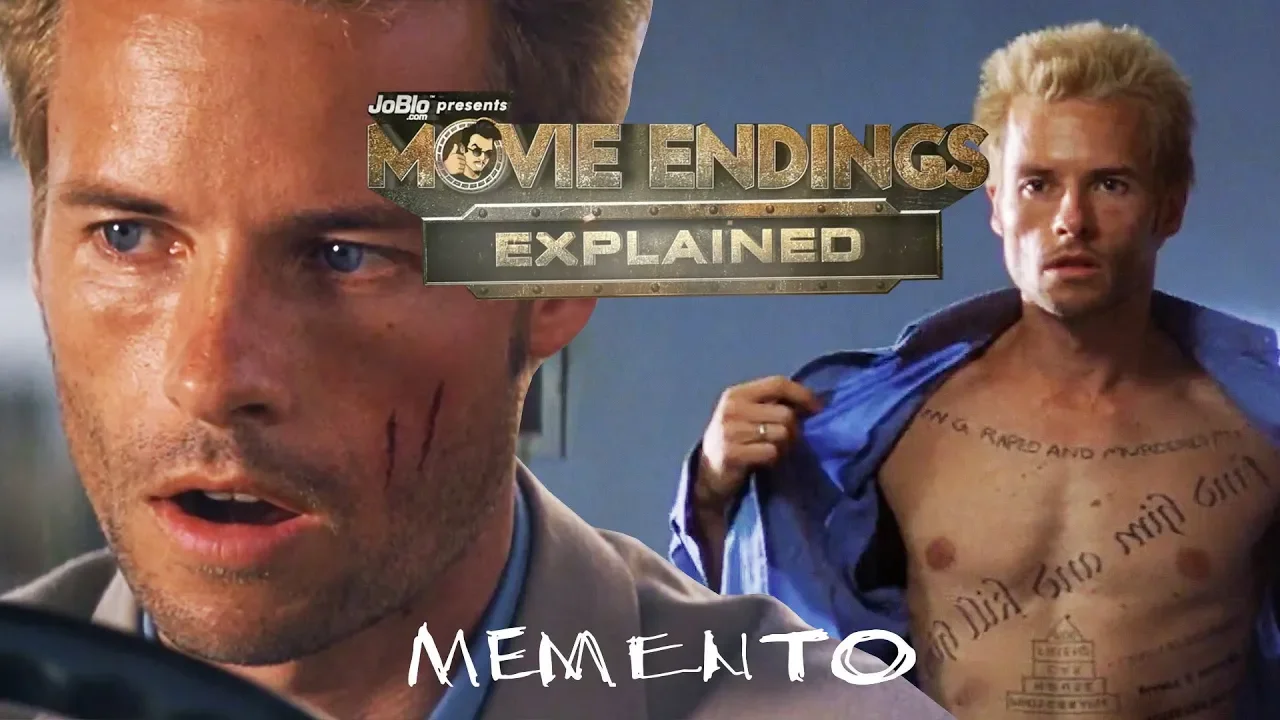
This video breaks down the structural design of Memento. It explains how the film weaves forward-moving chronological black-and-white sequences together with backward-moving color sequences. This complex temporal layout forces the audience to experience the same disorientation, confusion, and memory lapses as the protagonist, Leonard Shelby.

Why this video
This analytical character and editing study explores the psychological implications of Memento's backward structure. It shows how Nolan's editing forces us into Leonard’s fragmented consciousness, illustrating how non-linear structure is not merely a gimmick, but a tool to reveal the unreliability of memory, human trauma, and self-deception.
Why this video
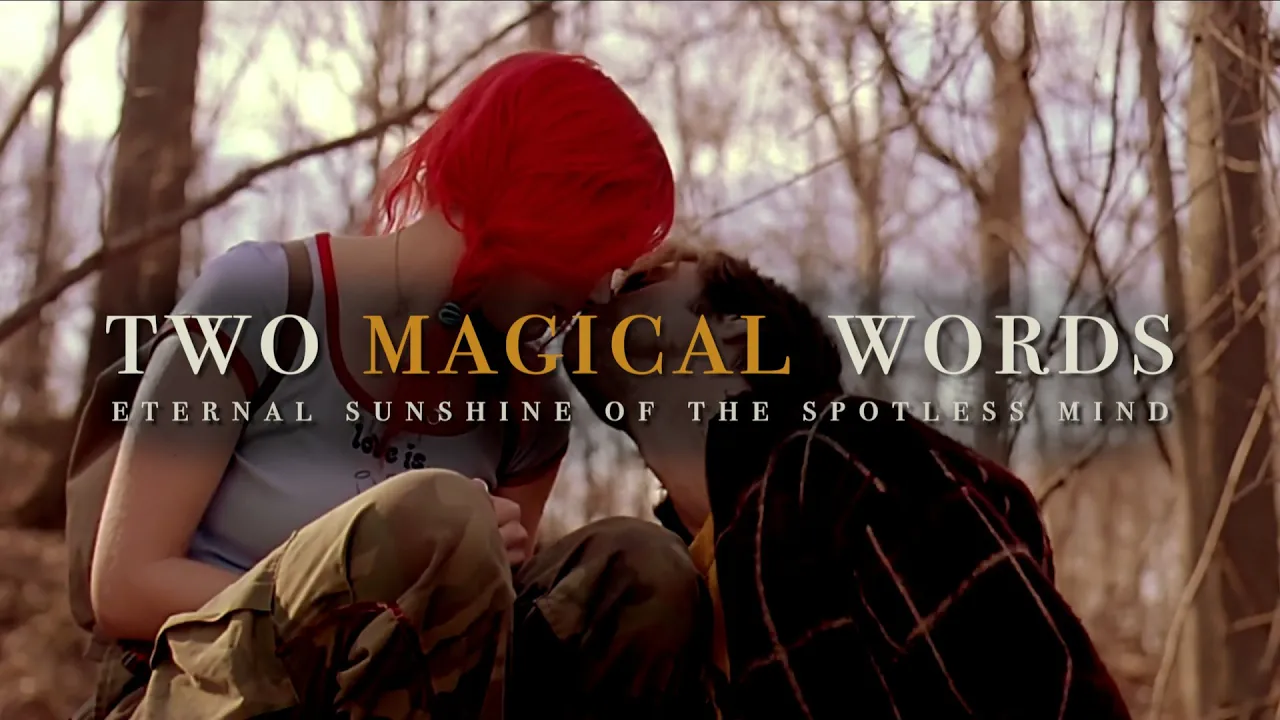
This deep-dive video essay explores how Eternal Sunshine of the Spotless Mind uses reverse chronology, jump cuts, and spatial morphs to depict the process of memory decay. It details how the editing reflects the protagonist's emotional journey as he fights to preserve his memories of Clementine, turning the editing suite into a representation of human consciousness.

Why this video
This video essay provides a detailed analysis of the circular, fragmented structure of Eternal Sunshine. It explores how Michel Gondry and editor Valdís Óskarsdóttir construct a non-linear narrative where the story begins at the end and moves backward through memories, showing how editing can represent trauma, regret, and the subconscious mind.
Knowledge Checkpoint
- Explain how Memento's dual-timeline structure (chronological black-and-white vs. reverse color) aligns the viewer's psychological experience with Leonard’s anterograde amnesia.
- Analyze how Eternal Sunshine of the Spotless Mind uses jump cuts and morphing transitions to visually represent the psychological process of memory erasure and decay.
- Define "non-linear narrative structure" and explain why a filmmaker might choose to present events out of chronological order to convey a character's internal emotional truth.
- Contrast how Memento and Eternal Sunshine manipulate the viewer's perception of subjective time to explore the themes of trauma, loss, and personal identity.
Course Map
Key People Index
- Jean-Luc Godard (1930–2022): A pioneer of the French New Wave who revolutionized modern film editing by introducing intentional jump cuts in Breathless (1960), breaking the rules of classical Hollywood continuity.
- Lev Kuleshov (1899–1970): Soviet filmmaker and theorist who discovered the Kuleshov Effect, proving that editing constructs meaning and temporal relations by juxtaposing shots.
- Edwin S. Porter (1870–1941): Early American director who pioneered parallel editing and cross-cutting in films like The Life of an American Fireman (1903).
- Christopher Nolan (b. 1970): Contemporary director renowned for his complex, puzzle-like temporal structures, masterfully utilizing non-linear timelines and cross-cutting in Memento, Interstellar, and Tenet.
- Michel Gondry (b. 1963): French director who co-crafted Eternal Sunshine of the Spotless Mind, translating the abstract, subjective experience of memory decay into tangible cinematic cuts and camera movements.
Final Self-Assessment
Complete this comprehensive self-assessment to verify your mastery of temporal editing and subjective time manipulation:
- I can clearly explain the structural difference between continuity editing (the classical Hollywood style) and discontinuity editing.
- I can describe the physiological and cognitive process behind the Kuleshov Effect, explaining how a viewer's brain constructs spatial and temporal links between two independent shots.
- I can identify a jump cut, explain how it violates the 30-degree rule, and describe its emotional and temporal effects on an audience.
- I can trace the origin of the jump cut to the French New Wave, specifically detailing its artistic use by Jean-Luc Godard in Breathless.
- I can differentiate between a graphic match cut, a match-on-action cut, and an audio match cut, providing classic film examples for each.
- I can analyze how a graphic match cut creates thematic and symbolic subtext across different settings or historical eras.
- I can outline the three crucial narrative conditions required to sustain suspense in a multi-level cross-cutting sequence, as demonstrated in Christopher Nolan’s Interstellar.
- I can explain how parallel editing can manipulate an audience’s perception of speed, urgency, and simultaneous action.
- I can break down the unique, dual-timeline structure of Christopher Nolan's Memento, explaining how the black-and-white and color sequences intersect.
- I can analyze how the editing in Eternal Sunshine of the Spotless Mind serves as a visual metaphor for the cognitive decay, loss, and preservation of human memory.
- I can write a short, analytical essay deconstructing how a modern film of my choice manipulates subjective screen time to reflect a character's internal, psychological state.