Metallurgy: From Bronze Age to Superalloys
Learning Goal: Analyze the development of metallurgy—from copper and bronze alloy casting to the Bessemer steel process and superalloys—and evaluate how improvements in material strength reshaped architectural engineering, warfare, and industrial machinery.
- Prerequisites: Basic knowledge of chemistry (atomic structure, elements) and introductory physics (force, stress, strain).
- Estimated Total Study Time: 12 hours
Module 1: The Dawn of Metallurgy: Copper & Bronze
This module covers the historical transition from the Stone Age to humanity’s first experiences with metalworking. You will explore how copper was first mined and smelted, the discovery of bronze (alloying copper with tin), and how this simple chemical union fundamentally altered tools, weaponry, and early civilizations.
Recommended Videos
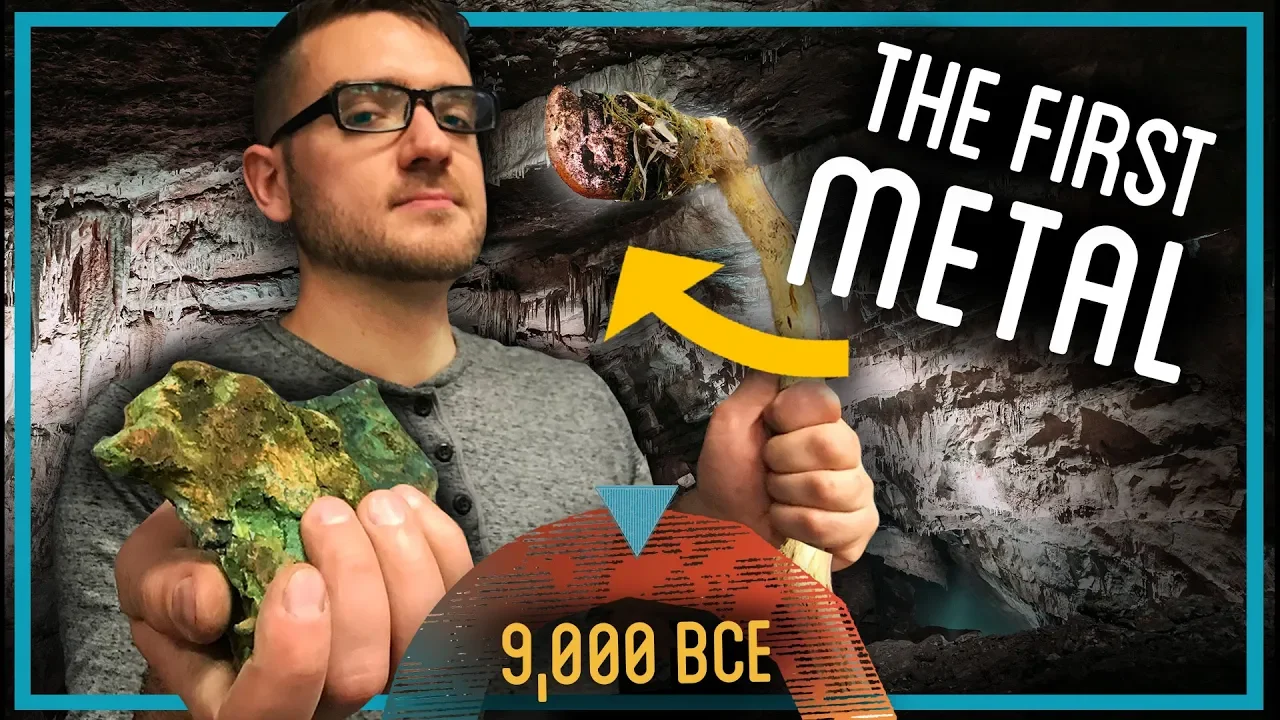
- Why this video: This video traces the complete journey of copper from natural raw deposits to processed metal. It demonstrates the immense energy and temperature thresholds required to initiate early metal extraction, which served as the literal trial-by-fire for human technology.
- Knowledge Checkpoint:
- Explain how early humans identified copper in its native state versus ore forms.
- Describe the temperature thresholds required to smelt copper and the tools used to achieve it.
- Contrast native stone-hammering with early pyrometallurgy.
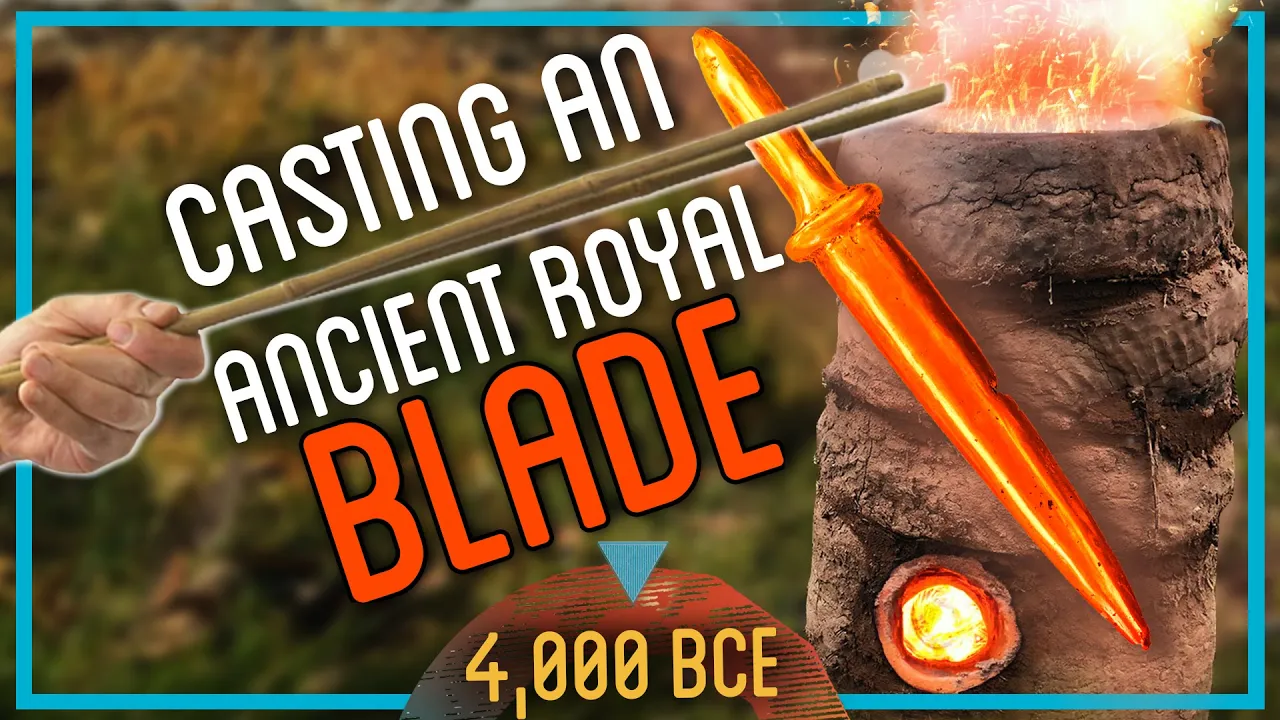
- Why this video: Provides a brilliant practical demonstration of Bronze Age furnace mechanics and ancient lost-wax casting. You will see how early metallurgists manipulated clay, beeswax, and bellows to control oxygen levels and cast intricate bronze weapons.
- Knowledge Checkpoint:
- Detail the physical steps of the lost-wax (cire perdue) casting process.
- Explain why bellows were essential to reach the melting point of bronze (~1,085°C).
- Identify how impurities were separated during this early casting methodology.

- Why this video: Demonstrates the physical changes that occur when alloying copper with tin. Despite tin being incredibly soft, alloying it with copper (typically at a 9:1 ratio) creates a crystal matrix that is far harder and more durable than either element individually.
- Knowledge Checkpoint:
- State the standard chemical composition (weight percentages) of classic bronze.
- Explain why pure copper is challenging to cast compared to bronze.
- Describe how the addition of tin alters the mechanical strength and pourability of the melt.
Curriculum Note on Gaps: While these practical guides show the physical properties and casting methods, they lack atomic-scale graphics illustrating the tin-copper interstitial lattice interactions. To supplement this, search independently for: "atomic simulation of tin copper alloy bronze" or "crystal lattice deformation in bronze vs copper".
Module 2: The Iron Age: Smelting, Forging & Early Steel
This module covers the massive transition from bronze to iron. You will explore the physics and chemistry of the bloomery furnace, learn how early blacksmiths manipulated charcoal (carbon) to turn soft wrought iron into hardened steel, and study how these techniques transformed ancient warfare.
Recommended Videos
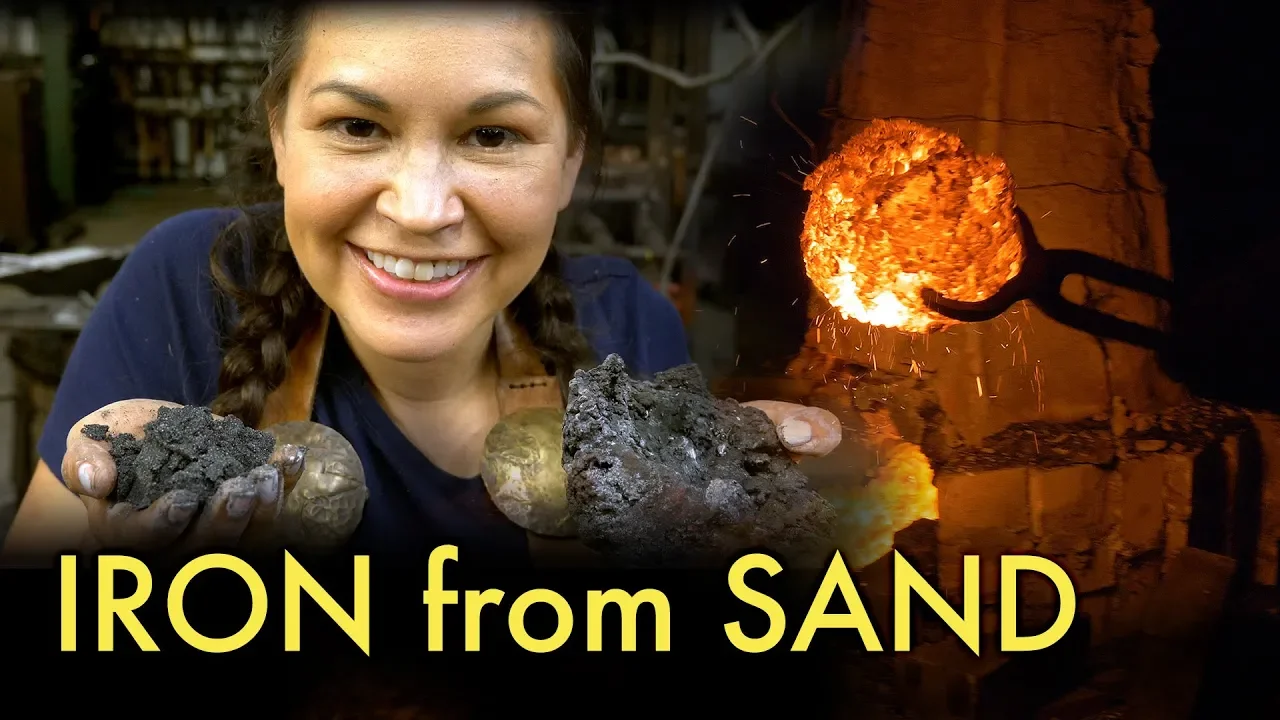
- Why this video: A masterclass in ancient bloomery technology. It details how metallurgists converted magnetite sand and iron ore into spongy "bloom" iron, bypassing the extreme melting temperatures of iron (~1,538°C) that early kilns could not reach.
- Knowledge Checkpoint:
- Explain how a bloomery furnace reduces iron oxides without fully melting the iron.
- Define what a "bloom" is and why it must be hammered to remove slag.
- Describe the chemical role of carbon monoxide in extracting oxygen from iron ore.

- Why this video: Offers a direct, hands-on look at smelting iron ore from rock deposits. It highlights how the geometry of the furnace, the layout of the tuyeres, and the continuous addition of charcoal maintain the high reduction environment necessary for iron extraction.
- Knowledge Checkpoint:
- Explain the structural design of a traditional clay bloomery.
- Identify the function of a tuyere in delivering compressed air to the fuel bed.
- Discuss the physical labor and thermal monitoring needed to maintain a ~1,300°C furnace environment.
- Why this video: Synthesizes the historical development of iron, wrought iron, and early carbon steel. It explains the critical differences in carbon content (from under 0.08% in wrought iron up to 2% in cast iron) and how controlling carbon revolutionized metallurgy.
- Knowledge Checkpoint:
- Differentiate between wrought iron, steel, and cast iron based on carbon percentage.
- Describe how ancient Indian and Asian swordsmiths developed early crucible steel (Wootz).
- Explain why control over carbon content dictates whether a blade is ductile, hard, or brittle.
Module 3: Industrial Steel: The Bessemer Process & Skylines
This module analyzes the mass-production breakthroughs of the 19th century. You will study how the Bessemer converter revolutionized heavy industry, drastically lowered steel costs, and enabled the rapid expansion of railways, suspension bridges, and modern skyscraper skylines.
Recommended Videos
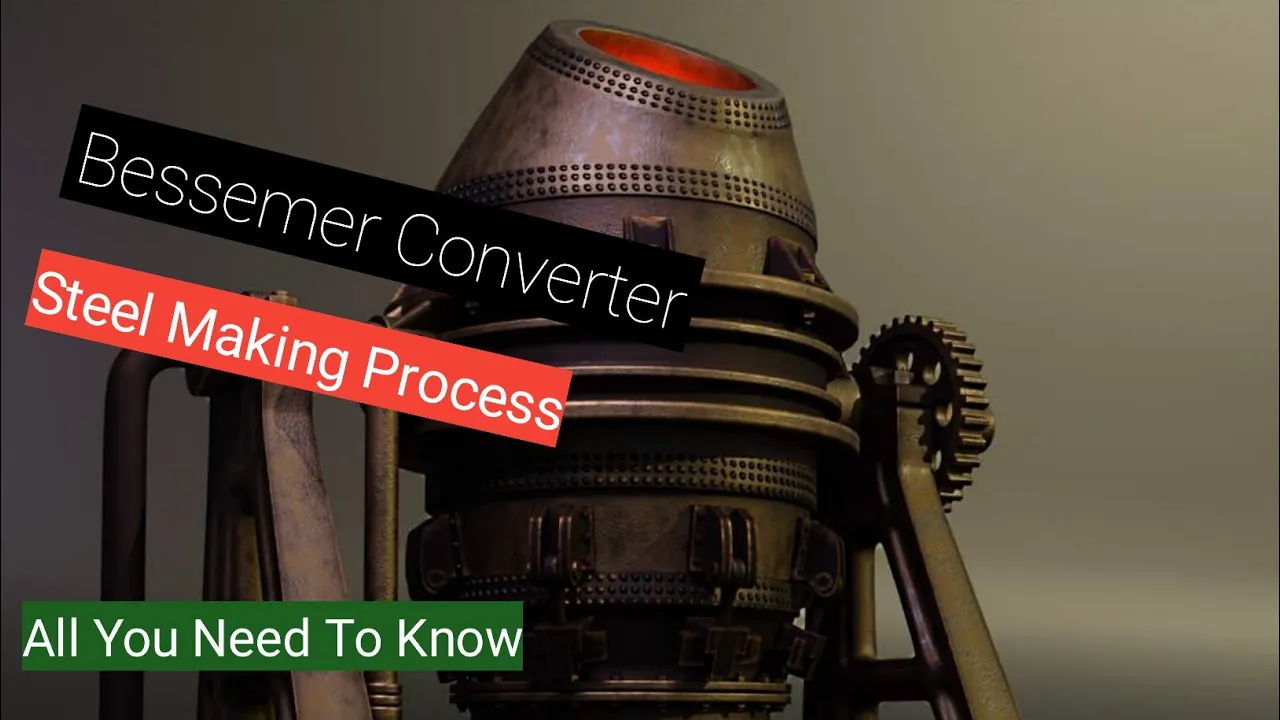
- Why this video: Outlines the core mechanical and chemical engineering behind the Bessemer converter. It illustrates how blowing raw oxygen through molten pig iron forces impurities like carbon, silicon, and manganese to oxidize and burn off, heating the mixture naturally without additional fuel.
- Knowledge Checkpoint:
- Describe the chemical reaction that occurs when cold air is blown into molten pig iron.
- Explain why the Bessemer process did not require extra external fuel to keep the metal molten.
- Identify the structural limitations of early Bessemer converters when dealing with phosphorus-rich ores.

- Why this video: Explains the historical context of high-quality Swedish crucible steel and how Bessemer developed a cheap, competitive alternative using pig iron. It addresses the manufacturing challenges and material science controversies surrounding early industrial cast steel.
- Knowledge Checkpoint:
- Contrast Bessemer's industrial steelmaking process with Benjamin Huntsman's earlier crucible cast steel method.
- Identify the raw material issues (e.g., sulfur and phosphorus) that threatened Bessemer's initial designs.
- Discuss the industrial impact of dropping high-quality steel prices.

- Why this video: Explains how architectural engineering transitioned from load-bearing masonry walls to lightweight, hyper-strong steel skeleton frames. This transition allowed buildings to grow vertically without needing excessively thick lower walls.
- Knowledge Checkpoint:
- Explain the structural limitations of load-bearing masonry walls in multi-story construction.
- Describe how a steel skeleton frame transfers building loads down to the foundation.
- Assess the role of mass-produced steel in the rapid physical development of 19th and 20th-century metropolitan areas.
Curriculum Note on Gaps: While the mechanics of the Bessemer converter are visually explained in these videos, detailed chemical equation balance sheets of the oxidation process are missing. To deepen your chemistry understanding, search independently for: "Bessemer converter process chemical engineering animation" or "Gibbs free energy of silicon and carbon oxidation in steelmaking".
Module 4: Modern Metallurgy: Superalloys & Extreme Environments
This module introduces advanced modern metallurgy. You will explore how nickel-, cobalt-, and titanium-based superalloys are engineered at the crystalline scale to withstand extreme mechanical loads and high oxidation environments—such as the hot sections of aerospace gas turbines.
Recommended Videos
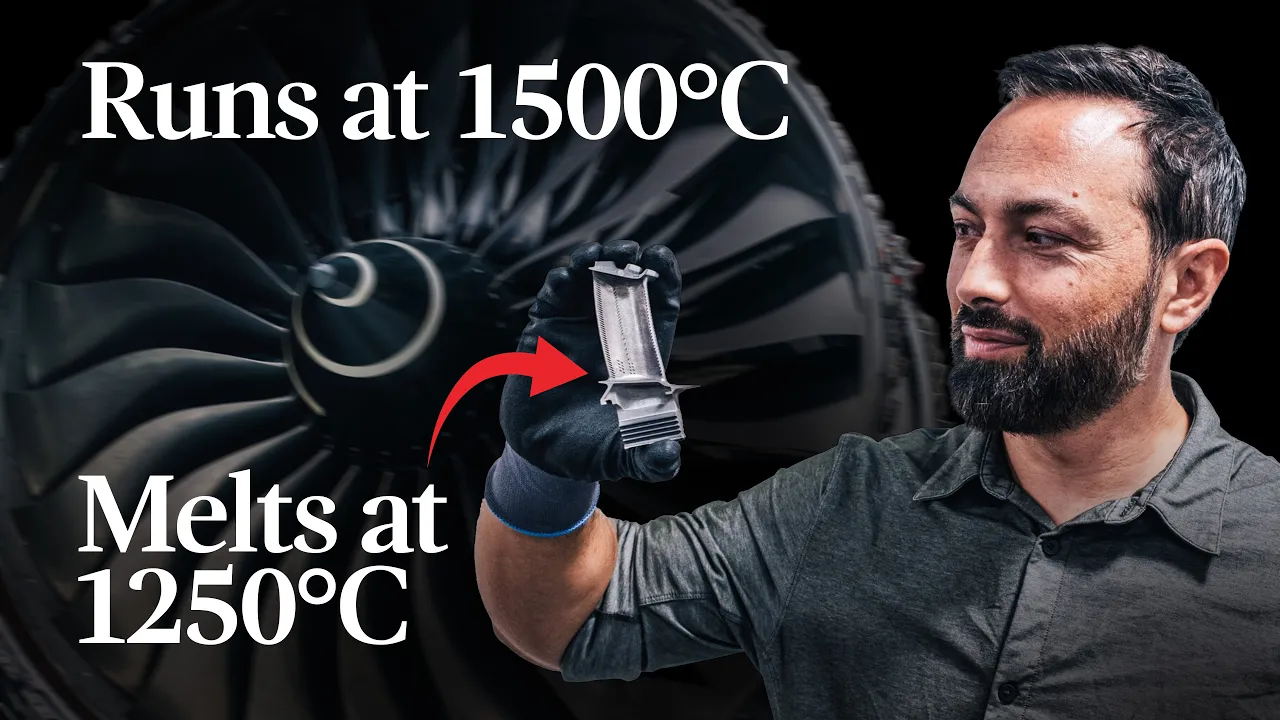
- Why this video: A brilliant introduction to the single-crystal casting revolution. Veritasium explains how eliminating grain boundaries prevents material "creep" under extreme centrifugal forces and high temperatures inside commercial jet engines.
- Knowledge Checkpoint:
- Define "creep" in metals and identify why grain boundaries accelerate it at high temperatures.
- Explain the casting technique (using a helical "pigtail" selector) used to grow a single, uniform metal crystal.
- Describe how internal cooling channels protect modern turbine blades from melting.

- Why this video: Delves deeper into the mechanical stress limits of turbine blades. It explains how material scientists transition alloys from polycrystalline to directionally solidified, and finally to single-crystal structures to survive operational speeds of thousands of RPM.
- Knowledge Checkpoint:
- Differentiate between polycrystalline, directionally solidified, and single-crystal metals.
- Describe how aluminum and titanium additions form strengthening precipitates ( phase) within nickel-based superalloy matrixes.
- Evaluate how single-crystal technology has increased the fuel efficiency of modern aviation.

- Why this video: A comprehensive, academic lecture detailing the chemical classification of superalloys (nickel, cobalt, and iron-based). It explains their physical properties, microstructural characteristics, and how they resist oxidation and corrosion.
- Knowledge Checkpoint:
- Categorize the three primary classes of superalloys and their relative mechanical trade-offs.
- Identify the role of chromium and aluminum in forming protective passivation oxide layers.
- Explain how solid solution strengthening and precipitation hardening function in high-temperature materials.
Module 5: Material Strength, Heat Treatment & Failure Analysis
In this module, you will master the mechanical engineering frameworks used to evaluate metals under stress. You will analyze stress-strain curves, explore how heat treatment organizes crystal lattices, examine microscopic dislocations, and study how structural fatigue causes real-world engineering disasters.
Recommended Videos
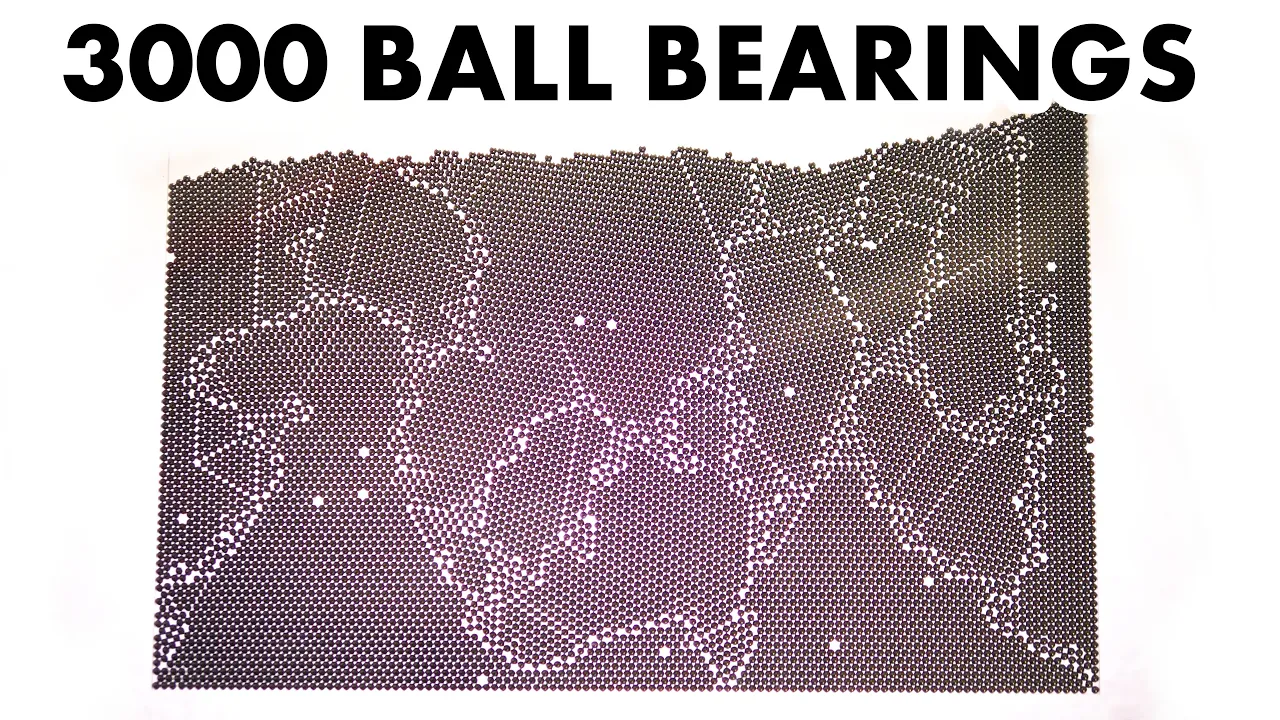
- Why this video: Provides a highly visual, intuitive physical model (using floating self-organizing steel spheres) to explain grain structures, crystal dislocations, and the atomic mechanics of metal heat treatments like annealing and quenching.
- Knowledge Checkpoint:
- Define a "dislocation" in a metal's crystal lattice and explain how it facilitates plastic deformation.
- Explain how heating and slow cooling (annealing) affects grain boundaries and dislocations.
- Describe how rapid cooling (quenching) locks carbon atoms in place to harden steel.
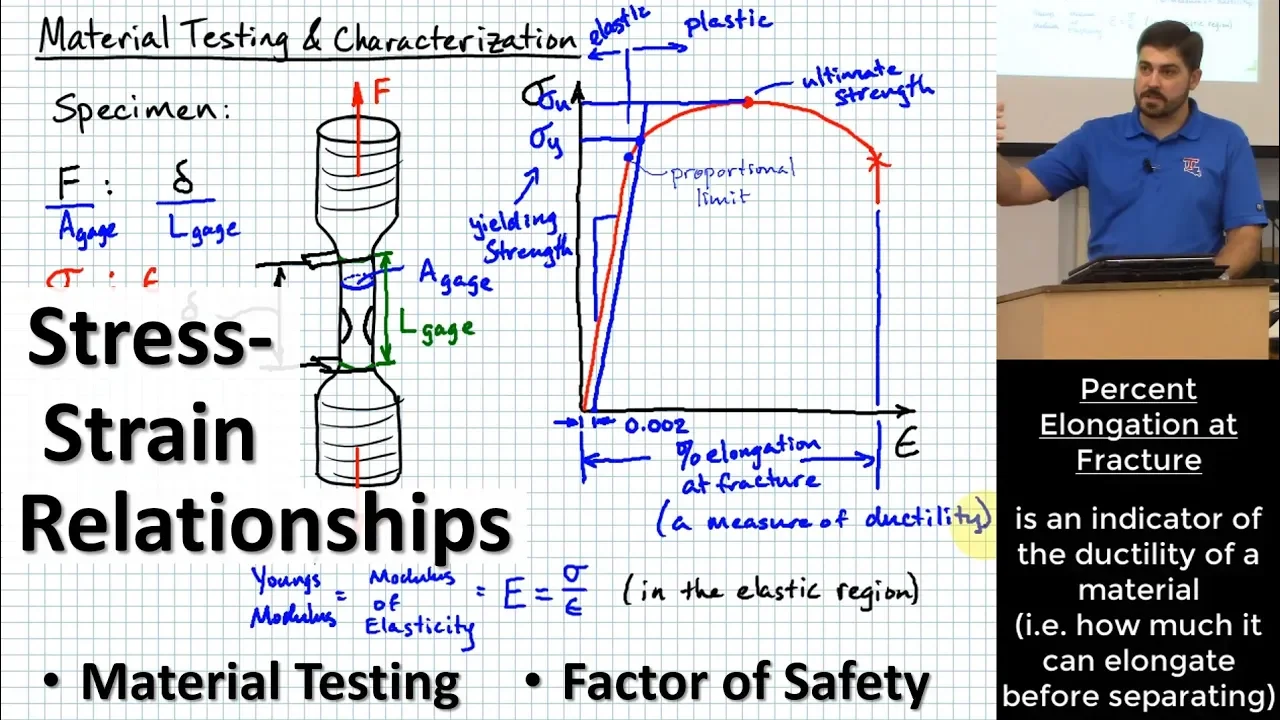
- Why this video: An excellent pedagogical lecture on tensile testing. This video defines how to calculate engineering stress and strain, use the elastic modulus (Young's Modulus), locate the yield point, and apply appropriate engineering safety factors.
- Knowledge Checkpoint:
- Define the mathematical equations for engineering stress () and engineering strain ().
- Identify the elastic region, yield strength, ultimate tensile strength, and fracture point on a standard stress-strain curve.
- Calculate the required safety factor for a structural beam under a given load.
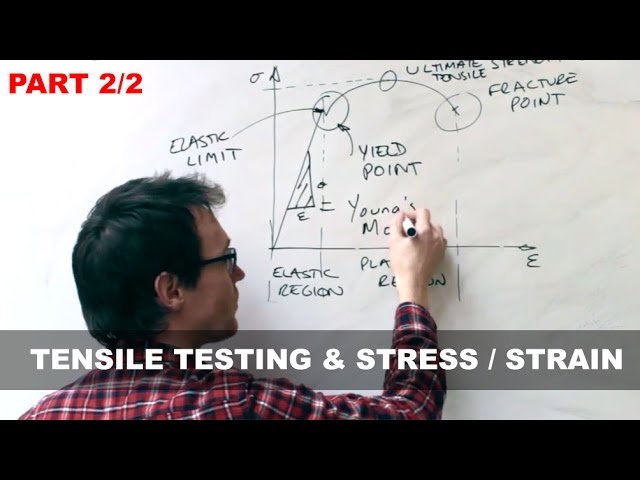
- Why this video: Focuses deeply on the experimental execution of tensile testing on universal testing machines. It explains the physical necking of metal specimens and helps you translate raw load-deformation data into an engineering stress-strain curve.
- Knowledge Checkpoint:
- Describe why standard test specimens are shaped like "dog bones."
- Explain "necking" and identify where it occurs on the stress-strain curve.
- Differentiate between brittle and ductile material fractures.

- Why this video: A short historical documentary analyzing the structural failure of the De Havilland Comet. It illustrates the real-world danger of metal fatigue, where repeated pressurization and cabin stress cycles caused micro-fractures to propagate from square window corners, resulting in catastrophic hull failure.
- Knowledge Checkpoint:
- Explain the concept of metal fatigue and how cyclic stress causes structural failure below the ultimate tensile strength.
- Describe how geometry, such as square window corners, acts as a stress concentration point.
- Discuss how the Comet disaster changed aerospace design and fatigue testing standards.
Curriculum Note on Gaps: While these videos explain stress-strain profiles and fatigue disasters, they do not provide step-by-step calculus derivations for Young's Modulus or shear strain tensors. For rigorous mathematical prep, search independently for: "tensile testing and stress strain curve explained" or "S-N curve fatigue limit engineering calculations".
Course Map
Key People Index
- Sir Henry Bessemer (1813–1898): English inventor and engineer who developed the first low-cost industrial method for the mass production of steel. His converter revolutionized infrastructure, rail transit, and vertical building engineering.
- Benjamin Huntsman (1704–1776): English metallurgist who invented crucible steelmaking, producing highly uniform cast steel that laid the groundwork for precision tool-making before the industrial era.
- William Kelly (1811–1888): An American inventor who independently developed a pneumatic steel-refining method similar to Bessemer's around the same historical period.
- Steve Mould: Modern science communicator and educator whose mechanical analogies (such as physical steel-ball crystal models) help students visualize microscopic lattice dislocations and grain-boundary dynamics.
Final Self-Assessment
Complete this comprehensive self-assessment to verify your mastery of the materials, processes, and engineering principles taught throughout this curriculum.
- Alloy Composition: Can you explain why adding 10% tin to copper increases the strength of the resulting bronze alloy, citing atomic lattice distortion?
- Reduction Chemistry: Can you write out the basic reduction reactions occurring within a bloomery furnace where carbon monoxide strips oxygen from iron ore?
- Carbon Categorization: Can you classify the carbon weight percentage ranges for wrought iron (), carbon steel (), and cast iron (), and explain how these differences dictate mechanical properties?
- Bessemer Thermodynamics: Can you explain how the oxidation of carbon and silicon inside a Bessemer converter supplies its own thermal energy without needing external fuel?
- Structural Load-Pathing: Can you explain how load-bearing masonry walls differ from steel skeleton frames in terms of weight distribution and building height limits?
- Creep Prevention: Can you explain the microscopic process of grain-boundary sliding (creep) at high temperatures and how single-crystal turbine blades prevent it?
- Single-Crystal Growth: Can you describe the geometric mechanism of a "pigtail" helix selector in a mold and how it forces all but one metal crystal to stop growing?
- Lattice Dislocation Dynamics: Can you sketch a crystal lattice dislocation and describe how dislocation movement under shear stress causes plastic deformation?
- Heat Treatment Mechanics: Can you contrast the microstructures and dislocation densities that result from slow annealing versus rapid water-quenching?
- Stress-Strain Curve Analysis: Can you point out and define the Elastic Modulus, Yield Strength ( offset), Ultimate Tensile Strength, and Fracture point on an engineering stress-strain curve?
- Fatigue & Stress Concentration: Can you explain how cyclic loading can propagate microscopic cracks at stress concentration points (like sharp corners) and lead to catastrophic structural failures below the material's yield strength?