House of Wisdom: Translation & Science
Learning Goal: Investigate the intellectual achievements of the Abbasid House of Wisdom in Baghdad (8th to 13th centuries), focusing on the Translation Movement and its preservation and advancement of scientific and mathematical knowledge.
- Prerequisites: None (A general interest in medieval history and the history of science is recommended).
- Estimated Total Study Time: 12 hours
Module 1: The Rise of Baghdad and the Abbasid Golden Age
This module explores the historical, political, and cultural shifts that enabled the rise of the Abbasid Caliphate in 750 CE. You will investigate how the transition of power from the Umayyad Dynasty in Damascus to the newly built "Round City" of Baghdad created a highly cosmopolitan, wealthy, and stable empire that prioritized intellectual progress.
Recommended Videos

- Why this video: This video provides an exceptional visual overview of how Baghdad was constructed by Caliph Al-Mansur. It highlights the transition from the exclusive Arab-centric ruling style of the Umayyads to the multi-ethnic, highly integrated administration of the Abbasids, establishing the baseline context for why Baghdad became an intellectual magnet.
- Why this video: A masterpiece of long-form historical narrative, this documentary digs deep into the geopolitical stability of the early Abbasid period (750-833 CE). It details the massive trade wealth, peace, and cross-cultural interactions (including with Persia and Byzantium) that fueled the state treasury and funded scholarly research.

- Why this video: This video emphasizes the structural and logistical achievements of Baghdad as the "City of Peace." It explains how the geographical placement of the capital along major global trade routes (the Silk Road and water pathways) brought both paper-making technology from China and vast monetary capital into the heart of the empire.
Knowledge Checkpoint
- Understand the political causes behind the Abbasid Revolution of 750 CE and the transition of the capital from Damascus to Baghdad.
- Explain how the administrative inclusion of non-Arabs (especially Persians) changed the cultural landscape of the Caliphate.
- Describe the geographical advantages of Baghdad's location between the Tigris and Euphrates rivers and how trade routes fed its academic growth.
Module 2: The Great Translation Movement
In this module, you will dive into the core engine of the Islamic Golden Age: the Great Translation Movement. You will examine the systematic patronage of the early Abbasid Caliphs (especially Al-Mansur and Al-Ma'mun) and analyze how scholars from various religious backgrounds (Muslim, Christian, Jewish, and Zoroastrian) worked together to translate classical Greek, Persian, and Sanskrit manuscripts into Arabic.
Recommended Videos

- Why this video: OSP delivers an engaging, highly structured overview of the Bayt al-Hikmah (House of Wisdom). It outlines how translation was not merely a passive preservation of ancient ideas but an active, heavily state-funded enterprise designed to solve practical administrative and astronomical problems for the state.
- Why this video: This video focuses on Hunayn ibn Ishaq, a Nestorian Christian scholar who became one of the most prolific translators in the House of Wisdom. It showcases the interreligious cooperation of the era and details his rigorous philological methods, which involved comparing multiple manuscript variants to produce accurate Arabic translations of Galen and Plato.
- Why this video: This video fills a crucial intellectual gap by exploring the Mu'tazila theological school—a rationalist movement championed by Caliph Al-Ma'mun. Understanding this theology is key to grasping why the Abbasid state spent massive fortunes (often matching the weight of books in gold) on translating Greek philosophical and scientific texts.
Curriculum Gap Note: While these videos provide excellent historical narratives, details regarding the administrative logistics of patronage under early Caliphs (such as the diplomatic missions sent to Constantinople to acquire Byzantine scrolls) are brief. Students are encouraged to independently research Caliph Al-Ma'mun's famous "Dream of Aristotle" to understand the philosophical and religious justifications for the state-sponsored Translation Movement.
Knowledge Checkpoint
- Identify the roles of Caliphs Al-Mansur and Al-Ma'mun in institutionalizing and funding translation efforts.
- Explain how Nestorian Christian scholars like Hunayn ibn Ishaq bridged the linguistic gap between Greek/Syriac and Arabic.
- Define the influence of the Mu'tazila rationalist school on the state's prioritization of reason and logic.
Module 3: Mathematical Revolutions: Algebra and Numerals
This module details how scholars in Baghdad synthesized Greek geometry and Indian arithmetic to create entirely new branches of mathematics. The primary focus is on Muhammad ibn Musa al-Khwarizmi, his development of systematic algebra, and how the introduction of the decimal system and the concept of zero revolutionized quantitative science.
Recommended Videos
- Why this video: Although brief, this clip serves as an excellent introduction to Al-Khwarizmi's work at the House of Wisdom. It showcases his historic book Kitab al-Mukhtasar fi Hisab al-Jabr wal-Muqabala and explains how his algebraic calculations were used to solve real-world problems like land distribution, inheritance laws, and canal engineering.
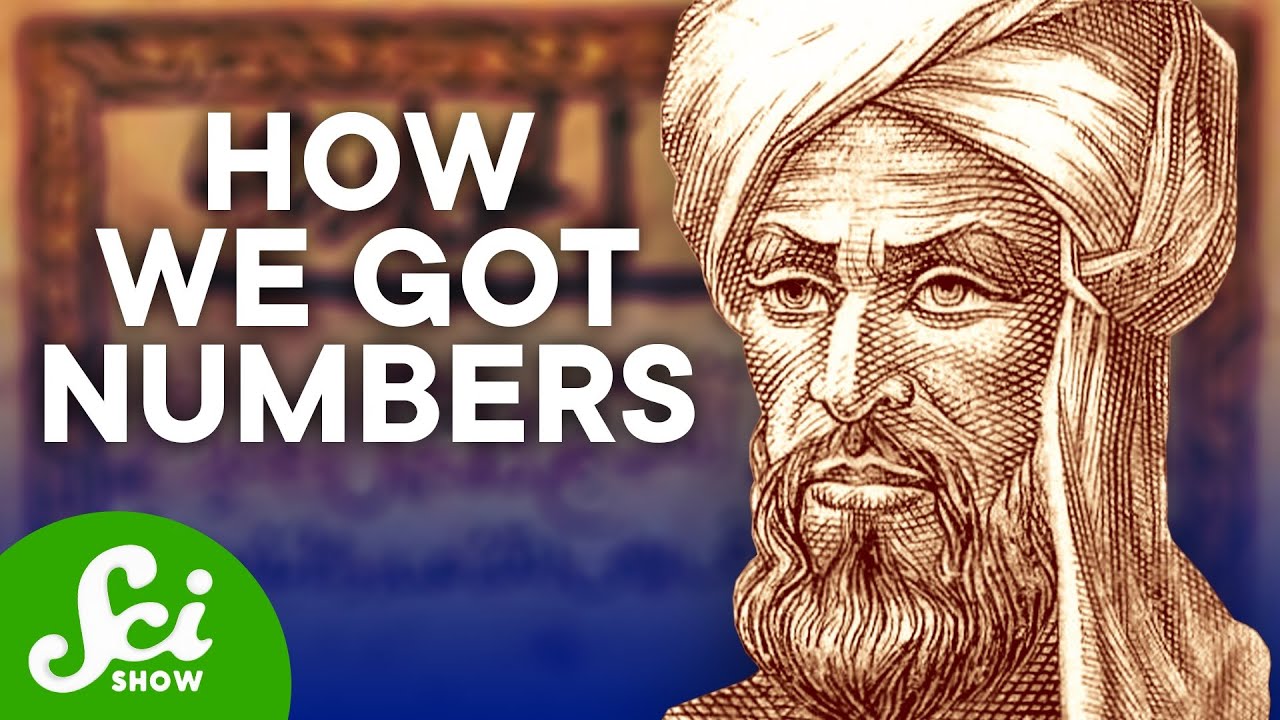
- Why this video: This video traces the fascinating journey of the "Hindu-Arabic" numeral system. It explains how Indian mathematicians invented the place-value system and zero, how Islamic scholars adopted and modified these concepts in Baghdad, and why this system was vastly superior to Roman numerals for complex mathematical calculations.
- Why this video: Delivered by Stanford University, this short lecture segment unpacks the mathematical mechanics of "restoration and reduction" (al-jabr and al-muqabala). It details how Al-Khwarizmi moved beyond specific numerical examples to establish abstract, generalized formulas for solving quadratic equations.
Knowledge Checkpoint
- Explain the linguistic origin and mathematical meaning of the terms "algebra" and "algorithm."
- Describe how the synthesis of Indian base-10 mathematics and Greek geometry occurred within the House of Wisdom.
- Solve or explain the basic concepts of "restoration" (al-jabr) and "balancing/reduction" (al-muqabala).
Module 4: Scientific Advancements: Optics, Medicine, and Astronomy
In this module, you will analyze how Abbasid scholars transformed theoretical ancient science into modern empirical disciplines. We focus on three key figures and concepts: Ibn al-Haytham's revolution in optics (using controlled experimentation), Ibn Sina's standardization of clinical medicine, and the mechanical refinement of astronomical instruments like the astrolabe.
Recommended Videos

- Why this video: An outstanding, high-production documentary that explores the work of Ibn al-Haytham (Alhazen). It explains his masterwork, the Book of Optics, and demonstrates how his systematic use of camera obscura experiments effectively laid the groundwork for the modern scientific method.
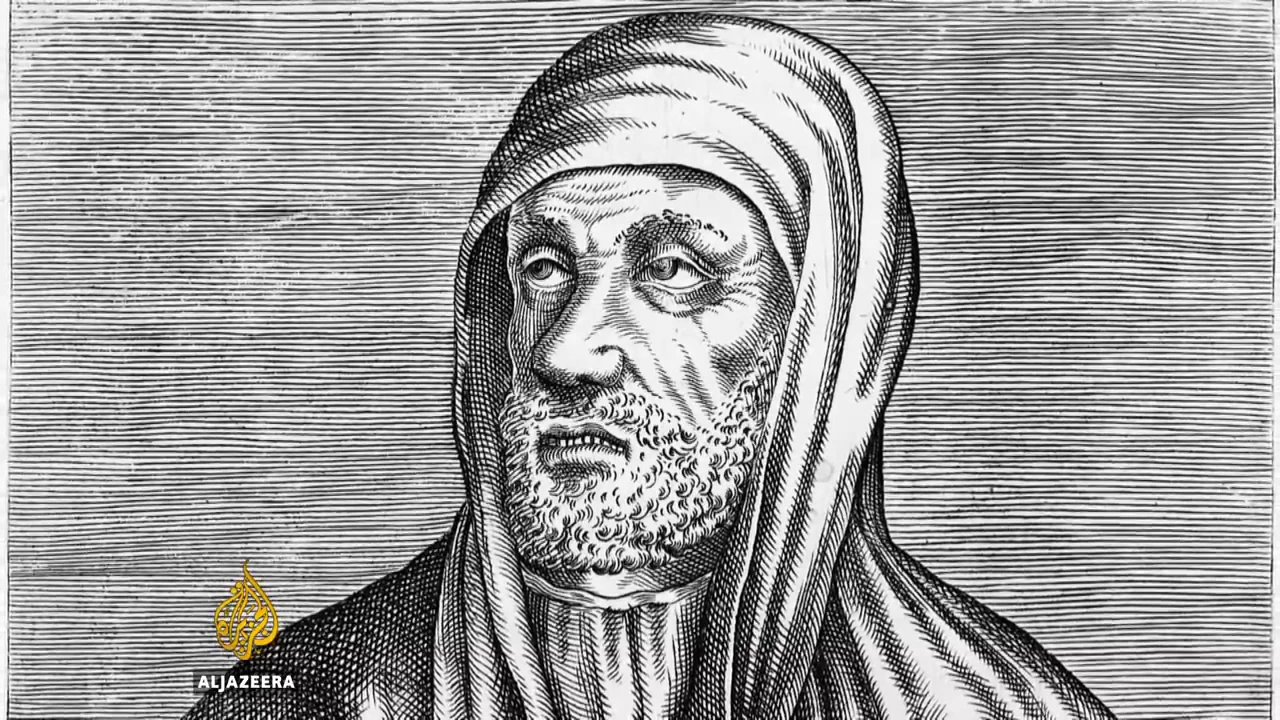
- Why this video: This video focuses on medical breakthroughs, contrasting the work of Al-Razi (who pioneered clinical trials and control groups) and Ibn Sina (Avicenna), whose massive encyclopedia The Canon of Medicine synthesized Galenic theory and remained Europe’s standard medical textbook for over five centuries.

- Why this video: This video breaks down the mechanics and design of the astrolabe. It shows how Islamic astronomers took a basic Hellenistic design and engineered it into a highly complex, portable analog computer used to calculate celestial coordinates, determine time, and map navigation routes.
Knowledge Checkpoint
- Explain how Ibn al-Haytham's empirical approach to light and sight challenged ancient Greek emission theories of vision.
- Detail the structure and legacy of Ibn Sina’s The Canon of Medicine.
- Identify at least three distinct practical applications of the medieval Islamic astrolabe.
Module 5: The Fall of Baghdad and the House of Wisdom's Legacy
This final module investigates the physical destruction of Baghdad during the Mongol Siege of 1258 led by Hulagu Khan. You will examine the tragic loss of libraries like the House of Wisdom and analyze the pathways through which this immense body of Arabic scientific knowledge survived, traveling westward through multicultural translation centers in Toledo (Spain) and Sicily to spark the European Renaissance.
Recommended Videos

- Why this video: A vivid and historically accurate portrayal of the 1258 siege. It documents the tactical mechanics of the siege, the systematic slaughter of Baghdad's population, and the destruction of its monumental libraries, including the symbolic turning of the Tigris River black with ink from thrown manuscripts.

- Why this video: This brief educational video highlights Al-Andalus (Muslim Spain) and the city of Toledo. It explains how, after the Christian reconquest of Toledo in 1085, scholars discovered libraries full of Arabic translations of ancient works, leading to the creation of the Toledo School of Translators.

- Why this video: This short explainer focuses on the westward geographic translation pipeline. It traces how books preserved and written in Baghdad, Cairo, and Córdoba were translated from Arabic into Latin in Toledo (Spain) and Salerno/Sicily (Italy), serving as the intellectual spark for the high medieval schools of Europe.
Curriculum Gap Note: The actual administrative structure of translation bureaus like the Toledo School of Translators is a complex historical subject briefly touched upon in the video pool. To master this topic, research the collaborative translation process where Jewish or Mozarabic scholars would verbally translate Arabic text into vernacular Spanish, and Latin scholars would then write it down in classical Latin.
Knowledge Checkpoint
- Understand the military and political events surrounding Hulagu Khan's siege and sacking of Baghdad in 1258.
- Describe how the Toledo School of Translators worked to transfer knowledge from Arabic to Latin.
- Explain why the preservation and enhancement of Greek texts in Baghdad was crucial to the development of the European Renaissance.
Course Map
This flowchart maps your pathway through the curriculum, highlighting module prerequisites and logical progressions.
Key People Index
- Abu Jafar Al-Mansur (714–775 CE): The second Abbasid Caliph who founded Baghdad in 762 CE and established the private palace library that would grow to become the House of Wisdom.
- Caliph Al-Ma'mun (786–833 CE): Abbasid Caliph who formalized and heavily funded the House of Wisdom, actively patronizing scholars of all backgrounds to translate foreign academic texts.
- Hunayn ibn Ishaq (809–873 CE): A Nestorian Christian scholar and masterful translator who standardized the translation process, turning complex Greek philosophical and medical treatises into clear, standardized Arabic.
- Muhammad ibn Musa al-Khwarizmi (780–850 CE): Celebrated mathematician and astronomer at the House of Wisdom whose seminal works introduced algebraic equations and the Hindu-Arabic decimal system to the world.
- Ibn al-Haytham (Alhazen) (965–1040 CE): Physicist and mathematician who revolutionized optics, proving that light travels in straight lines into the eye and establishing empirical experimentation as a core scientific standard.
- Ibn Sina (Avicenna) (980–1037 CE): Polymath whose monumental work, The Canon of Medicine, systematized clinical medicine and served as the primary medical textbook in both Islamic and European universities for centuries.
Final Self-Assessment
Test your mastery of the curriculum material by verifying if you can confidently perform and explain the following objectives:
- I can explain the political differences between the Umayyad and Abbasid Caliphates and how those differences directly contributed to the Golden Age.
- I can describe the founding layout of Baghdad and list the economic factors that made it a hub for global scholars.
- I can define the "Translation Movement" and identify the physical and intellectual pathways used to obtain manuscripts.
- I can outline the role of non-Muslim scholars, such as Hunayn ibn Ishaq, in translating texts in Baghdad.
- I can explain the rationalist Mu'tazila theological movement and why Caliphs supported it.
- I can explain how the word "algebra" is derived and list the mathematical techniques Al-Khwarizmi created to solve quadratic equations.
- I can trace the journey of decimal place-value numbers from India, through Baghdad, to Europe.
- I can explain how Ibn al-Haytham used experimental evidence to disprove ancient Greek models of vision.
- I can discuss the legacy of Ibn Sina's medical writings in European medical history.
- I can map the structural parts of an astrolabe and name its uses.
- I can describe the military siege of Baghdad in 1258 and the symbolic impact of the library's destruction.
- I can identify the geographic hubs (Spain/Toledo and Italy/Sicily) where Arabic texts were systematically translated into Latin.