Ancient Epics: Motifs, Hero Journeys & Duty
Learning Goal: Compare the structural motifs and cultural values within ancient epic poetry, analyzing how foundational texts from different global traditions construct the hero's journey and define civic duty.
- Prerequisites: Introduction to Literary Analysis (recommended but not required)
- Estimated Total Study Time: 12 Hours
Module 1: Foundations of Epic Poetry and the Monomyth
This module establishes the structural and historical foundations of the epic genre. You will explore Aristotle's classical criteria for epic poetry, investigate how pre-literate societies preserved narratives through the Milman Parry/Albert Lord oral-formulaic framework, and study Joseph Campbell's 12-stage "Monomyth" (Hero’s Journey) structure.
Recommended Videos

Why this video: This video introduces the academic criteria defining the epic genre. Drawing directly from Aristotle's Poetics, it details the four key characteristics of epic poetry: addressing great and serious subjects, utilizing elevated and formal language, focusing on a heroic or quasi-divine figure, and detailing a journey where the protagonist's fate determines the destiny of an entire civilization or tribe.

Why this video: This lecture addresses a critical gap in classic literary studies: how oral traditions existed before textual fixity. Professor Jonathan Hall explains the Milman Parry and Albert Lord oral-formulaic theory. By studying 1920s illiterate bards in Bosnia who transmitted thousands of lines of poetry, Parry and Lord proved that ancient poets did not memorize epics word-for-word, but instead composed them live using formulaic patterns, stock epithets, and rhythmic structures.

Why this video: This production provides an exhaustive, visually structured analysis of Joseph Campbell's Monomyth structure as outlined in The Hero with a Thousand Faces (1949). The video breaks down the three massive meta-phases—Departure, Initiation, and Return—into the 12 precise steps that shape heroic literature, preparing you to track how ancient protagonists navigate this psychological and structural landscape.
Knowledge Checkpoint
- List Aristotle's four defining features of an epic poem.
- Explain how "formulas" and "epithets" enabled ancient bards to perform thousands of epic lines from memory.
- Describe the structural distinction between the Departure, Initiation, and Return phases of Campbell's Monomyth.
Module 2: Mesopotamian and Greek Epics: Gilgamesh and Homer
In this module, you will analyze humanity's earliest surviving epics: the Mesopotamian Epic of Gilgamesh and Homer's Iliad and Odyssey. You will examine how these texts construct the hero's identity through the themes of mortality, friendship, and the tension between individual search for glory (kleos) and civic survival.
Recommended Videos

Why this video: Delivered by Andrew George, the world's foremost translator of the tablet texts, this Harvard lecture provides an elite academic analysis of Gilgamesh's transformation. George details how the tyrant-king is domesticated and civilized through his friendship with the wild man Enkidu, only to be shattered by Enkidu's death—a catalyst that shifts Gilgamesh from a seeker of biological immortality to a ruler who accepts mortality and builds a legacy through the civic architecture of Uruk.
Why this video: This Crash Course episode maps the narrative arc of Gilgamesh directly onto Joseph Campbell's Monomyth framework. It highlights how Gilgamesh's physical descent to find Utnapishtim (the flood survivor) and his ultimate return empty-handed represents the quintessential transition from a destructive egocentric hero to a wise, community-focused civic guardian.

Why this video: This seminar focuses on how the Iliad and Odyssey functioned as the primary ideological foundation of ancient Greek identity. It explains how Homeric values shaped Greek concepts of masculinity, military excellence, and the critical tension between an individual warrior’s pursuit of personal honor and their loyalty to the larger Greek confederation (polis).
Why this video: This video unpacks the "Homeric Question," examining the historical gap between the Bronze Age Trojan War (c. 1200 BCE), the Dark Age oral preservation, and the ultimate transcription of the epics in the 8th century BCE. It reveals how the transition from oral performance to written text consolidated pan-Hellenic cultural identity.
Knowledge Checkpoint
- How does Enkidu's death transform Gilgamesh's quest from physical conquest to existential search?
- Define the Homeric concepts of kleos (glory/renown) and nostos (homecoming), explaining how they pull the epic hero in opposite directions.
- Explain how the ending of the Epic of Gilgamesh (pacing the walls of Uruk) redefines the concept of "immortality."
Module 3: Roman and Indian Epics: Pietas and Dharma
This module contrasts the primary cultural, civic, and moral values that underpin the Western Roman tradition and the Eastern Indian tradition. By analyzing Virgil's Aeneid alongside the Ramayana and the Mahabharata, you will contrast the Roman civic duty of Pietas (duty to state, gods, and family) with the Indian concept of Dharma (cosmic, moral, and social order).
Recommended Videos
Why this video: Dr. Anthony Esolen delivers a precise, etymological, and cultural breakdown of the core Roman virtue: pietas. He explains that pietas is not simple modern "piety," but an intense, unyielding web of obligation. It requires the Roman citizen to subordinate all personal desires, loves, and ambitions to three entities: the gods, the fatherland (patria), and the family line.
Why this video: This deep-dive academic lecture positions the Aeneid as a deliberately constructed national myth designed to legitimize Augustus Caesar's new Roman Empire. Tondro contrasts Homer’s self-interested Greek heroes with Virgil's Aeneas, who must continually abandon his personal happiness (such as his love for Queen Dido of Carthage) to fulfill his civic destiny: founding the lineage that would become Rome.
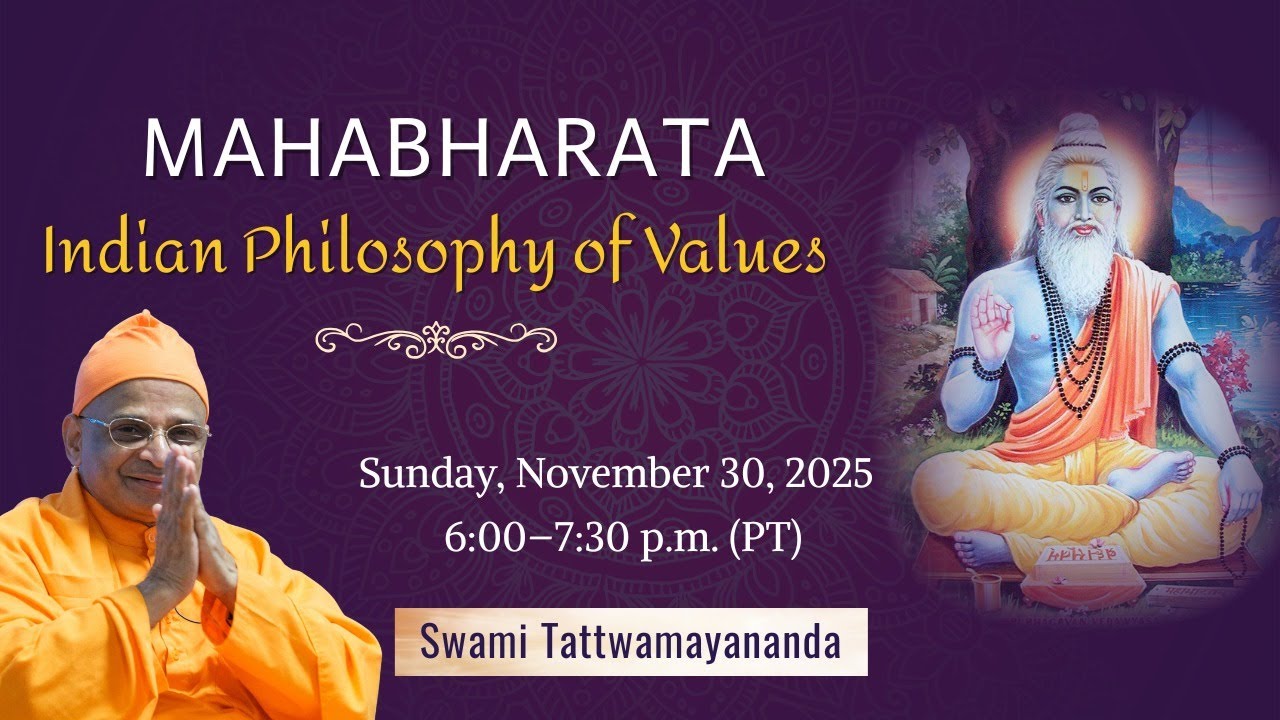
Why this video: Swami Tattwamayananda provides a rigorous philosophical analysis of Dharma as the central organizing principle of the Mahabharata and Ramayana. He explains that Dharma represents cosmic balance, righteousness, and the moral duty appropriate to one’s social position (varnashrama dharma). Crucially, the lecture details how Indian epics do not present simple moral codes, but complex ethical dilemmas where duties conflict.

Why this video: This short lecture examines the ethical limits and human struggles of executing Dharma in the Ramayana. The speaker explains how Prince Rama behaves as the physical embodiment of Dharma, displaying total submission to his societal and filial duties even when it causes immense personal suffering, contrasting this with the more complex, compromised ethics found in the Mahabharata.
⚠️ Curriculum Note on Module Gaps: While the video pool provides strong individual analyses of Pietas in the Aeneid and Dharma in Hindu philosophy, it lacks a direct comparative video side-by-side.
Independent Study Recommendation: To bridge this gap, write a comparative reflection comparing how Aeneas’s abandonment of Dido (to satisfy Roman Pietas) mirrors or differs from Prince Rama’s exile to the forest (to preserve his father’s vow and Hindu Dharma).
Knowledge Checkpoint
- Define pietas and list the three tiers of obligation a Roman hero must honor.
- Contrast Aeneas’s motivation for fighting with Achilles’ motivation. How do their goals reflect Roman vs. Greek civic values?
- What is dharma, and how does Yudhishthira’s dialogue in the Mahabharata define it as moral alertness rather than rigid dogma?
Module 4: Comparative Analysis of Motifs and Civic Values
This synthesizing module compares key recurring structural motifs across ancient traditions. You will analyze Katabasis (the physical and psychological descent to the underworld) and the literary role of Divine Intervention, evaluating how these devices reveal each culture's unique view of civic duty, death, and human agency.
Recommended Videos

Why this video: Renowned scholar Dr. Bart Ehrman defines the classical Greek term Katabasis ("going down"). He explains how Katabasis functions as a widespread, cross-cultural literary motif where a living hero descends into the underworld to gain otherwise inaccessible cosmic knowledge, map out destiny, and return to the land of the living fundamentally transformed.

Why this video: This video explores the underworld descents in early epics, specifically highlighting Book 11 of Homer's Odyssey (the Nekuia). It contrasts the bleak, shadow-filled Greek afterlife with later Roman iterations, demonstrating how a hero's encounter with the dead is used to reveal cultural attitudes toward death and legacy.

Why this video: This video analyzes the structural role of divine intervention in ancient epics. It explains that rather than simple deus ex machina cheat codes, the gods function as active literary devices that mirror characters' internal psychological states, drive cause-and-effect plots, and illustrate the limits of human agency in a cosmos ruled by fate.

Why this video: This lecture outlines how Virgil deliberately co-opted and adapted Greek Homeric myths to build Roman civic pride. It illustrates how Virgil changed the focus of the hero's journey from Odysseus's individual survival to Aeneas's founding of a collective, eternal state, providing an excellent capstone comparative case study.
Knowledge Checkpoint
- Explain the structural function of Katabasis in an epic hero's journey. What does the hero acquire in the underworld that they cannot obtain on Earth?
- How does Virgil's underworld in Aeneid Book 6 (which features a parade of future Roman heroes) differ in political purpose from Homer's underworld in Odyssey Book 11?
- How do the gods serve as psychological mirrors for the characters in epic poetry, rather than just external actors?
Course Map
Below is the recommended sequence of modules. Note that Module 1 provides the foundational frameworks required to successfully navigate both the Western-focused Module 2 and Eastern/Roman comparative landscapes in Module 3, which converge in the final synthesis of Module 4.
Key People Index
- Joseph Campbell (1904–1987): An American mythologist and writer, famous for identifying the Monomyth (Hero’s Journey), a cross-cultural narrative archetype that underlies global storytelling from ancient epics to modern cinema.
- Milman Parry (1902–1935) & Albert Lord (1912–1991): Classicists who developed the Oral-Formulaic Theory. Their empirical fieldwork with Yugoslavian bards revolutionized Homeric studies, proving that ancient epics were orally composed living traditions rather than memorized static texts.
- Andrew George: An eminent British academic and Assyriologist, globally recognized for his definitive, award-winning translations of the Epic of Gilgamesh from cuneiform tablets.
- Virgil (70–19 BCE): Ancient Roman poet commissioned during the reign of Augustus Caesar to write the Aeneid, transforming Greek epic conventions into an ideological founding myth for the Roman Empire.
Final Self-Assessment
To verify your mastery of the curriculum learning goal, ensure you can confidently check off each of the following synthesis tasks:
- I can define the epic genre using Aristotle's classical criteria (elevated language, heroic figure, serious subject, national/civilizational scope).
- I can trace a protagonist through the three major movements of Joseph Campbell’s Monomyth: Departure, Initiation, and Return.
- I can explain how the transition from oral composition (Parry-Lord thesis) to written codification affects the narrative flexibility of an epic.
- I can describe the structural and thematic shifts in the Epic of Gilgamesh that occur when Gilgamesh shifts his focus from seeking physical immortality to building the walls of Uruk.
- I can compare and contrast the Greek heroic pursuit of kleos (personal glory) with the Roman civic demand for pietas (duty to state and family).
- I can analyze how the Indian epic hero (e.g., Rama or Arjuna) navigates a crisis of dharma, where personal desire must be subordinated to maintain cosmic and moral order.
- I can define the term Katabasis and explain why heroes across different cultural traditions (Odysseus, Aeneas, Gilgamesh) must physically or metaphorically descend into the underworld.
- I can explain how divine intervention in ancient epics functions as a literary device to represent internal human psychology and express the parameters of fate.
- I can write a comparative analysis demonstrating how Virgil’s Aeneid adaptively recycled Homeric motifs to transform individualistic Greek ideals into collectivist Roman civic propaganda.