Mastering Surgical Suturing Techniques and Acute Wound Care
Learning Goal: Master the clinical principles of acute wound assessment, sterile technique, local anesthesia administration, wound debridement, and basic-to-advanced surgical suturing and knot-tying. This curriculum is designed to equip medical, nursing, and surgical training professionals with the practical, evidence-based skills required to confidently manage acute cutaneous injuries.
Prerequisites
- Basic understanding of human biology and tissue layers.
- Access to a basic suture practice kit (silicone suture pad, needle driver, forceps, suture scissors, and suture materials) for hands-on practice.
Estimated Study Time
- Total Curriculum Duration: ~12 Hours (comprising video instruction, conceptual review, and intensive hands-on psychomotor practice).
Module 1: Foundations of Wound Healing and Assessment
Understanding how tissue responds to trauma is essential before selecting an intervention. This module covers the macroanatomy of the skin, the physiological phases of wound healing, and clinical techniques for acute wound exploration, classification, and triage.
Recommended Videos

- Why this video: This 3D animation provides a clear visual baseline of how injured tissue transitions through the inflammation, proliferation, and remodeling phases of healing. Visualizing these overlapping physiological phases is critical for clinical decision-making.

- Why this video: A deeper look at skin anatomy and its physiological functions. It explains the protective barrier of the skin, tissue permeability, and vascular patterns, providing the anatomical context necessary to understand how wounds heal.
- Why this video: This video introduces clinical classification systems for acute versus chronic wounds. Understanding these classifications is key to deciding whether to close a wound immediately or leave it open to heal.
🔍 Curriculum Note: Clinical Triage and Assessment Gaps
While these videos establish a strong physiological foundation, they do not include a dedicated clinical workflow for acute wound triage.
Independent Study Recommendation: Search for "clinical acute wound assessment and classification tutorial" to study triage algorithms, such as:
- Checking distal neurovascular status and tendon function prior to anesthesia or closure.
- Distinguishing between primary closure (immediate suturing), secondary intention (leaving the wound open to granulate), and tertiary closure (delayed primary closure).
Knowledge Checkpoint
- Can you define the three physiological phases of wound healing and identify when they overlap?
- Do you know how to clinically differentiate between an acute laceration and a chronic wound?
- Can you list the indications for choosing secondary intention healing over primary closure?
Module 2: Sterile Field and Instrument Mastery
To perform safe surgical procedures, you must maintain aseptic technique and handle surgical instruments correctly. This module covers establishing a sterile field, identifying instruments on a standard minor laceration tray, and using correct hand-grip mechanics.
Recommended Videos
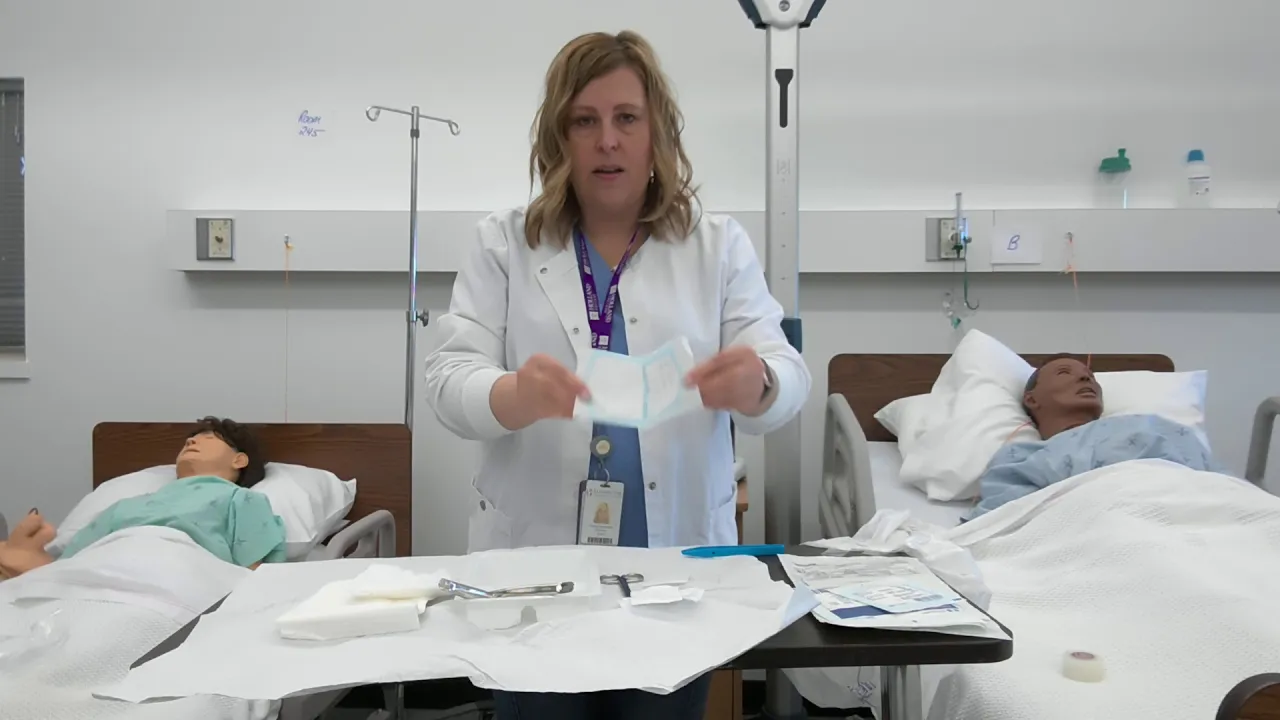
- Why this video: This practical guide covers how to set up a sterile field, maintain a 1-inch non-sterile border, and arrange supplies safely. These skills are essential for preventing surgical site infections.

- Why this video: Demonstrates the mechanics of needle loading. It shows how to clamp the curved needle at 1/4 to 1/3 of its circumference from the swaged end and secure it near the tip of the needle driver to prevent slipping during tissue transit.

- Why this video: A clear breakdown of surgical forceps and needle holders. It details the structural differences between dressing forceps and toothed Adson forceps, explaining how to select the right tool to avoid tissue trauma.
Knowledge Checkpoint
- Can you set up a sterile field and identify the boundaries of the non-sterile 1-inch border?
- Where should a curved needle be clamped on its body, and why is clamping near the swaged end avoided?
- What is the difference in clinical application between toothed Adson forceps and non-toothed dressing forceps?
Module 3: Essential Suturing and Knot Tying
Mastering the mechanics of the simple interrupted suture and the instrument-assisted flat knot is the foundation of surgical closure. This module covers these core skills alongside the continuous running suture technique.
Recommended Videos
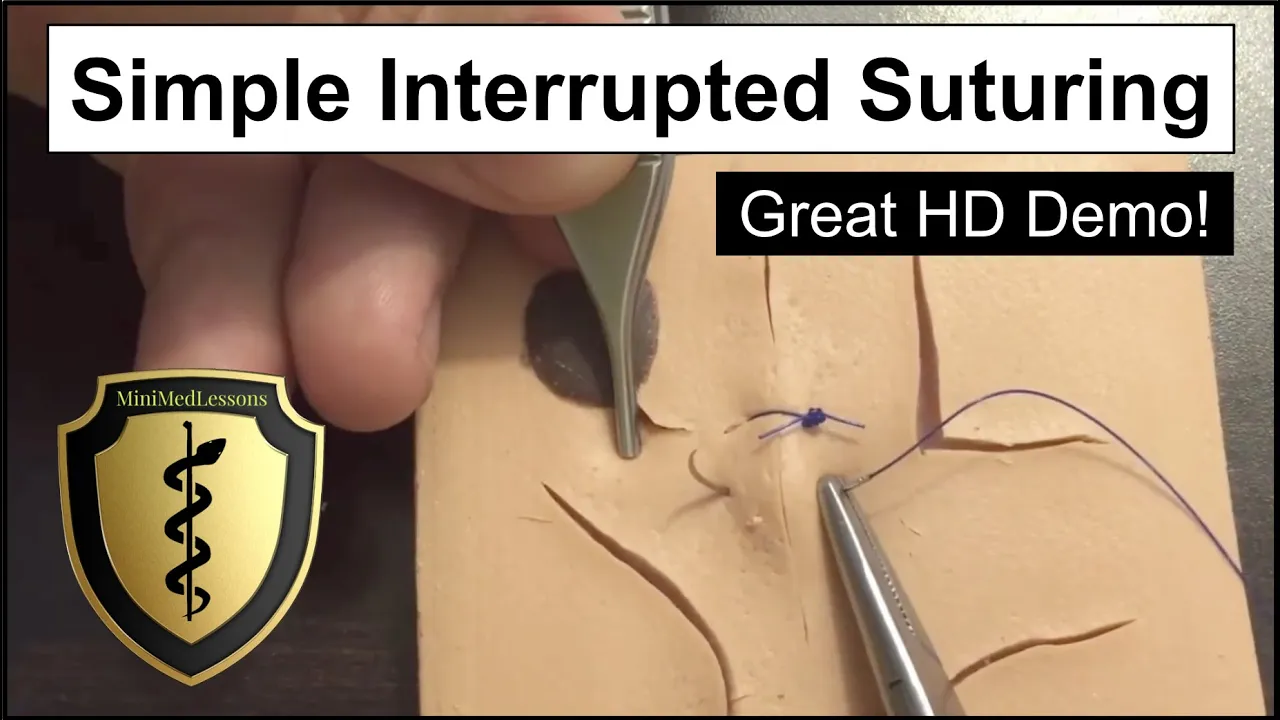
- Why this video: An excellent, close-up tutorial on the simple interrupted suture. It teaches how to enter the skin at a 90-degree angle and take symmetrical, equidistant bites to achieve proper wound edge eversion.

- Why this video: Breaks down the mechanics of the instrument tie. It shows how to place the needle driver between the suture ends, alternate wrap directions, and lay down flat, secure knots without twisting the tissue.
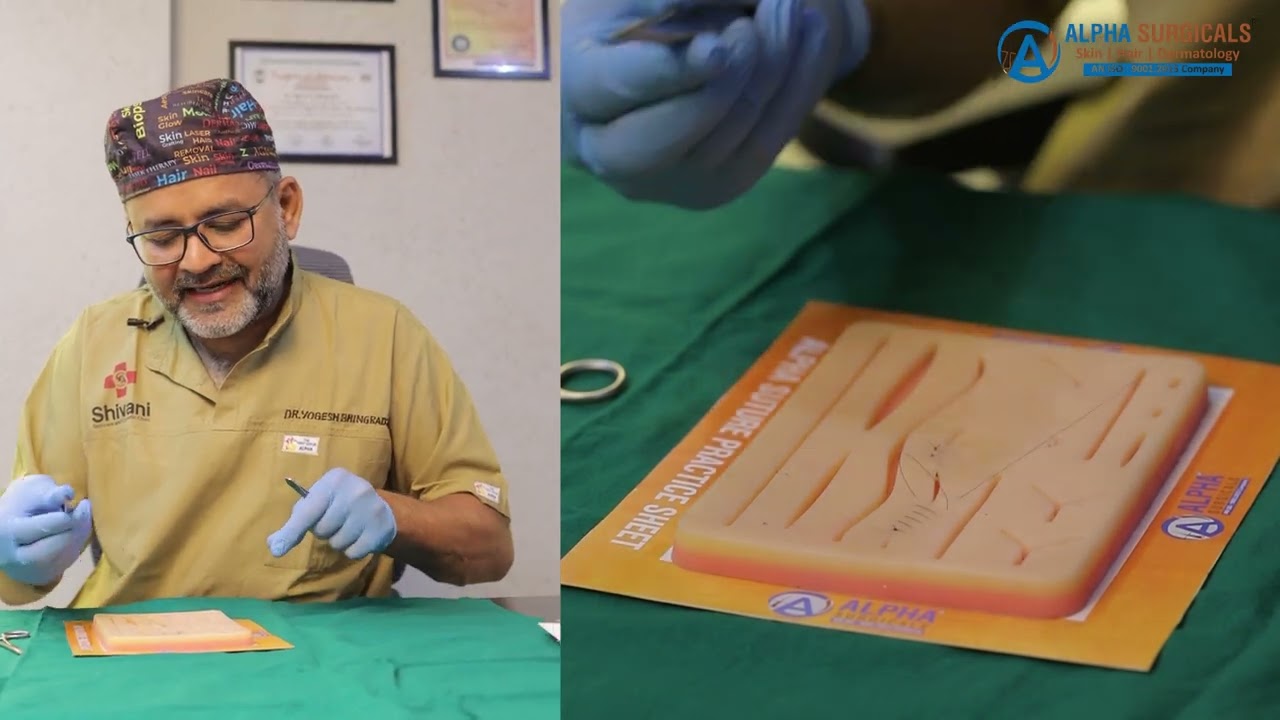
- Why this video: Demonstrates the continuous running suture in dermatological surgery. It highlights the speed of this technique, how it distributes tension evenly along the wound line, and the methods for securing both ends.
Knowledge Checkpoint
- Why is entering the skin at a 90-degree angle critical for wound edge eversion?
- How do you configure a surgeon's knot using a needle driver, and why must you alternate the direction of each throw?
- In what clinical scenarios is a running continuous suture preferred over simple interrupted sutures?
Module 4: Advanced Suture Techniques and Materials
This module introduces deep dermal tissue closure, tension-relieving mattress sutures, and the properties of different suture materials.
Recommended Videos
- Why this video: A quick, high-yield overview of suture materials. It defines non-absorbable (Prolene) versus absorbable sutures (Vicryl, PDS, and Catgut), helping you understand how long different materials retain their tensile strength in tissue.
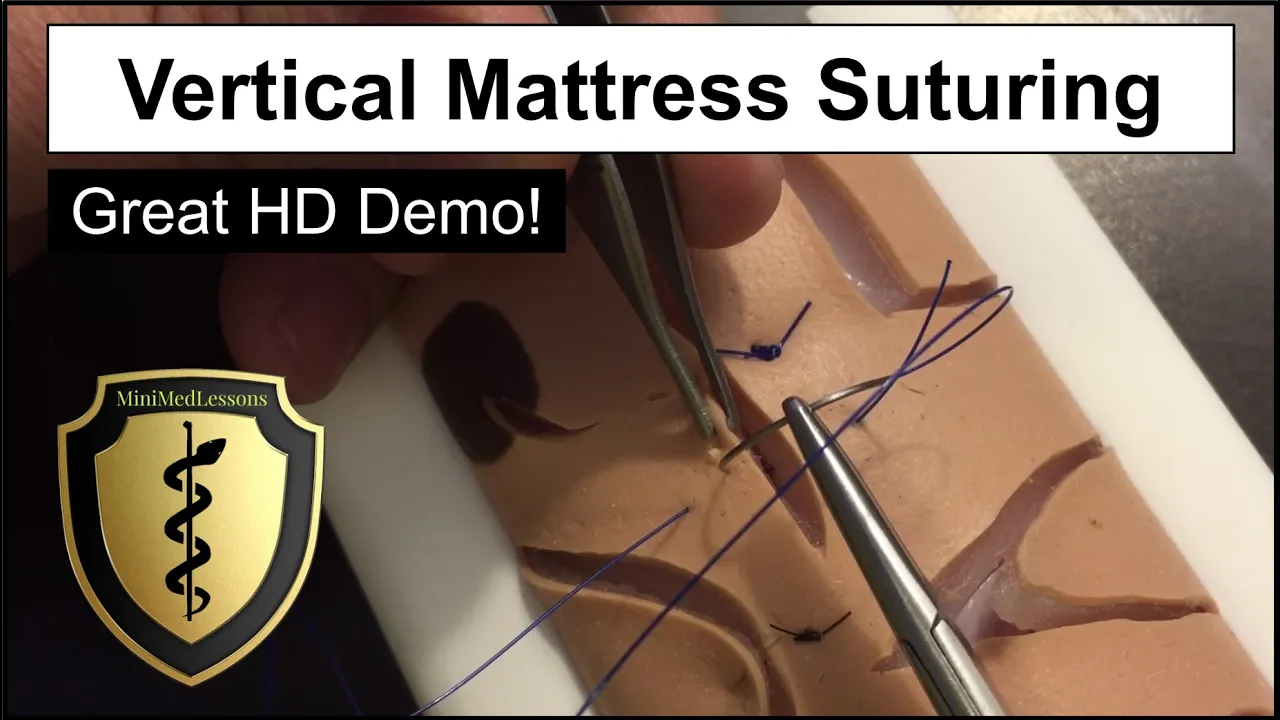
- Why this video: Teaches the vertical mattress suture ("Far-Far, Near-Near"). This technique is vital for closing deep wounds under high tension, as it provides both structural support and excellent skin edge eversion.
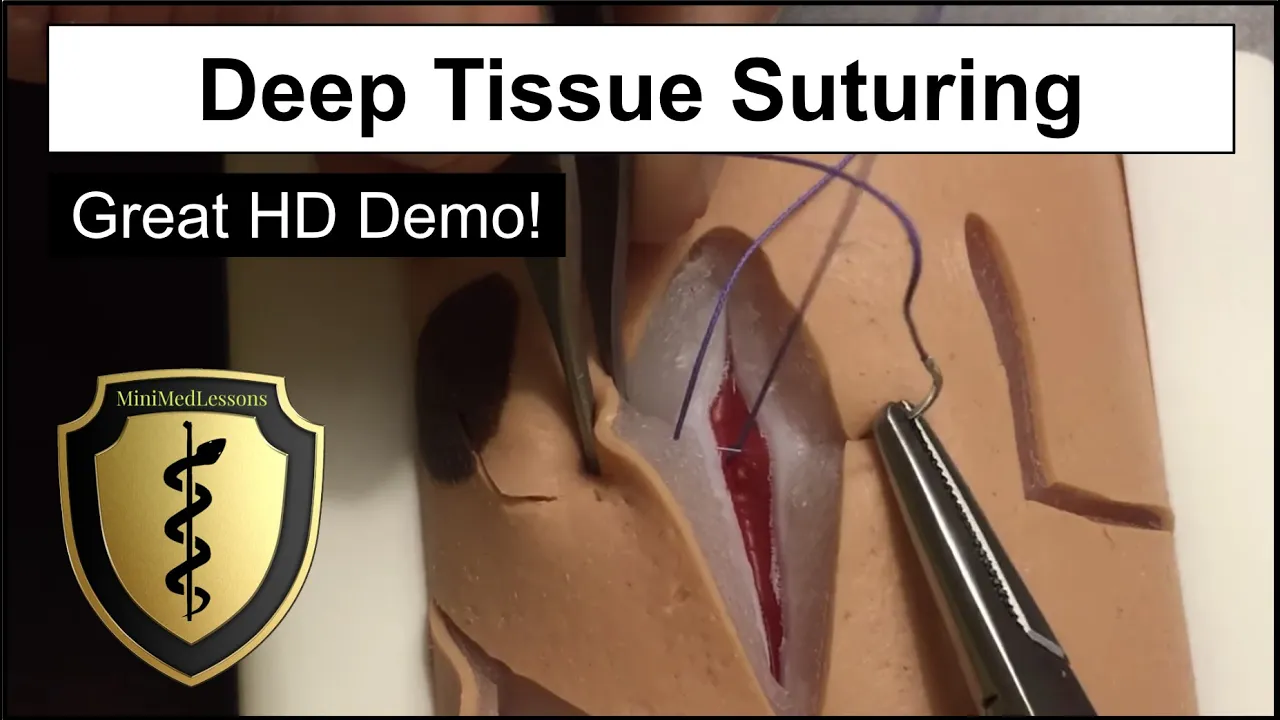
- Why this video: A clear guide on closing dead space with inverted, absorbable simple dermal sutures. It explains how to bury the knot deep in the wound to prevent tension on the superficial epidermal closure.

- Why this video: A detailed tutorial on the running subcuticular suture, which is used for low-tension cosmetic closures. It shows how to work within the dermal-epidermal junction to produce a flat, clean scar.
🔍 Curriculum Note: Suture Sizing and Material Properties
While the high-yield video introduces key terms, you will need to familiarize yourself with the standard USP sizing system (e.g., matching suture thickness to the anatomical location).
Independent Study Recommendation: Search for "suture materials selection guide absorbable non absorbable" to review:
- Suture sizing: When to use 3-0 or 4-0 (trunk and extremities) versus 5-0 or 6-0 (face and delicate areas).
- Monofilament vs. braided structures (e.g., Monocryl vs. Vicryl) and their handling characteristics.
Knowledge Checkpoint
- What is the clinical difference between Vicryl (absorbable) and Prolene (non-absorbable) sutures?
- How does the "Far-Far, Near-Near" pattern of a vertical mattress suture relieve wound tension?
- Why is it critical to close "dead space" in deep wounds before closing the skin?
Module 5: Local Anesthesia, Debridement, and Aftercare
This final module covers patient preparation, wound cleansing, and aftercare: administering local anesthetic, irrigating and debriding wounds, and safely removing sutures post-healing.
Recommended Videos

- Why this video: Explains how to infiltrate local anesthetic through the exposed laceration margins rather than sensitive intact skin. It also demonstrates how to aspirate before injecting to prevent intravascular delivery.

- Why this video: An educational animation demonstrating surgical debridement. It highlights the importance of removing devitalized, necrotic, or contaminated tissue to establish a clean wound bed that is ready to heal.

- Why this video: Demonstrates how to safely remove sutures. It shows how to pull the knot upward with forceps, snip the loop close to the skin, and slide the thread out without pulling contaminated external material through the healed tract.
Knowledge Checkpoint
- Why is it important to inject local anesthetic through the wound margins rather than the surrounding skin?
- What are the signs of necrotic tissue, and why must it be debrided before closure?
- How do you cut and pull a suture during removal to minimize the risk of infection?
Course Map
This flowchart outlines the recommended pathway through the modules. You should master the foundational aseptic techniques and instrument handling before moving on to practical suturing and advanced procedures.
Key People Index
The educators and medical professionals featured in this curriculum:
- Dr. Rohan Khandelwal (@lefthandedsurgeon): A surgical educator who provides clear, concise explanations of suture materials, tissue handling, and high-yield surgical concepts.
- Dr. David Keegan (@drDavidKeegan): A clinical educator in family medicine who specializes in teaching practical, everyday clinical procedures.
- Dr. Yogesh Bhingradia (@alphasurgicals7582): A specialist in dermatological surgery who focuses on precise continuous suturing techniques and clean, cosmetic wound closures.
- MiniMedLessons (@minimedlessons): A respected medical education channel known for its detailed, high-definition videos showing proper hand positioning and needle mechanics.
Final Self-Assessment
Complete this comprehensive self-assessment to verify your understanding of the material before moving on to clinical practice:
- Phases of Healing: Can you outline the primary physiological events that occur during the inflammatory, proliferative, and remodeling phases of wound healing?
- Wound Assessment: Can you list three clinical signs that indicate a wound should be left open to heal by secondary intention rather than closed immediately?
- Aseptic Technique: Do you know how to establish a sterile field and identify the correct procedure if you accidentally touch the 1-inch border?
- Instrument Handling: Can you demonstrate the correct grip for a needle holder and explain why toothed forceps are preferred for holding skin edges?
- Simple Interrupted Suture: Can you perform a simple interrupted suture with symmetrical bites and proper wound edge eversion?
- Surgical Knot Security: Can you tie a secure instrument knot, ensuring each throw lies flat without creating a granny knot?
- Deep Dermal Closures: Can you explain the purpose of an inverted deep dermal suture and describe how to bury the knot?
- Mattress Techniques: Can you explain when to use a vertical mattress suture instead of a simple interrupted suture?
- Suture Materials: Can you identify which suture materials are absorbable versus non-absorbable, and explain when to use a 3-0 versus a 5-0 suture?
- Anesthetic Safety: Do you know how to safely infiltrate local anesthetic, including how to perform the aspiration test before injection?
- Surgical Debridement: Can you define the clinical goals of mechanical wound debridement and list the types of tissue that must be removed?
- Suture Removal: Can you demonstrate how to remove a simple interrupted suture without pulling contaminated external thread through the healed tissue?