The Art of the Leitmotif: Applying Motivic Development and Orchestral Variation Techniques to Character Themes in Film Scoring
Learning Goal: You will master the craft of film scoring by designing, developing, and adapting character themes (leitmotifs). Through the study of music theory, structural thematic transformation (inversion, retrograde, augmentation, diminution), narrative-driven orchestration, and reharmonization, you will learn to dynamically modify a theme to track a character's emotional journey and narrative arc.
- Prerequisites: Basic familiarity with a Digital Audio Workstation (DAW) and elementary keyboard geography.
- Estimated Total Study Time: 18 Hours
Module 1: Music Theory Basics and the Role of Film Music
In this module, you will establish the fundamental building blocks of music theory, including scales, chord construction, and basic melody writing. You will also discover the psychological and narrative functions of background music in film, learning how a composer's structural decisions translate directly to audience emotion.

- Why this video: Rick Beato provides a comprehensive foundation in analyzing temporary tracks (temp tracks). He breaks down chord qualities (major, minor, diminished, augmented, and suspended) and demonstrates how to identify modal sounds through half-step patterns. This is crucial for understanding how specialized harmonic choices evoke specific cinematic spaces and moods.
- Knowledge Checkpoint:
- Understand the differences between major, minor, diminished, augmented, and suspended chords.
- Identify modal scales using their characteristic half-step patterns.
- Explain how to analyze a temp track's emotional intent without copying its direct notes.
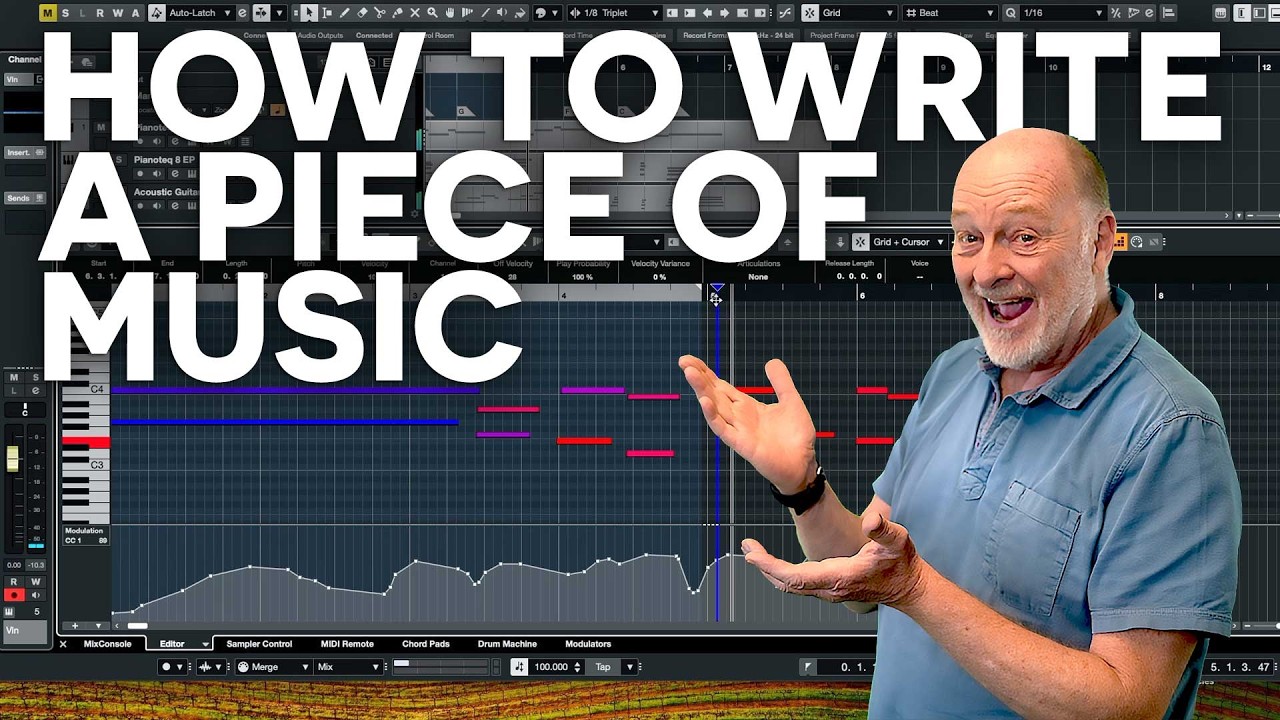
- Why this video: This video defines the smallest building blocks of musical composition. It introduces the "motif" as the core, indivisible unit of music that combines both specific intervals and a rhythmic profile.
- Knowledge Checkpoint:
- Define the musical concept of a "motif" using both pitch and rhythm components.
- Differentiate between a simple motif and a fully realized theme.
- Explain how basic instrumental choices begin to form the raw materials of a sketch.
![4-14 Melody Writing for beginners [Year 1 #62 ] Free Beginner Video Piano Lesson | Composition](https://i.ytimg.com/vi_webp/l8ckZXGu5_U/sddefault.webp)
- Why this video: A practical, hands-on piano roll and keyboard tutorial designed for beginners. It demonstrates four fundamental melodic writing techniques: utilizing a base motive, repetition, sequence (playing the motive starting on different pitches), and variation.
- Knowledge Checkpoint:
- Create a basic 3-to-4 note motif over a simple rhythmic structure.
- Write a complete 4-bar phrase utilizing exact repetition and sequential movement.
- Explain how to keep a beginner-level melody structured and memorable.
Module 2: The Anatomy of a Leitmotif
This module explores the historical origins of the leitmotif—from its development by Richard Wagner in 19th-century opera to its modern adaptation by John Williams and John Powell. You will analyze iconic themes to understand how a short musical phrase can embody a concrete character, object, or abstract concept.

- Why this video: This short but precise video clarifies a common industry misconception: the difference between a musical theme and a leitmotif. It explains that while a theme is simply a recurring piece of music, a true leitmotif represents a concrete element within a narrative (such as a character, event, emotion, or noun).
- Knowledge Checkpoint:
- Articulate the difference between a general musical theme and a strict narrative leitmotif.
- Identify the thematic requirements for a motif to acquire concrete narrative meaning.
- Why this video: This video contextualizes the historical invention of the leitmotif by opera composer Richard Wagner. Understanding these origins explains why modern film music relies on the exact same principles to represent abstract emotions or characters on screen.
- Knowledge Checkpoint:
- Describe how Richard Wagner utilized the leitmotif to communicate subconscious dramatic developments in his operas.
- Explain the link between Wagner's music dramas and modern symphonic Hollywood film scoring.
- Why this video: A concise look at John Powell's iconic thematic construction. This analysis illustrates how short, memorable cells are tied directly to characters and places, cementing their identity in the viewer's subconscious memory.
- Knowledge Checkpoint:
- Explain how John Powell makes themes easily recognizable to the audience.
- Identify the structural markers of a leitmotif that trigger immediate recognition when played.

- Why this video: Acclaimed composer Kris Bowers demonstrates step-by-step how to construct a character's musical DNA from initial concept to a finished thematic layout. Using a character prototype, he shows how to draft harmony, rhythm, and melody to capture psychological depth.
- Knowledge Checkpoint:
- Translate a written character profile or psychological state into an initial chord progression.
- Describe the process of layering a melodic motive on top of character-specific chords.
Module 3: Thematic Transformation: Structural Development Techniques
In this module, you will learn the classic formal composition techniques used to develop and transform a basic motif. Master the technical implementation of inversion (mirroring interval directions), retrograde (playing the motif backward), augmentation (stretching note values), and diminution (compressing note values).

- Why this video: This video provides a brilliant, highly visual demonstration of classical contrapuntal devices in action. Pianist Marta Czech demonstrates how Bach’s Art of Fugue relies on inversion (reversing interval directions to create a mirror image) and retrograde (playing the motif backwards).
- Knowledge Checkpoint:
- Define the technical mechanics of melodic inversion.
- Define retrograde and explain how a motif is reversed in time.
- Identify visual examples of mirrored intervals on a piano roll or musical score.
- Why this video: A deeper exploration of Bach's sophisticated thematic development. It demonstrates how these strict mathematical structures (including augmentation—doubling note lengths, and diminution—halving note lengths) create unified, cohesive works from simple musical concepts.
- Knowledge Checkpoint:
- Differentiate between augmentation and diminution in rhythmic development.
- Explain how stretching or compressing a motif's duration changes its psychological character.

- Why this video: A brilliant real-world analysis showing how John Williams applied these exact classical techniques to the modern Star Wars scores. You will see how Rey's Theme and Kylo Ren's Theme are constructed as near-perfect retrogrades of older motifs, embedding subtext directly into the music's structure.
- Knowledge Checkpoint:
- Analyze how John Williams uses retrograde to link character families and plot twists.
- Explain how a character's theme can hide a subtextual connection to another character through interval mirroring.
![How to Develop a Musical Idea [Full Length Real-Time Tutorial]](https://i.ytimg.com/vi/Q3HdQVkw1Qk/maxresdefault.jpg)
- Why this video: This tutorial links motivic manipulation to the structural "Theme and Variations" technique, providing a practical, real-time workflow for taking a simple musical seed and systematically varying it to build a larger composition.
- Knowledge Checkpoint:
- Map out a workflow for developing a 4-note idea into a full thematic section.
- Describe the primary steps of modifying pitch rhythm while keeping the core identity intact.
Curriculum Gap Alert: Direct video demonstrations of using modern DAW tools (like MIDI MIDI transform tools) to apply retrograde, inversion, or interval expansion can be sparse. For independent practice, load your DAW, program a 5-note character motif, and manually use your DAW's "Invert Midi" or "Reverse Midi" commands to analyze the resulting variations. Independent Search Terms:
DAW MIDI inversion retrograde tutorial,rhythmic augmentation MIDI piano roll
Module 4: Orchestration and Color for Character Scoring
An optimized motif must be translated to the orchestra. In this module, you will learn the ranges, strengths, and expressive qualities of the woodwind, brass, string, and percussion families. You will explore "instrumental colors" to assign specific instruments to psychological and character states.

- Why this video: This comprehensive crash course uses free virtual instruments to teach you how to write orchestrally. It covers key technical concepts including managing short vs. long articulations (keyswitching) and balancing instrument groups.
- Knowledge Checkpoint:
- Understand the technical differences between long and short instrumental articulations.
- List the primary instrument families (Strings, Brass, Woodwinds, Percussion) and their layout in a digital template.
- Explain how to balance simulated dynamics to make a virtual orchestra sound realistic.

- Why this video: Ryan Leach breaks down the roles of the brass family. You will learn to assign melodic and structural duties within a single instrument family—specifically assigning heroic or primary melodies to French horns and supporting low chords to trombones and tuba.
- Knowledge Checkpoint:
- Identify the expressive qualities and range of the French horn as a primary melodic voice.
- Structure a low-brass voicing utilizing trombones and tuba to support a theme.
- Explain how different registers of brass instruments alter the mood of a cue.

- Why this video: A classic case study in narrative-driven orchestration. This excerpt demonstrates how John Williams uses a highly specific instrument—the contrabassoon—to characterize the three-headed dog Fluffy as slow, ominous, and massive, aligning its timbral color with the creature's physical traits.
- Knowledge Checkpoint:
- Define "instrumental color" (timbre) in the context of character development.
- Explain why a composer might choose an extreme register instrument (like the contrabassoon or piccolo) to illustrate physical character traits.

- Why this video: This lighthearted demonstration illustrates how the human brain associates musical instrument colors with specific visual and emotional palettes (e.g., matching a smooth, grand piano sound to calm tones, or a flashy saxophone to vibrant colors).
- Knowledge Checkpoint:
- Connect basic instrumental colors (timbral textures) to psychological profiles.
- Explain the concept of cross-modal association between sound textures and character visuals.
Curriculum Gap Alert: While standard orchestral sample workflows are covered, video material pairing complex instrument registers with detailed character psychology can be abstract. Independent Search Terms:
narrative orchestration character psychology,timbre and instrument selection film score
Module 5: Narrative Variation: Scoring the Character Arc
Your final challenge is tracking a character's emotional changes over time. You will learn to use dynamic orchestration, dramatic reharmonization, and tempo variations to adapt a single character theme to wildly different scenes (such as action, tragedy, or romance).

- Why this video: This brilliant, in-depth analysis shows how John Powell changes a theme's harmonic context to convey vastly different emotions. Instead of just transposing a melody, changing the chords underneath can completely shift a theme's tone from triumphant to melancholy.
- Knowledge Checkpoint:
- Explain how a melody's emotional meaning changes when its underlying chord progression is converted from major to minor mode.
- Describe how John Powell matches thematic variations with the bond growing between Hiccup and Toothless.
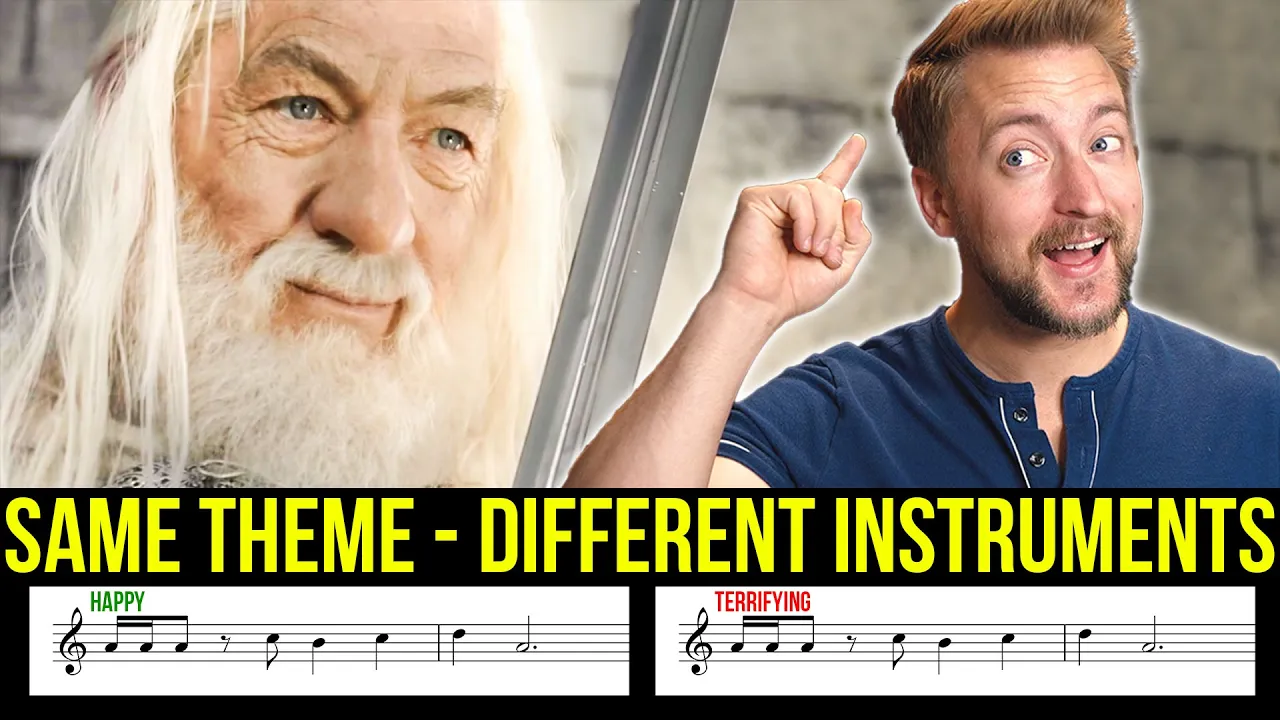
- Why this video: Using the Rohan theme from The Lord of the Rings, this analysis demonstrates tracking a character arc through context. It analyzes the dark, melancholy Hardanger fiddle version used during King Théoden's corruption, contrasting it with the triumphant, brass-led variation during his restoration.
- Knowledge Checkpoint:
- Explain how instrument substitutions (e.g., solo fiddle vs. unison brass) represent a character's physical and spiritual transformation.
- Identify how texture, density, and orchestration can illustrate a character's shift from weakness to strength.
- Why this video: This video provides 6 concrete examples of expanding a simple musical theme by changing its instrumentation, altering its perspective, combining themes, and trying lyrical explorations.
- Knowledge Checkpoint:
- List three physical ways to expand a basic keyboard sketch into a cinematic landscape.
- Describe how "altering the perspective" of a melody changes its dramatic function in a scene.

- Why this video: Reharmonization is a powerful tool for scoring a character's internal changes. This tutorial introduces seven progressive levels of reharmonization, teaching you to change underlying chord progressions while keeping the melody completely intact.
- Knowledge Checkpoint:
- Reharmonize a basic diatonic melody note using third-interval substitutions.
- Describe how changing the underlying bass notes changes the function and mood of a static melody note.
Curriculum Gap Alert: While reharmonization and thematic context are covered, direct walkthroughs of adapting one theme to multiple specific movie scenes (e.g., action vs. romance) can be highly proprietary. Independent Search Terms:
scoring the scene adapting character themes,thematic variation for contrasting scenes
Course Map
Key People Index
- John Williams: Legendary film composer (Star Wars, Harry Potter, E.T.). Renowned for adapting 19th-century operatic leitmotif structures into modern cinema, utilizing mathematical transformations (retrograde, inversion) to weave narrative subtext into his scores.
- Howard Shore: Composer of The Lord of the Rings trilogy. He utilized a massive system of over 80 structural leitmotifs, tracking the complex narrative arcs and corruption/restoration of Middle-earth.
- John Powell: Composer of How to Train Your Dragon. Celebrated for his highly memorable thematic writing and his ability to completely alter the emotional weight of a motif through harmonic context and instrumentation.
- Kris Bowers: Modern Emmy-winning and Academy Award-nominated composer (The Green Book, Bridgerton). Known for his highly character-focused approach, crafting character profiles directly into his initial harmonic sketches.
- Richard Wagner: 19th-century German opera composer who pioneered the use of the leitmotif (recurring musical phrases tied to specific characters, objects, or dramatic concepts) in his monumental music dramas.
- Johann Sebastian Bach: Baroque master whose work (The Art of Fugue) defined the mathematical and structural mechanics of motivic development, including inversion, retrograde, augmentation, and diminution.
Final Self-Assessment
Complete this comprehensive self-assessment to test your mastery of character-based film scoring:
- Motif Design: Can you write a 3-to-5 note musical motif that has both a distinct pitch profile and a highly recognizable rhythmic signature?
- Leitmotif Distinction: Can you explain the difference between a simple recurring theme and a strict leitmotif?
- Melodic Inversion: Can you manually calculate and write the mirror-image inversion of your motif (e.g., a rising perfect fifth becomes a falling perfect fifth)?
- Retrograde Transformation: Can you reverse your motif's pitch and rhythm to create a clean, structurally linked retrograde variation?
- Rhythmic Expansion: Can you apply structural augmentation (doubling note values) and diminution (halving note values) to your motif?
- Instrumental Range Knowledge: Do you know the functional registers of the primary symphonic families and how to avoid writing outside their physical ranges?
- Narrative Orchestration: Can you explain why you would assign a specific instrument (such as a solo French horn vs. a contrabassoon) to represent a specific character's psychological state?
- Harmonic Context: Can you take your character's melody and alter its mood from triumphant to tragic solely by changing the chords underneath (reharmonization)?
- Tracking the Arc: Can you sketch out three distinct variations of a single character theme that correspond to: (1) their heroic introduction, (2) their tragic defeat, and (3) their final triumph?