Neo-Riemannian Theory: Sci-Fi & Fantasy Scoring
Learning Goal: Decode Neo-Riemannian Theory and the Tonnetz to analyze, visualize, and compose epic, otherworldly, and magical chord progressions. By the end of this curriculum, you will be able to bypass traditional diatonic constraints to write cinematic sci-fi and fantasy film cues with smooth, parsimonious voice leading.
- Prerequisites: Basic understanding of the piano keyboard, familiarity with reading treble and bass clefs (or piano roll MIDI editors), and an elementary understanding of major/minor scale structures.
- Estimated Total Study Time: 14 Hours
Module 1: Foundations of Triads and Voice Leading
To understand triadic transformations, you must first master the construction of the triads themselves and the classical guidelines of moving between them. This module establishes how major and minor triads are built geometrically and micro-stepwise, transitioning your perspective from "chord roots" to "individual singing voices."
Recommended Videos

Why this video: This tutorial bridges the gap between scale-based and interval-based triadic construction. For Neo-Riemannian theory, the interval-based approach (counting semitones) is critical because triadic transformations rely on the physical shifting of intervals rather than their diatonic functions.
- Knowledge Checkpoint:
- Build a major triad using the interval pattern (Root + 4 semitones + 3 semitones).
- Build a minor triad using the inverse interval pattern (Root + 3 semitones + 4 semitones).
- Differentiate between the scale-degree method and the interval-stacking method of chord construction.

Why this video: Introducing chord inversions is the first step toward "parsimonious voice leading" (moving chords with minimal physical distance). This video explains how to rearrange chord tones (root position, first inversion, second inversion) to make transitions more musical.
- Knowledge Checkpoint:
- Identify the bass note of a triad in first inversion (the 3rd) and second inversion (the 5th).
- Rearrange a C Major triad to transition smoothly to an F Major triad with minimal finger movement.
- Define what a "voicing" is in the context of arranging notes across a staff or MIDI roll.
Why this video: This lesson dives deep into the physical mechanics of voice leading. It teaches you how to keep "common tones" locked in place while moving other voices by only a step or half-step, setting the foundational logic of the P, L, and R transformations.
- Knowledge Checkpoint:
- Explain the concept of a "common tone" between two adjacent chords.
- Write a progression where no voice moves more than two semitones (a whole step).
- Explain how smooth voice leading helps prevent chord changes from sounding jarring, even when shifting between distant keys.
Module 2: The Core Triadic Transformations (P, L, R)
This module introduces the heart of Neo-Riemannian Theory: the Parallel (P), Leading-Tone Exchange (L), and Relative (R) transformations. Unlike classical Roman numeral analysis, which references a single home key, these operations relate triads directly to one another based on shared notes and half-step voice leading.
Recommended Videos
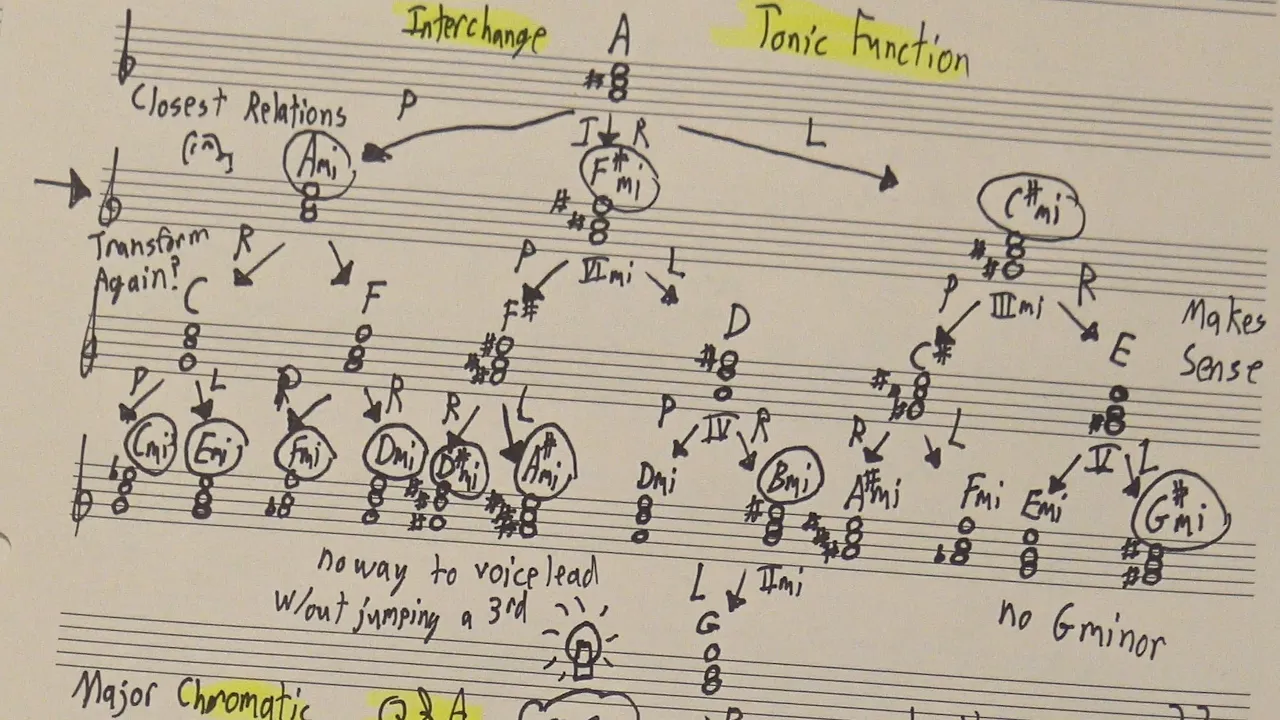
Why this video: An incredibly clear, highly visual primer on the core mechanics of Neo-Riemannian transformations. It defines the operations mathematically and demonstrates how they preserve two common tones while moving the remaining note by a step or half-step.
- Knowledge Checkpoint:
- Define the P (Parallel) transformation: change the mode (major/minor) by moving the third by a half-step (e.g., C Major C Minor).
- Define the R (Relative) transformation: move the root of a major chord down a whole step to get its relative minor, preserving the other two notes (e.g., C Major A Minor).
- Define the L (Leading-Tone Exchange) transformation: move the root of a major chord down a half-step to form a minor chord, preserving the third and fifth (e.g., C Major [C-E-G] E Minor [B-E-G]).

Why this video: This academic but accessible lecture contextualizes triadic transformations within the broader landscape of music history. It shows how late 19th-century composers (like Wagner and Liszt) bypassed traditional functional harmony to achieve highly expressive, chromatic soundscapes.
- Knowledge Checkpoint:
- Contrast traditional Roman numeral analysis (tonal centers and keys) with Neo-Riemannian transformational analysis (voice-leading relationships).
- Trace compound transformations, such as applying "PR" (Parallel then Relative) to a starting chord.
- Mathematically verify that each of the three core transformations (P, L, R) is "self-inverting" (applying P to a triad, then P again, returns you to the original triad).

Why this video: This video directly applies PLR transformations to media composition. It showcases how simple, single-step transformations generate immediate mood shifts that are characteristic of film scores.
- Knowledge Checkpoint:
- Identify the emotional quality of a P-transformation (Parallel shift, e.g., Major to Minor) in a cinematic context.
- Identify the "magical" or "mystical" quality of an L-transformation (Leading-tone exchange, e.g., C Major to E Minor).
- Write a 4-chord progression utilizing alternating L and P transformations on a keyboard.
Module 3: Navigating Harmony via the Tonnetz
To visualize how these chords relate globally, we use a 300-year-old geometric coordinate system called the Tonnetz (tone-grid). This module teaches you how to map pitches, triads, and progressions as paths and shapes on a hexagonal landscape.
Recommended Videos
Why this video: This highly viral, beautifully animated short video explains the structure of Leonhard Euler’s Tonnetz grid. It visually breaks down the three axes of the grid: perfect fifths, major thirds, and minor thirds.
- Knowledge Checkpoint:
- Identify the three interval directions (axes) on a standard Tonnetz grid.
- Visualize a major triad as a downward-pointing triangle on the grid.
- Visualize a minor triad as an upward-pointing triangle on the grid.

Why this video: A deep-dive tutorial that transforms the theoretical Tonnetz chart into an indispensable, practical fretboard/keyboard roadmap. It covers 25 distinct musical use-cases, showcasing how geometric relationships on the grid translate directly to chord progressions.
- Knowledge Checkpoint:
- Map a standard I-IV-V progression on the Tonnetz grid and notice its localized shape.
- Explain how moving "diagonally" on the Tonnetz affects chord quality.
- Locate adjacent triads on the grid and identify their voice-leading connections.
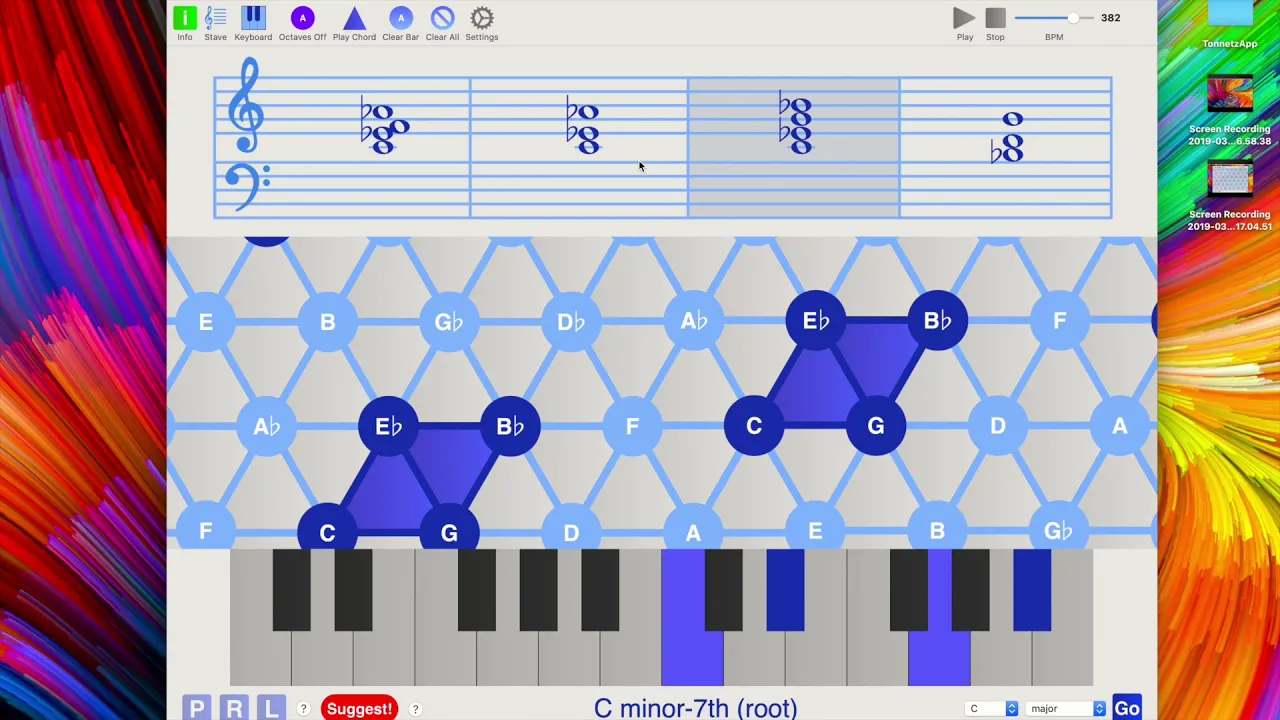
Why this video: This video demonstrates how to use interactive software to compose progressions on a Tonnetz grid in real-time. By observing the geometry of your chord selections, you will learn to build smooth, voice-led modulations dynamically.
- Knowledge Checkpoint:
- Trace a path on the Tonnetz that represents a series of PLR moves.
- Use an interactive Tonnetz app to generate a progression that starts in C Major and ends in a distant key like Minor.
- Explain how sharing a boundary (edge) between two triangles on the grid indicates shared common tones.
Module 4: Symmetrical Scales and S-Transformation
As we move beyond basic transformations, we encounter symmetrical structures that divide the octave evenly. This module explores Hexatonic Systems, the eerie SLIDE (S) transformation, and symmetrical cycles that evoke otherworldly, cosmic, and suspended-in-space sensations.
Recommended Videos

Why this video: While many tutorials ignore the SLIDE (S) transformation, this video highlights it as a core operation. It demonstrates how to perform a Slide: changing mode by keeping only the third of the chord while both the root and fifth "slide" in parallel by a half-step (e.g., C Major Minor).
- Knowledge Checkpoint:
- Perform a Slide (S) transformation on an F Major triad. What minor triad is produced? (Answer: Minor).
- Diagram how a Slide transformation moves on a keyboard (thirds stay locked, roots/fifths shift by half-steps).
- Contrast the voice-leading efficiency of a Slide (two voices moving by a half-step) with a Parallel transformation.
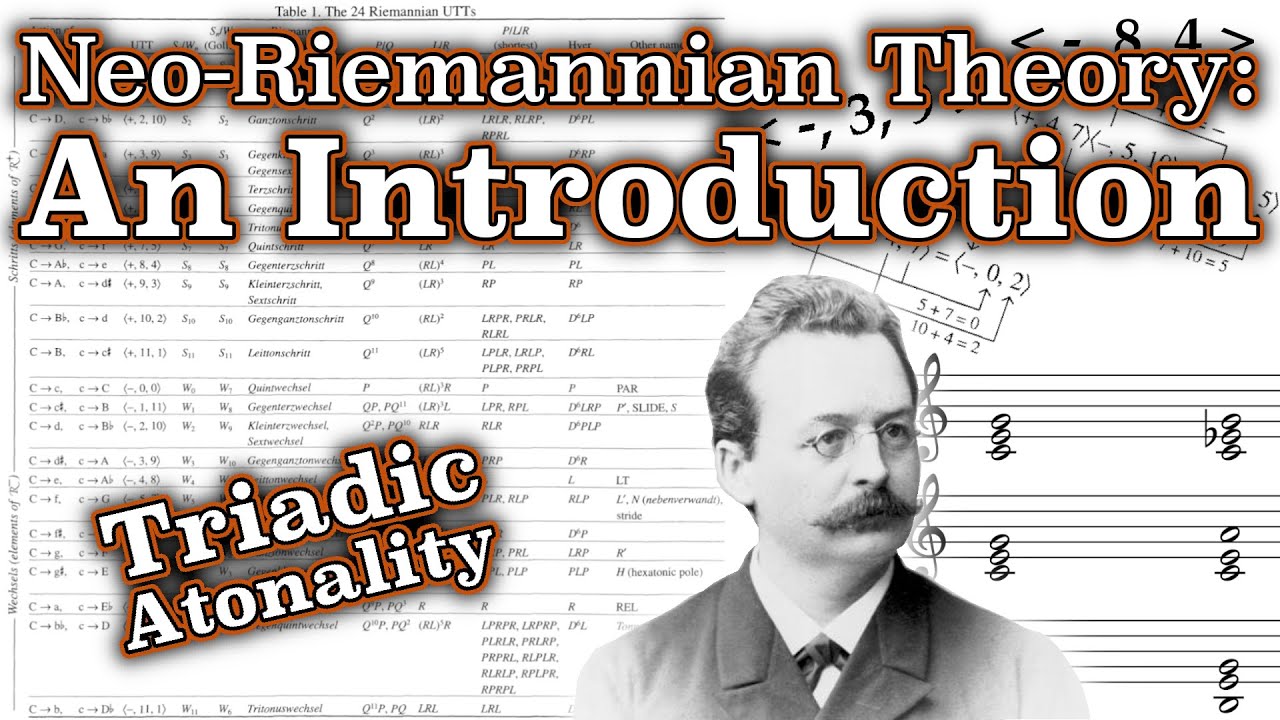
Why this video: An exceptional and detailed lecture on advanced Neo-Riemannian concepts, specifically focusing on Hexatonic Cycles and Hexatonic Poles (triads that share zero notes but are voice-led via a symmetrical step-wise process, like C Major Minor).
- Knowledge Checkpoint:
- Define a "Hexatonic Pole" and identify its location on the Tonnetz.
- Explain how a hexatonic scale is constructed by combining two polar-opposite triads.
- Describe the dramatic effect of transitioning directly to a hexatonic pole in a film score (often used to portray extreme mystery, magic, or danger).
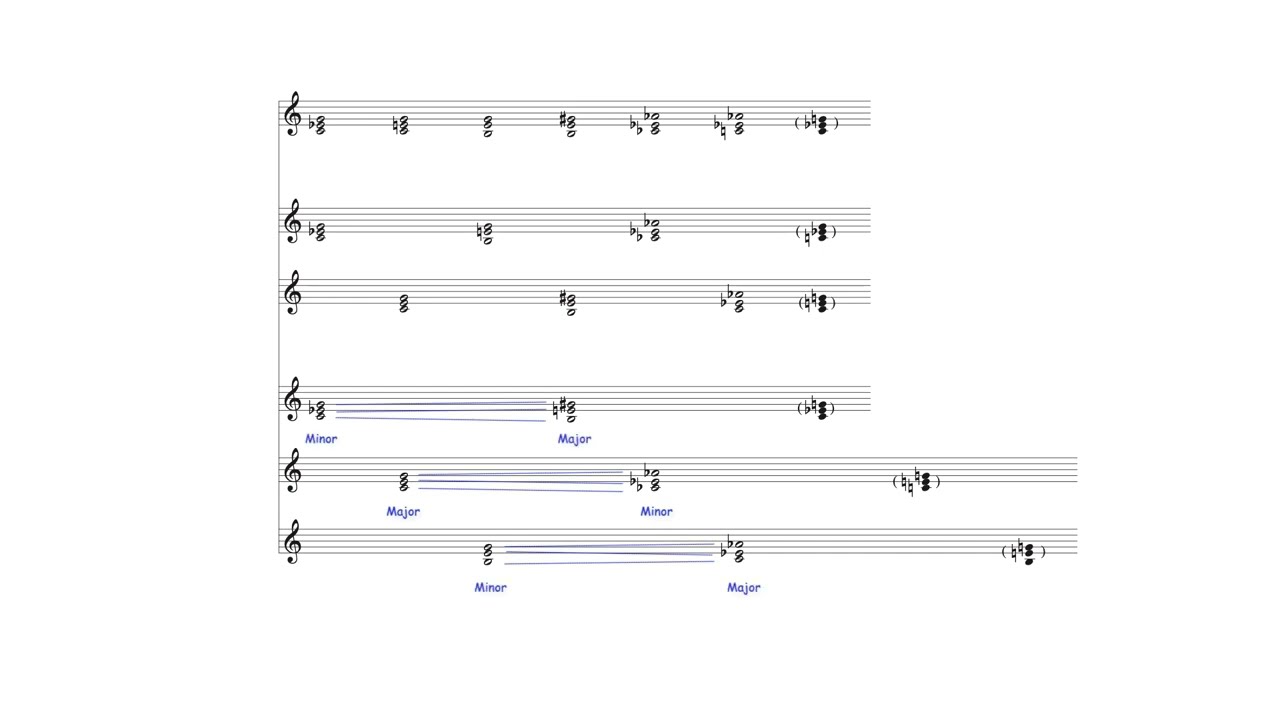
Why this video: This video focuses on the geometry of Hexatonic Cycles (specifically "Cohn Cycles"). By alternating L and P transformations, you generate a closed loop of six major and minor triads derived from a single augmented triad, bypassing traditional diatonic key centers entirely.
- Knowledge Checkpoint:
- Play through a complete 6-chord PL cycle (e.g., C Cm m E Em C).
- Identify the underlying augmented triad that acts as the physical frame for a specific hexatonic cycle.
- Explain why these progressions sound constantly shifting but coherent.
⚠️ Curriculum Gap Note: Independent learning is encouraged for the SLIDE (S) transformation. If you want more examples of S-transformations in action, search YouTube for: "SLIDE transformation music theory examples" to hear how modern composers use it to represent sudden, dramatic, and dream-like scene transitions.
Module 5: Composing Epic Sci-Fi and Fantasy Film Cues
In this final module, we apply our transformational tools to creative scoring. You will study how legendary Hollywood composers (like John Williams, Danny Elfman, and Hans Zimmer) use these non-functional, geometric harmonic relationships to generate vast outer-space settings and magical worlds.
Recommended Videos
Why this video: This practical showcase presents nine chord progressions used by composers like James Newton Howard, John Powell, and Patrick Doyle. Many of these progressions rely on chromatic mediant shifts and voice-leading techniques that map directly to Neo-Riemannian principles.
- Knowledge Checkpoint:
- Analyze the relationship between a Major I chord and a Major VI chord (chromatic mediant) using your PLR toolset (Hint: it’s an LP compound transformation).
- Compose an 8-bar fantasy phrase in your DAW using one of the demonstrated progressions as your harmonic bed.
- Arrange the voices of your progression to ensure smooth, stepwise motion in the woodwinds or strings.
Why this video: Danny Elfman’s magical, quirky sound relies heavily on moving major and minor chords in thirds. This video demonstrates how to connect chords via major and minor third relationships (chromatic mediants) to create an instant "fairy tale" or "gothic fantasy" atmosphere.
- Knowledge Checkpoint:
- Play a progression that moves strictly in major thirds (e.g., C Major E Major Major).
- Map this Danny Elfman-style third-relationship on the Tonnetz and note the geometric shape it traces.
- Use chromatic mediants to score a quick transition from a normal emotional state to a magical state.
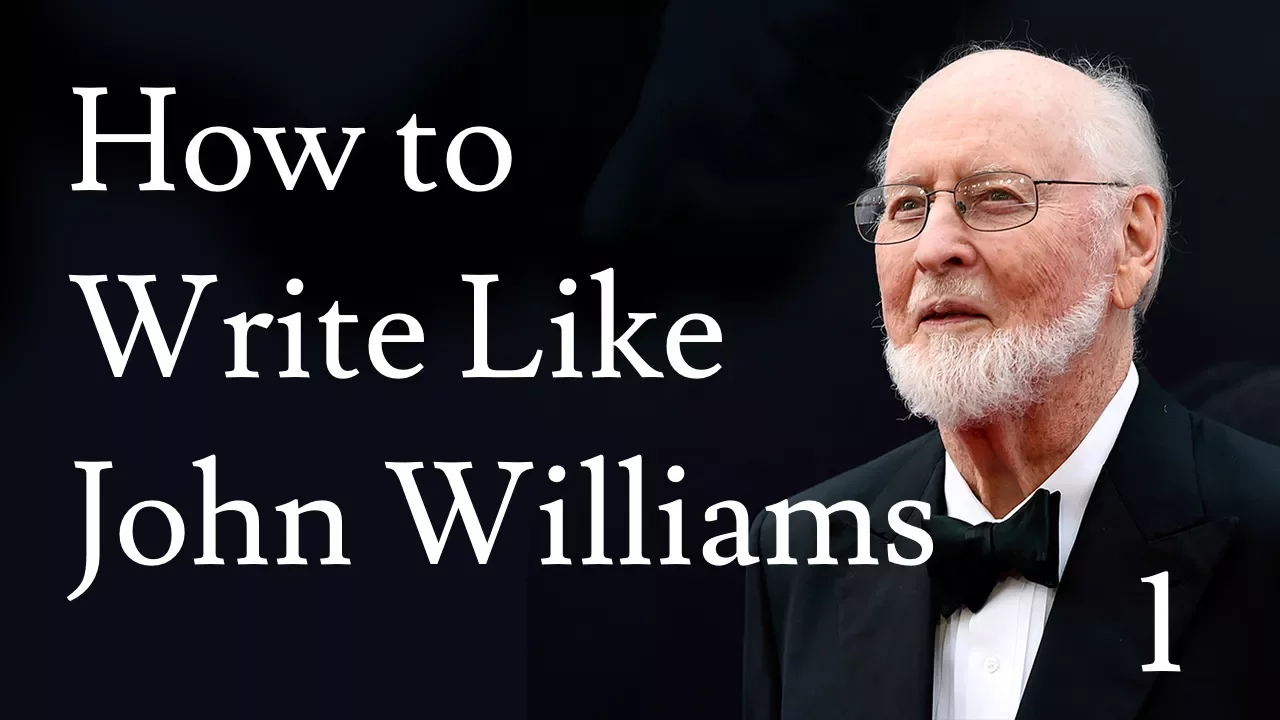
Why this video: A masterclass on the orchestral wizardry of John Williams. The video shows how Williams constructs complex orchestral climaxes by layering simple components. You will learn to use triadic transformations as the underlying harmonic framework, layered with brilliant orchestrations (woodwind runs, celesta lines, and brass countermelodies) to capture the sound of Harry Potter.
- Knowledge Checkpoint:
- Identify the prominent Neo-Riemannian transformations inside the famous "Hedwig’s Theme" (e.g., E Minor G Minor, which is an L-then-P shift).
- Analyze how Williams layers orchestral color (celesta, high strings) on top of a non-functional chord progression to make it sound "magical" rather than "confused."
- Write a short melody over an PL-transformational loop (like E minor to C major) using a classic John Williams woodwind voicing.
⚠️ Composition Workflow Note: If you are seeking a detailed, step-by-step DAW walkthrough using a software Tonnetz grid to build a sci-fi cue from scratch, search YouTube for: "Composing sci-fi music with Tonnetz tutorial" or "How to write space music using Neo Riemannian theory". This will help you bridge the gap between abstract music theory and practical DAW MIDI production.
Course Map
This flowchart shows the recommended order of study. Notice how the core transformations feed directly into the geometric visualizations of the Tonnetz, which then unlock the symmetrical structures needed for epic film scoring.
Key People Index
- Leonhard Euler (1707–1783): Swiss mathematician who first introduced the Tonnetz in 1739 as a visual representation of just intonation relationships between pitches.
- Hugo Riemann (1849–1919): German music theorist who expanded the Tonnetz and championed harmonic dualism (the concept that minor chords are a direct, inverted mirror of major chords).
- David Lewin (1933–2003): American theorist who formalized "transformational theory" in 1987, shifting focus away from static chords to the mathematical actions/operations that connect them.
- Richard Cohn: Music theorist who popularized the modern "Neo-Riemannian" framework, showing how it explains highly chromatic passages in late Romantic music (Wagner, Schubert) and modern film scores through "parsimonious voice leading" and symmetrical cycles.
Final Self-Assessment
Test your command of Neo-Riemannian composition techniques with this cumulative diagnostic checklist. If you can confidently check off these items, you are ready to write professional, non-functional sci-fi and fantasy scores!
- Triadic Mechanics: Can you build any major or minor triad instantly using both half-step counting and scale steps?
- P-Transformation: Can you shift any chord to its Parallel (e.g., Major to Minor) in your DAW with a single MIDI note adjustment?
- L-Transformation: Can you resolve any major triad to its Leading-Tone Exchange minor triad (e.g., Major to D Minor) maintaining two common tones?
- R-Transformation: Can you resolve any minor triad to its Relative major triad (e.g., G Minor to Major) maintaining two common tones?
- S-Transformation: Can you execute a Slide (S) transformation (e.g., C Major to Minor) and explain which note remains static? (The 3rd, E).
- Geometric Tracking: Can you draw a major triad, a minor triad, and a basic PLR path on a physical or digital Tonnetz grid?
- Hexatonic Cycles: Can you play or input a full 6-chord "Cohn Cycle" progression using alternating L and P steps?
- Hexatonic Poles: Can you identify the hexatonic pole of G Major ( Minor) and explain why this shift sounds dramatic or unsettling?
- Chromatic Mediants: Can you identify why progressions moving by major/minor thirds (like Danny Elfman's scores) bypass traditional "circle of fifths" harmony?
- Cinematic Orchestration: Can you write a 16-bar sci-fi cue that uses a non-functional, Neo-Riemannian chord progression as its engine, arranged with smooth stepwise voice leading in your string MIDI tracks?