Mind-Body Problem: Physicalism to Panpsychism
Learning Goal: Analyze the mind-body problem, contrasting physicalism, property dualism, and panpsychism, while evaluating classic thought experiments like Mary’s Room and philosophical zombies.
- Prerequisites: None (an open mind and a basic familiarity with introductory philosophical terms are helpful but not required).
- Estimated Total Study Time: 10 Hours
Module 1: Introduction to the Mind-Body Problem
This module establishes the foundational historical and conceptual framework of the mind-body puzzle. You will explore René Descartes' formulation of Substance Dualism (the division between res extensa and res cogitans), understand how the Scientific Revolution transformed our view of the physical world, and appreciate the classic interaction problem: how can an immaterial mind causally affect a physical body?
Recommended Videos
![PHILOSOPHY - Mind: Mind-Body Dualism [HD]](https://i.ytimg.com/vi_webp/AMTMtWHclKo/maxresdefault.webp)
- Why this video: This video offers a rigorous, accessible introduction to the logical arguments behind substance dualism. It breaks down Leibniz's Law (the indiscernibility of identicals) to explain why Descartes concluded that the mind and body must be separate substances, providing a core conceptual foundation for beginners.
- Knowledge Checkpoint:
- Explain how Leibniz's Law is used to argue that the mind is distinct from the physical body.
- Define "substance" in the Cartesian sense and distinguish between res cogitans (thinking stuff) and res extensa (extended stuff).
- Identify the primary difficulty that dualism faces regarding mental-physical interaction.
- Why this video: Abigail Thorn provides a highly engaging, theatrical, and concise overview of Cartesian dualism. This video is crucial for quickly grasping how Descartes' skepticism led to his famous Cogito, ergo sum and how he split the universe into unconscious mechanisms and conscious spirit.
- Knowledge Checkpoint:
- Describe Descartes' radical skepticism and how it led him to find certainty only in his own conscious existence.
- Explain why Descartes viewed animals and the physical body as mere "machines."
- Why this video: While titled "Functionalism", the first half of this excellent lecture by Professor Jeffrey Kaplan acts as an indispensable transition. He traces the historical path from Descartes' substance dualism directly to the famous critique of the "ghost in the machine" and Princess Elisabeth of Bohemia's powerful objection to Cartesian interaction.
- Knowledge Checkpoint:
- Articulate Princess Elisabeth of Bohemia's critique regarding how an immaterial soul can causally nudge a physical pineal gland.
- Define what Gilbert Ryle meant by a "category mistake" when critiquing substance dualism.
Module 2: Physicalism and its Variations
Physicalism asserts that everything that exists is ultimately physical. This module traces the historical progression of physicalist frameworks attempting to explain away the "ghost in the machine." You will evaluate Behaviorism (identifying mental states with behavioral dispositions), Mind-Brain Identity Theory (reductive physicalism mapping mental states directly to neural pathways), and Functionalism (non-reductive physicalism defining minds by cognitive roles rather than physical substrates).
Note on Video Coverage: While basic physicalist subtopics like Behaviorism and Identity Theory are notoriously dry in academic settings, we have bypassed low-yield lectures to highlight engaging, conceptually dense tutorials that directly address these core shifts.
Recommended Videos
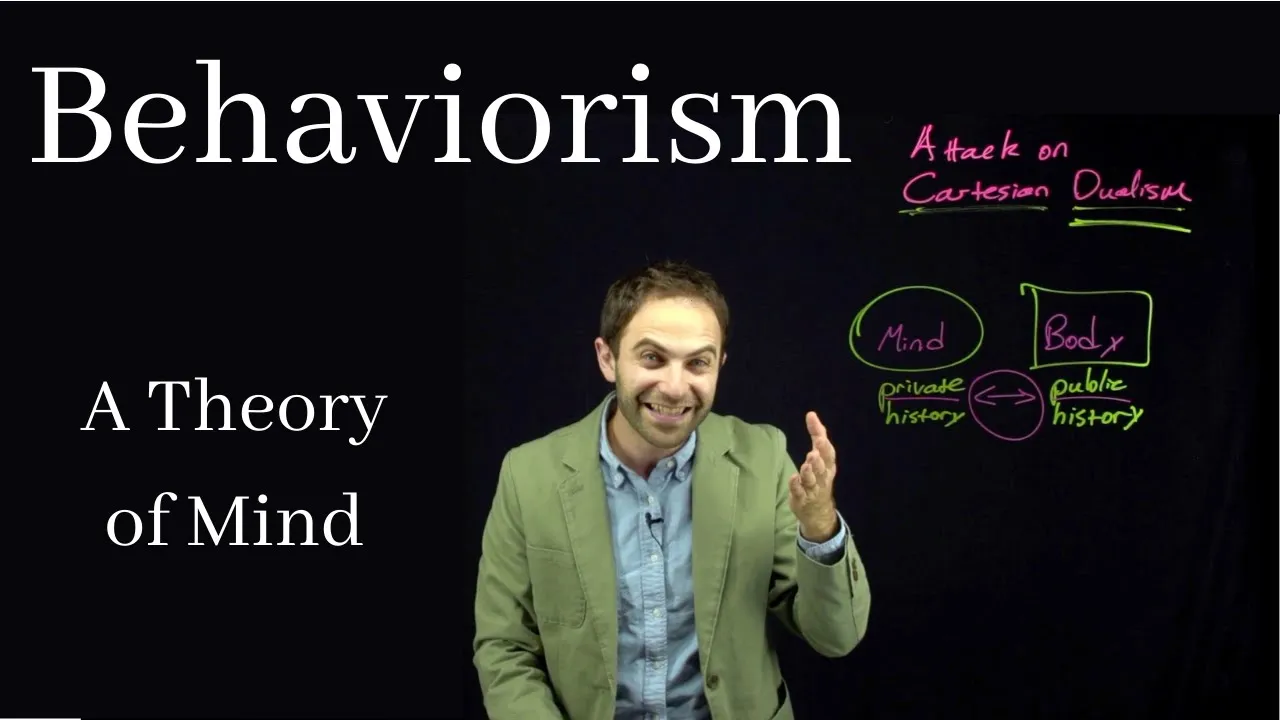
- Why this video: A short but sharp conceptual definition of analytical behaviorism. Kaplan quickly clarifies how behaviorism attempts to solve the mind-body problem by arguing that having a mind is nothing more than behaving (or being disposed to behave) in certain ways, leaving no need for an unobservable inner theater.
- Knowledge Checkpoint:
- Differentiate between psychological behaviorism (methodological) and analytical/philosophical behaviorism (ontological).
- Explain why defining pain merely as "pain-behavior" fails to capture the internal feeling of pain.

- Why this video: This comprehensive video is a deep dive into reductive physicalism (Mind-Brain Identity Theory). It explores the bold assertion that mental states are literally identical to brain states (e.g., "pain is the firing of C-fibers"), evaluating its strengths and its vulnerability to the "multiple realizability" objection.
- Knowledge Checkpoint:
- Define the central thesis of Mind-Brain Identity Theory.
- Explain the objection of multiple realizability: why can't we restrict the concept of "pain" strictly to human-specific neural structures if an alien or a synthetic machine can also feel pain?

- Why this video: A clear, beautifully paced explainer of Functionalism, the dominant view in modern cognitive science. This video illustrates how functionalism side-steps the limitations of Identity Theory by focusing on what a mental state does (inputs, internal transitions, and outputs) rather than what it is made of.
- Knowledge Checkpoint:
- Explain the software/hardware analogy used by functionalists to explain the mind-brain relationship.
- Contrast Functionalism with both Behaviorism and Identity Theory.
Module 3: The Hard Problem, Qualia, and Mary's Room
Can a purely physical description of the brain ever capture what it feels like to be conscious? This module investigates subjective, first-person experiences, known as "qualia." You will analyze Frank Jackson's classic "Mary's Room" thought experiment (the Knowledge Argument) and engage with David Chalmers' seminal formulation of the "Hard Problem of Consciousness" vs. the "Easy Problems."
Recommended Videos
- Why this video: This world-class, highly viewed animation perfectly illustrates Frank Jackson's "Knowledge Argument." By walking through the life of Mary, a neuroscientist who knows every physical fact about color but has only ever lived in a black-and-white room, it clearly demonstrates the intuitive pull of non-physical facts.
- Knowledge Checkpoint:
- Reconstruct the logical steps of Frank Jackson's Knowledge Argument.
- Evaluate the "Ability Hypothesis" objection: did Mary actually learn a new fact, or did she merely acquire a new skill (like recognizing red)?
- Define "qualia" using examples from the video.
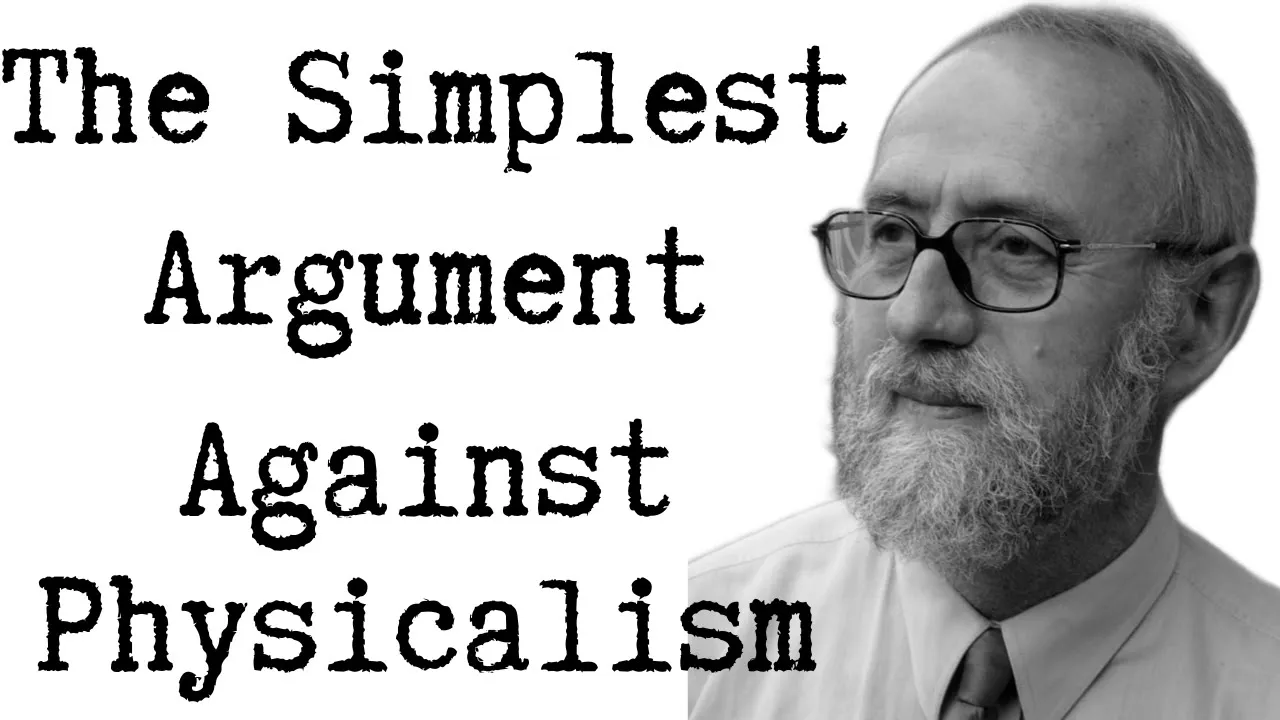
- Why this video: Professor Kaplan provides a precise breakdown of Jackson's argument, distinguishing it from Thomas Nagel's "What is it like to be a bat?" argument. He focuses strictly on how Jackson defines "physical information" to show how the experiment attacks the core premise of physicalism.
- Knowledge Checkpoint:
- Explain why Jackson's Mary's Room argument is an ontological argument (about what exists), whereas Nagel's bat argument is primarily epistemological (about what we can know).
- Summarize how a physicalist might defend their position against the Mary's Room setup.

- Why this video: A landmark, in-depth conversation with the philosopher who coined the term "the Hard Problem of Consciousness." David Chalmers explains why mechanics (the "easy" problems like data processing, reaction to stimuli, and focus) do not automatically explain why we have subjective experiences.
- Knowledge Checkpoint:
- Distinguish between Chalmers' "Easy Problems" and the "Hard Problem" of consciousness.
- Explain why solving the physical cognitive mechanisms of the brain does not automatically resolve why those mechanisms are accompanied by an inner experience.
Module 4: Philosophical Zombies and Property Dualism
This module uses David Chalmers' "Philosophical Zombie" thought experiment to challenge the completeness of physicalism. If it is conceivable that a creature could be physically identical to you but completely lack inner experience, then physicalism must be false. In response to this, you will explore Property Dualism—the view that while there is only one physical substance (the brain), it possesses both physical and non-reductive mental properties.
Note on Video Coverage: Property dualism is often poorly explained in short clips. To bridge this gap, we use detailed philosophical lectures that clearly contrast property dualism with both substance dualism and physicalism.
Recommended Videos
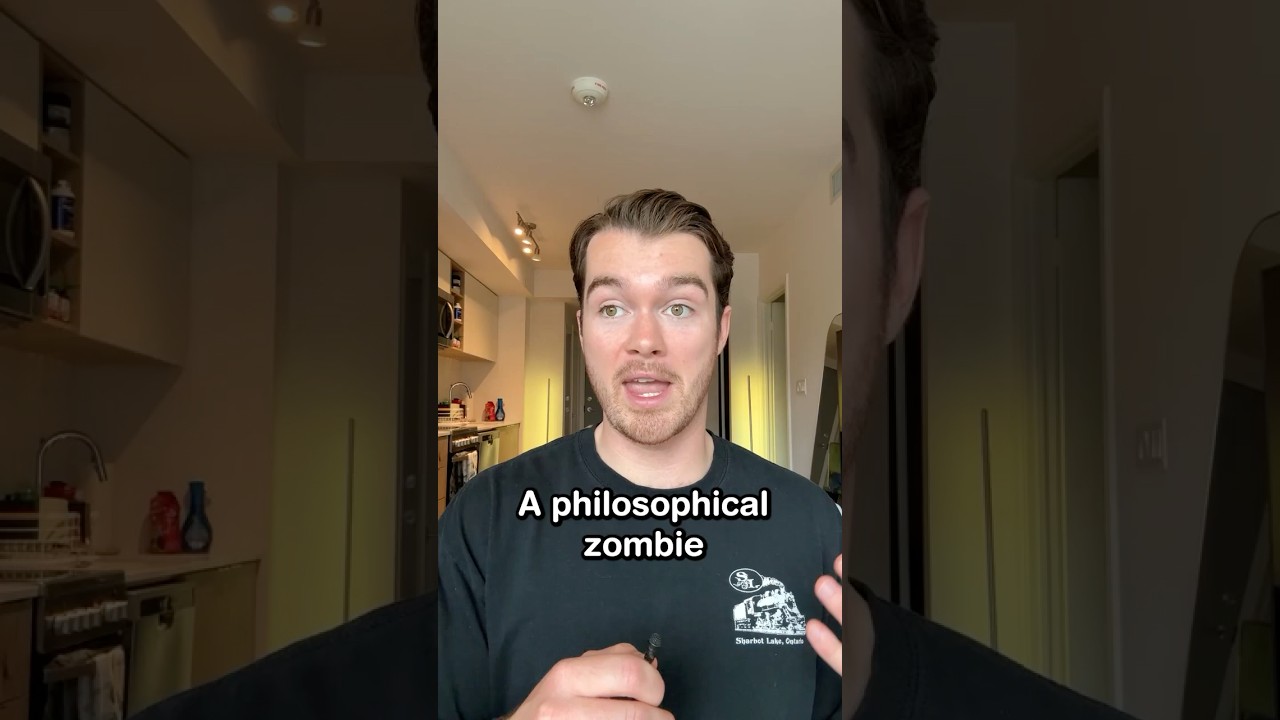
- Why this video: A concise, highly visual explanation of the "P-Zombie" concept. This short video acts as a perfect primer for understanding what a philosophical zombie is—physically and behaviorally indistinguishable from a normal human, but lacking any subjective, inner experience ("dark inside").
- Knowledge Checkpoint:
- Define a "philosophical zombie" and explain why it is different from a Hollywood movie zombie.
- Clarify how the mere conceivability of a philosophical zombie is used to argue against the truth of physicalism.
- Why this video: This video tackles the conceptual machinery of Property Dualism. It explains how property dualism tries to rescue qualia by treating them as non-physical properties of a physical brain, while critically evaluating its biggest challenge: mental causation (how these non-physical properties can have physical effects without violating the causal closure of the physical).
- Knowledge Checkpoint:
- Explain how Property Dualism differs from Cartesian Substance Dualism.
- Define the "Interaction Problem" or "Epiphenomenalism" objection as it applies to Property Dualism.

- Why this video: Hosted by professional philosophers, this video systematically reviews the arguments against physicalism. It ties together the conceivability of P-zombies, the knowledge argument, and property dualism, providing a robust academic summary of how non-reductive physicalism fails to hold under pressure.
- Knowledge Checkpoint:
- Reconstruct the logical connection between the P-Zombie argument and the denial of physical supervenience.
- Explain the concept of physical closure and why it presents a dilemma for non-reductive physicalists.
Module 5: Panpsychism and Alternative Monisms
If both physicalism and dualism lead to dead ends, what are the alternatives? This module explores Panpsychism—the theory that consciousness is a fundamental and ubiquitous feature of the universe, existing even at the level of subatomic particles. You will evaluate the promise of this theory in solving the hard problem, while critically analyzing its primary hurdle: the Combination Problem.
Recommended Videos

- Why this video: Leading panpsychist philosopher Philip Goff introduces the core claims of panpsychism. He argues that instead of trying to explain how consciousness emerges from "dead," un-conscious matter, we should view consciousness as a fundamental property of matter itself, akin to mass or electrical charge.
- Knowledge Checkpoint:
- Define Panpsychism and distinguish it from Animism.
- Explain how panpsychism attempts to bypass the "emergence" problem of consciousness.
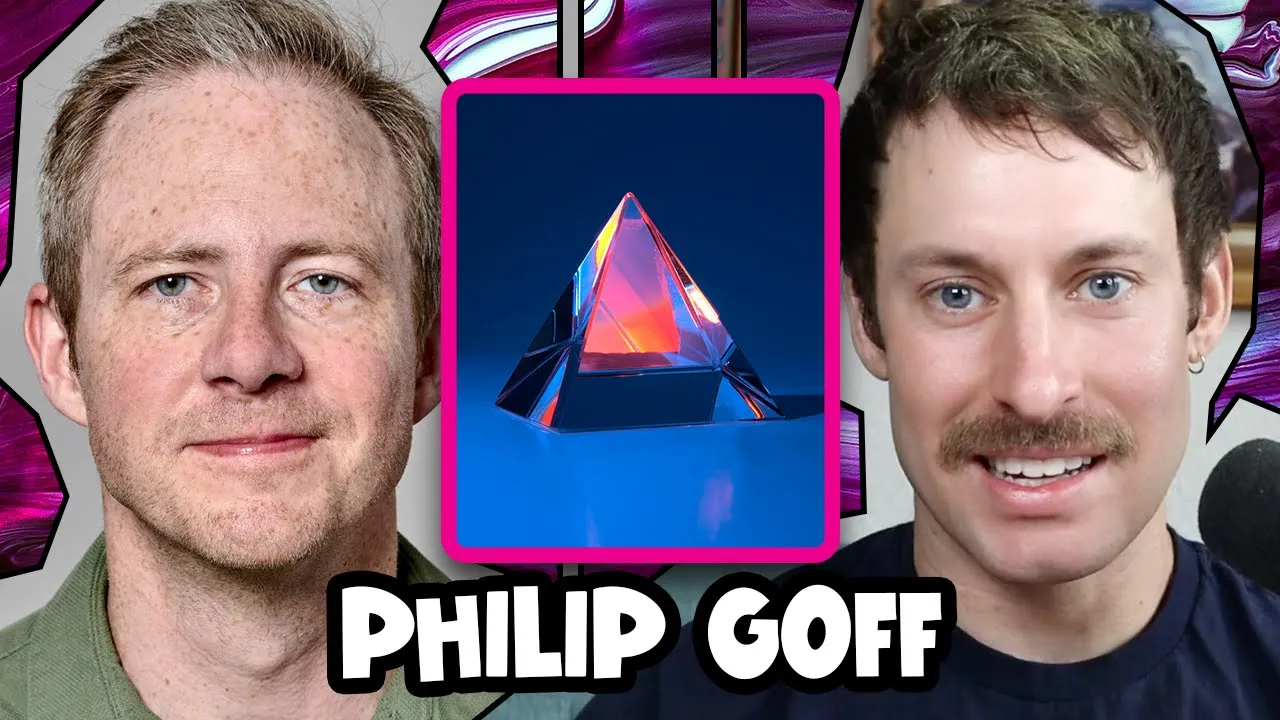
- Why this video: A short, razor-focused clip where Philip Goff explains the single greatest challenge to panpsychism: the "Combination Problem." How do millions of micro-conscious subatomic particles in your brain combine to form the singular, unified, macro-conscious experience that is "you"?
- Knowledge Checkpoint:
- Formulate the Combination Problem in your own words.
- Explain why the combination of micro-conscious entities is conceptually difficult to explain compared to physical combinations (like bricks forming a house).

- Why this video: This video features philosopher J.P. Moreland raising a powerful objection to panpsychism. He uses the unity of consciousness to argue that a "soul" or unified mind cannot be constructed out of aggregated tiny parts, making it an excellent counterweight to panpsychist views.
- Knowledge Checkpoint:
- Explain the concept of the "unity of consciousness" and why it poses a problem for any view that builds minds out of smaller parts.

- Why this video: Physicist Federico Faggin introduces a fascinating modern attempt to solve the Combination Problem using quantum mechanics. He explains how combining classical parts creates a mere sum of parts, whereas combining quantum states creates a new, unified, entangled whole.
- Knowledge Checkpoint:
- Explain how Federico Faggin uses quantum entanglement to address the combination problem of panpsychism.
Course Map
Key People Index
- René Descartes (1596–1650): The father of modern philosophy who established substance dualism, asserting that mind (res cogitans) and matter (res extensa) are two completely distinct substances.
- Princess Elisabeth of Bohemia (1618–1680): A royal philosopher who famously challenged Descartes to explain how an immaterial soul could causally interact with a physical body, exposing the core flaw of substance dualism.
- Frank Jackson (1943–Present): The Australian philosopher who proposed the "Mary's Room" thought experiment (Knowledge Argument) to prove that physicalism cannot account for subjective qualia.
- David Chalmers (1966–Present): The philosopher who famously formulated the "Hard Problem of Consciousness" and popularized the "Philosophical Zombie" thought experiment to challenge materialist views.
- Philip Goff (1979–Present): A leading contemporary philosopher and champion of Panpsychism, arguing that consciousness is a fundamental property of matter.
- Federico Faggin (1941–Present): A physicist and inventor (designer of the first commercial microprocessor) who advocates for quantum information panpsychism to solve the combination problem.
Final Self-Assessment
Test your grasp of the material by ensuring you can confidently check off each of the following tasks:
- Summarize the difference between substance dualism and property dualism.
- Explain the interaction problem and why it remains the biggest obstacle for Cartesian dualists.
- Detail how Behaviorism, Identity Theory, and Functionalism each attempt to define a "mental state" from a physicalist standpoint.
- Explain why multiple realizability serves as a strong argument against Identity Theory but supports Functionalism.
- Explain the premise of the Mary’s Room thought experiment and state what it is designed to prove.
- Define qualia and give three real-world examples of qualitative experience.
- Outline the logical argument behind philosophical zombies and how it challenges physicalism.
- Explain why property dualism faces the threat of epiphenomenalism (mental properties being causally useless).
- Define panpsychism and explain how it differs from traditional physicalism.
- Describe the combination problem of panpsychism and present at least one proposed solution (e.g., quantum entanglement).