Civil-Military Relations: Control & Coups
Learning Goal: Evaluate the structural determinants of civil-military relations, analyzing how democratic regimes maintain civilian control over the armed forces and prevent military coups d'état.
- Prerequisites: Introduction to Political Science or Comparative Politics (recommended)
- Estimated Study Time: 12 Hours
Module 1: Foundations of Civil-Military Relations
This module introduces the fundamental paradox of military power: a democratic state must maintain a military strong enough to protect itself from external adversaries, yet disciplined enough not to subvert the domestic democratic process. You will explore why militaries obey civilian authority and the deep constitutional norms that sustain democratic civilian control.

Why this video: Kori Schake, a leading scholar on civil-military relations, discusses how democracies cultivate absolute military subordination to civilian leadership. She emphasizes the historical foundations of this dynamic, tracking it back to George Washington's critical precedents in the United States. This provides a rich, long-form discussion on the non-partisan norms required to shield a republic from military overreach.

Why this video: Featuring a seasoned military perspective, this lecture breaks down the conceptual framework of civilian control over the armed forces. It introduces Samuel Huntington’s foundational ideas, explaining the core principle that military officers must serve elected governments rather than their own corporate, institutional, or political interests.
Why this video: This structured debate gets to the heart of the "military obedience" paradox. It evaluates how professional military forces navigate the tension between civilian control (the obligation to obey elected leaders) and the rule of law (the obligation to refuse illegal commands), exposing the real-world operational boundaries of civilian authority.
💡 Curriculum Note (Coverage Gap): While these discussions offer excellent practical context on military obedience, they lack a single, formal academic lecture focusing solely on the "democratic paradox of military force."
- Recommended Independent Search: For deeper theory, search YouTube for "why do militaries obey civilian leaders lecture".
Knowledge Checkpoint
- Define the fundamental paradox of military power in democratic systems.
- Explain how historical precedents (such as George Washington's actions) establish norms of civilian control.
- Distinguish between a military's obligation to obey civilian leaders and its obligation to uphold constitutional rule of law.
Module 2: Theories of Civilian Control: Huntington vs. Janowitz
This module focuses on the classic academic debate in civil-military relations: Samuel Huntington’s theory of Objective Civilian Control versus Morris Janowitz’s theory of Subjective Civilian Control. You will evaluate how these two competing paradigms suggest states should structure their institutions to minimize the threat of military intervention.
Why this video: This academic review systematically walks through Morris Janowitz's theory of civil-military relations. It details how Janowitz viewed the military as an institution that must integrate with, rather than isolate from, democratic civilian society to remain loyal.
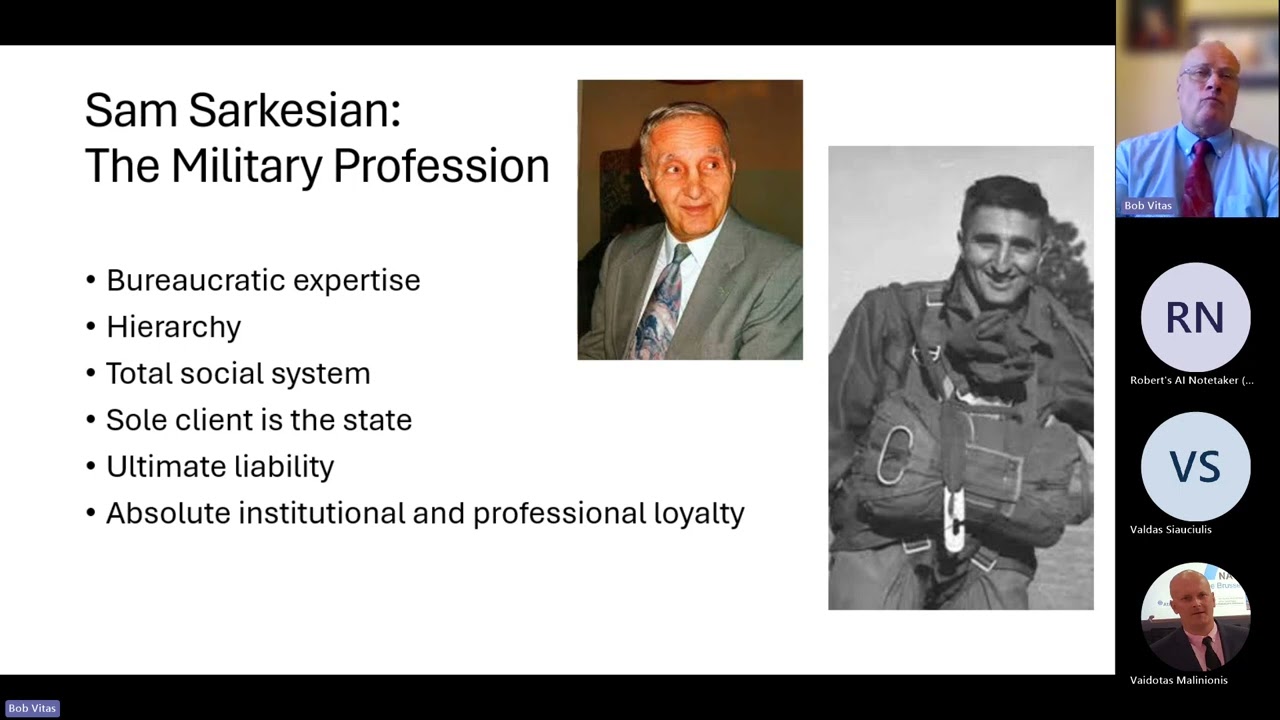
Why this video: Though brief and focused on Baltic history, this video provides a concise comparative baseline, explicitly contrasting Huntington's view of professional isolation with Janowitz's view of the socially integrated, apolitical officer corps.

Why this video: Dr. Erica De Bruin outlines the core tension of Huntington’s "objective control" paradigm. She explains how Huntington proposed separating the military from politics by granting them autonomy over their professional domain, and introduces how modern scholarship challenges this partition.
💡 Curriculum Note (Coverage Gap): Direct, side-by-side comparative lectures of Huntington and Janowitz are scarce in the video pool.
- Recommended Independent Search: Search YouTube for "Samuel Huntington objective civilian control theory lecture" or "Morris Janowitz civil military relations" to round out your conceptual notes.
Knowledge Checkpoint
- Contrast Huntington's "Objective Control" (professionalization and isolation) with "Subjective Control" methods.
- Detail Janowitz’s perspective on how military integration with civilian values prevents the rise of an isolated warrior caste.
- Critique Huntington's assumption that professionalization automatically leads to political neutrality.
Module 3: Democratic Institutions and Oversight Mechanisms
Democracies enforce civilian control through concrete institutional design: legislative budgets, statutory limitations, and Security Sector Reform (SSR). This module examines the formal mechanisms used by parliaments and congresses to audit, restrict, and direct armed forces.

Why this video: This video offers a detailed study of post-conflict institutional engineering. It illustrates the real-world operational challenges legislators face when conducting parliamentary oversight of security forces, highlighting the necessity of legislative expertise and budgetary control.

Why this video: This video introduces the conceptual definition of Security Sector Reform (SSR). It explains how nations rebuild dysfunctional, unaccountable military and police institutions into structures subordinated to democratic governance and human rights standards.

Why this video: Panelists at this Tufts University symposium analyze the legal norms that keep armed services politically neutral. The discussion centers on how transition periods require civilian control over defense budgets and procurement policies to prevent military capture of state resources.
Knowledge Checkpoint
- Explain how legislative bodies use "power of the purse" to control security sectors.
- Define Security Sector Reform (SSR) and state its primary goals during democratic transitions.
- Analyze the challenges of maintaining institutional memory in civilian legislative committees overseeing the military.
Module 4: The Anatomy of Military Coups d'État
To prevent military intervention, one must understand its causes. This module dissects the structural, economic, and political conditions that trigger coups, moving beyond superficial explanations to focus on institutional decay and elite fragmentation.
Why this video: Dr. Natasha Ezrow details how different regime designs influence elite cohesion and military intervention. By explaining why personalist, single-party, and military regimes fall differently, she highlights the structural vulnerabilities that make a state ripe for military takeover.
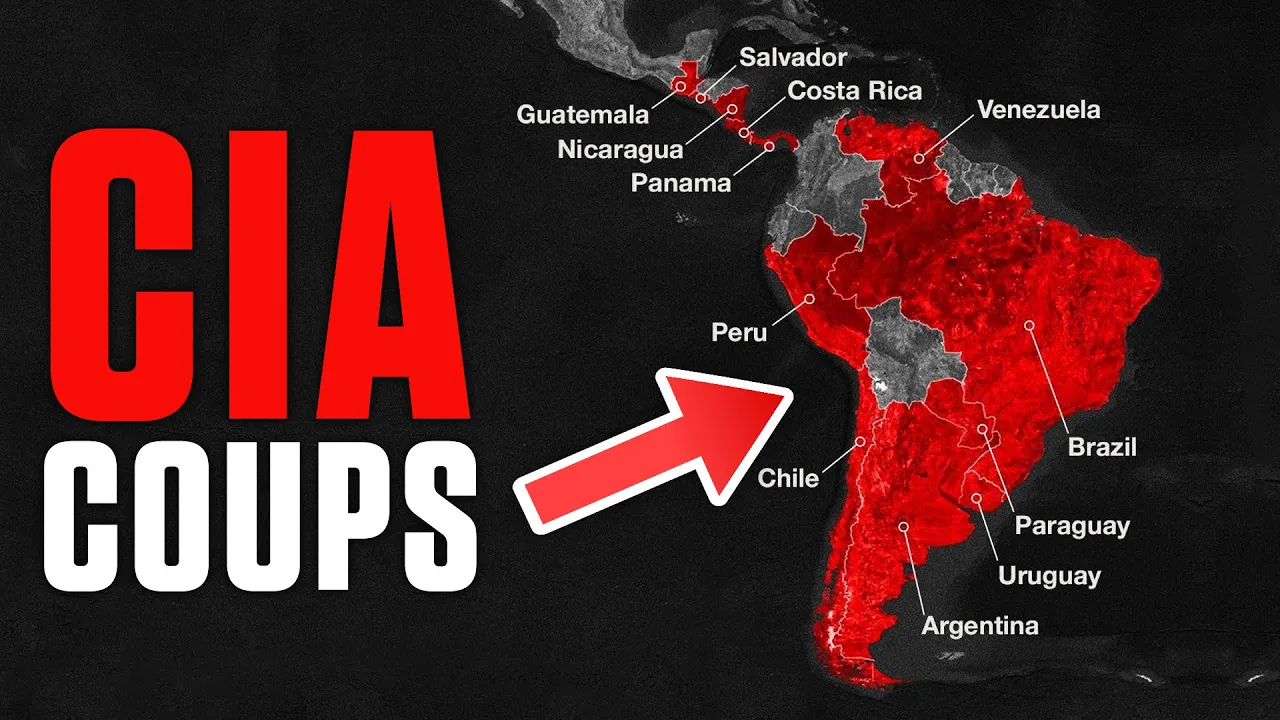
Why this video: This video tracks the strategic mechanics of staging coups, focusing on covert operations and tactical takeovers of communication hubs. It emphasizes how external powers historically leveraged military actors to execute regime change during the Cold War.

Why this video: A short but illustrative news report on an attempted coup in Benin. This case study demonstrates how structural issues—economic stagnation, corruption, and the erosion of democratic institutions—create opportunities for military officers to justify intervention.
💡 Curriculum Note (Coverage Gap): The video pool contains several short news clips of individual coup events, but lacks a full, dedicated academic lecture on the macroeconomic and structural determinants of coups.
- Recommended Independent Search: Search YouTube for "causes of military intervention in politics lecture" or "political science of coup dynamics".
Knowledge Checkpoint
- Identify the primary structural vulnerabilities that expose a state to coup attempts.
- Describe the tactical objectives of coup plotters during the initial hours of an intervention (e.g., communication nodes, executive offices).
- Explain how a government's loss of democratic legitimacy serves as a primary justification for military takeover.
Module 5: Coup-Proofing and Structural Safeguards
Regimes that fear their own militaries implement "coup-proofing" strategies. This module evaluates these tactical and structural designs, looking at the trade-offs of counterbalancing, ethnic matching, parallel security organizations, and rapid officer reshuffling.
Why this video: Dr. Erica De Bruin briefly outlines the diverse toolkit of coup-proofing, including the creation of rival parallel security forces, the integration of co-ethnics into key command posts, and strategic military budgeting.

Why this video: This video introduces the Rapid Support Forces (RSF) in Sudan, a classic real-world example of counterbalancing. It illustrates the dangers of creating parallel military forces to protect a regime, as these forces often end up fighting the regular military for state control.

Why this video: An expert panel details how Nicolás Maduro has maintained power in Venezuela through intensive coup-proofing. The video explains the use of rapid, selective promotions, continuous monitoring, and the distribution of economic benefits to buy military loyalty.
💡 Curriculum Note (Coverage Gap): While these short clips present real-world examples, they do not provide a comprehensive, step-by-step academic lecture on the systematic mechanics of coup-proofing.
- Recommended Independent Search: Search YouTube for "Erica De Bruin coup proofing counterbalancing" or "coup proofing strategies in authoritarian regimes".
Knowledge Checkpoint
- Define "counterbalancing" and explain how it differs from conventional military structures.
- Analyze the security risks a state faces when it establishes parallel, heavily armed paramilitary organizations.
- Explain how ethnic stacking or selective economic patronage is used as a coup-proofing mechanism in weak states.
Module 6: Case Studies: Crisis, Consolidation, and Collapse
This module applies theoretical models to historical and contemporary case studies. You will analyze how Indonesia successfully managed its transition out of military rule, how Turkey's long-running coup cycle was ultimately altered, and how India successfully designed an apolitical military institution.

Why this video: This documentary offers an outstanding case study on democratic transition. It covers how Indonesia consolidated its democracy by dismantling the military’s dwifungsi (dual political-security function) after the collapse of the Suharto regime in 1998, demonstrating the long-term steps required to return the military to the barracks.

Why this video: Turkey has historically been the classic comparative case of military tutelage, where the army acted as the "guardian" of the state's secular constitution. This historical documentary focuses on the 1960 coup, showing how the military intervened when civilian politics began to polarize and slide toward authoritarianism.

Why this video: This deep-dive episode investigates how India, unlike many of its post-colonial neighbors (such as Pakistan), successfully constructed an apolitical military. It highlights the deliberate institutional designs, administrative separations, and conscious political choices made since 1947 to maintain absolute civilian supremacy.
Knowledge Checkpoint
- Explain how Indonesia dismantled the military's dwifungsi (dual-function) doctrine.
- Describe the "tutelary" role played by the Turkish military in politics between 1960 and the early 2000s.
- Identify key institutional decisions that allowed India to maintain civilian control over its military while neighboring states collapsed into coups.
Course Map
Key People Index
- Samuel Huntington (1927–2008): Harvard political scientist who authored The Soldier and the State (1957). He pioneered the theory of "Objective Civilian Control," arguing that the most effective way to prevent military political intervention is to maximize military professionalism and keep the military isolated from domestic politics.
- Morris Janowitz (1919–1988): University of Chicago sociologist who authored The Professional Soldier (1960). He contested Huntington's view, advocating for "Subjective Control." Janowitz argued that the military must integrate with democratic society, ensuring military officers share the values of the citizens they protect.
- Dr. Erica De Bruin: Associate Professor of Government at Hamilton College. Her research focuses on military coup dynamics, civil war, and the effectiveness of coup-proofing strategies (specifically parallel military forces and counterbalancing).
- Kori Schake: Director of Foreign and Defense Policy Studies at the American Enterprise Institute (AEI). She is a leading scholar on civil-military relations, specializing in how public perception and legislative design shape military alignment.
Final Self-Assessment
- Explain the fundamental paradox of military power in a democratic society.
- Compare Samuel Huntington's "Objective Control" and Morris Janowitz's "Subjective Control" models.
- List at least three legislative or institutional mechanisms used by democracies to maintain military oversight.
- Define Security Sector Reform (SSR) and explain its challenges during transitions from military rule to democracy.
- Identify the structural, political, and economic drivers of military coups.
- Describe "counterbalancing" and explain how it can backfire on a regime.
- Contrast how Indonesia and Turkey managed the historical political power of their armed forces.
- Explain why India succeeded in keeping its military apolitical while neighboring states suffered military interventions.